
Loudoun Decks Blog
Read our latest articles on outdoor living, deck maintenance tips, material comparisons, and inspiration for your next backyard project.
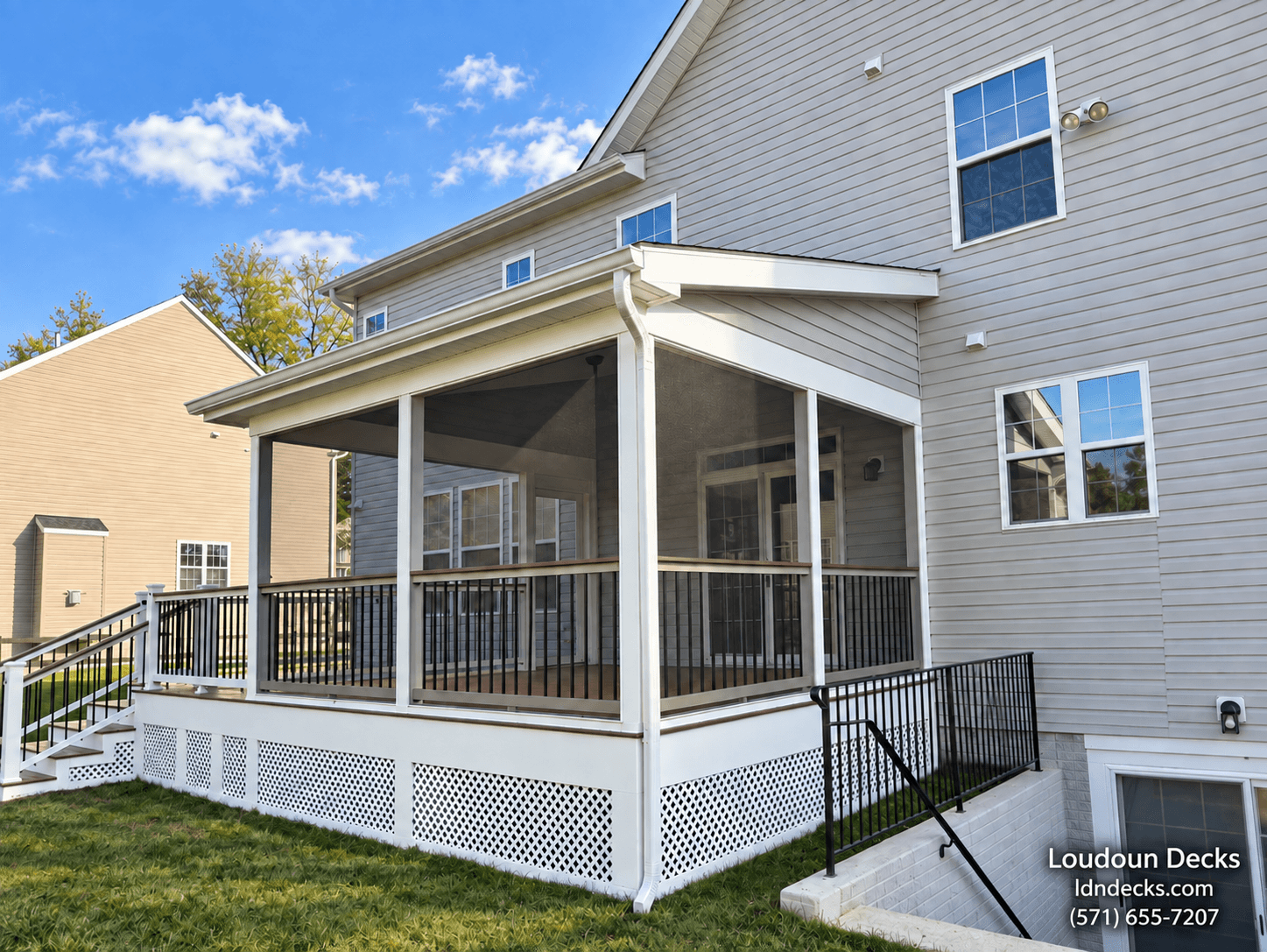
Screened Porch with Trex Select in Purcellville, VA
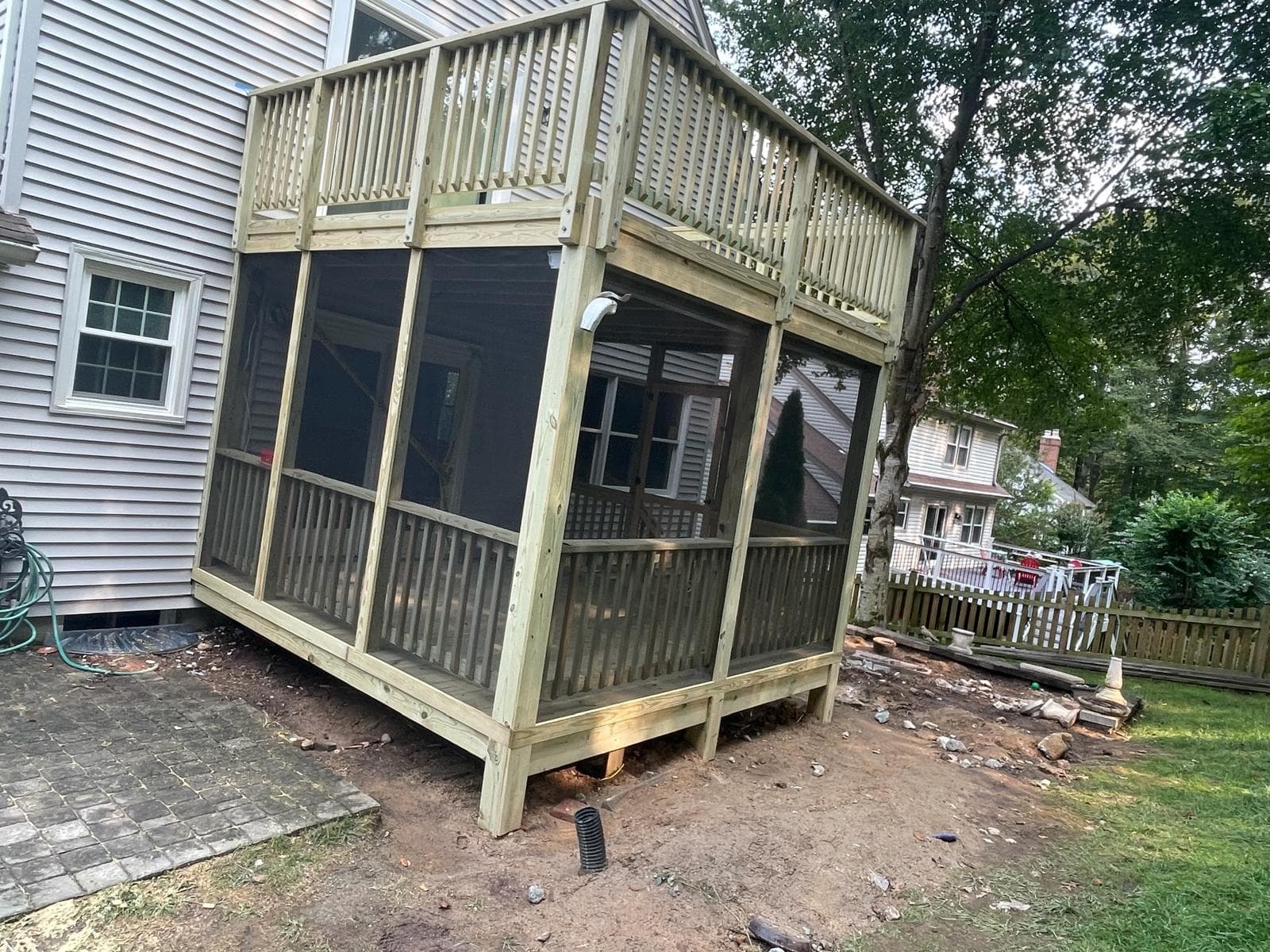
A Purcellville screened porch with Trex Select decking and backyard access, plus planning considerations for a possible future Eze-Breeze enclosure.
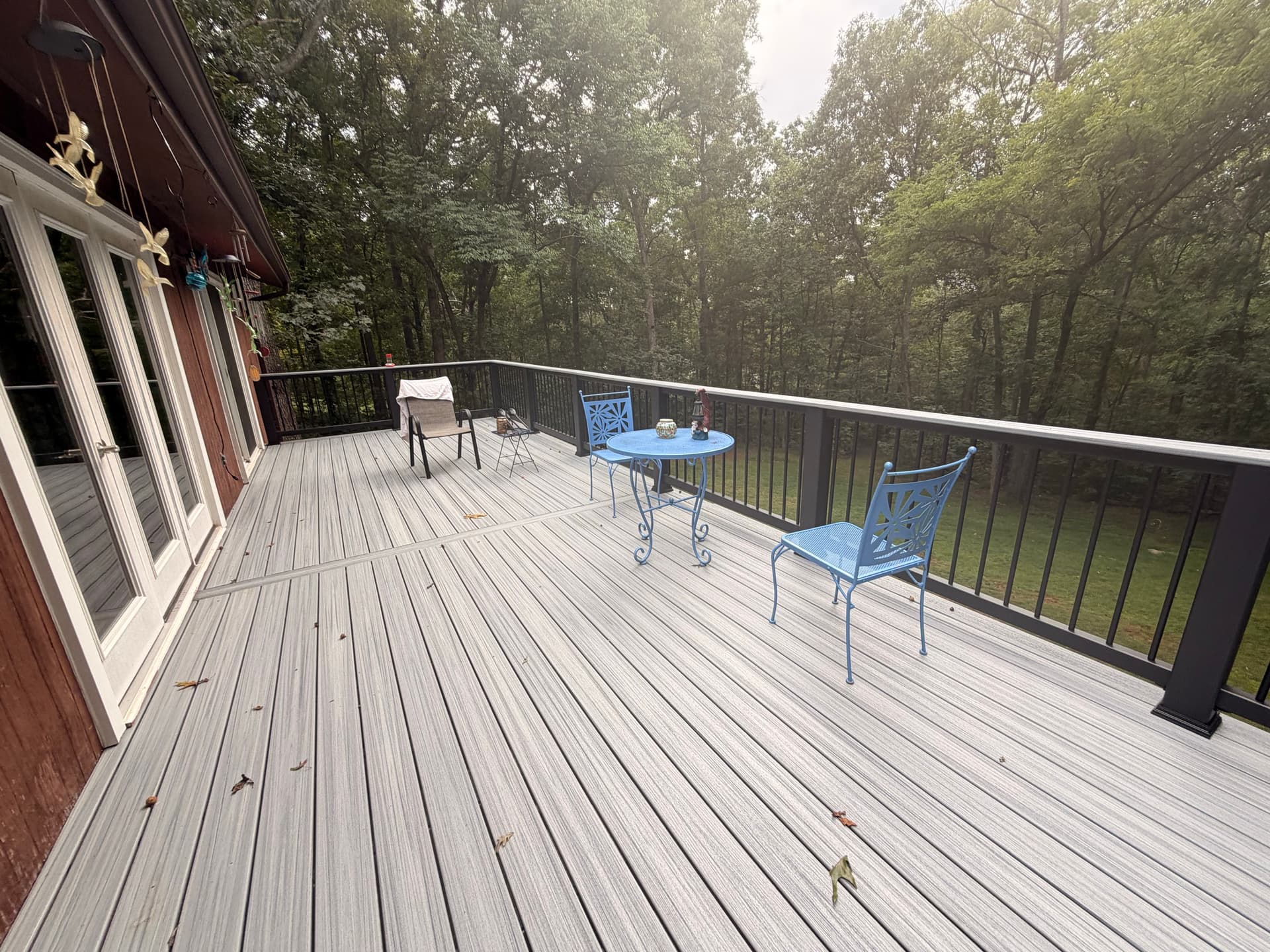
Trex Foggy Wharf Deck in Gainesville, VA
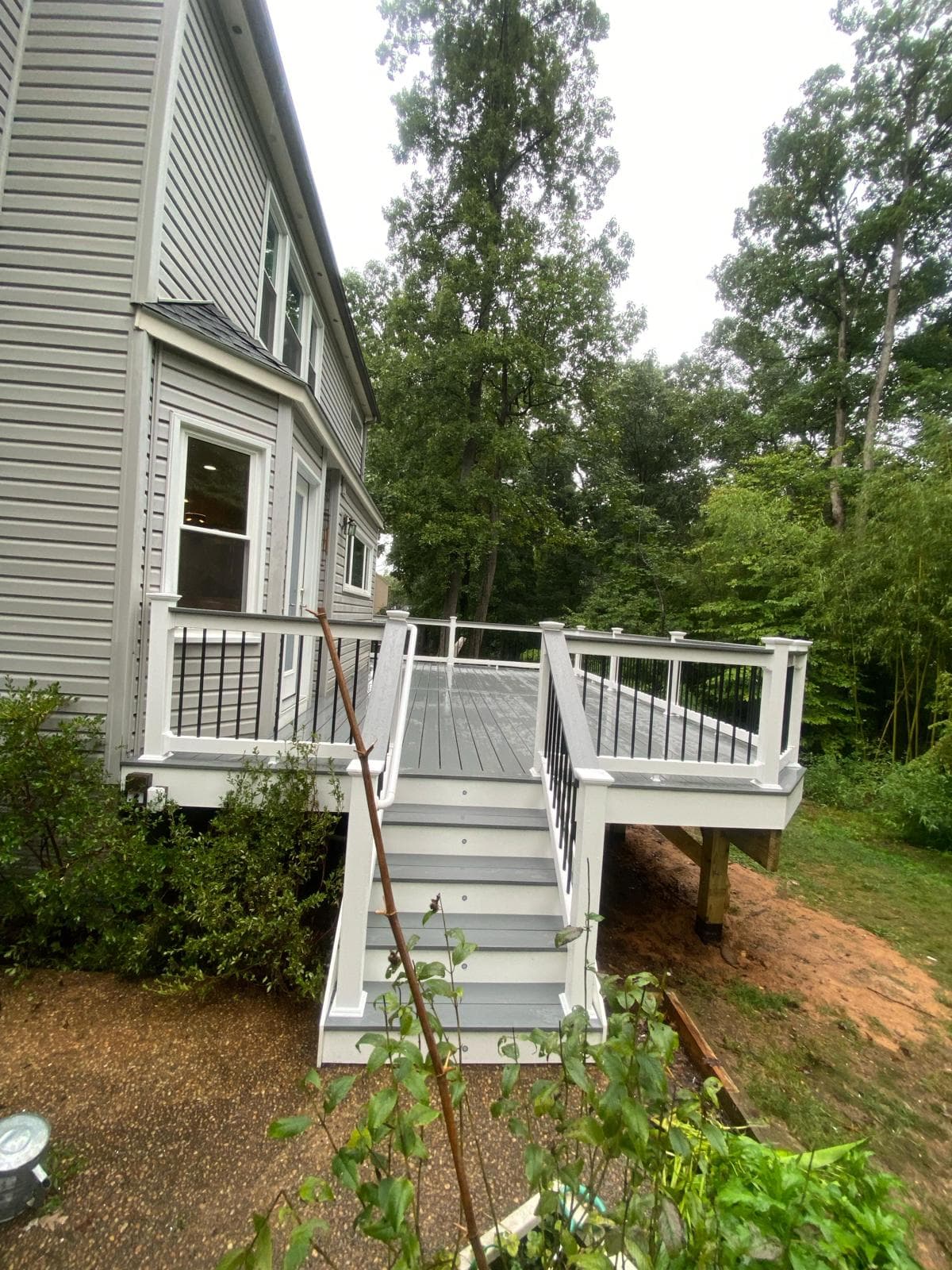
A Gainesville project featuring Trex Enhance Foggy Wharf decking, matching fascia and cocktail top, and Classic Black-on-Black railings.
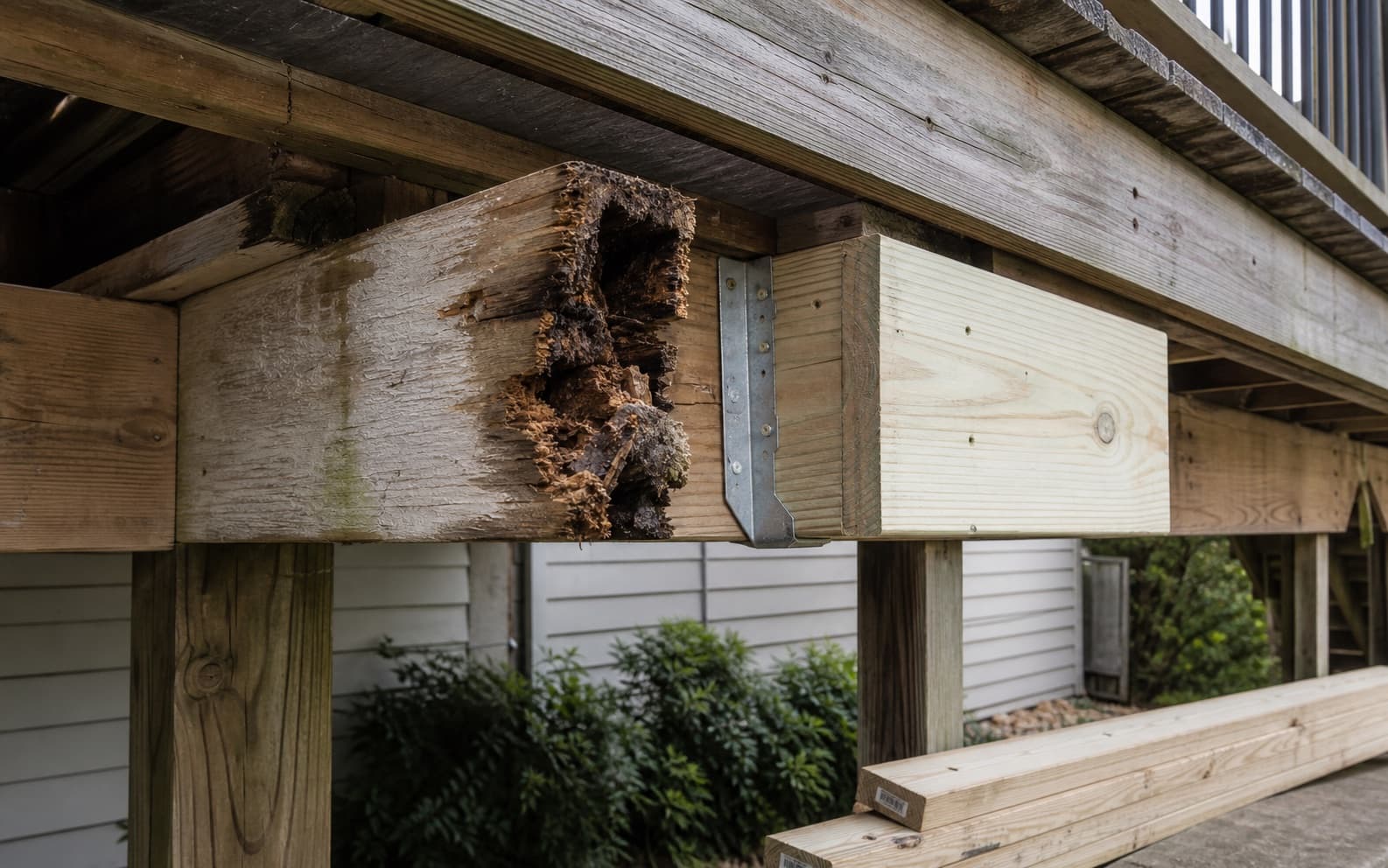
2016 Decks Are Hitting the 10-Year Problem: Framing Rot, Ledger Damage, and Replacement Decisions
Decks built around 2016 are now reaching the age where surface boards can still look acceptable while the hidden pressure-treated frame begins to show rot, water damage, loose ledger connections, post base decay, and footing movement. This guide explains what Northern Virginia homeowners should inspect before investing in resurfacing or replacement.
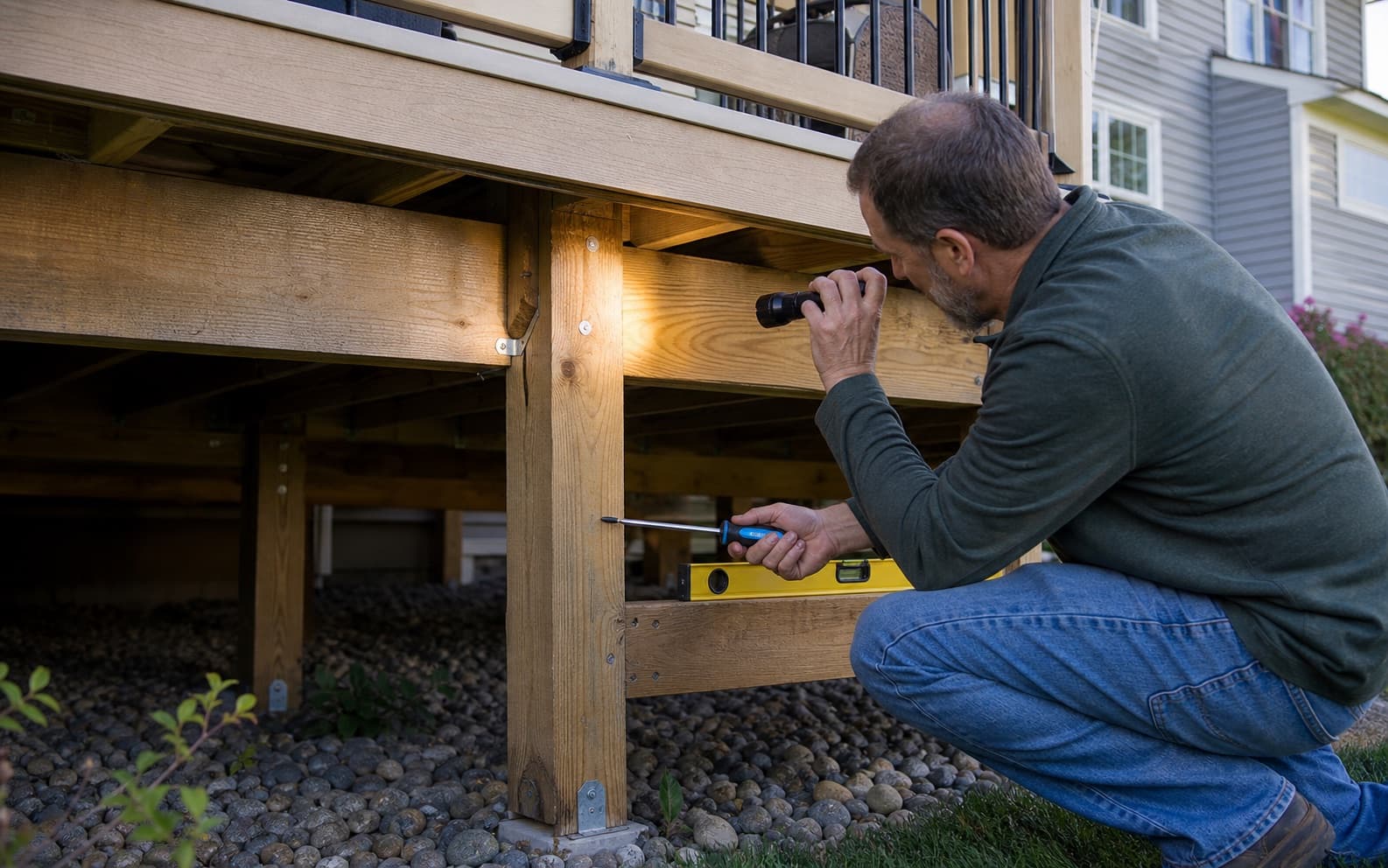
Deck Replacement Checklist for Loudoun County Homes
Use this deck replacement checklist before rebuilding an older Loudoun County deck. It helps homeowners organize safety issues, permit questions, HOA review, material decisions, and estimate-ready details before work starts.
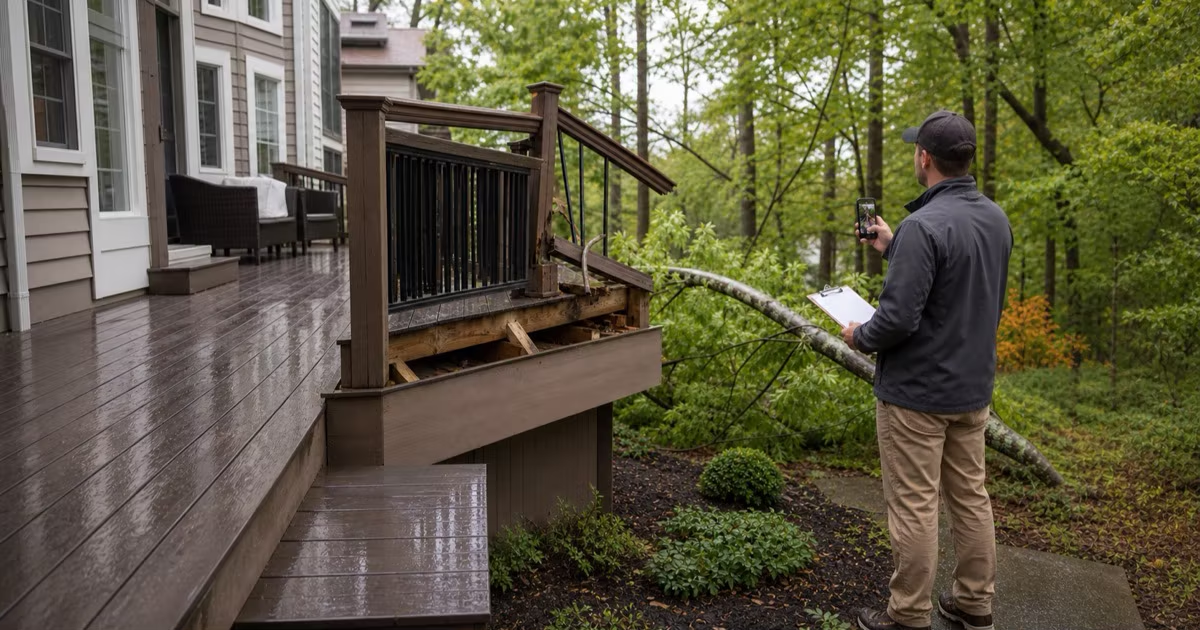
Deck Insurance Claims in Northern Virginia: How We Help
LDN Decks works on deck repair and reconstruction projects associated with homeowners insurance claims. We document visible damage, prepare a written structural scope and estimate, and complete approved repair or rebuilding work across Northern Virginia.
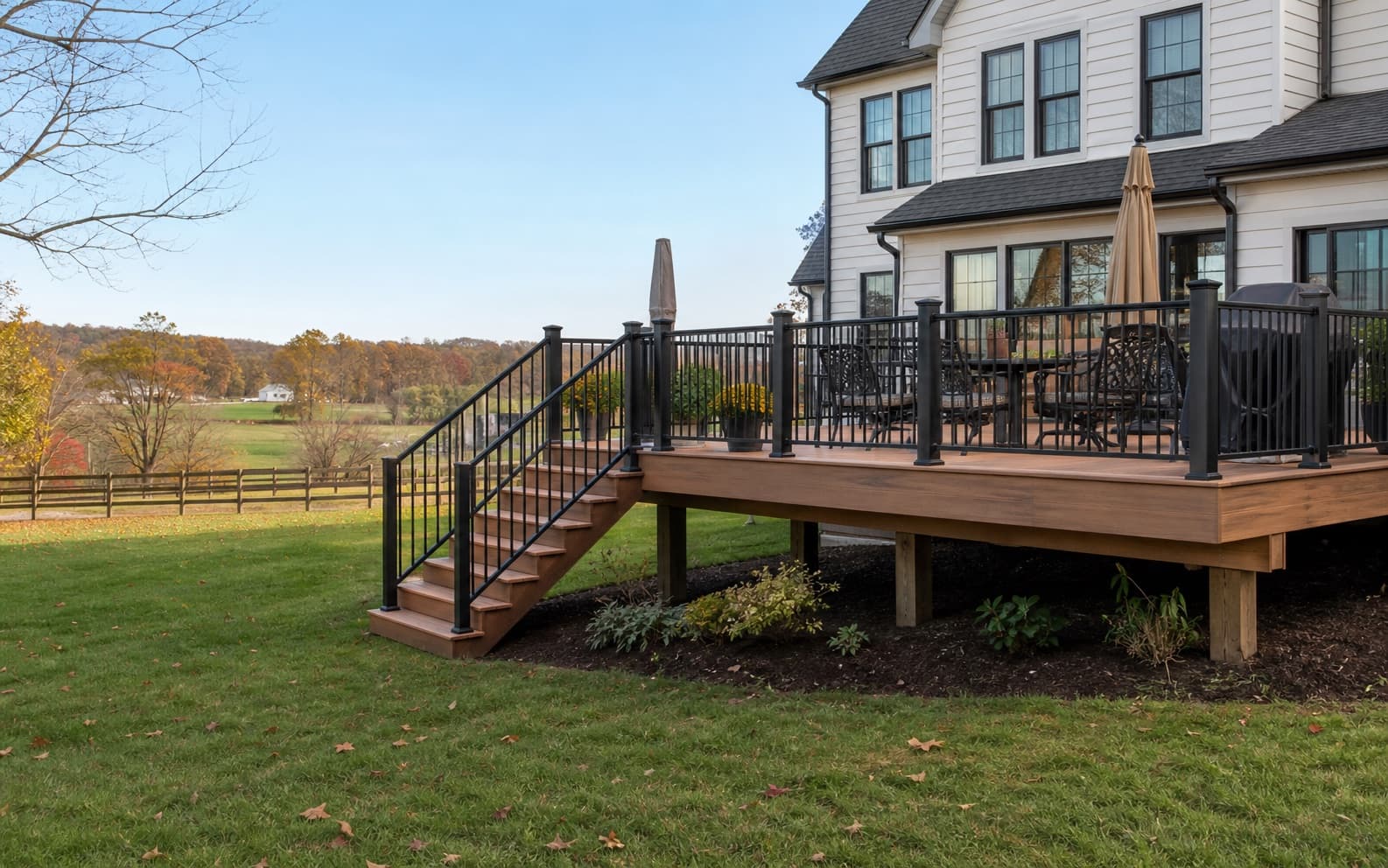
Deck Builder in Dale City VA: Prince William County Permits & Costs 2026
Dale City is one of the largest unincorporated communities in Virginia and the most populous community in Prince William County. Developed primarily from the 1960s through the 1980s without a master HOA, Dale City's 1960s–1980s housing stock creates one of the largest deck replacement markets in the region — and most homeowners need only a Prince William County building permit with no HOA review.
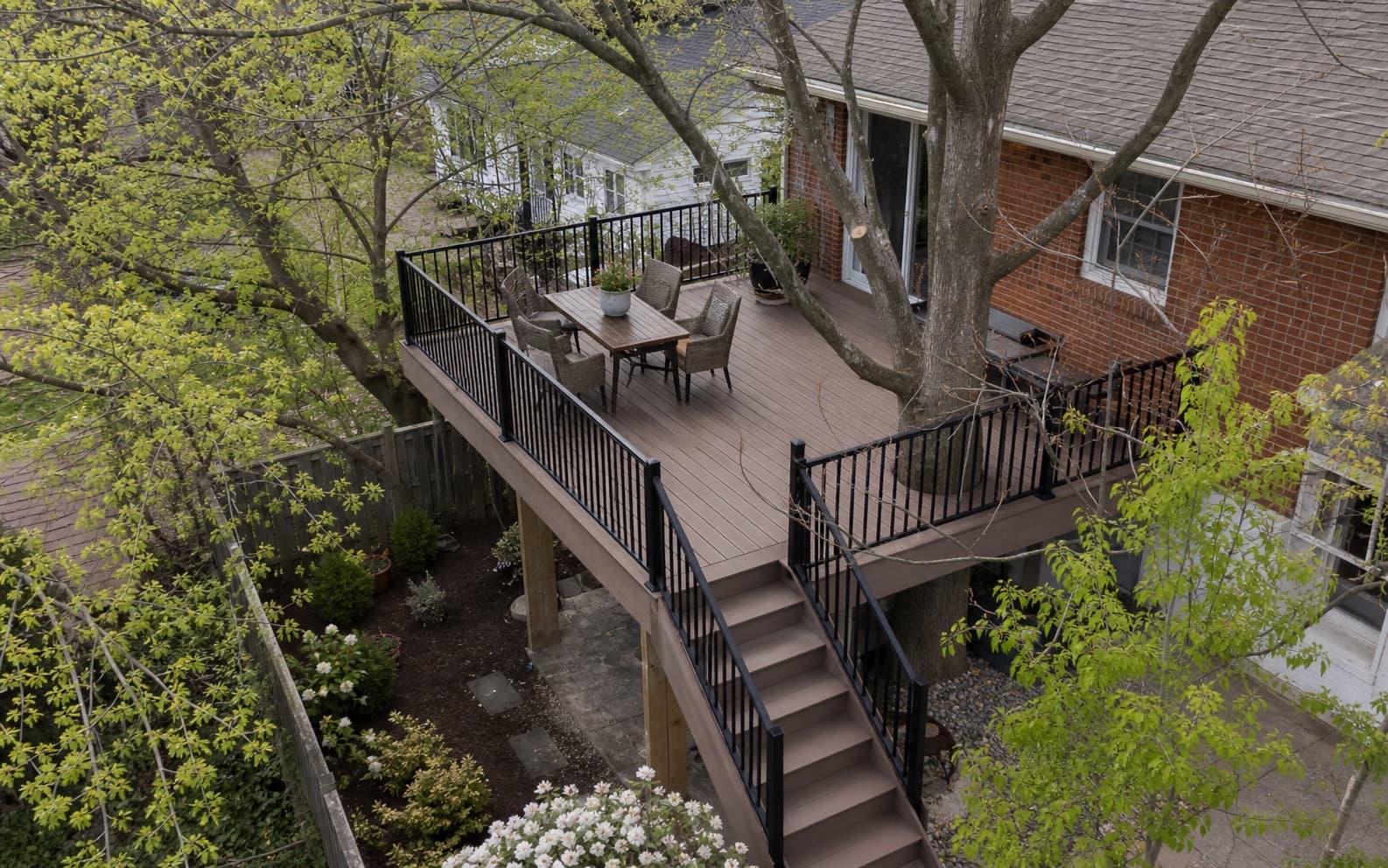
Deck Builder in Occoquan VA: Town & Prince William County Permits 2026
Occoquan is a small historic waterfront town on the Occoquan River in southeastern Prince William County. Its tight grid of 18th and 19th century buildings creates strict architectural review for in-town properties, while the surrounding unincorporated communities along the river and Route 123 corridor follow standard Prince William County permit rules.
Deck Builder in Dumfries VA: Prince William County Permits & Costs 2026
Dumfries is one of the oldest incorporated towns in Virginia, located in southeastern Prince William County along Route 1 near Interstate 95. The surrounding area — including Montclair — has housing stock spanning the 1970s through the 2000s, creating one of the most active deck replacement markets in eastern Prince William County.
Deck Builder in Clifton VA: Fairfax County Permits & Costs 2026
Clifton is a small historic town and surrounding rural community in western Fairfax County. Clifton's large-lot homes, wooded settings, and custom home character create a distinct deck market — larger footprints, premium specifications, and limited HOA governance — with permits issued either through the Town of Clifton or Fairfax County depending on the property's location.
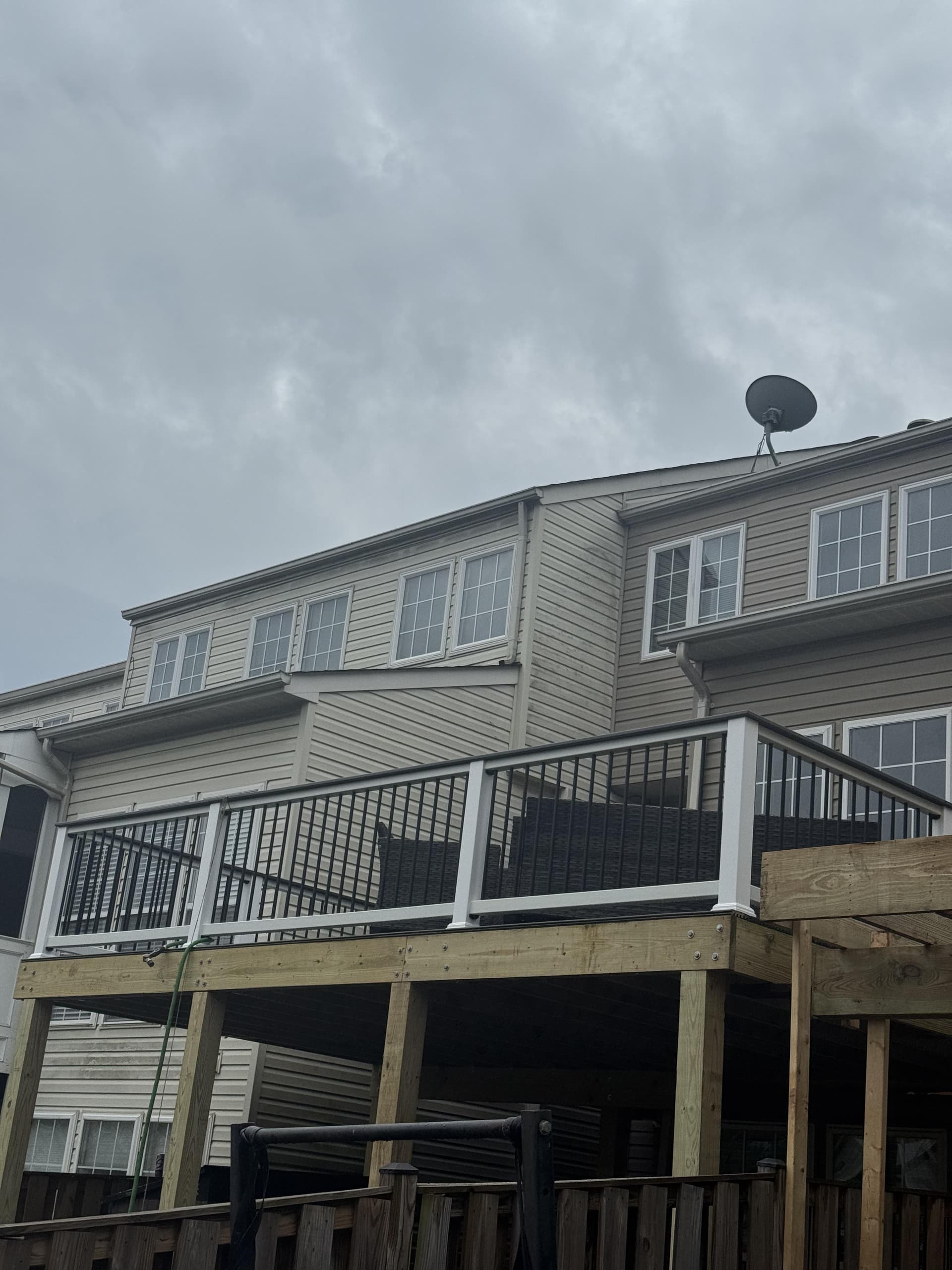
Deck Builder in Lake Ridge VA: Prince William County Permits, HOA & Costs 2026
Lake Ridge is one of Prince William County's largest planned communities, developed from the 1970s through the 1990s in the Occoquan District east of Interstate 95. Lake Ridge's housing stock spans 40 to 50 years of age in its oldest sections — one of the most active deck replacement markets in eastern Prince William County — governed by the Lake Ridge Community Service Authority.
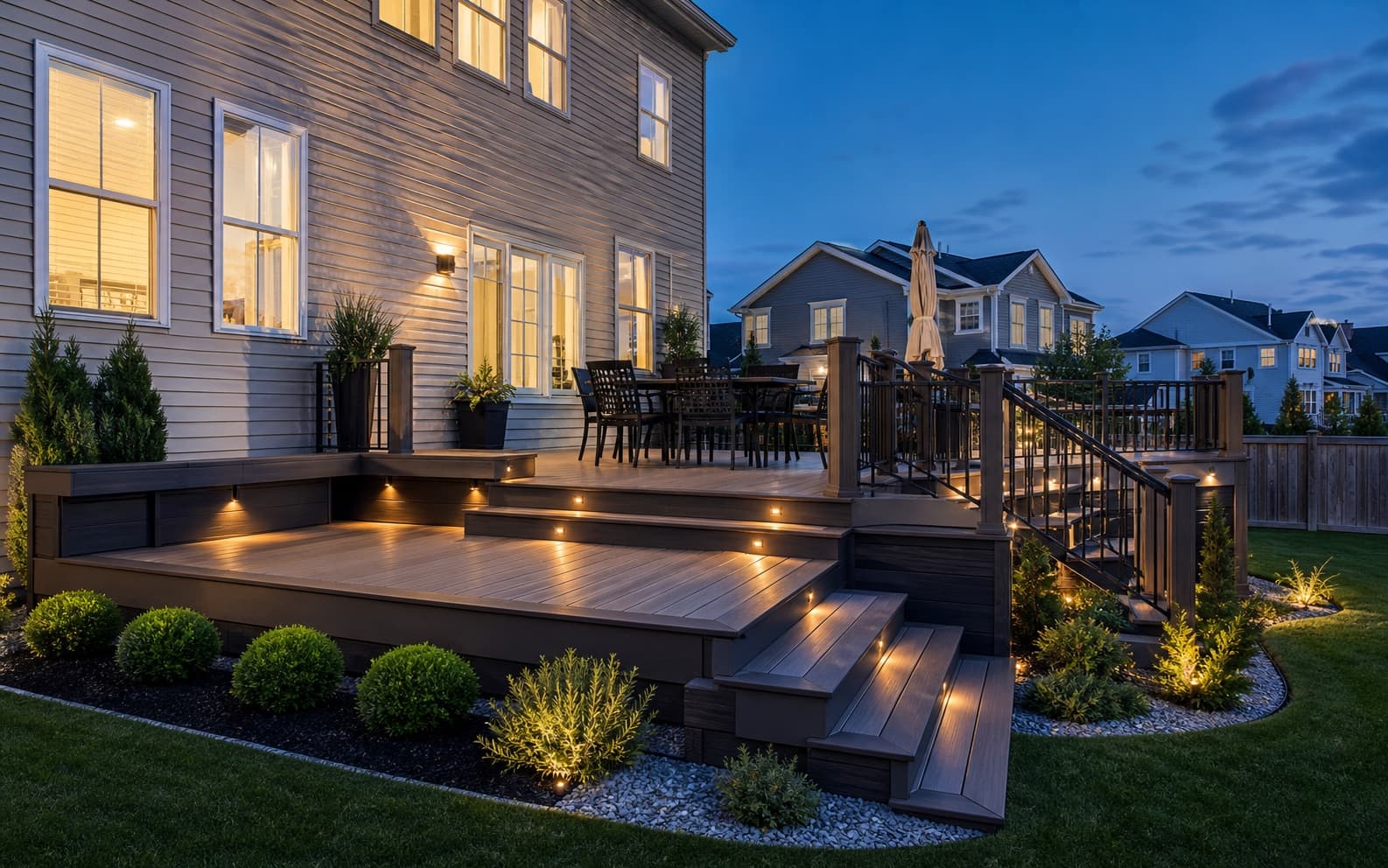
Deck Builder in Bristow VA: Prince William County Permits, HOA & Costs 2026
Bristow is an unincorporated community in eastern Prince William County along the Route 28 and Route 29 corridors. Bristow's housing stock is dominated by 2000s and 2010s planned communities — Braemar, Victory Lakes, and Avendale — creating a new-addition deck market alongside an emerging replacement market as the community's oldest homes approach the 20-year mark.
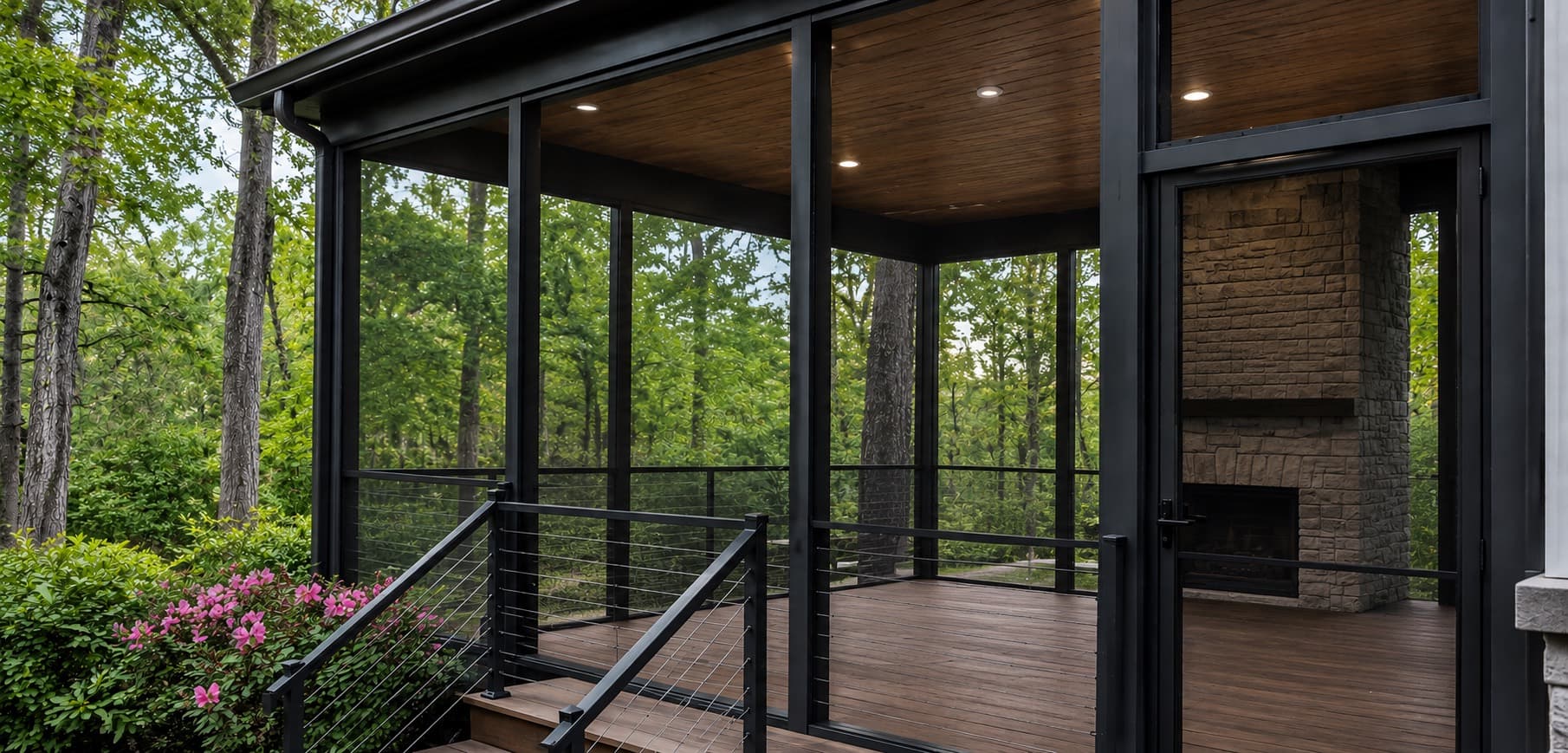
How Much Does a Screened Porch Cost in Northern Virginia? 2026 Pricing Guide
Screened porch costs in Northern Virginia vary significantly based on size, roof type, foundation, screening system, and interior finish level. This 2026 guide covers real pricing ranges from Loudoun and Fairfax County projects.
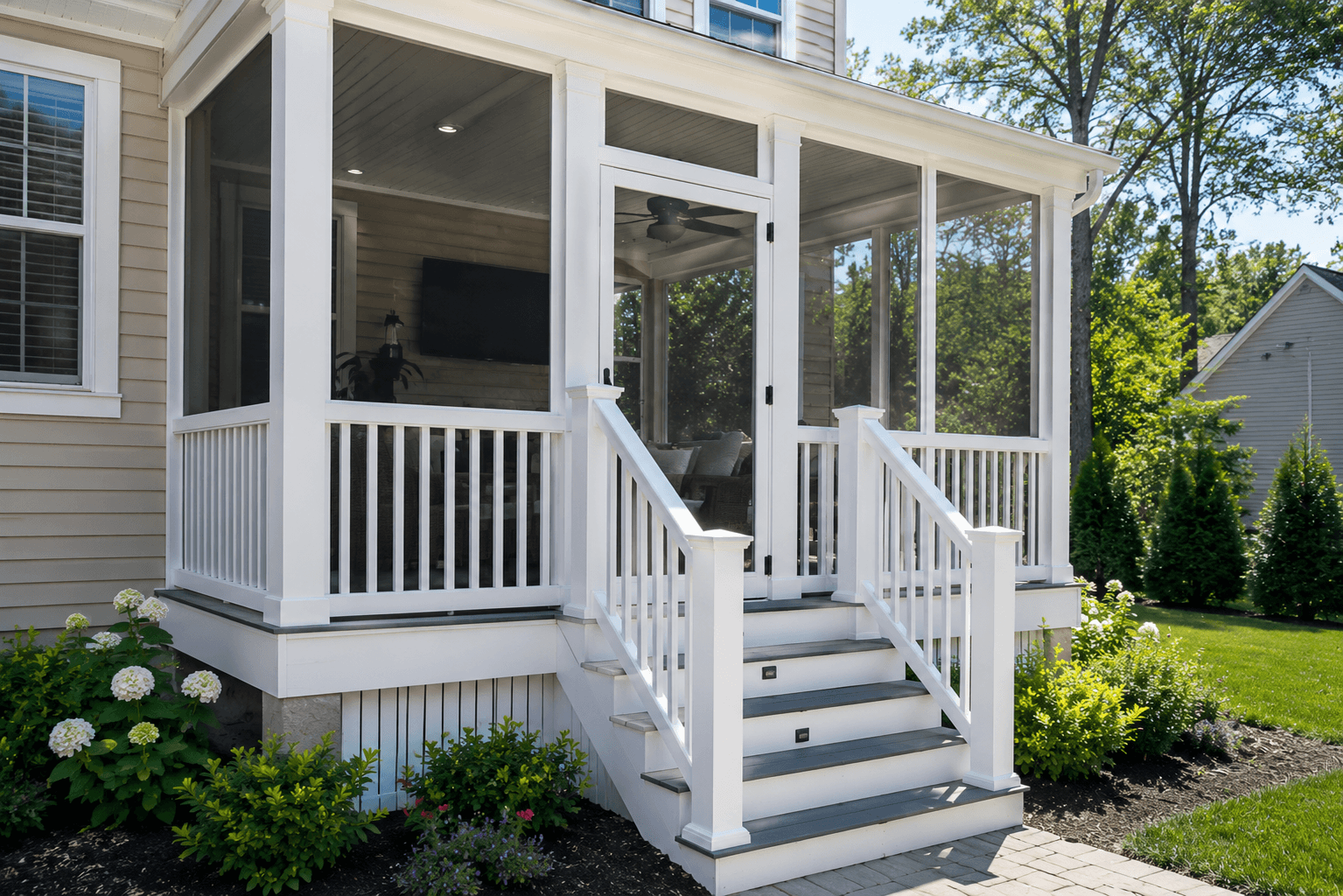
Screened Porch Contractor in Northern Virginia: What to Look For and How to Hire
Hiring the right screened porch contractor in Northern Virginia requires more than getting three quotes. The contractor you choose determines the permit path, structural approach, screening system, and how the finished porch connects to your home. Here is what to look for.
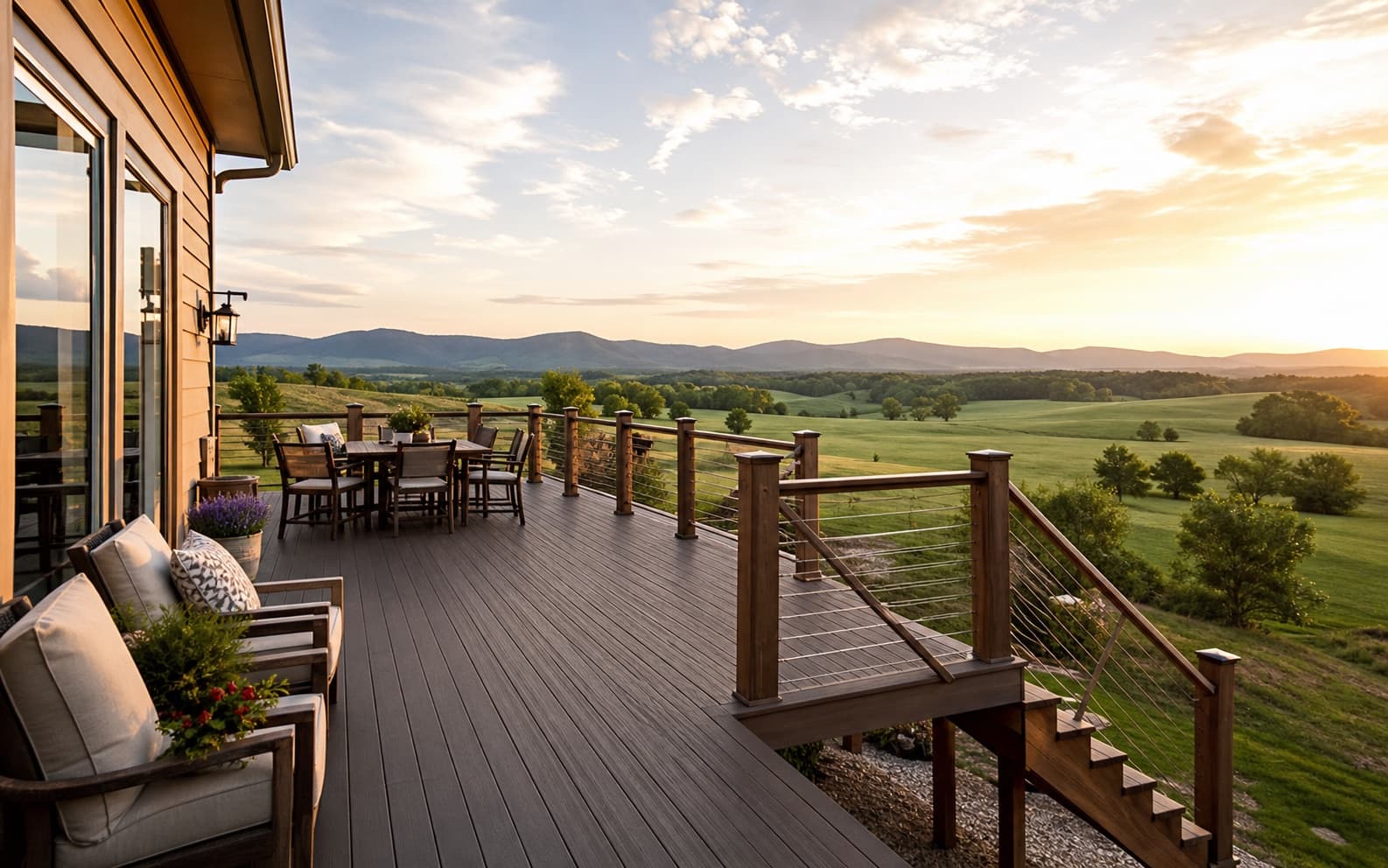
Deck Builder in Hamilton VA: Western Loudoun Permits & Costs 2026
Hamilton is a small historic town in western Loudoun County along Route 7, situated between Purcellville and Leesburg. Unlike eastern Loudoun's large planned communities, Hamilton and the surrounding rural corridor is characterized by older home stock, larger lot sizes, and the absence of HOA governance on most properties — creating a distinct deck project environment from the typical Loudoun County suburban community.
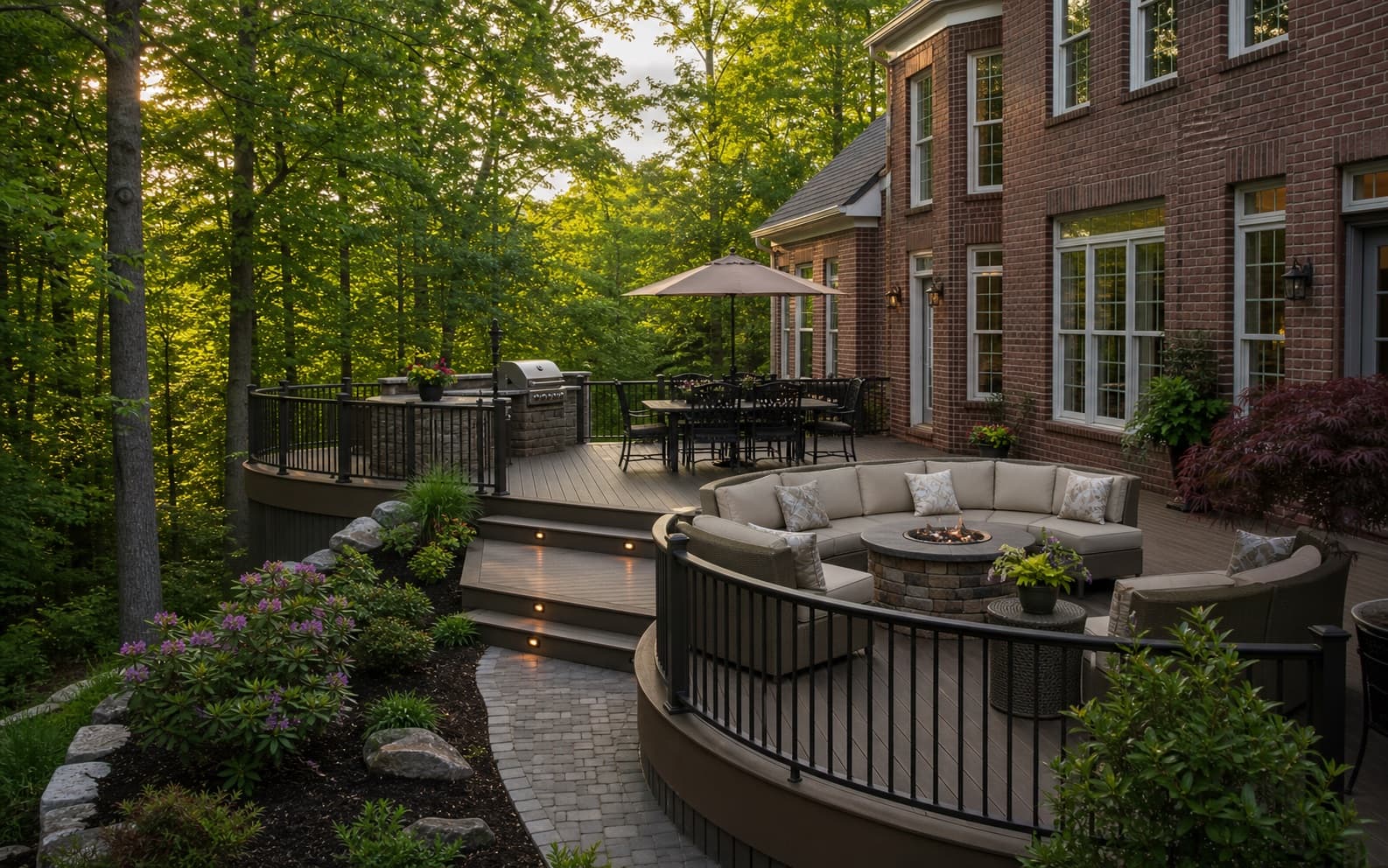
Deck Builder in Cascades VA: Loudoun County Permits, HOA & Costs 2026
The Cascades community in Sterling is one of Loudoun County's most established large-scale planned communities, developed through the 1990s in the Potomac Falls corridor along Route 7. With thousands of homes across a mix of single-family and townhouse product types, Cascades has a mature housing stock and a substantial replacement market for original builder-grade decks.
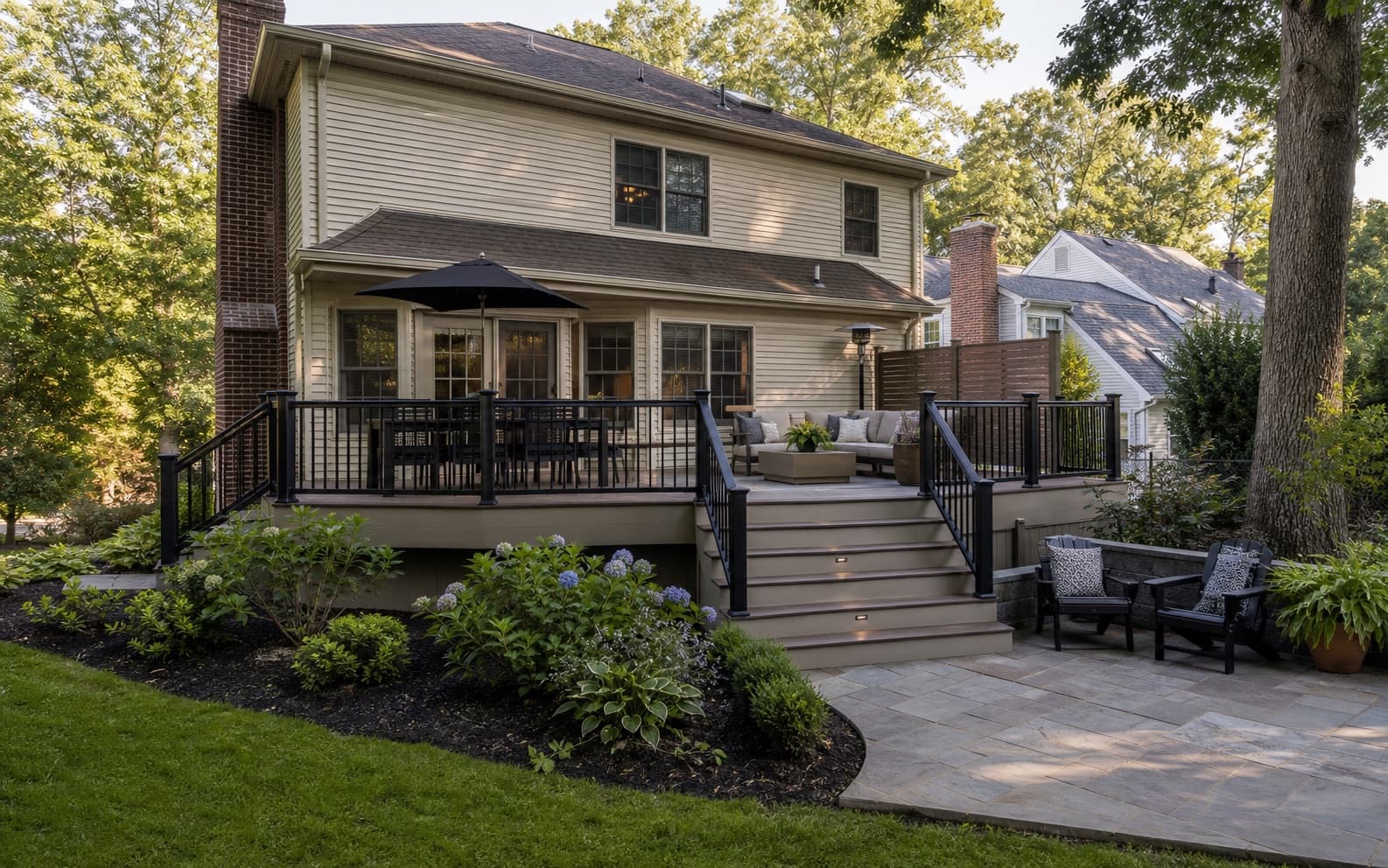
Deck Builder in Ashburn Farm VA: Loudoun County Permits, HOA & Costs 2026
Ashburn Farm is one of Loudoun County's first large-scale planned communities — developed from 1988 onward, making it significantly older than neighboring communities like Brambleton, Broadlands, and South Riding. Ashburn Farm's age means its original builder-grade decks are now among the oldest in eastern Loudoun, creating one of the most active deck replacement markets in the county.
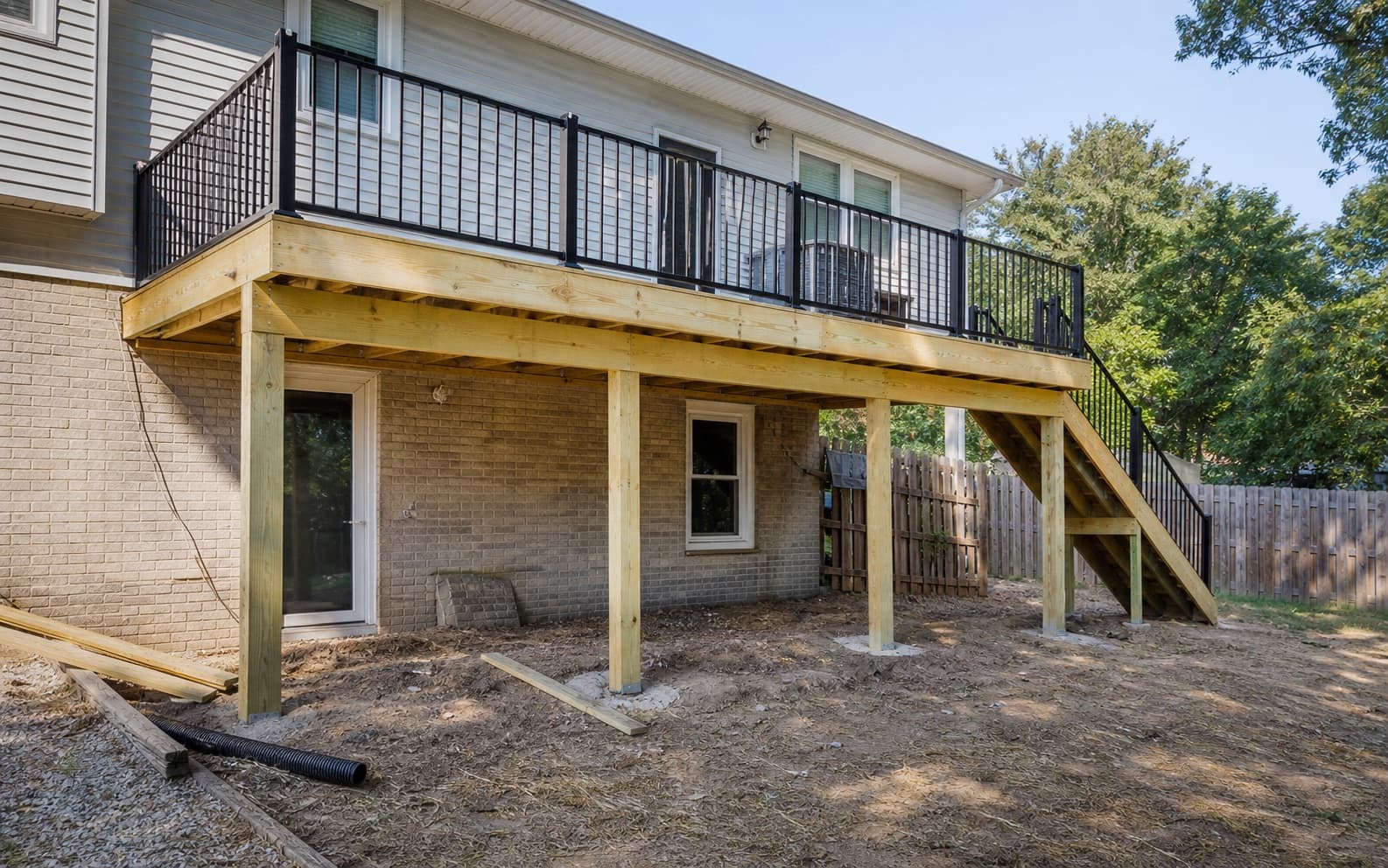
Deck Builder in Brambleton VA: Loudoun County Permits, HOA & Costs 2026
Brambleton is one of Loudoun County's newest and most comprehensively planned communities — a master-planned development built from the early 2000s through the 2010s in the Ashburn area. Its relatively recent construction means it is earlier in the deck replacement cycle than South Riding or Broadlands, but its newer homes and highly engaged community association make it an active market for new deck additions and early composite upgrades.
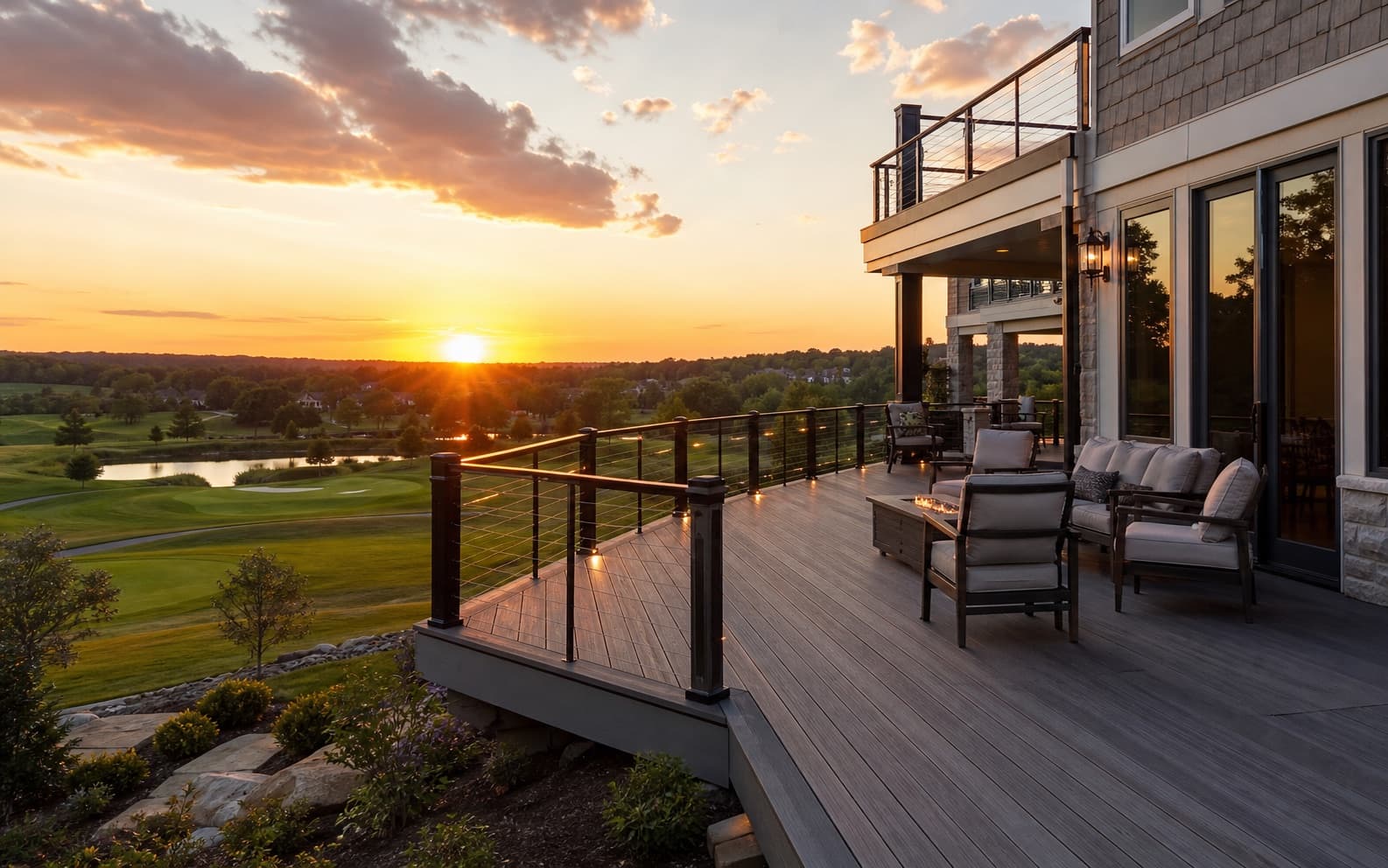
Deck Builder in Lansdowne VA: Loudoun County Permits, HOA & Costs 2026
Lansdowne is a well-established planned community in eastern Loudoun County near Leesburg, anchored by the Lansdowne Resort and built along the Potomac River corridor. Lansdowne on the Potomac is one of the most prestigious planned communities in Loudoun County — a golf community with detailed architectural standards, river and golf course views, and a housing stock that drives premium composite deck specifications.
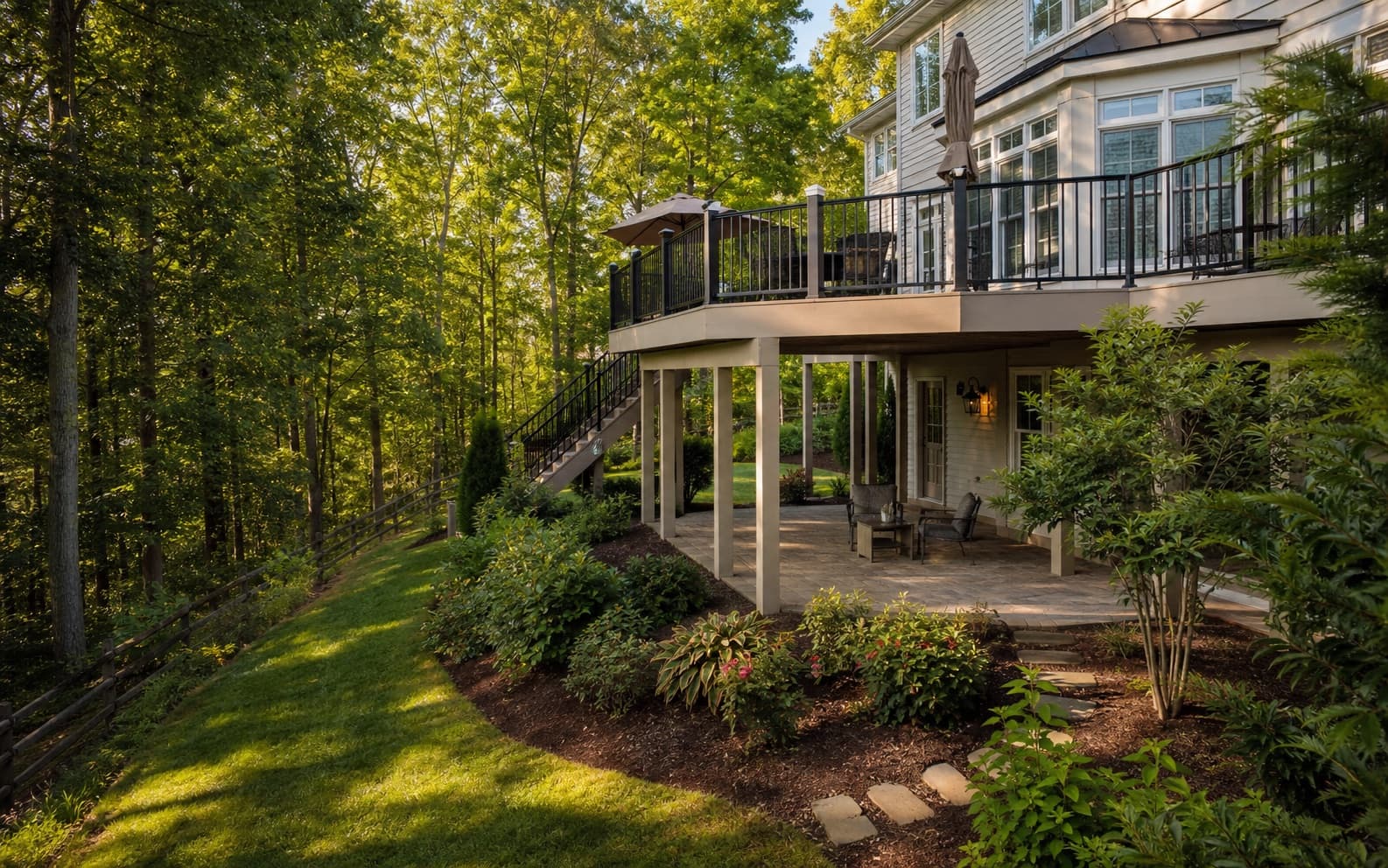
Deck Builder in Broadlands VA: Loudoun County Permits, HOA & Costs 2026
Broadlands is a large established planned community in the Ashburn area of eastern Loudoun County, built primarily from the late 1990s through the mid-2000s. One of the earlier large-scale planned communities in eastern Loudoun, its housing stock is now 20 to 25 years old — precisely the age at which original pressure-treated wood decks are reaching the end of their practical life and entering their primary composite replacement cycle.
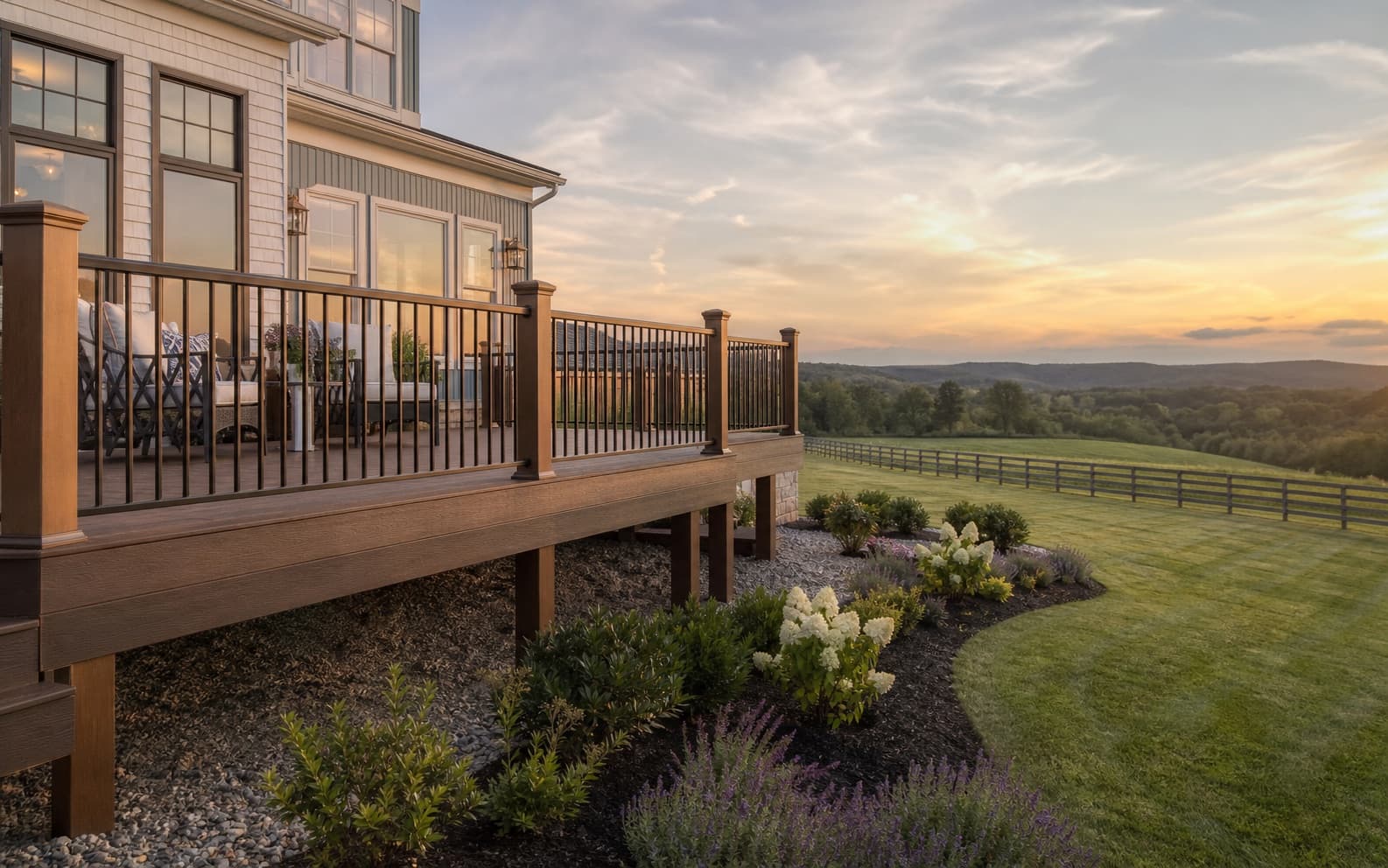
Deck Builder in Aldie VA: Loudoun County Permits, HOA & Costs 2026
Aldie is a small historic crossroads community in central Loudoun County that has become surrounded by some of the county's largest and most ambitious planned communities — Stone Ridge, Willowsford, and the broader Route 50 corridor developments that represent Loudoun's mid-2000s through 2010s growth wave. These planned communities now define the Aldie area's character and drive its deck market.
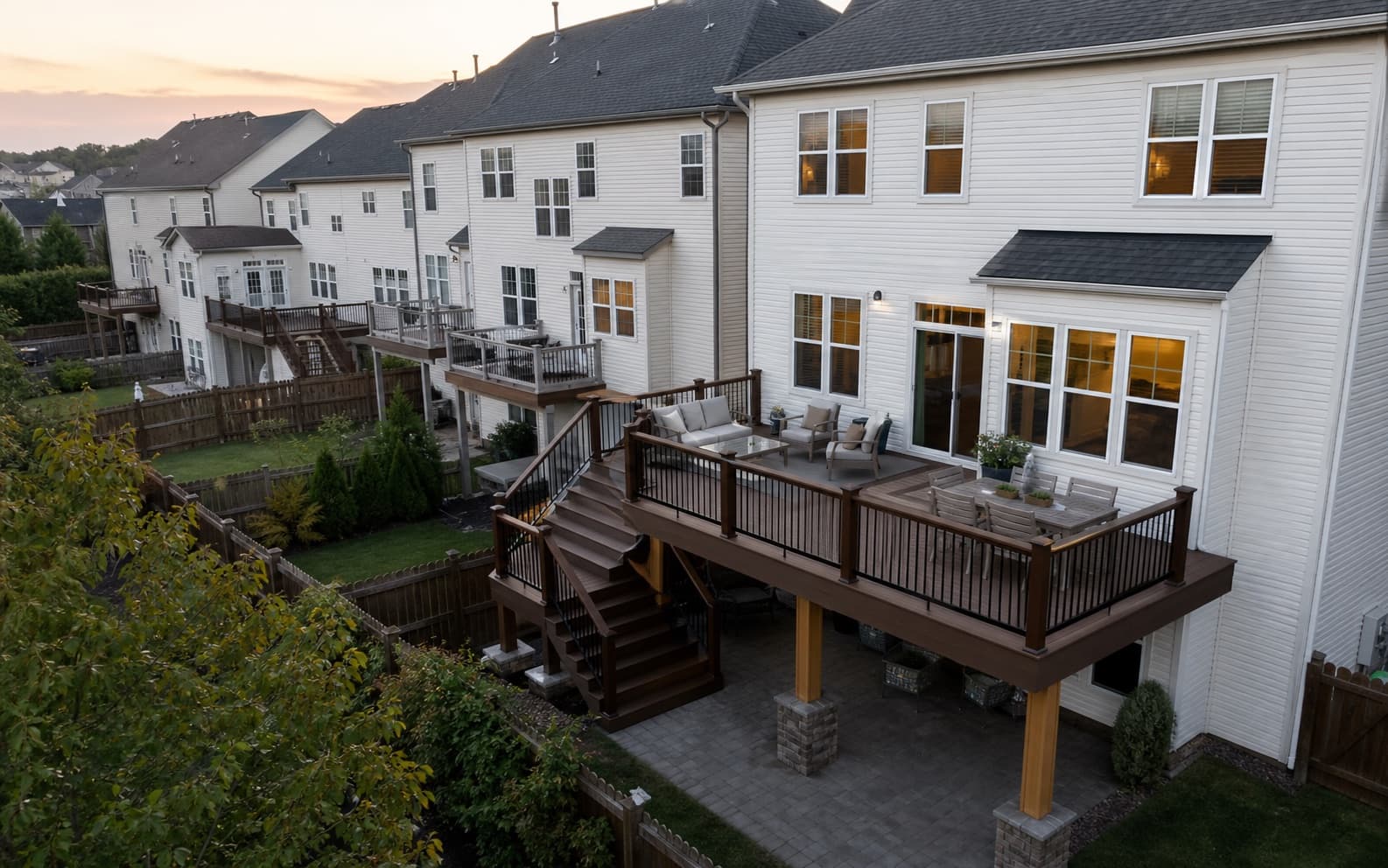
Deck Builder in South Riding VA: Loudoun County Permits, HOA & Costs 2026
South Riding is one of Loudoun County's largest and most established planned communities — a master-planned development of approximately 6,500 homes built from the mid-1990s through the mid-2000s in the eastern Loudoun corridor between Chantilly and Dulles. Its size, age, and highly active community association make it one of the most structured HOA environments for deck work in the county.
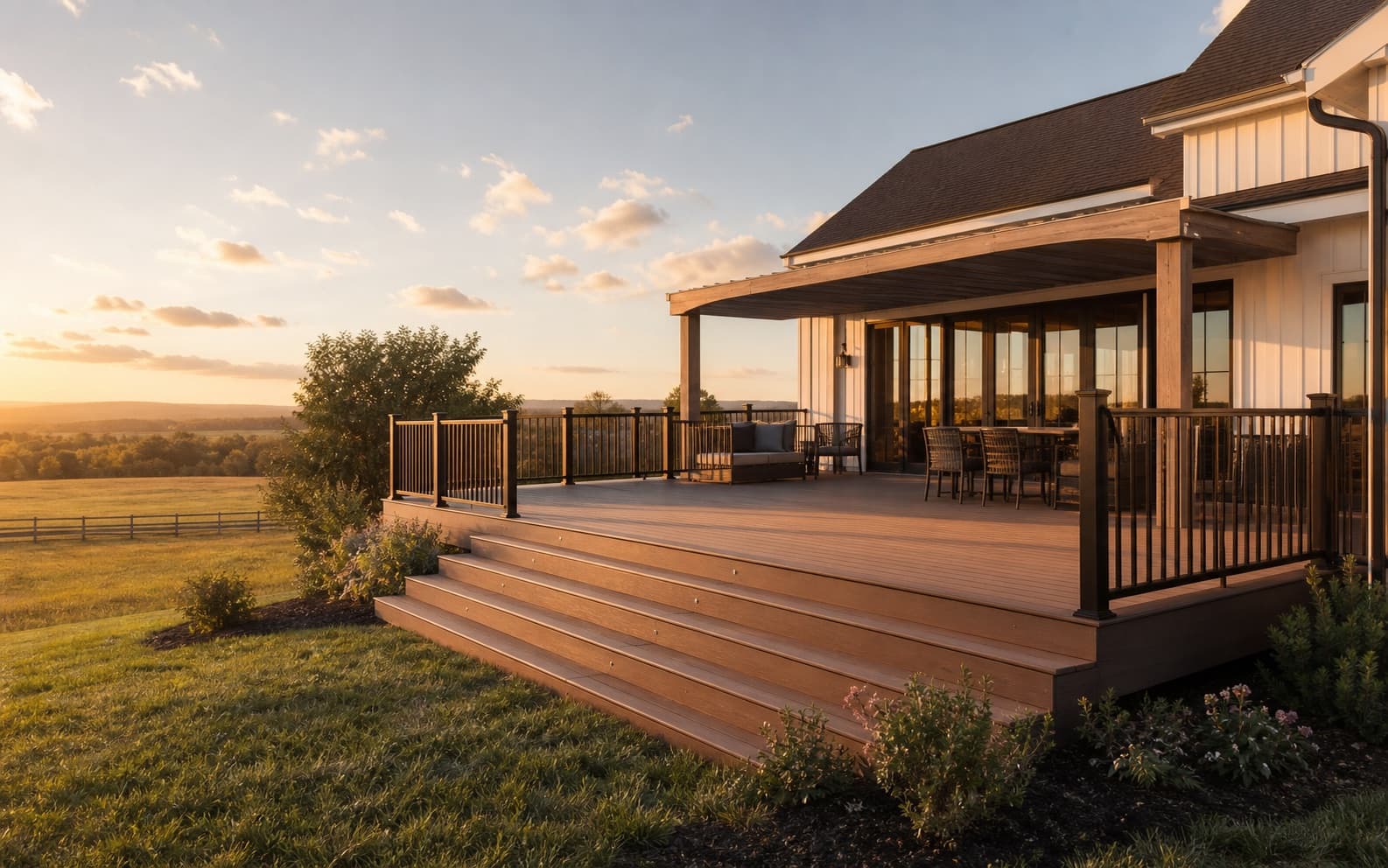
Deck Builder in Purcellville VA: Loudoun County Permits, HOA & Costs 2026
Purcellville is the largest town in western Loudoun County — the heart of Loudoun's rural and small-town west, distinct from the suburban and exurban growth corridor along Route 7 and the Dulles Toll Road to the east. It is an incorporated town with its own permit authority, surrounded by Loudoun County properties, and serves as the commercial center for a large rural residential area with a character entirely different from eastern Loudoun's planned communities.
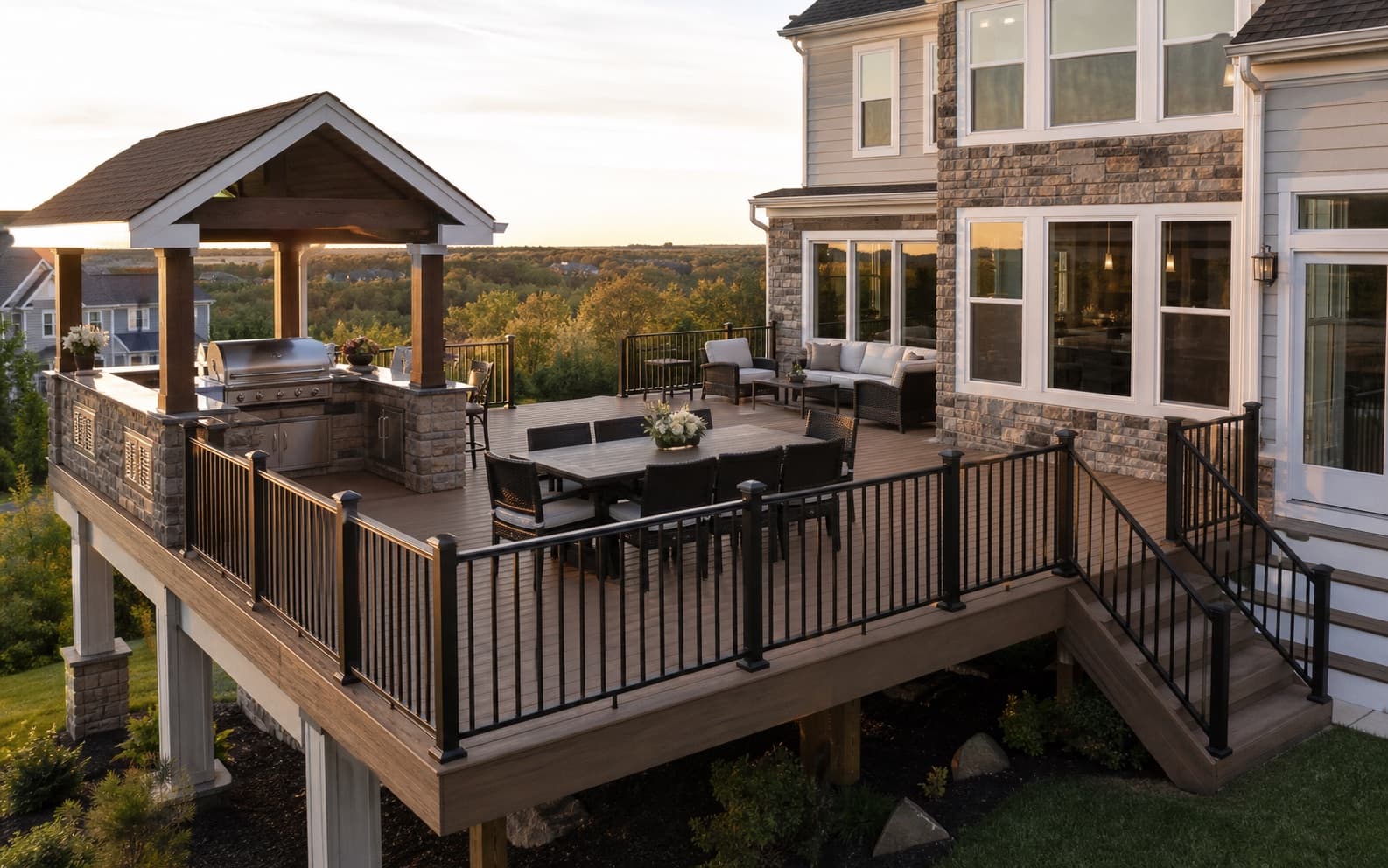
Deck Builder in Haymarket VA: Prince William County Permits, HOA & Costs
Haymarket sits at the western edge of Prince William County's developed corridor — a small incorporated town surrounded by larger planned communities, most notably Dominion Valley Country Club, one of Northern Virginia's most prominent gated golf communities. The combination of the town's historic character and the surrounding planned community development creates a distinctive and varied deck market.
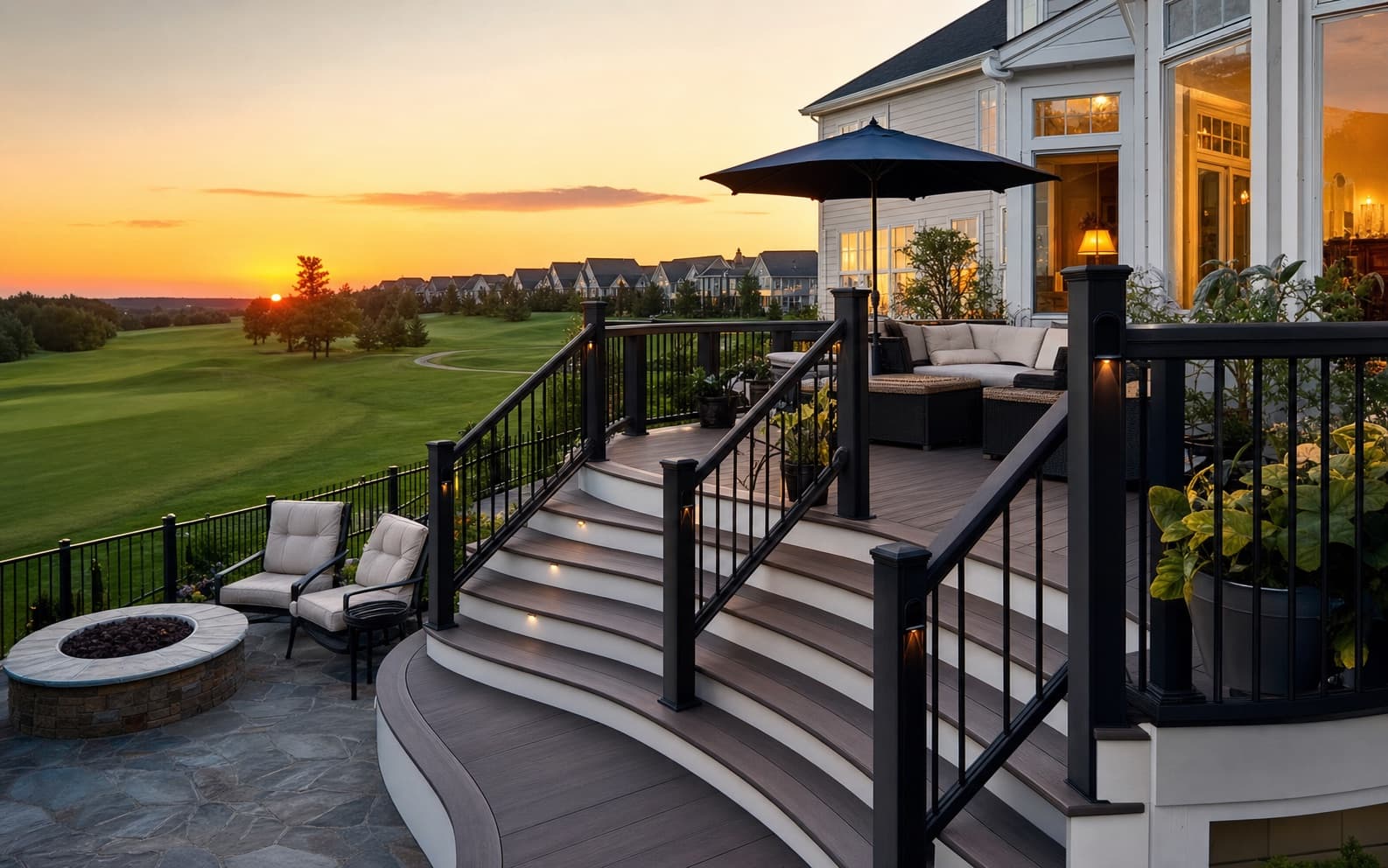
Deck Builder in Gainesville VA: Prince William County Permits, HOA & Costs
Gainesville is one of Prince William County's fastest-grown communities — a large area of planned community development along the Route 29 and Interstate 66 corridor that expanded dramatically from the early 1990s through the 2010s. It is home to Piedmont, one of Northern Virginia's largest gated golf communities, as well as numerous planned subdivisions, making HOA governance and design review the norm rather than the exception.
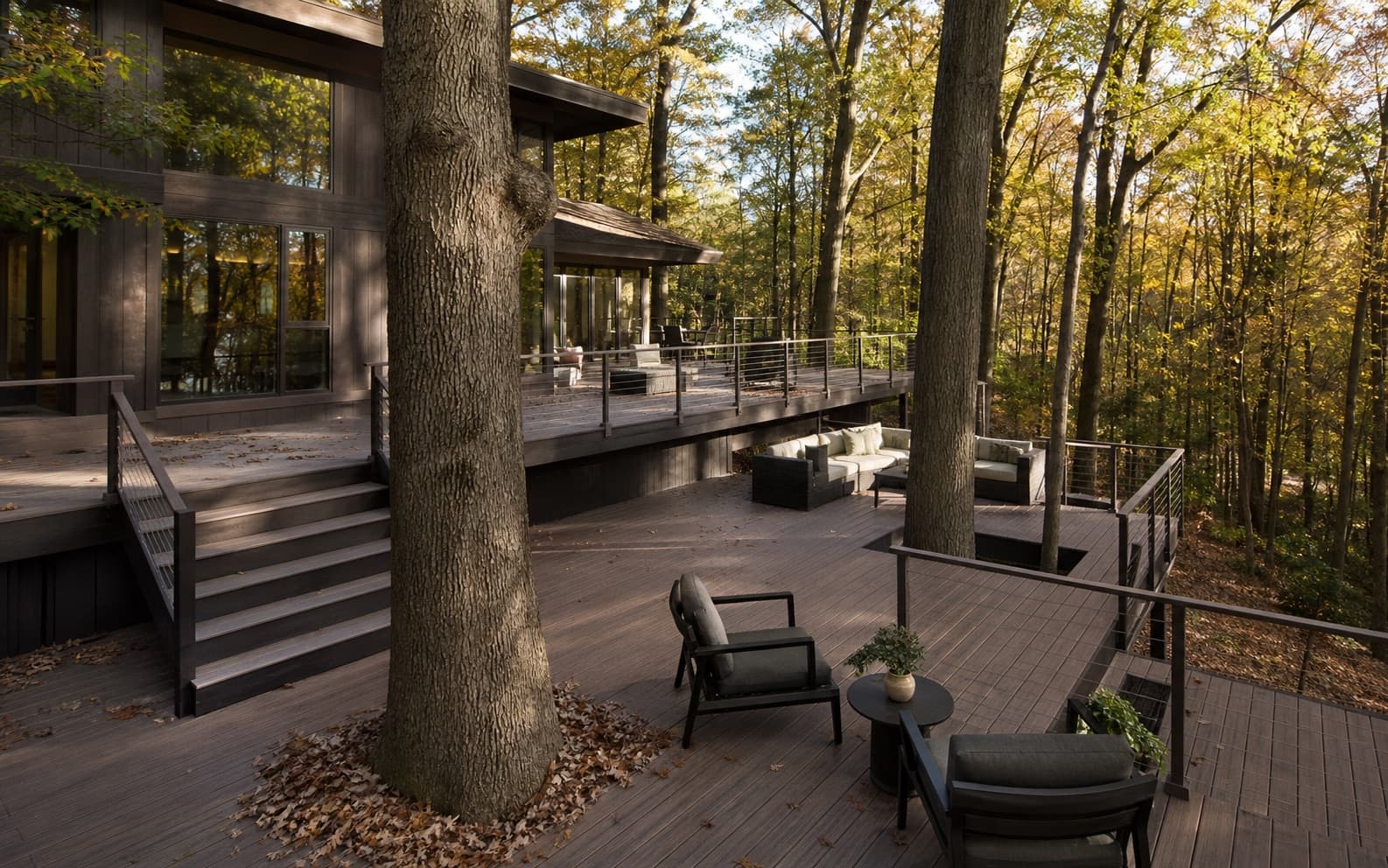
Deck Builder in Oakton VA: Fairfax County Permits, HOA & Costs 2026
Oakton is an unincorporated Fairfax County community along the Route 123 corridor between Vienna and Fairfax. It is one of the county's premium residential areas — characterized by larger lot sizes than most of Fairfax County, a housing stock that skews toward 1970s through 1990s custom and semi-custom construction, and some of the highest average home values in the county outside of McLean and Great Falls.
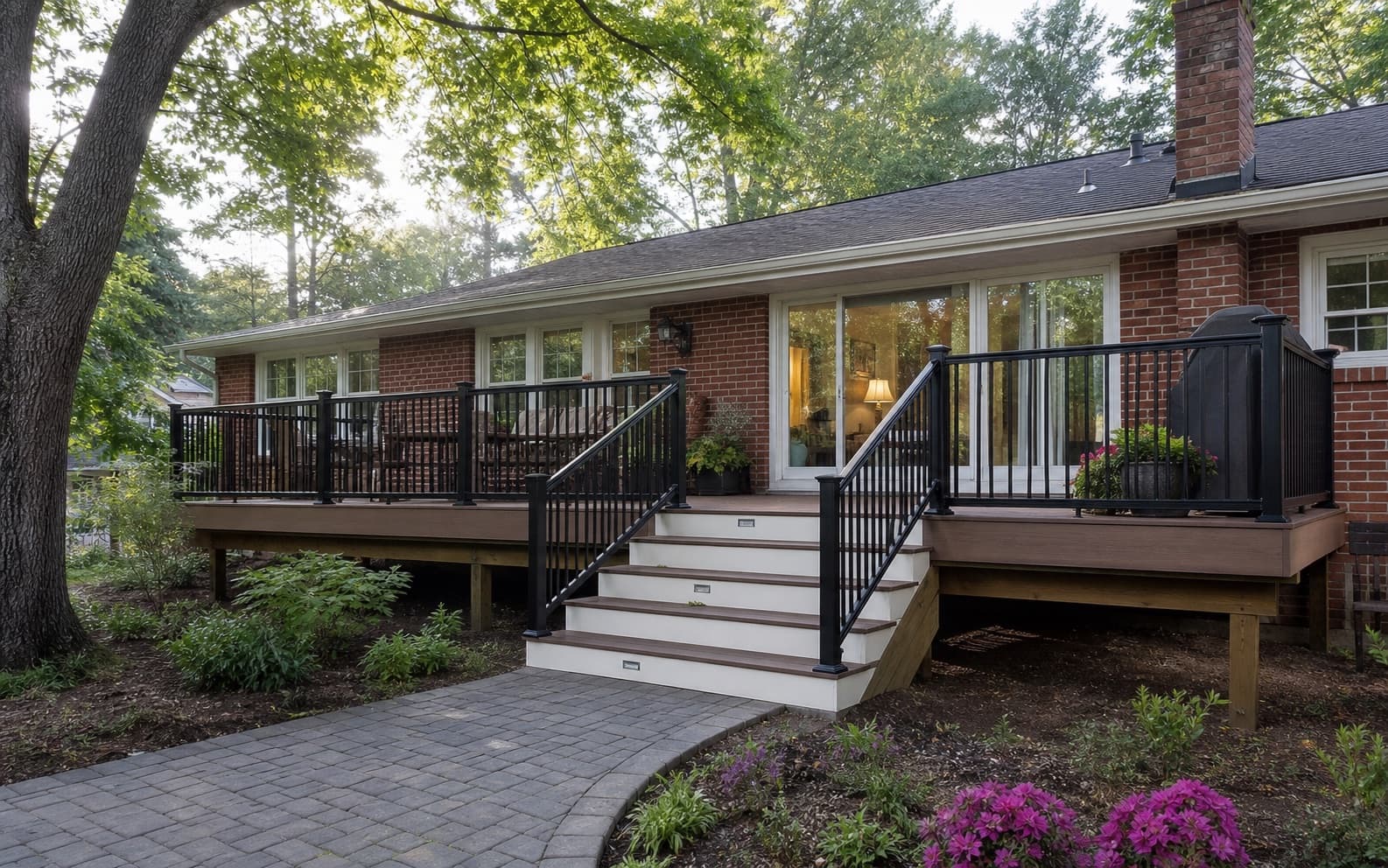
Deck Builder in Falls Church VA: City & County Permits, HOA & Costs 2026
Falls Church is one of the smallest independent cities in Virginia — a compact incorporated city of just over two square miles surrounded entirely by Fairfax County and Arlington County. Like Fairfax, Manassas, and Alexandria, the City of Falls Church is a separate jurisdiction from the surrounding county, with its own building permit department. Many Falls Church-address properties are actually in Fairfax County or Arlington County, not the city.
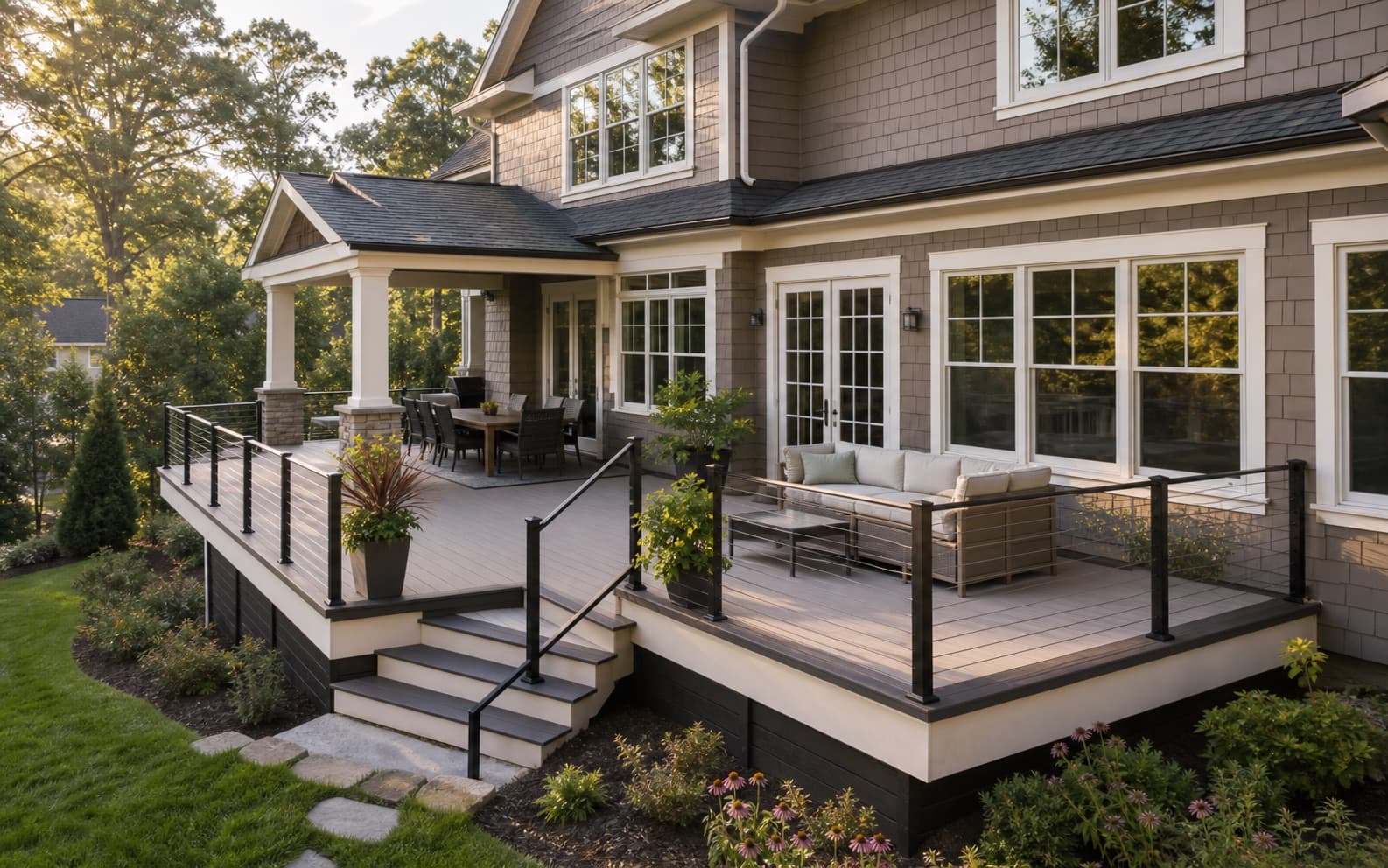
Deck Builder in Vienna VA: Fairfax County Permits, HOA & Costs 2026
Vienna presents one of Northern Virginia's most distinctive deck markets: a mix of an incorporated town with its own permit authority, surrounding Fairfax County parcels, and one of the highest average home values in the region. Vienna's combination of mature tree canopy, lot sizes, and the Maple Avenue corridor has made it a consistent top-tier market for deck quality and composite material adoption.
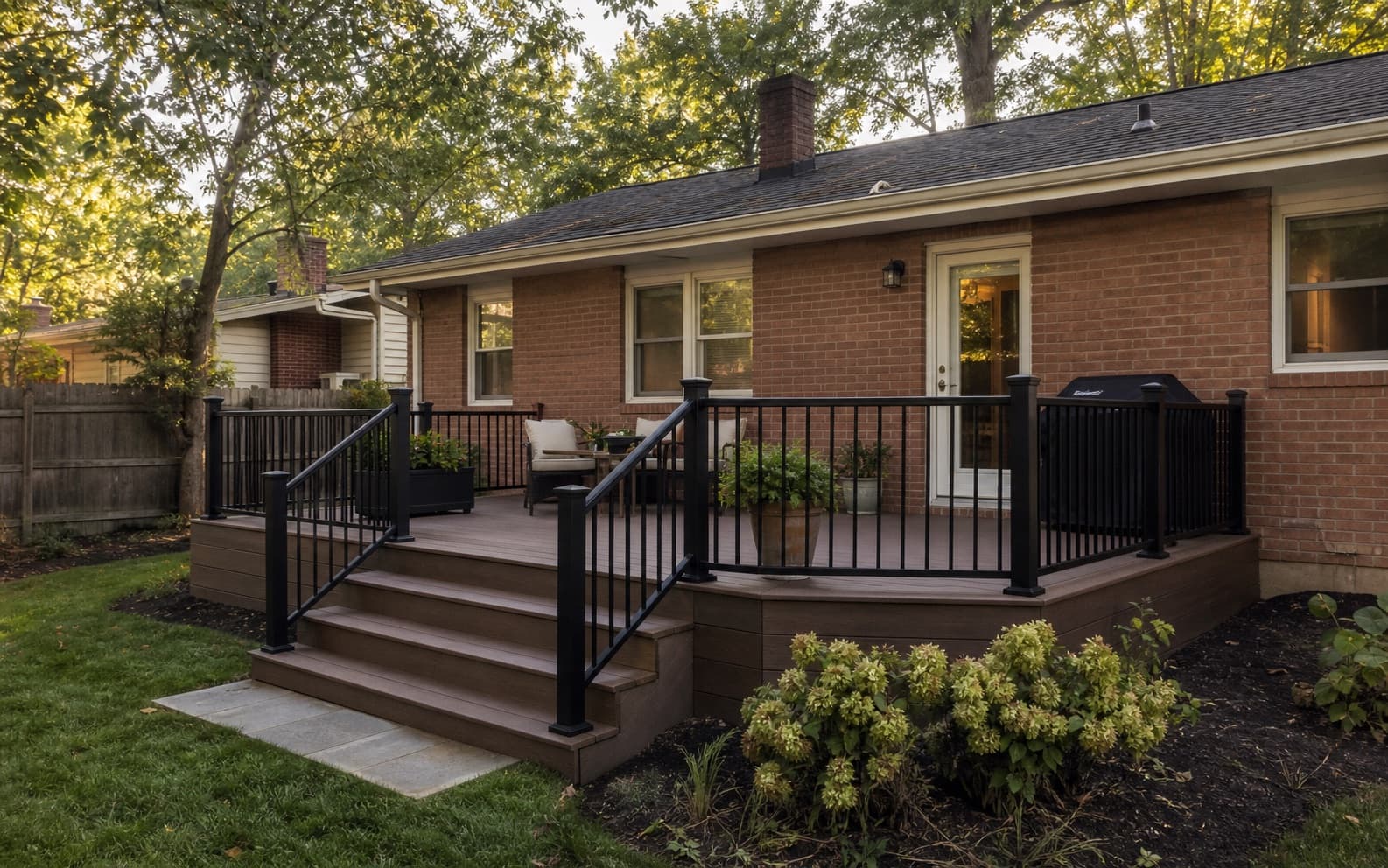
Deck Builder in Annandale VA: Fairfax County Permits, HOA & Costs 2026
Annandale is a large, densely developed unincorporated Fairfax County community immediately inside the Capital Beltway. Its housing stock spans from small postwar Cape Cods and ramblers built in the late 1940s and 1950s to larger colonial and contemporary homes from the 1970s and 1980s. The age and density of this housing stock creates one of the highest concentrations of deck replacement demand in Fairfax County.
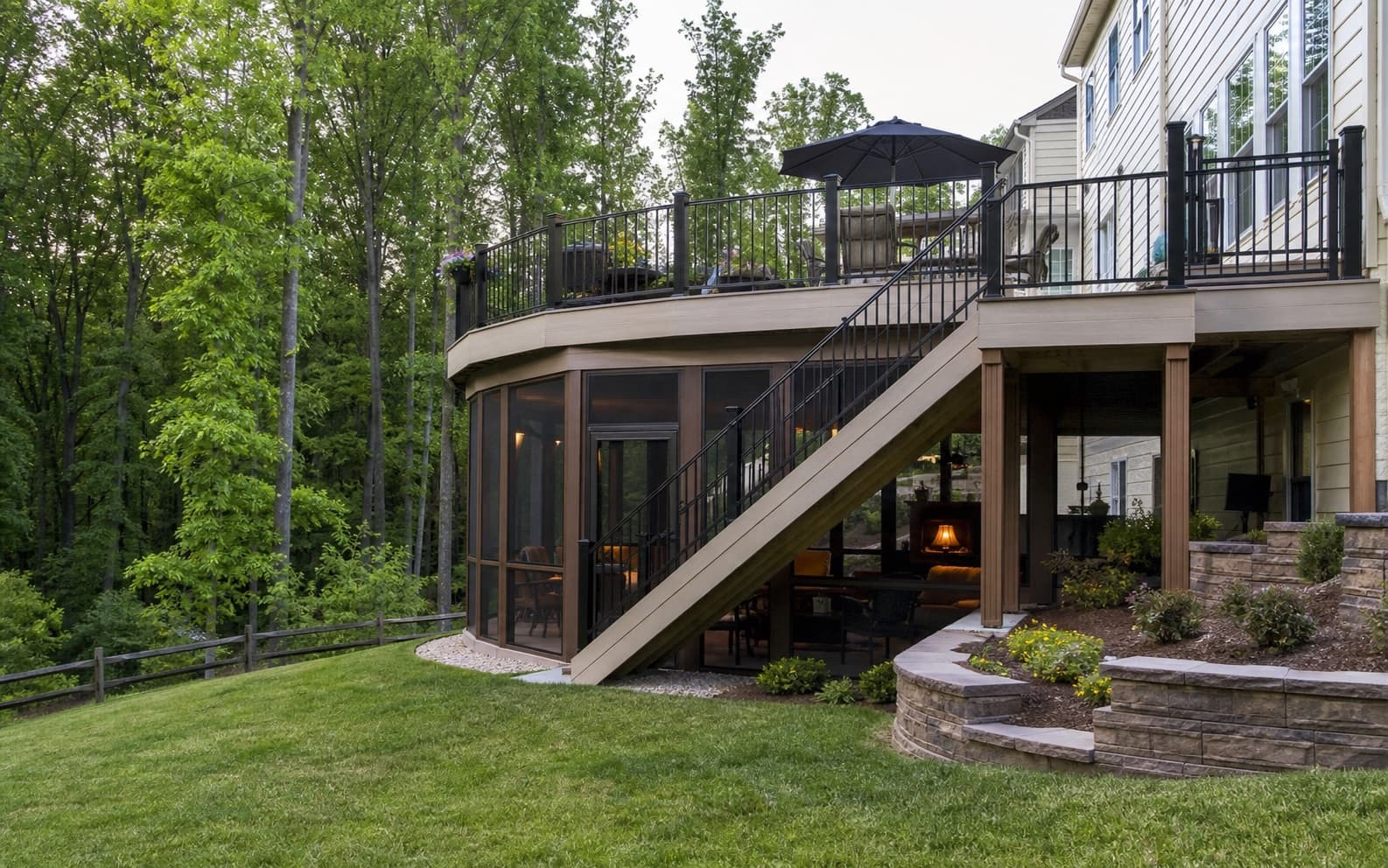
Deck Builder in Lorton VA: Fairfax County Permits, HOA & Costs 2026
Lorton is a large unincorporated Fairfax County community anchored by the Lorton Workhouse Arts Center — the historic former federal prison complex that now serves as an arts campus — and surrounded by a mix of older established neighborhoods and significant newer planned community development on what was previously the prison farm land. The Laurel Hill community is one of the largest and most active HOA-governed planned communities in southern Fairfax County.
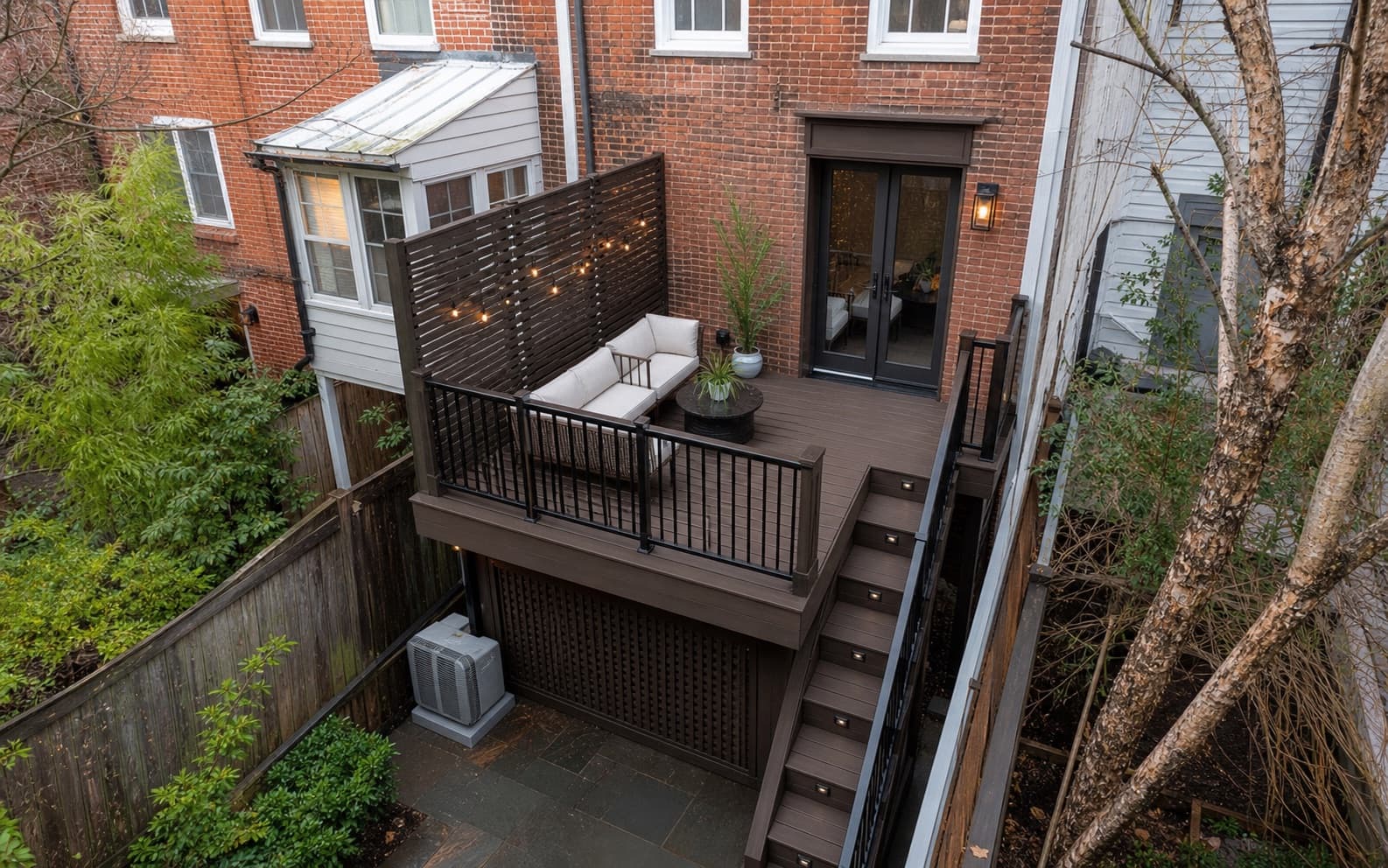
Deck Builder in Alexandria VA: City Permits, HOA & Costs 2026
Alexandria is an independent city with some of the most distinctive permitting and design review requirements in Northern Virginia. Old Town Alexandria's historic district is the most protected historic overlay in the region, with Architectural Review Board oversight that applies rigorous standards to any exterior modification including decks. Outside the historic core, Alexandria's neighborhoods range from mid-century suburban to newer mixed-use development.
Deck Builder in Manassas VA: City & County Permits, HOA & Costs 2026
Manassas, like Fairfax and Herndon, presents a jurisdictional split: the City of Manassas is an independent incorporated city, separate from the surrounding Prince William County. Properties within city limits permit through the city; properties in the surrounding area with Manassas addresses permit through Prince William County. This distinction matters — the two jurisdictions have separate permitting departments, different processes, and different fees.
Deck Builder in Woodbridge VA: Prince William County Permits, HOA & Costs
Woodbridge is a large unincorporated Prince William County community spanning several distinct neighborhoods, planned developments, and newer subdivisions. It is one of the highest-volume deck markets in the broader Northern Virginia region — a large base of townhomes and single-family homes from the 1980s through the 2000s generating steady replacement demand, alongside active new-construction communities building new decks.
Deck Builder in Springfield VA: Fairfax County Permits, HOA & Costs 2026
Springfield is one of Fairfax County's oldest established communities — a large area of single-family neighborhoods, townhouse clusters, and commercial development anchored by the Springfield interchange of I-95, I-395, and I-495. The housing stock ranges from 1950s and 1960s ranch homes to newer planned community developments, creating a deck market that spans basic structural replacements on very old structures to standard composite upgrades.
Deck Builder in Burke VA: HOA Rules, Fairfax County Permits & Costs 2026
Burke is a large unincorporated Fairfax County community dominated by Burke Centre — one of Northern Virginia's original and largest planned communities — alongside older established neighborhoods and newer infill developments. The Burke Centre HOA is one of the most active and well-established community associations in the region, with specific design standards that every Burke Centre deck project must navigate.
Deck Builder in Fairfax VA: City & County Permits, HOA Rules & Costs
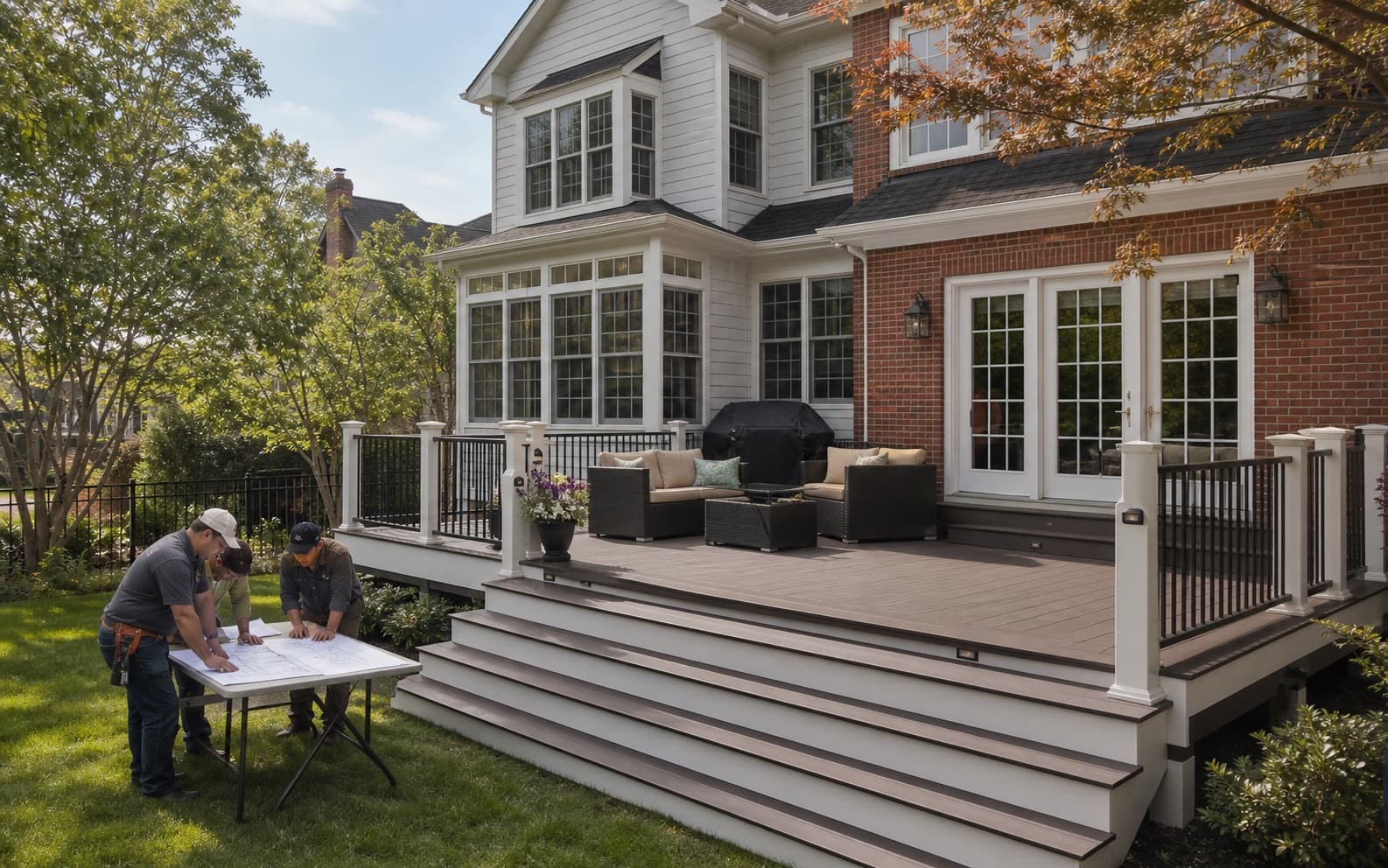
Fairfax presents a jurisdictional complexity similar to Leesburg and Herndon: the City of Fairfax is an independent city with its own permitting jurisdiction, distinct from the surrounding Fairfax County. Properties within the City of Fairfax limits receive permits from the city — not Fairfax County — and the two jurisdictions have separate processes, fees, and review timelines.
Deck Builder in Chantilly VA: HOA Rules, Fairfax County Permits & Costs
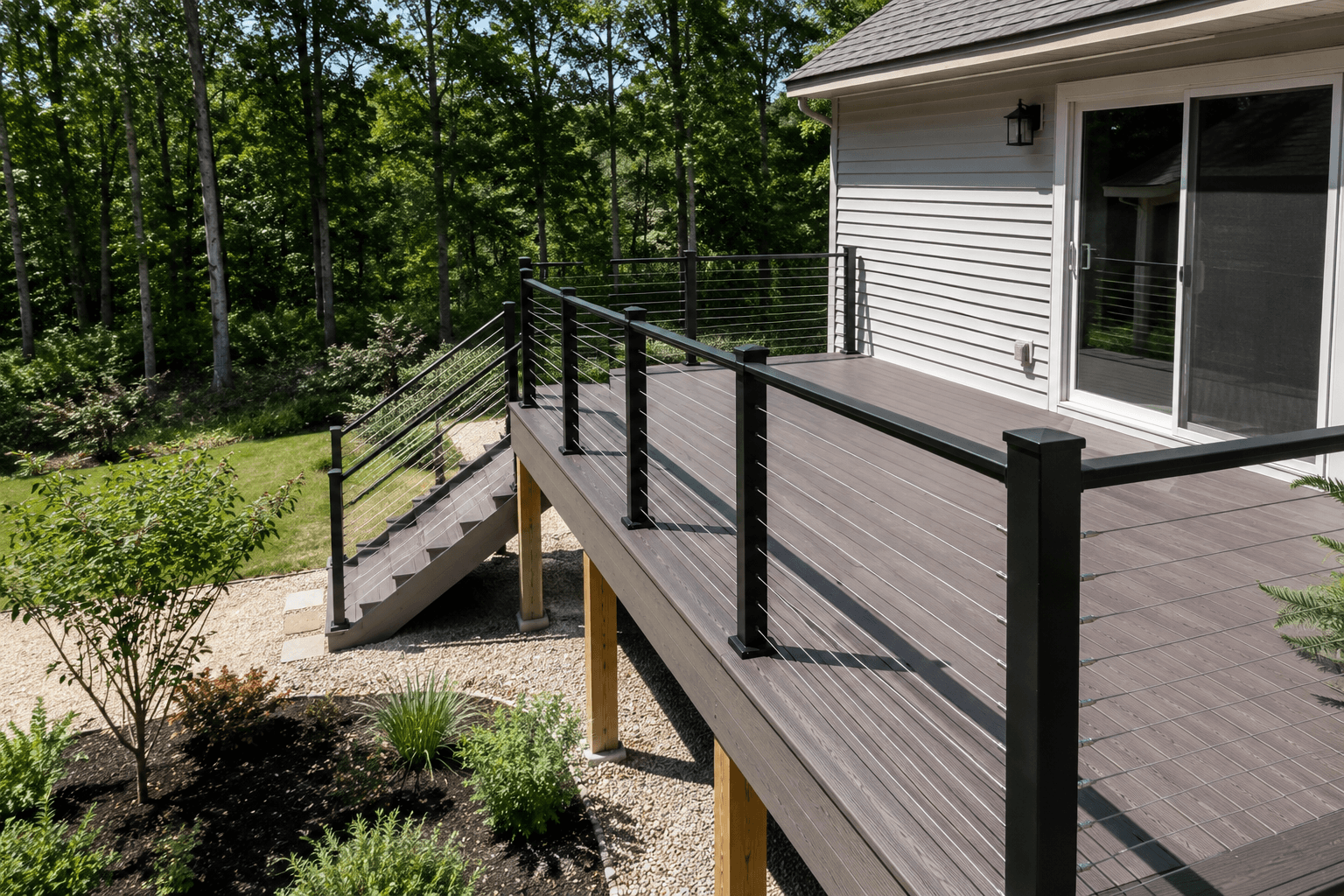
Chantilly is a large unincorporated Fairfax County community anchored by Dulles International Airport and built out primarily through planned communities and subdivisions from the 1980s through the early 2000s. It is one of the most active deck replacement markets in the county, with a large base of aging pressure-treated decks reaching the end of their useful life.
How to Choose a Deck Contractor in Northern Virginia: 10 Questions to Ask
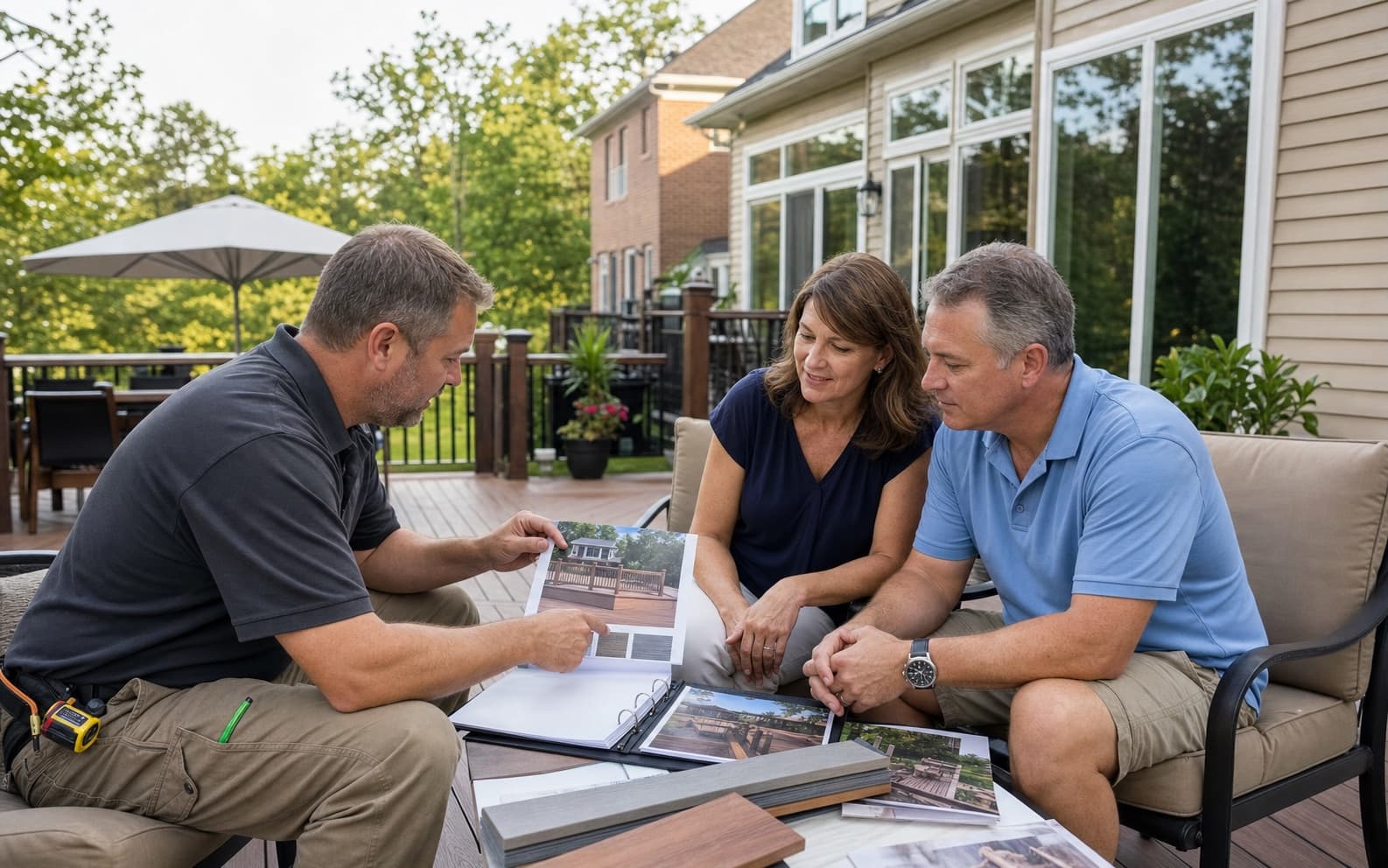
Choosing the wrong deck contractor in Northern Virginia is one of the most expensive mistakes a homeowner can make — a poorly built deck that fails inspection, requires structural repair, or collapses under load is not just expensive to fix, it is dangerous. These 10 questions separate qualified, licensed, insured deck contractors from the rest.
How Long Does a Composite Deck Last? Real Numbers for Northern Virginia
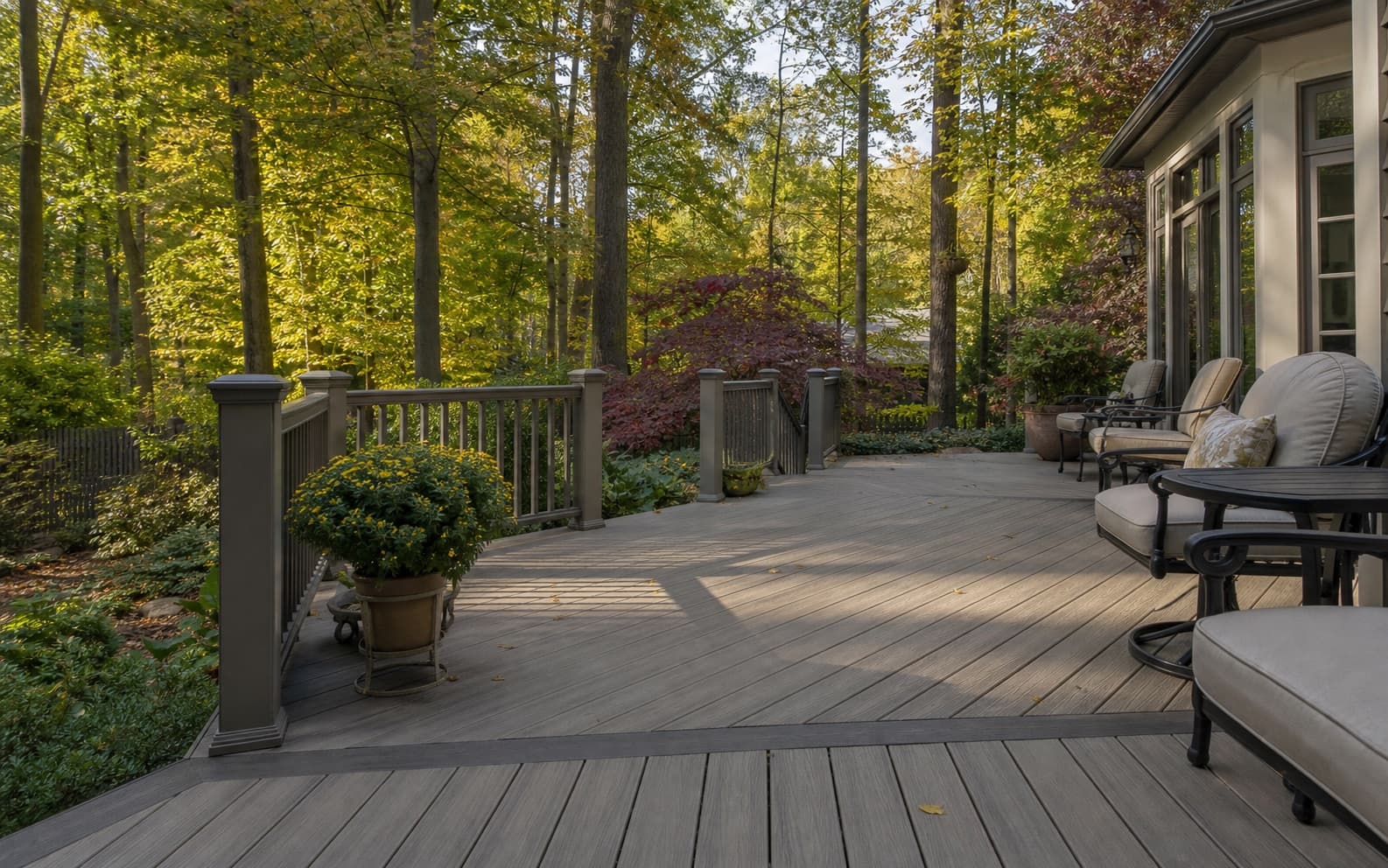
Composite decking carries 25 to 30-year warranties from major brands, but warranty terms and real-world service life are not the same thing. This guide covers what the warranties actually cover, what Northern Virginia's climate does to composite decking over time, and what realistic service life looks like for Trex, TimberTech, and AZEK installations in the region.
Composite Deck vs. Wood Deck: Total Cost Over 20 Years
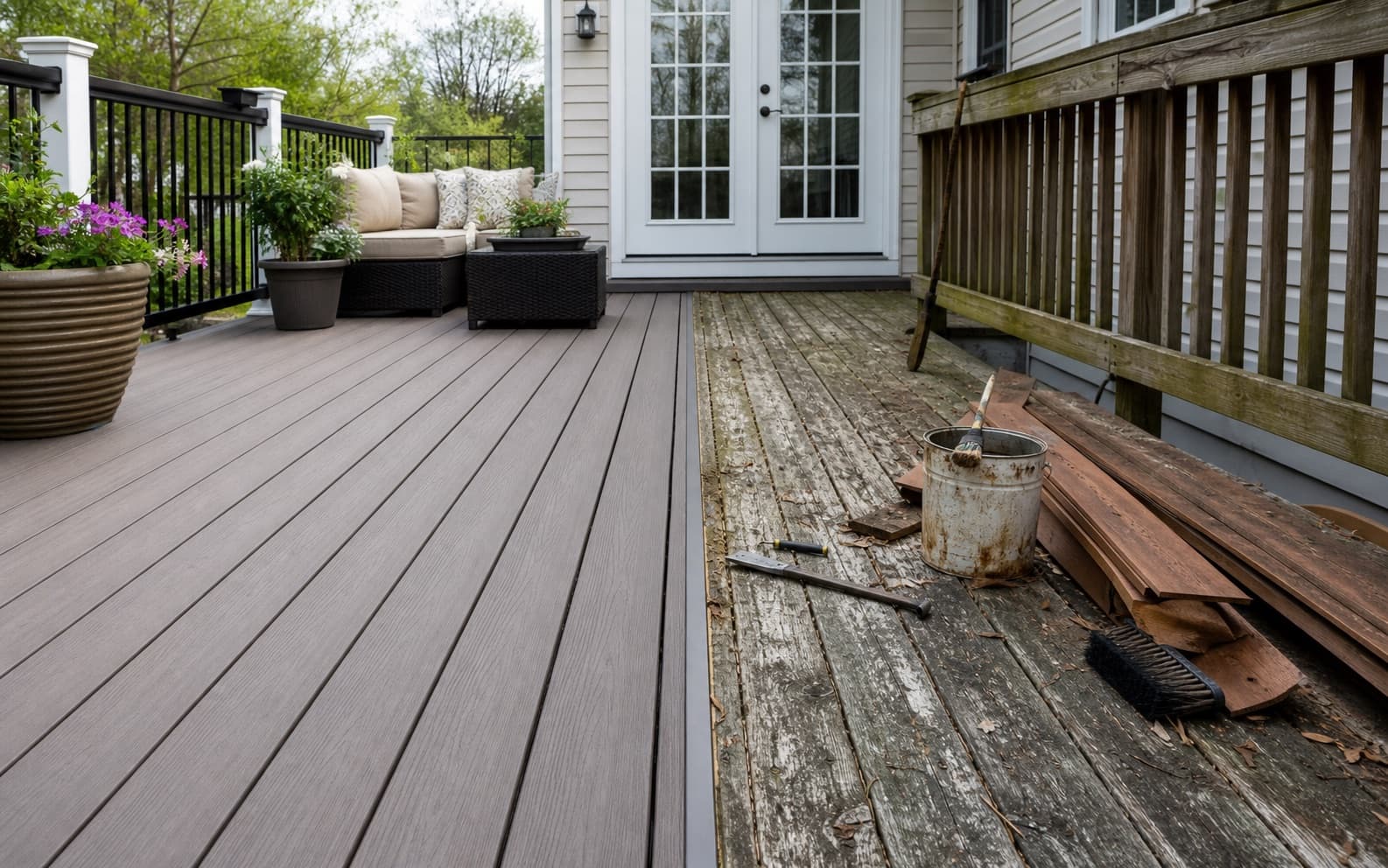
The composite versus pressure-treated wood deck debate almost always starts with upfront cost — composite costs more to build. But the more useful comparison for a Northern Virginia homeowner is the 20-year total cost of ownership: initial build, plus maintenance, plus partial and full replacement cycles. The numbers often surprise people.
Under-Deck Drainage Systems for Northern Virginia: Create Dry Space Below
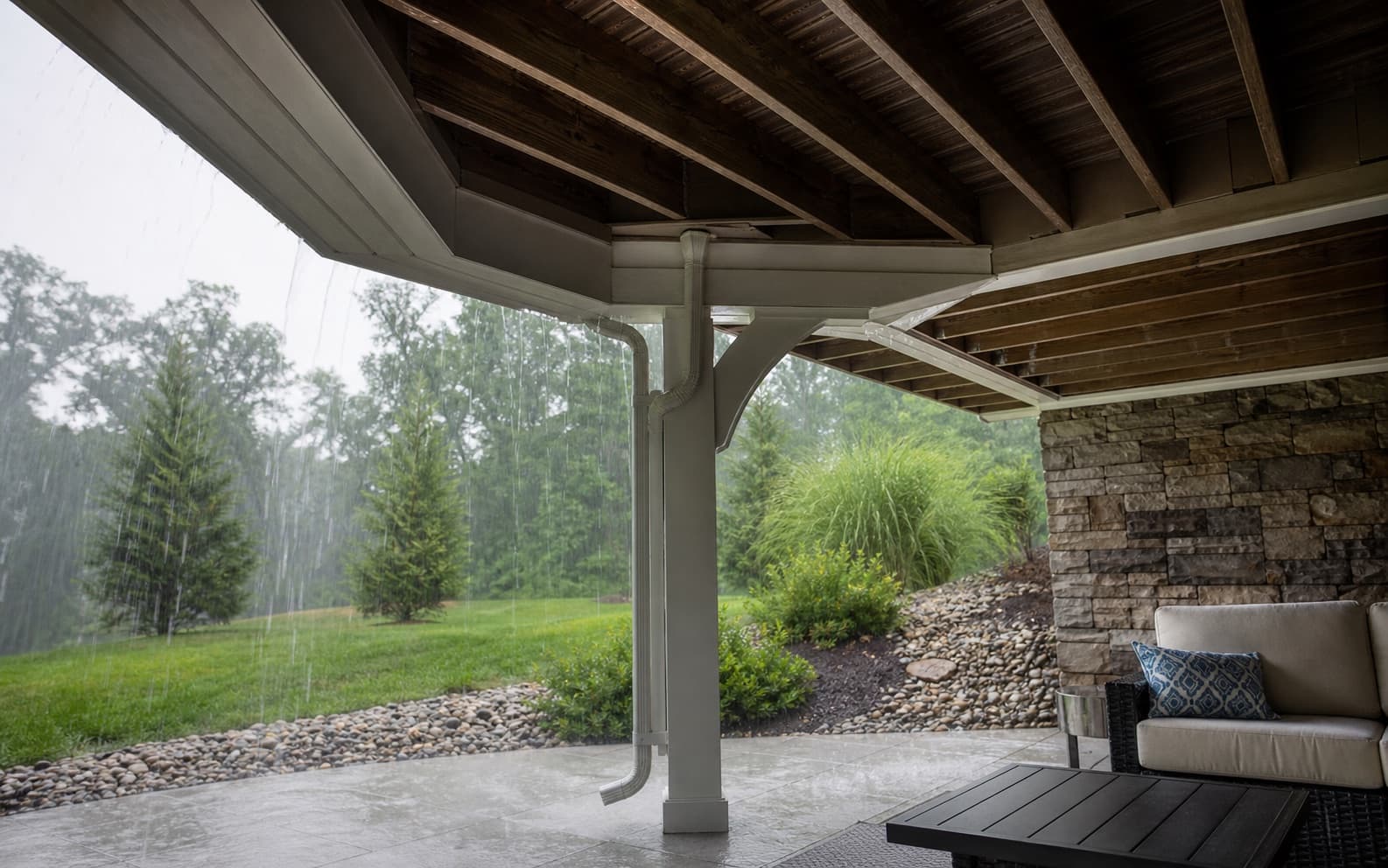
Northern Virginia's elevated decks — walkout basement decks on split-level and two-story homes — create a natural outdoor space below the deck surface that is unused in most installations because rain water falls directly through the deck boards. An under-deck drainage system captures this water and redirects it, turning a wet, unusable area into a dry patio, storage space, or additional outdoor living zone.
Pergola on a Deck: What Northern Virginia Homeowners Need to Know
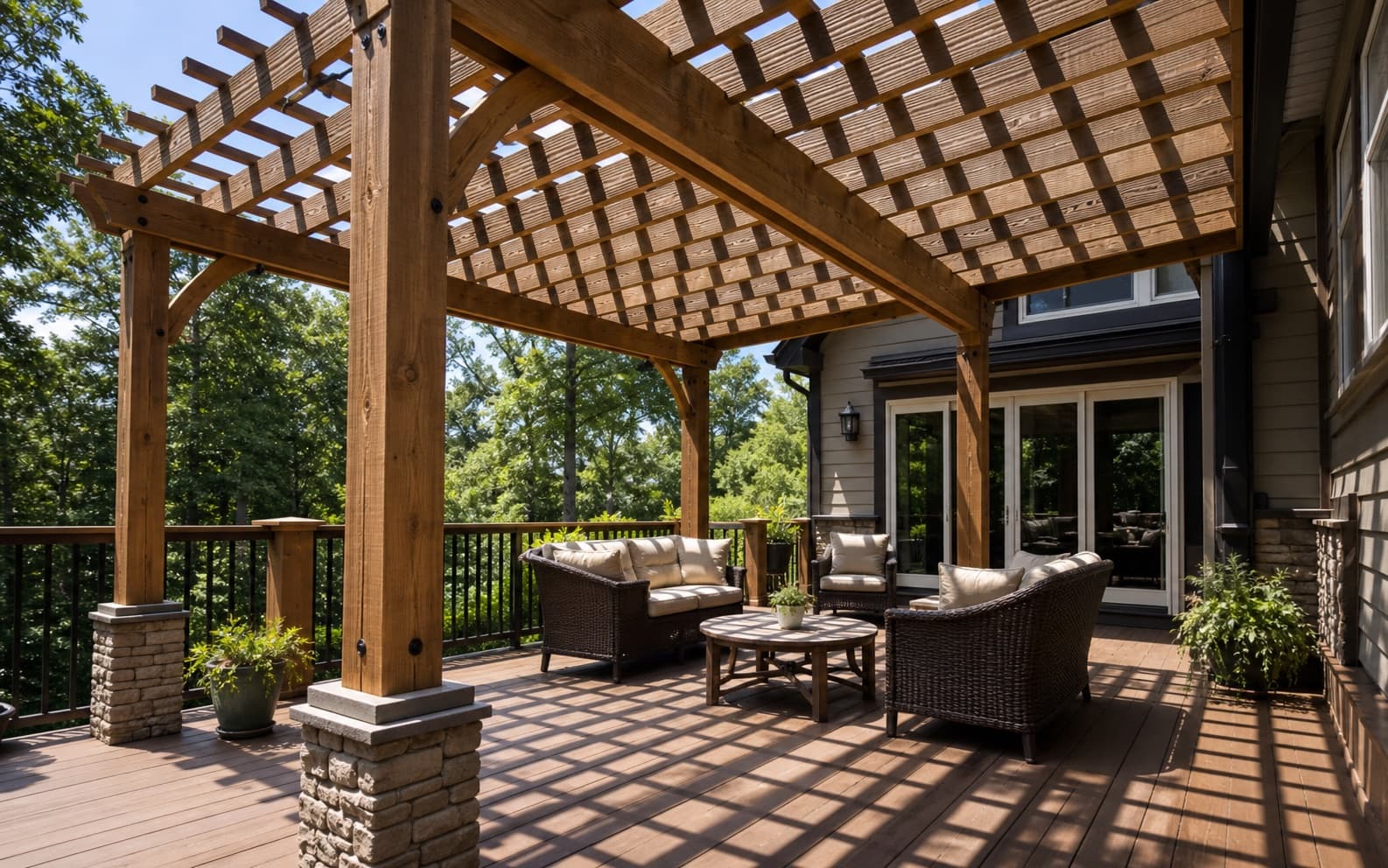
A pergola on a deck provides partial shade, a defined outdoor room feel, and a structure for lighting, fans, and climbing plants — while still feeling open to the sky. In Northern Virginia's hot summers, a pergola with fabric shade panels or a retractable canopy makes a significant difference in the usability of a deck during the July and August heat.
Outdoor Kitchen on a Deck: Planning Guide for Northern Virginia Homeowners
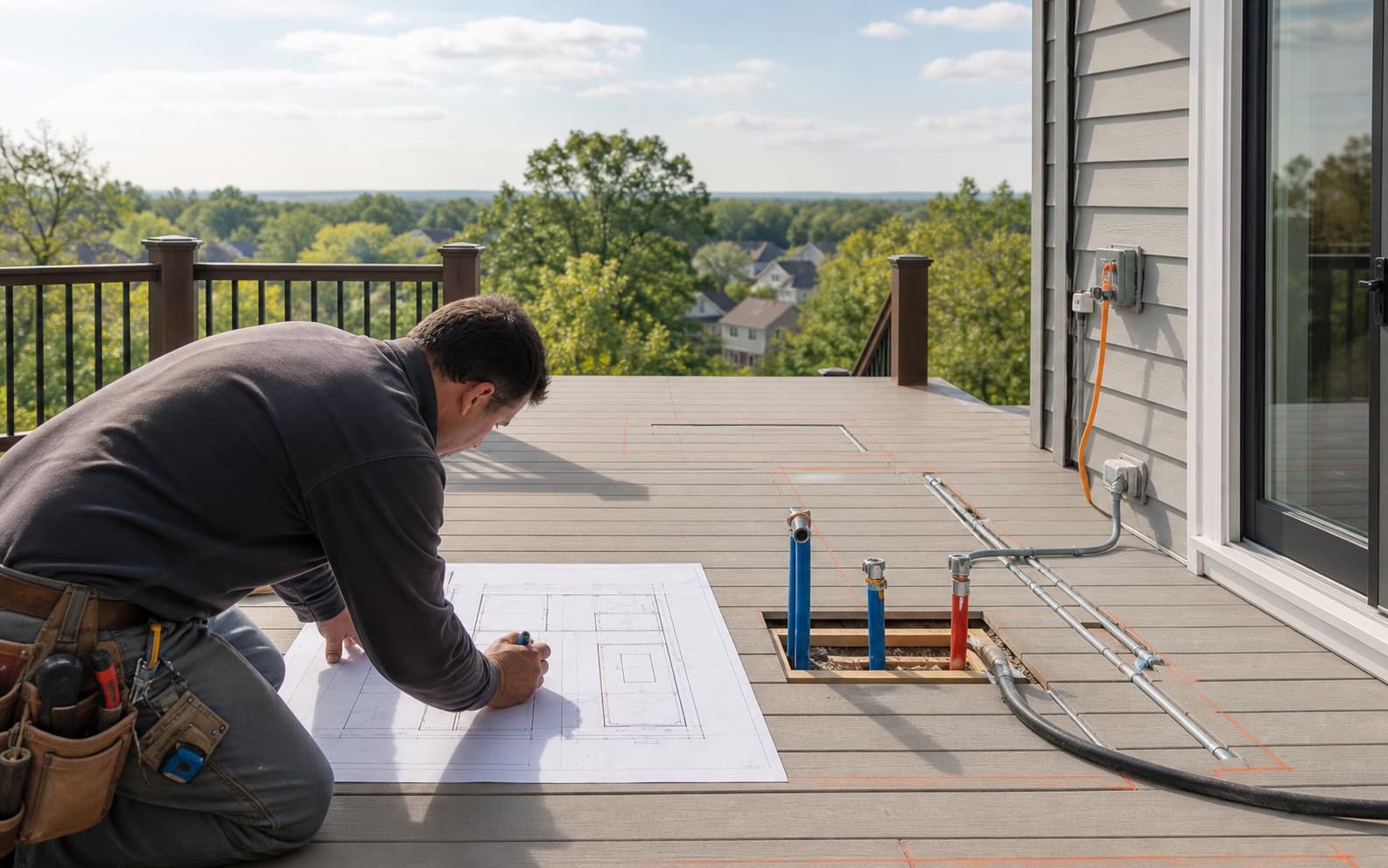
An outdoor kitchen integrated into a deck is one of the highest-value outdoor living upgrades in Northern Virginia — and one of the most technically complex to plan correctly. Gas lines, electrical service, structural loading, drainage, and HOA approval all intersect in an outdoor kitchen project in ways that are not obvious when looking at showroom displays or online inspiration photos.
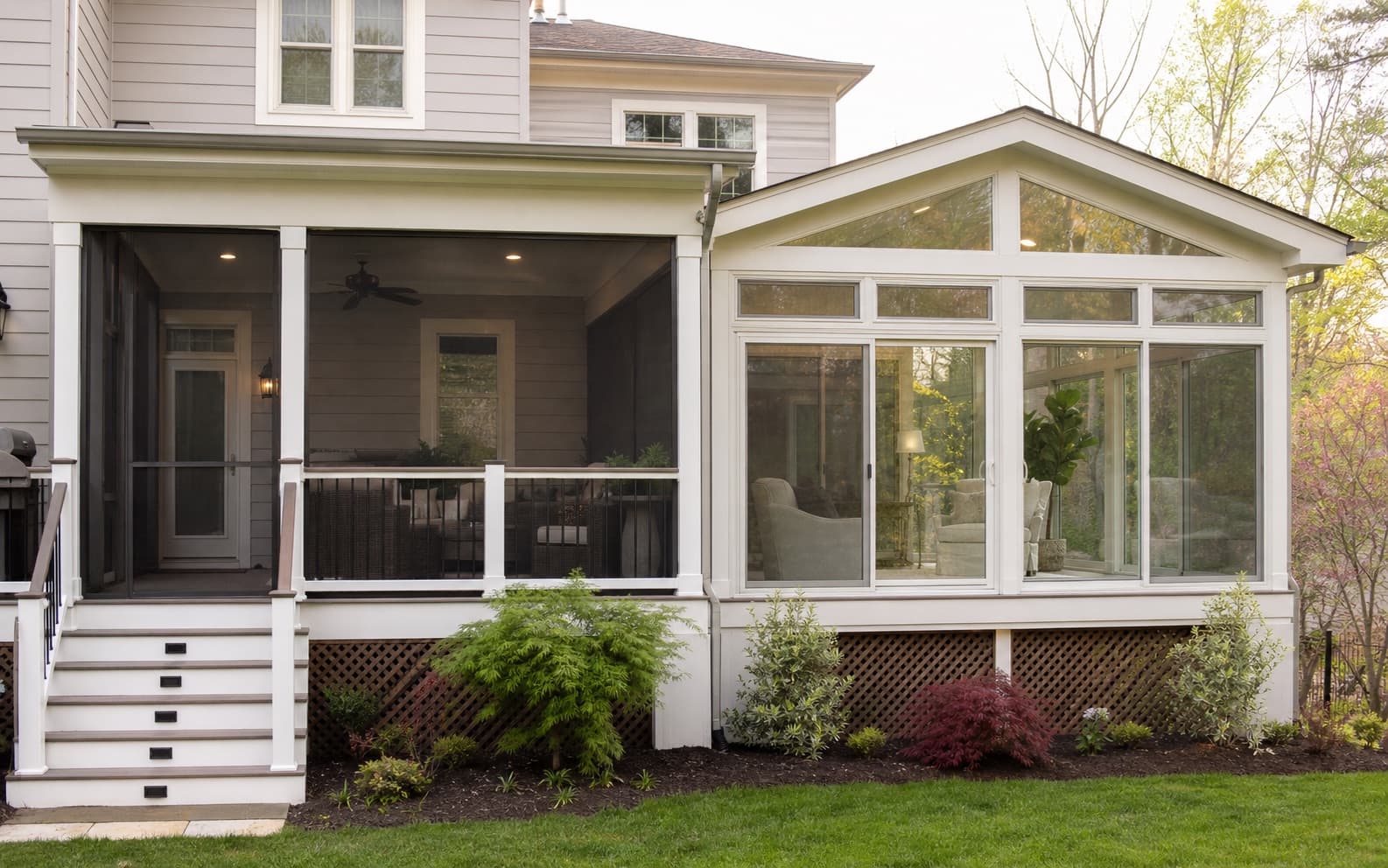
Screened Porch vs. Three-Season Room: Which Is Right for Northern Virginia?
A screened porch and a three-season room look similar from the outside but are fundamentally different structures with different costs, permit requirements, usability windows, and HOA treatment. Understanding the distinction helps Northern Virginia homeowners choose the option that actually matches how they want to use the space.
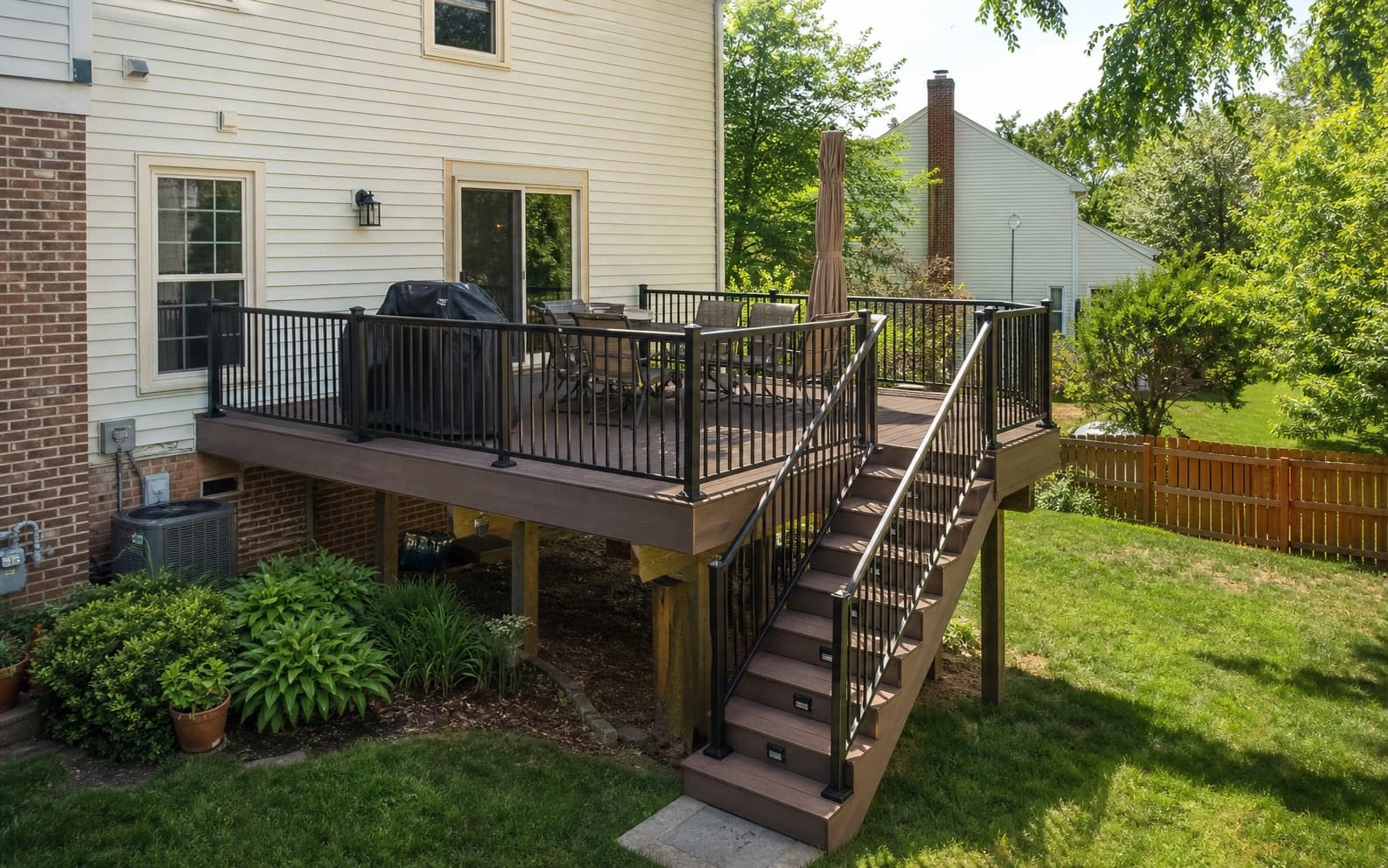
Deck Builder in Centreville VA: Fairfax County Guide & Costs 2026
Centreville is a large unincorporated community in western Fairfax County with a mix of single-family neighborhoods, planned communities, and townhouse developments built primarily between 1985 and 2005. It is one of the most active deck replacement markets in the county, with a substantial base of aging decks reaching the end of their useful life.
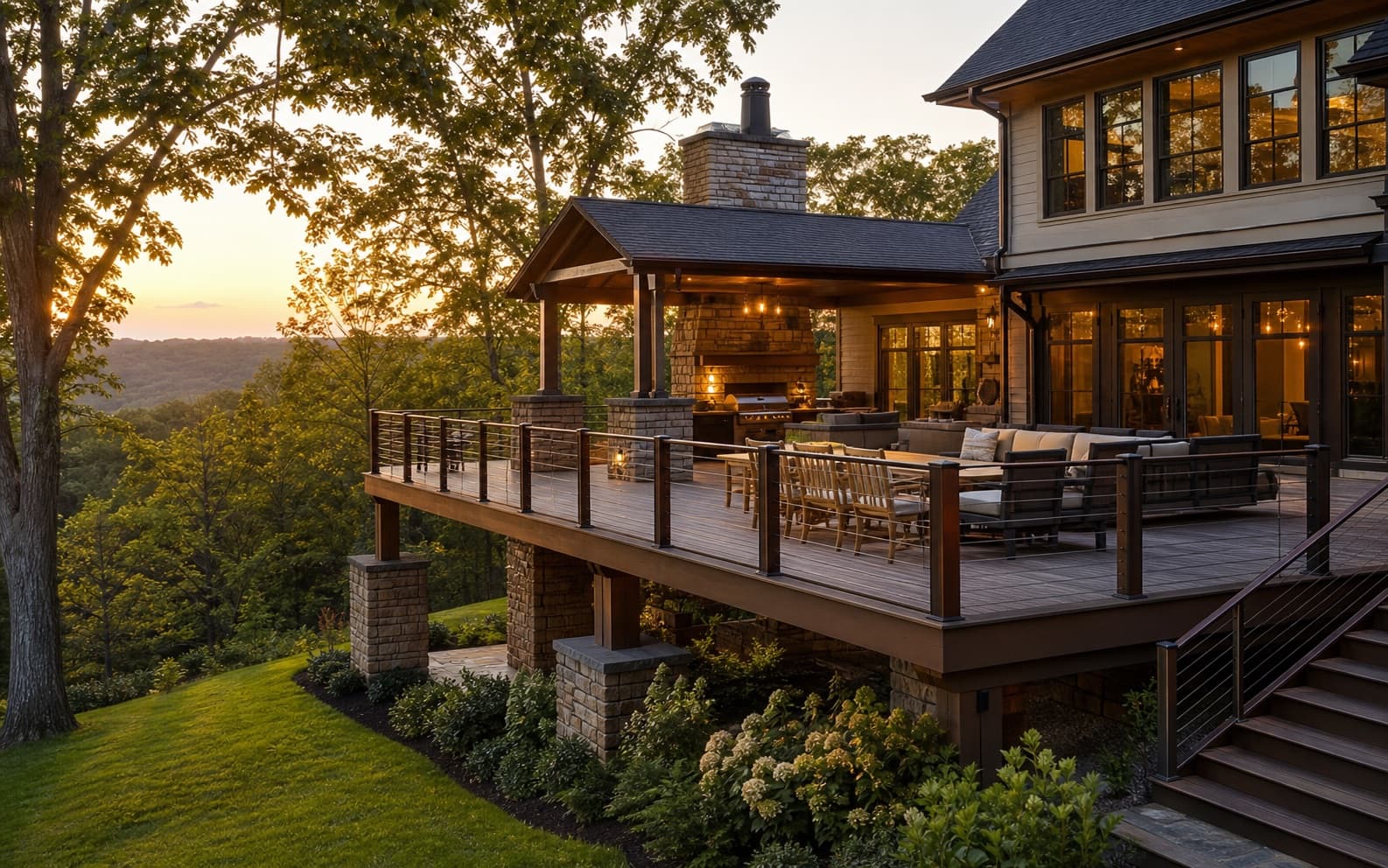
Deck Builder in Great Falls VA: Large Lots, Premium Builds & Fairfax County
Great Falls is one of Northern Virginia's most distinctive communities — large-lot, semi-rural character, minimal HOA penetration, and a home value profile that supports premium outdoor living projects. It is one of the few Northern Virginia communities where a homeowner can design and build essentially any deck configuration they want without navigating HOA review.
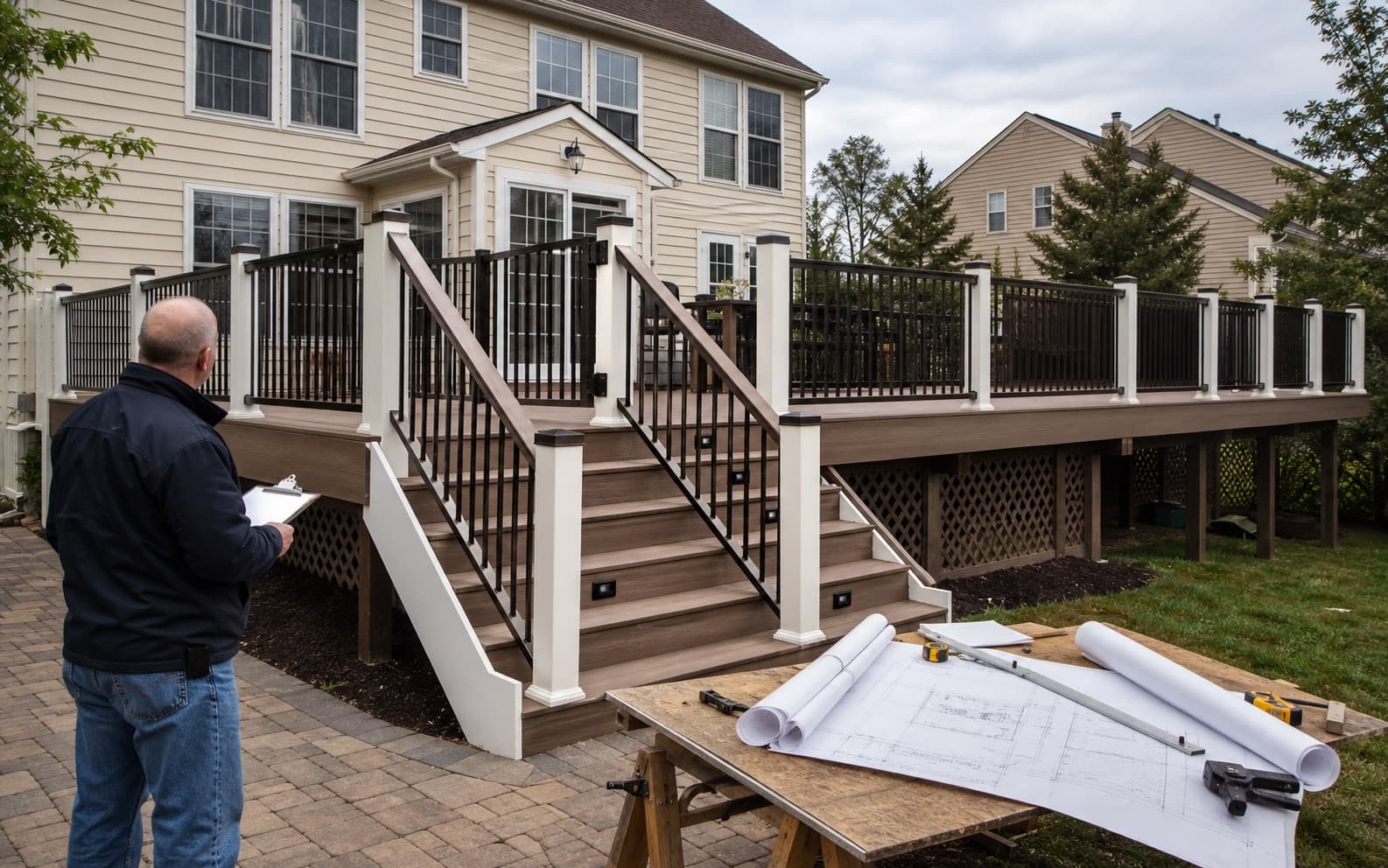
Deck Builder in Herndon VA: Fairfax County Permits & Local Guide
Herndon is a mid-size town on the Loudoun-Fairfax county border with its own incorporated government and permitting jurisdiction — a distinction from the surrounding unincorporated Fairfax County that affects deck permitting. Like Leesburg in Loudoun County, properties within the Town of Herndon limits receive permits from the town, not the county.
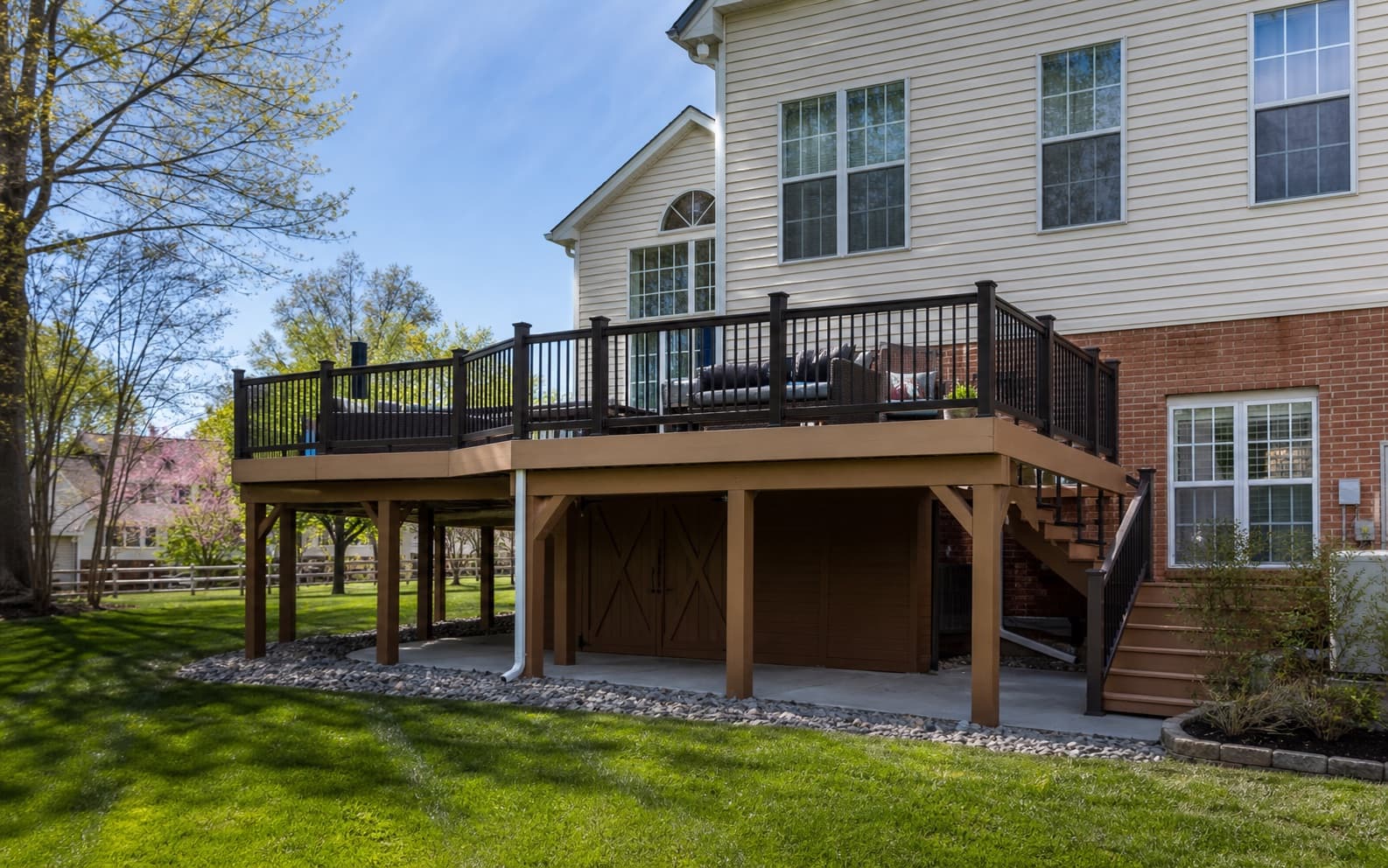
Deck Builder in Sterling VA: Costs, HOA Rules & What to Know
Sterling is one of Loudoun County's most densely populated communities — a mix of single-family neighborhoods, townhouse developments, and planned communities built largely between 1980 and 2010. It is one of the highest-volume deck markets in the county, with a large base of aging decks reaching replacement age and active new construction in newer neighborhoods.
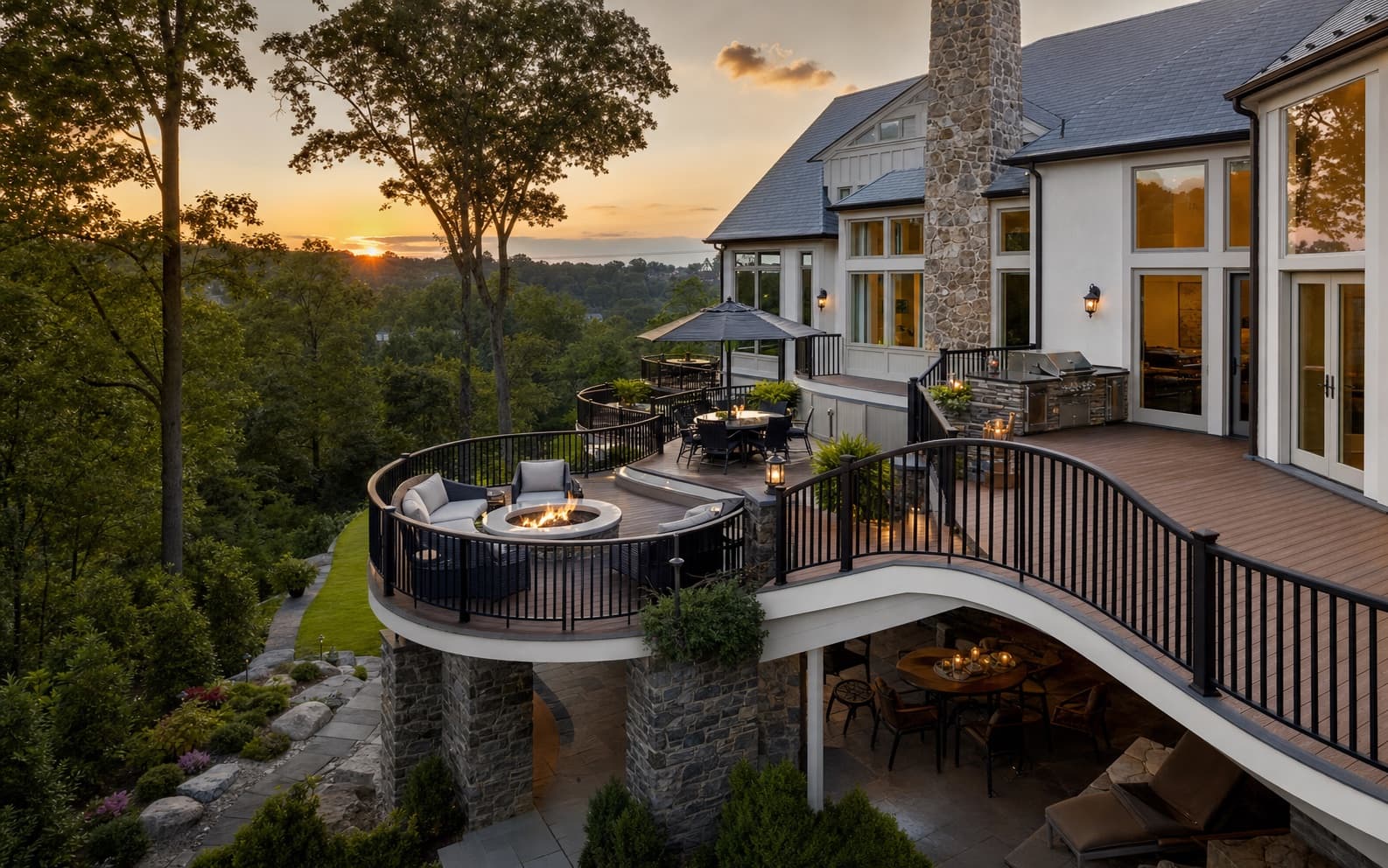
Deck Builder in McLean VA: Premium Decks in Fairfax County
McLean is one of Northern Virginia's most affluent communities and one of the most active markets for premium deck and outdoor living projects in Fairfax County. Most McLean properties are not subject to HOA restrictions — a significant distinction from Reston or most of Loudoun County's planned communities. This means McLean homeowners have more design freedom than almost anywhere else in Northern Virginia.
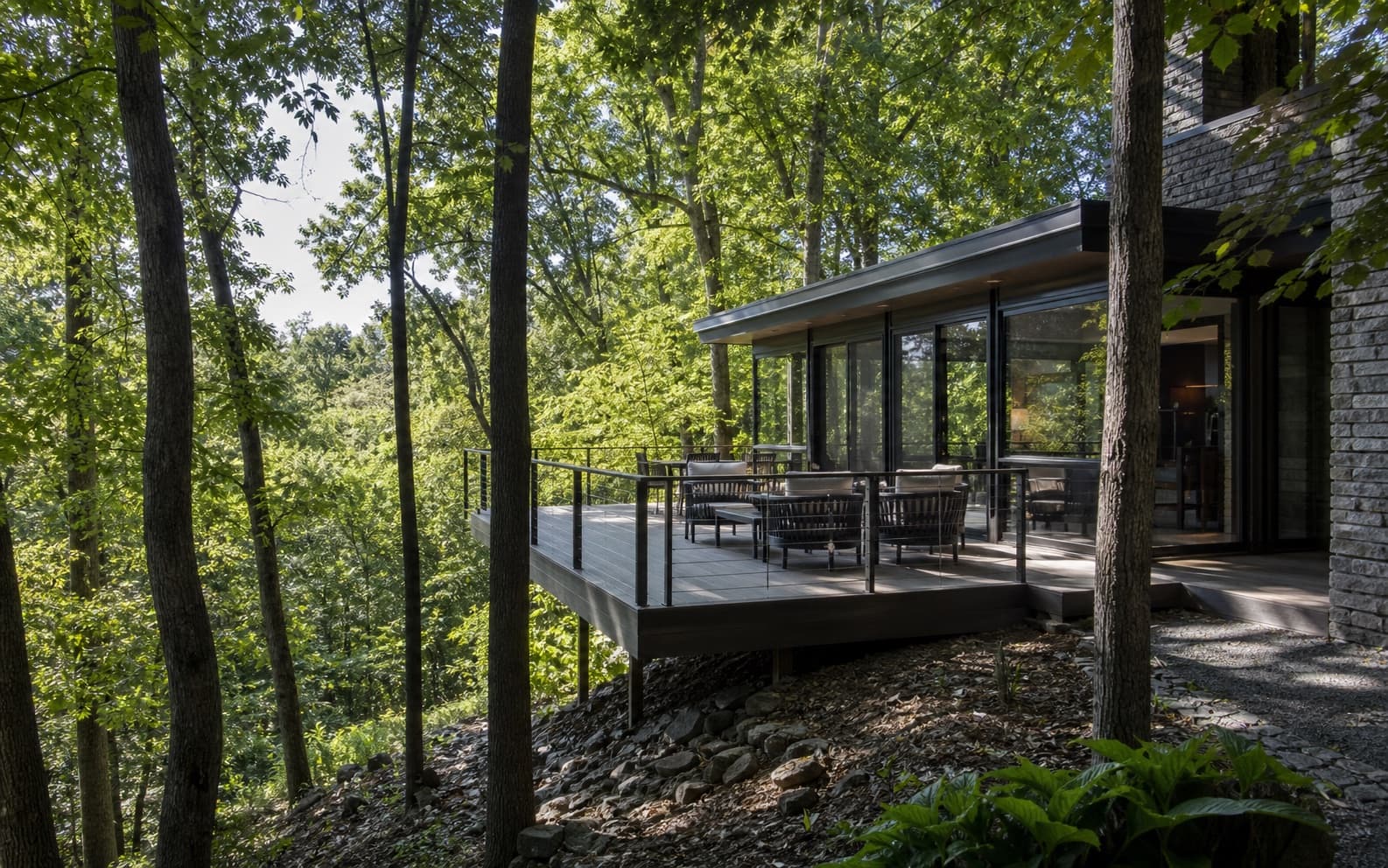
Deck Builder in Reston VA: What Northern Virginia Homeowners Need to Know
Reston is one of America's original planned communities — founded in 1964 with a master plan and design covenants that remain in effect today through the Reston Association. Every exterior modification to a Reston property, including deck additions and replacements, must be reviewed and approved by the Reston Association Design Review Board before a Fairfax County permit is pulled. This is the defining characteristic of deck building in Reston.
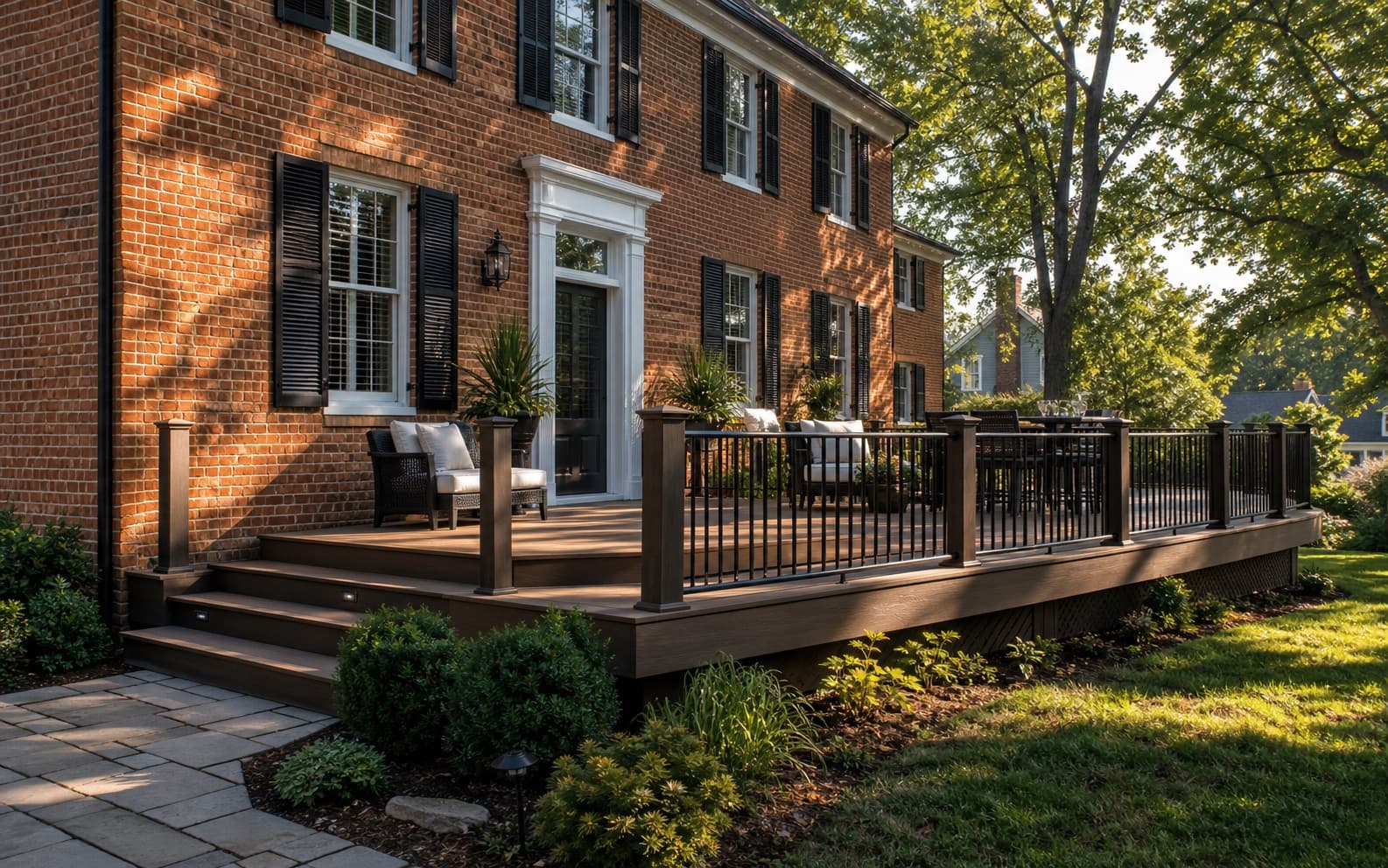
Deck Builder in Leesburg VA: Local Code, HOA Rules & Costs
Leesburg is Loudoun County's county seat and its oldest urban center — a mix of historic downtown districts with strict design review, established single-family neighborhoods with or without HOAs, and newer planned developments on the town's growing perimeter. Deck permitting in Leesburg involves a different authority than the rest of Loudoun County, which is the first thing homeowners need to understand.
Deck Builder in Ashburn VA: What to Expect & How to Choose
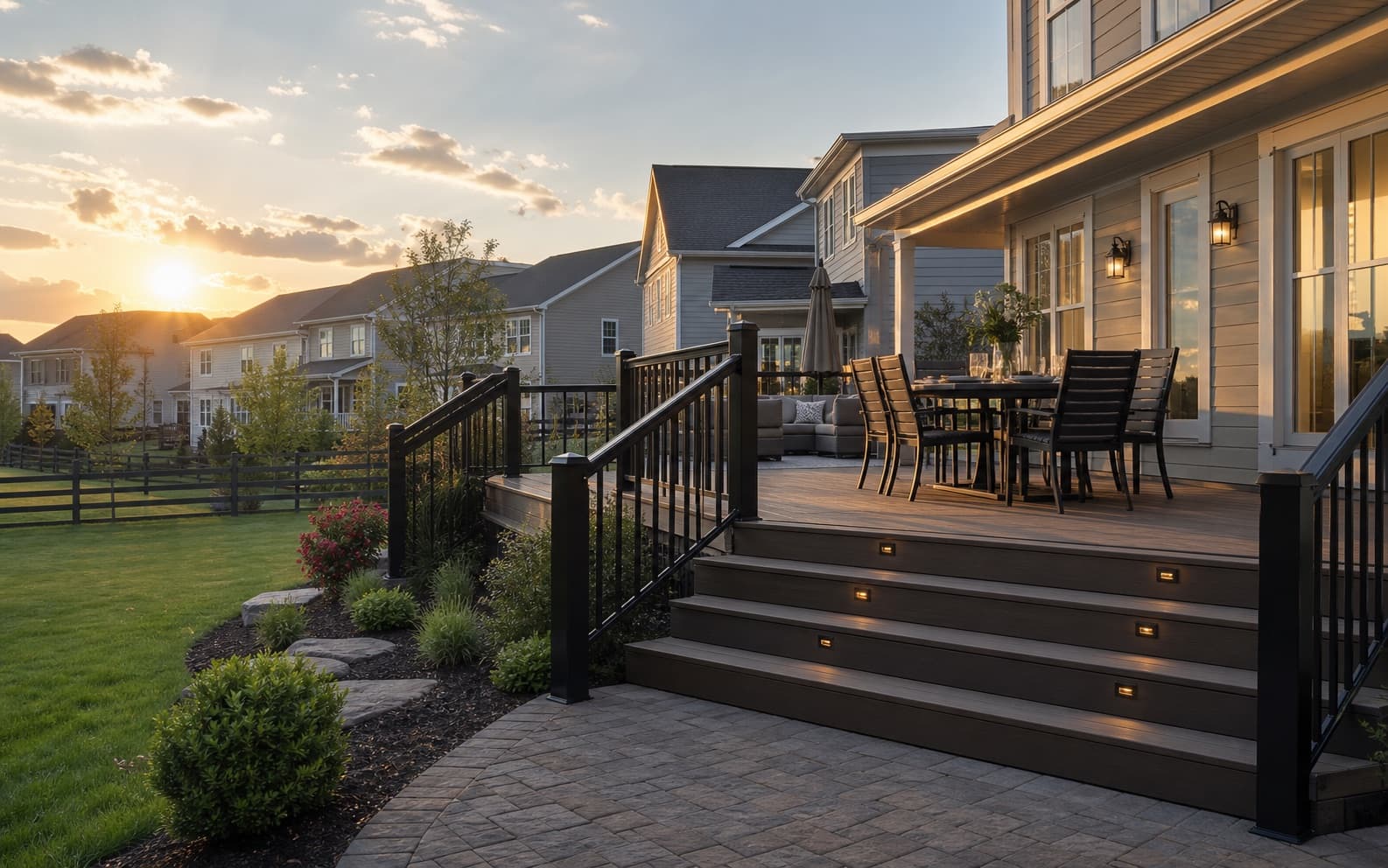
Ashburn is one of the most active deck-building markets in Northern Virginia — a combination of large planned communities with maturing housing stock, HOA-governed neighborhoods with specific design standards, and homeowners who are investing heavily in outdoor living space. Here is what Ashburn homeowners specifically need to know when choosing a deck builder.
Repair vs. Replace a Deck in Northern Virginia: How to Decide
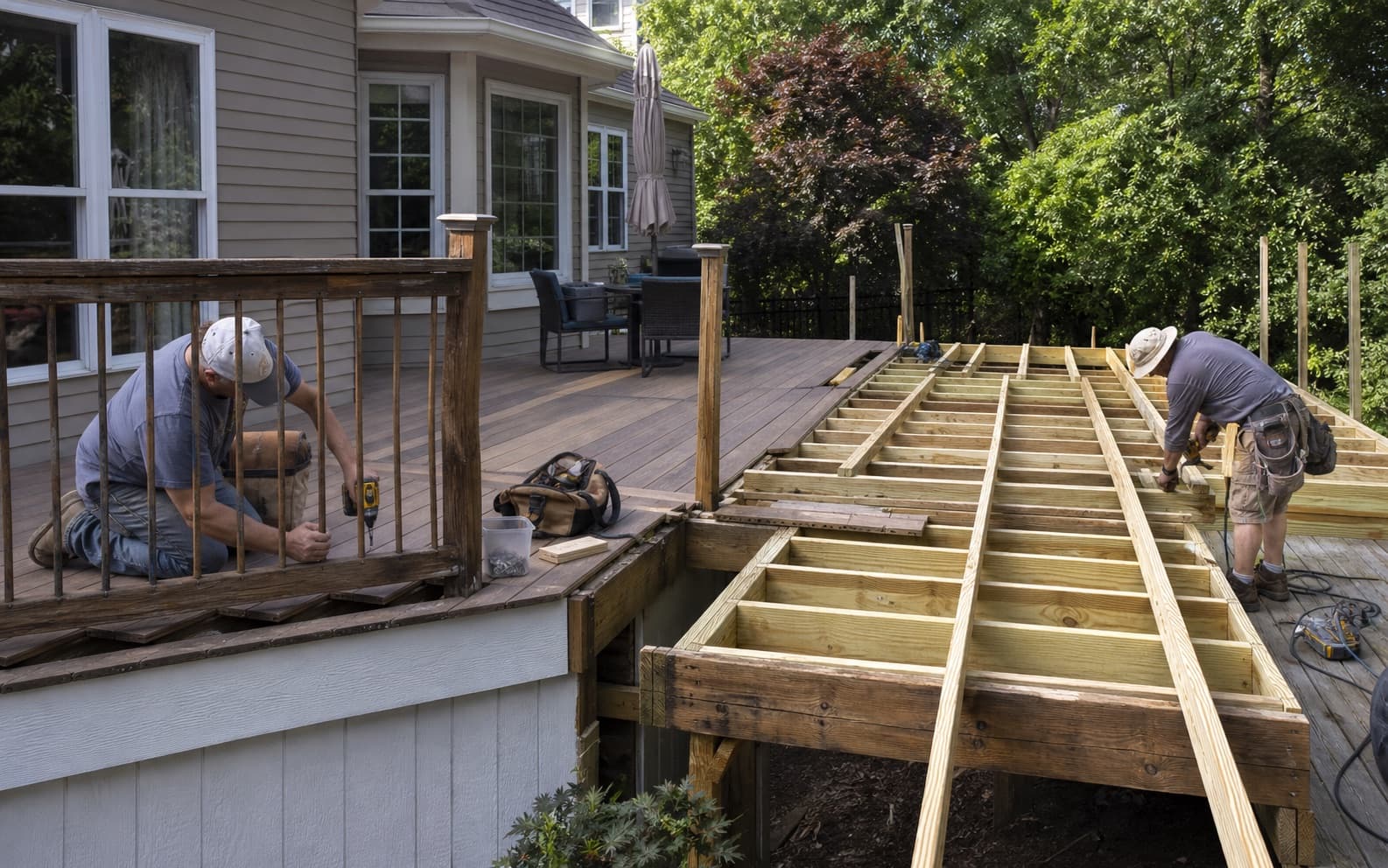
The repair-versus-replace decision is the most consequential choice a Northern Virginia homeowner faces when their deck begins to show age. The wrong decision in either direction is expensive: repairing a deck that needs replacement means spending money on a structure that will need replacement in a few years anyway; replacing a deck that could be repaired means an unnecessary $25,000 to $50,000 spend.
Ledger Board Failure: The #1 Cause of Deck Collapses in Northern Virginia
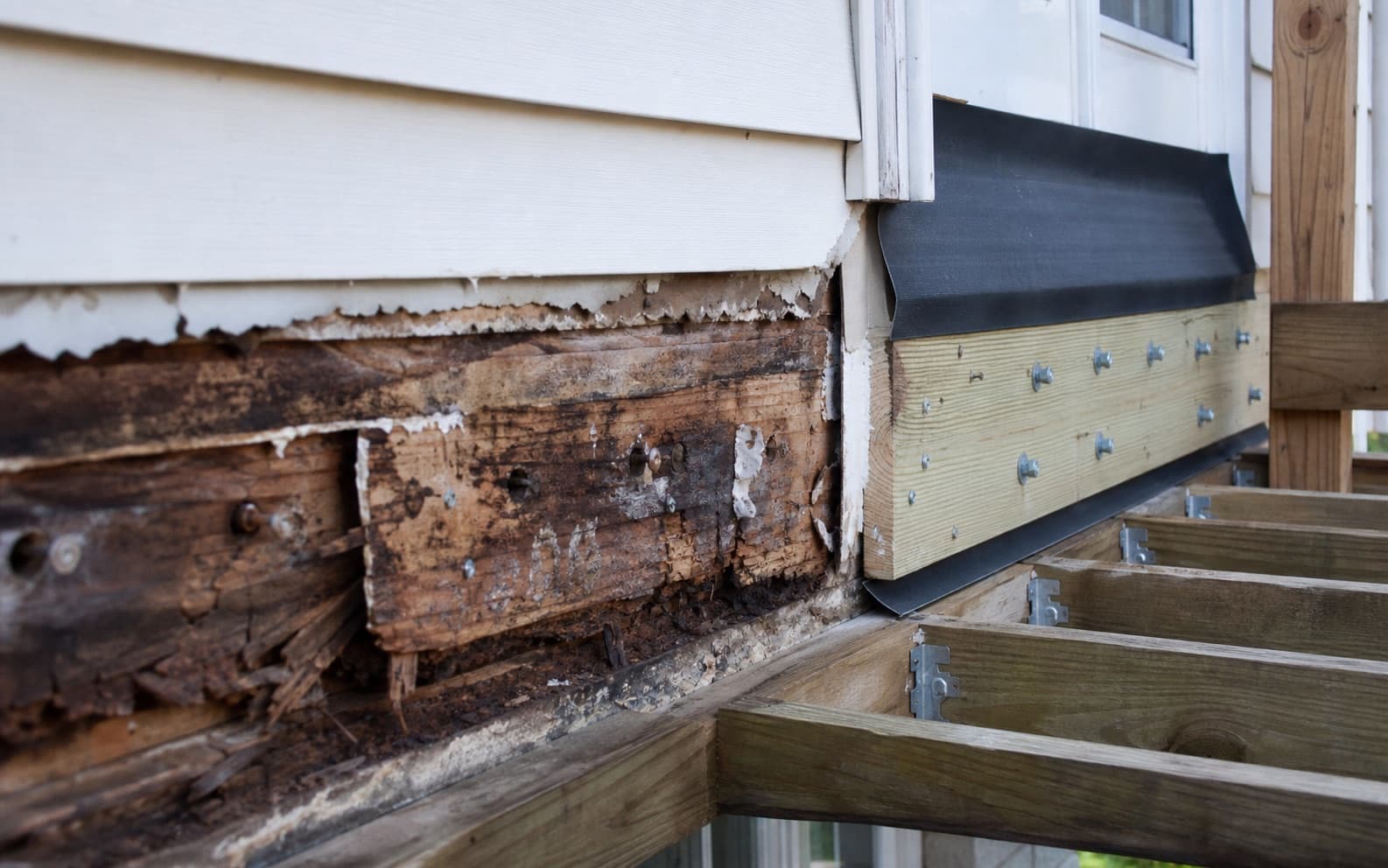
The ledger board — the framing member connecting the deck to the house — is involved in the majority of catastrophic deck collapses in the United States. Understanding what the ledger is, why it fails, how to inspect it, and what current code requires helps Northern Virginia homeowners assess the single greatest structural risk factor in their deck.
How to Inspect Your Deck for Safety: A DIY Checklist
A DIY deck safety inspection takes about 30 minutes and covers the most important structural elements of a residential deck. It does not replace a professional inspection — a homeowner cannot probe wood density or assess concealed connections the way a contractor can — but it identifies the most obvious risk conditions and determines when professional assessment is needed.
Deck Collapse Warning Signs Every Northern Virginia Homeowner Should Know
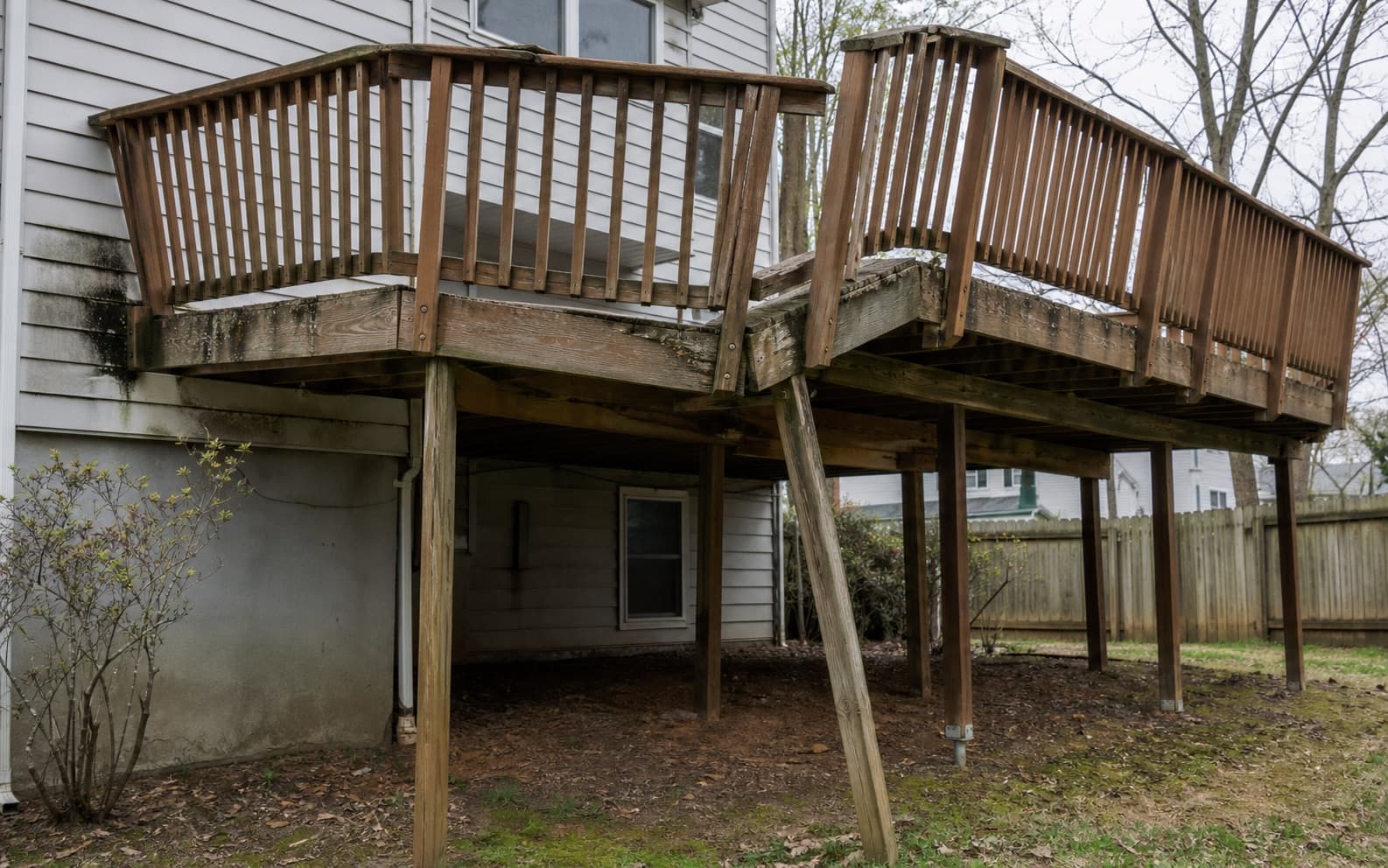
Deck collapses injure an estimated 40,000 Americans per year and kill dozens. Most collapses are not sudden failures of a healthy structure — they are the end result of years of visible, inspectable deterioration that was never addressed. Northern Virginia homeowners need to know eight warning signs that indicate a deck is at or near structural failure.
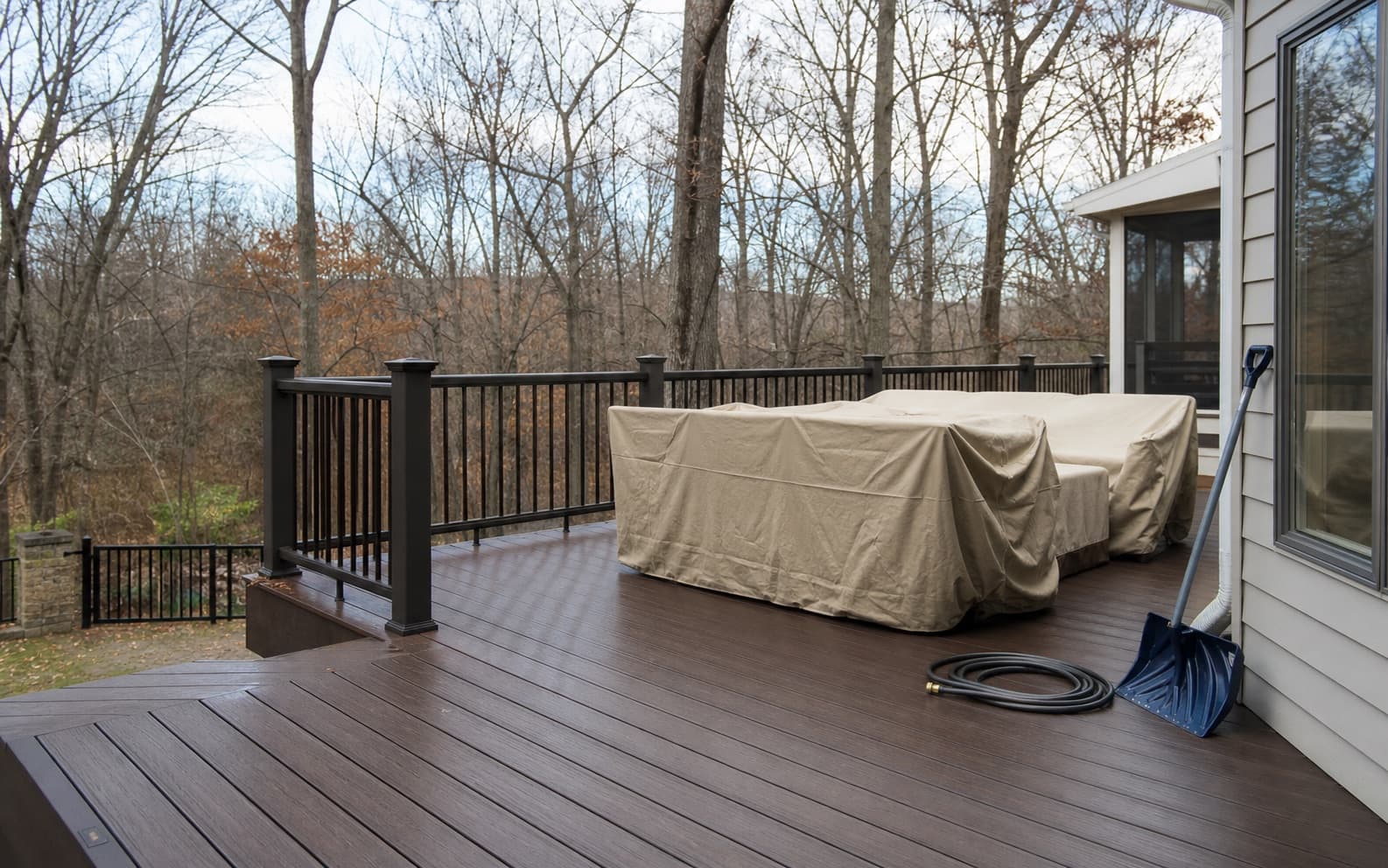
Deck Winterization Checklist for Northern Virginia Homeowners
Northern Virginia winters are moderate compared to northern climates — but the freeze-thaw cycles, ice storms, and sustained wet-cold periods from December through February create real stress on deck structures and surfaces. A 90-minute winterization pass in November addresses the issues that cause the most damage: standing water, clogged drainage gaps, retained leaves, and deferred repairs going into the cold months.
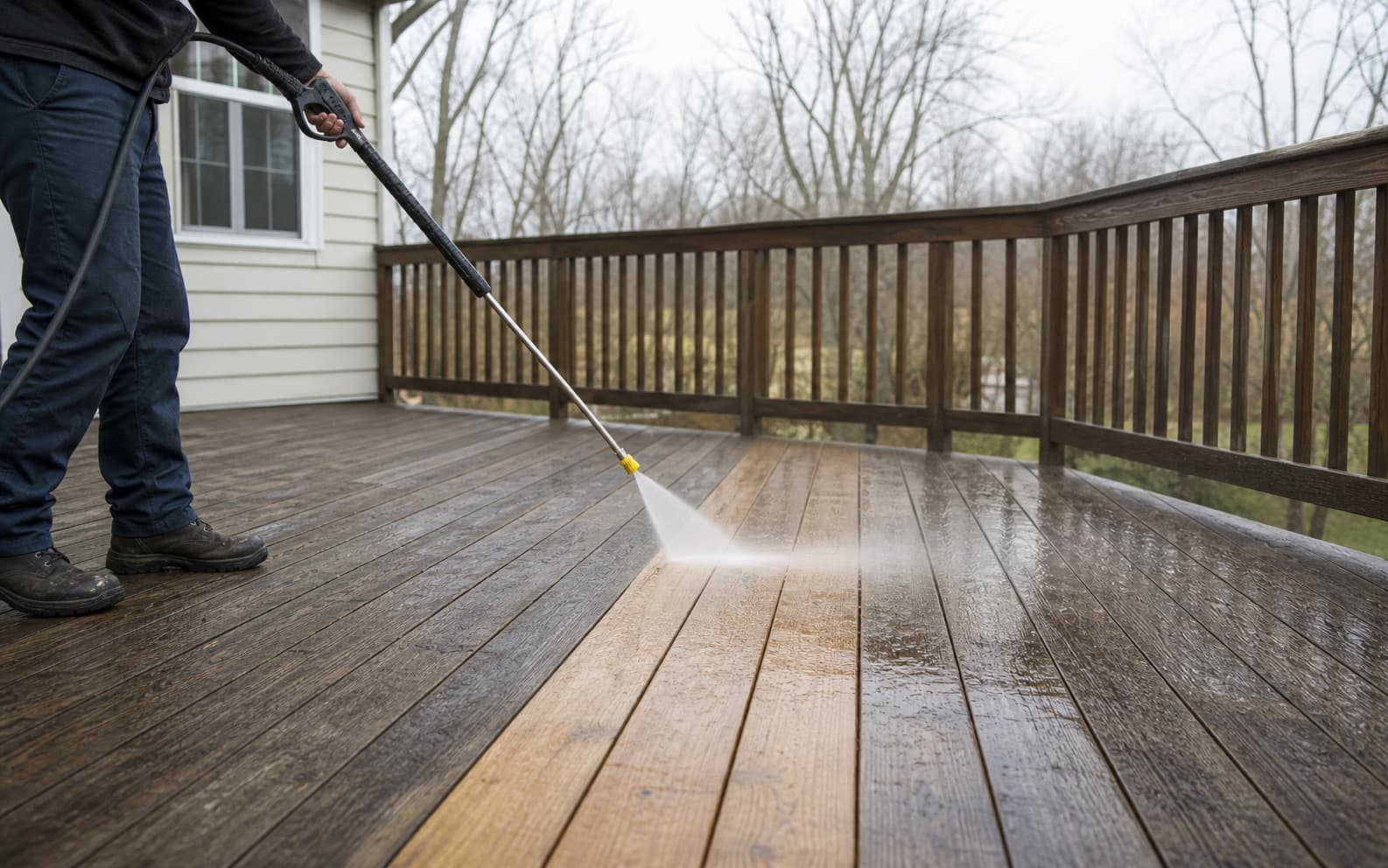
How to Power Wash a Deck Without Causing Damage
Power washing is the fastest and most effective way to clean a deck — and one of the easiest ways to permanently damage one. Too much pressure, the wrong nozzle tip, or the wrong technique leaves marks, raises grain, and damages composite caps. This guide covers exactly how to power wash both wood and composite decks without causing damage.
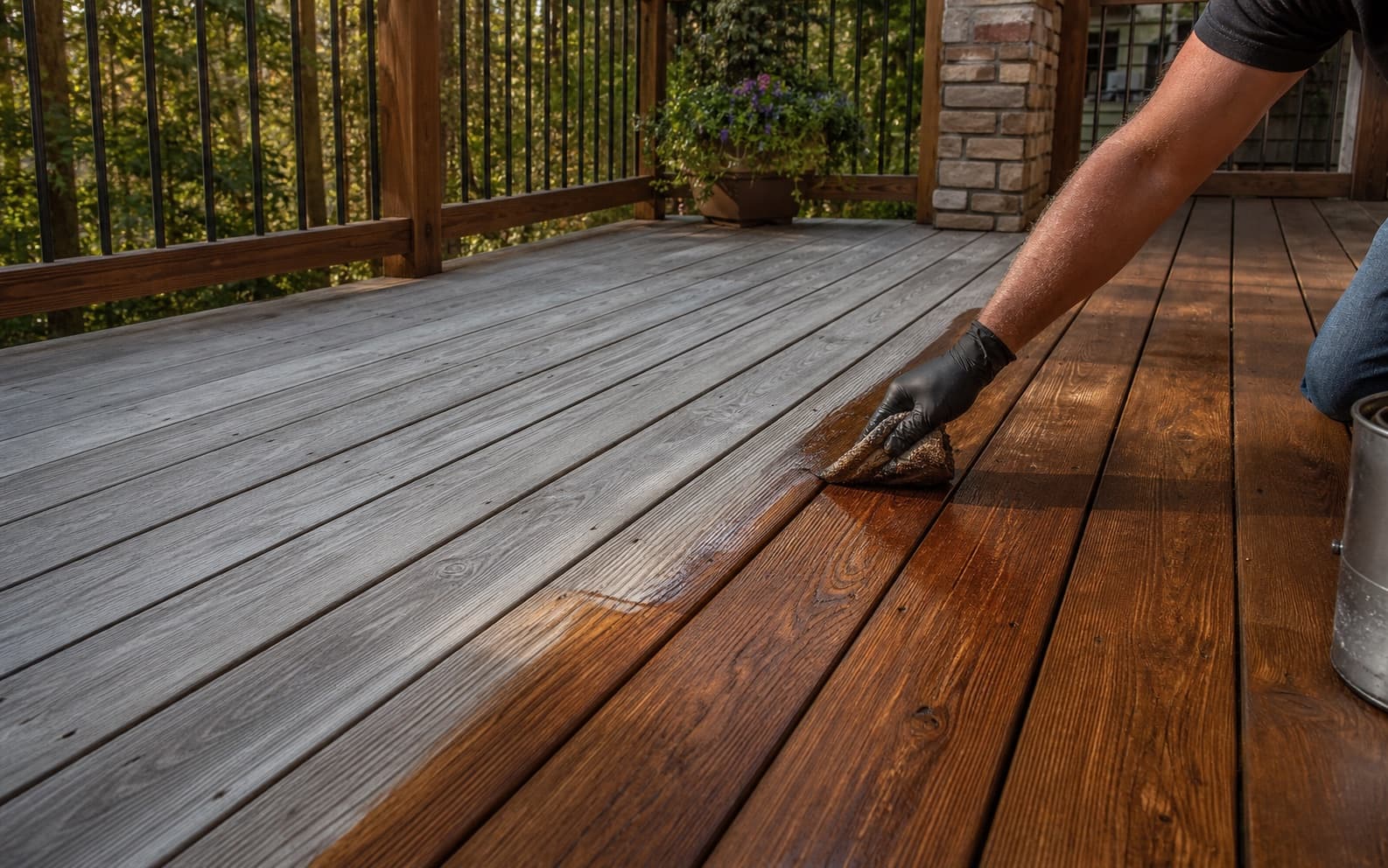
Deck Staining in Northern Virginia: When to Stain, How to Do It & What It Costs
Deck staining is the single most impactful maintenance action for pressure-treated and hardwood deck surfaces. Done on the right schedule with the right product and proper preparation, staining extends deck life by 5 to 10 years and is the primary reason some wood decks in Northern Virginia last 25 years while others look worn out at 8.
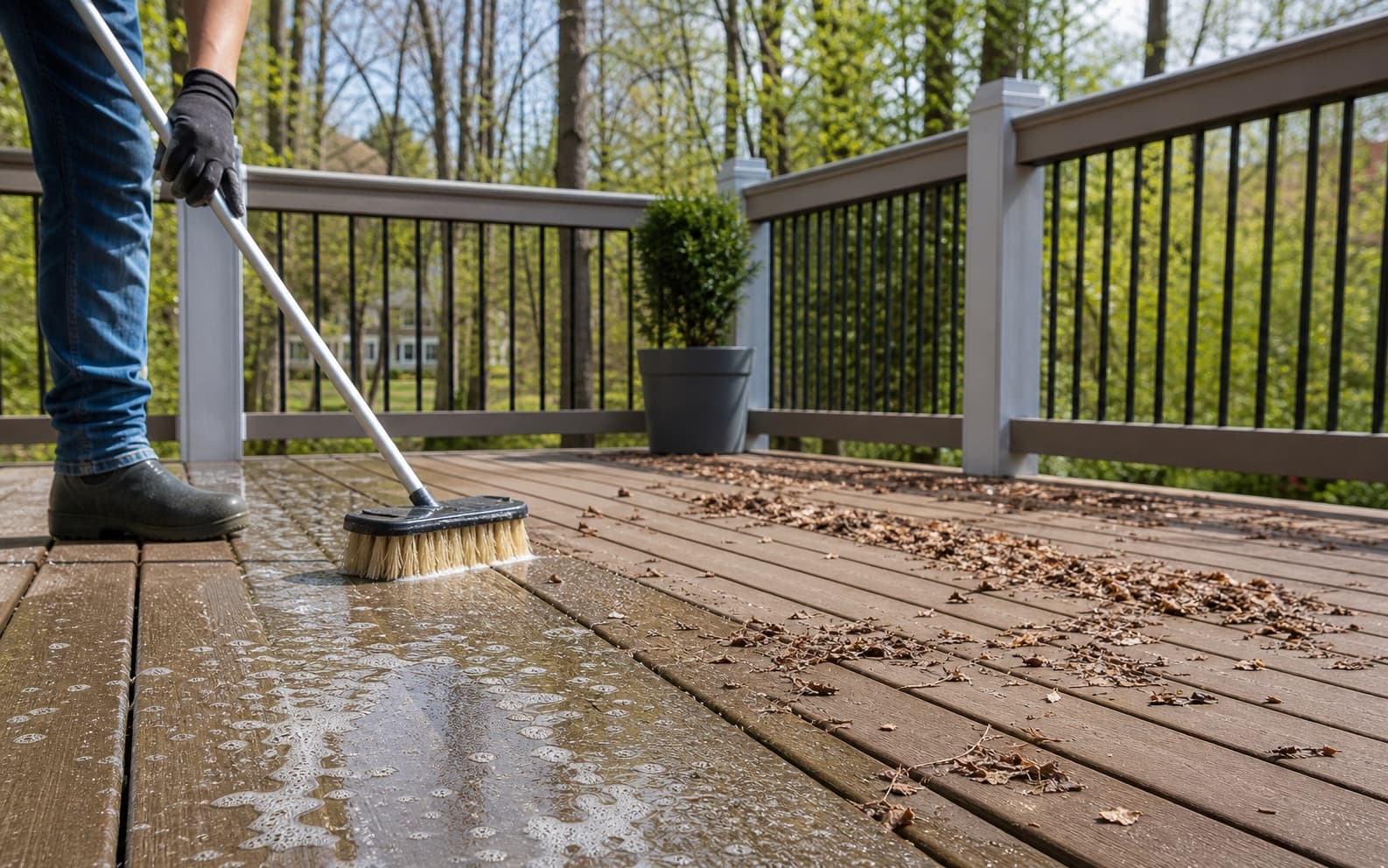
How to Clean a Composite Deck in Northern Virginia: Spring & Fall Guide
Composite decking requires minimal maintenance — but minimal is not zero. In Northern Virginia, two cleaning cycles per year address the specific challenges of the local climate: spring pollen accumulation and summer mildew, and fall leaf tannin staining. Cleaning composite correctly takes less than two hours and keeps the deck looking like new for the full warranty period.
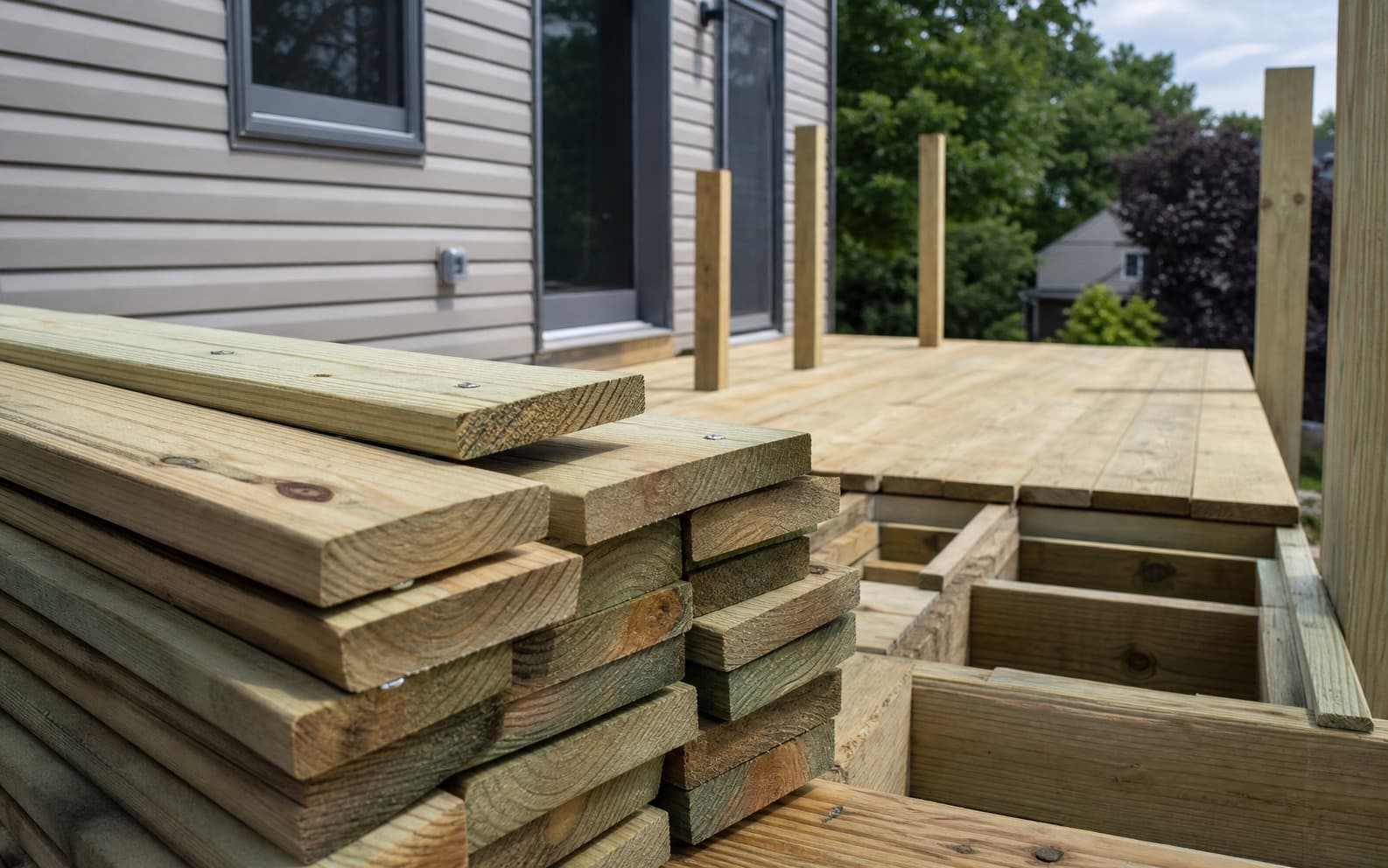
Pressure-Treated Deck Boards: What Northern Virginia Homeowners Need to Know
Pressure-treated decking has been the standard material for residential deck surfaces for decades, and it remains a viable option in 2026 for Northern Virginia homeowners who understand what they are choosing. This guide covers what modern pressure-treated lumber actually is, how it performs in Northern Virginia's climate, and what maintenance commitment it requires.
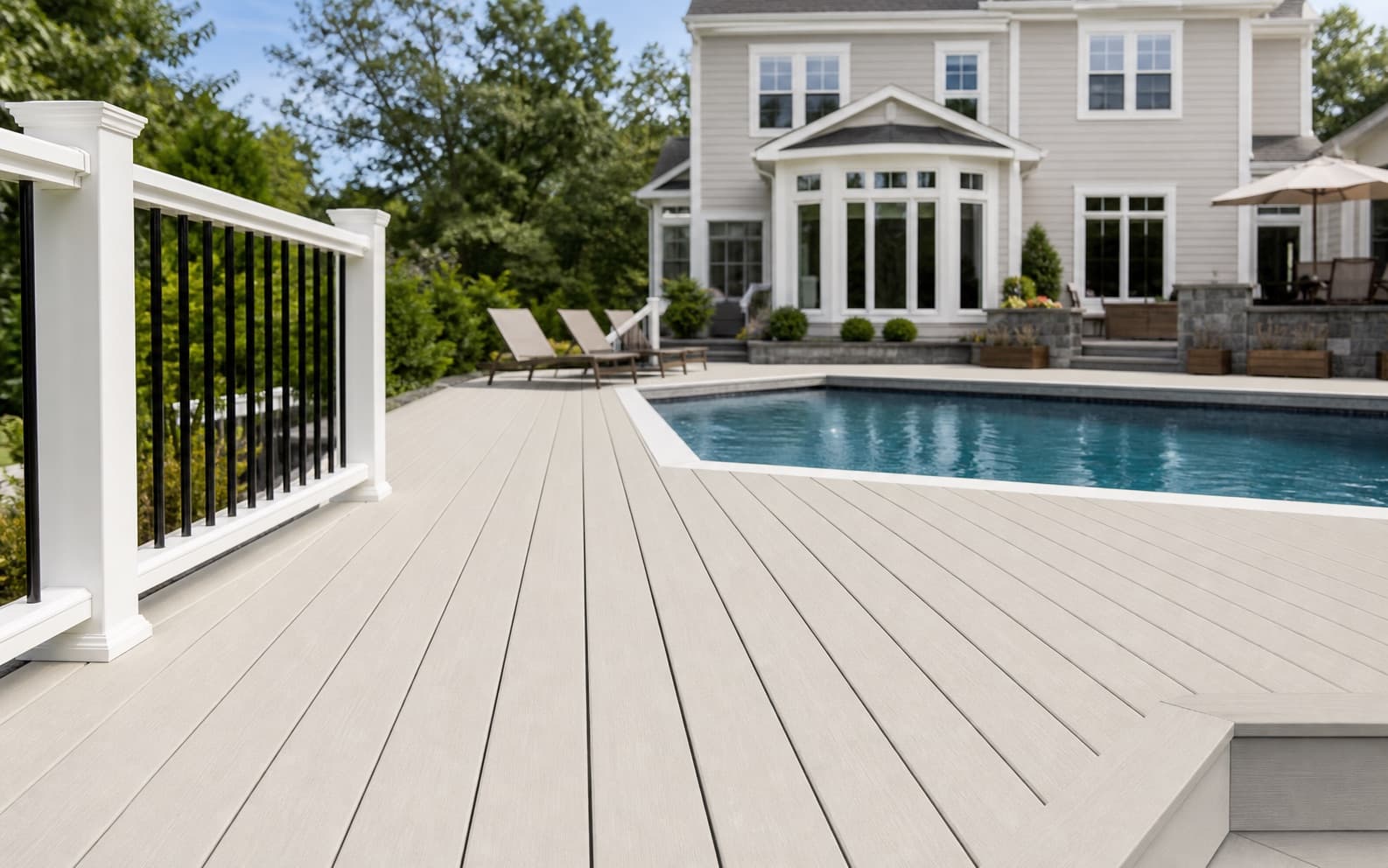
AZEK Decking Review: Is PVC Decking Right for Northern Virginia?
AZEK is the premium PVC (polyvinyl chloride) decking brand — and it is categorically different from composite decking, not just a premium version of it. Where composite decking uses a core of wood fiber and plastic polymer, AZEK uses a fully cellular PVC core with no wood fiber. This matters in Northern Virginia's humid climate for one key reason: PVC cannot rot.
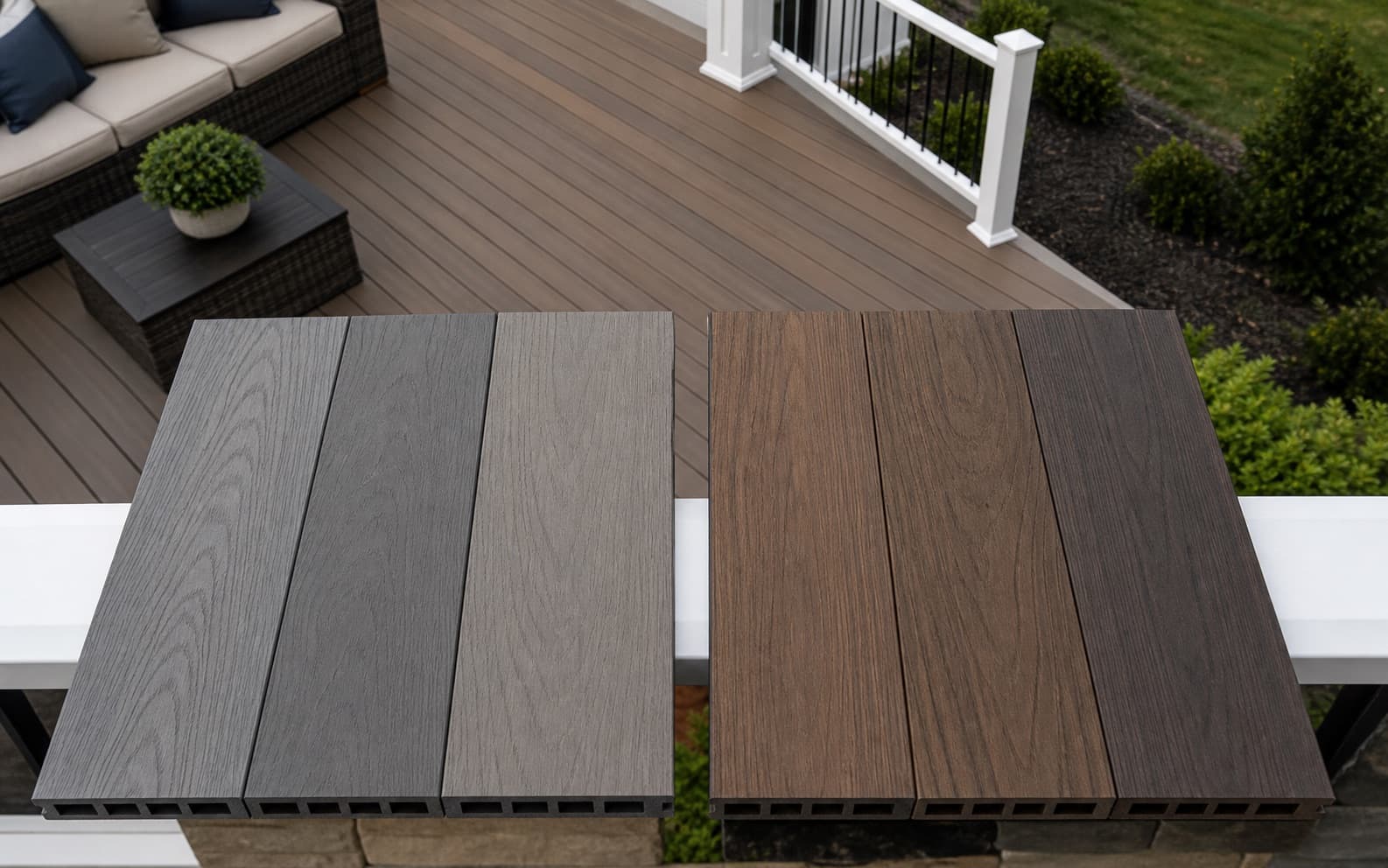
TimberTech vs. Trex in Northern Virginia: Side-by-Side Comparison 2026
TimberTech and Trex are the two dominant composite decking brands in Northern Virginia, and the comparison between them is the most frequently asked question among homeowners getting deck estimates in 2026. This guide compares them directly across the dimensions that matter for a Northern Virginia climate and HOA environment.
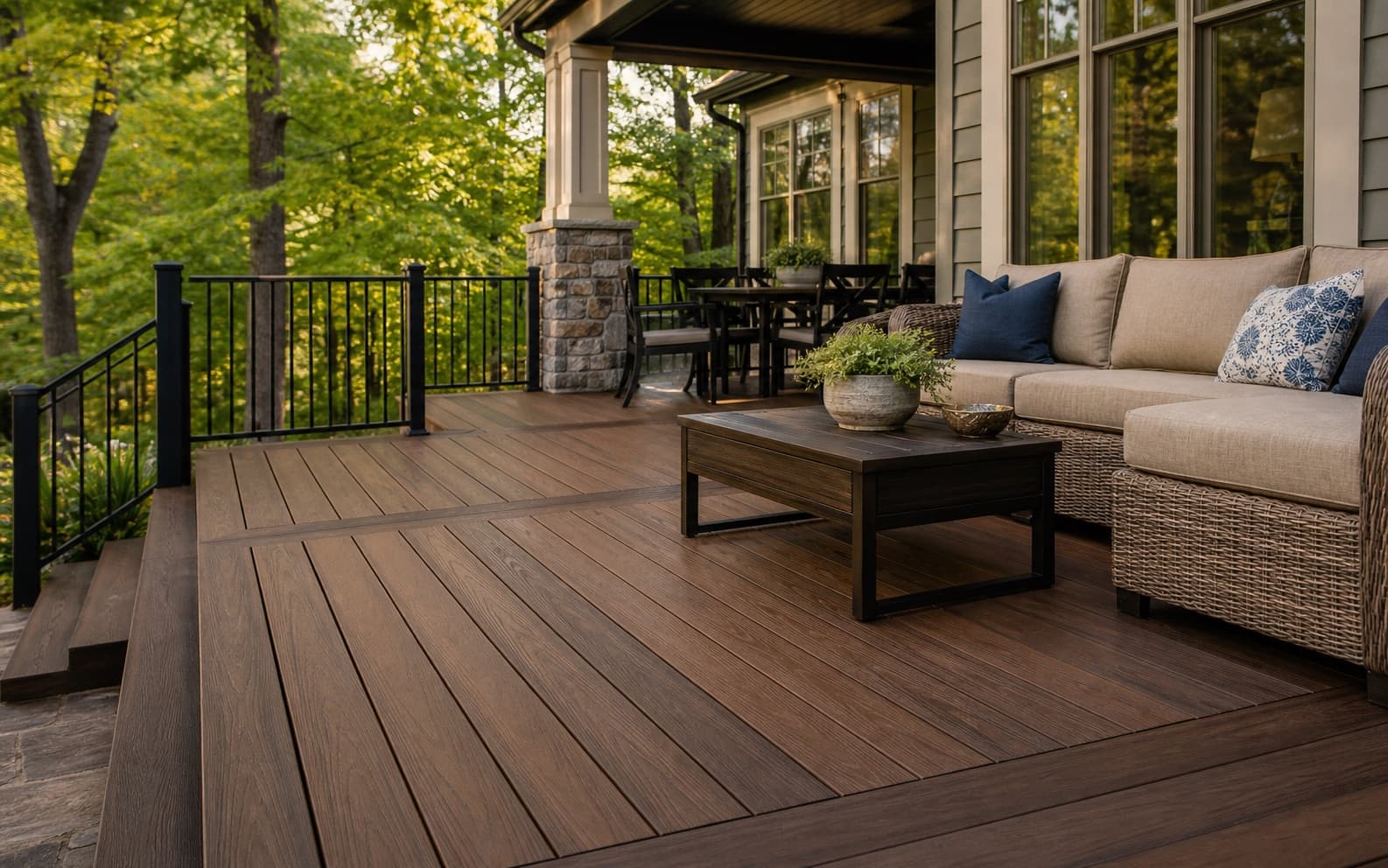
Trex Decking Review: Is It Worth It for Northern Virginia Homeowners?
Trex is the most recognized name in composite decking — and the most frequently asked about by Northern Virginia homeowners considering a new deck. This review covers what Trex actually delivers across its product lines, how it performs in Northern Virginia's climate, what the warranty covers in practice, and where it falls short compared to competitors.
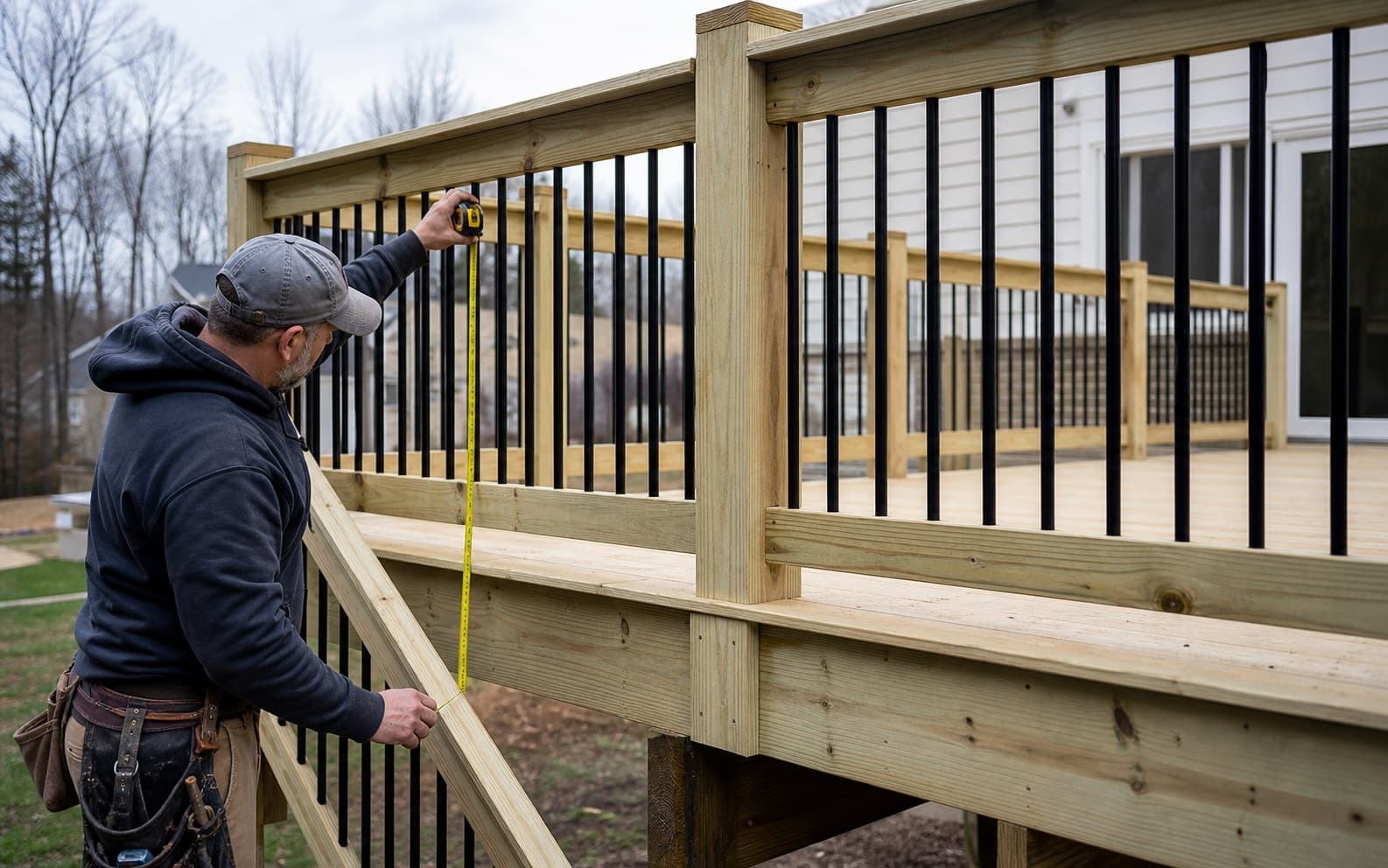
Deck Railing Code Requirements in Northern Virginia 2026
Every deck railing system built or replaced in Northern Virginia must meet the Virginia Uniform Statewide Building Code, which adopts the International Residential Code with local amendments. Understanding what the code actually requires — railing height, baluster spacing, load capacity, and connection details — helps homeowners verify that contractor proposals are code-compliant and avoid failed inspections.
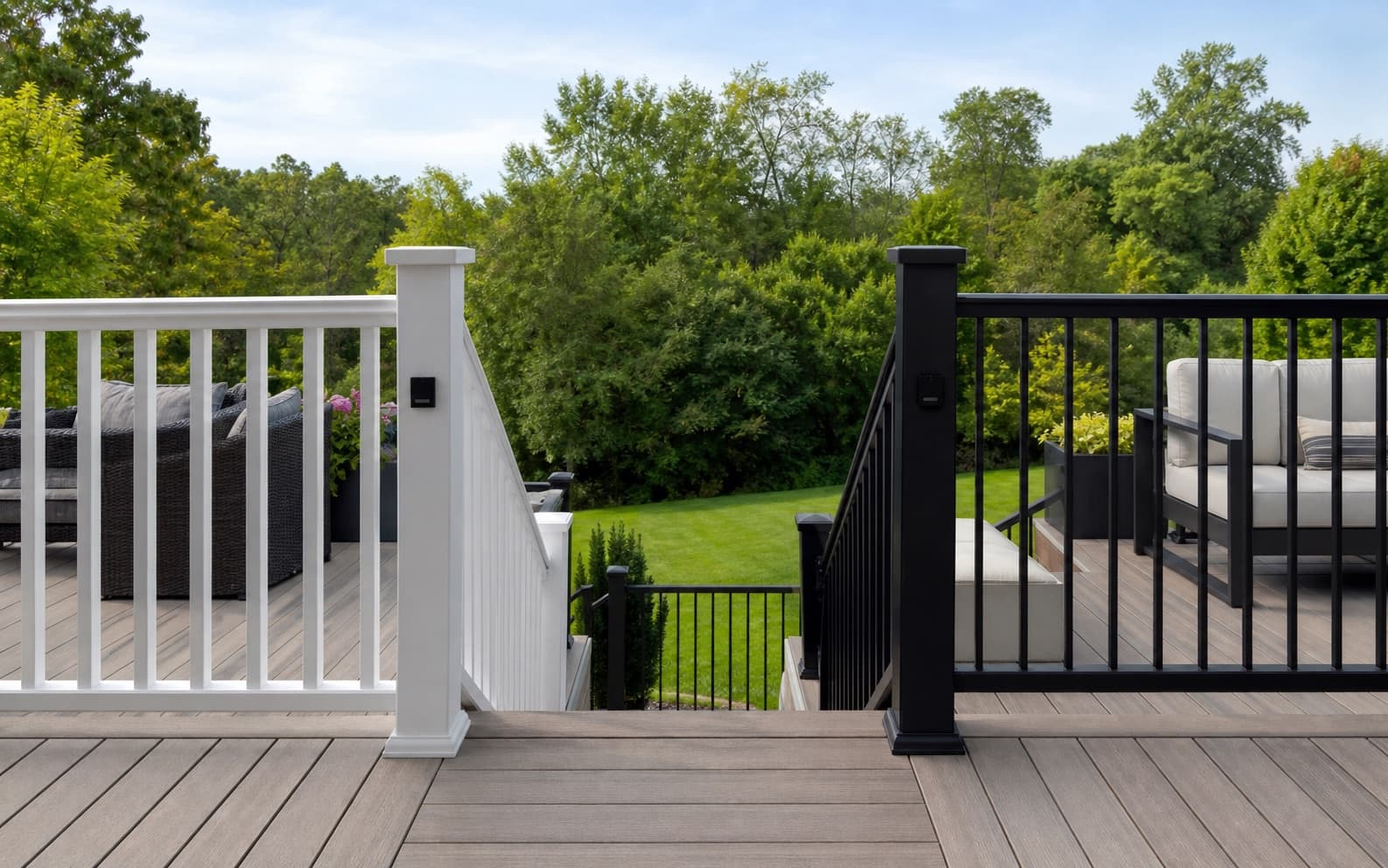
Composite Railing vs. Aluminum Railing: Which Is Better for Your Deck?
Composite and aluminum railing are the two most common baluster-style railing systems on Northern Virginia decks. Both are code-compliant, low-maintenance, and HOA-friendly. The right choice depends on aesthetic goal, budget, and whether the railing is on a composite deck, a porch, or a structure where one material performs noticeably better than the other.
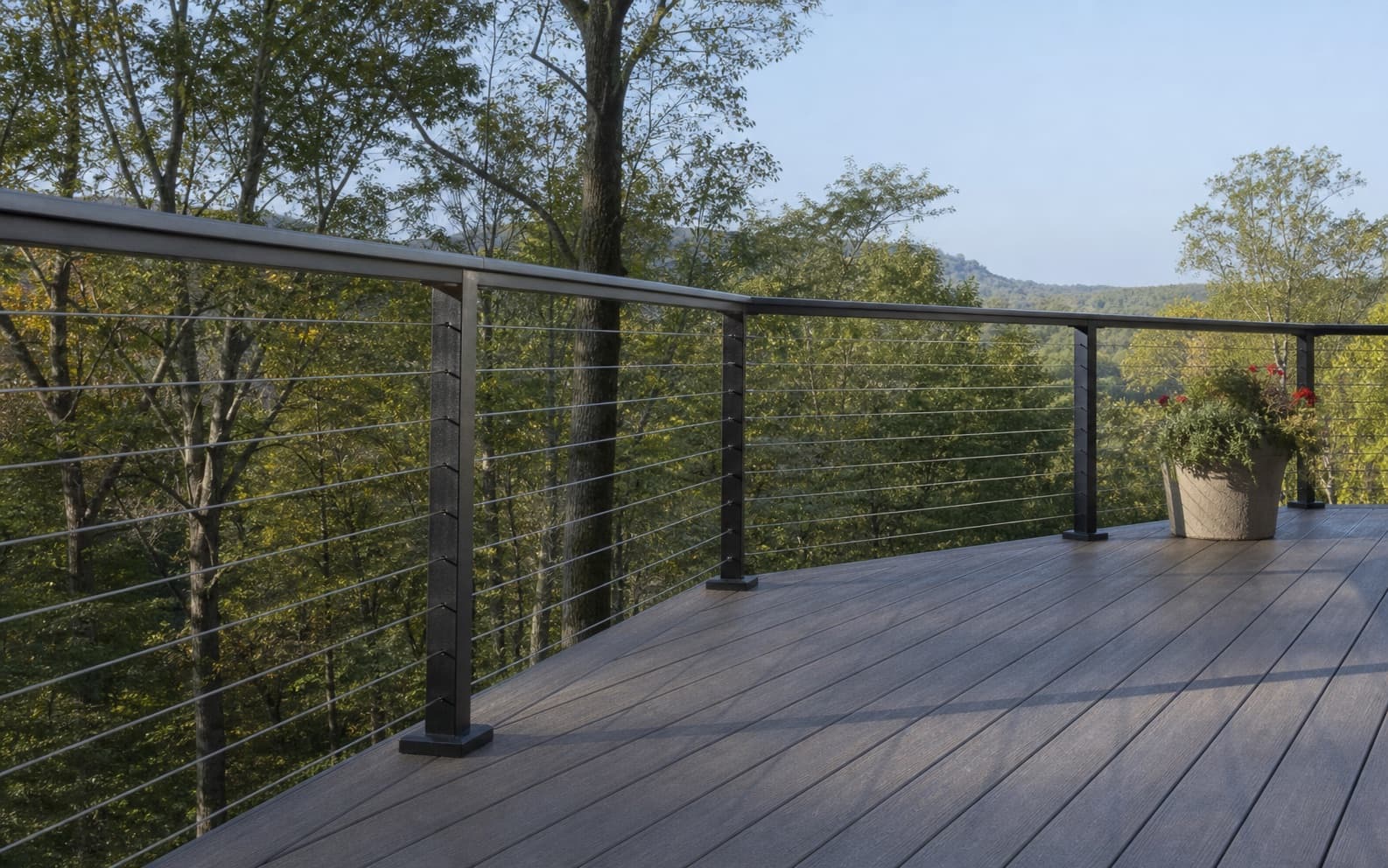
Cable Railing for Decks in Northern Virginia: Pros, Cons & Cost
Cable railing has gone from a niche premium option to one of the most requested railing systems in Northern Virginia in the past five years. The appeal is obvious — the horizontal cables are nearly invisible, views are preserved, and the aesthetic is clean and contemporary. But cable railing also has real trade-offs that homeowners frequently discover after the project is complete.
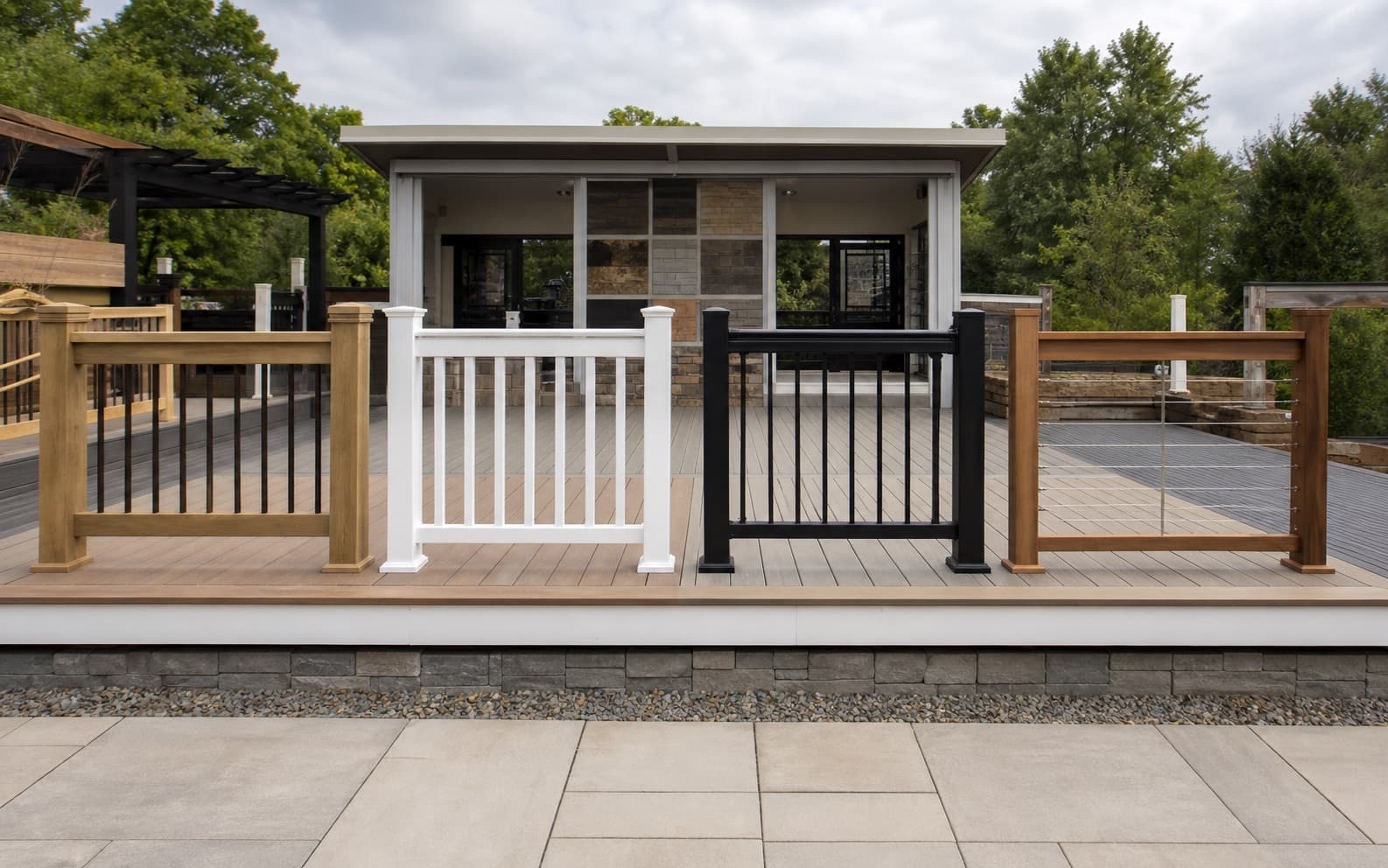
Deck Railing Options in Northern Virginia: Types, Cost & Comparison
Railing is the most visible design element on most decks — it defines the perimeter, sets the style tone, and accounts for 20 to 35 percent of total project cost on a typical deck. Understanding the four primary railing categories available in Northern Virginia in 2026, what each costs, and what the code and HOA requirements are will help you choose the right system for your project.
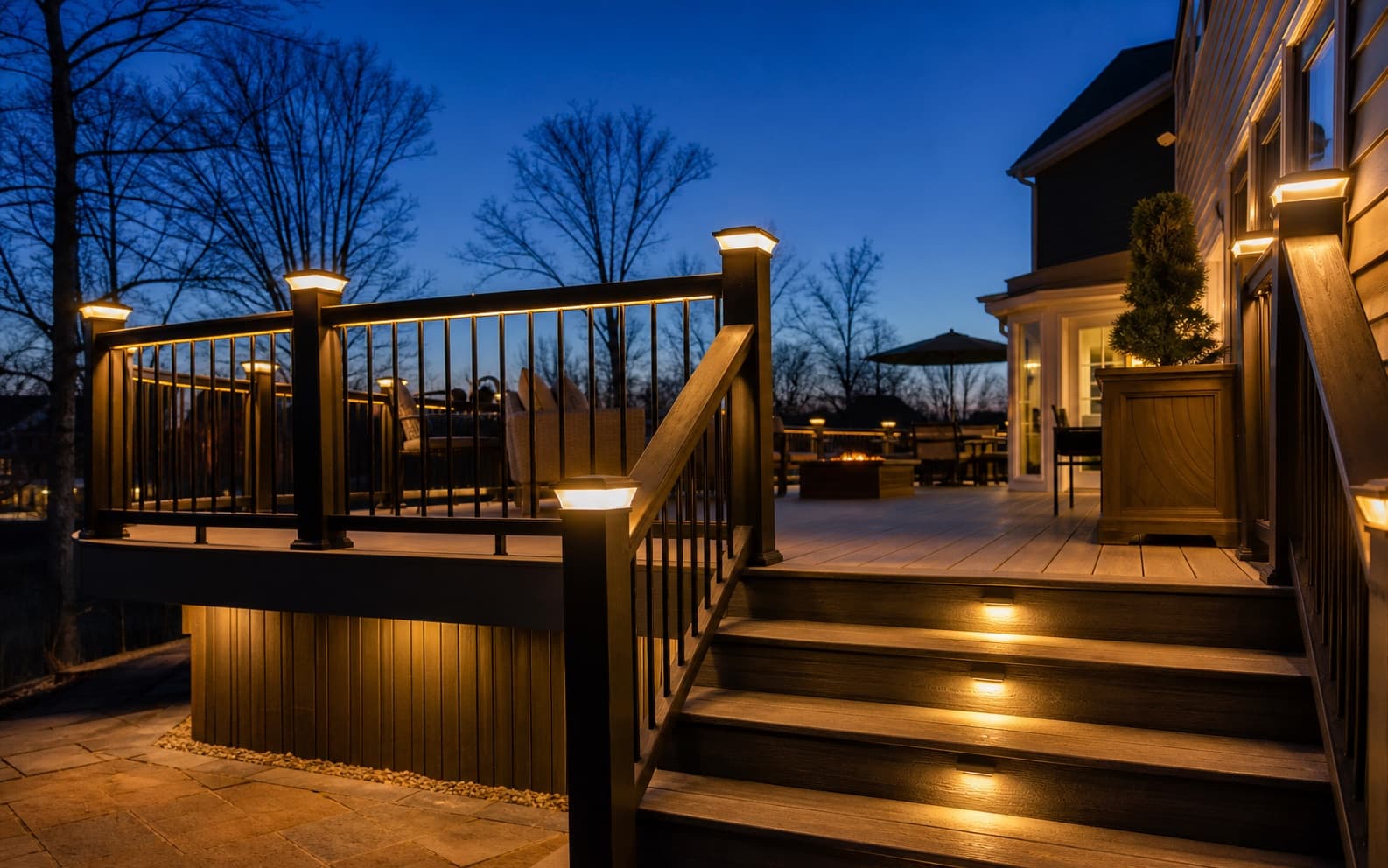
Deck Lighting Ideas for Northern Virginia Homes: A Practical 2026 Guide
Deck lighting is one of the highest-return additions you can make to an outdoor space — it extends usable hours into the evening, adds safety on stairs and edges, and transforms the appearance of the deck after dark. This guide covers the practical options for Northern Virginia homeowners in 2026, from low-voltage systems to line-voltage circuits.
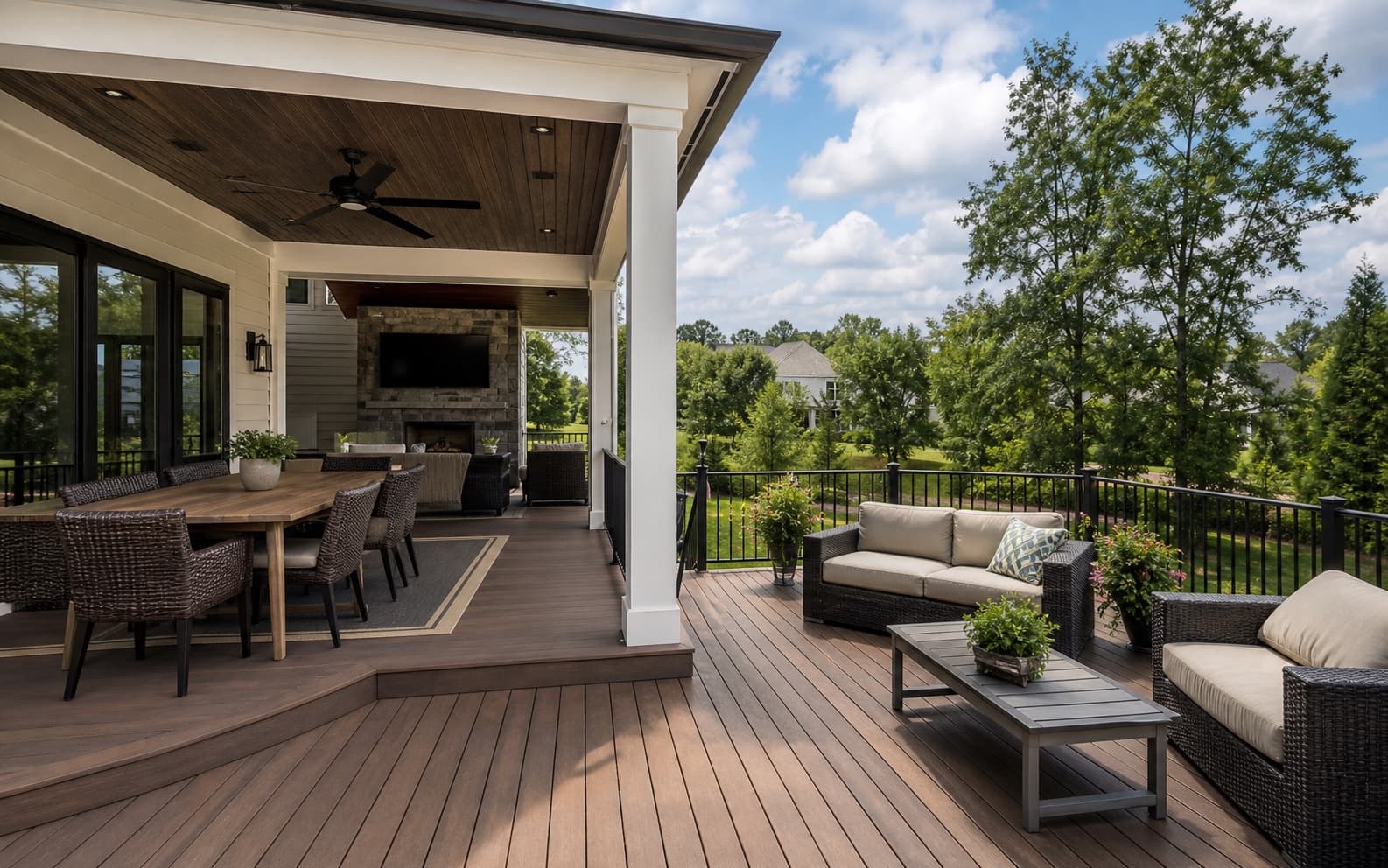
Covered Deck vs. Open Deck in Northern Virginia: Which Is Right for You?
Northern Virginia summers — hot, humid, with intense afternoon sun from June through September — make the covered-versus-open deck decision more consequential than it might seem. A deck that bakes in direct afternoon sun becomes unusable from 2 to 6 PM for four months of the year. This guide helps you decide which configuration makes sense for your lot, lifestyle, and budget.
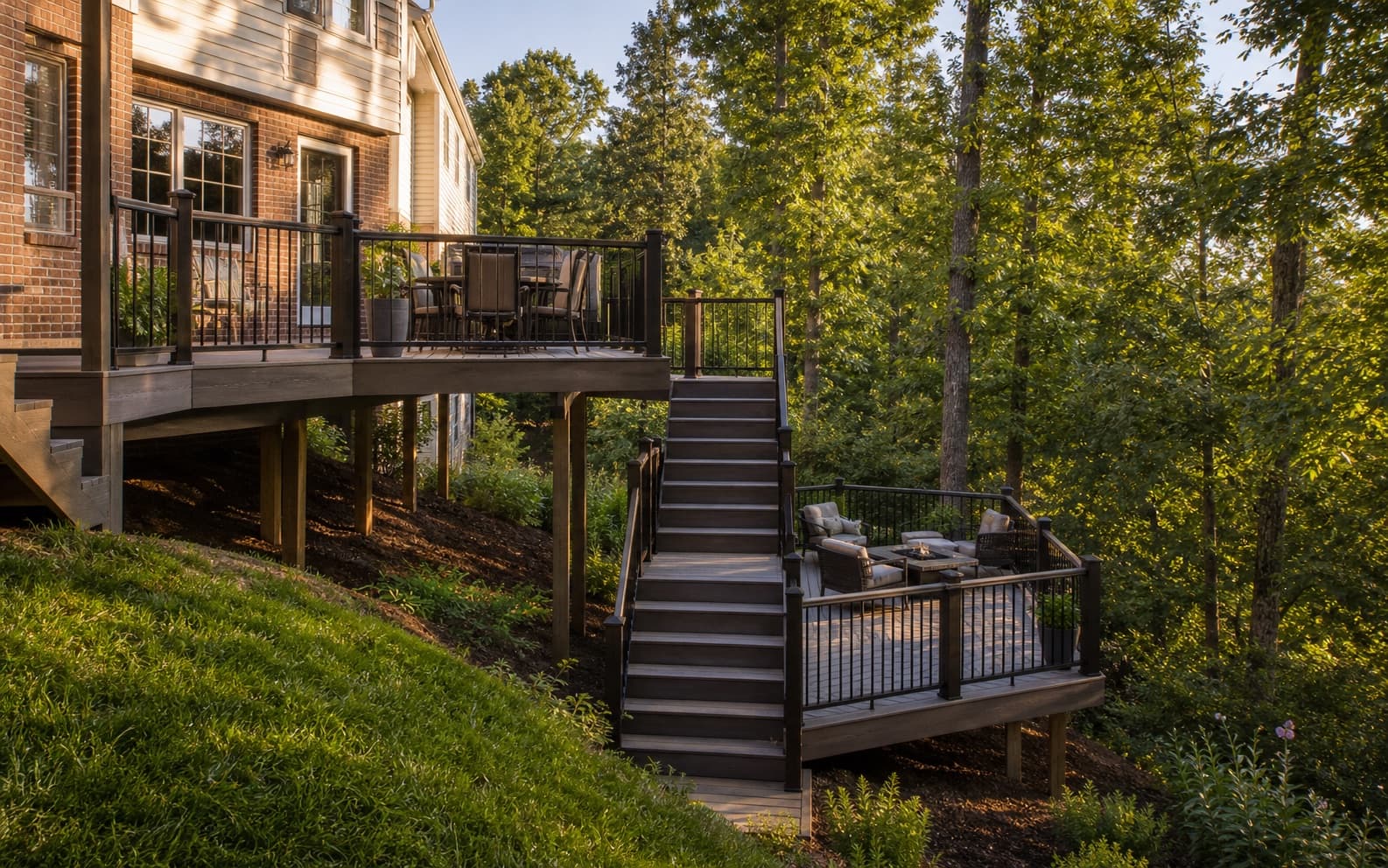
Multi-Level Deck Design in Northern Virginia: What to Know Before You Build
A multi-level deck solves design challenges that a single-level platform cannot: sloped lots, large yard areas that benefit from functional zones, and the desire to separate dining, cooking, and lounge areas in a way that feels intentional. But multi-level decks also cost more, require more complex permitting, and introduce design decisions that affect how the space functions for years.
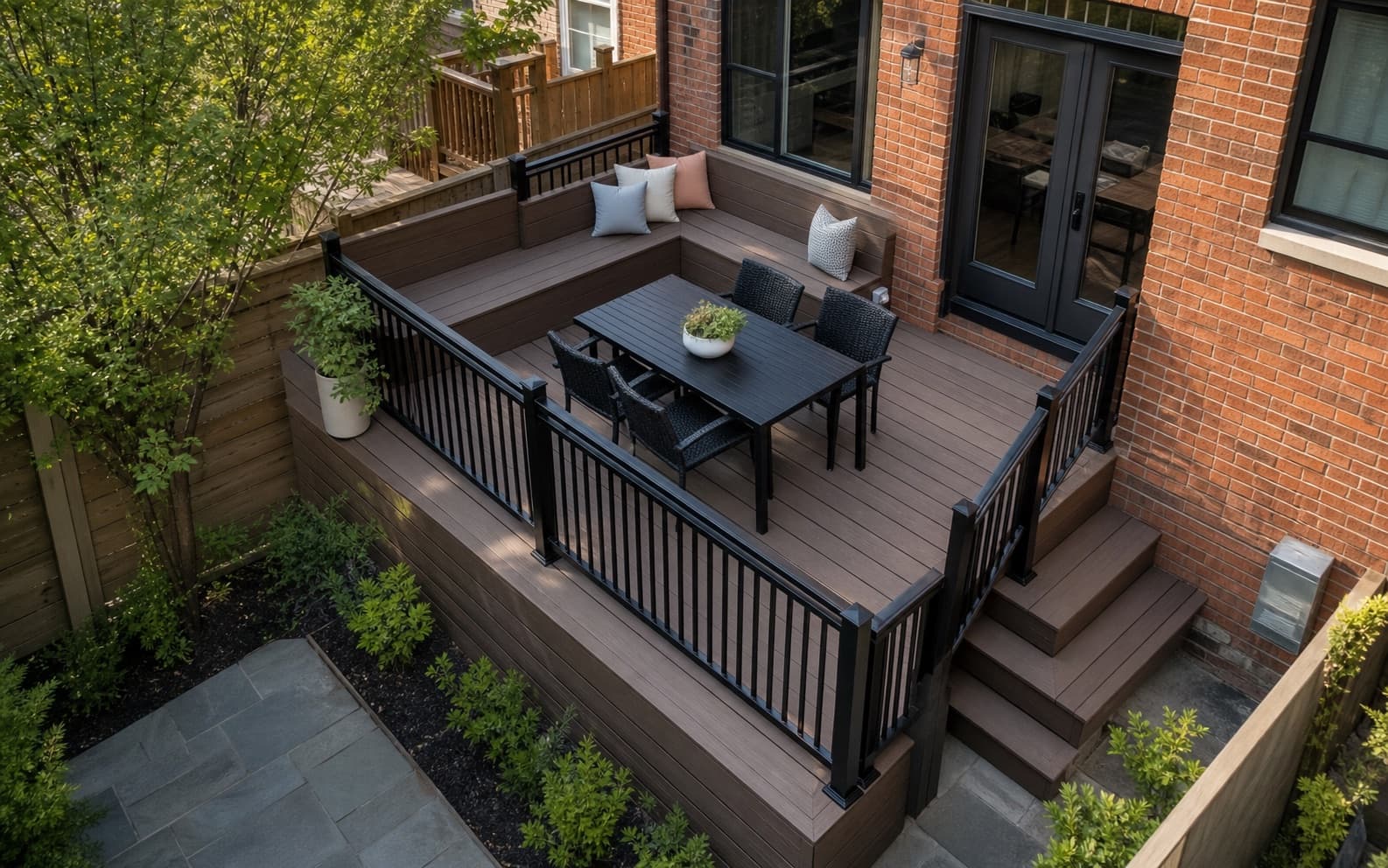
Deck Design Ideas for Small Backyards in Northern Virginia
Many Northern Virginia homes — particularly townhomes, end-units, and newer subdivisions in Ashburn, Brambleton, and South Riding — have compact backyards that feel limiting when it comes to outdoor living. The right deck design turns that constraint into an asset. Here are the approaches that work best on small lots.
What Affects Deck Cost the Most? 8 Factors That Move the Price
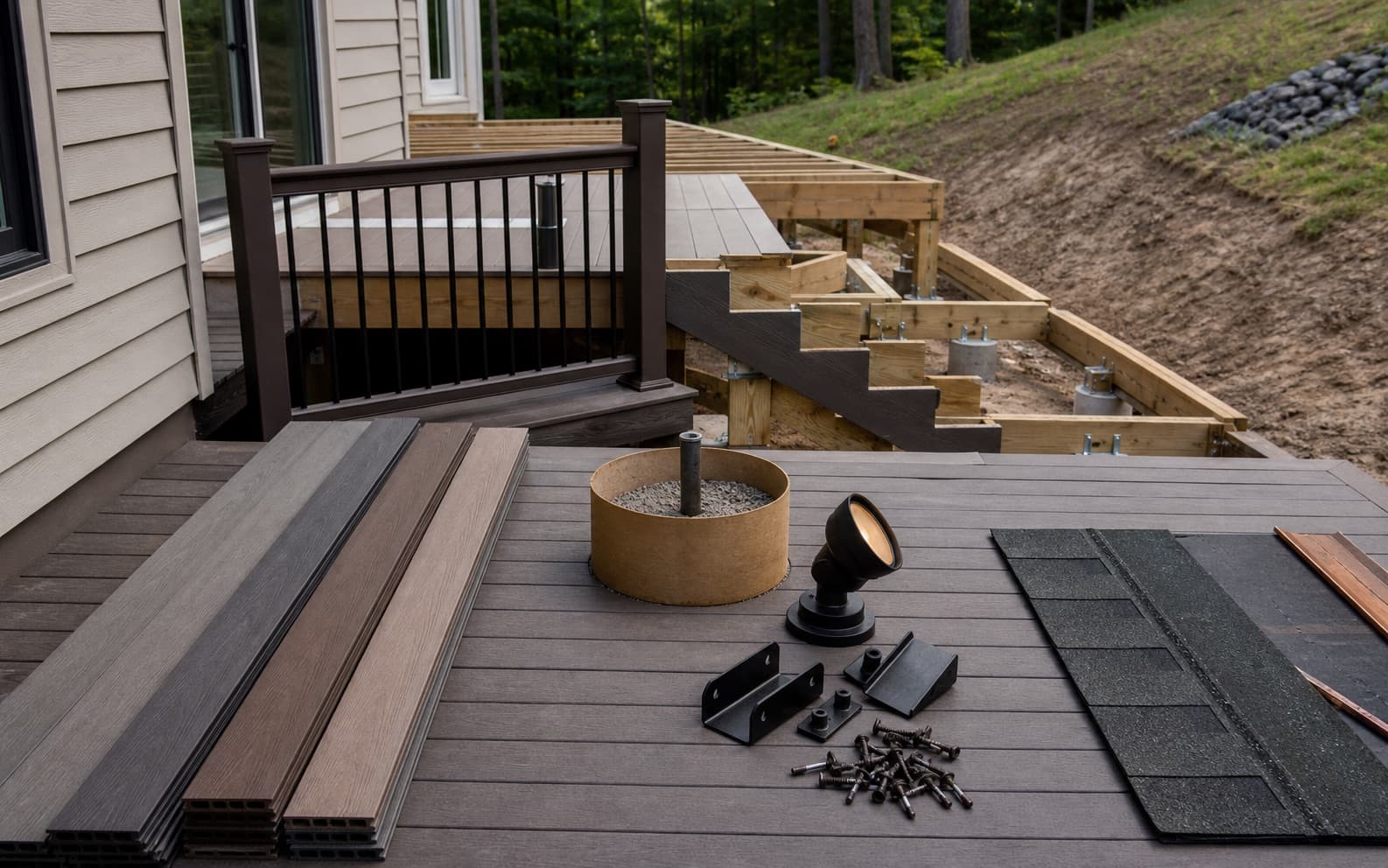
Homeowners comparing deck quotes are often surprised to find that two bids for a similarly sized deck can differ by $10,000 or more. The difference is almost never profit margin — it is scope. Eight specific factors drive deck cost, and understanding each one lets you read bids accurately and make design decisions that align with your budget.

Deck Financing Options for Northern Virginia Homeowners
A new composite deck in Northern Virginia costs $35,000 to $70,000 for most mid-size projects. Few homeowners pay cash. Understanding the financing options available — HELOCs, home equity loans, personal loans, and contractor financing — and what each costs in 2026 will help you make an informed decision about how to pay for your project.
How Much Does a Deck Cost in Northern Virginia? 2026 Price Guide
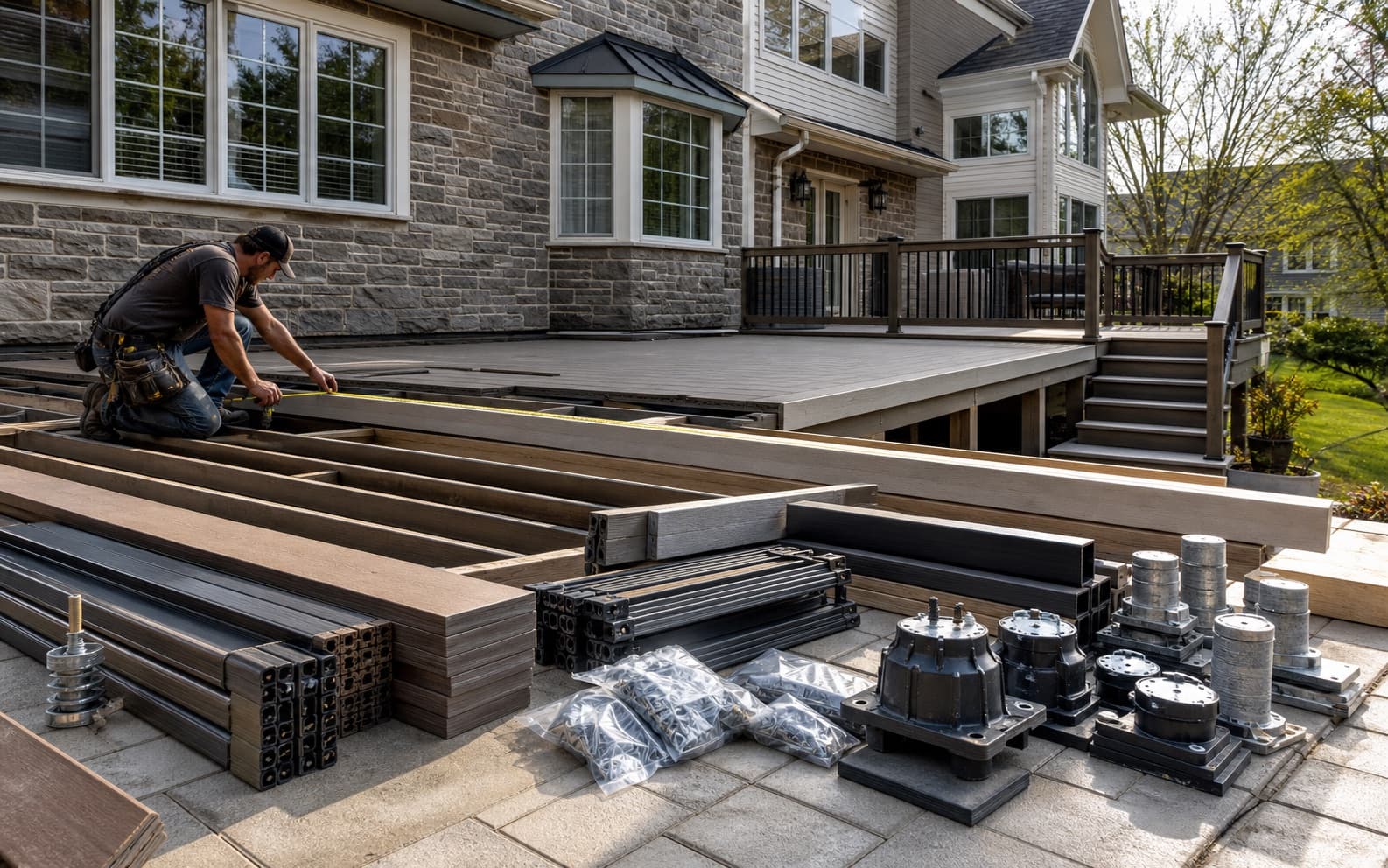
The single most common question homeowners ask before starting a deck project is: what will it cost? In Northern Virginia in 2026, a new deck can range from under $15,000 to over $80,000 depending on size, material, complexity, and site conditions. This guide breaks down cost by every variable so you can set a realistic budget before the first contractor call.
HOA Deck Approval Process in Northern Virginia: What to Expect
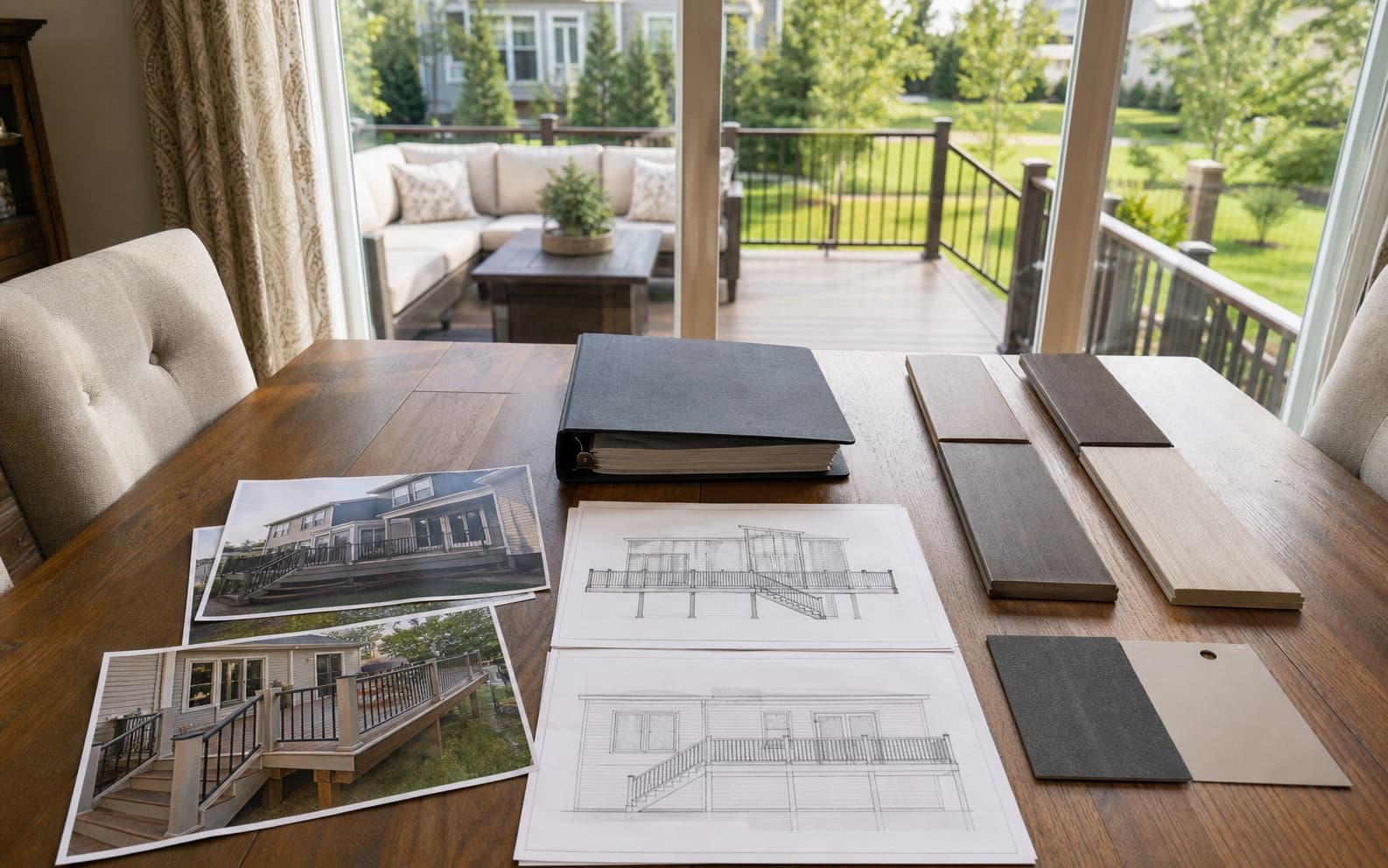
More than half of all homeowners in Loudoun and Fairfax counties live in HOA-governed communities. Before any deck permit can be pulled or any work can begin, the HOA Architectural Review Committee must approve the project. The ARC process is separate from county permitting, has its own timeline, and requires specific documentation that differs from what the county requires.
Deck Permit Requirements in Fairfax County 2026
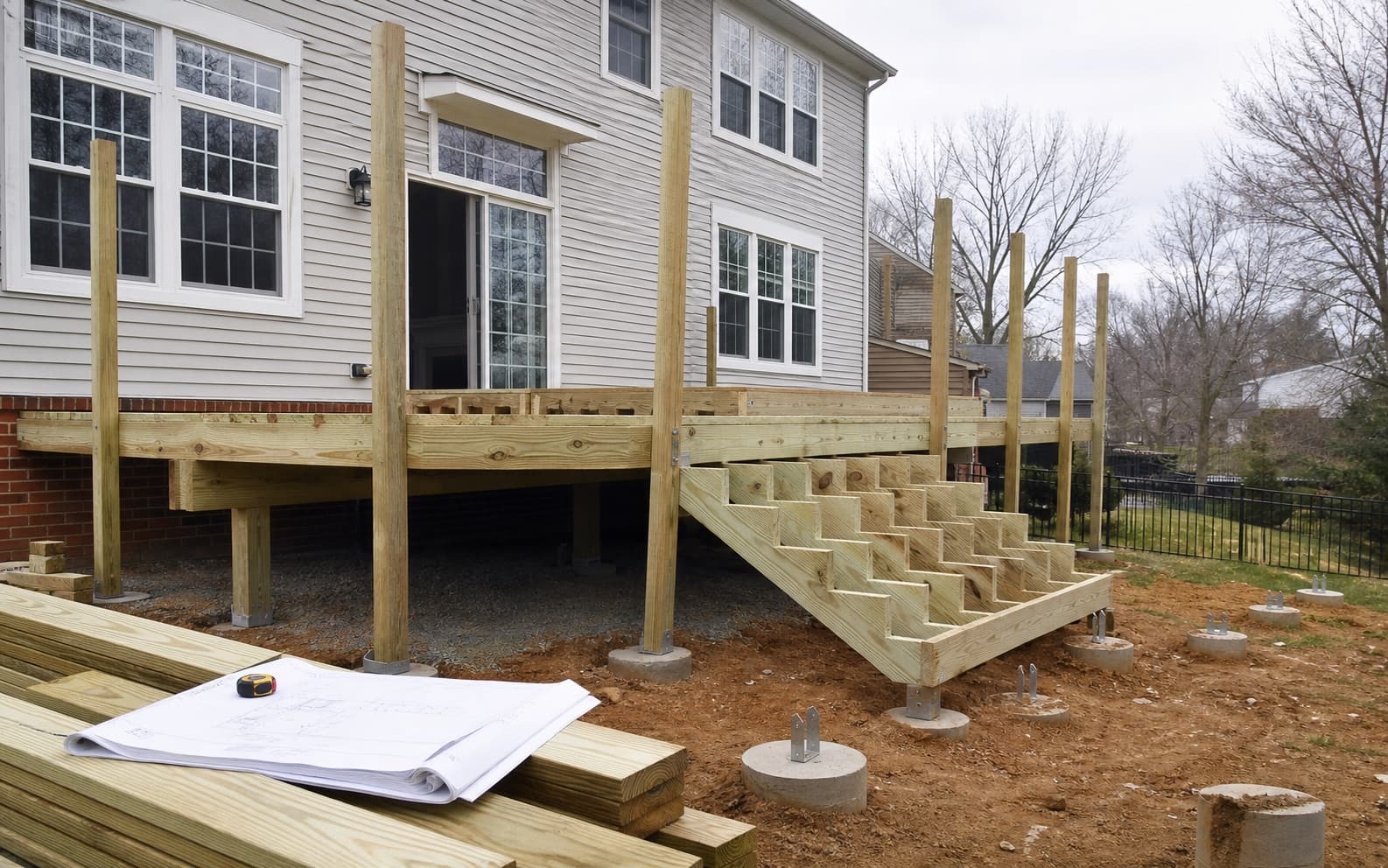
Fairfax County is one of the most active residential construction permit jurisdictions in Virginia, and deck permits are subject to detailed plan review. This guide covers what triggers a deck permit in Fairfax County, what the application requires, current fee structure, and what the inspection process involves in 2026.
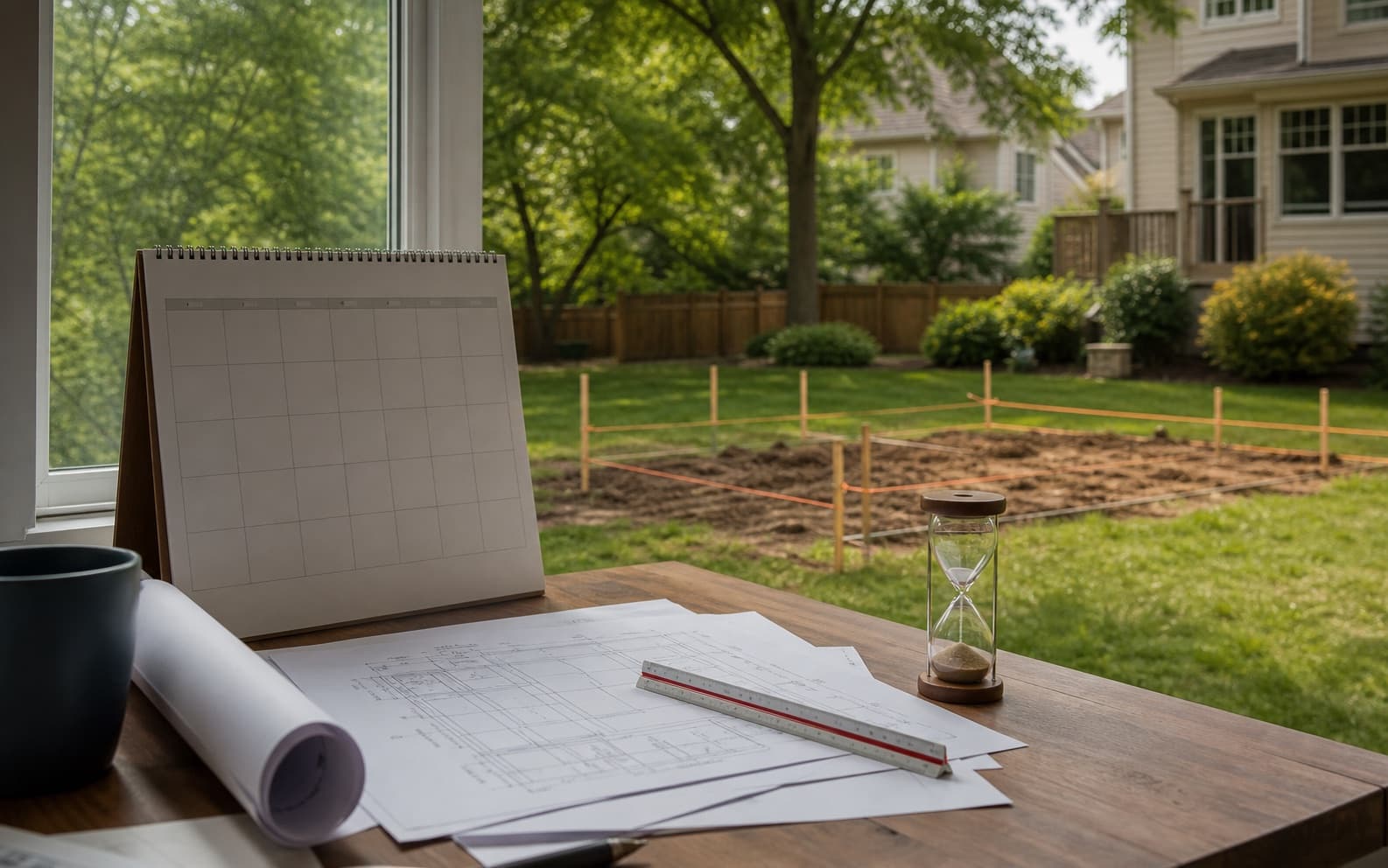
How Long Does a Deck Permit Take in Northern Virginia?
The most common planning mistake Northern Virginia homeowners make when scheduling a deck project is underestimating the permit timeline. A permit that takes three to six weeks means a deck started in early April may not be under construction until May or June. Here are realistic timelines for every major Northern Virginia jurisdiction in 2026.
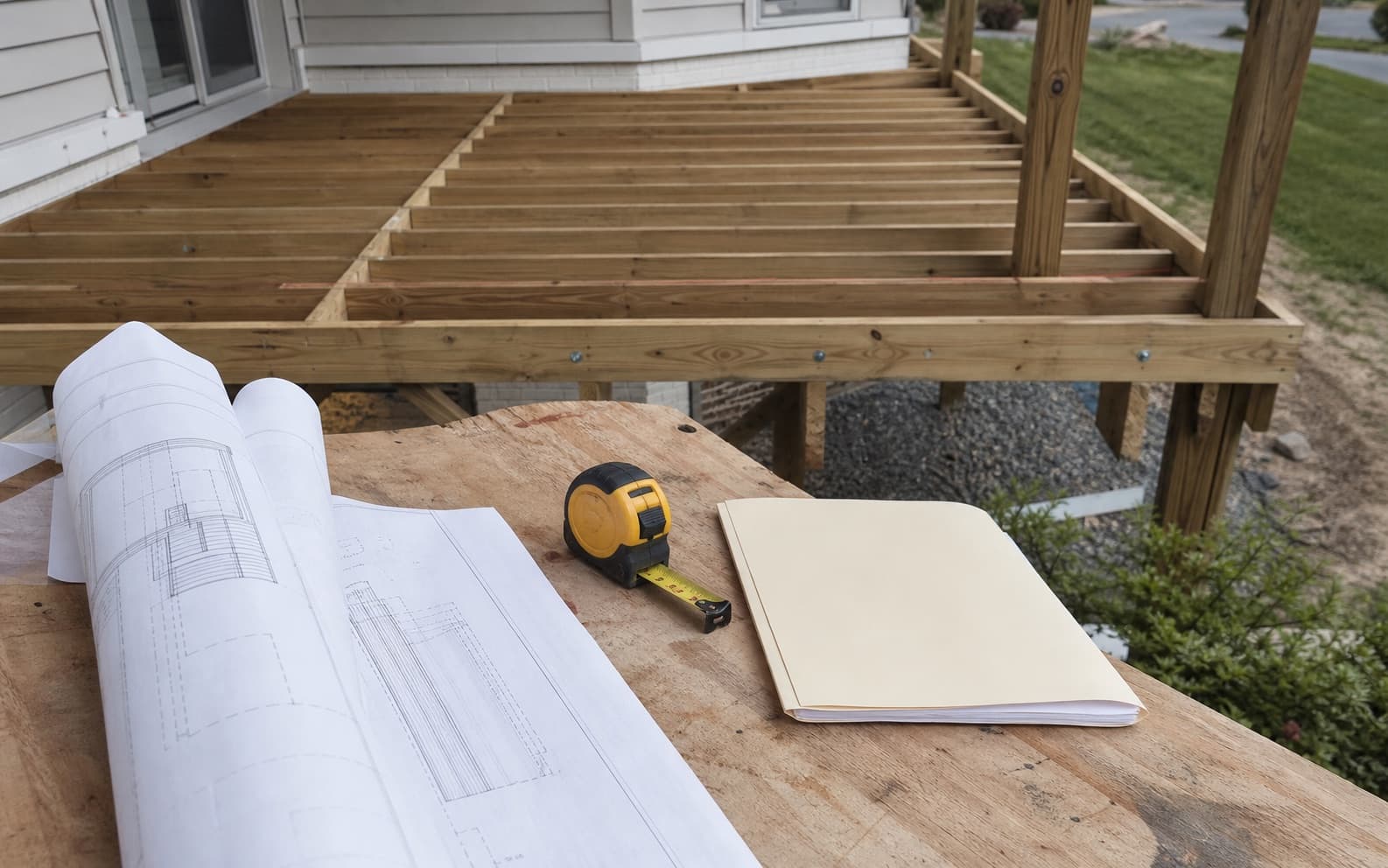
Deck Permit Process in Loudoun County: Step-by-Step Guide
Building a deck in Loudoun County without a permit is one of the most expensive mistakes a homeowner can make — it creates a disclosed defect that must be reported when selling, can result in forced removal, and voids most homeowner insurance coverage for deck-related incidents. This guide walks through every step of the permit process so there are no surprises.
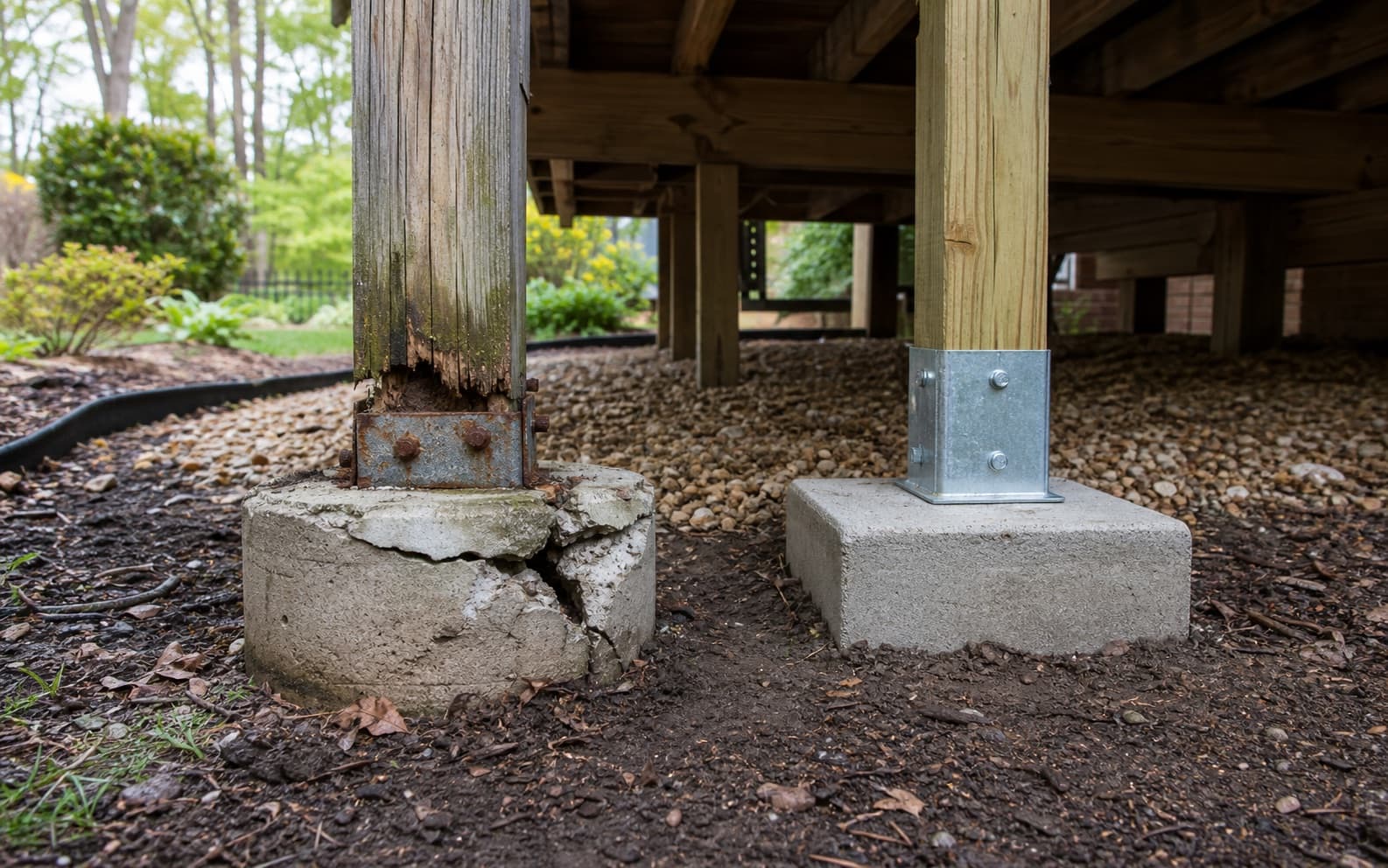
Deck Post and Footing Problems: When to Replace and What It Costs
Deck posts carry every pound of load from the deck surface to the ground. When a post rots or a footing heaves, the entire structural system above it is at risk. This guide covers how to identify post and footing failure on Northern Virginia decks and what replacement actually involves.
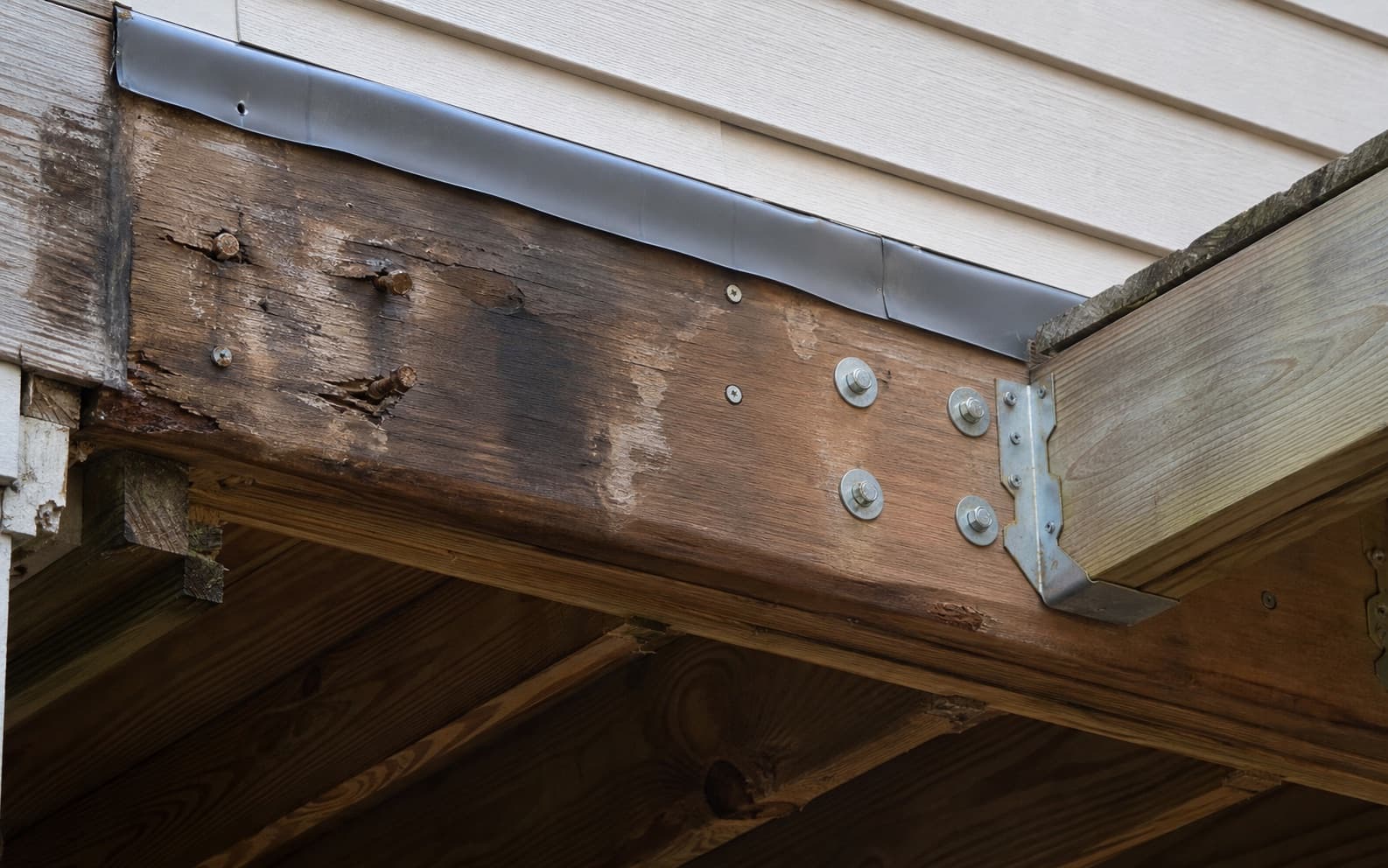
Deck Ledger Board Problems: Signs of Failure and What to Do
The ledger board is the single most critical structural connection on your deck — and the most common cause of catastrophic deck collapses in the United States. Without proper installation and maintenance, it silently deteriorates behind the deck surface until the structure separates from the house without warning.
Deck Joist Rot: How to Identify, Repair, or Replace Rotted Joists
Deck joist rot is the most common structural defect found during professional deck inspections in Northern Virginia. It develops slowly and silently beneath the surface boards, often invisible until the structure is significantly compromised. This guide shows you how to find it, assess it, and fix it before it becomes a collapse risk.
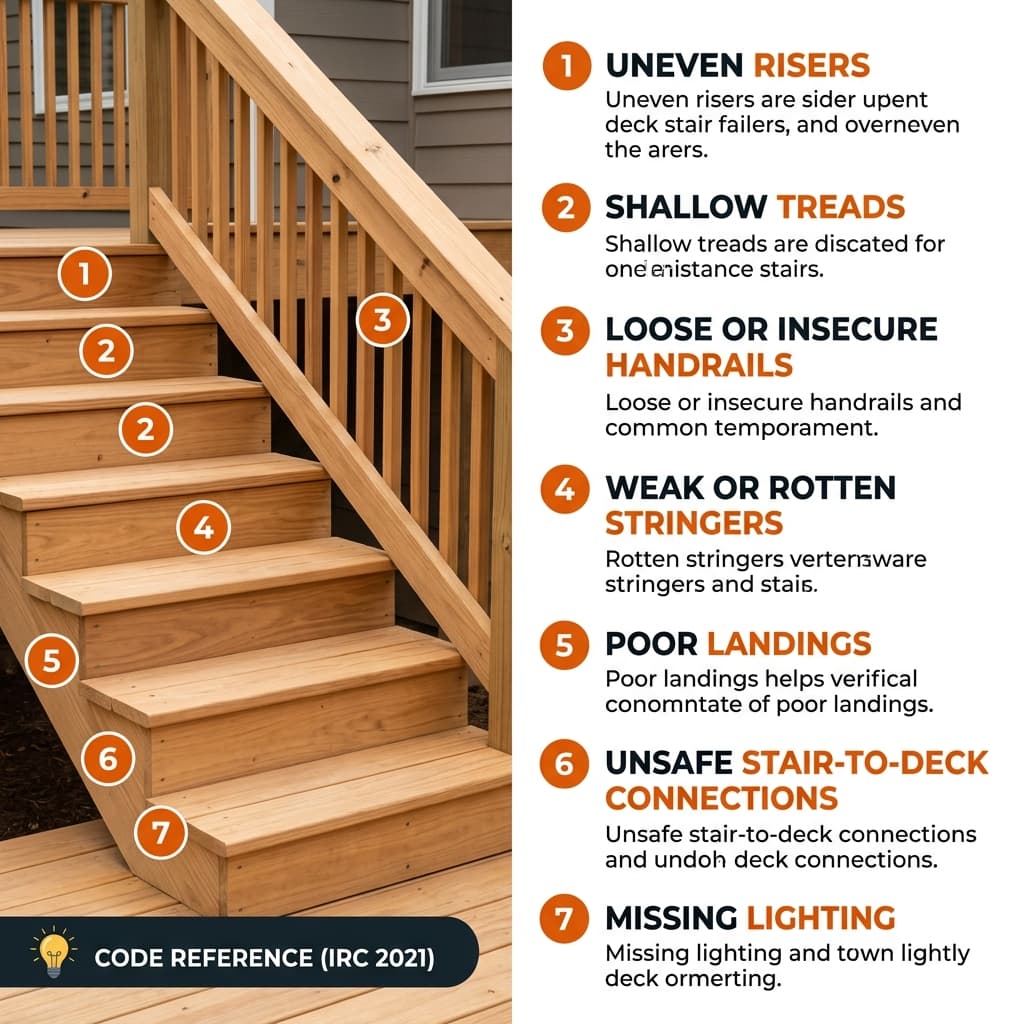
7 Signs Your Deck Needs Immediate Structural Repair
Deck failures in the United States injure thousands of homeowners every year, and Northern Virginia decks face a particularly demanding environment of humid summers, heavy freeze-thaw cycling, and aggressive seasonal pollen. Most failures are preventable — if you know what to look for before the problem becomes a collapse.
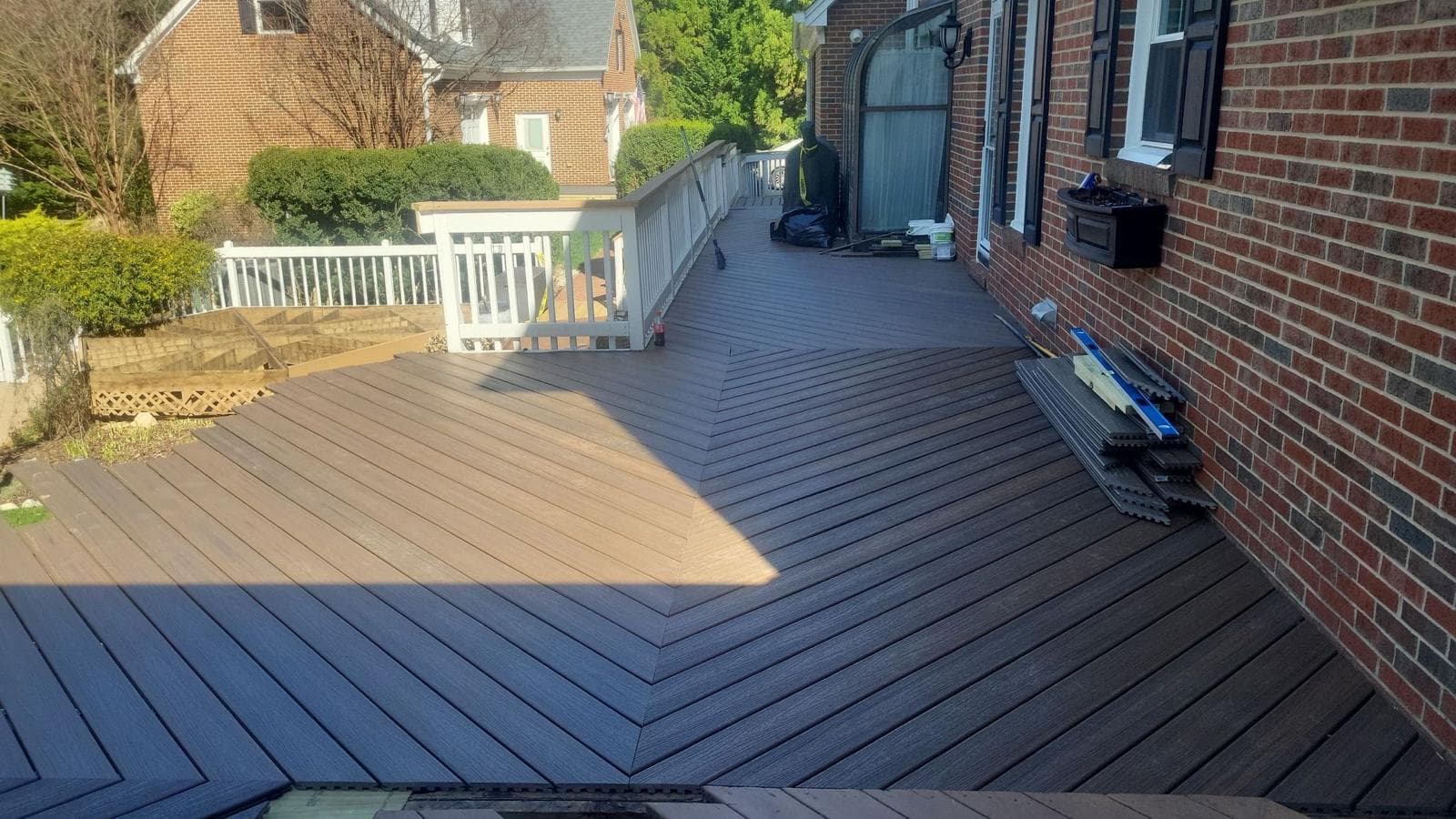
Resurface vs. Replace a Composite Deck: How to Decide
At some point, every composite deck that has aged significantly, faded, or developed surface damage becomes a candidate for resurfacing or full replacement. These are two very different scopes of work at very different price points. This guide provides a clear, practical framework for deciding which one your deck in Northern Virginia actually needs.
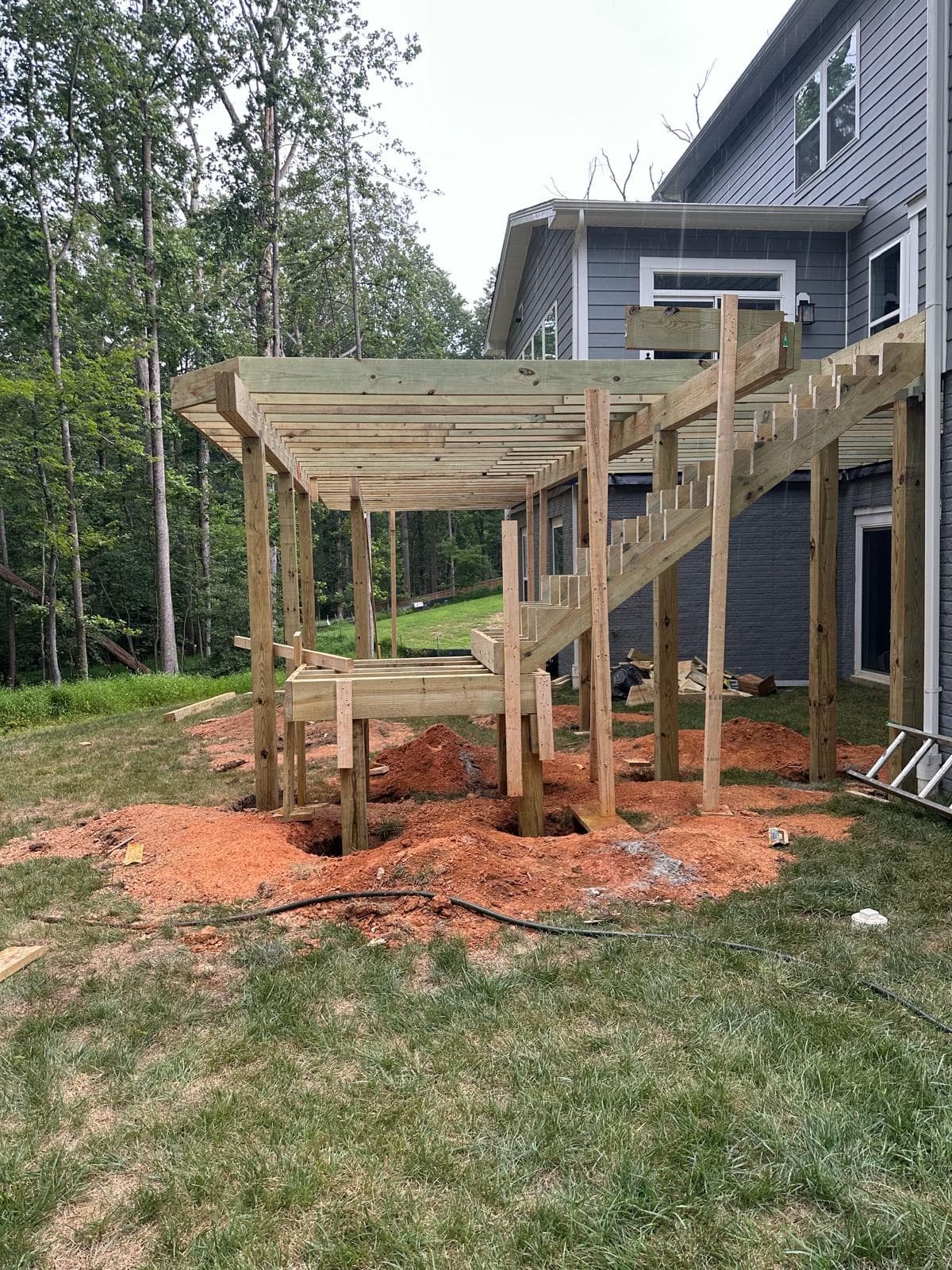
Best Composite Deck Colors for Full Sun in Northern Virginia
Choosing the right composite decking color for a full-sun Northern Virginia deck is not just an aesthetic decision — it directly affects surface temperature, UV fading, and long-term appearance. This guide covers the science of color and heat, specific product picks, and Northern Virginia backyard-oriented recommendations.
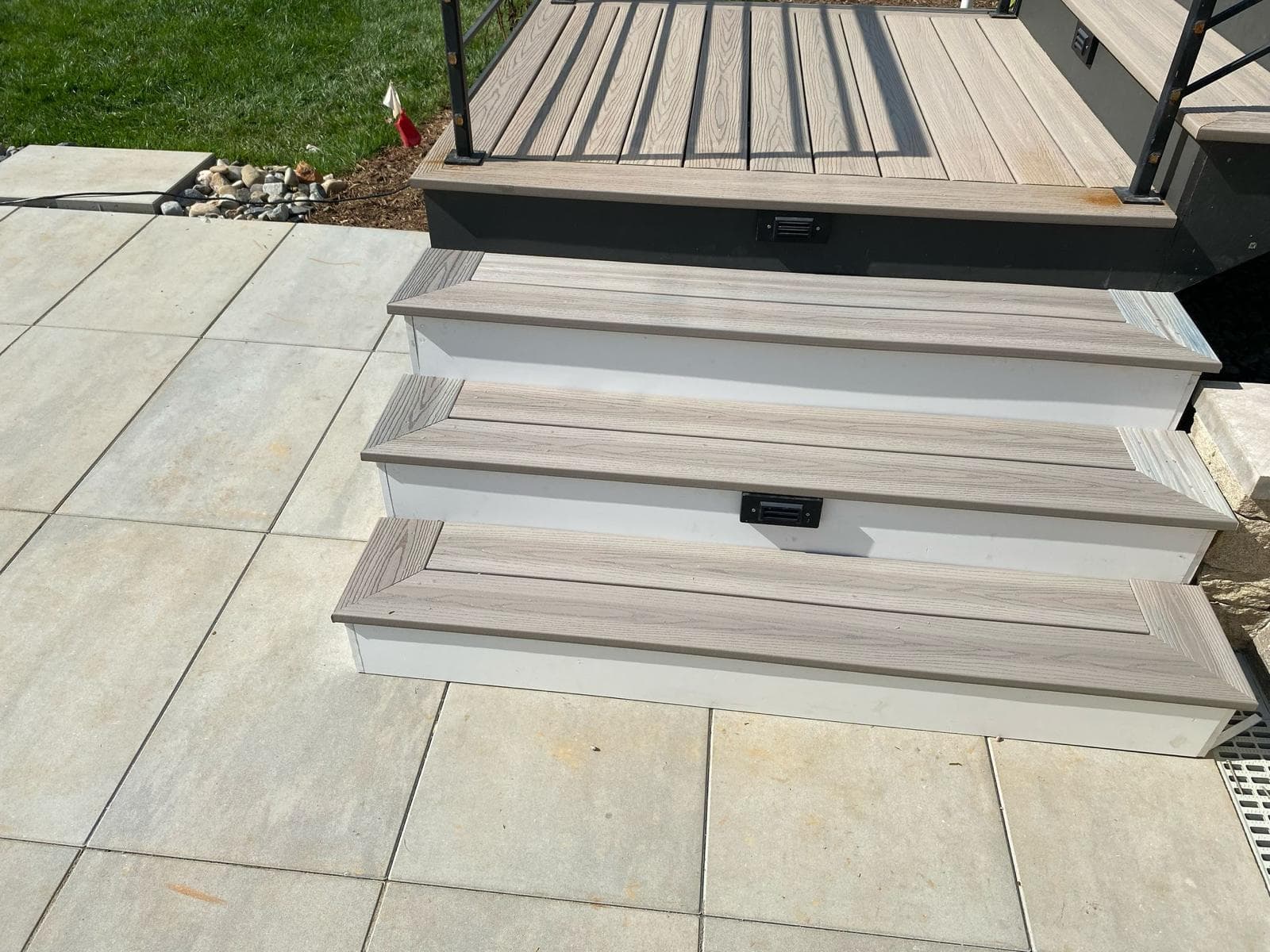
Trex vs TimberTech Fade Resistance: Which Holds Color Better?
When choosing between Trex and TimberTech for a new composite deck in Northern Virginia, one of the most important real-world questions is which one holds its color better over time. The answer depends significantly on which product line within each brand you are comparing — not just the brand name itself.
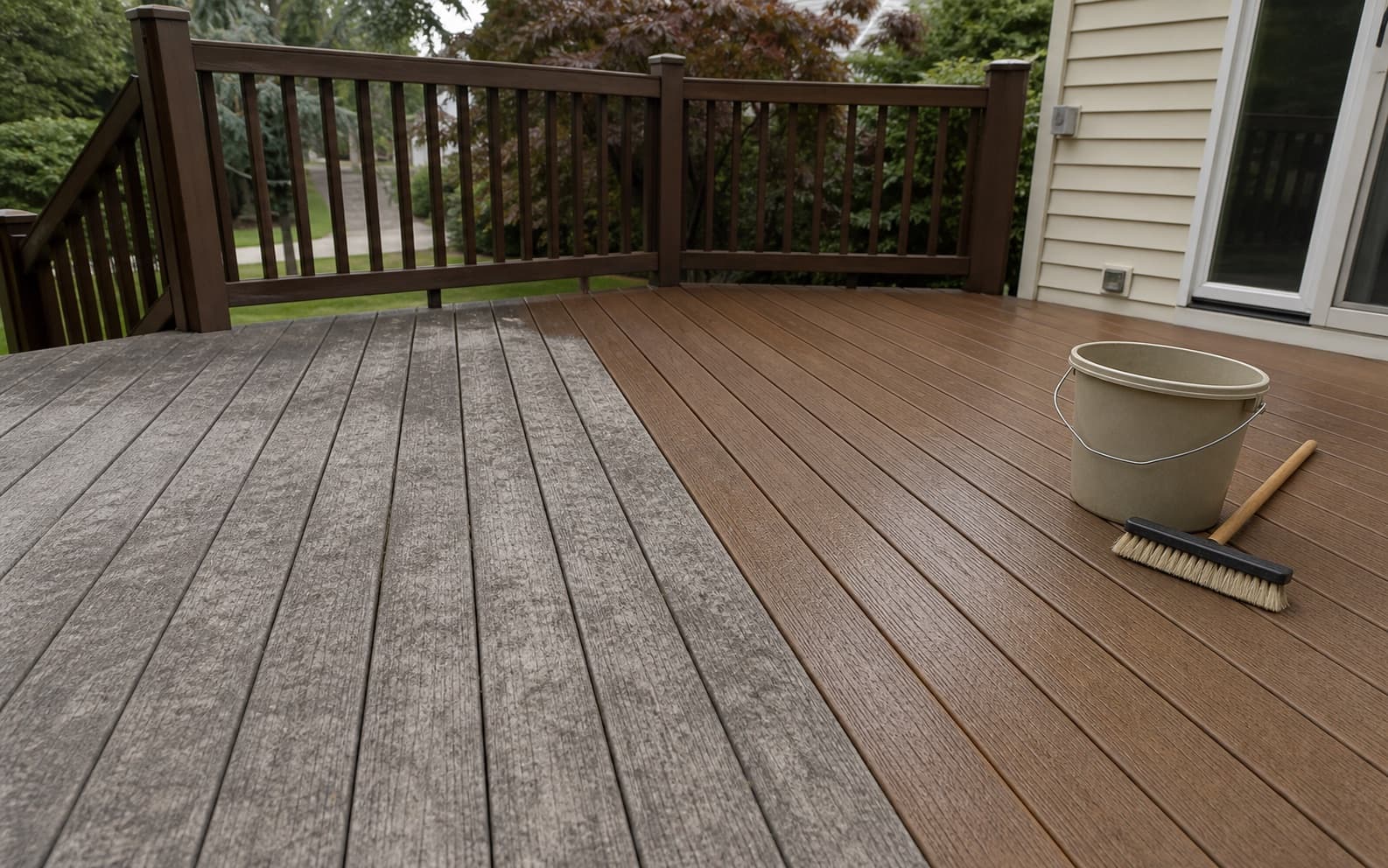
How to Restore Faded Composite Decking
Homeowners who discover their composite deck has lost its original richness often search for a restoration solution. This guide walks through the realistic, step-by-step process for assessing and restoring a faded composite deck — and being honest about which boards need professional attention versus replacement.
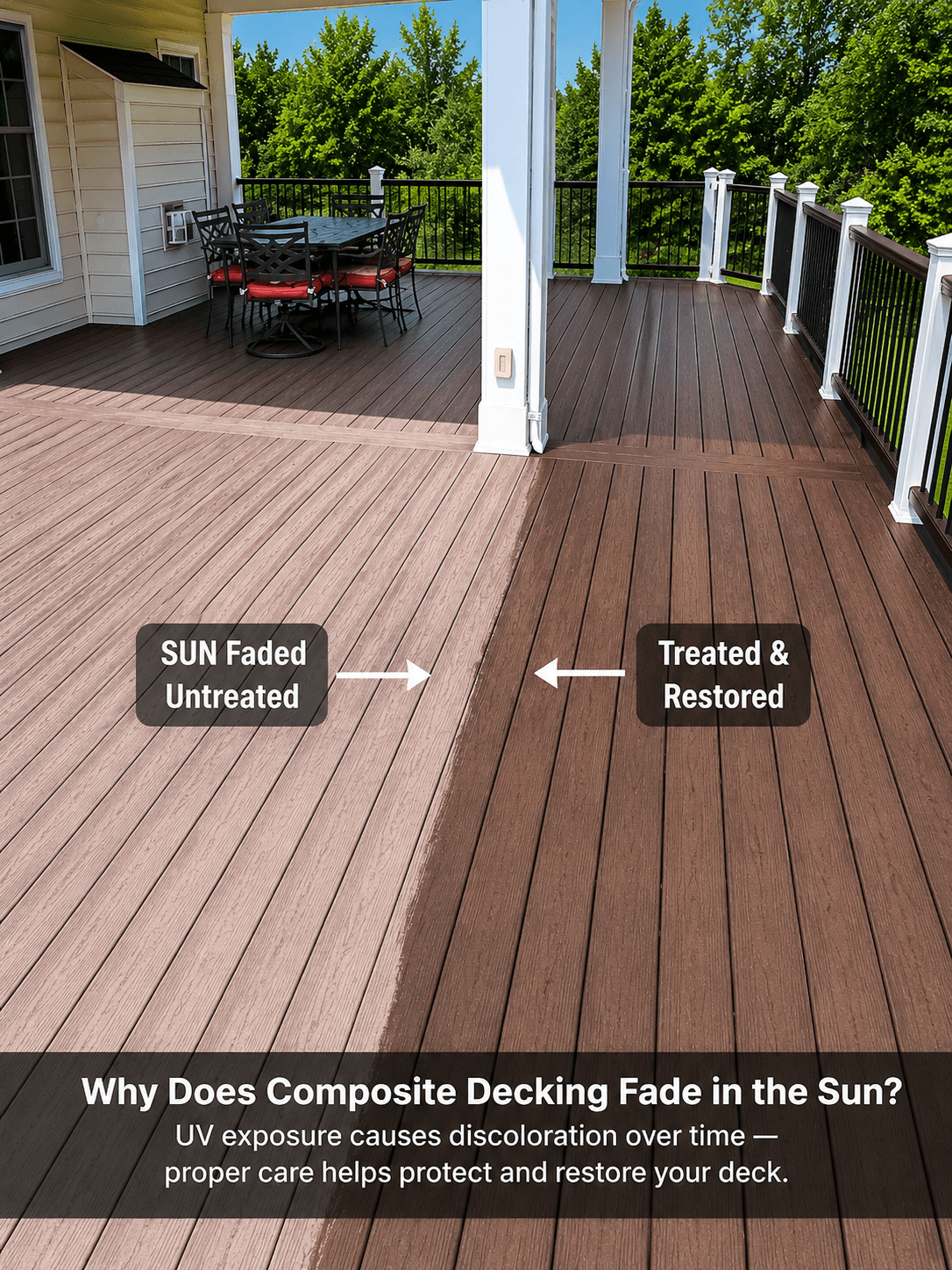
Why Does Composite Decking Fade in the Sun?
If your Trex or composite deck looks washed out, chalky, or uneven after a few years in the Northern Virginia sun, you are not alone. Here is what causes composite decking to fade, how to tell real sun damage from pollen or mildew staining, and what your repair or replacement options actually are.
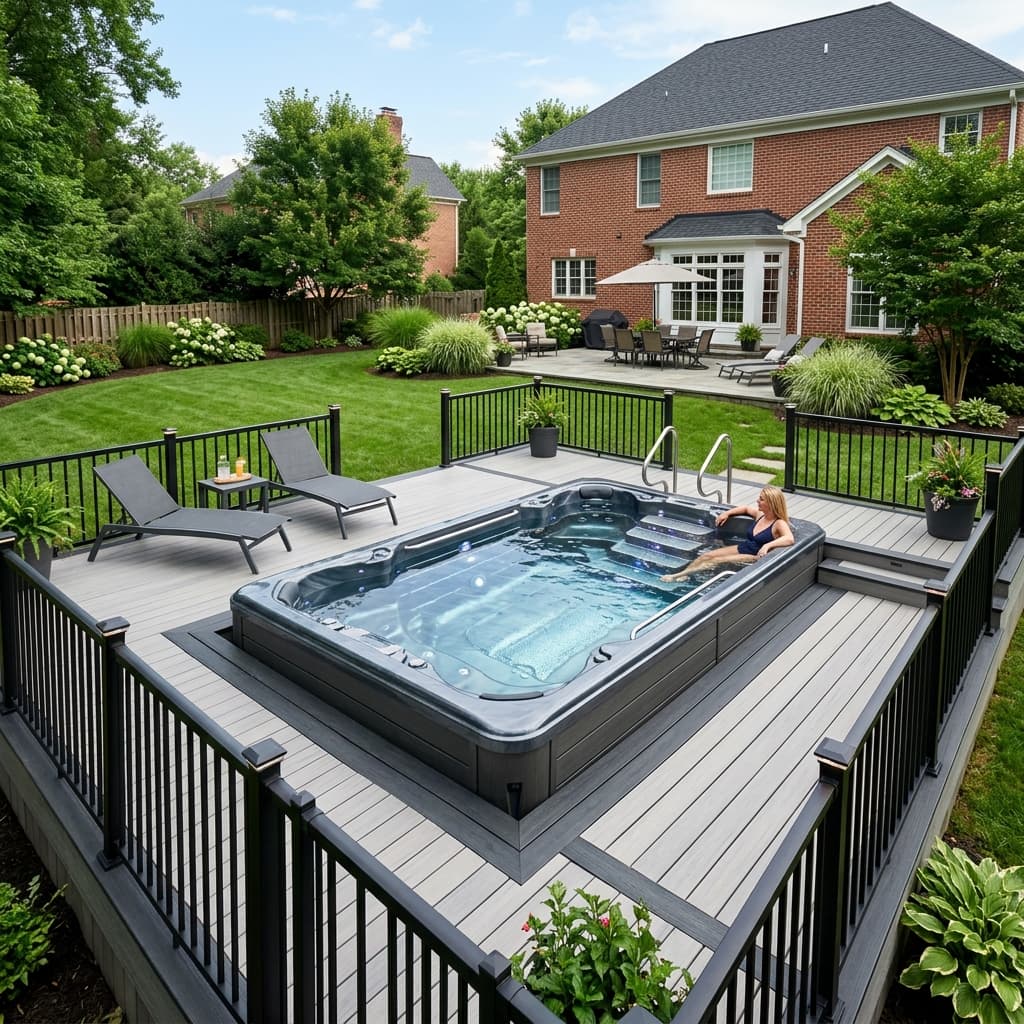
Designing a Deck for a Swim Spa: Structural Loads, Sinking Layouts, and Material Selection
Swim spas are one of the hottest outdoor living upgrades in 2026. Discover the structural calculations, access clearances, and design strategies needed to seamlessly integrate a heavy swim spa into your custom composite deck.
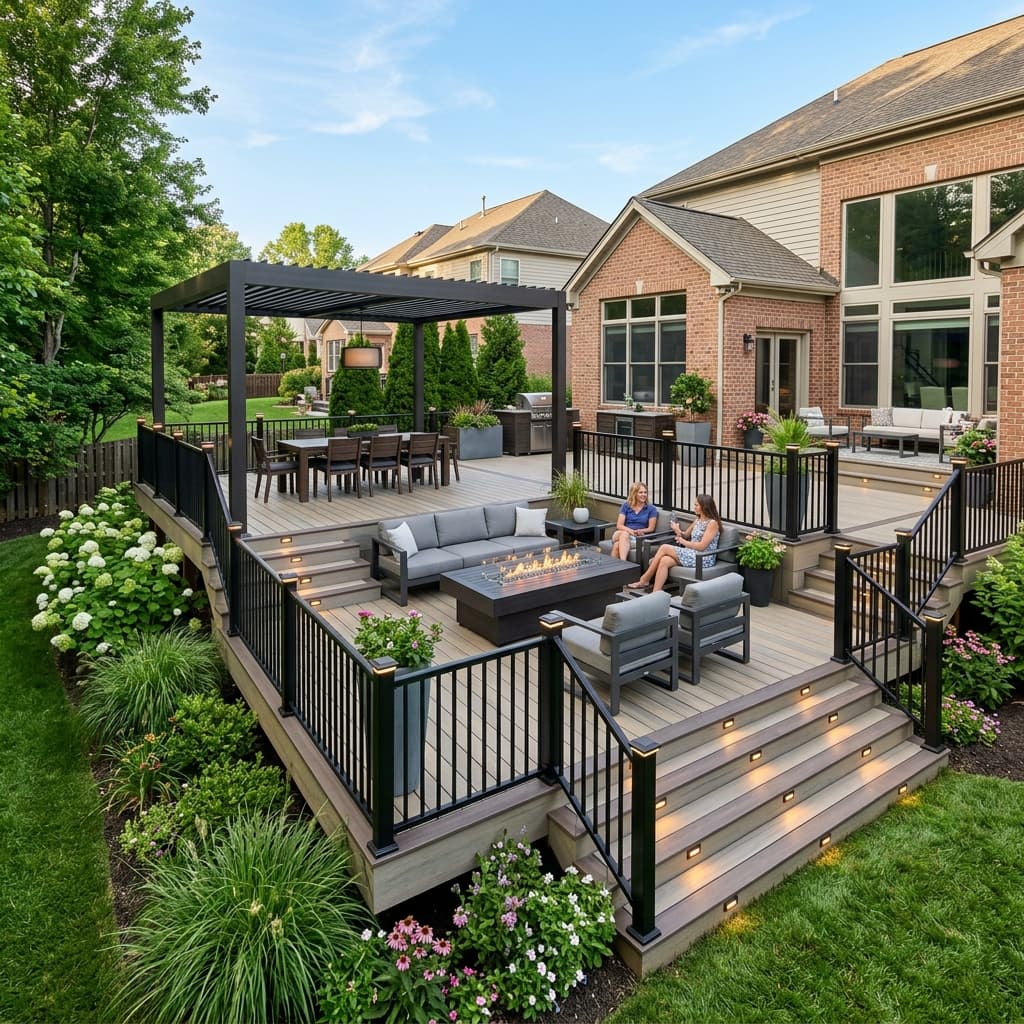
Designing a Multi-Level Composite Deck: Zoning, Traffic Flow, and Structural Planning
A multi-level composite deck is the ultimate solution for transforming sloped yards into elegant, multi-functional outdoor sanctuaries. Discover how to plan traffic flow, designate distinct living zones, and coordinate structural framing for tiered decks in Northern Virginia.
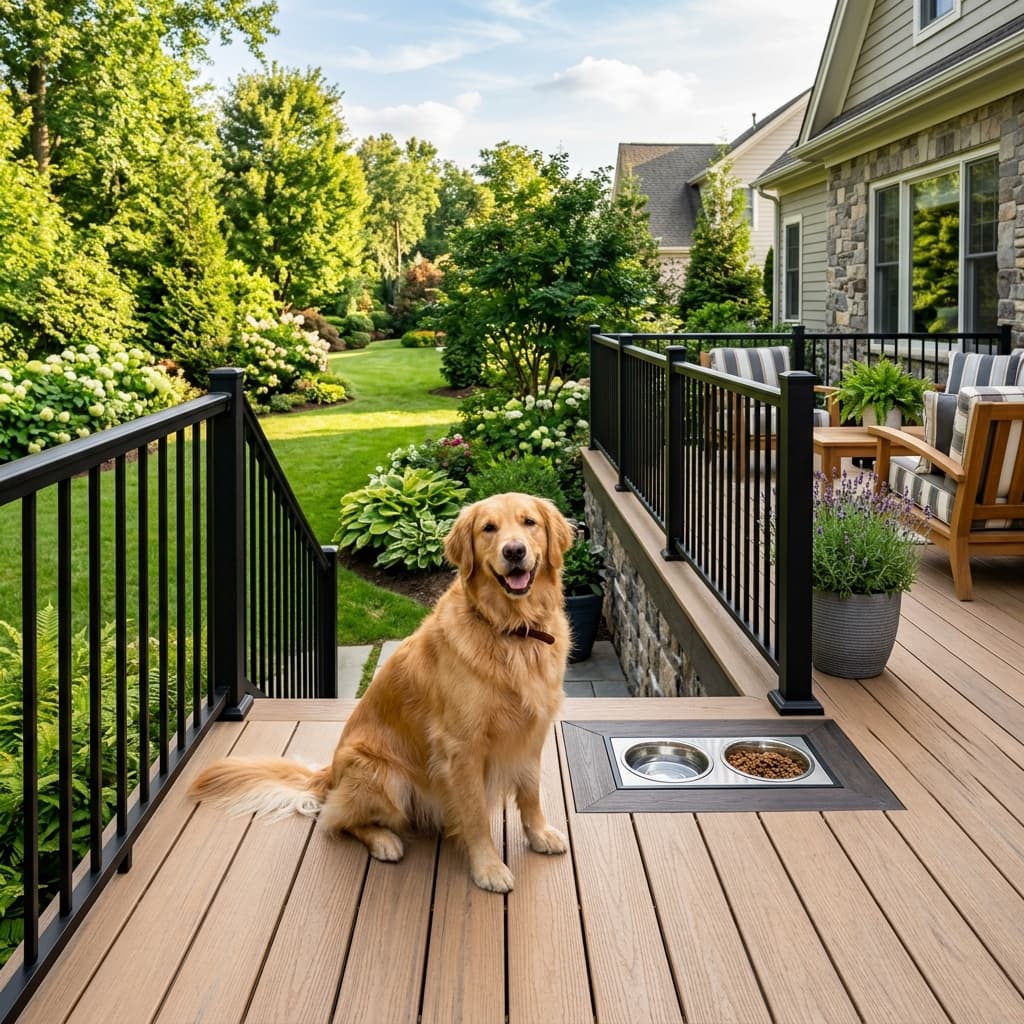
Designing a Pet-Friendly Composite Deck: Safety, Materials, and Layouts
Designing an outdoor living space that your dogs and cats can enjoy safely is a top priority for Northern Virginia homeowners. Learn about scratch-resistant composite materials, temperature-safe boards, secure railing spacing, and built-in pet gates.
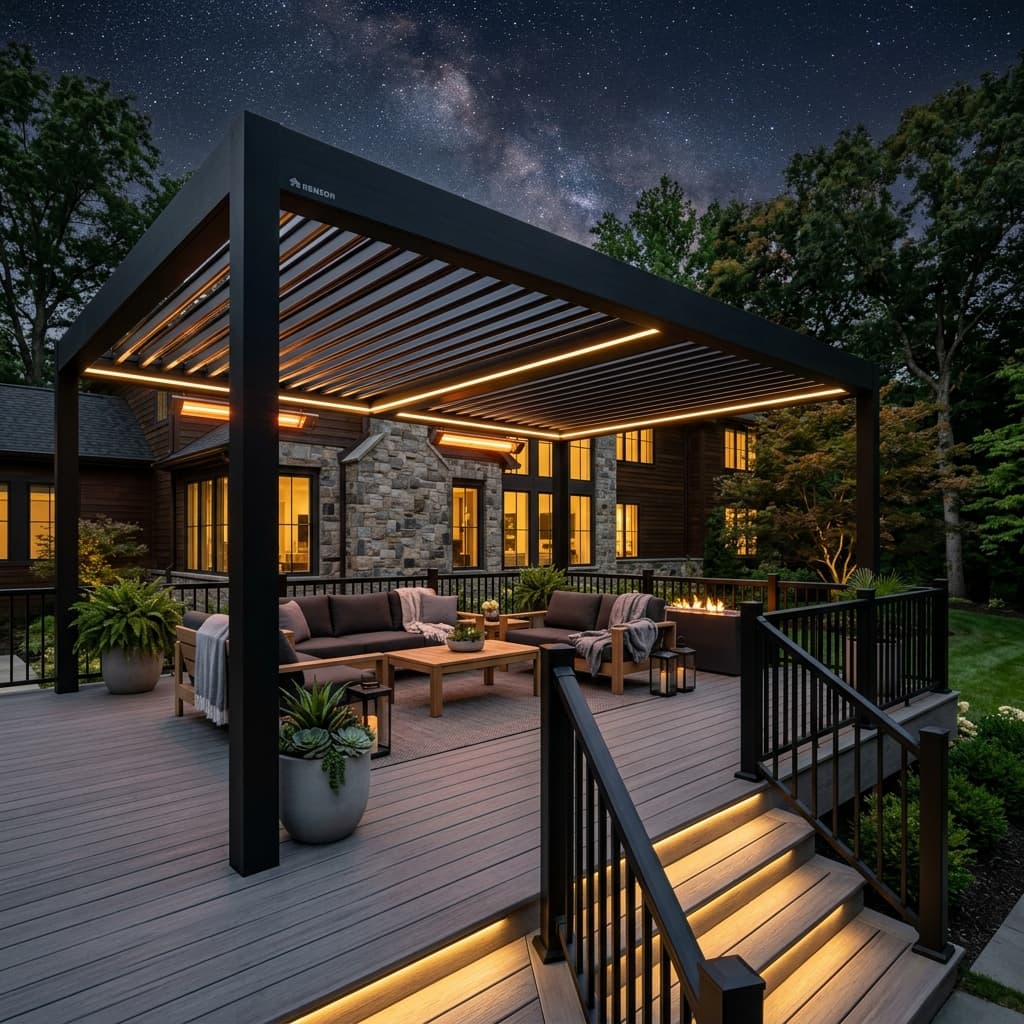
Smart Deck Technologies: 2026 Innovations in Outdoor Living
The backyard is getting a massive high-tech upgrade. Discover the latest 2026 smart deck technologies, from automated climate control and motorized louvers to integrated app-controlled LED systems.
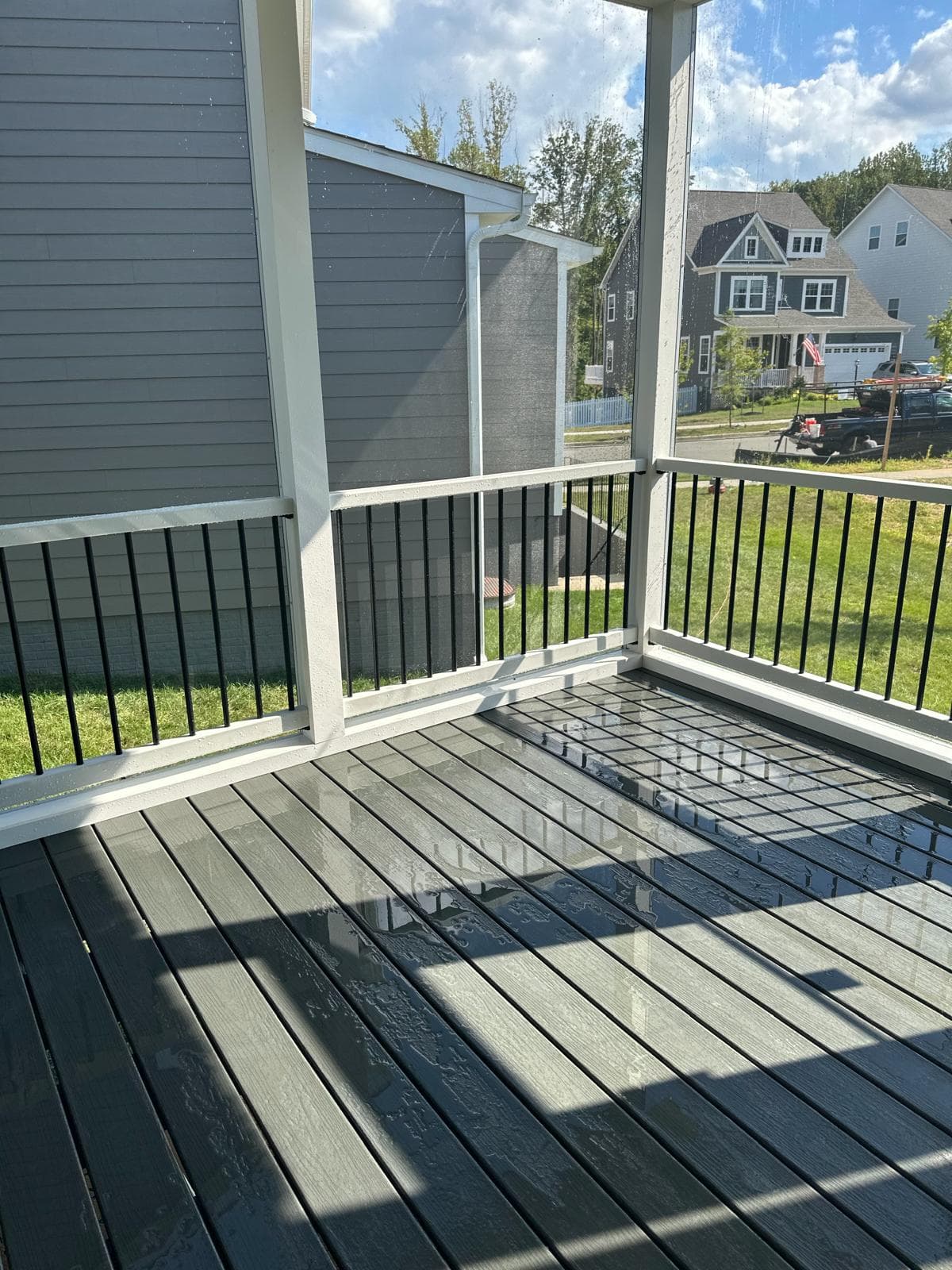
TimberTech vs Trex 2026: Which Composite Wins in Northern Virginia
TimberTech vs Trex is a common NoVA composite question. The honest answer: both are excellent, neither is universally "better," and the right pick depends on three specific things about your deck and budget. Here is the side-by-side from an installation-planning perspective.
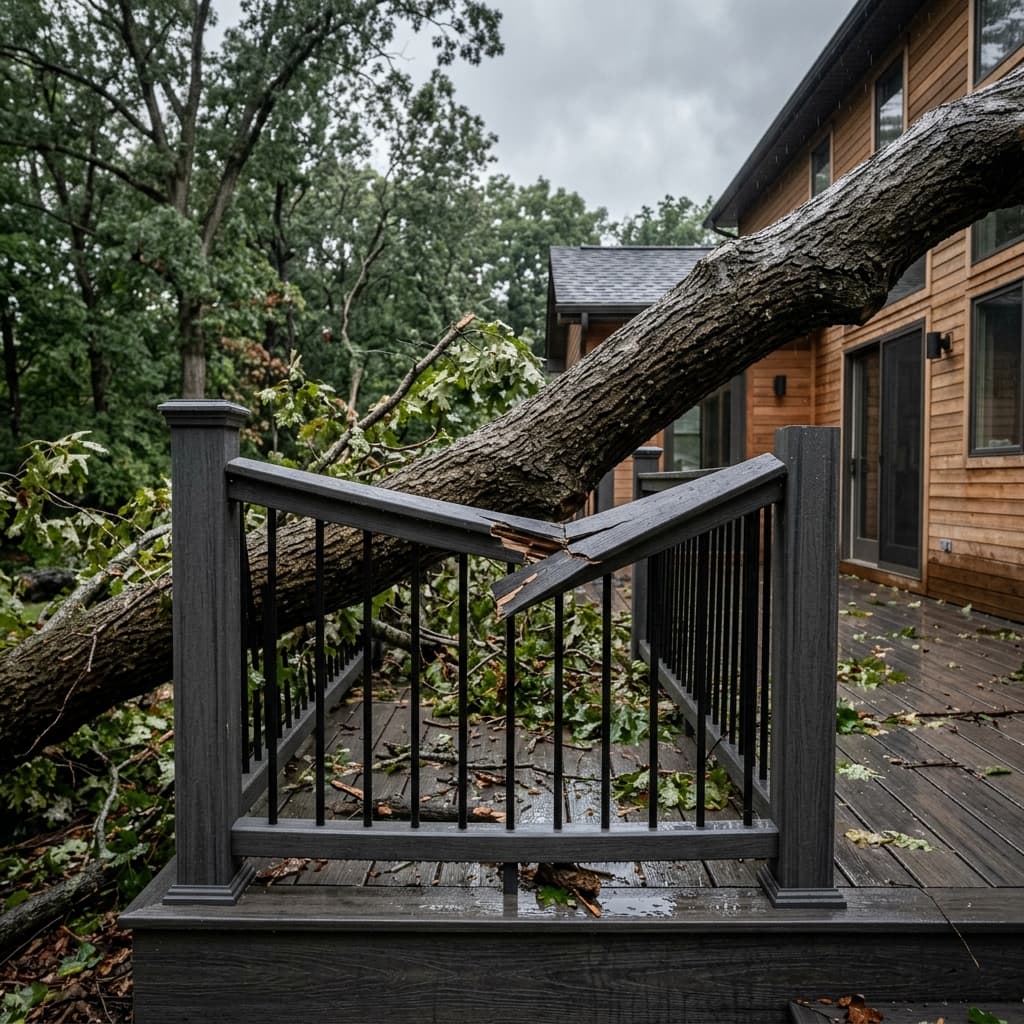
Does Homeowners Insurance Cover Deck Damage in Virginia?
A tree limb cracks your deck during a summer thunderstorm — is that covered? Usually yes. Slow rot at the ledger board? Almost never. Here is exactly how Virginia homeowners insurance treats deck damage, the attached versus detached rule that decides which part of your policy applies, and what to do the moment damage happens.
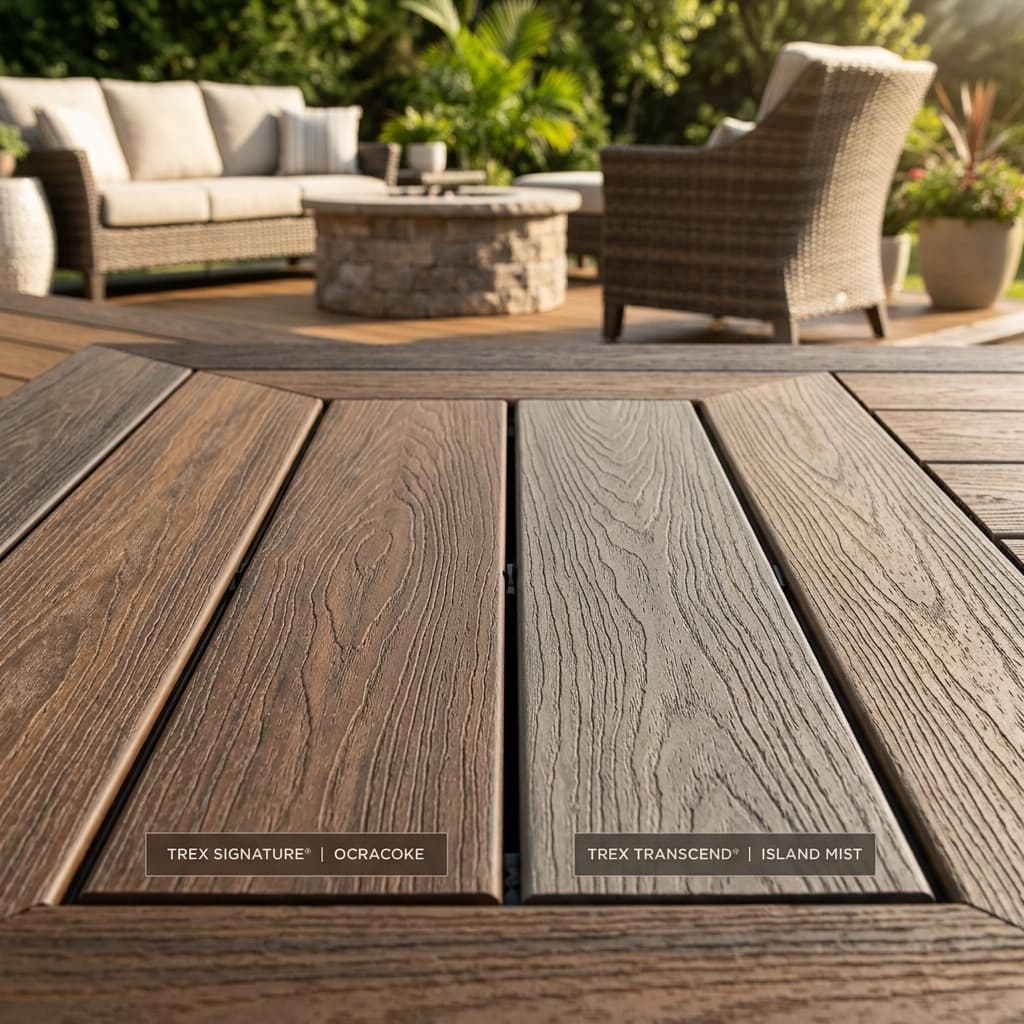
Trex Lineage vs Transcend vs Signature: The 2026 Trex Lineup Compared
Trex is the most-asked-about decking brand in Northern Virginia — but the lineup has expanded fast, and Transcend, Lineage, and the new mineral-composite Signature line each solve very different problems. Here is how the five Trex collections actually differ on heat, grain realism, warranty, and 2026 installed pricing in NoVA.
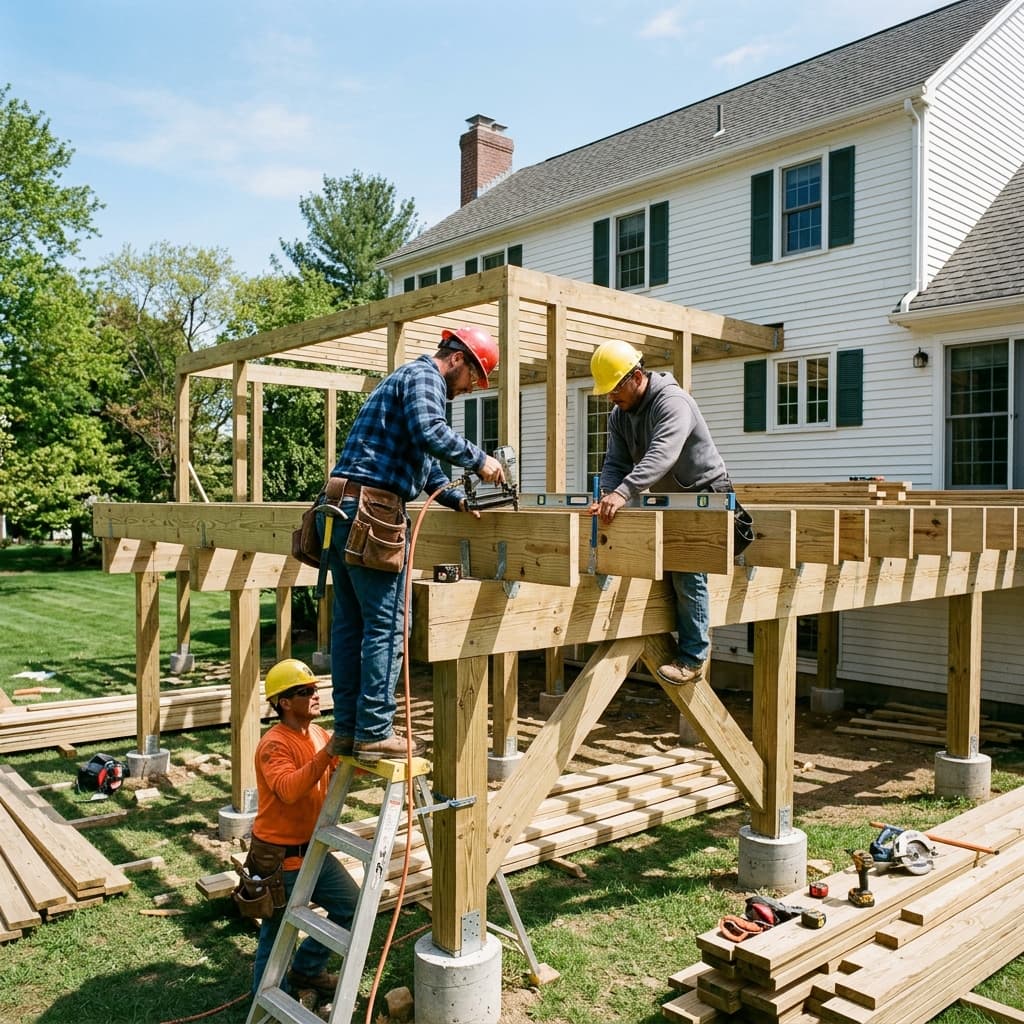
How Long Does It Take to Build a Deck in Northern Virginia?
The honest answer for Northern Virginia: 6 to 14 weeks from signed contract to final walkthrough. Here is exactly where the weeks go — design, county permit, HOA review, and construction — and what speeds the process up or stretches it out.
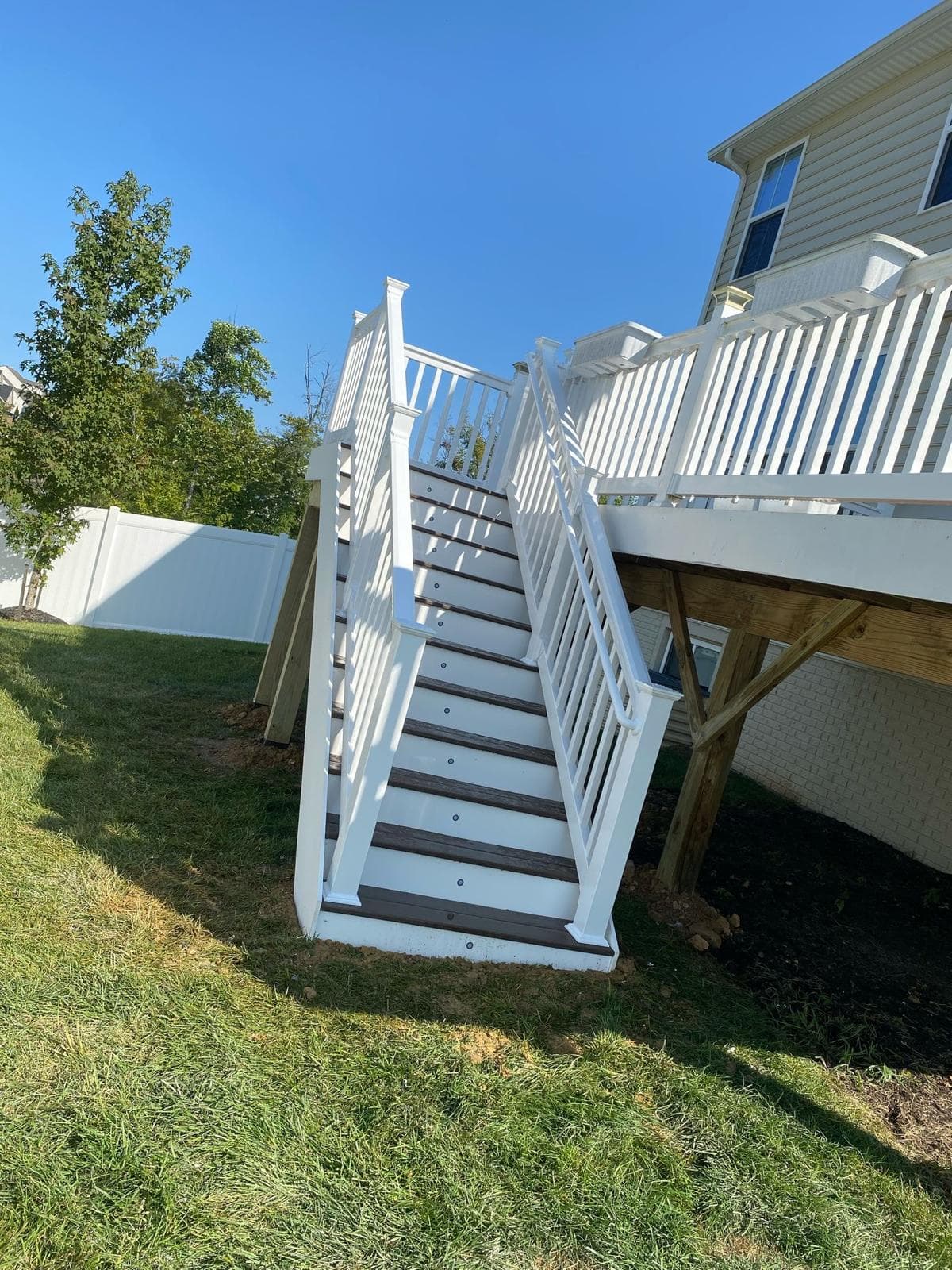
Smart Deck Technology: Lighting, Shade & Audio Trends for 2026
Decks are quietly joining the smart-home ecosystem in 2026 — automated lighting, motorized shade, weatherproof audio, and app control. Here are the smart deck technologies Northern Virginia homeowners want, and the one rule that makes them work flawlessly.
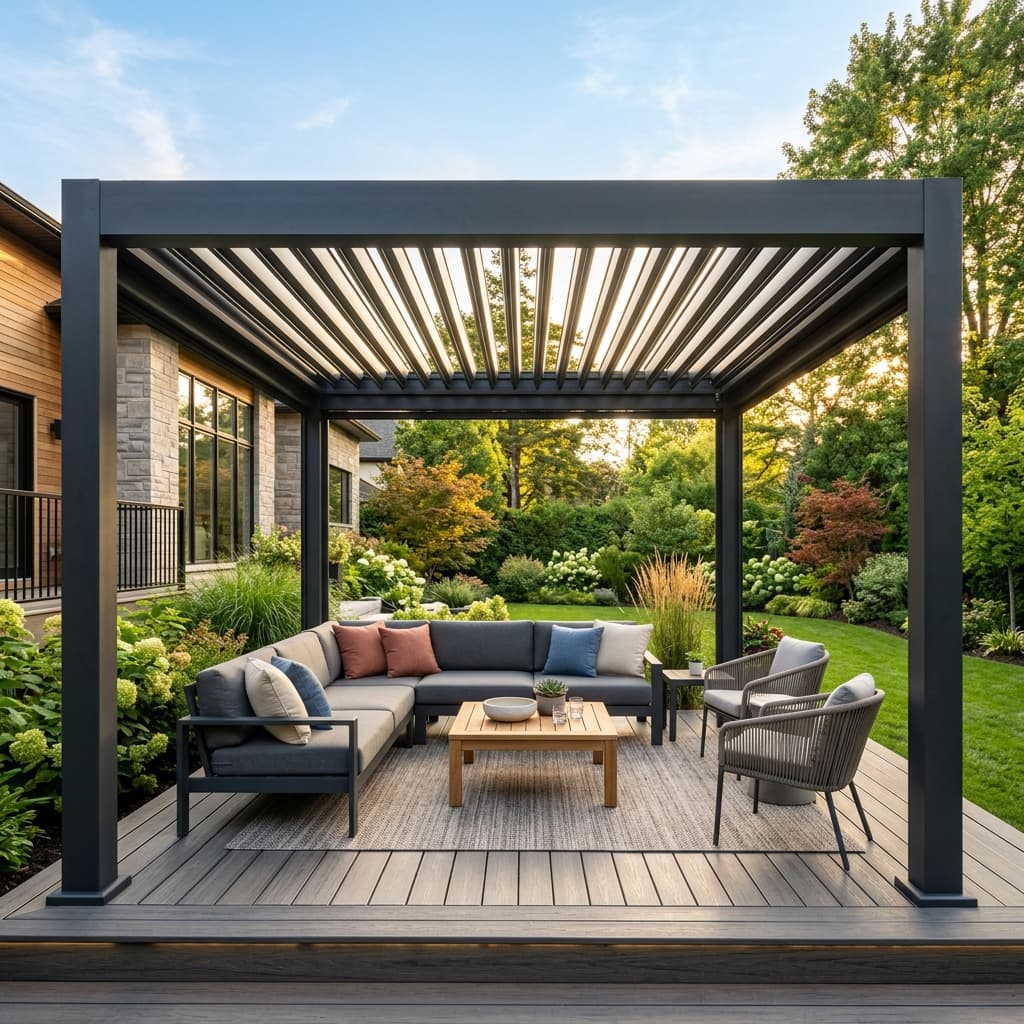
Louvered Pergolas Over a Deck: The 2026 Outdoor Living Upgrade
The louvered pergola is the breakout outdoor living upgrade of 2026 — an adjustable roof that opens for sun and closes against rain at the push of a button. Here is how they work over a deck, what they cost, and the structural and permit details Northern Virginia homeowners need to know.
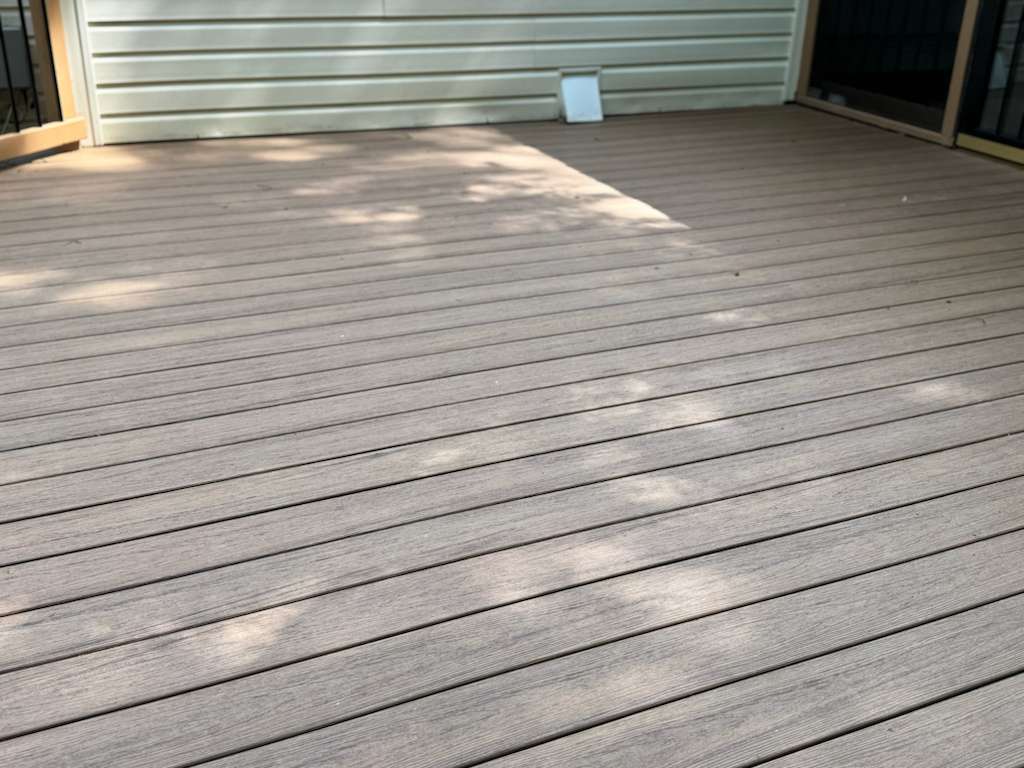
How to Choose a Deck Resurfacing Contractor in Northern Virginia
Choose a resurfacing contractor by documented frame suitability, product-specific installation details and a written quote that explains repairs, permits and exclusions.
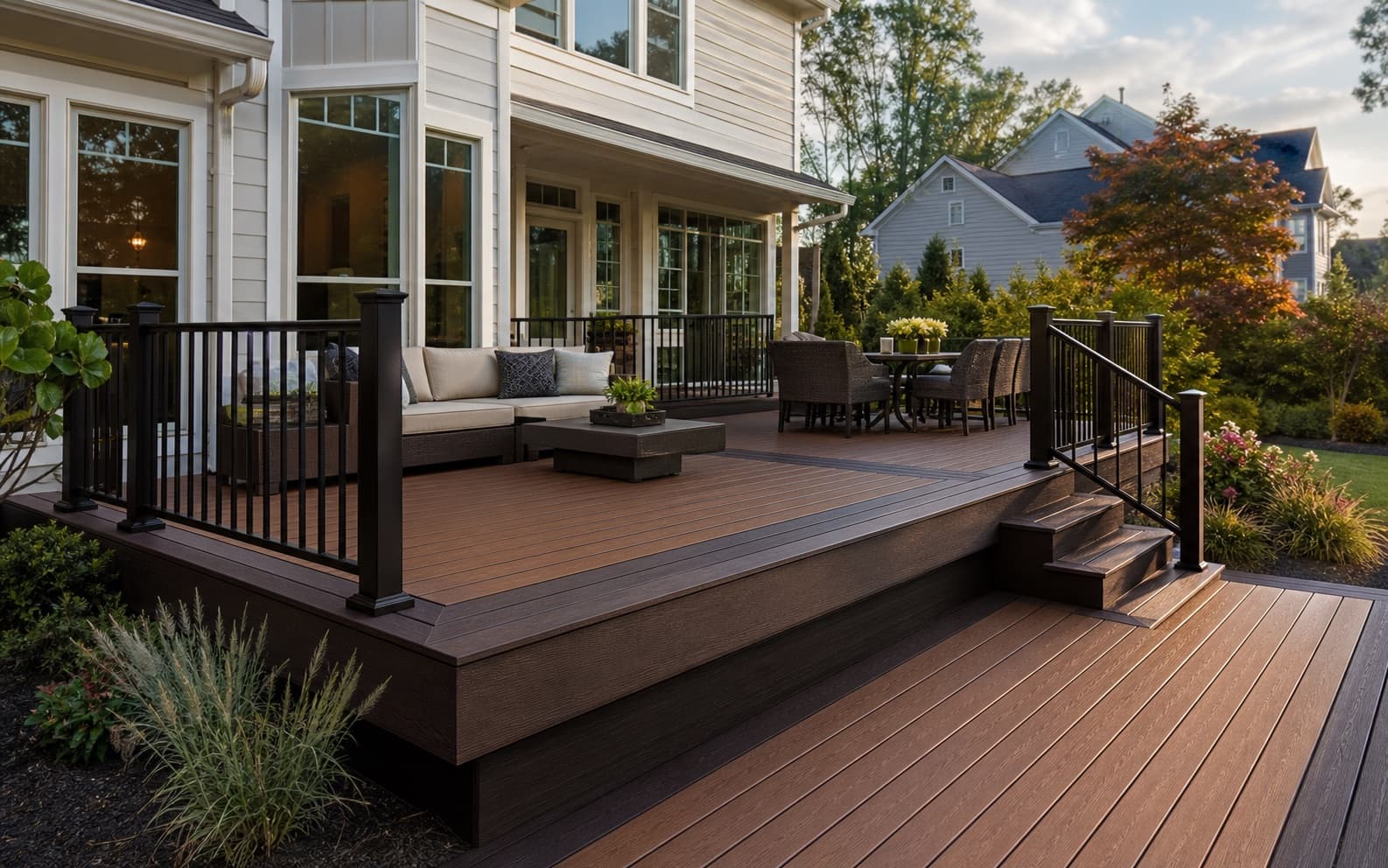
Trex Deck Color Combinations: Best Duos for Northern Virginia Homes
Elevate your composite deck from basic to breathtaking. Explore the top-selling Trex color duos and design trends that complement Northern Virginia home architectures.
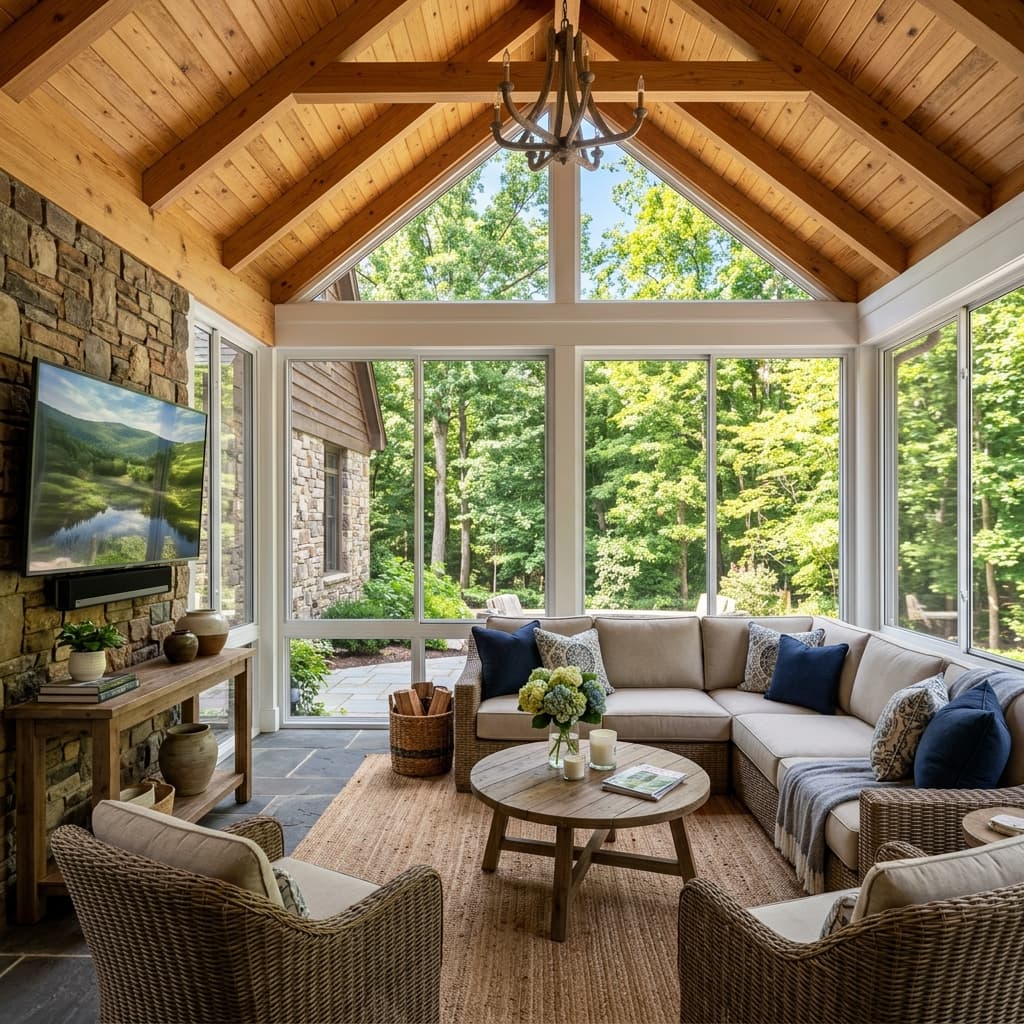
Screened Porch vs. Three-Season Room: Which is Best for Virginia Climates?
Deciding between a classic screened porch and a three-season room? We compare costs, comfort, seasonal usability, and local permitting requirements for Northern Virginia homeowners.
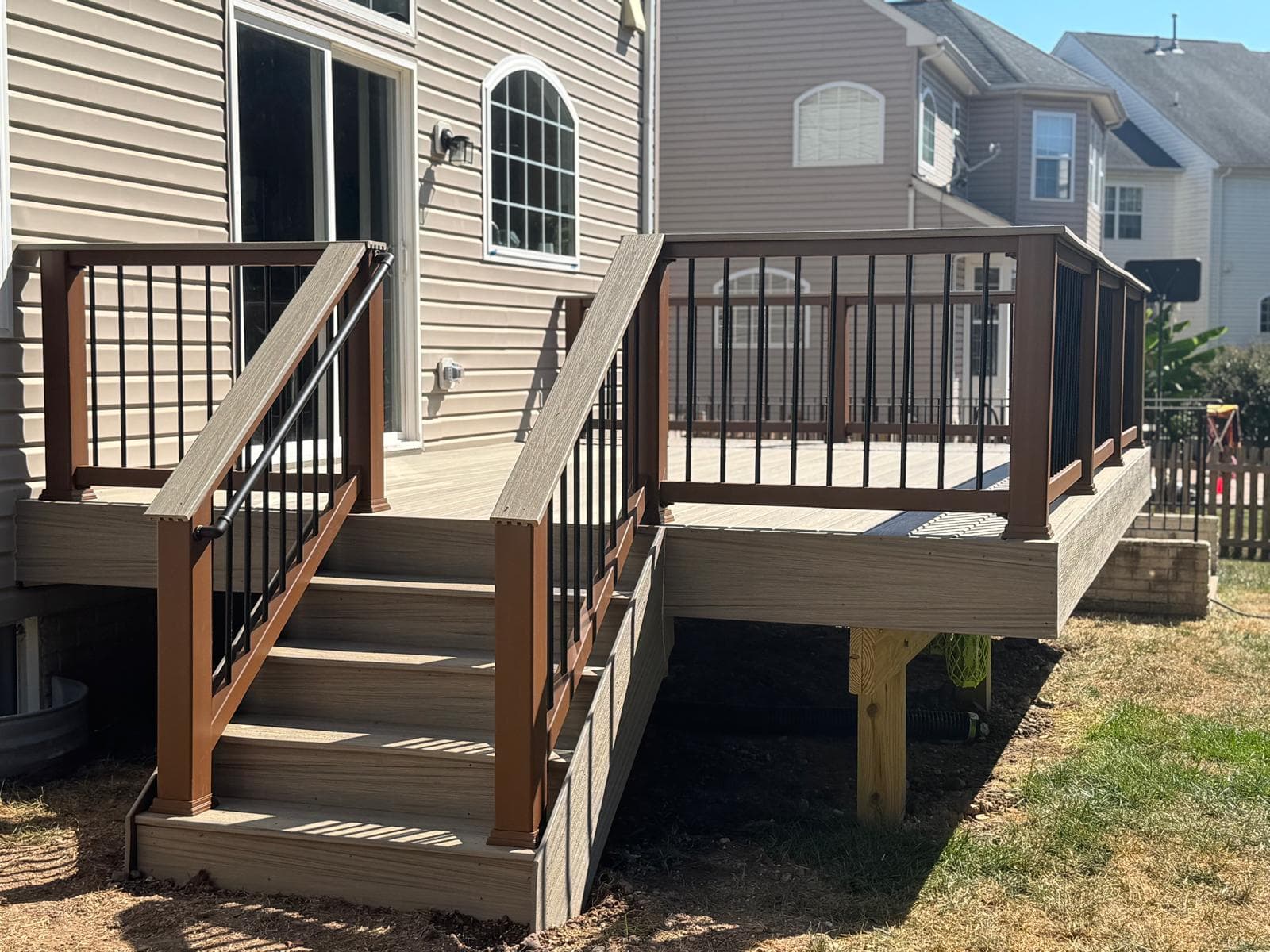
Spring Deck Maintenance: 7 Crucial Steps to Prep Your Deck for Summer
Spring is the perfect time to prep your outdoor living space. Follow our 7 crucial maintenance and cleaning steps to ensure your deck is safe, clean, and ready for summer.
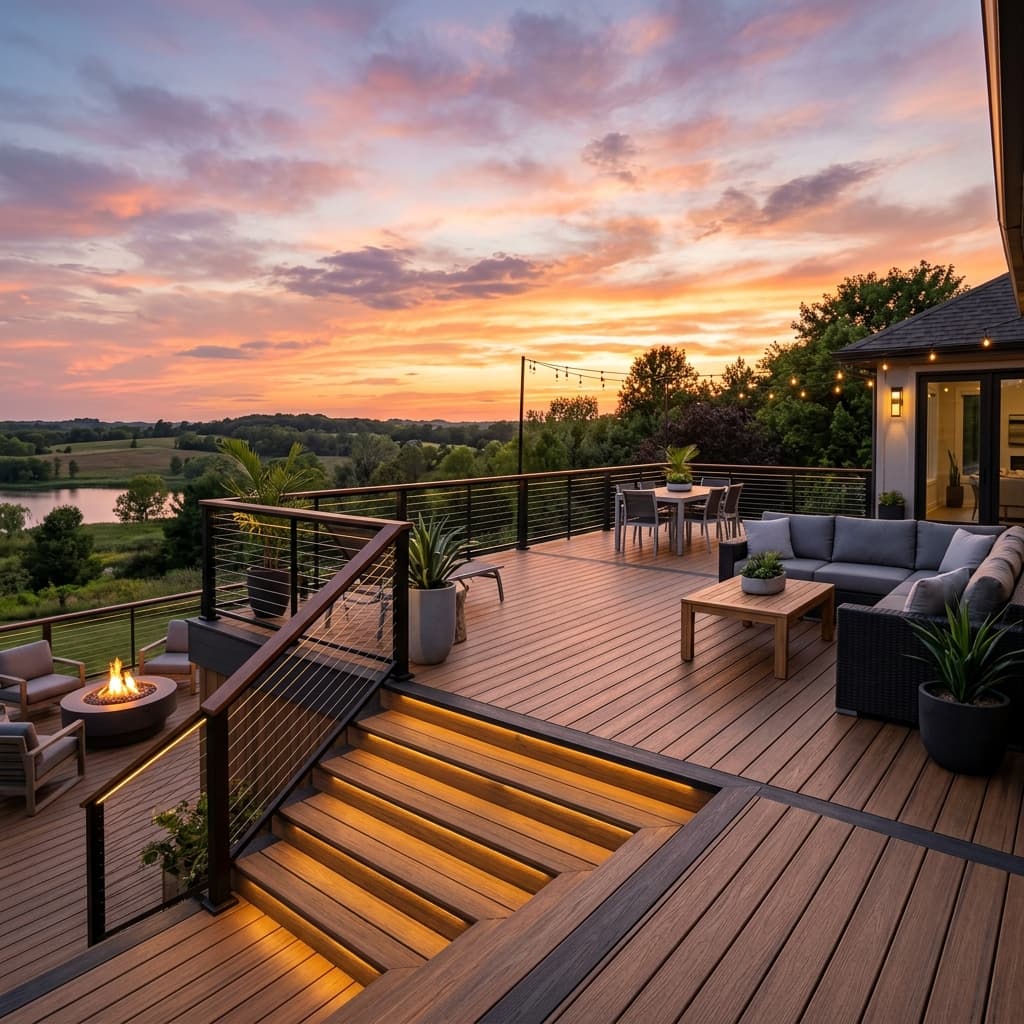
Top 5 Outdoor Living Design Trends Dominating Northern Virginia in 2026
Looking to update your backyard? We break down the top 5 outdoor living and deck design trends taking over Northern Virginia in 2026.
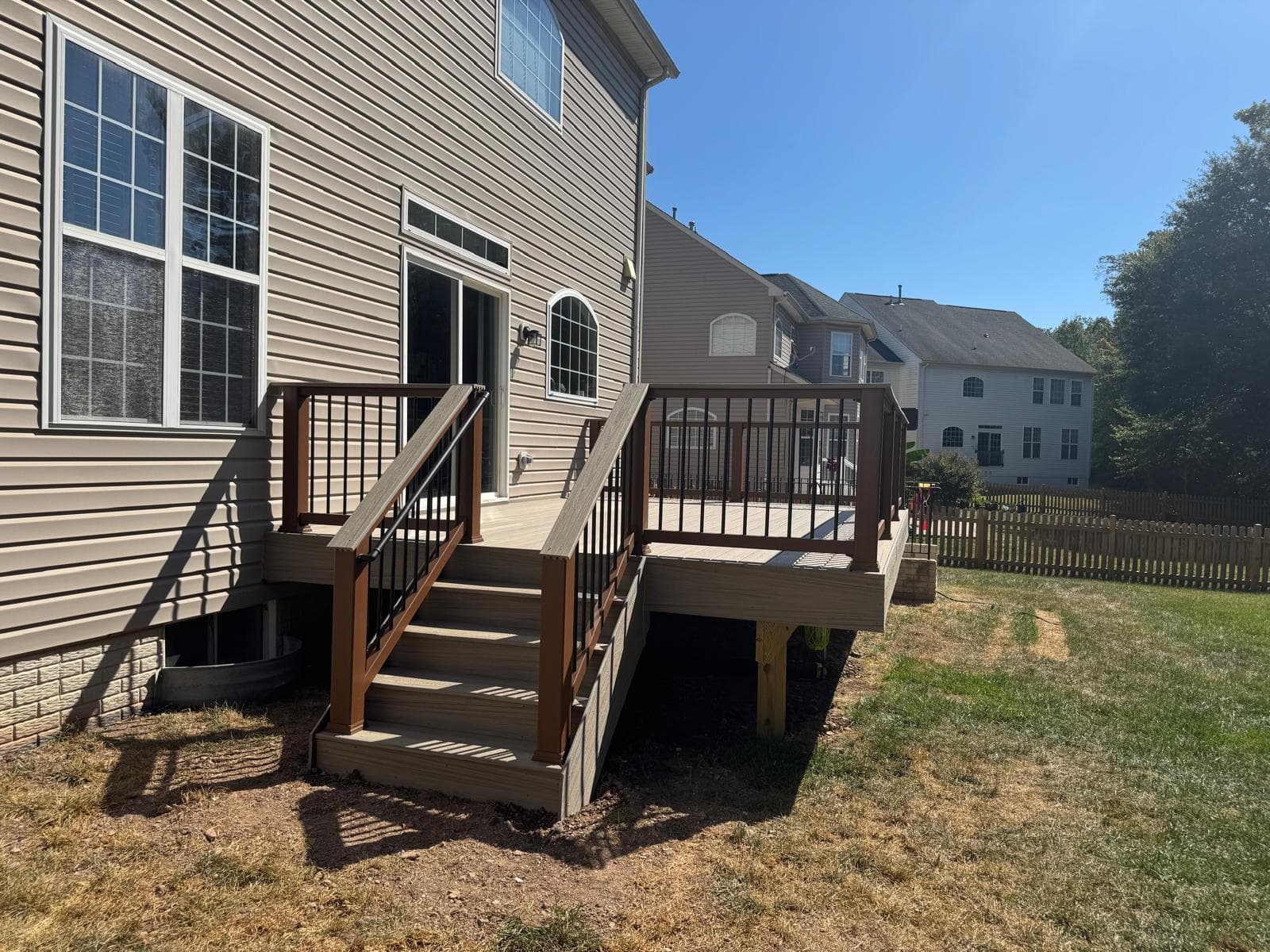
Do I Need 2x8 or 2x10 Joists for My Deck?
2x8 or 2x10 joists? The answer comes down to how far the joists span, how far apart they sit, and what the deck has to carry. Here is how span, spacing, and load drive the decision on a Northern Virginia deck.
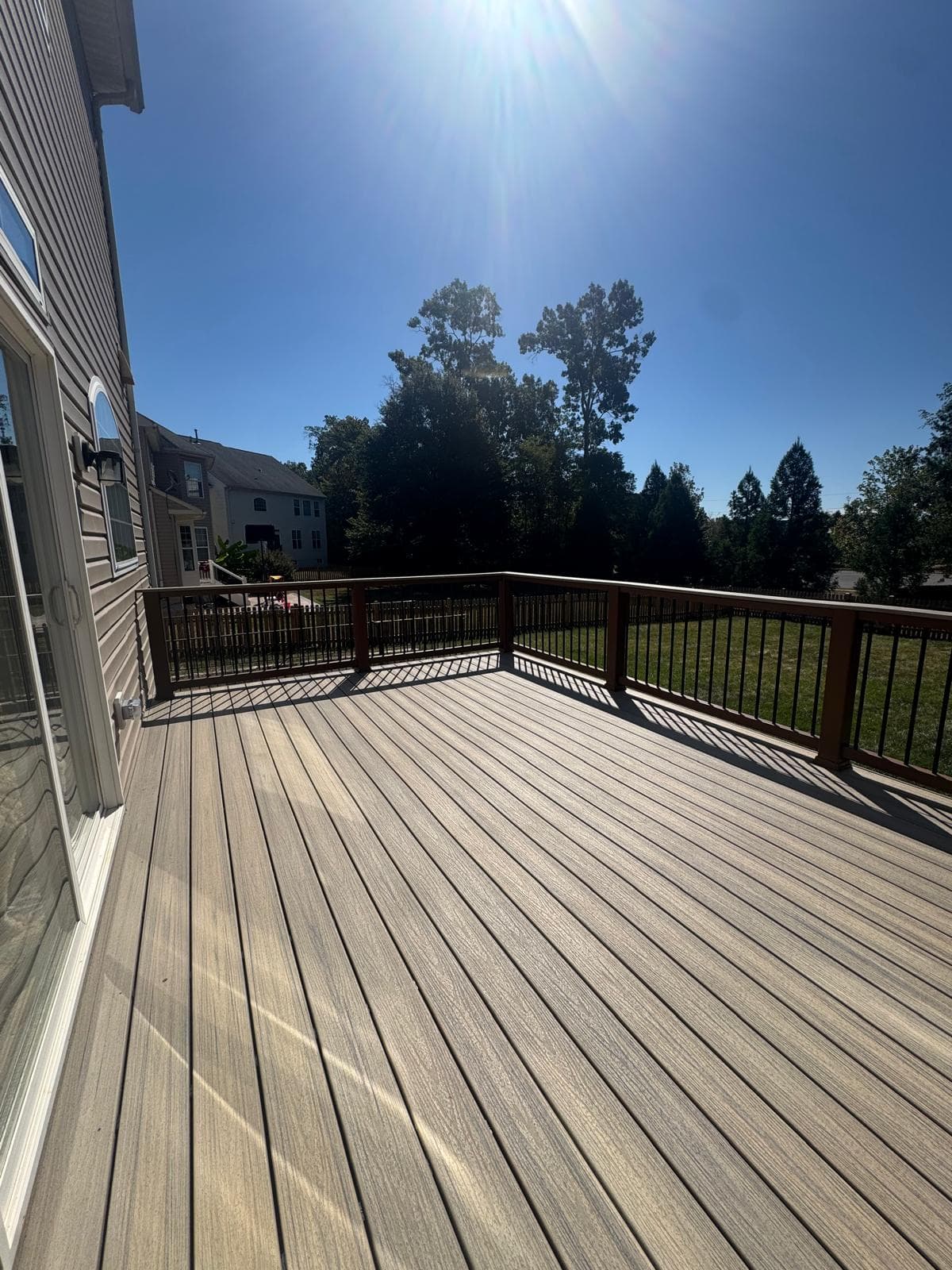
What Is the 3-4-5 Rule for Decking?
The 3-4-5 rule is the fastest way to get a perfect 90-degree corner on a deck frame — no fancy tools required. It is the Pythagorean theorem turned into a job-site shortcut, and here is exactly how deck builders use it.
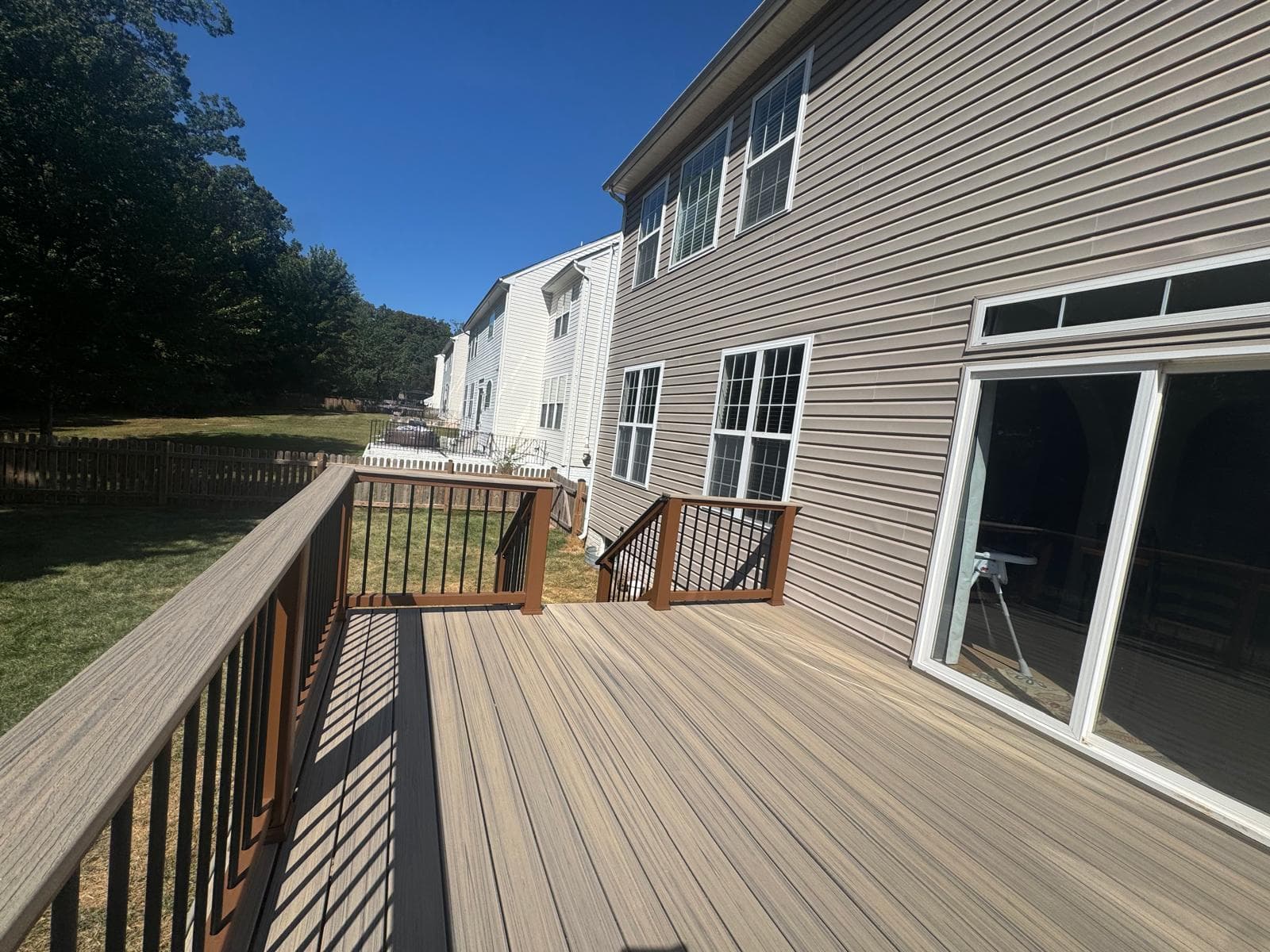
What Happens If You Build a Deck Without a Permit?
Skipping the permit feels like a shortcut. In Virginia it can mean stop-work orders, daily fines, a forced tear-down, a blocked home sale, and voided insurance coverage. Here is what an unpermitted deck really costs.
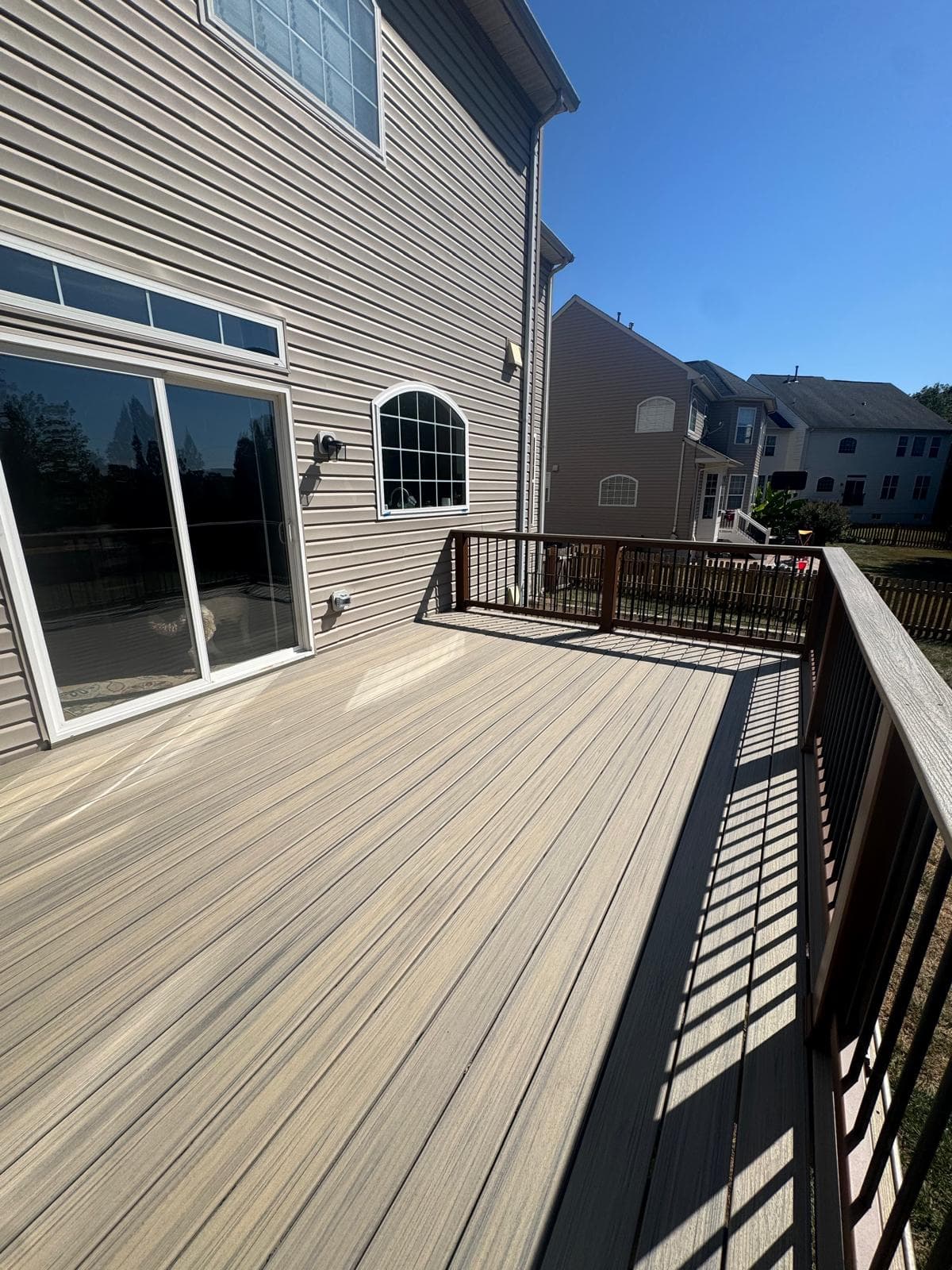
How Deep Do Deck Footings Need to Be in Virginia?
In Virginia, deck footings have to reach below the frost line — generally 24 to 30 inches deep — or freezing ground will lift and crack your deck. Here is how depth, diameter, and soil bearing actually work.
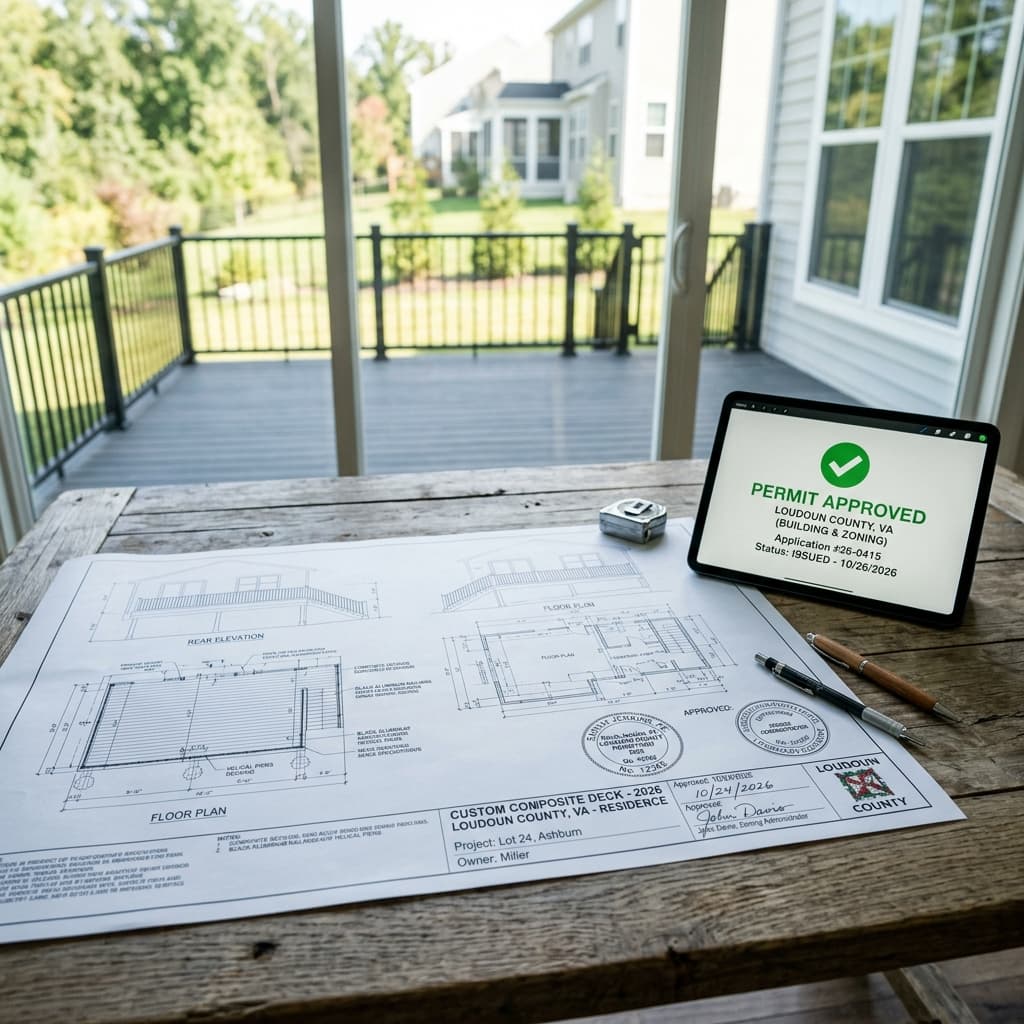
Navigating the 2026 Loudoun County Deck Permit Process: A Homeowner’s Blueprint for Approval
Everything you need to know about the 2026 Virginia Deck Building Code. From LandMARC digital submissions to 24-inch footing depths and ledger board rules.
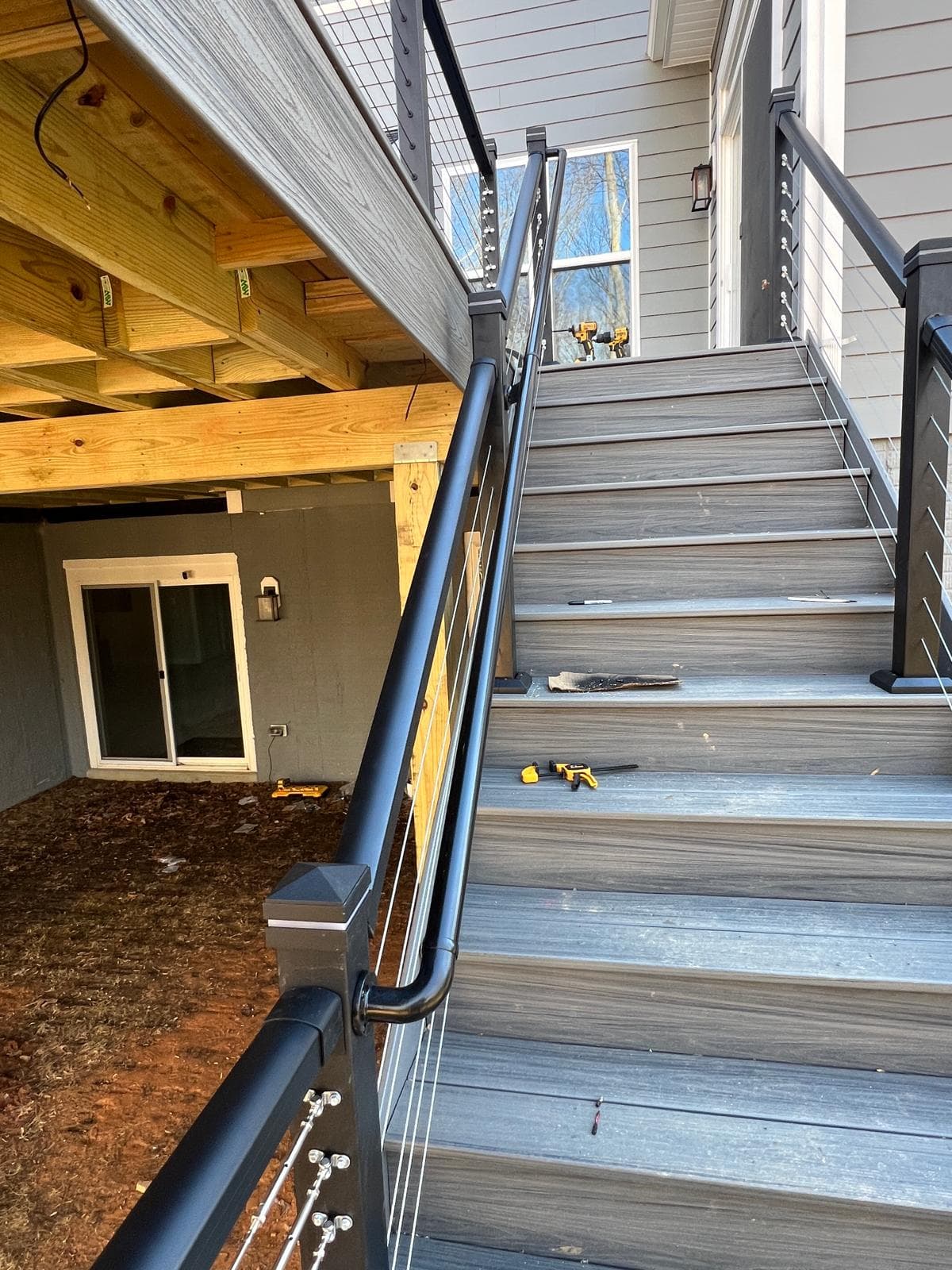
Saving Your Deck: The Critical Guide to Structural Repair & Rot Prevention in Northern Virginia
Real-world insights into identifying hidden wood rot, replacing critical structural posts, and passing failed county inspections in Loudoun and Fairfax.
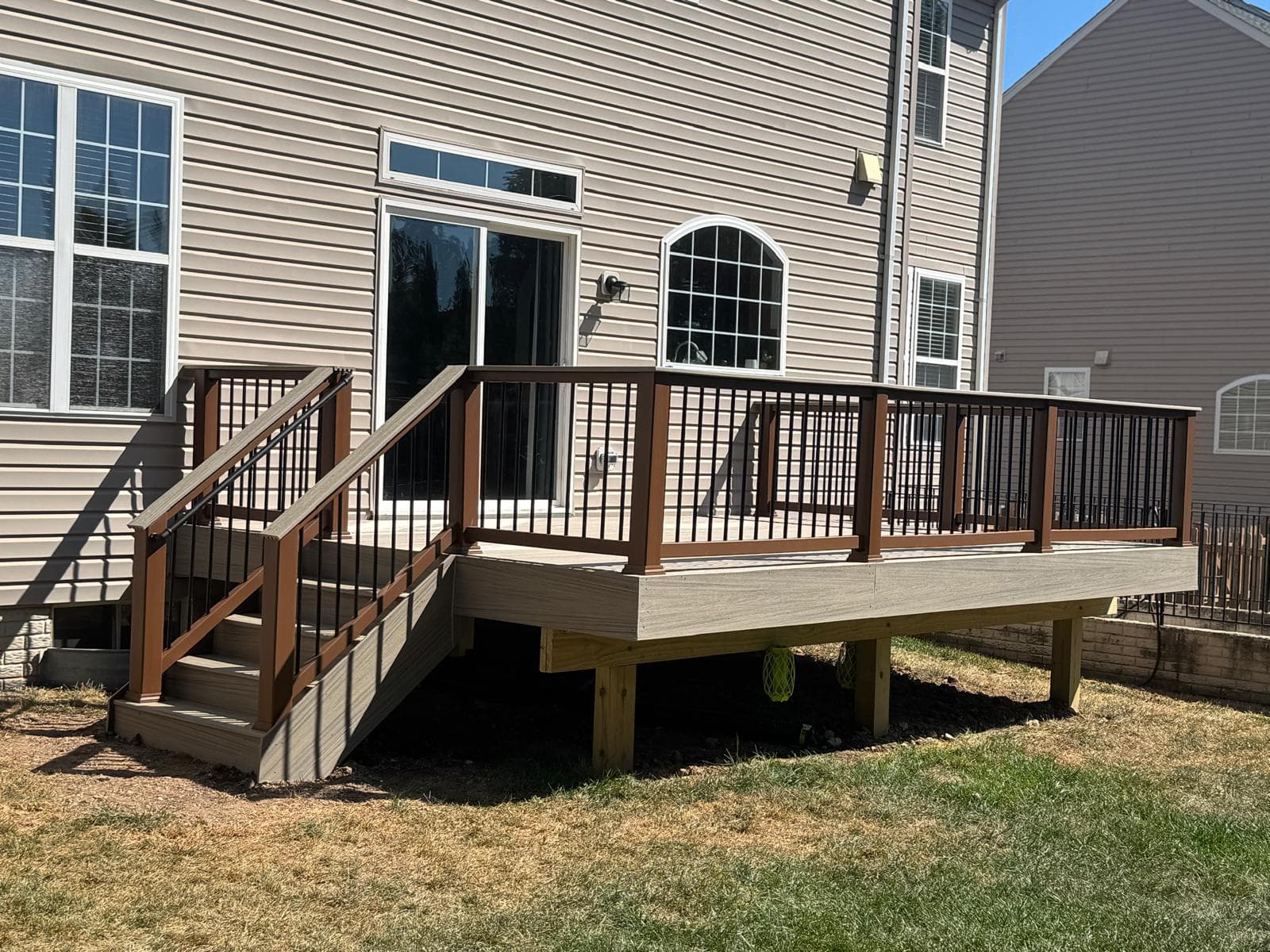
How Much Does a Deck Cost in Northern Virginia in 2026?
Explore the 2026 pricing breakdowns for new deck construction, materials, and labor in Loudoun and Fairfax County.
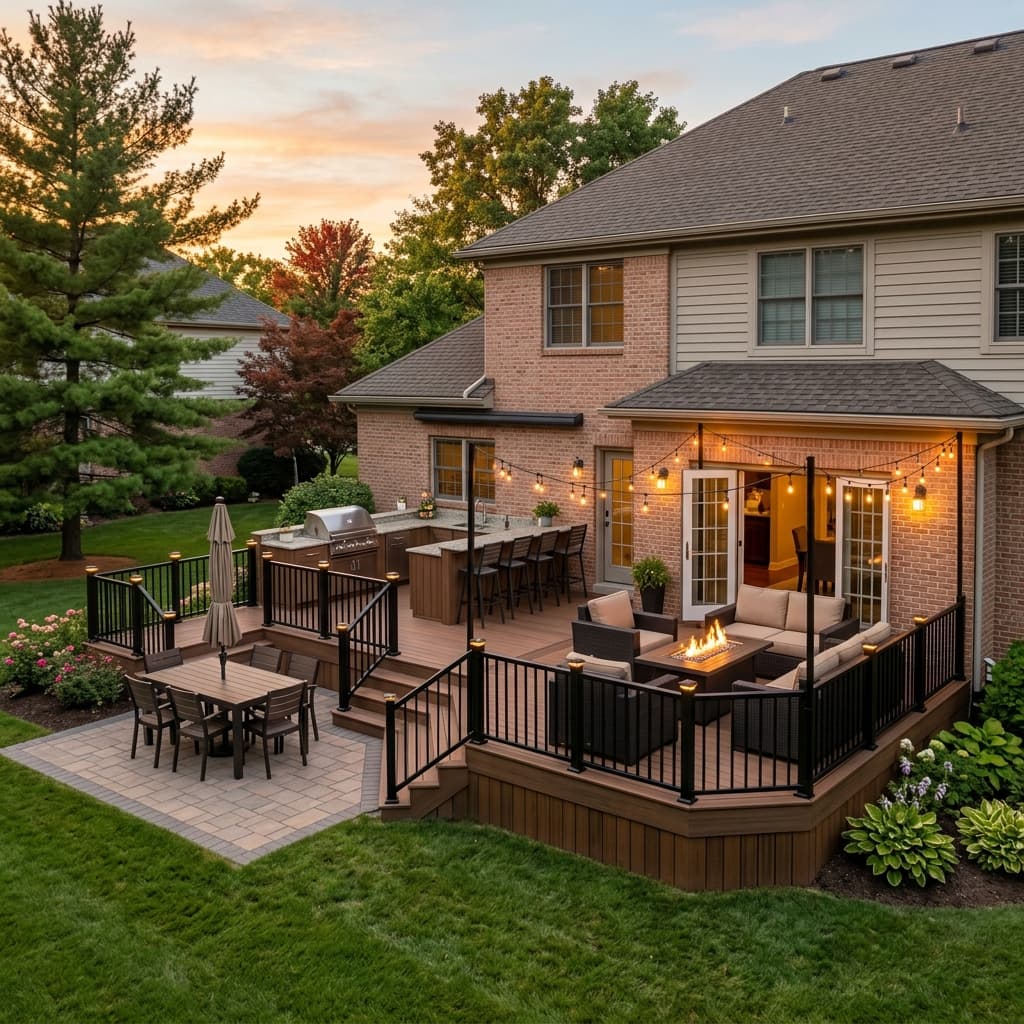
The Complete Journey: From First Blueprint to Your First BBQ on a Custom Northern Virginia Deck
Building a custom deck is more than just a renovation—it is a journey. Explore the step-by-step process of transforming a Northern Virginia backyard into a luxury retreat.
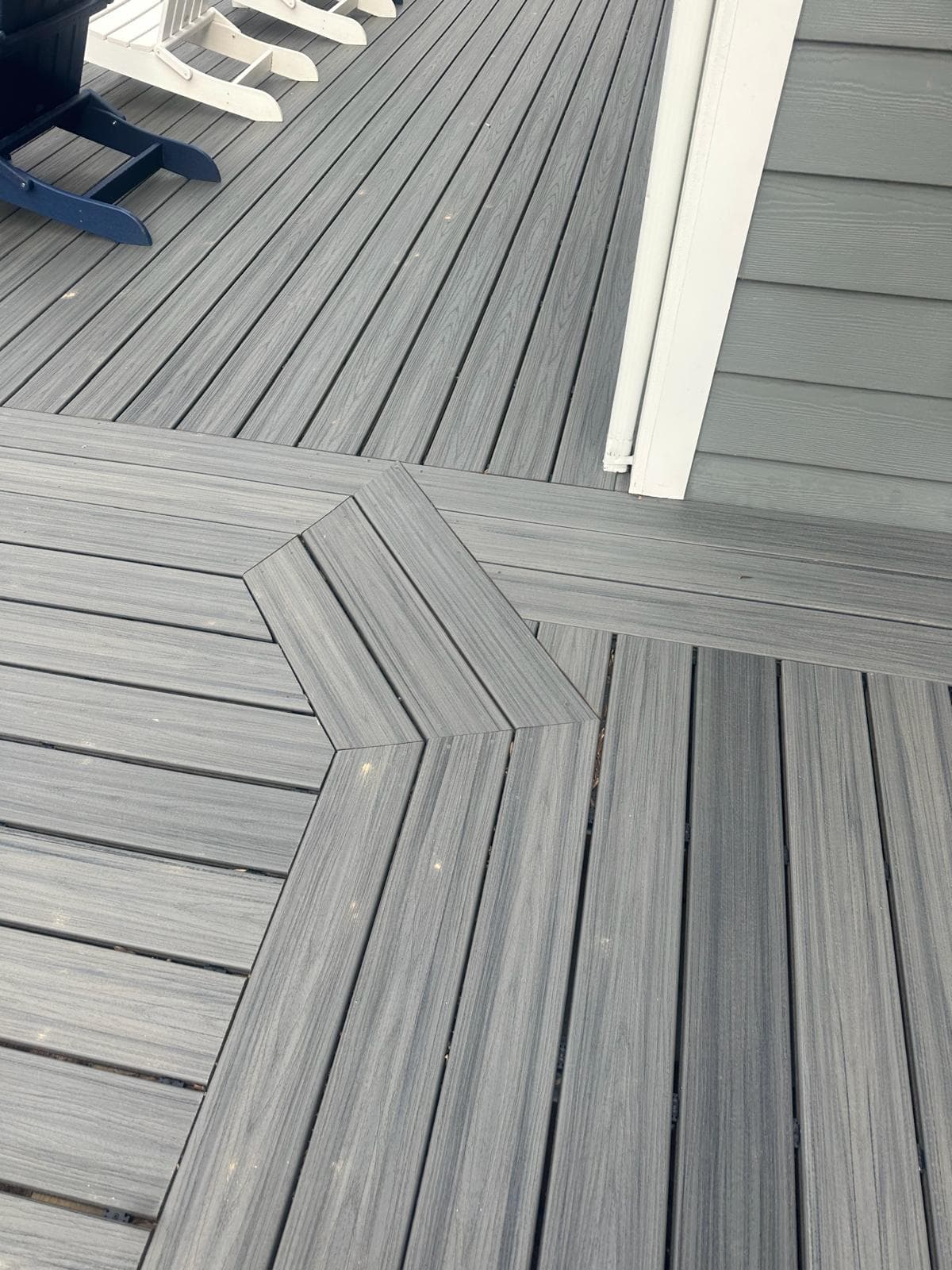
Do I Need a Building Permit for a Deck in Virginia?
If you are planning a deck anywhere in Northern Virginia, the honest answer is almost always yes — you need a building permit. Here is exactly when Virginia requires one, what the 16-inch and 256-square-foot rules mean, and how HOA review fits in.
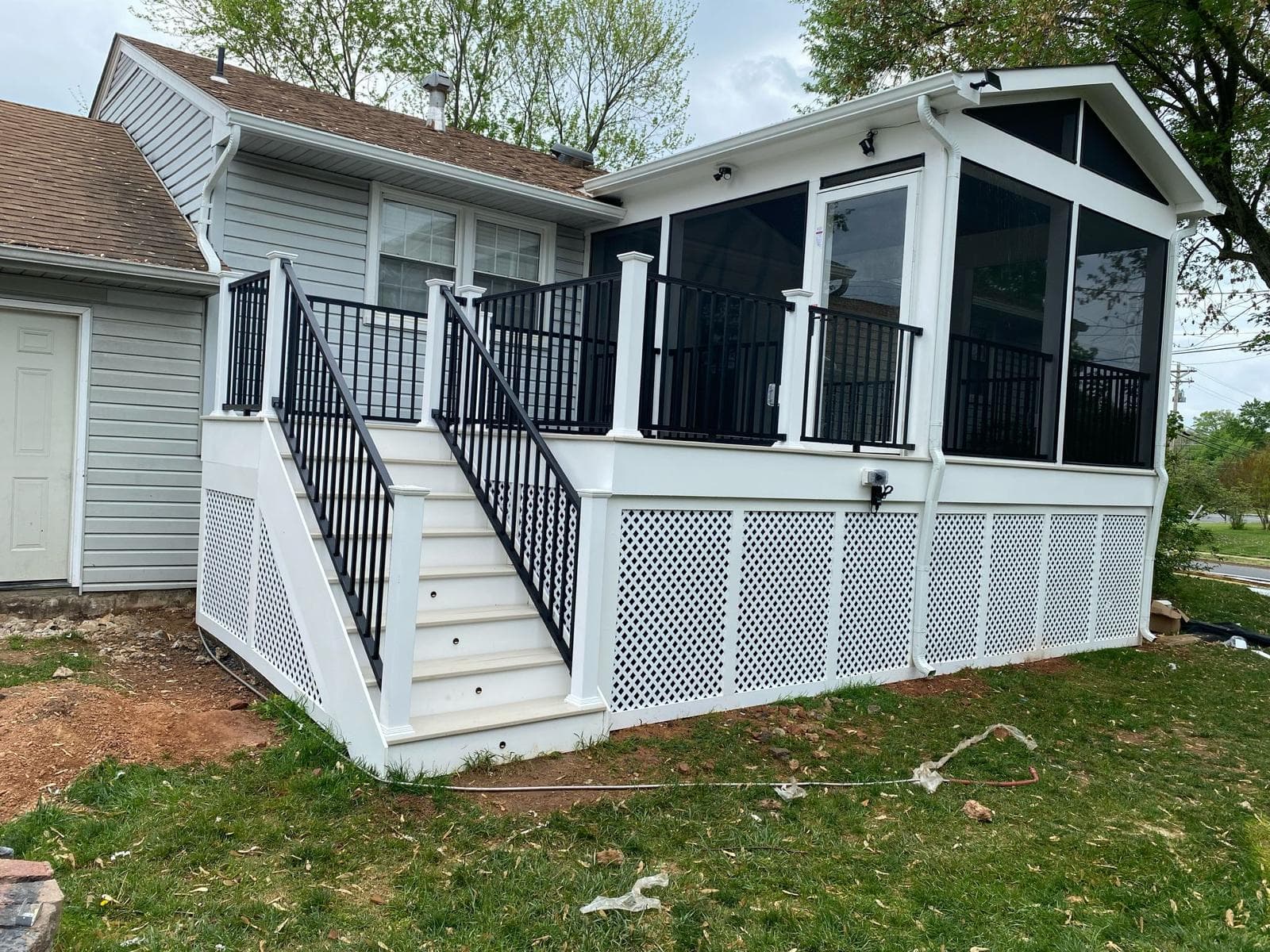
Top 5 Deck Designs for Sloped Backyards
Overcome aggressive yard slopes with these multi-level and elevated deck configurations tailored for hilly Northern Virginia properties.
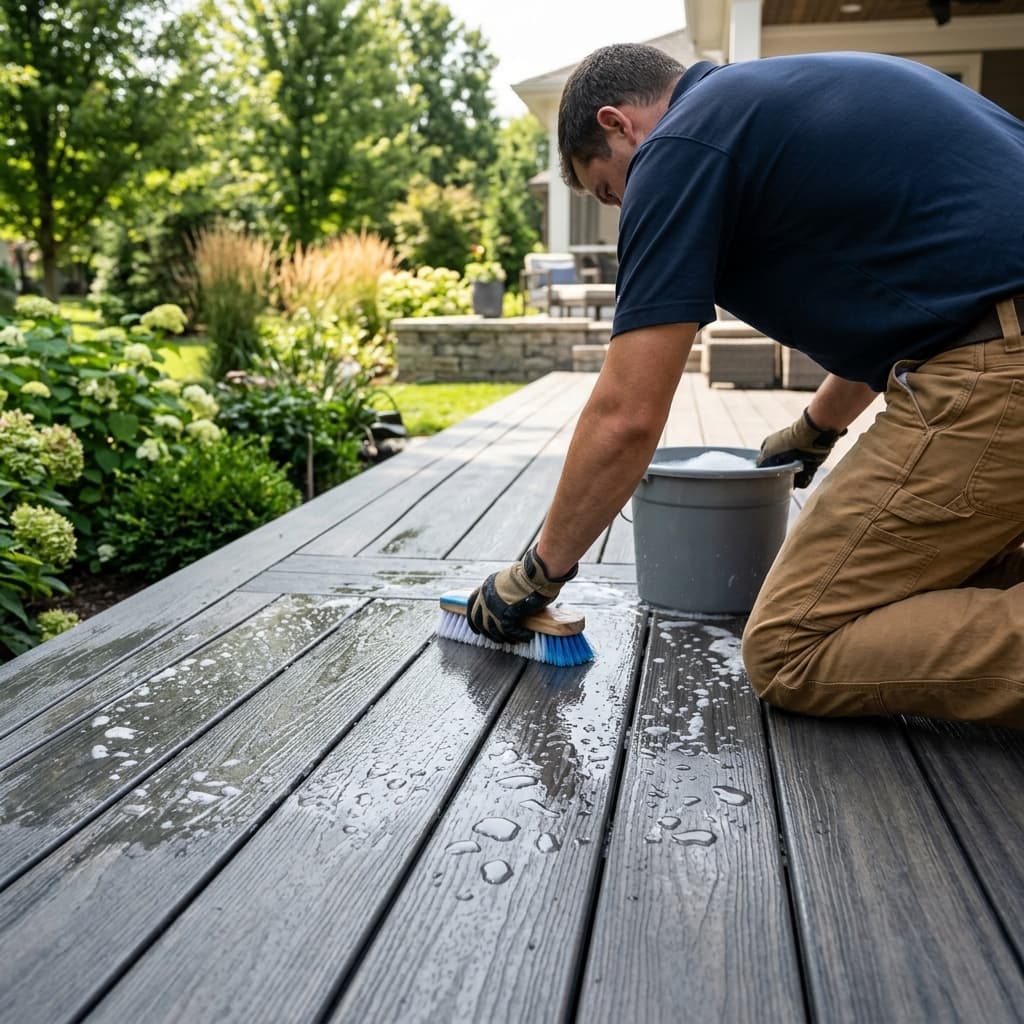
How to Properly Maintain Your Composite Deck
Composite decking is low-maintenance, not no-maintenance. Learn the essential cleaning routines to protect your Trex investment.
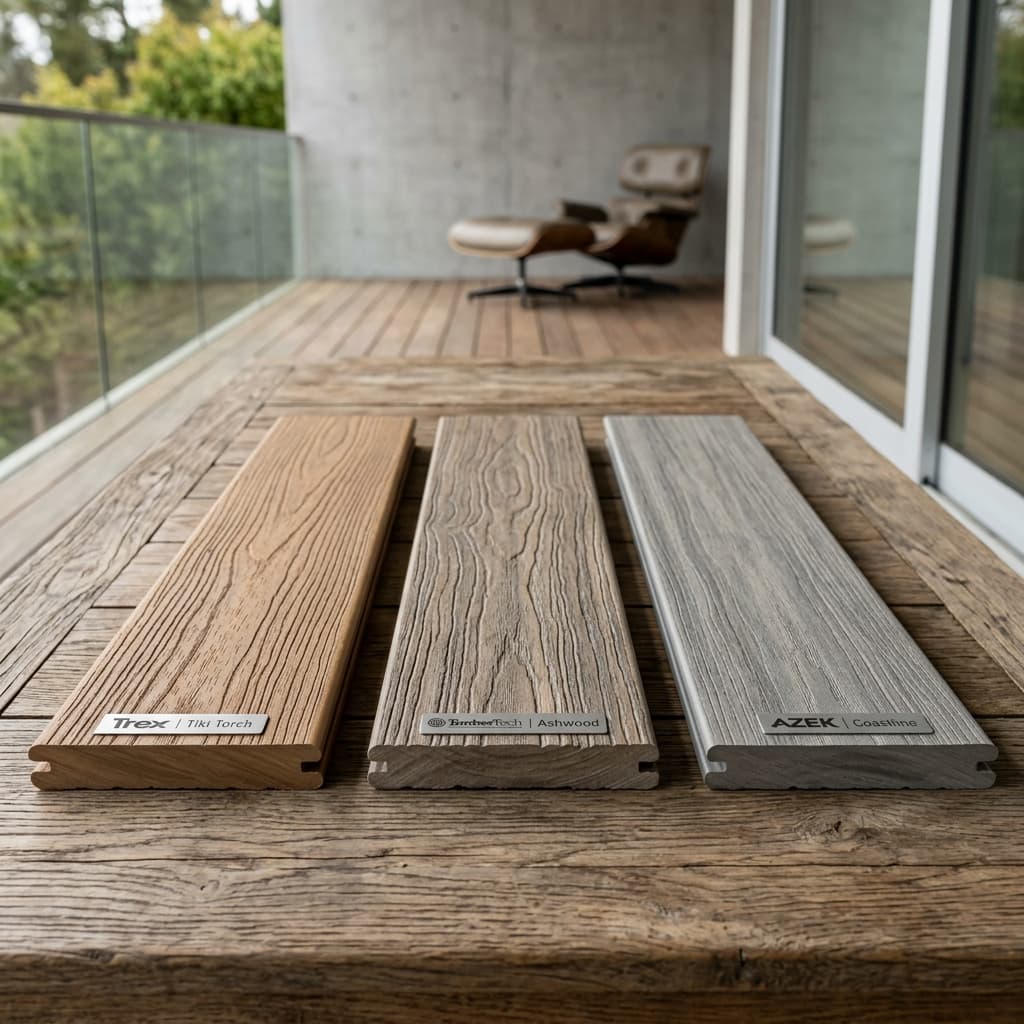
Trex vs. TimberTech vs. AZEK: The Ultimate Comparison
Confused by the different composite brands? We break down the differences between the industry titans to help you choose the best boards.
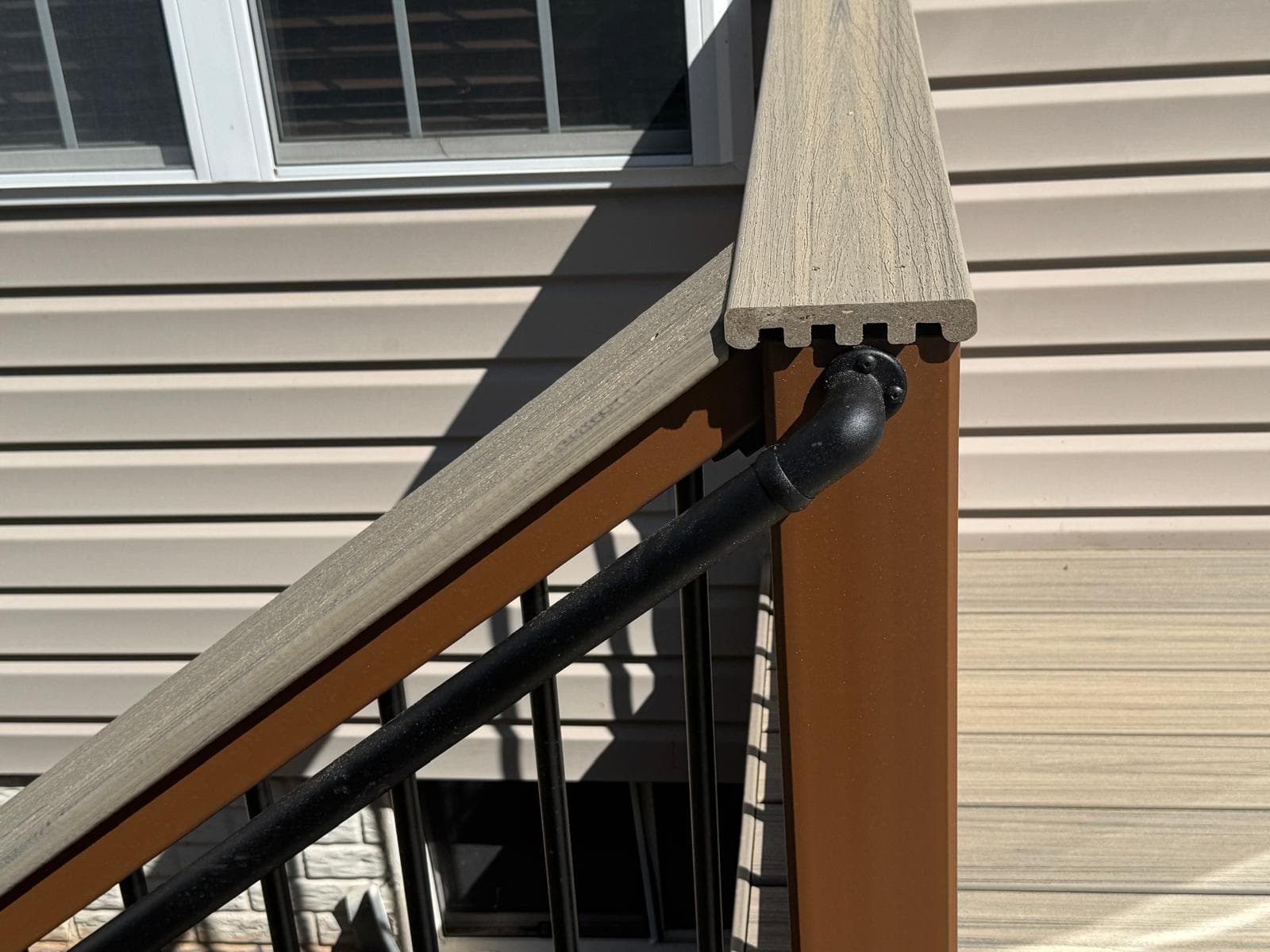
Modern Deck Railing Trends: Cable, Glass & More
Transitioning from wood pickets to sleek, low-obstruction railing systems. Discover how modern railings can transform your view and safety.
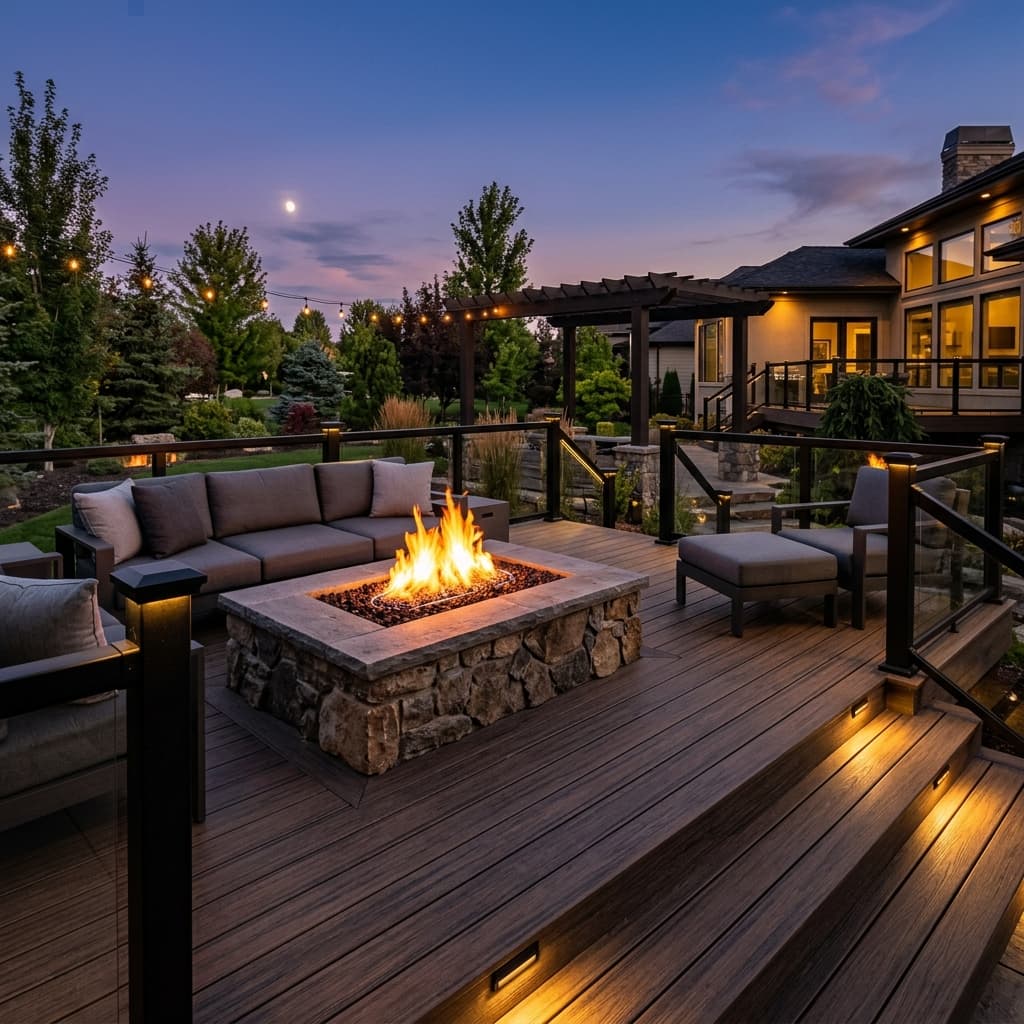
Fire Pits vs. Fire Tables: Which is Better?
Comparing built-in stone fire pits to portable fire tables for composite decks. Which one offers the best ambiance and safety for your backyard?
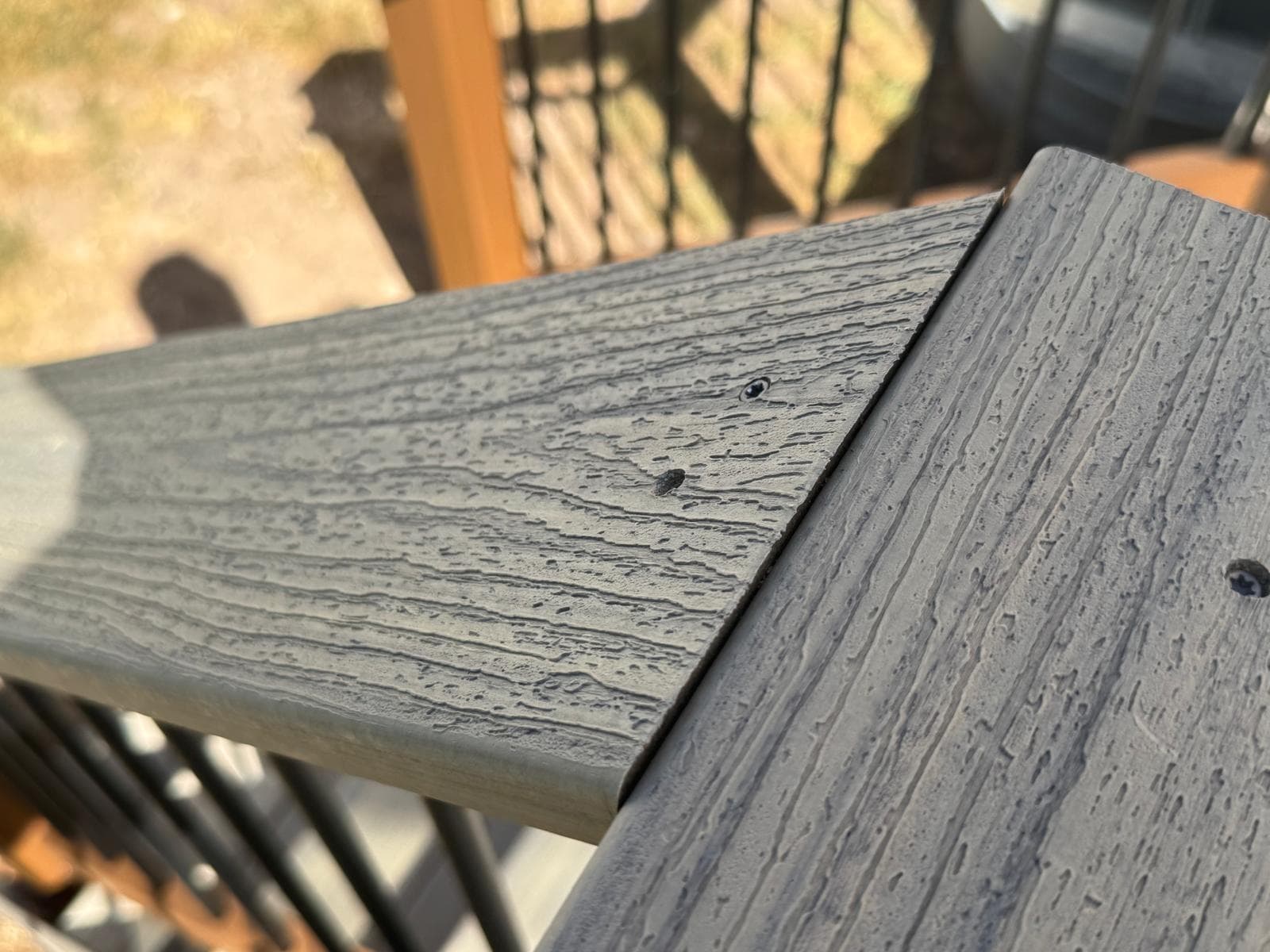
Winterproof Your Deck: Maintenance Tips for Northern Virginia
Preparing for snow and ice. Protect your composite and wood deck from winter damage with these professional maintenance steps.
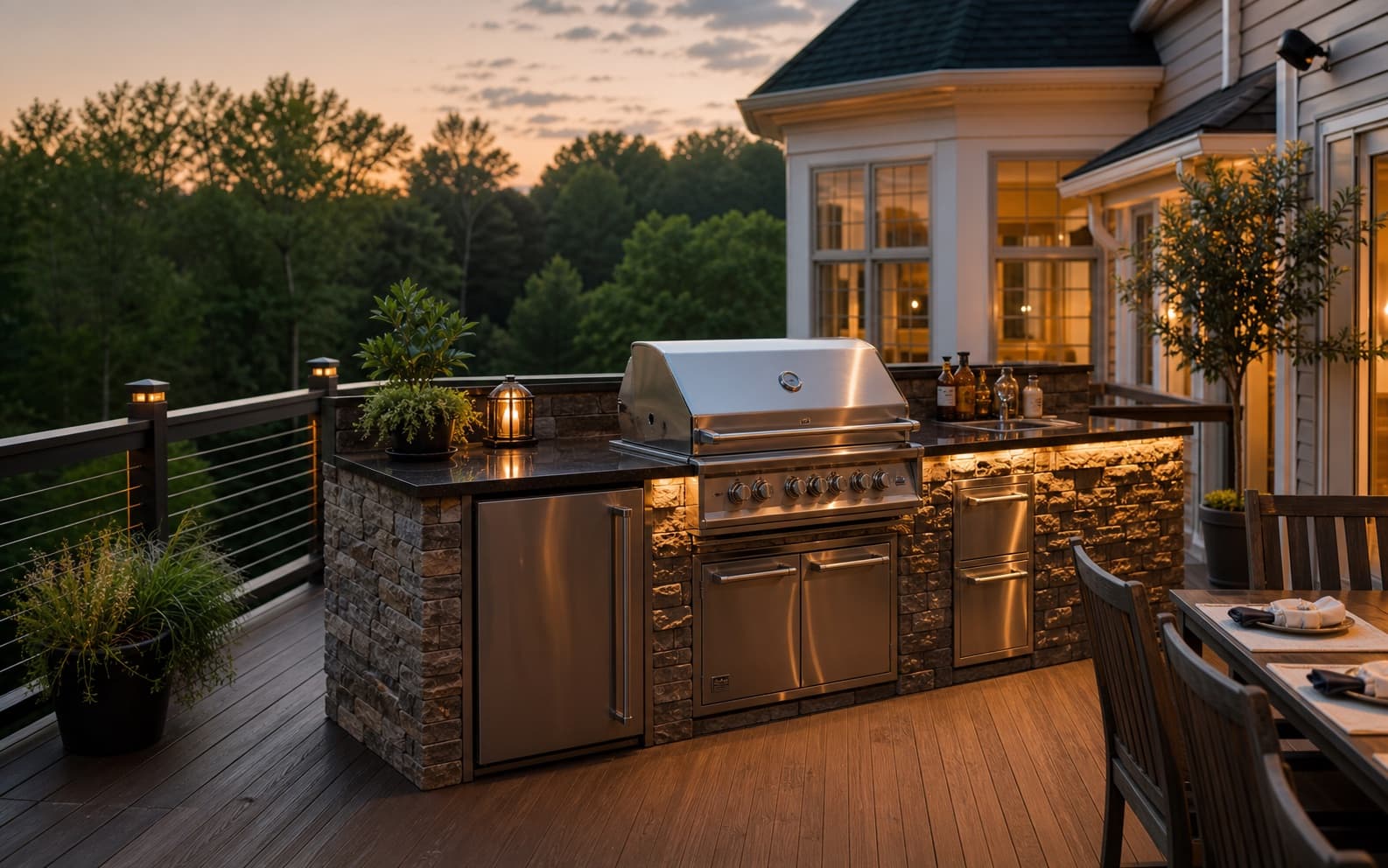
Outdoor Kitchen ROI: Is a Built-In Grill Worth it?
Analyzing the equity gain and lifestyle benefits of professional outdoor culinary spaces. Is a built-in kitchen worth the $15k+ investment?
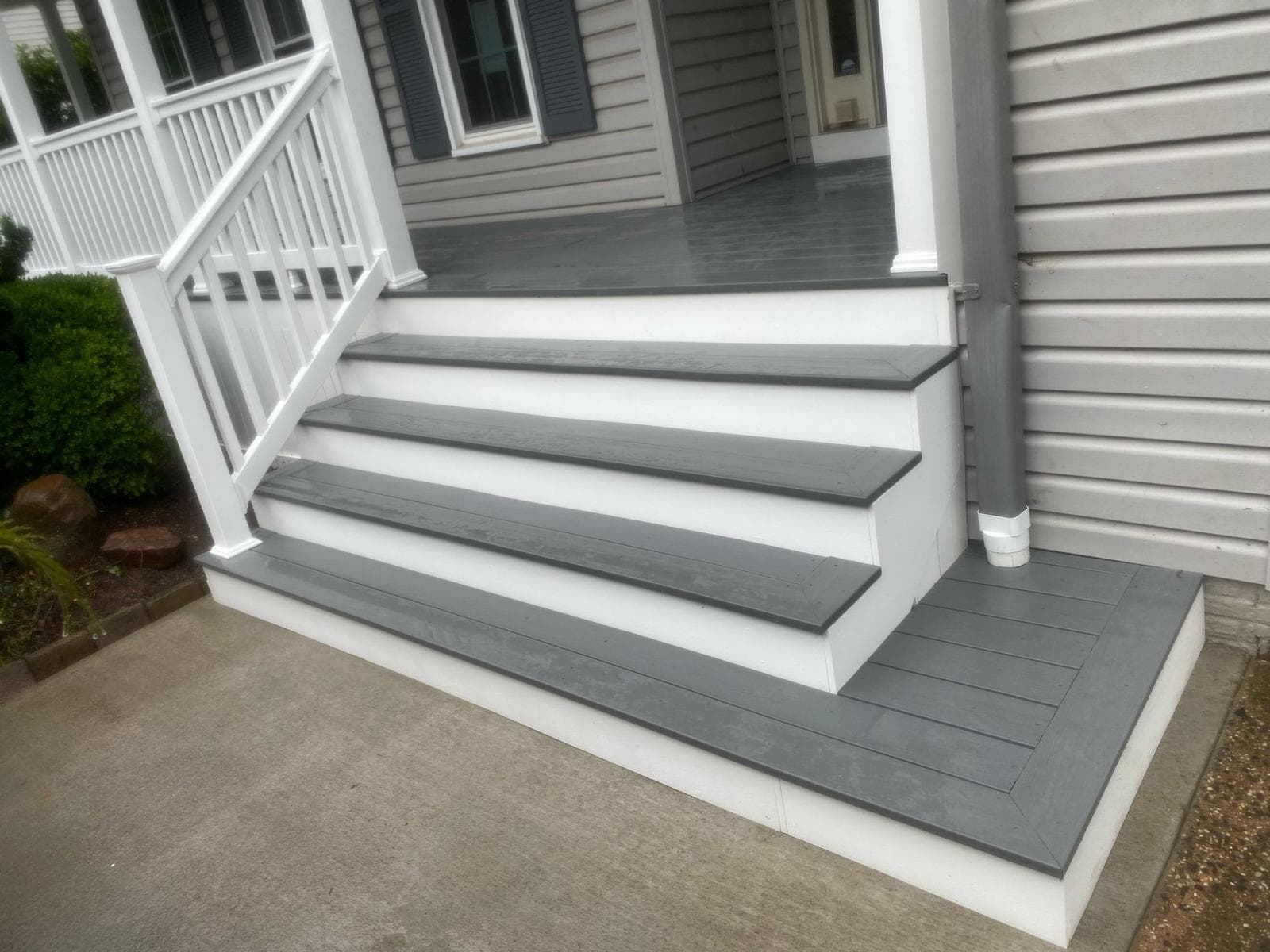
Small Deck, Big Impact: Smart Designs for Compact Backyards
Space-saving furniture, multi-level layouts, and corner designs for small lots. Learn how to maximize your square footage in Northern Virginia.
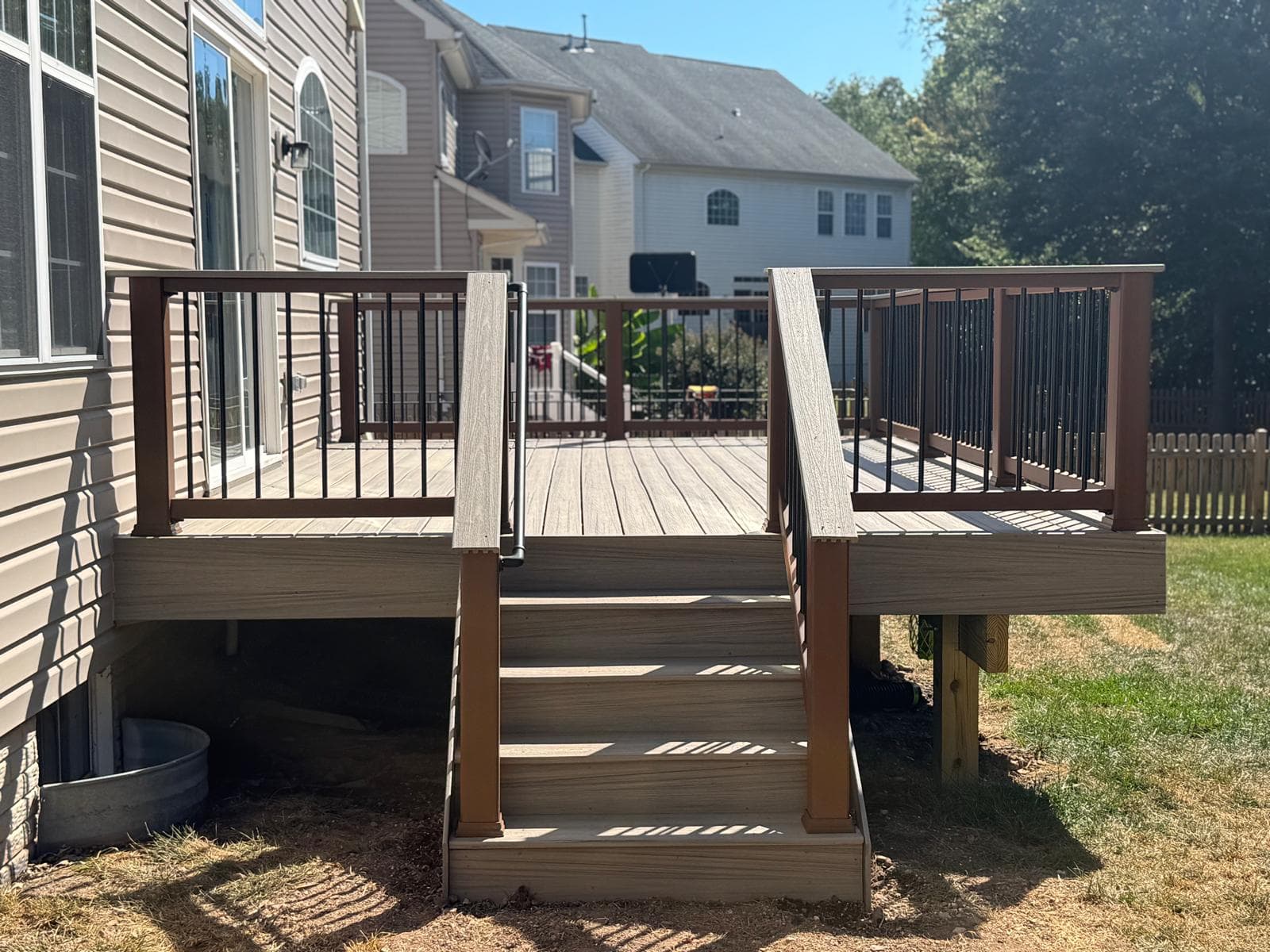
Hot Tubs and Decks: Structural Requirements Explained
Looking to integrate a spa into your outdoor space? Learn the massive engineering and framing requirements necessary to safely support 4,000 pounds of water.
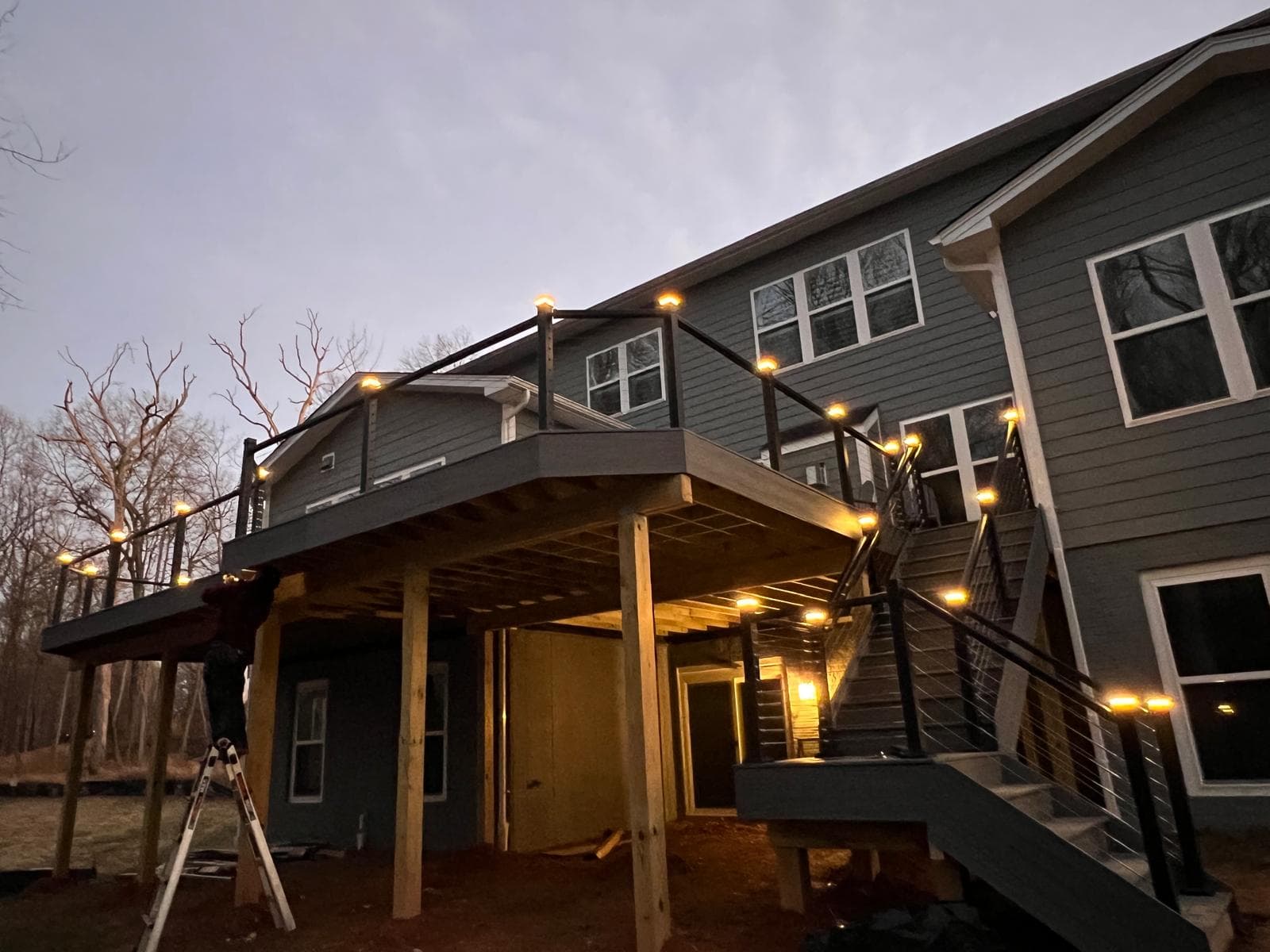
Deck Landscaping: Integrating Gardens with Your Outdoor Space
Beautiful decks deserve beautiful surroundings. Learn how to blend your new deck with professional landscaping and vertical gardens.
Expert Tips: Preparing Your Deck for a Virginia Summer
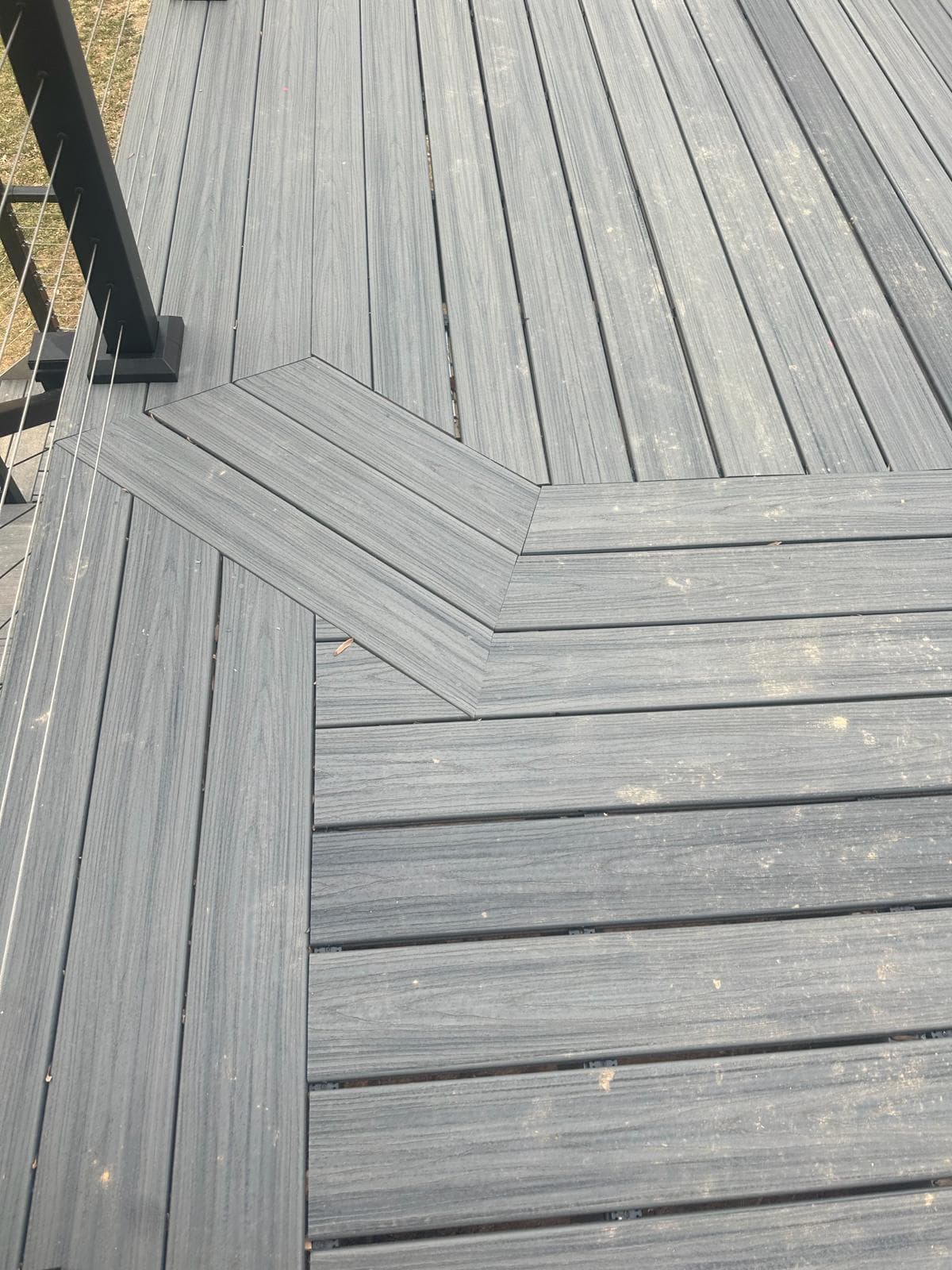
Summer is around the corner! Follow our professional checklist to ensure your outdoor space is safe, clean, and ready for BBQ season.
Trex vs Wood Decking: Cost and Maintenance Comparison 2026
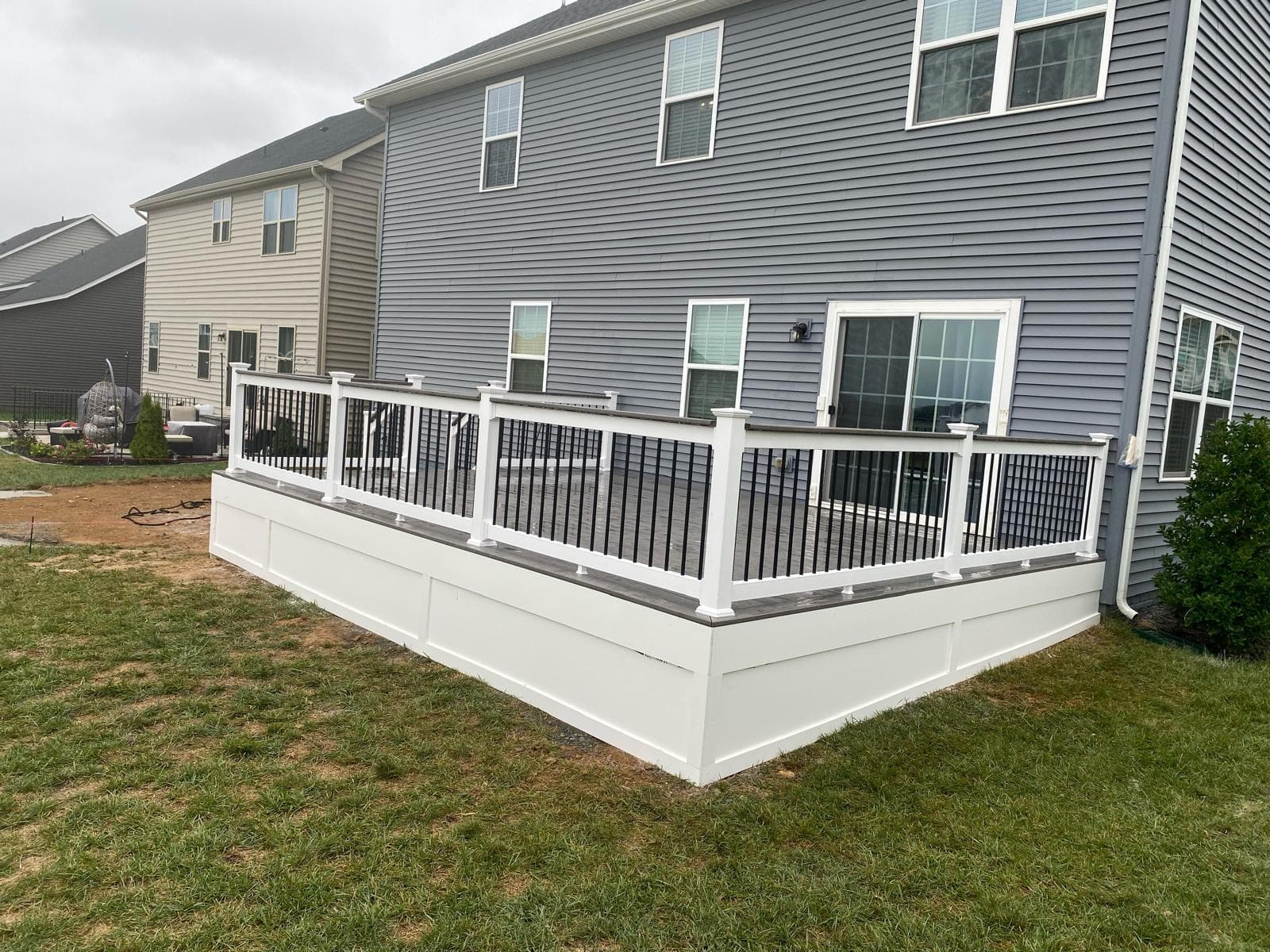
Comparing smooth composite decking materials to rich natural wood. Which one offers the best long-term value for Northern Virginia homeowners?
Why Enclosed & Screened-In Porches Are Trending
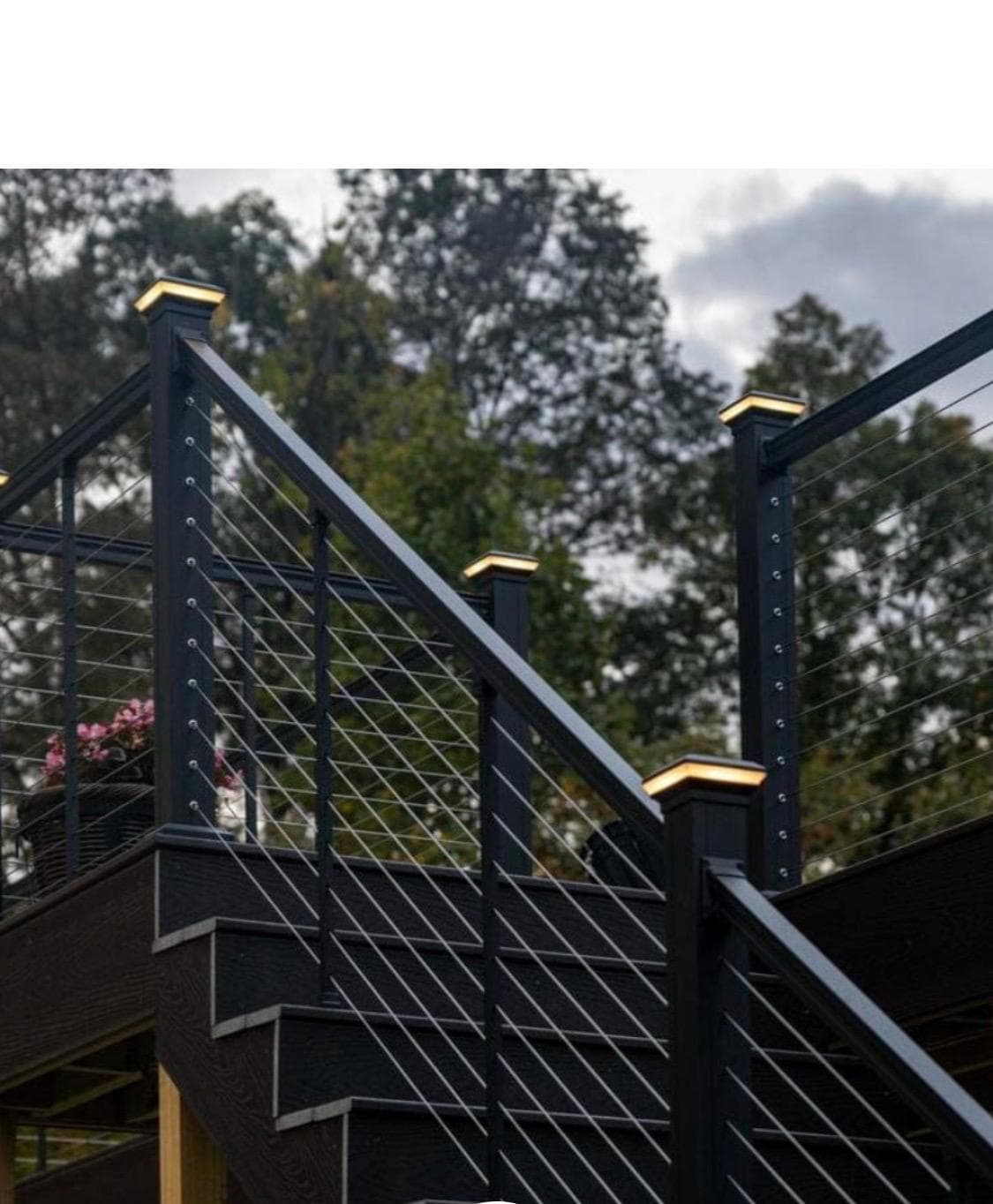
Custom wooden porches are extending the outdoor living season well into the autumn months. Discover the benefits of screened-in architecture.
Pergola vs. Gazebo: Finding Your Perfect Fit
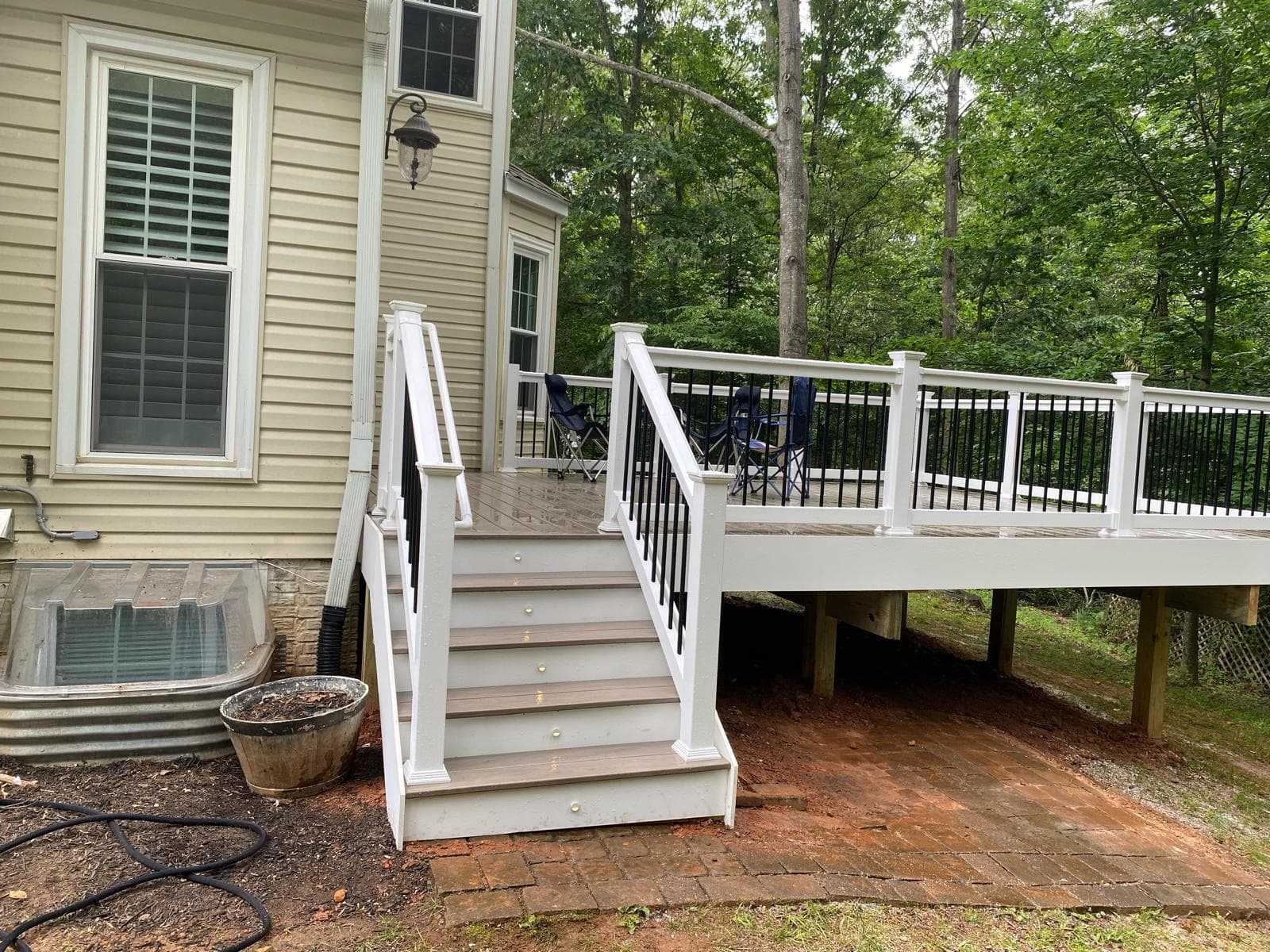
Looking to add definition and shade to your stone patio? We break down the structural differences between open-air pergolas and enclosed-roof gazebos.
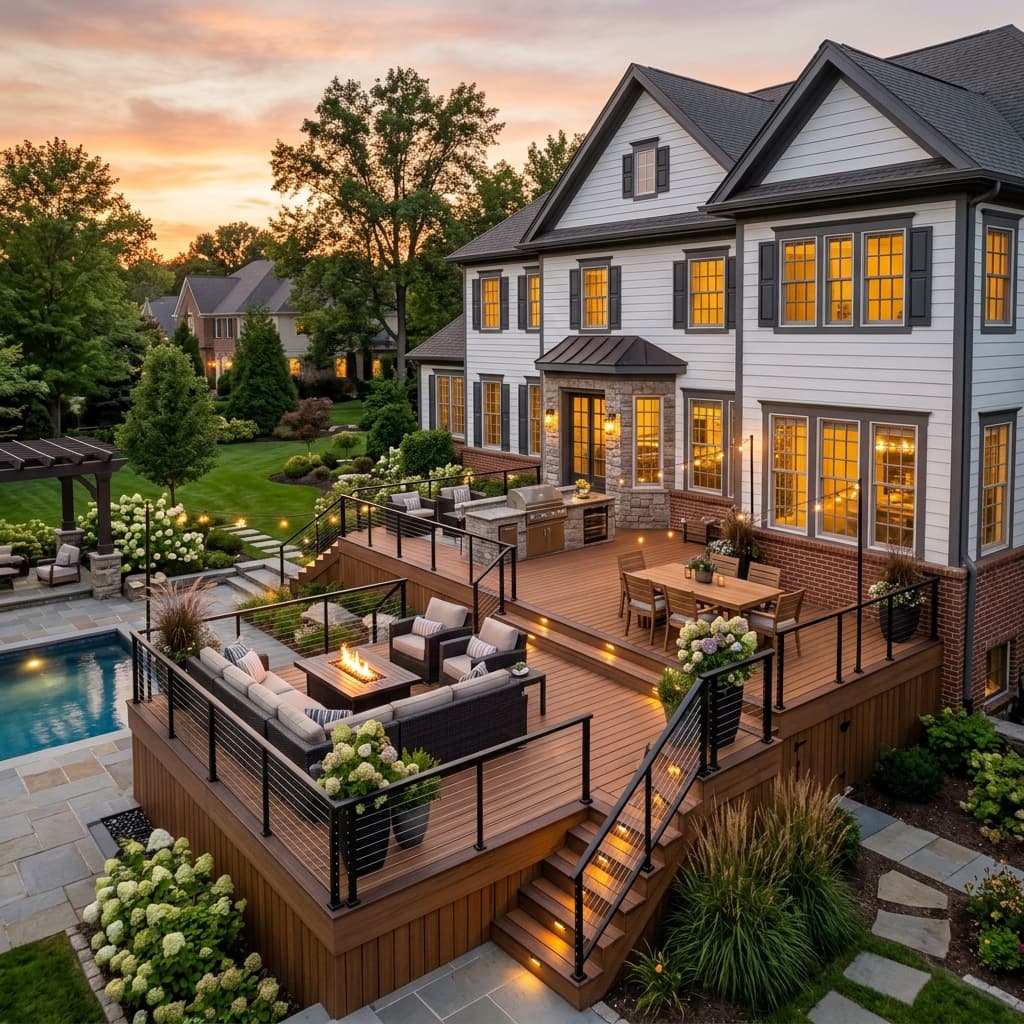
Adding Value: Does a Deck Increase Home Appraisal?
Analyzing the Return on Investment (ROI) of composite outdoor living spaces for home appraisals in the Northern Virginia real estate market.
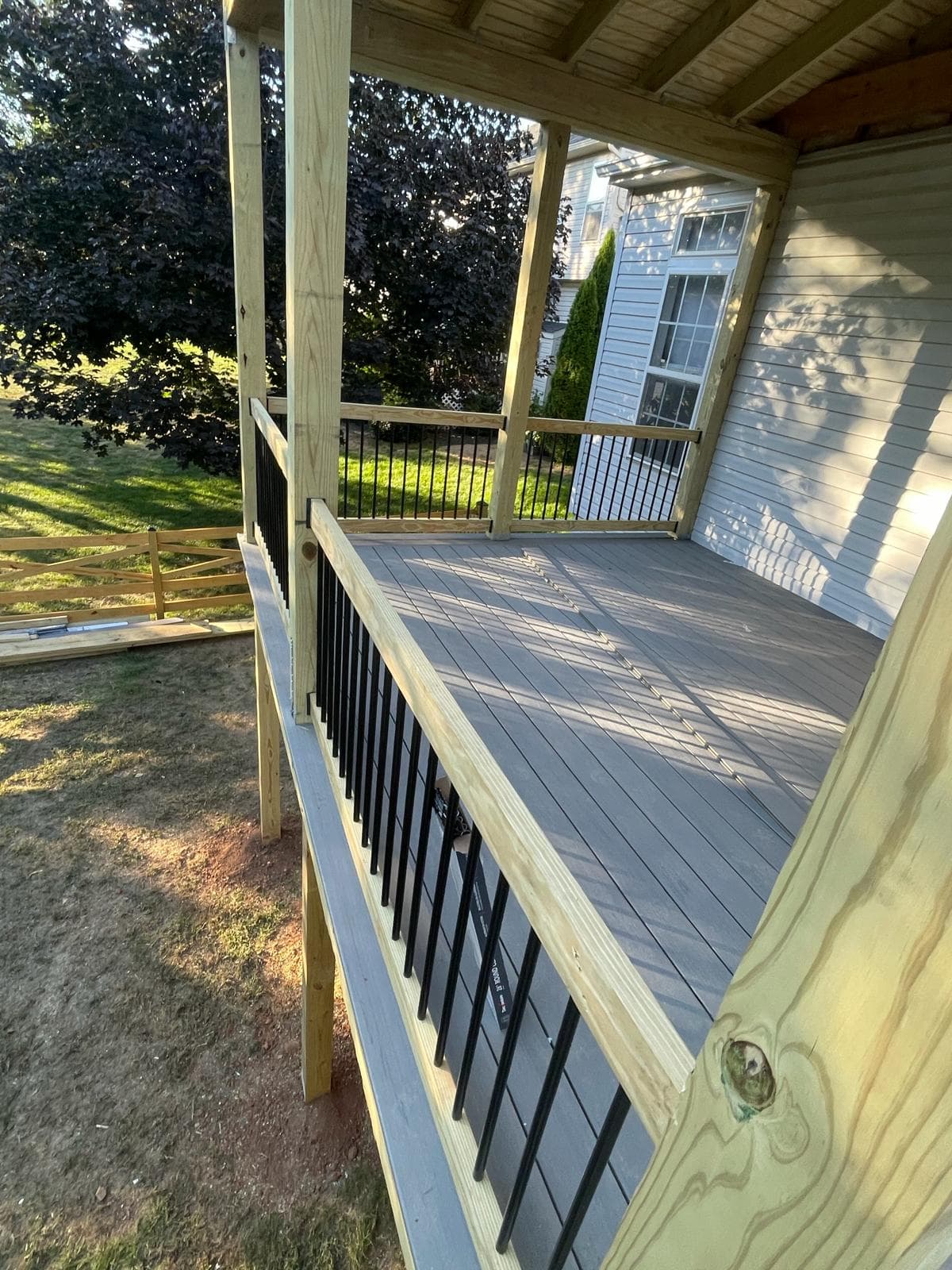
The Ultimate Guide to Deck Resurfacing
Does your deck have structural integrity but a worn surface? Resurfacing might be the cost-effective solution to bring your outdoor space back to life.
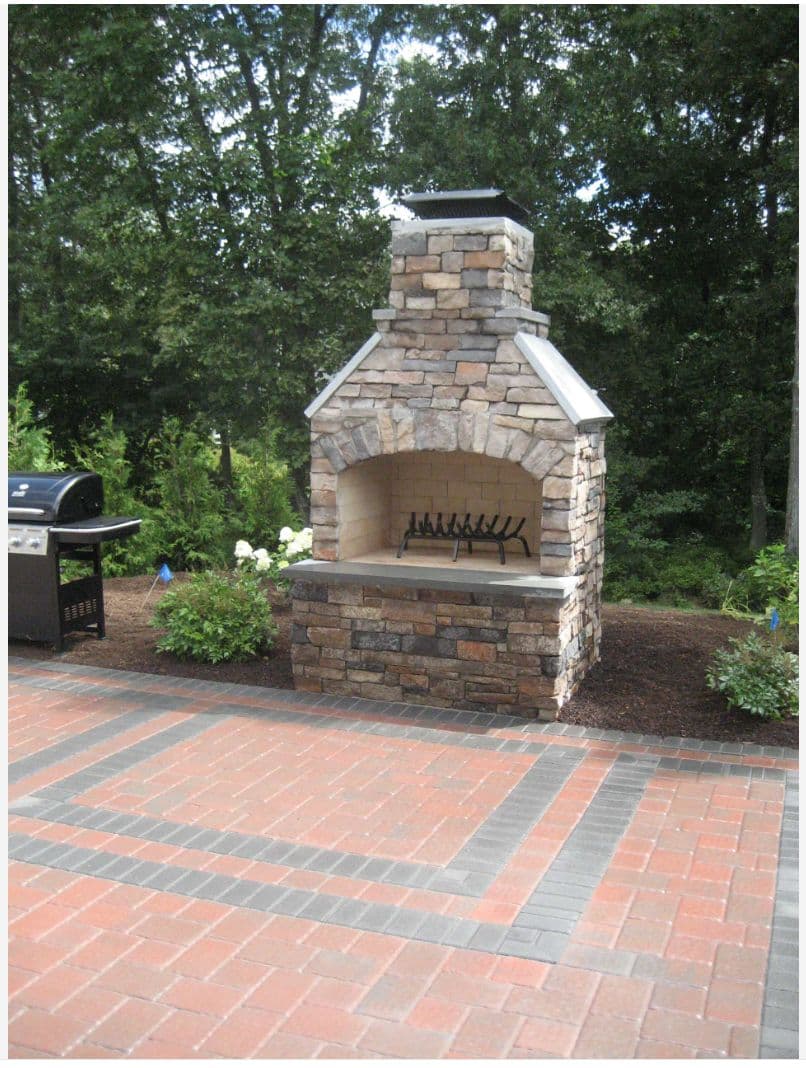
Illuminating Your Deck: Low-Voltage Lighting Guide
Extend the usability of your deck deep into the night safely with integrated low-voltage LED landscape and composite lighting systems.
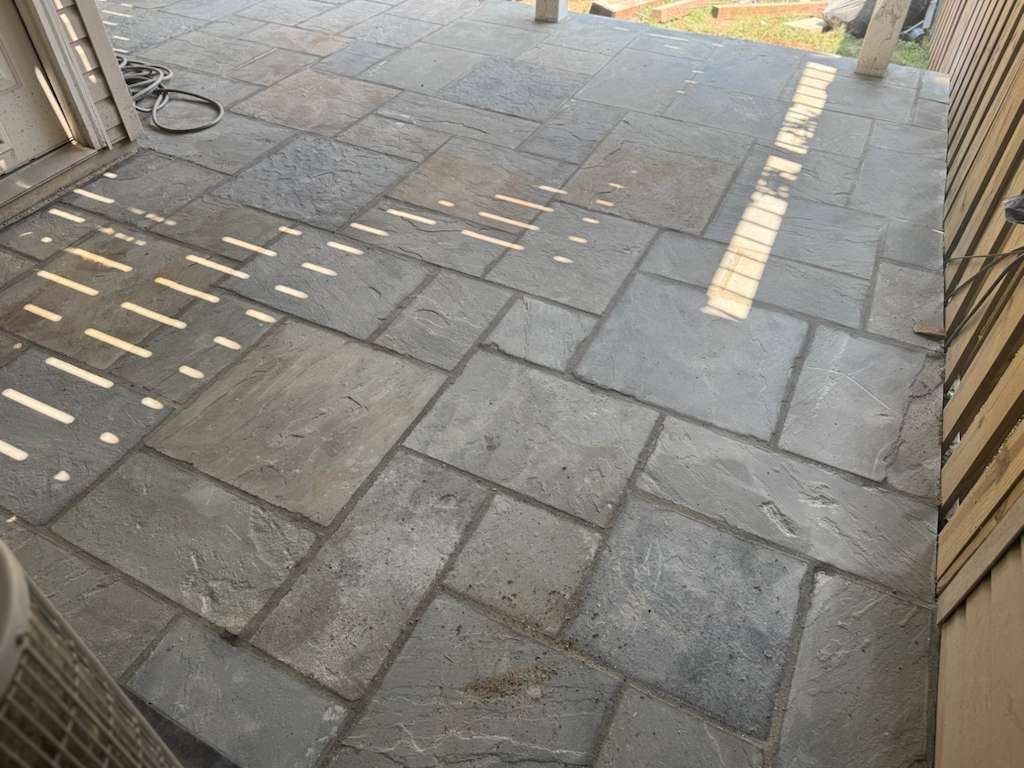
Natural Bluestone vs Concrete Pavers for Patios
The ultimate hardscaping comparison. Discover why natural dimensional bluestone remains the king of luxury patios over manufactured concrete.
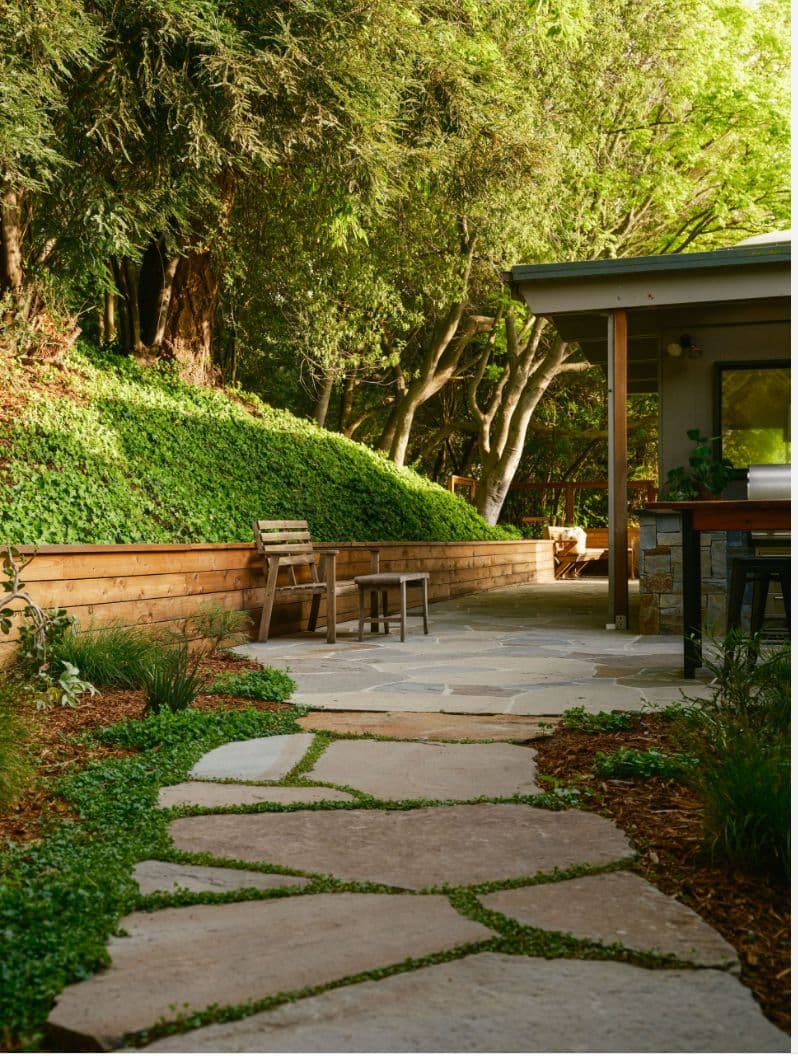
Creating a Dry Space: Under-Deck Drainage Systems
Maximize the square footage of your property by capturing the rain and creating a secondary, bone-dry outdoor living room beneath your elevated deck.
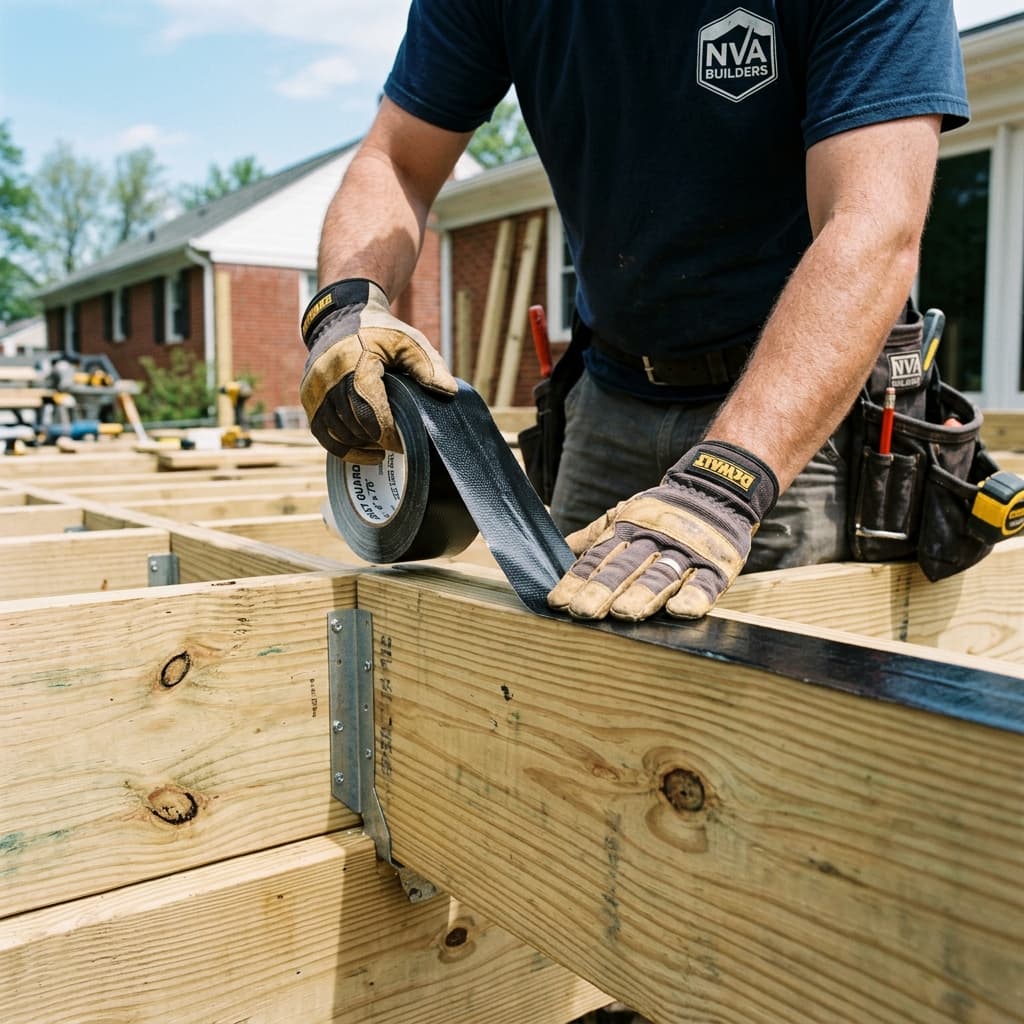
Wood Preservatives: How to Stop Rot Before It Starts
Protecting your wood framing is crucial. Learn about the chemical preservatives and butyl tapes that prevent joist decay under your composite decking.
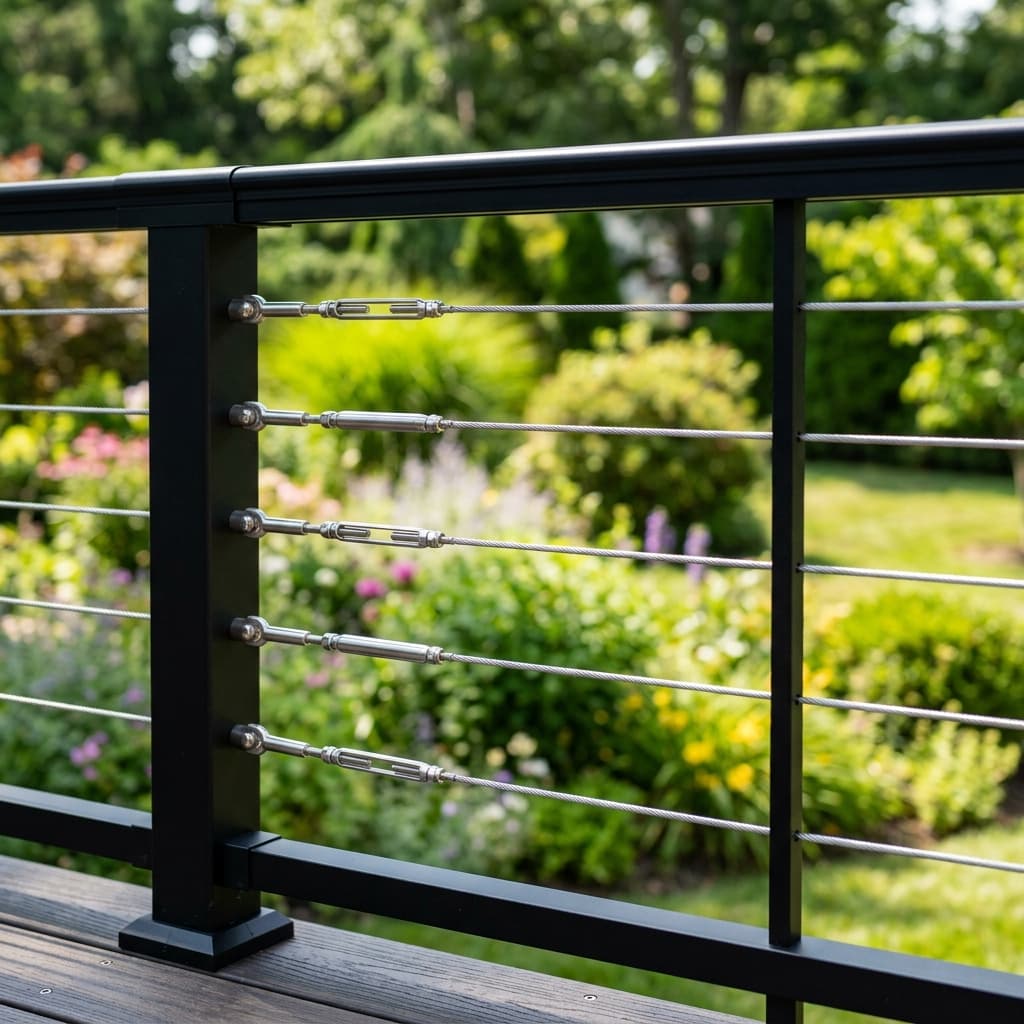
Navigating Railing Heights: Safety and Local Codes
Building a safe deck means adhering strictly to Virginia Uniform Statewide Building Codes regarding railing heights, spindle spacing, and stairway graspability.
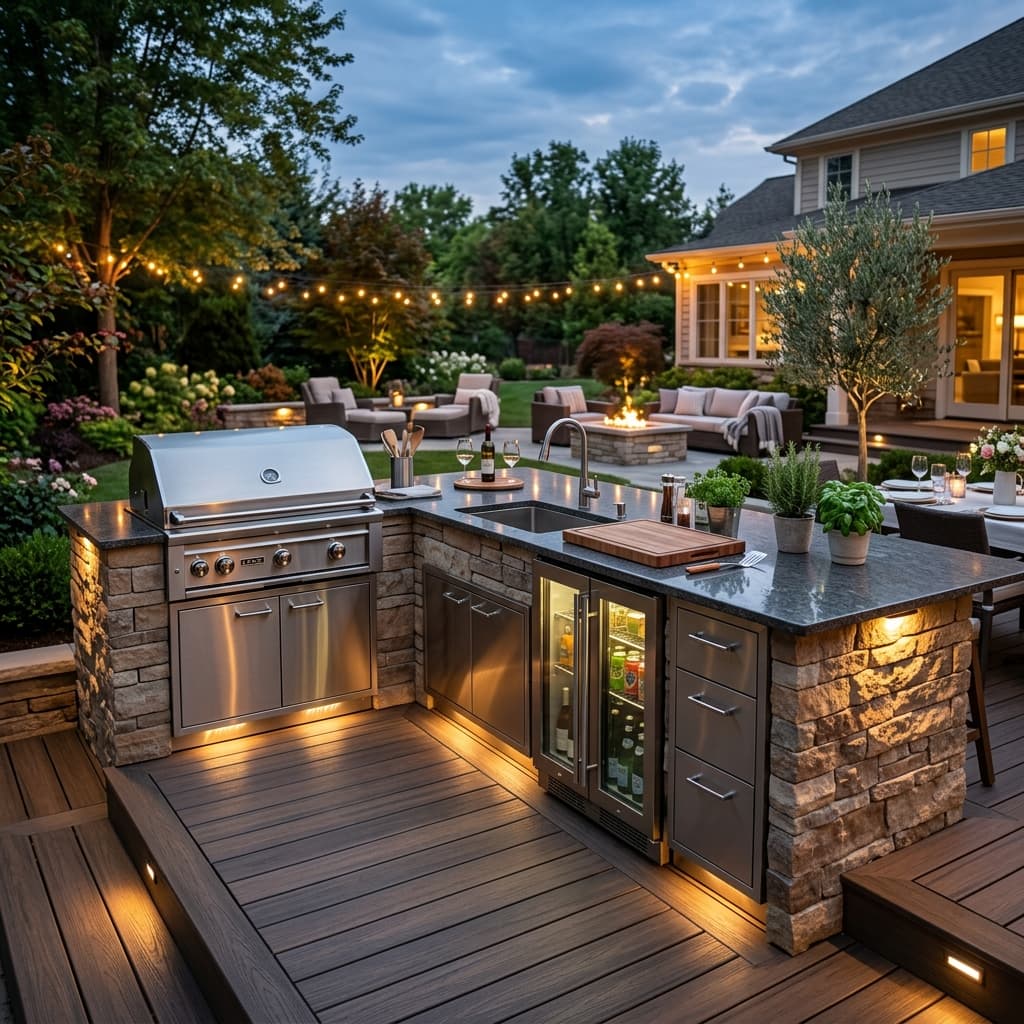
The ROI of Installing an Outdoor Kitchen
Outdoor culinary spaces are the most highly requested upgrade in 2026. Explore the structural costs and long-term equity benefits of built-in grilling stations.
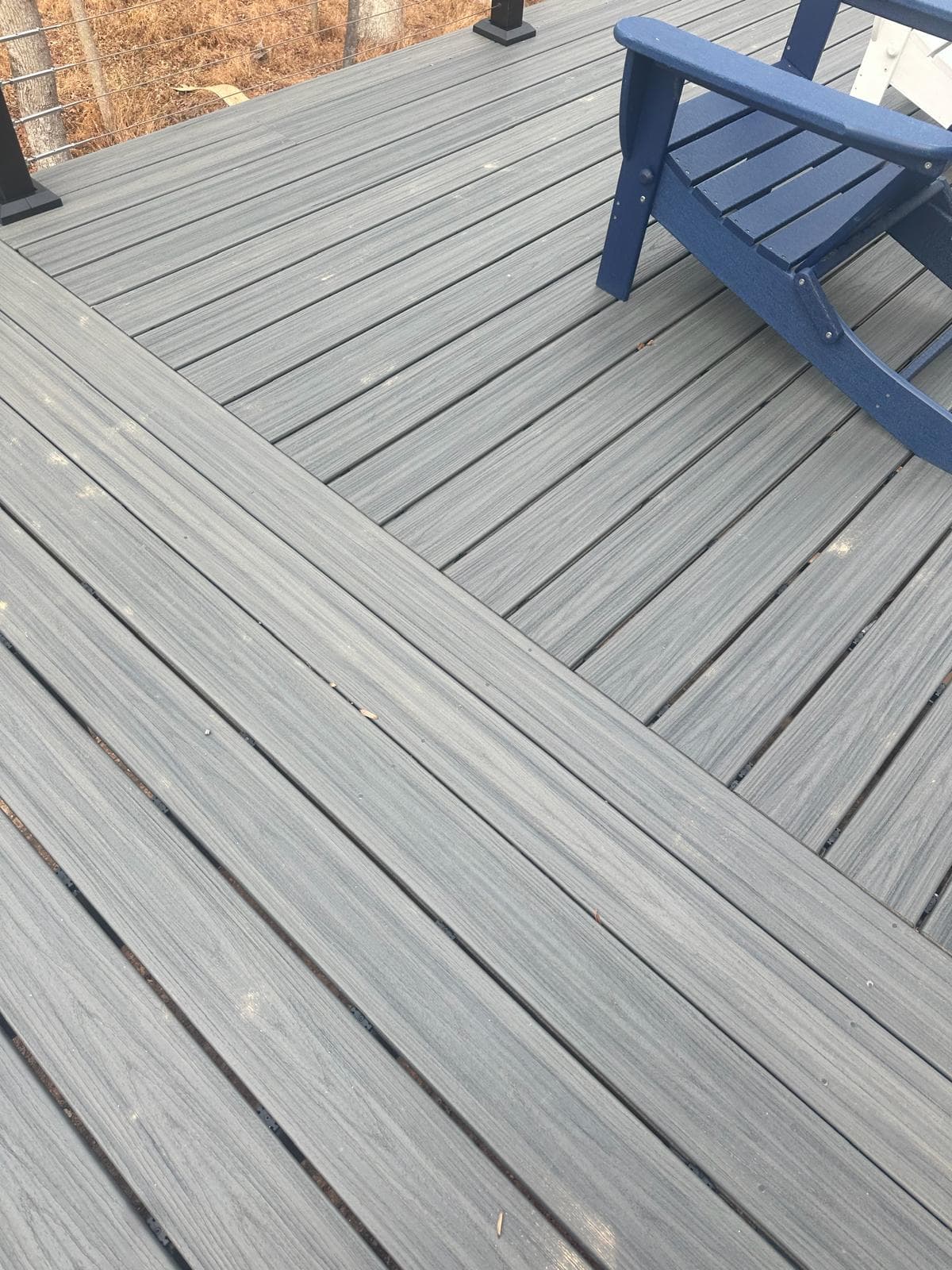
Composite Decking Colors: Top Trends for 2026
Move past standard gray. Discover the rich, dual-tone tropical colors and modern monochromatic decking trends dominating Northern Virginia backyards.
Guides Northern Virginia Homeowners Are Reading
BBB Accredited Deck Builder
BBB profile, status context and third-party trust signals.
LDN Decks Reviews on Yelp
Yelp review profile and public reputation signals for homeowners.
Deck Beam Span Calculator
Estimate beam span, post spacing, tributary width and framing warnings.
Deck Joist Span Calculator
Estimate joist span, spacing, cantilever and composite decking support warnings.
Deck Load Calculator
Estimate distributed deck load, beam line load, post load and heavy-upgrade warnings.
Virginia Deck Stair Calculator
Estimate deck stair rise, run, number of steps, tread depth and stair angle.