


Outdoor Kitchen on a Deck: Planning Guide for Northern Virginia Homeowners
An outdoor kitchen integrated into a deck is one of the highest-value outdoor living upgrades in Northern Virginia — and one of the most technically complex to plan correctly. Gas lines, electrical service, structural loading, drainage, and HOA approval all intersect in an outdoor kitchen project in ways that are not obvious when looking at showroom displays or online inspiration photos.
Outdoor kitchens have moved from a niche luxury feature to a standard request on premium Northern Virginia deck projects. The appeal is clear — the ability to cook, entertain, and serve without moving between the house and the deck is a genuine quality-of-life improvement for households that use their outdoor space frequently. But an outdoor kitchen is not a drop-in feature. It requires advance planning that affects the deck framing, the gas and electrical rough-in, the permit scope, and the HOA submission.
This guide covers what Northern Virginia homeowners need to plan for when adding an outdoor kitchen to a deck.
Structural Loading: Plan the Kitchen Location at Framing Time
The most important planning point for an outdoor kitchen on a deck is structural loading. Outdoor kitchen components — countertops, built-in grills, refrigerators, storage cabinets — are significantly heavier than deck furniture. A full outdoor kitchen installation with stone or concrete countertops, a built-in grill, a refrigerator, and cabinet units can weigh 2,000 to 5,000 pounds concentrated in a 50 to 100 square foot area.
Deck framing is designed for a distributed live load (people moving around) and a concentrated point load at specific locations (posts, beam midpoints). An outdoor kitchen creates a concentrated dead load in a location that the standard deck framing calculations may not have been designed for.
The practical requirement: If an outdoor kitchen is planned for a new deck, the kitchen location must be communicated to the deck designer before framing begins. Additional joist blocking, closer joist spacing, or supplemental beam support under the kitchen footprint may be required. Adding this structural support during framing is a modest cost; retrofitting it after the deck is complete is expensive and disruptive.
For outdoor kitchens added to existing decks, a structural assessment of the framing under the proposed kitchen location is required before installation. A contractor with deck-building experience can assess whether the existing framing is adequate or requires reinforcement.
Gas Line Requirements
A built-in grill on a deck almost always requires a dedicated natural gas line — propane tanks under a built-in grill in a deck enclosure create safety hazards from gas accumulation. Natural gas is the correct fuel for deck outdoor kitchens in Northern Virginia's largely gas-served residential market.
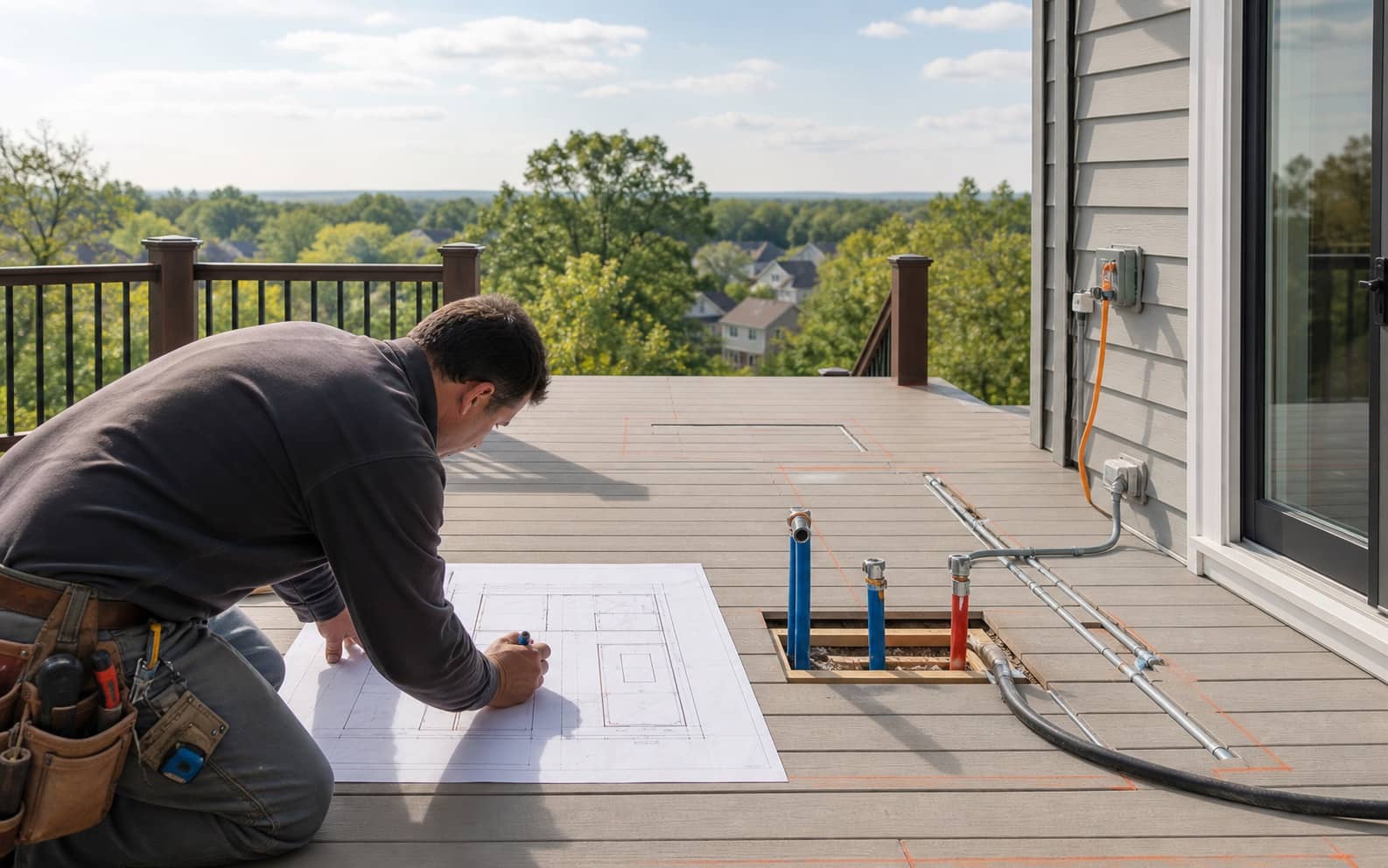
Gas line routing: A licensed plumber or gas line contractor routes the gas line from the house's gas service to the outdoor kitchen location. The line typically runs through the deck framing and exits through the deck surface or the side of the kitchen structure. This requires coordination with the deck framing to ensure a clear routing path.
Gas line permit: A separate gas line permit is required from the county building department. This is separate from the deck permit and requires inspection by a gas inspector before the line is put into service. The deck contractor and the gas contractor must coordinate timing so the gas rough-in happens during deck construction rather than after completion.
Shutoff valve: A code-required manual gas shutoff valve must be installed in an accessible location at the outdoor kitchen — typically visible and accessible without removing cabinet panels.
Electrical Requirements
An outdoor kitchen typically requires electrical service for: the refrigerator (standard 120V outlet), task lighting over the cooking area, and any powered accessories (blenders, outdoor speakers, etc.). A built-in outdoor refrigerator should be on a dedicated circuit.
GFCI protection: All outdoor electrical outlets within 6 feet of a water source (including any sink in the outdoor kitchen) must be GFCI-protected under the NEC. Outdoor kitchen circuits that include any moisture exposure must also be GFCI-protected.
Electrical permit: Electrical work for the outdoor kitchen requires a separate electrical permit, pulled by a licensed electrician. Like the gas rough-in, electrical rough-in should be coordinated to happen during deck construction.
Weatherproof covers: All outdoor outlets must use in-use weatherproof covers (the covers that close over the outlet while a plug is inserted). Standard weatherproof covers that only close when nothing is plugged in are not sufficient for in-use outdoor installation.
Drainage
If the outdoor kitchen includes a sink, drainage must be planned. There are two options:
Plumbed drain to the house's drain-waste-vent system: The cleanest solution — the outdoor kitchen sink drains like an interior sink. This requires routing a drain line through the deck framing to the house and connecting to the existing DWV system. Requires a plumbing permit and inspection.
Dry well or gravel pit: Some outdoor kitchen installations use a dry well under the deck to handle sink drainage — a gravel-filled pit that allows gray water to percolate into the soil. This is simpler but not appropriate in all soil conditions and may not be permitted in all Northern Virginia jurisdictions. Verify with your county before specifying a dry well.
A deck outdoor kitchen without a sink avoids the drainage issue entirely — many excellent outdoor kitchens use only a hose bib connection for cleaning and rely on the kitchen having no sink.
HOA Approval for Outdoor Kitchens
Outdoor kitchens on decks in HOA communities require ARC approval as part of the overall deck or deck modification permit. The ARC review for an outdoor kitchen typically focuses on:
- Visibility from the street or common areas: If the outdoor kitchen is visible from neighbors or common spaces, materials and finish must be consistent with community standards - Gas line access: Some HOAs want to confirm that the gas connection meets safety standards — providing the gas contractor's license and permit documentation satisfies this - Structure height: Outdoor kitchen enclosures that add significant height to the deck profile may be flagged if they block views or violate height restrictions in the community guidelines
Cost of Outdoor Kitchens on Northern Virginia Decks 2026
Basic built-in grill + counter (no sink, gas only): $8,000 to $18,000 for the kitchen components; $2,000 to $4,000 for gas line rough-in; $1,500 to $3,000 for structural framing support if needed.
Full outdoor kitchen (grill, refrigerator, sink, storage): $20,000 to $45,000 for kitchen components; $4,000 to $8,000 for gas and electrical rough-in; $2,000 to $5,000 for structural support and drainage.
Premium outdoor kitchen (custom stone counters, built-in smoker, full appliance suite): $45,000 to $90,000+ all-in.
These costs are for the kitchen addition to a deck project. When combined with a new deck build, the outdoor kitchen planning is integrated from the start — which reduces the structural and rough-in costs compared to adding a kitchen to an existing deck.
LDN Decks plans and builds outdoor kitchen integrations on deck projects across Northern Virginia. We coordinate the structural, gas, and electrical requirements from the framing stage.
Get an Outdoor Kitchen + Deck Estimate
---
Related: Pergola on a Deck Northern Virginia · Screened Porch vs Three-Season Room · Deck Lighting Ideas Northern Virginia · Deck Cost Northern Virginia 2026 · New Deck Services
Frequently Asked Questions
Can I add an outdoor kitchen to my existing deck?
Yes, but it requires a structural assessment first. Outdoor kitchen components — countertops, built-in grills, refrigerators, cabinets — can weigh 2,000 to 5,000 pounds concentrated in a 50 to 100 square foot area. The deck framing under the kitchen location must be assessed to confirm it can handle this concentrated dead load. Additional blocking or beam support may be required, which is far less expensive if done before the kitchen is installed.
Does an outdoor kitchen on a deck need a permit in Northern Virginia?
Yes — multiple permits. The deck modification itself requires a building permit. A separate gas line permit is required for the natural gas rough-in, pulled by a licensed plumber or gas contractor. Electrical work for refrigerators, outlets, and lighting requires a separate electrical permit. All three permits require inspections. LDN Decks coordinates the sequencing of all permit applications and inspections as part of the outdoor kitchen project.
Do I need natural gas or can I use propane for a deck outdoor kitchen?
Natural gas is the correct choice for built-in deck outdoor kitchens in Northern Virginia's gas-served residential market. Propane tanks stored in an enclosed deck kitchen structure create a safety hazard from potential gas accumulation in confined spaces. Natural gas requires a permanent line from the house's gas service to the kitchen location, installed by a licensed plumber with a gas line permit.
How much does an outdoor kitchen cost to add to a deck in Northern Virginia?
A basic built-in grill and counter (no sink, gas only) runs $8,000 to $18,000 for kitchen components plus $2,000 to $4,000 for gas rough-in. A full outdoor kitchen with grill, refrigerator, sink, and storage runs $20,000 to $45,000 for components plus $4,000 to $8,000 for gas, electrical, and drainage. Premium custom kitchens run $45,000 to $90,000+. Structural framing support adds $1,500 to $5,000 if the existing framing requires reinforcement.
Does an HOA need to approve an outdoor kitchen on a deck?
Yes, in most Northern Virginia HOA communities. An outdoor kitchen is a visible exterior modification that falls within ARC review scope. The review typically focuses on visibility from common areas, material and finish consistency with community standards, and confirmation of safe gas line installation. LDN Decks prepares complete ARC submissions for outdoor kitchen projects including gas contractor documentation.
Cost ranges reflect Northern Virginia market conditions as of 2026. Gas line, electrical, and plumbing work must be performed by licensed contractors with applicable permits. HOA and permit requirements vary by jurisdiction and community. Always obtain permits for all gas, electrical, and plumbing work regardless of scope.
Plan Your Northern Virginia Deck Project With Loudoun Decks
Get a free, no-pressure consultation from a licensed Northern Virginia deck builder. Call (571) 655-7207 or visit ldndecks.com/get-estimate.
Get a Free EstimateEverything Your Outdoor
Space Needs
From ground-up deck construction to full outdoor living spaces, every project is custom-designed for your home with permit planning, material guidance, and written workmanship terms.
Custom Deck Builder
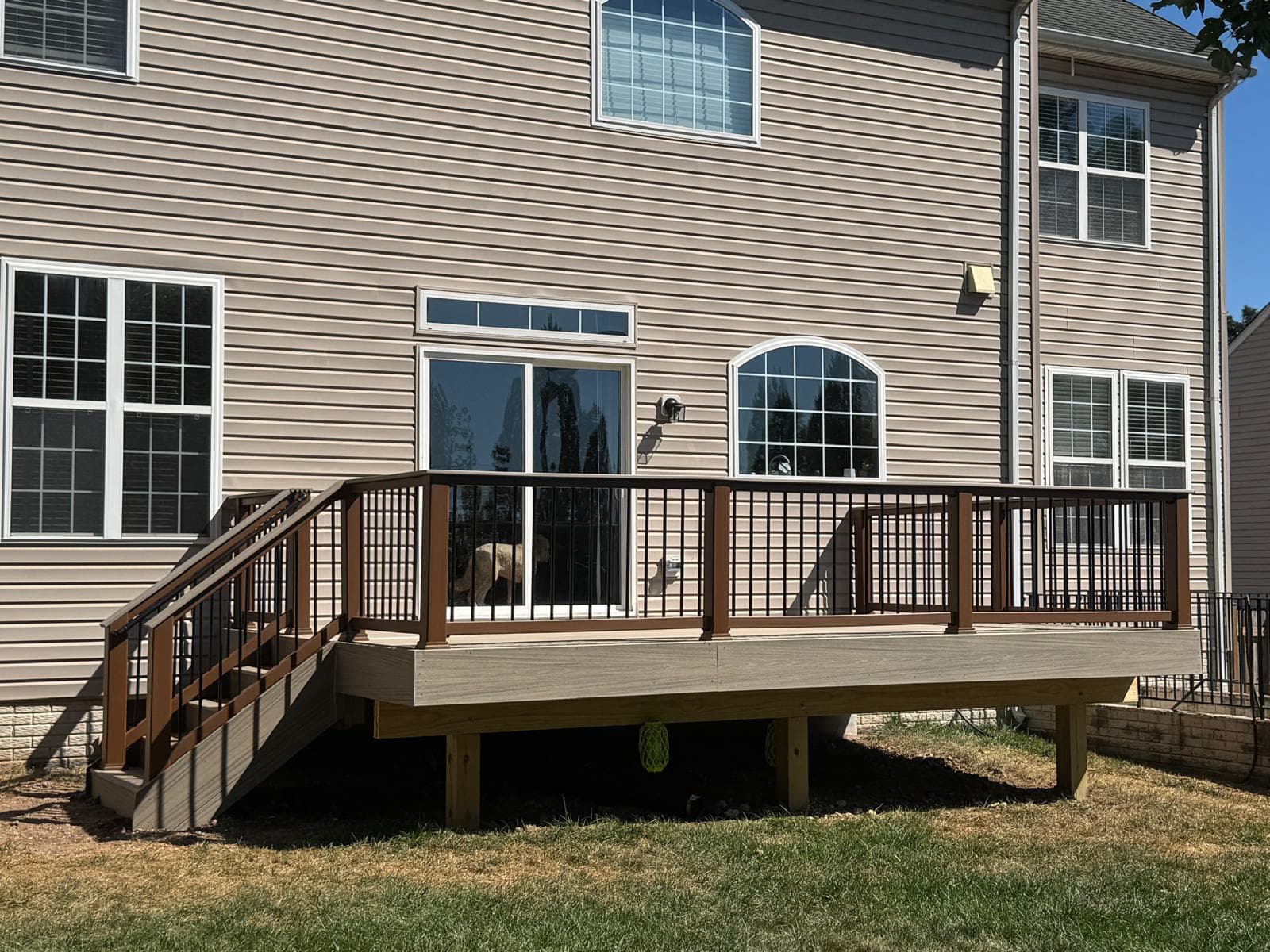
Transform your backyard with a custom-designed deck using Trex, TimberTech, wood, or PVC materials matched to your budget, HOA rules, and maintenance goals.
Deck Resurfacing
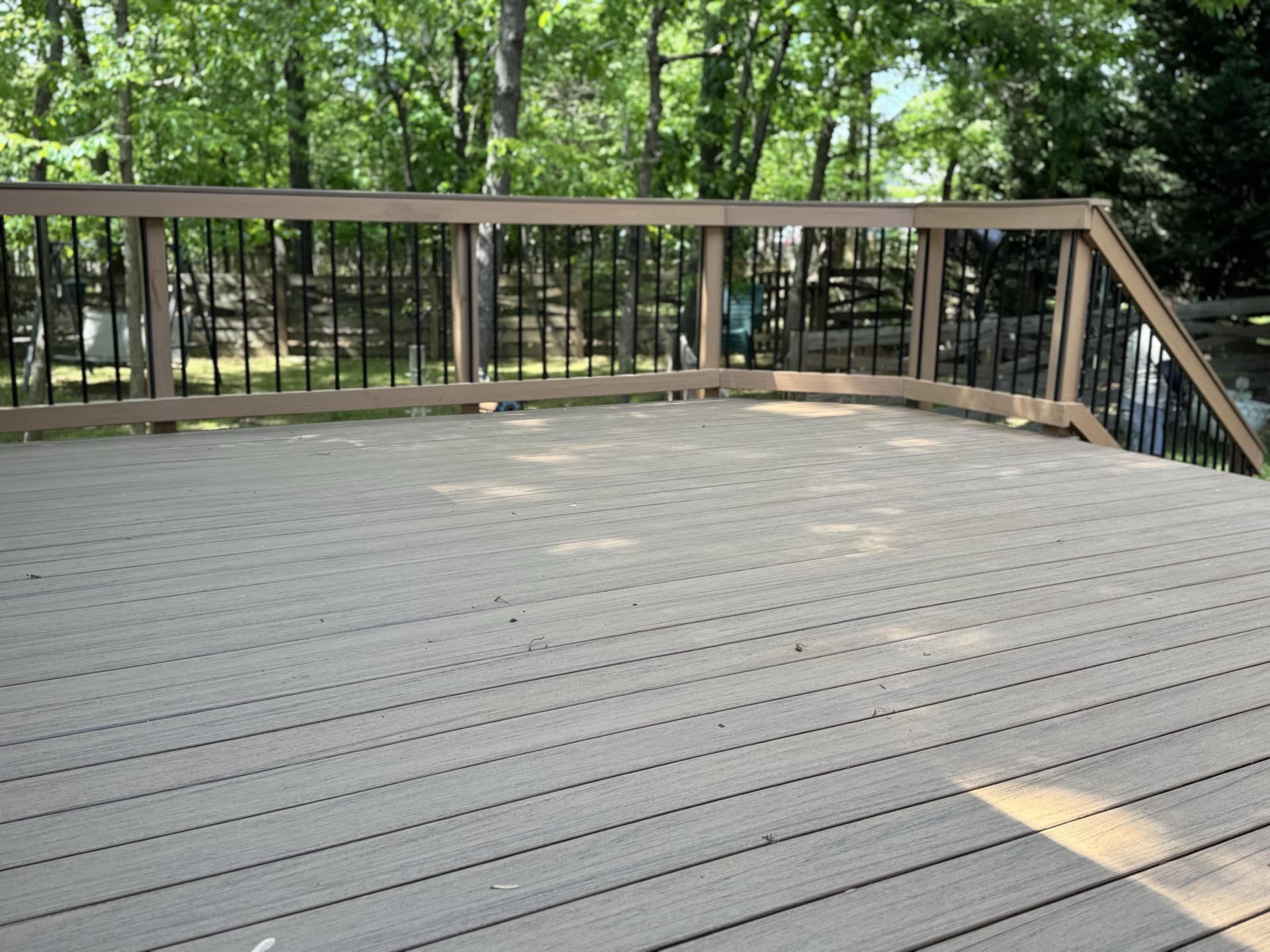
Premium wood-to-composite resurfacing for structurally sound frames. Full surface conversions start from $15k with boards, railings, fascia, and safety review.

Patio Contractor Services
Professional bluestone and paver patio installation. We create durable, beautiful ground-level outdoor living spaces that last a lifetime.
Local Expertise Across Northern Virginia
Loudoun Decks is a trusted deck builder serving Loudoun County, Fairfax County, Prince William County, Arlington, and Stafford.
Guides Northern Virginia Homeowners Are Reading
Trex vs TimberTech vs AZEK
Side-by-side brand comparison for Virginia climate.
Composite Deck Cost in Northern Virginia
Material pricing, verified source references, planning examples and what drives the price.
Free Deck Cost Calculator
Get an instant estimate by material, size, and add-ons.
TimberTech & AZEK Decks
Premium PVC and composite deck options for Northern Virginia.
Deck Permits in Loudoun County
Permit requirements, review steps and inspection context for Loudoun homeowners.
Deck Permits in Fairfax County
Requirements, timeline, fees, and inspection process.