


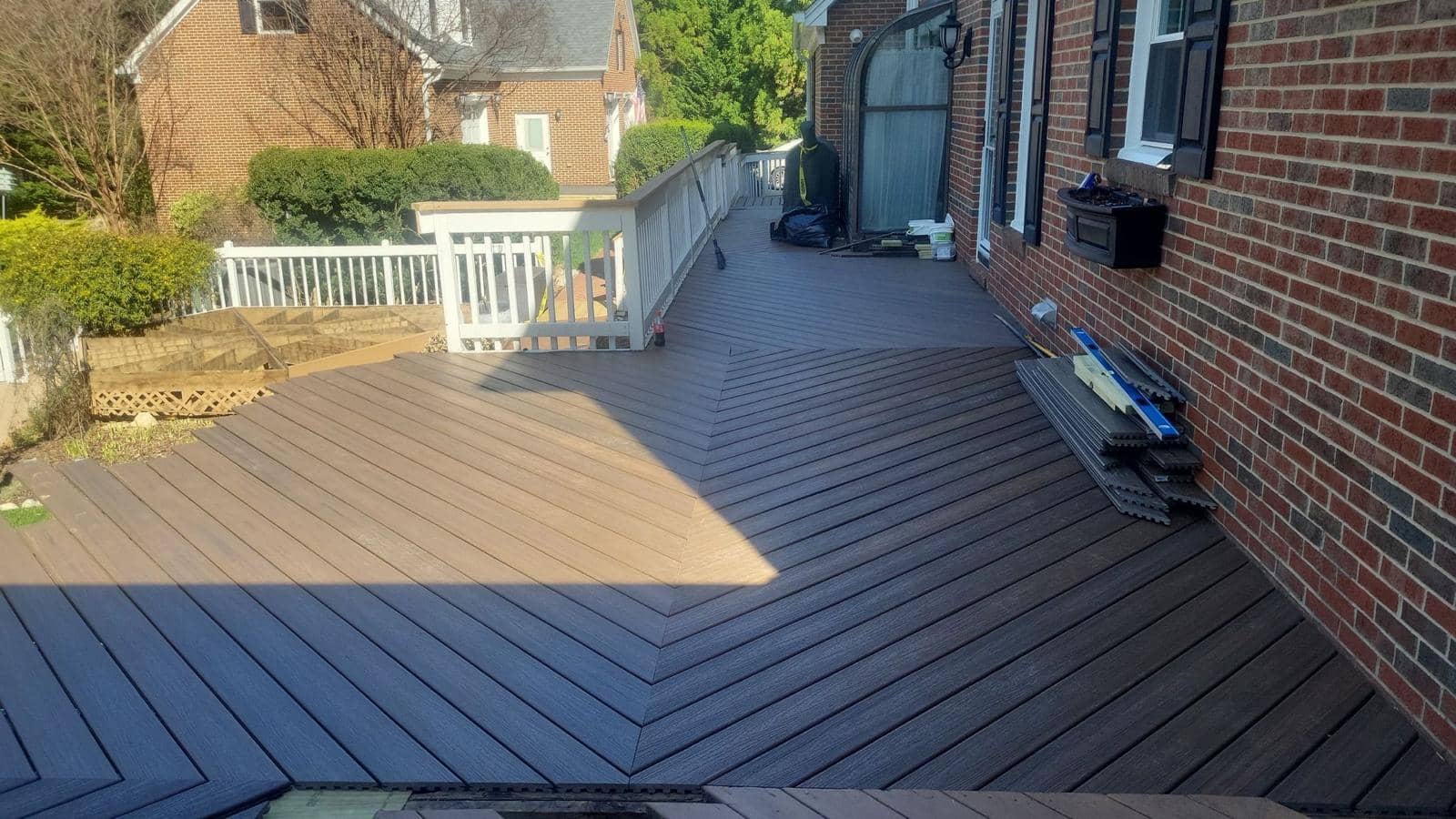
Resurface vs. Replace a Composite Deck: How to Decide
At some point, every composite deck that has aged significantly, faded, or developed surface damage becomes a candidate for resurfacing or full replacement. These are two very different scopes of work at very different price points. This guide provides a clear, practical framework for deciding which one your deck in Northern Virginia actually needs.
At some point, every composite deck that has aged, faded significantly, developed surface damage, or simply does not match the homeowner's current vision becomes a candidate for either resurfacing or full replacement. These are two very different scopes of work at very different price points, and choosing the wrong one costs significant money in either direction.
This guide provides a clear, practical framework for deciding whether your composite deck in Northern Virginia needs resurfacing — replacing the surface boards over the existing frame — or a full tear-down and rebuild.
What Is Deck Resurfacing?
Deck resurfacing is a surgical renovation. It involves removing all of the existing deck surface boards, fascia, and railing system, then thoroughly inspecting the exposed structural skeleton — the posts, beams, ledger board, and joists. If the structure passes inspection, we apply protective butyl joist tape to the top of every joist to prevent future moisture intrusion, then install a completely new composite surface, new fascia, and a new railing system.
The result looks and performs exactly like a brand-new deck surface. The homeowner chooses new boards in any current colorway and product line. The understructure — which represents a significant portion of the total deck cost — is preserved and reused.
Resurfacing typically costs 25 to 40 percent less than full replacement, depending on the size and complexity of the original deck and the materials selected for the new surface.
What Is Full Deck Replacement?
Full deck replacement is a complete tear-down and rebuild. Every component is removed — surface boards, railings, joists, beams, posts, and concrete footings. A completely new structure is engineered and installed from the ground up, meeting all current Loudoun, Fairfax, or Prince William County building codes.
Full replacement is more expensive and takes longer, but it provides the opportunity to correct structural issues, change the footprint or layout entirely, upgrade to modern construction methods and hardware, and ensure full compliance with current Virginia Residential Code.
Signs You Need Resurfacing Only
Resurfacing is the right answer when the surface has failed but the structure remains sound. Look for these conditions.
Surface boards are aged, faded, or degraded across the entire deck, but when you probe the joists with a screwdriver, the wood is firm and solid — not spongy or soft.
The ledger board flashing is intact and there is no visible water infiltration at the house-to-deck connection. The ledger is the most structurally critical joint on the deck and the most common failure point.
Posts and footings are stable. Stand at the outermost corner of the deck and push laterally. If the deck is solid with no lateral movement, the post and footing system is likely sound.
Joists are free of widespread rot. Some surface checking or minor weathering on joist tops is normal. Soft spots, black staining deep into the wood, or joists that compress under pressure are warning signs.
The deck was built within the last 10 to 15 years to relatively modern standards with adequate joist spacing, ledger hardware, and post attachment methods.
The homeowner wants the same footprint and layout. Resurfacing preserves the existing deck shape exactly. If you want to expand, add a staircase, or reconfigure the layout, resurfacing alone cannot accomplish that.
Signs You Need Full Deck Replacement
Replacement is required when structural integrity is compromised or when the existing deck cannot safely support a new surface.
Widespread joist rot or soft spots. If more than a few joists are soft when probed, the structural frame cannot safely carry the load of a new surface. Replacing only the surface boards on a structurally compromised frame is dangerous.
Ledger failure or improper original attachment. If the ledger was attached without proper flashing, has separated from the house, or shows active water infiltration, the entire ledger system must be rebuilt. This typically makes a surface-only resurfacing impractical.
Post or footing failure. Concrete footings that have heaved, shifted, or been placed too shallow for Virginia's frost line (24 to 30 inches) cannot reliably support the deck through another decade of freeze-thaw cycling.
The deck pre-dates modern code. Decks built before approximately 2003 to 2005 often lack ledger joist hangers, hurricane ties, through-bolt post connections, or proper flashing systems. Building on top of a non-code-compliant structure creates liability and will fail inspection.
The homeowner wants a different footprint. If you want to expand the deck, add an additional level, change the stair location, or reconfigure the layout entirely, a full replacement is the appropriate scope.
Significant active rot or pest damage to main beams. Beam failure can cause sudden collapse. Any evidence of deep rot, tunneling from carpenter bees or ants, or major cracking in structural beams requires a full rebuild.
The Cost Comparison
For a typical 400 square foot deck in Northern Virginia:
Resurfacing with mid-tier composite generally ranges from a written estimate to a written estimate, depending on the composite brand selected, railing system, and labor complexity.
Full replacement with mid-tier composite on the same 400 square foot footprint typically ranges from a written estimate to a written estimate, reflecting the full structural cost — new footings, posts, beams, joists, ledger installation, and all associated labor.
For homeowners whose existing structure passes inspection, resurfacing delivers a brand-new appearance at a fraction of the replacement cost. For homeowners whose structure has failed, attempting to resurface is not a cost savings — it is a deferred safety liability.
The Structural Inspection Process
No competent contractor should recommend resurfacing without first inspecting the structural frame. At LDN Decks, every resurfacing evaluation includes:
- Probing all visible joists with a screwdriver to check for soft spots - Inspecting the ledger board attachment, flashing, and condition - Evaluating post condition at ground contact points - Checking lateral stability by pushing the deck frame - Reviewing footing visibility and condition where accessible - Confirming the existing structure meets or can be brought up to current code
If structural deficiencies are found, we present them clearly with repair scope and cost before any decision is made. Sometimes a targeted structural repair combined with resurfacing is the most cost-effective path. We always present the full picture.
Permit Considerations in Northern Virginia
Resurfacing a deck in Loudoun, Fairfax, or Prince William County typically requires a building permit, just as a new deck does. The permit allows the county to inspect the ledger connection and the new fastening system during the resurfacing process. Skipping the permit on a resurfacing project creates the same risks as unpermitted new construction: complications at sale, liability issues, and potential forced removal.
Full replacement always requires a permit. As part of the replacement process, the new deck must meet all current code requirements — even if the original deck was built to a lower standard.
LDN Decks helps homeowners identify permit requirements, plan documentation, and coordinate inspection milestones for resurfacing and replacement projects across Loudoun, Fairfax, and Prince William counties. Permit scope and responsibilities are confirmed in the written project proposal.
Which Option Is Right for Your Deck?
If your composite deck has aged surface boards but the frame is solid, resurfacing delivers exceptional value — a completely fresh deck appearance at 25 to 40 percent below replacement cost. If the structure has compromised, the ledger is failing, or you want a different layout, replacement is the only responsible path.
The only way to know for certain which option applies to your specific deck is a professional in-person inspection. Contact LDN Decks to schedule a free structural assessment in Northern Virginia — Ashburn, Leesburg, Fairfax, Centreville, or any of the communities we serve across Loudoun, Fairfax, and Prince William counties.
---
Related: Deck Resurfacing Services · Deck Replacement Services · Deck Repair Services · Why Composite Decks Fade in the Sun · How to Restore Faded Composite Decking · Deck Cost Calculator
Frequently Asked Questions
How do I know if I need to resurface or replace my deck?
The determining factor is structural condition. If the joists, beams, posts, and ledger are solid when inspected, resurfacing is appropriate. If the structural frame has widespread rot, ledger failure, or does not meet current building code, full replacement is required. A professional in-person structural inspection is the only reliable way to determine which applies.
How much cheaper is resurfacing than deck replacement?
Resurfacing is typically 25 to 40 percent less expensive than full replacement for the same deck footprint, because the existing structural frame is preserved. On a 400 square foot deck in Northern Virginia, this translates to a potential savings of several thousand to over ten thousand dollars depending on materials selected.
Do I need a permit to resurface a composite deck?
Yes, in most Northern Virginia jurisdictions. Loudoun, Fairfax, and Prince William counties require a building permit for deck resurfacing because the permit allows inspection of the ledger connection and new fastening system. LDN Decks supports permit documentation planning for resurfacing and replacement projects when the jurisdiction requires it.
Can I resurface a composite deck myself?
Removing old boards and installing new composite decking is technically within the ability of an experienced DIYer, but it requires a permit, a structural inspection of the existing frame, proper joist tape application, and familiarity with the specific composite product's fastening system. Errors can void the manufacturer warranty or create safety issues.
How long does deck resurfacing take?
Most deck resurfacing projects in the 300 to 600 square foot range are completed in two to four days for the decking portion, with railing installation adding one to two additional days. Permit review and inspection scheduling can add one to three weeks to the overall project timeline depending on county workload.
This article provides general guidance on deck resurfacing versus replacement decisions and is not a substitute for a professional in-person structural inspection. Costs, code requirements, and permit timelines vary by county and project. Always obtain a licensed professional inspection before making renovation decisions.
Plan Your Northern Virginia Deck Project With Loudoun Decks
Get a free, no-pressure consultation from a licensed Northern Virginia deck builder. Call (571) 655-7207 or visit ldndecks.com/get-estimate.
Get a Free EstimateEverything Your Outdoor
Space Needs
From ground-up deck construction to full outdoor living spaces, every project is custom-designed for your home with permit planning, material guidance, and written workmanship terms.
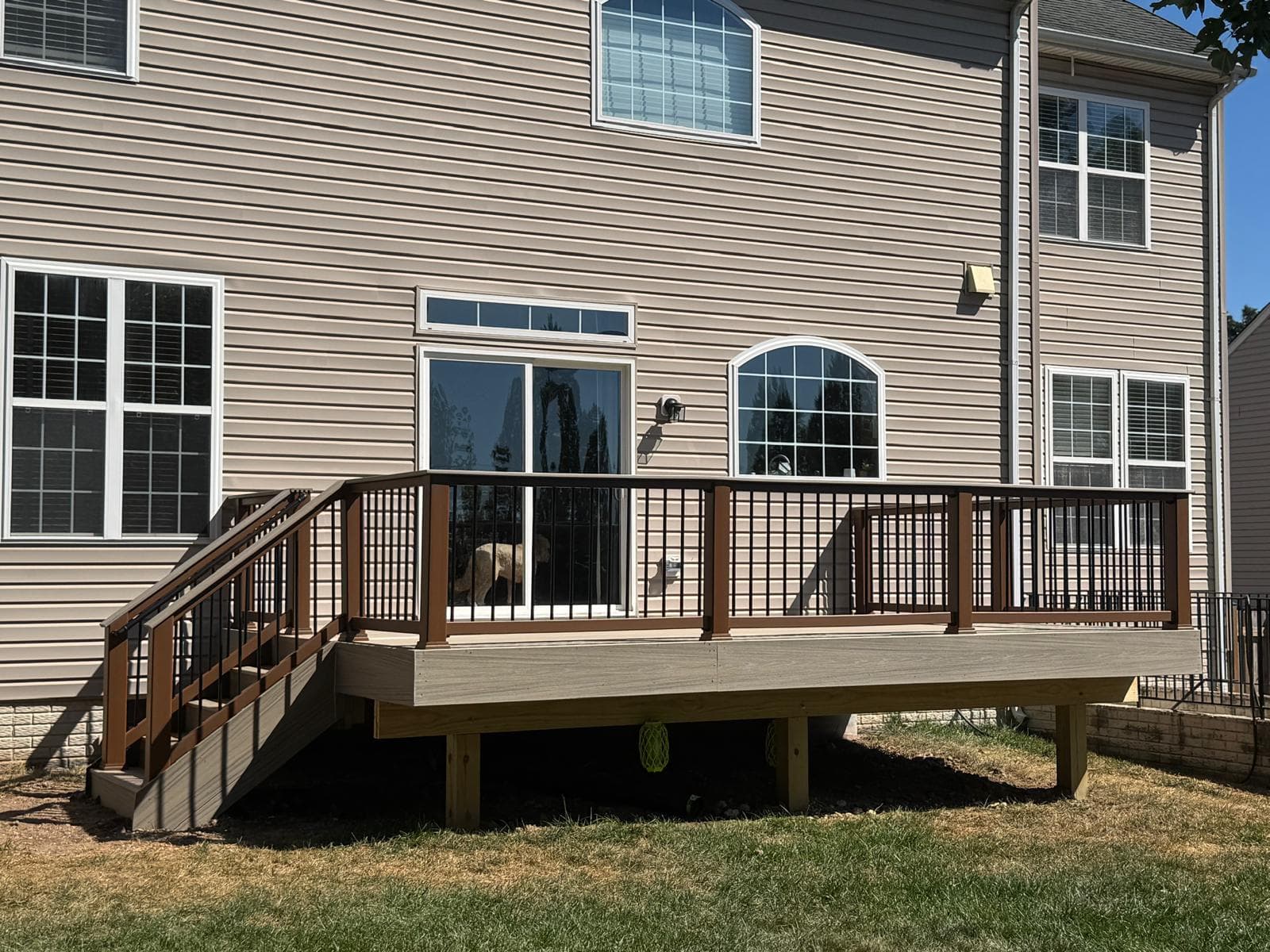
Custom Deck Builder
Transform your backyard with a custom-designed deck using Trex, TimberTech, wood, or PVC materials matched to your budget, HOA rules, and maintenance goals.
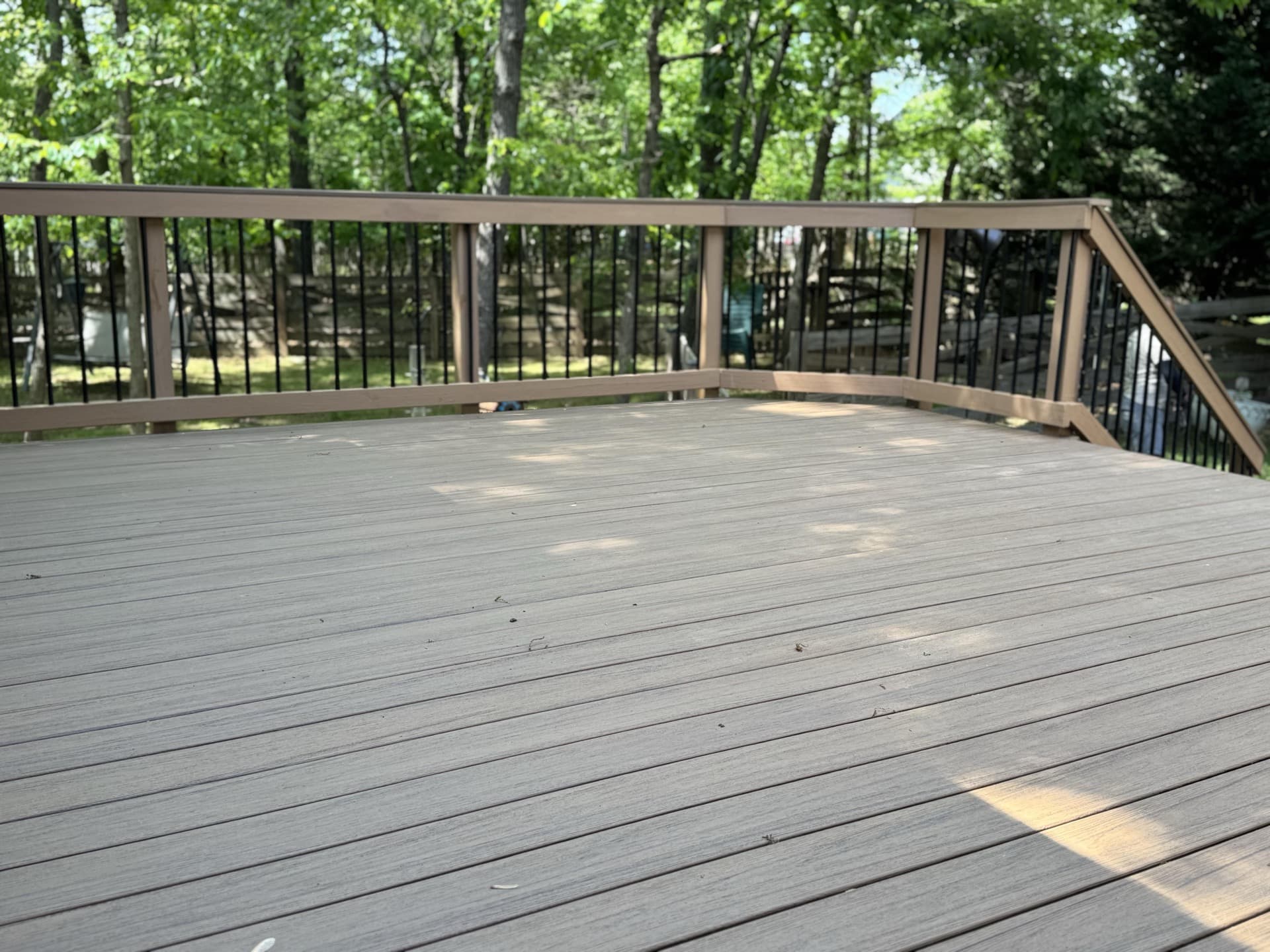
Deck Resurfacing
Wood-to-composite resurfacing for frames that pass inspection. The written estimate lists boards, railings, fascia, and what stays in the existing structure.
Patio Contractor Services
Professional bluestone and paver patio installation. We create durable, beautiful ground-level outdoor living spaces that last a lifetime.
Local Expertise Across Northern Virginia
Loudoun Decks serves homeowners in Loudoun County, Fairfax County, Prince William County, Arlington County, Alexandria, Falls Church, and Stafford County.
Loudoun County
- Ashburn, VA
- Leesburg, VA
- Sterling, VA
- Aldie, VA
- South Riding, VA
- Broadlands, VA
- Brambleton, VA
- Purcellville, VA
- Hamilton, VA
- Lovettsville, VA
- Round Hill, VA
- Middleburg, VA
- Dulles, VA
- Arcola, VA
- Belmont, VA
- Cascades, VA
- Countryside, VA
- Lowes Island, VA
- Potomac Falls, VA
- Lansdowne, VA
- One Loudoun, VA
- Stone Ridge, VA
Fairfax County
- Fairfax, VA
- Fairfax Station, VA
- Burke, VA
- Springfield, VA
- West Springfield, VA
- Annandale, VA
- Centreville, VA
- Chantilly, VA
- Clifton, VA
- Herndon, VA
- Reston, VA
- Great Falls, VA
- McLean, VA
- Vienna, VA
- Oakton, VA
- Falls Church, VA
- Tysons, VA
- Dunn Loring, VA
- Merrifield, VA
- Alexandria, VA
- Lorton, VA
- Mount Vernon, VA
Prince William County
- Gainesville, VA
- Haymarket, VA
- Bristow, VA
- Manassas, VA
- Manassas Park, VA
- Woodbridge, VA
- Lake Ridge, VA
- Dumfries, VA
- Occoquan, VA
- Nokesville, VA
- Independent Hill, VA
- Montclair, VA
- Dale City, VA
- Triangle, VA
Arlington County
- Arlington, VA
- Rosslyn, VA
- Ballston, VA
- Clarendon, VA
- Pentagon City, VA
- Crystal City, VA
- Shirlington, VA
Stafford County
- Stafford, VA
- Falmouth, VA
- Garrisonville, VA
- Aquia Harbour, VA
Guides Northern Virginia Homeowners Are Reading
Deck Builder in Northern Virginia
Custom decks, permits, HOA support and local service areas.
Covered Deck Builder
Covered deck planning, outdoor living upgrades and shade structure decisions.
Trex vs TimberTech vs AZEK
Side-by-side brand comparison for Virginia climate.
Composite Deck Cost in Northern Virginia
Material pricing, verified source references, planning examples and what drives the price.
Free Deck Cost Calculator
Get an instant estimate by material, size, and add-ons.
TimberTech & AZEK Decks
Premium PVC and composite deck options for Northern Virginia.