

How Long Does It Take to Build a Deck in Northern Virginia?
The honest answer for Northern Virginia: 6 to 14 weeks from signed contract to final walkthrough. Here is exactly where the weeks go — design, county permit, HOA review, and construction — and what speeds the process up or stretches it out.
When homeowners in Ashburn, Leesburg, McLean, and Vienna call us about a new deck, the first question is almost always the same: how long is this going to take? It is a fair question. A backyard remodel disrupts the lawn, the patio doors, and the family rhythm, and most homeowners want a realistic answer before they sign anything.
The honest range for a typical custom deck in Northern Virginia is 6 to 14 weeks from a signed contract to the final walkthrough. Smaller, simpler builds without HOA review can close faster; large, multi-level, or HOA-heavy projects can take longer. Here is exactly how those weeks break down — and the levers that speed the process up or stretch it out.
The Short Answer
A typical 350 to 500 square foot composite deck in Loudoun, Fairfax, or Prince William County moves through four phases:
- Phase 1 — Design & contract: 1 to 3 weeks - Phase 2 — County permit: 2 to 6 weeks - Phase 3 — HOA architectural review: 2 to 4 weeks (often overlapping with the county permit) - Phase 4 — Construction: 1 to 3 weeks
Those ranges overlap, which is why the total stays in the 6 to 14 week window for most projects rather than adding to something longer.
Phase 1: Design and Contract (1 to 3 weeks)
The project starts with a free on-site consultation. We walk the yard, measure the house, talk through how the family uses the space, and discuss budget. From that conversation we produce a design — for larger projects, 3D renderings showing the deck from multiple angles — along with a fixed-price contract that locks in materials, dimensions, and a target build window.
Most design rounds resolve in a week. The work stretches out when a homeowner is comparing several material brands, deciding between composite and PVC, or weighing a second-story addition against a wraparound. Our Trex vs TimberTech vs AZEK guide and our composite vs wood comparison are the two resources that usually shorten this phase.
Phase 2: County Permit (2 to 6 weeks)
Once the design is locked, we submit engineered drawings to the appropriate county building department. In 2026, here is what to expect:
- Loudoun County: 2 to 4 weeks (LOLA portal) - Fairfax County: 3 to 6 weeks (FIDO submission) - Prince William County: 2 to 4 weeks - Arlington County: 3 to 5 weeks
Review times stretch in late spring and early summer, when every contractor in Northern Virginia is submitting at once. The earlier in the season you sign, the faster the permit usually moves. Almost every functional deck needs a permit — the thresholds are spelled out in our guide to whether you need a permit for a deck in Virginia and the county-specific Loudoun and Fairfax deck permit pages.
The permit is not optional time. Without it, the county can issue a stop-work order and force a tear-down — a scenario we cover in detail in what happens if you build a deck without a permit.
Phase 3: HOA Architectural Review (2 to 4 weeks)
If your home is in a community with a homeowners’ association — Brambleton, South Riding, Ashburn Village, Broadlands, Dominion Valley, and dozens of others — the deck also needs architectural review approval. The HOA does not check structural code; the county does not check appearance. You almost always need both.
HOA review typically runs 2 to 4 weeks, with some boards meeting only monthly. The good news: HOA review runs in parallel with the county permit, so the clock does not double. The bad news: an HOA that meets the second Tuesday of every month can add three weeks to a project that is otherwise ready to start. Our HOA deck rules overview lists what most NoVA boards ask for so you can submit cleanly the first time.
Phase 4: Construction (1 to 3 weeks)
Once the permit is issued and HOA approval is in hand, construction is the fastest phase. Most builds break down like this:
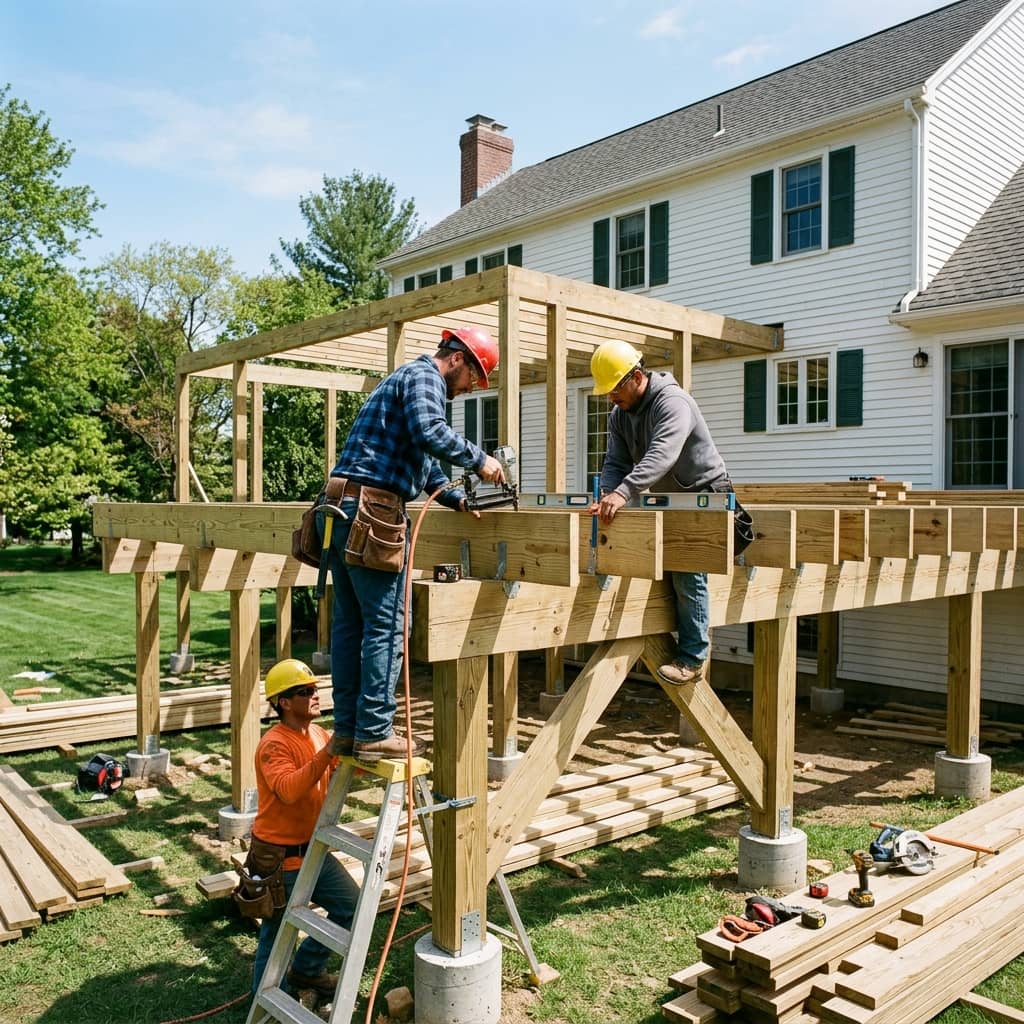
- Ground-level composite deck, 300 to 400 sqft, no stairs: 5 to 7 working days - Elevated composite deck with stairs and railings, 400 to 600 sqft: 7 to 12 working days - Multi-level deck or deck with screened porch: 2 to 4 weeks - Deck with hot tub framing or outdoor kitchen integration: add 3 to 7 days
Construction proceeds in a fixed sequence: footings poured first, framing built and inspected, decking and railing installed, lighting and finishes added, and a final inspection. The county footing and framing inspections are scheduled live and can add a day or two of wait time if the inspector is booked.
What Stretches the Timeline
Four factors stretch a deck project past the 6 to 14 week window:
1. A late HOA submission. Submitting to the HOA after the permit is already in review can add weeks if the board does not approve before the build is ready to start. 2. Material backorders. Premium boards like TimberTech AZEK Vintage or specialty railing systems occasionally run on long lead times. We flag this at contract signing so the order can be placed early. 3. Weather. Footings cannot be poured into frozen ground or during heavy rain. A wet stretch in March or November adds days, not weeks, but it does add up. 4. Scope creep mid-build. Adding a pergola, lighting, or under-deck patio after the framing is up means re-permitting and re-engineering. The cleanest way to avoid this is to decide on every add-on before the contract is signed — see our planning checklist for what to think about up front.
What Compresses It
A few things speed the process up dramatically:
- Sign in fall or winter. Permit queues are shortest from November through February. A January start often closes by April, well before the spring rush. - Submit the HOA package the same day as the county. We prepare both submissions in parallel so neither one waits. - Choose a stock composite color. Premium colors carry a 1 to 3 week lead time; popular colors are usually in stock locally. - Skip the second-story. Ground-level decks need fewer footings, no lateral bracing, and pass inspection faster than elevated decks.
How Loudoun Decks Manages the Timeline End to End
A realistic timeline is only useful if someone is actually moving the project through it. We coordinate the major planning phases: the design and 3D rendering, the engineered permit drawings, the county submission, the HOA architectural package, the inspection scheduling, and the construction itself. You approve the design and walk the finished deck — we keep the documented next steps moving.
If you want a deck builder who tells you the realistic timeline and then hits it, call us at 571-655-7207 or get a free estimate at ldndecks.com/get-estimate.
---
Related: Full Deck Build Timeline Guide
Frequently Asked Questions
How long does it take to build a deck in Northern Virginia?
For a typical custom composite deck, expect 6 to 14 weeks from signed contract to final walkthrough. The range covers 1 to 3 weeks of design, 2 to 6 weeks of county permit review, 2 to 4 weeks of overlapping HOA review, and 1 to 3 weeks of construction.
Can you build a deck in two weeks?
Only if no permit or HOA review is required, which is uncommon. A small, fully detached, low ground-level platform may be exempt from permits — but most usable backyard decks cross at least one permit trigger, which adds weeks of review time before construction can begin.
Why does HOA approval take so long?
Many architectural review committees meet only once a month, so a submission can wait up to four weeks just for the next meeting. Submitting the HOA package the same day as the county permit application — and including every detail the board asks for the first time — is the best way to avoid delays.
Can you build a deck in winter in Northern Virginia?
Yes. Composite boards install year-round, and footings can be poured whenever ground temperatures are above freezing. Winter builds often have shorter permit queues and faster scheduling than peak-season spring projects.
Is the construction timeline different for composite versus wood decks?
Construction time is similar — both take roughly one to three weeks for a standard deck. The bigger timeline difference is long-term: composite needs no staining or sealing, while a wood deck requires ongoing maintenance work every one to two years.
Can Loudoun Decks guarantee a build date?
We commit to a target build window at contract signing and update you weekly as the permit and HOA reviews progress. Final scheduling locks once the permit is issued, the HOA has approved, and the materials are confirmed in stock.
Plan Your Northern Virginia Deck Project With Loudoun Decks
Get a free, no-pressure consultation from a licensed Northern Virginia deck builder. Call (571) 655-7207 or visit ldndecks.com/get-estimate.
Get a Free EstimateEverything Your Outdoor
Space Needs
From ground-up deck construction to full outdoor living spaces, every project is custom-designed for your home with permit planning, material guidance, and written workmanship terms.
Custom Deck Builder
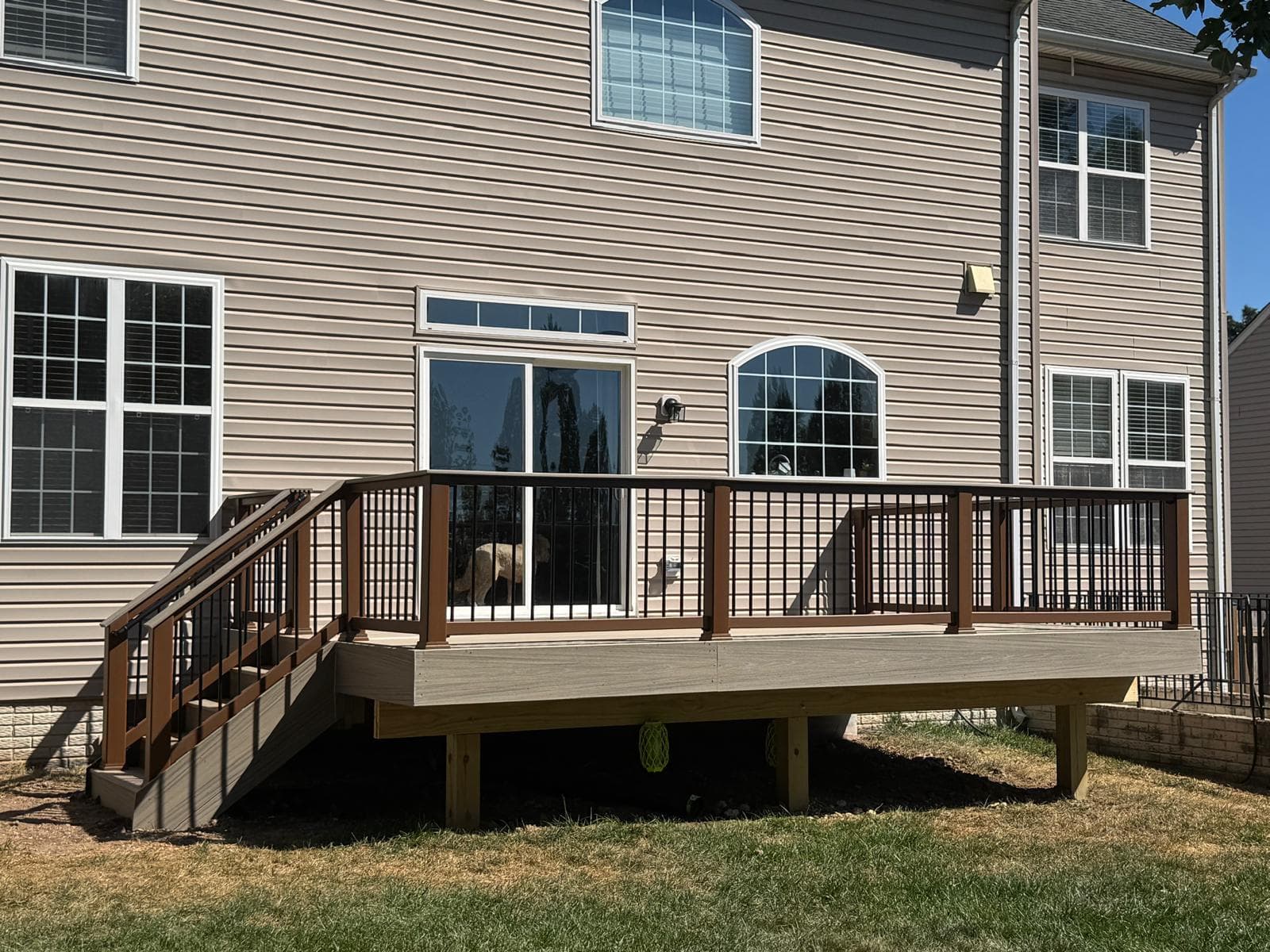
Transform your backyard with a custom-designed deck using Trex, TimberTech, wood, or PVC materials matched to your budget, HOA rules, and maintenance goals.
Deck Resurfacing
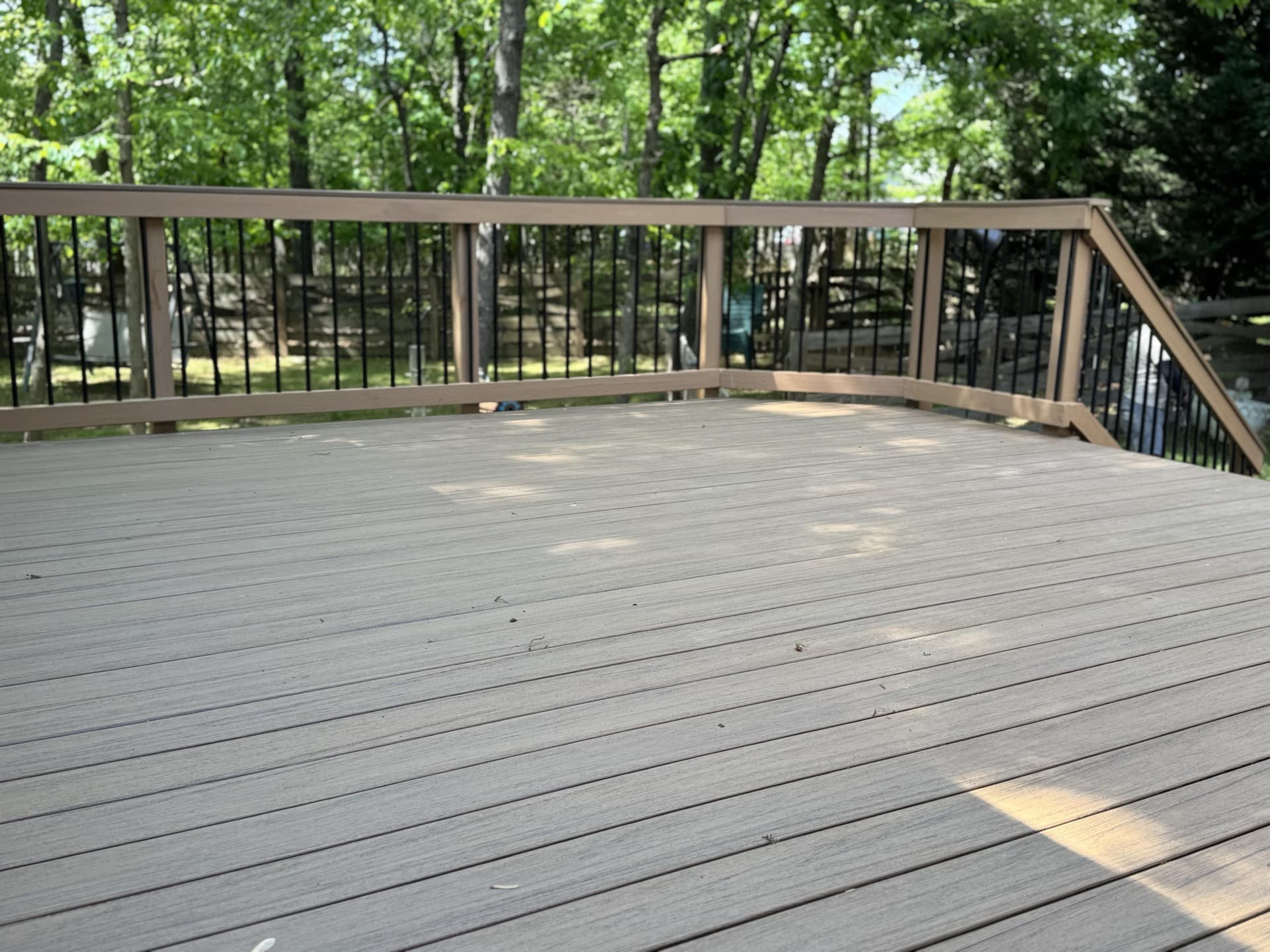
Premium wood-to-composite resurfacing for structurally sound frames. Full surface conversions start from $15k with boards, railings, fascia, and safety review.

Patio Contractor Services
Professional bluestone and paver patio installation. We create durable, beautiful ground-level outdoor living spaces that last a lifetime.
Local Expertise Across Northern Virginia
Loudoun Decks is a trusted deck builder serving Loudoun County, Fairfax County, Prince William County, Arlington, and Stafford.
Guides Northern Virginia Homeowners Are Reading
Composite Deck Cost in Northern Virginia
Material pricing, verified source references, planning examples and what drives the price.
Free Deck Cost Calculator
Get an instant estimate by material, size, and add-ons.
TimberTech & AZEK Decks
Premium PVC and composite deck options for Northern Virginia.
Deck Permits in Loudoun County
Permit requirements, review steps and inspection context for Loudoun homeowners.
Deck Permits in Fairfax County
Requirements, timeline, fees, and inspection process.
Deck Builder in Northern Virginia
Custom decks, permits, HOA support and local service areas.