
Designing a Multi-Level Composite Deck: Zoning, Traffic Flow, and Structural Planning
A multi-level composite deck is the ultimate solution for transforming sloped yards into elegant, multi-functional outdoor sanctuaries. Discover how to plan traffic flow, designate distinct living zones, and coordinate structural framing for tiered decks in Northern Virginia.
A multi-level composite deck is the ultimate architectural solution for transforming a sloped or challenging backyard into a luxurious, highly functional outdoor sanctuary. For many Northern Virginia homeowners, a single-level deck simply isn’t enough to accommodate their lifestyle goals, which often include dining, grilling, lounging, and entertaining simultaneously.
By creating a tiered or multi-level deck design, you can separate these activities into distinct "zones" while utilizing the natural topography of your yard. However, designing a successful multi-level deck requires more than just drawing random shapes at different heights. It requires careful planning of traffic flow, strict adherence to structural engineering codes, and thoughtful aesthetic coordination. This guide explores the essential design principles and technical considerations for planning a premium multi-level composite deck.
1. Defining Your "Lifestyle Zones"
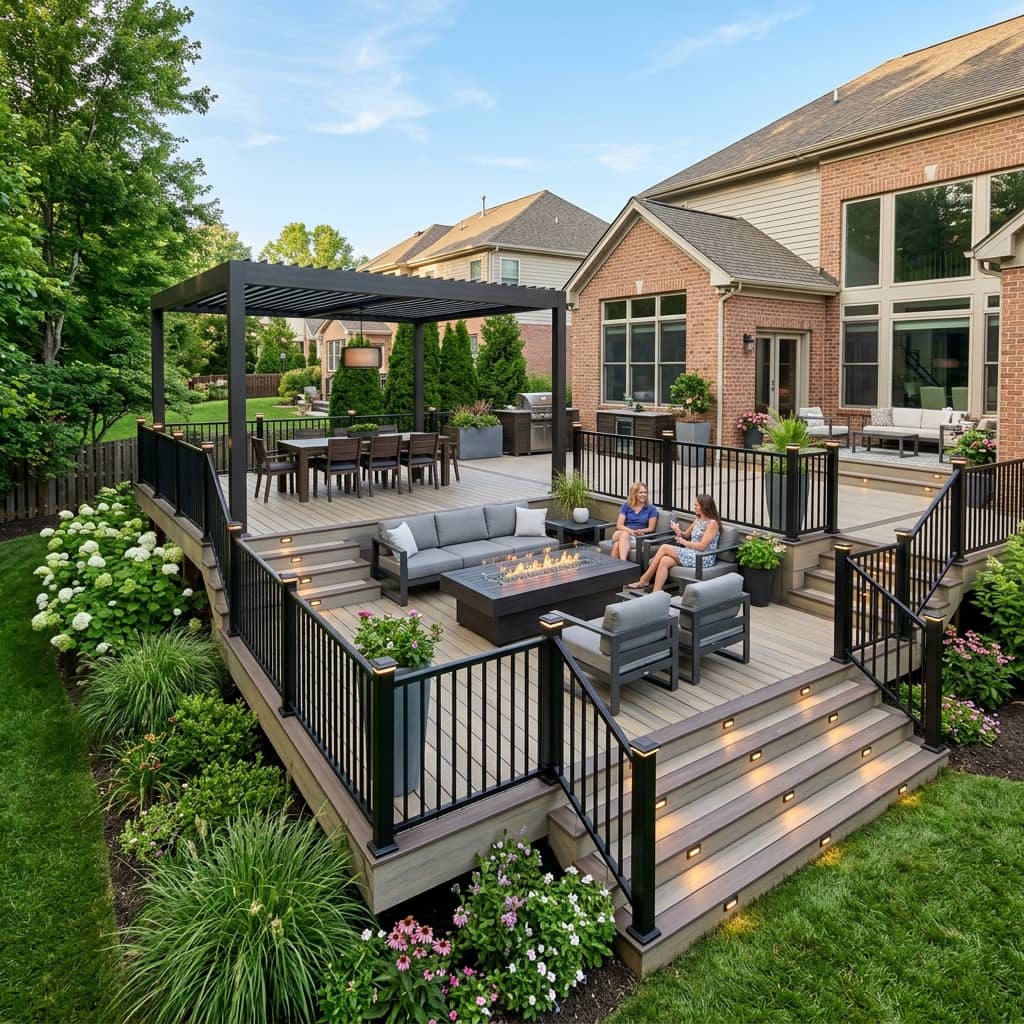
One of the greatest benefits of a multi-level deck is the ability to designate specific areas for different activities, creating a series of outdoor "rooms" without physical walls. When planning your levels, consider these classic zoning pairings:
- The Cooking and Dining Zone (Upper Level): Typically located closest to the kitchen door, this level houses your grill or outdoor kitchen and dining table. Keeping the food prep and dining area on the upper level minimizes the distance you have to carry plates and supplies, making outdoor dining convenient and highly practical. - The Lounging and Social Zone (Mid Level): A few steps down, a spacious middle level is the perfect spot for deep-seating outdoor sofas, club chairs, and a central gas fire table. Being slightly lower provides an intimate, cozy atmosphere and offers an unobstructed view of the yard. - The Spa or Recreation Zone (Lower Level): The lowest tier, which sits closest to the ground, is the ideal location for a heavy-duty feature like a hot tub, a built-in fire pit, or an open play area. Placing a hot tub on the lowest level makes it easier to support structurally and provides more privacy from neighbors.
2. Planning Smooth Traffic Flow and Step Transitions
Traffic flow is what makes a deck feel spacious and comfortable rather than cramped and awkward. In a multi-level design, step transitions and stair placement are critical elements of that flow:
- Cascading Stairs: Instead of a narrow, single staircase, consider using wide, cascading steps between the main levels. This creates an open, welcoming transition that doubles as casual extra seating for large gatherings. - Landing Platforms: If there is a significant height difference between your upper and lower levels, integrate intermediate landing platforms. A generous landing breaks up the climb, makes the staircase feel grander, and provides opportunities for beautiful corner planters or lighting displays. - Clear Walkways: Ensure that walkways between stairs and primary seating zones remain at least 3 to 4 feet wide. Homeowners should be able to walk from the house to the lower lawn without forcing seated guests to squeeze out of the way.
3. Structural Engineering and Multi-Level Framing
From a structural standpoint, a multi-level deck is actually a series of individual decks built adjacent to one another. This adds complexity to the framing and engineering process:
- Independent Support Systems: Each tier requires its own beam-and-post support system. Because different levels exert varying forces, the load paths must be precisely engineered to prevent shifting or uneven settling. Refer to our guide on understanding deck load paths for a look at how this weight is transferred. - Post and Beam Offsets: To achieve clean, architectural lines, beams and posts under the upper levels must be carefully placed so they do not block walkways or views on the lower levels. This often requires using cantilevered joist designs or heavy-duty steel beams to span longer distances without intermediate posts. - Water Drainage: If the lower level sits directly underneath an upper level, a dry-space drainage system (such as Trex RainEscape) can be installed inside the upper joist bays. This keeps the lower level completely dry, allowing you to install finished ceilings, lighting, and televisions underneath.
4. Visual Continuity: Color and Railing Design
With multiple levels, the visual impact of your decking boards is multiplied. Maintaining a premium, unified aesthetic across the tiers is crucial:
- Contrasting Picture-Frame Borders: Use a two-tone color scheme to define the boundaries of each level. For example, a warm brown field board (such as Trex Transcend Spiced Rum) framed with a dark charcoal border (like Trex Transcend Lava Rock) creates a stunning architectural outline. This contrast is also a critical safety feature, as it clearly highlights where step transitions begin. - Railing Height and Infill Choices: In Northern Virginia, guardrails are required for any deck surface elevated more than 30 inches above the ground. By using minimalist railing infills—such as sleek black aluminum balusters, cable railings, or glass panels—you can maintain open sightlines between levels, ensuring the upper tier still feels connected to the beauty of the backyard. - Low-Voltage LED Lighting: Integrated lighting is essential for safety and ambiance on a multi-level deck. Recessing low-voltage LED lights into stair risers, post caps, and under railings ensures that every level is safely illuminated after sunset while creating a resort-like atmosphere.
5. Navigating Permits and Site Slopes
Northern Virginia’s rolling topography makes it prime territory for multi-level builds, but it also presents regulatory and physical challenges:
- HOA and Zoning Setbacks: Elevated multi-level decks often require larger structural setbacks from property lines than low-profile decks. We handle the process of verifying local setbacks and obtaining architectural approvals from strict local HOAs. - Frost-Line Footings: No matter how many tiers your deck has, every concrete footing must extend at least 24 inches below grade to meet Virginia’s frost-depth standards. In sloped yards, this means the footings on the lower side of the hill must be dug significantly deeper to reach stable, undisturbed soil.
Start Your Tiered Deck Journey
Designing a multi-level composite deck is a highly rewarding investment that adds massive aesthetic value, functional space, and resale equity to your home. By pairing elegant design with professional structural craftsmanship, the team at Loudoun Decks can turn your sloped backyard into an multi-level masterpiece.
Ready to explore a custom 3D rendering for your home in Loudoun or Fairfax County? Contact the Loudoun Decks team today to schedule your free design consultation.
Frequently Asked Questions
How much more expensive is a multi-level deck compared to a single-level?
On average, a multi-level deck costs 20% to 35% more than a single-level deck of the same total square footage. The increased cost is due to the additional structural beams, extra posts, concrete footings, and stair stringers required to support separate structural levels.
Can I add a hot tub to one of the levels?
Yes, absolutely. A filled hot tub is extremely heavy and requires dedicated structural engineering. Placing the hot tub on the lowest tier (closest to the ground) is highly recommended, as it allows us to frame a heavy-duty, reinforced landing pad with shortened support posts and oversized concrete footings.
What lighting is recommended for multi-level decks?
We highly recommend a complete low-voltage LED lighting system. This includes recessed riser lights on every step transition for safety, post-cap lights on the main corners, and under-rail strip lighting to cast a soft, warm glow across the deck field.
Plan Your Northern Virginia Deck Project With Loudoun Decks
Get a free, no-pressure consultation from a licensed Northern Virginia deck builder. Call (571) 655-7207 or visit ldndecks.com/get-estimate.
Get a Free EstimateEverything Your Outdoor
Space Needs
From ground-up deck construction to full outdoor living spaces, every project is custom-designed for your home with permit planning, material guidance, and written workmanship terms.
Custom Deck Builder
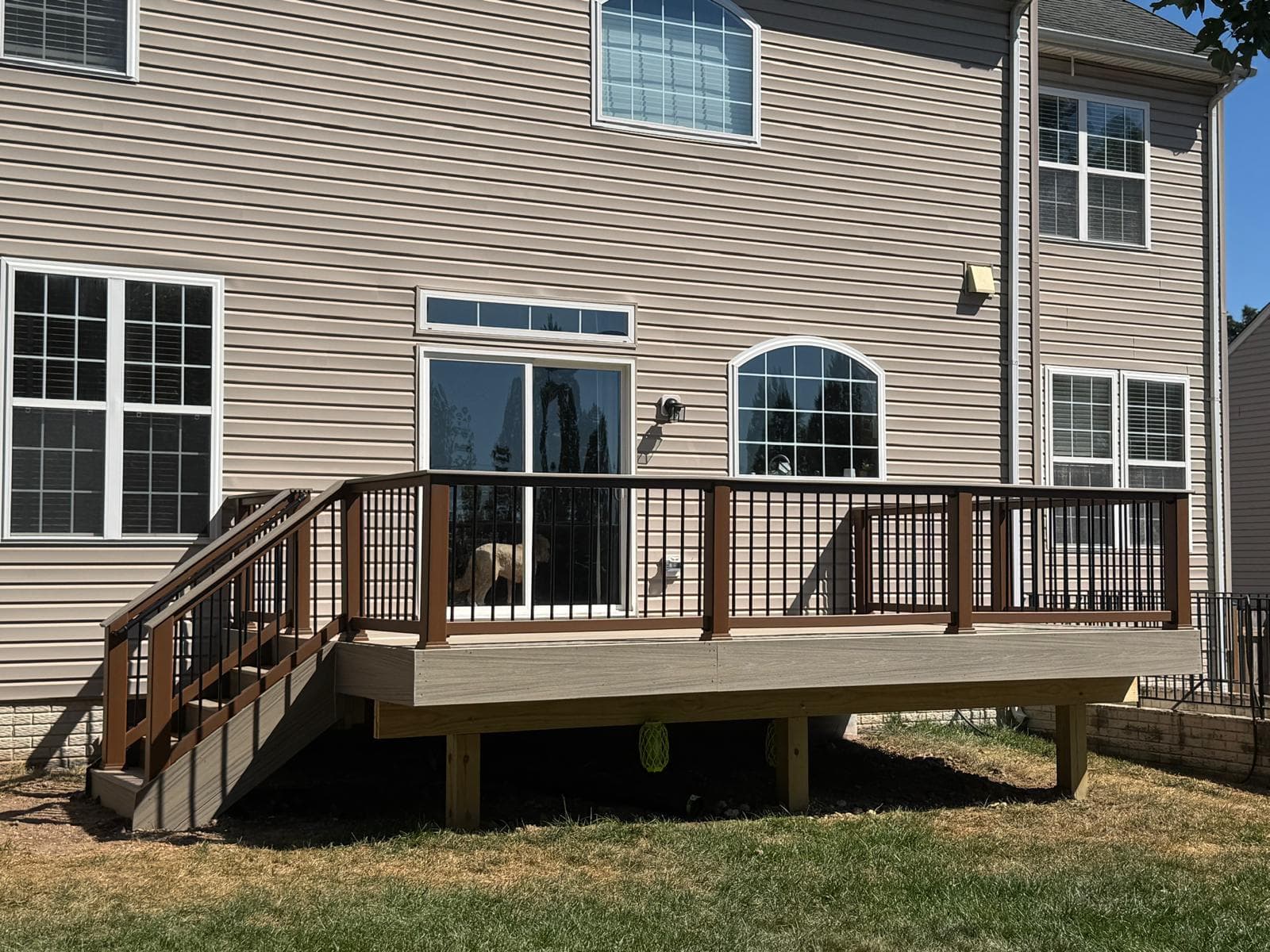
Transform your backyard with a custom-designed deck using Trex, TimberTech, wood, or PVC materials matched to your budget, HOA rules, and maintenance goals.
Deck Resurfacing
Premium wood-to-composite resurfacing for structurally sound frames. Full surface conversions start from $15k with boards, railings, fascia, and safety review.

Patio Contractor Services
Professional bluestone and paver patio installation. We create durable, beautiful ground-level outdoor living spaces that last a lifetime.
Local Expertise Across Northern Virginia
Loudoun Decks is a trusted deck builder serving Loudoun County, Fairfax County, Prince William County, Arlington, and Stafford.
Loudoun County
- Ashburn, VA
- Leesburg, VA
- Sterling, VA
- Aldie, VA
- South Riding, VA
- Broadlands, VA
- Brambleton, VA
- Purcellville, VA
- Hamilton, VA
- Lovettsville, VA
- Round Hill, VA
- Middleburg, VA
- Dulles, VA
- Arcola, VA
- Belmont, VA
- Cascades, VA
- Countryside, VA
- Lowes Island, VA
- Potomac Falls, VA
- Lansdowne, VA
- One Loudoun, VA
- Stone Ridge, VA
Fairfax County
- Fairfax, VA
- Fairfax Station, VA
- Burke, VA
- Springfield, VA
- West Springfield, VA
- Annandale, VA
- Centreville, VA
- Chantilly, VA
- Clifton, VA
- Herndon, VA
- Reston, VA
- Great Falls, VA
- McLean, VA
- Vienna, VA
- Oakton, VA
- Falls Church, VA
- Tysons, VA
- Dunn Loring, VA
- Merrifield, VA
- Alexandria, VA
- Lorton, VA
- Mount Vernon, VA
Prince William County
- Gainesville, VA
- Haymarket, VA
- Bristow, VA
- Manassas, VA
- Manassas Park, VA
- Woodbridge, VA
- Lake Ridge, VA
- Dumfries, VA
- Occoquan, VA
- Nokesville, VA
- Independent Hill, VA
- Montclair, VA
- Dale City, VA
- Triangle, VA
Arlington County
- Arlington, VA
- Rosslyn, VA
- Ballston, VA
- Clarendon, VA
- Pentagon City, VA
- Crystal City, VA
- Shirlington, VA
Stafford County
- Stafford, VA
- Falmouth, VA
- Garrisonville, VA
- Aquia Harbour, VA
Guides Northern Virginia Homeowners Are Reading
TimberTech & AZEK Decks
Premium PVC and composite deck options for Northern Virginia.
Deck Permits in Loudoun County
Permit requirements, review steps and inspection context for Loudoun homeowners.
Deck Permits in Fairfax County
Requirements, timeline, fees, and inspection process.
Deck Builder in Northern Virginia
Custom decks, permits, HOA support and local service areas.
Covered Deck Builder
Covered deck planning, outdoor living upgrades and shade structure decisions.
Trex vs TimberTech vs AZEK
Side-by-side brand comparison for Virginia climate.