


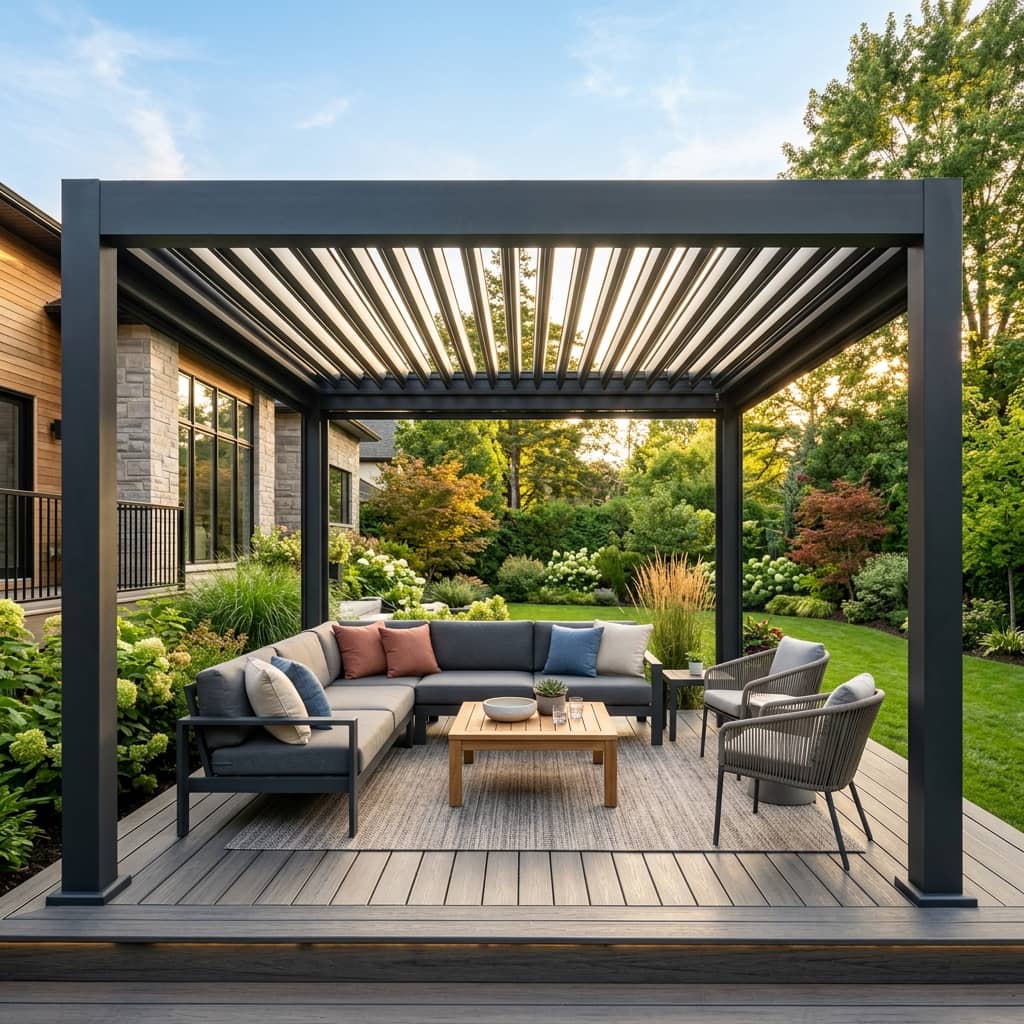
Louvered Pergolas Over a Deck: The 2026 Outdoor Living Upgrade
The louvered pergola is the breakout outdoor living upgrade of 2026 — an adjustable roof that opens for sun and closes against rain at the push of a button. Here is how they work over a deck, what they cost, and the structural and permit details Northern Virginia homeowners need to know.
Of all the outdoor living upgrades trending in Northern Virginia for 2026, none has climbed faster than the louvered pergola. Homeowners who once settled for a fixed-roof gazebo or an open-rafter pergola now want something smarter — a roof they can actually control.
A louvered pergola delivers exactly that. With the flick of a switch, or a tap in an app, the overhead slats rotate from fully open to fully closed, letting you dial in sun, shade, or complete rain protection on demand. Paired with a composite deck, it turns an exposed platform into a true outdoor room you can use across far more of the year.
Here is how louvered pergolas work, what they cost in Northern Virginia, and the structural and permit details that matter before you build one.
What Is a Louvered Pergola?
A louvered pergola is an open-sided shade structure whose roof is built from adjustable slats — called louvers — instead of fixed beams or a solid panel. The louvers pivot on a central axis. Open them flat and sunlight pours through; rotate them closed and they overlap into a sealed roof that sheds rain into the hollow support posts and away from your deck.
Nearly all modern louvered pergolas are made from powder-coated aluminum. Aluminum will not rot, rust, warp, or splinter, and it carries the moving louver mechanism without sagging over time — which is why it has become the default material for these systems.
Louvered vs. Traditional Pergola
A traditional pergola has a fixed, open roof of wood or aluminum rafters. It diffuses harsh midday sun and looks beautiful wrapped in string lights or climbing vines, but it never truly shelters you — rain falls straight through. We compared the classic open-air options in our guide to pergolas versus gazebos.
The louvered pergola erases that compromise. On a clear morning you leave the louvers open for filtered light; when a typical Virginia afternoon thunderstorm rolls in, you close them and stay completely dry — without losing the airy, open-sided feel of a pergola the rest of the time. In a single structure you get the shade control of an awning and the rain protection of a roof.
Manual vs. Motorized Louvers
Louvered pergolas come in two tiers. Manual systems use a hand crank or a pull rod to rotate the louvers. They cost less and have fewer moving parts, but you have to be home — and willing to step outside — to adjust them.
Motorized systems are the breakout trend of 2026. A small, weather-sealed motor rotates the louvers on command from a wall switch, a remote, or a smartphone app. The best systems add a rain sensor that closes the roof automatically at the first drops and a wind sensor that opens it in a storm to relieve pressure. Many integrate with smart-home platforms, so the pergola joins the same ecosystem as your lighting and audio.
The Structural Catch: A Louvered Pergola Is Heavy
This is the single most important thing to understand before you build. A louvered pergola weighs far more than a wood pergola or patio furniture — the aluminum frame, the bank of louvers, and the motor add up quickly, and a closed roof loaded with rain or snow adds a significant live load on top of that.
You cannot simply bolt aluminum posts to finished composite deck boards and hope for the best. The pergola posts must be tied directly into the deck framing, and in most cases they need their own dedicated concrete footings poured below the frost line — the same 24-to-30-inch depth Virginia requires for deck footings. The load has to travel into the ground, not rest on the deck surface. It is a textbook example of the load-path principle every safe structure depends on.
The practical takeaway: the best time to add a louvered pergola is while the deck is still being designed. Retrofitting one onto a finished deck often means opening up boards to add footings and reinforcement. If a pergola is anywhere in your plans, tell your builder before the framing goes in.
Do You Need a Permit?
Usually, yes. A louvered pergola whose roof closes fully is generally treated by Virginia building departments as a roofed structure — not an open pergola — which means it is subject to wind and snow load engineering and requires a building permit. Add the dedicated footings and the structural tie-in, and a permit is almost always part of the project. Our overview of when a deck project needs a permit explains the same thresholds that apply here.
If your home is in an HOA community, you will also need architectural review approval. Committees look closely at the pergola color, post style, and how the structure relates to your roofline, so submit those plans early.
What a Louvered Pergola Costs in Northern Virginia
Pricing varies with size, mounting, and automation level, but as a planning guide for Northern Virginia homeowners:
- Manual louvered pergola (about 12x14 ft): $12,000 to $20,000 installed.
- Motorized louvered pergola (about 12x14 ft): $20,000 to $35,000 installed.
- Large or sensor-equipped systems with integrated lighting and screens: $35,000 and up.
Those ranges assume the structural footings and deck reinforcement are part of the job. Integrated LED lighting, retractable side screens, and heaters all add cost — but each is far cheaper to install during the original build than to add later.
Is a Louvered Pergola Right for Your Deck?
A louvered pergola is an excellent fit if you want to use your deck across more of the year, you entertain often and want push-button control over sun and rain, or your deck faces west and bakes in afternoon heat. It pairs especially well with an outdoor kitchen or dining zone you want protected from both sun and surprise showers.
If your budget is tight and you mostly use the deck on clear evenings, a classic pergola or a simple shade sail may serve you just as well for far less.
Build It Right With Loudoun Decks
At Loudoun Decks, we design decks and pergolas together as one integrated structure — so the footings, framing, and load path are engineered for the pergola from day one. If a louvered pergola is on your 2026 wish list, call us at 571-655-7207 or visit ldndecks.com/get-estimate for a free design consultation.
---
Related: Louvered Pergola Services · Pergola & Gazebo Services
Frequently Asked Questions
Can you add a louvered pergola to an existing deck?
Sometimes, but it is far more involved than building one with a new deck. A louvered pergola is heavy and usually needs its own concrete footings and a structural tie-in to the deck framing, which often means removing boards on a finished deck. Whenever possible, plan the pergola during the deck design phase.
Do louvered pergolas need a permit in Virginia?
Usually yes. A louvered pergola whose roof closes fully is generally treated as a roofed structure subject to wind and snow load engineering, and the dedicated footings and structural connection typically require a building permit. HOA architectural approval is also normally required.
What are louvered pergolas made of?
Almost all modern louvered pergolas are powder-coated aluminum. Aluminum does not rot, rust, warp, or splinter, and it is strong and light enough to carry the moving louver mechanism and motor without sagging over time.
Are motorized louvered pergolas worth the extra cost?
For homeowners who entertain often or have a west-facing deck that bakes in afternoon heat, yes. Motorized louvers with rain and wind sensors adjust automatically, so the space stays usable across far more of the year without anyone walking out to crank a roof.
Plan Your Northern Virginia Deck Project With Loudoun Decks
Get a free, no-pressure consultation from a licensed Northern Virginia deck builder. Call (571) 655-7207 or visit ldndecks.com/get-estimate.
Get a Free EstimateEverything Your Outdoor
Space Needs
From ground-up deck construction to full outdoor living spaces, every project is custom-designed for your home with permit planning, material guidance, and written workmanship terms.
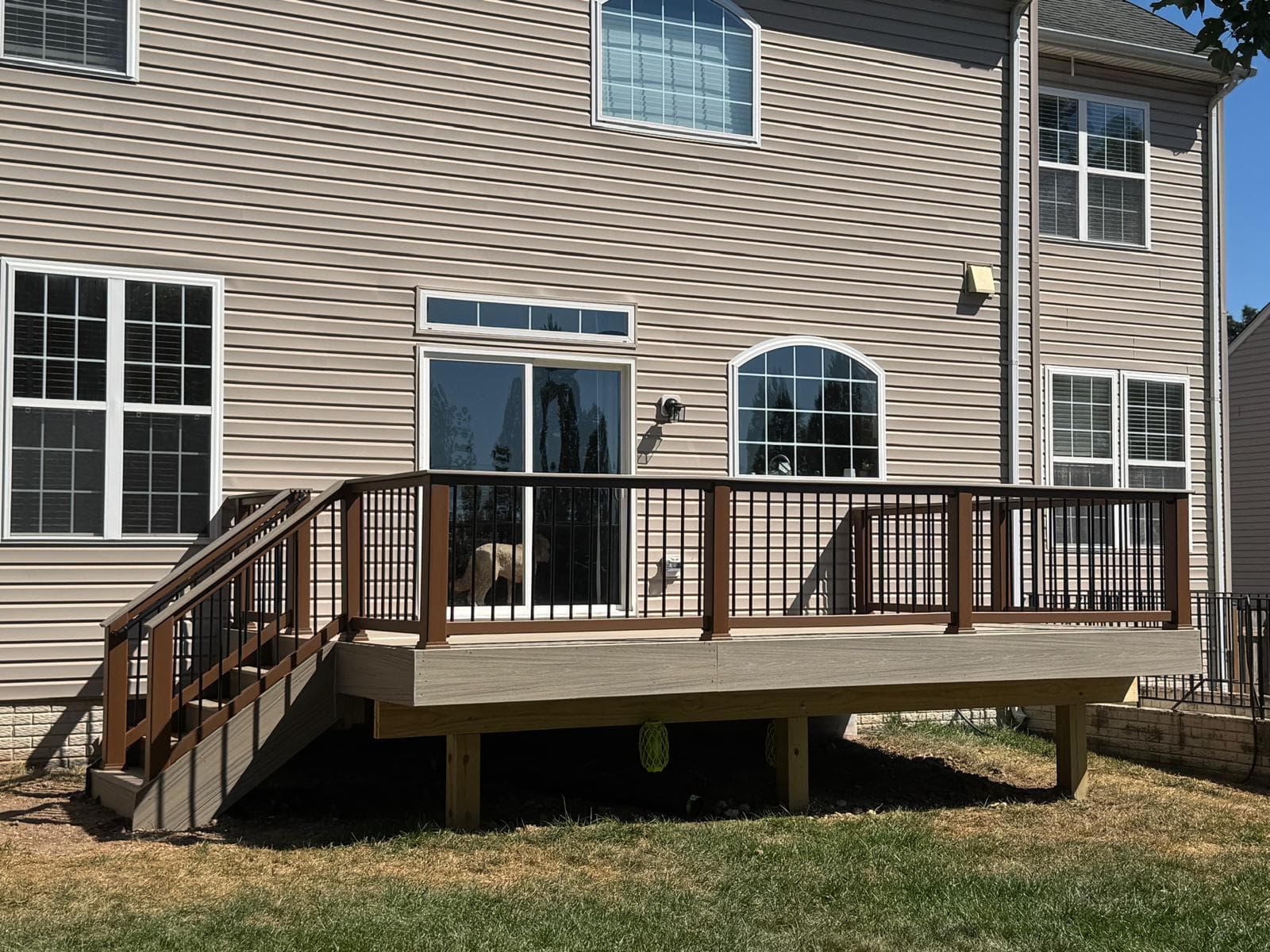
Custom Deck Builder
Transform your backyard with a custom-designed deck using Trex, TimberTech, wood, or PVC materials matched to your budget, HOA rules, and maintenance goals.
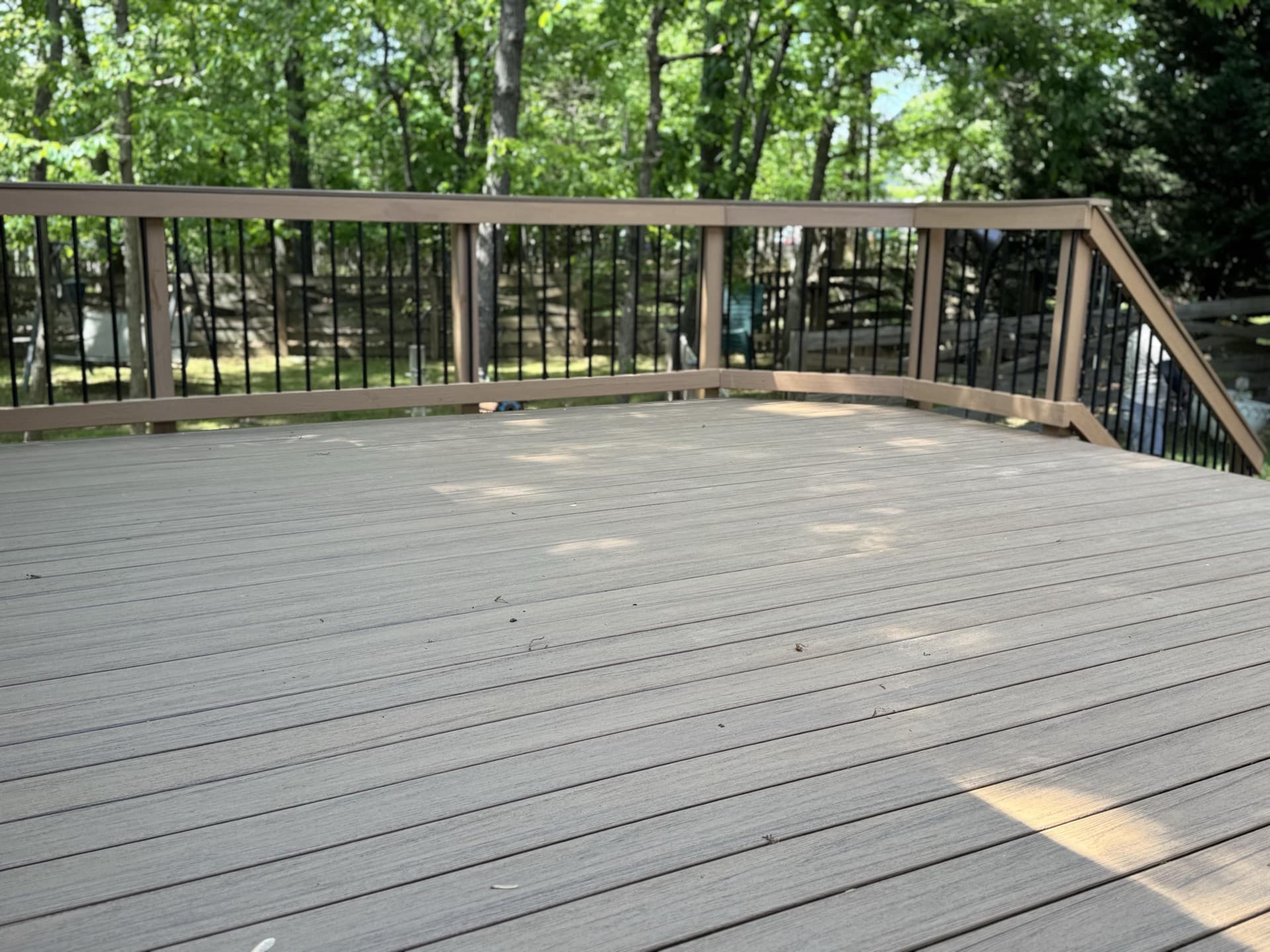
Deck Resurfacing
Premium wood-to-composite resurfacing for structurally sound frames. Full surface conversions start from $15k with boards, railings, fascia, and safety review.
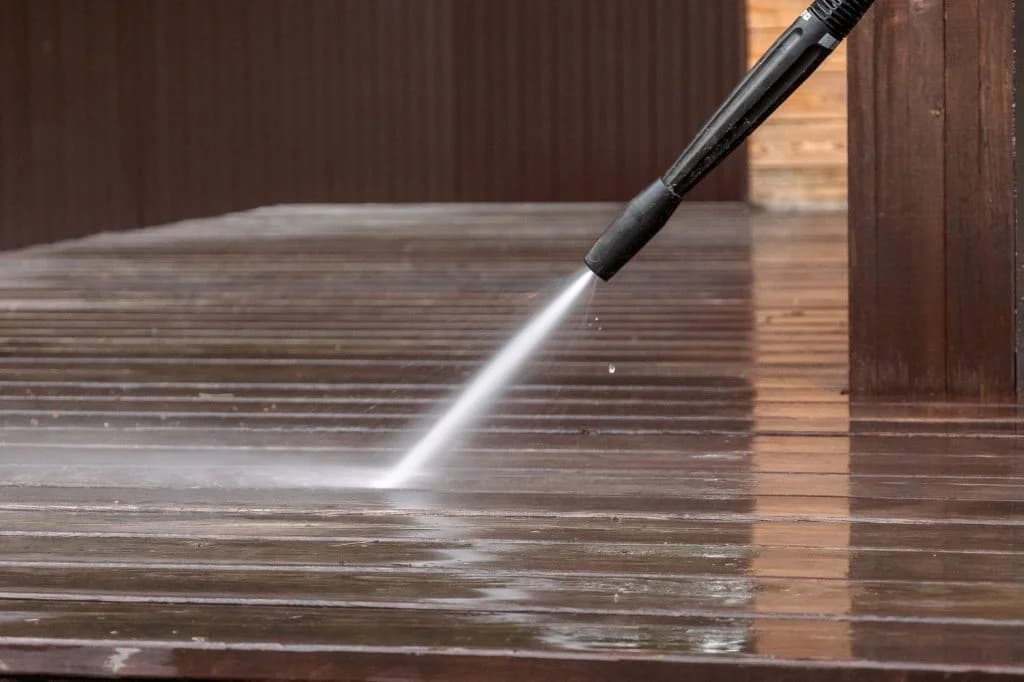
Patio Contractor Services
Professional bluestone and paver patio installation. We create durable, beautiful ground-level outdoor living spaces that last a lifetime.
Local Expertise Across Northern Virginia
Loudoun Decks is a trusted deck builder serving Loudoun County, Fairfax County, Prince William County, Arlington, and Stafford.
Guides Northern Virginia Homeowners Are Reading
Deck Permits in Fairfax County
Requirements, timeline, fees, and inspection process.
Deck Builder in Northern Virginia
Custom decks, permits, HOA support and local service areas.
Covered Deck Builder
Covered deck planning, outdoor living upgrades and shade structure decisions.
Trex vs TimberTech vs AZEK
Side-by-side brand comparison for Virginia climate.
Composite Deck Cost in Northern Virginia
Material pricing, verified source references, planning examples and what drives the price.
Free Deck Cost Calculator
Get an instant estimate by material, size, and add-ons.