
Deck Collapse Warning Signs Every Northern Virginia Homeowner Should Know
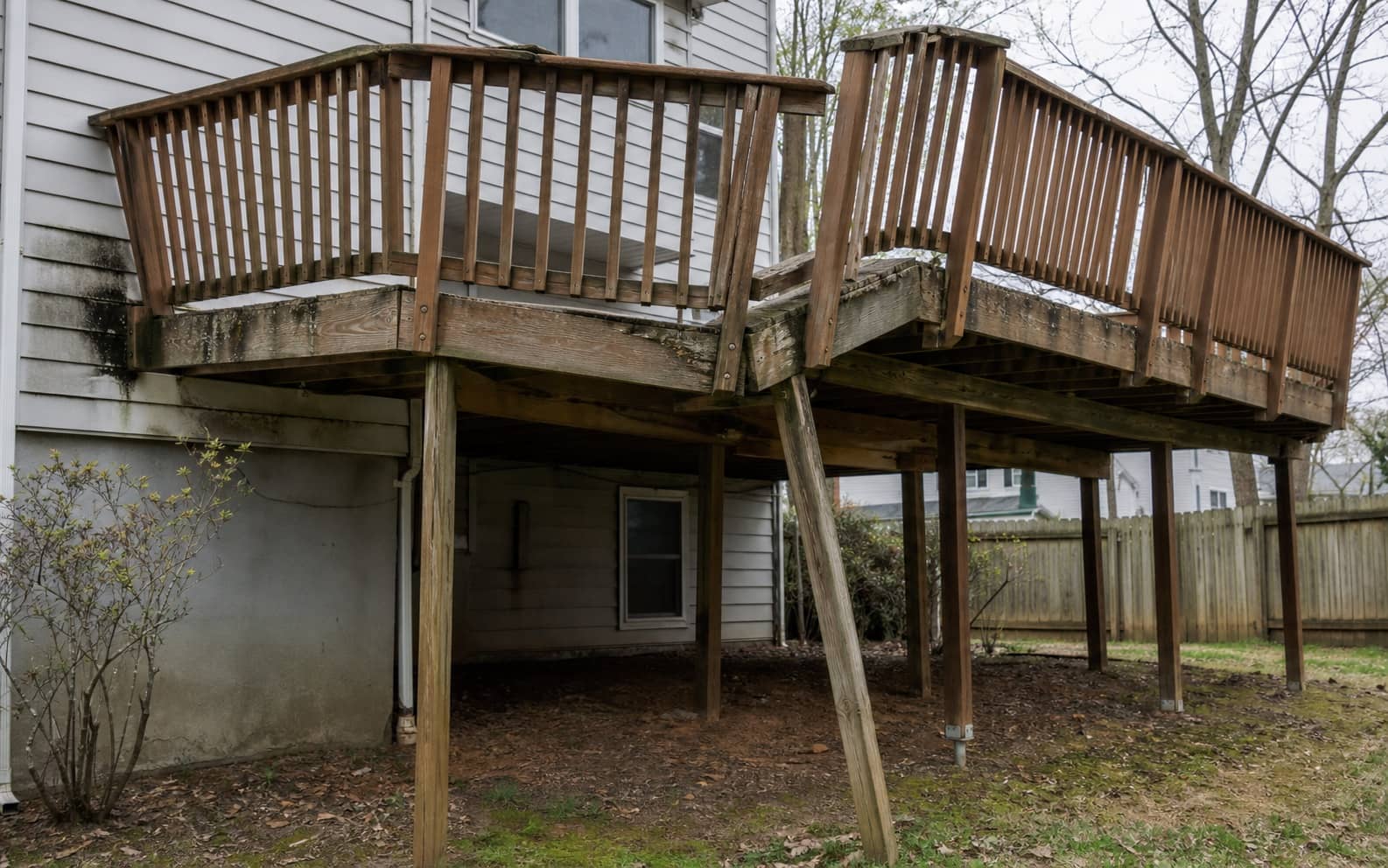
Deck collapses injure an estimated 40,000 Americans per year and kill dozens. Most collapses are not sudden failures of a healthy structure — they are the end result of years of visible, inspectable deterioration that was never addressed. Northern Virginia homeowners need to know eight warning signs that indicate a deck is at or near structural failure.
The statistics on deck collapses are not alarming in aggregate — they become alarming when you understand that most failures are preventable. Studies by the North American Deck and Railing Association and engineering safety organizations consistently find that the majority of deck collapses involve structures with visible pre-collapse warning signs. The collapses were not unpredictable failures; they were predictable outcomes of deferred maintenance and ignored deterioration.
Northern Virginia's deck stock includes a significant number of structures built in the 1990s and 2000s — decks now 20 to 30 years old that may have been built before current ledger attachment codes, inspected only once at initial construction, and maintained inconsistently since. These are the structures most at risk.
This guide covers the eight most important warning signs that a deck in Northern Virginia may be at or approaching structural failure.
Warning Sign 1: Ledger Separation
The ledger board is the horizontal framing member attached directly to the house. It connects the deck to the structure and transfers a significant portion of the deck's load to the house framing. Ledger failure — the ledger separating from the house — is the single most common cause of catastrophic deck collapse in the United States.
What to look for: Gaps between the ledger board and the house siding or house rim joist. Visible space where the ledger should be flush against the house. Fasteners pulling out of the ledger or the house framing. Dark staining or staining on the house siding directly above the ledger (indicating water intrusion behind the ledger).
Why it happens in Northern Virginia: Ledgers built before 2009 were often attached with nails or insufficient bolts per the pre-IRC 2009 code. Water infiltrating behind the ledger causes rot in the house rim joist, which progressively reduces the fastener holding capacity. The connection appears intact until the rot has advanced beyond the point of safety.
What to do: Any visible gap between the ledger and the house is a stop-use condition. The deck should not be occupied until a licensed contractor inspects and repairs the ledger connection.
Warning Sign 2: Post Rot at the Base
Deck posts transfer the vertical load from the deck beams to the footings. Post rot at the base — at or just above the footing or post base connector — reduces the load-carrying capacity of the post, sometimes to the point of complete failure.
What to look for: Soft, spongy wood at the base of any post. Discoloration (gray-black) at the post base. Visible fungal growth or mushroom bodies at or near the post. A post that moves slightly when pushed at the base.
Why it happens: Post bases that collect standing water, post bases embedded directly in concrete without separation (trapping moisture against end grain), and poorly flashed post-to-beam connections are the most common sources. In Northern Virginia's humid summers and wet springs, posts in areas with poor drainage are the most vulnerable.
What to do: A post with soft wood at the base has compromised load capacity. A contractor should assess the extent of rot and determine whether the post can be sistered with a new post or must be replaced, including an evaluation of whether the footing capacity is still adequate.
Warning Sign 3: Beam-to-Post Connection Movement
The connection between the beam (horizontal spanning member) and the post (vertical load-carrying member) must be rigid and secure. Movement at this connection indicates fastener failure, hardware corrosion, or dimensional change in the wood that has loosened the joint.
What to look for: Beam-to-post connections where you can see daylight in a joint that should be flush. Hardware that is visibly corroded, deformed, or missing fasteners. A beam that you can rock slightly at its bearing point on the post.
What to do: Any observable movement at a structural connection is a professional inspection item. Do not attempt to re-tighten or re-fasten structural connections without understanding the underlying cause — loose hardware is often a symptom of dimensional wood change or rot, not a fastener problem.
Warning Sign 4: Joist Rot at the Ends
Joists are the horizontal framing members that span between the beam and the ledger, supporting the decking above. Joist rot at the ends — where they connect to the ledger or beam — is common in Northern Virginia because end grain absorbs moisture aggressively and joist hanger connections frequently trap water.
What to look for: Inspect from below the deck. Look for gray-black discoloration at joist ends, visible fungal growth, or joists that flex more than they should when you push up on the decking above a specific joist bay. On accessible decks, poke a screwdriver blade into joist ends — if it penetrates more than 1/4 inch without significant resistance, the wood has rotted.
What to do: Individual rotted joists can often be sistered — a new joist is installed alongside the rotted one. If multiple joists are rotted, the deck requires significant structural repair and a professional assessment of the full framing condition.
Warning Sign 5: Railing That Moves When Pushed
Railing movement — any lateral movement of the railing when you apply a horizontal push at the top rail — indicates a failure of the railing-to-framing connection. The IRC requires railing to withstand 200 pounds of lateral force. A railing that visibly moves under a 20-pound push from one person is failing its structural requirement by an order of magnitude.
What to look for: Grab the railing cap at any post location and push horizontally with both hands. The railing should feel absolutely solid — no perceptible movement. Any visible movement, audible creaking under applied force, or post bases that rock indicates a failure.
Why it happens: Post bases improperly surface-mounted to decking rather than through-bolted to framing. Post bases corroded by modern PT preservatives on standard hardware. Posts that were properly installed but have wood rot at the connection point.
What to do: A railing that moves is a use restriction for any elevated deck. Children and adults leaning on a failing railing are at serious fall risk.
Warning Sign 6: Decking Boards That Bounce or Sink
A properly framed deck surface should feel solid underfoot — stiff, with no perceptible flex or bounce between joists. Excessive springiness, visible deflection underfoot, or boards that sink when stepped on indicate a problem in the framing below.
What to look for: Walk the full deck surface, including at the center spans farthest from supports. Note any areas of unusual springiness. Look for decking boards that are visibly lower than adjacent boards — this can indicate a failed or rotted joist below.
Why it happens: Joist rot (see Warning Sign 4), overspan (joists spaced too far apart for the span), or joist connections that have failed and allowed the joist to drop from its bearing.
Warning Sign 7: Visible Cracks in the House Foundation or Rim Joist at the Ledger
The house structure the ledger attaches to must be sound. If the house rim joist — the perimeter framing of the house floor — is cracked, rotted, or structurally compromised, no ledger connection can be made safe regardless of hardware quality.
What to look for: From below the deck (if accessible), inspect the house rim joist at the ledger attachment location. Any visible rot, cracks running through the rim joist depth, or sections of rim joist that feel soft indicate that the ledger attachment point may be compromised.
What to do: Rim joist repair requires coordination between a deck contractor and potentially a structural engineer, depending on the extent of the damage. This is not a DIY repair.
Warning Sign 8: Age Without Inspection
A deck that is more than 10 years old and has never been professionally inspected is a risk factor regardless of visible condition. Many structural failures — particularly ledger attachment failures and hidden joist rot — are not visible to a homeowner walk-around. A professional inspection uses a probe to test wood density, a moisture meter to find elevated moisture content before visible rot develops, and knowledge of connection details that are not accessible to visual inspection.
In Northern Virginia, decks built in the 1990s and early 2000s may predate the strengthened ledger attachment requirements in the 2009 IRC. These decks may appear sound while having ledger connections that do not meet current code.
LDN Decks provides professional deck safety inspections across Northern Virginia. If your deck shows any of the warning signs described here, or has not been inspected in more than 5 years, schedule an inspection before the next heavy-use season.
Schedule a Professional Deck Safety Inspection
---
Related: DIY Deck Safety Inspection Checklist · Ledger Board Failure Northern Virginia · Repair vs. Replace a Deck · Deck Structural Safety Signs · Deck Repair Services
Frequently Asked Questions
What are the most common causes of deck collapse?
Ledger board failure — the connection between the deck and the house — is the most common cause of catastrophic deck collapse in the United States. Other leading causes include post rot at the base, corroded or missing joist hanger hardware, overloaded structures built before current code requirements, and railing connection failures that allow falls from elevated decks. Most collapses involve multiple compounding failure modes, not a single point of failure.
How do I know if my deck is safe in Northern Virginia?
Check these five items: (1) The ledger board is flush against the house with no visible gap. (2) No deck posts are soft or discolored at the base. (3) The railing feels completely solid when pushed horizontally at any post. (4) The deck surface does not bounce or sink when walked on. (5) The deck has been professionally inspected within the past 5 years. If any of these are not satisfied, schedule a professional inspection.
How often should a deck be inspected for safety?
Professional deck safety inspection is recommended every 5 years for decks less than 10 years old, and every 3 years for decks more than 10 years old. Decks in Northern Virginia that are more than 20 years old should be inspected annually. A professional inspection uses probe testing of wood density and moisture metering to find failing conditions that are not visible in a homeowner walk-around.
What is the ledger board and why does it cause deck collapses?
The ledger board is the framing member attached directly to the house that connects the deck to the structure. It transfers a significant portion of the deck load to the house framing. Ledger failure is the most common cause of catastrophic deck collapse because water infiltrating behind the ledger causes rot in the house rim joist, progressively reducing fastener holding capacity until the connection fails suddenly under load.
What should I do if my deck railing moves when I push it?
Stop using the railing for leaning or load-bearing and schedule a professional inspection. Any visible lateral movement in the railing under normal hand pressure indicates the post connection has failed its structural requirement. On an elevated deck, a failed railing is a serious fall risk. This is a stop-use condition until a contractor assesses and repairs the post anchoring.
This guide describes common structural warning signs for informational purposes. It does not constitute a structural safety inspection and does not replace professional assessment. If you observe any of the described warning signs, consult a licensed contractor before allowing occupancy of the deck structure.
Plan Your Northern Virginia Deck Project With Loudoun Decks
Get a free, no-pressure consultation from a licensed Northern Virginia deck builder. Call (571) 655-7207 or visit ldndecks.com/get-estimate.
Get a Free EstimateEverything Your Outdoor
Space Needs
From ground-up deck construction to full outdoor living spaces, every project is custom-designed for your home with permit planning, material guidance, and written workmanship terms.
Custom Deck Builder
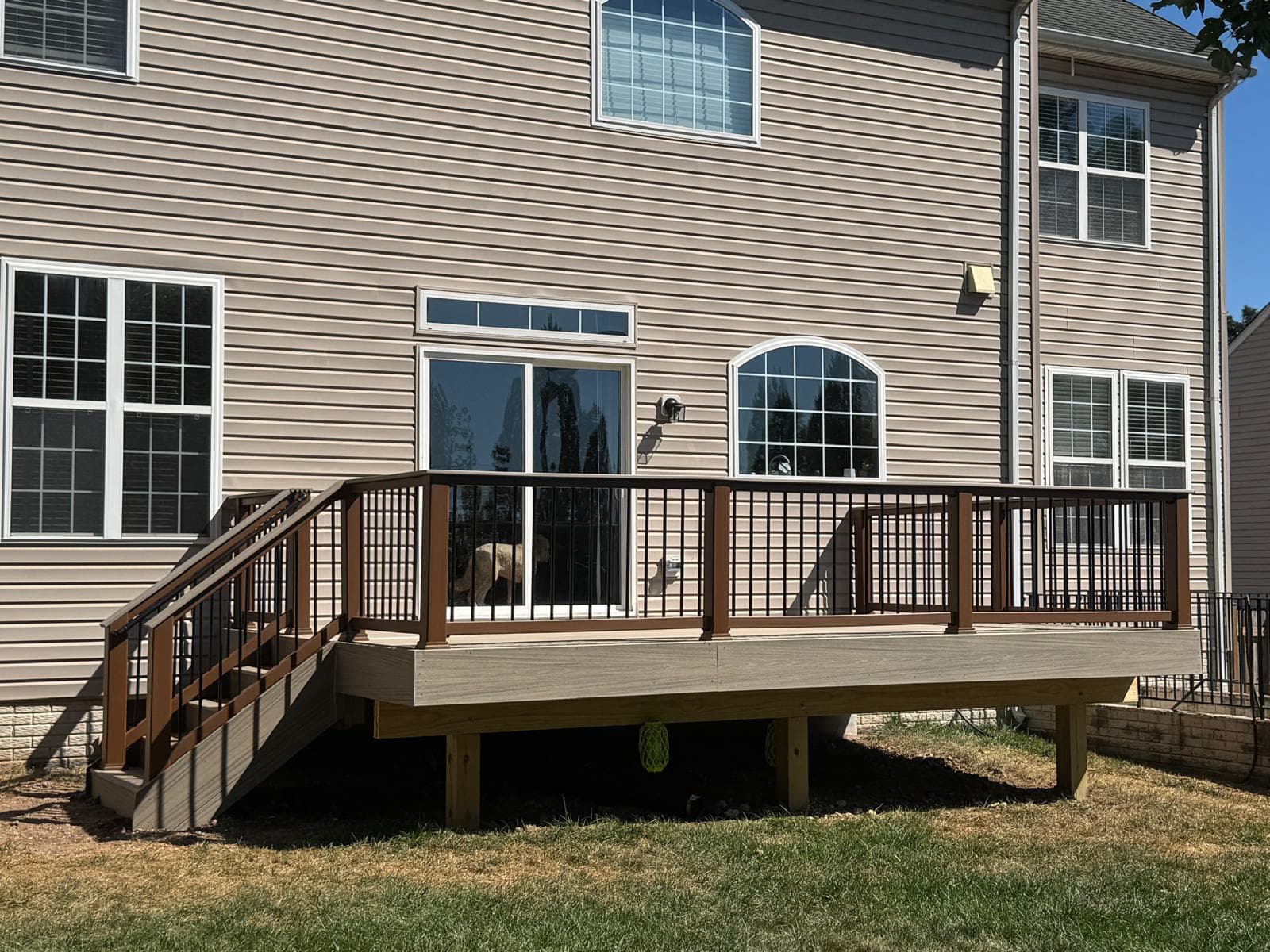
Transform your backyard with a custom-designed deck using Trex, TimberTech, wood, or PVC materials matched to your budget, HOA rules, and maintenance goals.
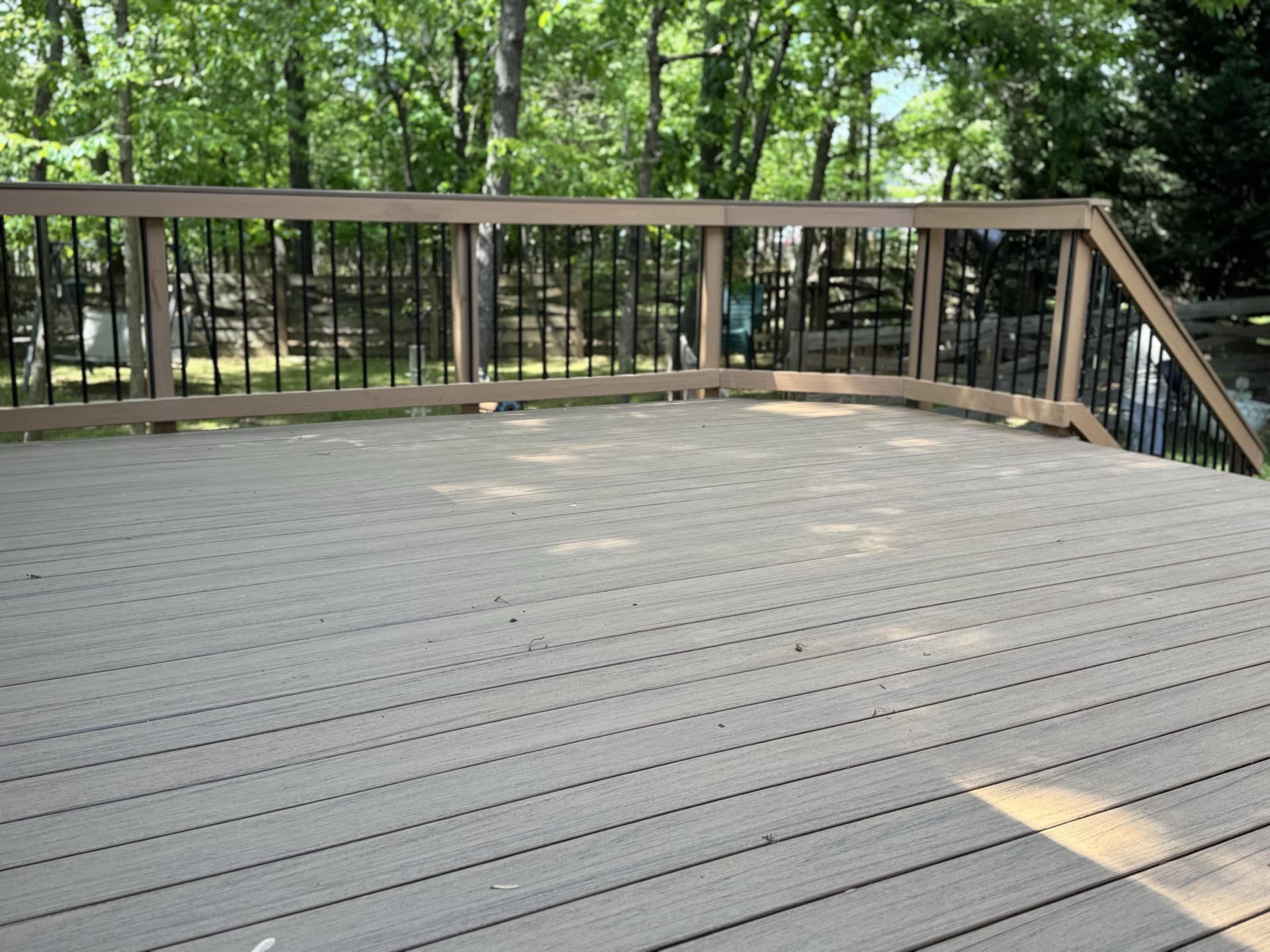
Deck Resurfacing
Premium wood-to-composite resurfacing for structurally sound frames. Full surface conversions start from $15k with boards, railings, fascia, and safety review.
Patio Contractor Services
Professional bluestone and paver patio installation. We create durable, beautiful ground-level outdoor living spaces that last a lifetime.
Local Expertise Across Northern Virginia
Loudoun Decks is a trusted deck builder serving Loudoun County, Fairfax County, Prince William County, Arlington, and Stafford.
Guides Northern Virginia Homeowners Are Reading
Deck Builder in Northern Virginia
Custom decks, permits, HOA support and local service areas.
Covered Deck Builder
Covered deck planning, outdoor living upgrades and shade structure decisions.
Trex vs TimberTech vs AZEK
Side-by-side brand comparison for Virginia climate.
Composite Deck Cost in Northern Virginia
Material pricing, verified source references, planning examples and what drives the price.
Free Deck Cost Calculator
Get an instant estimate by material, size, and add-ons.
TimberTech & AZEK Decks
Premium PVC and composite deck options for Northern Virginia.