


How to Restore Faded Composite Decking
Homeowners who discover their composite deck has lost its original richness often search for a restoration solution. This guide walks through the realistic, step-by-step process for assessing and restoring a faded composite deck — and being honest about which boards need professional attention versus replacement.
Homeowners who discover that their composite deck has lost its original richness often search for a restoration solution — something that can be sprayed or brushed on to bring back the color, the way a stain or sealer works on a wood deck. The hard reality of composite decking is that true color restoration in that sense does not exist as a product category. But there is a meaningful difference between a composite deck that cannot be restored and one that simply has not been properly cleaned in several seasons.
This guide walks through the realistic, step-by-step process for assessing and restoring a faded composite deck — and being honest about which boards are genuinely damaged versus which ones just need professional attention.
Can You Restore Faded Composite Decking?
The answer depends entirely on what caused the color change. Composite boards have an outer polymer cap that gives them their color, UV resistance, and stain protection. That cap layer is fixed at the factory. Once UV photodegradation breaks down the cap permanently, the color cannot be replenished by any cleaning product, coating, or treatment currently available.
However, most composite decks that look faded — especially decks under eight to ten years old — are not actually UV-degraded. They are coated in a layered accumulation of pollen, mildew, tannins, mineral deposits, and grime that makes boards look dull and washed-out. Remove that surface contamination, and the boards underneath often look dramatically better.
The first step of any composite deck restoration project is an honest diagnostic: are you dealing with surface contamination or actual board degradation?
Step 1: Diagnose the Problem
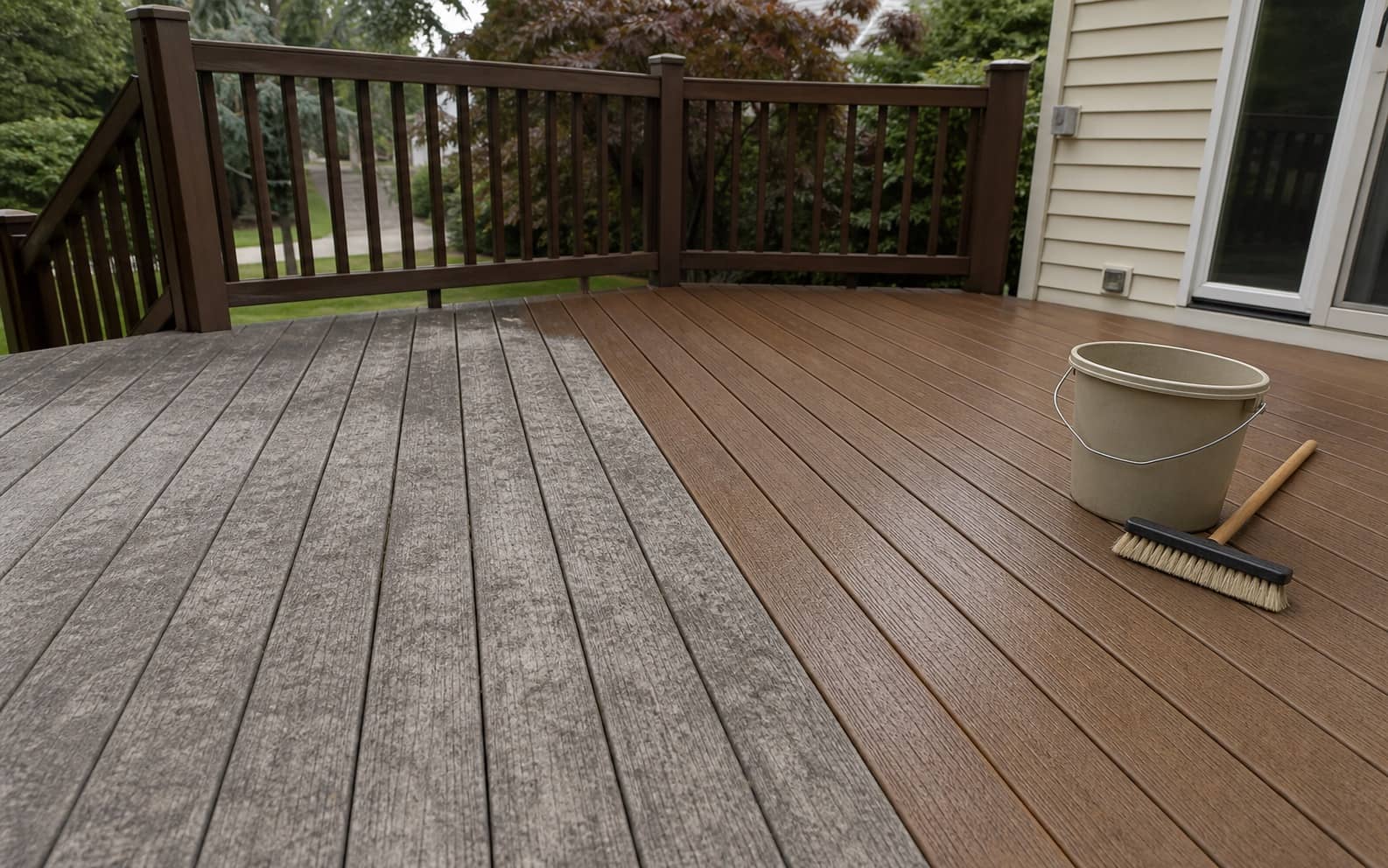
It is likely staining or contamination if: the color loss is uneven or patchy, the boards look worse after damp weather, there is a yellow-green film in spring, there are dark patches near downspouts or tree drip zones, or shaded areas look noticeably better than sun-exposed areas of the same age.
It is likely genuine UV fading or degradation if: the color loss is uniform across all sun-exposed boards regardless of shade, the boards feel rough or chalky to the touch, the surface has a matte or powdery appearance that does not change after rain, or boards have visible cracking, warping, or soft areas.
If the diagnosis points to contamination, restoration is achievable. If it points to genuine photodegradation, the options shift to resurfacing or replacement.
Step 2: Professional Composite Deck Cleaning
For most composite decks neglected for one to several seasons, a professional soft wash is the most powerful restoration tool available. This is not pressure washing — it is a low-pressure, chemistry-driven process using cleaners specifically formulated for capped composite materials.
Pre-wet and inspection: The deck is wetted with clean water to protect the surface, and the technician evaluates staining type and board condition before selecting the right cleaner.
Application of composite-safe cleaner: A composite-approved cleaner — often an oxygen-bleach or enzymatic formula, never a bleach-based or solvent product — is applied to the surface and allowed to dwell. This chemistry breaks down the organic bond between contaminants and the board cap.
Soft scrubbing: A soft-bristle brush is used to work the cleaner into the grain texture without scoring the cap.
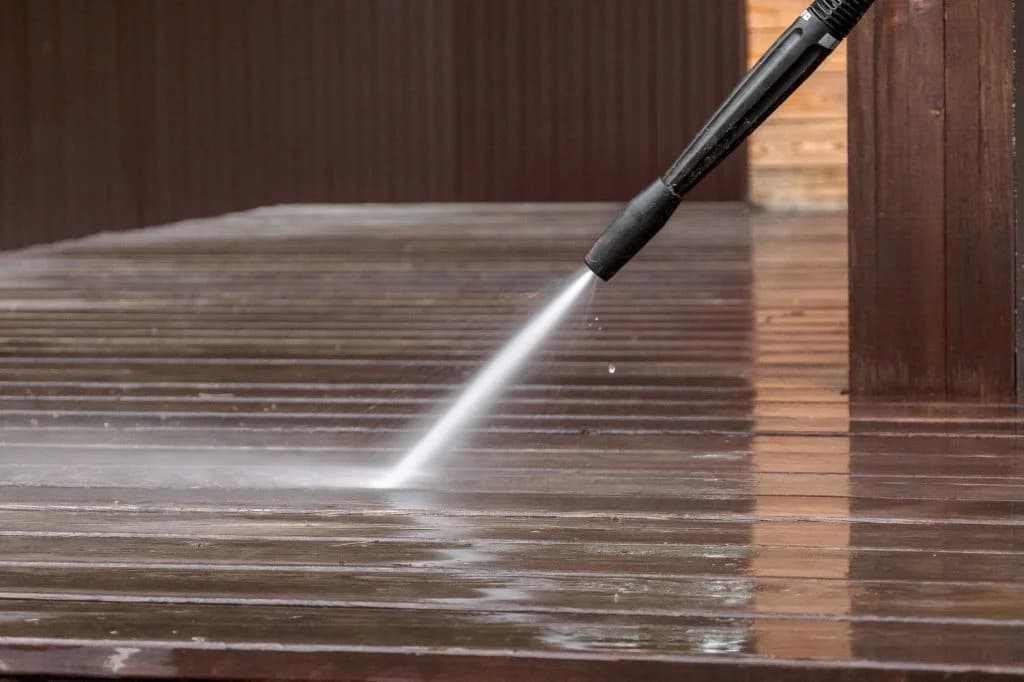
Low-pressure rinse: The deck is rinsed at 500 to 1,000 PSI with a fan tip, below the threshold that damages most composite cap layers. All cleaner residue and lifted contamination is flushed off.
Post-cleaning assessment: Once dry, the actual condition of the boards is visible. Homeowners are frequently pleasantly surprised — boards have recovered most of their original depth and richness.
Step 3: Composite Brightener Treatments
After cleaning, some homeowners use a composite deck brightener as a finishing treatment. These products are not paints or coatings — they do not add a new layer of color. Rather, they clear oxidation residue, restore surface brightness on the cap, and in some cases add a light layer of UV protection.
Composite brighteners work best on boards with mild surface oxidation or boards cleaned after heavy tannin staining. They are not effective on boards with deep photodegradation.
Do not use paints, sealers, or stains designed for wood on composite decking. These products do not bond correctly to the polymer cap, peel within one to two seasons, void most manufacturer warranties, and create a maintenance cycle that composite was designed to eliminate.
Step 4: Individual Board Replacement
After thorough cleaning, if specific boards remain clearly more degraded than their neighbors, targeted replacement is the most precise next step. This is appropriate when:
- A section had heavy reflected heat from a nearby window or glass door that accelerated degradation beyond the rest of the deck. - A small number of boards were damaged by pressure washing or improper chemical treatment. - Boards in one section are at end of useful life while the rest of the deck remains in good condition.
The challenge with individual replacement on older decks is colorway matching. Composite manufacturers discontinue specific colors over time, and the difference between a new board and an aged board of the same colorway can be visually obvious. On a well-aged deck, new boards may look significantly brighter for one to two full weathering seasons before blending in.
Step 5: When Professional Resurfacing Is the Right Answer
If deck-wide cleaning and targeted replacement do not achieve the desired result — or if the deck is old enough that the entire surface is uniformly degraded — professional deck resurfacing is the clean, cost-effective path forward.
Resurfacing means removing all existing surface boards and installing a complete new composite surface over the existing structural frame. It delivers a truly fresh deck at a fraction of full replacement cost — typically 25 to 40 percent less than a complete tear-down and rebuild.
Resurfacing is appropriate when: surface boards across the entire deck are uniformly aged or UV-faded; the structural frame is inspected and found sound; the homeowner wants to upgrade to a newer composite product with better UV performance; or a significant visual refresh is needed before selling the home.
Restoration vs. Resurfacing: Which Do You Need?
A professional cleaning costing a few hundred dollars and a resurfacing project costing several thousand are not competing options — they are sequential steps. Most responsible contractors will recommend cleaning and inspection before ever recommending resurfacing, because cleaning often reveals that resurfacing is not yet necessary.
The sequence: clean professionally, evaluate results, replace specific damaged boards if needed, then decide if resurfacing is warranted based on actual board condition — not on appearance through a layer of pollen and mildew.
Northern Virginia-Specific Restoration Tips
In Ashburn, Leesburg, Fairfax, Centreville, Herndon, and communities across Northern Virginia, composite deck restoration has region-specific considerations.
The heavy spring pollen season means most decks need a thorough cleaning by early May each year to remove yellow film before it fully bonds under summer heat. The dense hardwood tree coverage in Great Falls, McLean, and western Loudoun County means tannin staining from oak and maple is a recurring annual issue — not a sign of a failing deck.
Darker composite colors popular in communities like Brambleton, Stone Ridge, and One Loudoun are the most likely to show visible fading contrast between shaded and sun-exposed areas. Annual cleaning and a spring brightener treatment are highly effective at managing this difference without replacing any boards.
Ready to have your composite deck professionally assessed in Northern Virginia? Contact LDN Decks for a free inspection and honest recommendation on whether cleaning, board replacement, or resurfacing is the right next step.
---
Related: Why Composite Decking Fades in the Sun · Deck Resurfacing Services · Deck Repair Services · Composite Decking Services · Deck Maintenance Checklist
Frequently Asked Questions
Can you restore the color of faded composite decking?
Not with a coating or stain — the polymer cap layer that gives composite boards their color is factory-set and does not regenerate. However, if the fading is actually surface contamination from pollen, mildew, or tannins, professional cleaning often restores much of the original appearance. Genuine UV photodegradation requires board replacement or resurfacing.
What products can I use to restore composite decking?
Composite deck cleaners and brighteners are effective at removing contamination and surface oxidation on capped boards. Do not use paints, sealers, or wood stains — they do not bond to composite polymer caps, void warranties, and peel within one to two seasons.
How much does composite deck restoration cost in Northern Virginia?
A professional soft wash and cleaning for an average composite deck typically costs a few hundred dollars and is always the recommended first step. If resurfacing is needed after cleaning, the cost is typically 25 to 40 percent less than a full deck replacement, depending on size and materials selected.
How do I know if my composite deck needs resurfacing or just cleaning?
If boards feel rough, chalky, or porous to the touch across the entire surface, resurfacing may be needed. If discoloration is patchy, localized, or worse near trees or downspouts, cleaning is likely sufficient. A professional inspection after thorough cleaning gives the most accurate answer.
Can I pressure wash a composite deck to restore its appearance?
Low-pressure rinsing under 1,500 PSI with a wide fan tip is safe for most composite boards. Aggressive pressure washing with a narrow tip or at high PSI will permanently score and damage the cap layer. Pressure washing is a cleaning tool, not a restoration tool for faded boards.
This article provides general homeowner guidance on composite deck restoration. Product effectiveness varies by composite brand, product line, and degree of weathering. Always verify maintenance procedures with your composite manufacturer or a licensed deck professional before applying any restoration product.
Plan Your Northern Virginia Deck Project With Loudoun Decks
Get a free, no-pressure consultation from a licensed Northern Virginia deck builder. Call (571) 655-7207 or visit ldndecks.com/get-estimate.
Get a Free EstimateEverything Your Outdoor
Space Needs
From ground-up deck construction to full outdoor living spaces, every project is custom-designed for your home with permit planning, material guidance, and written workmanship terms.
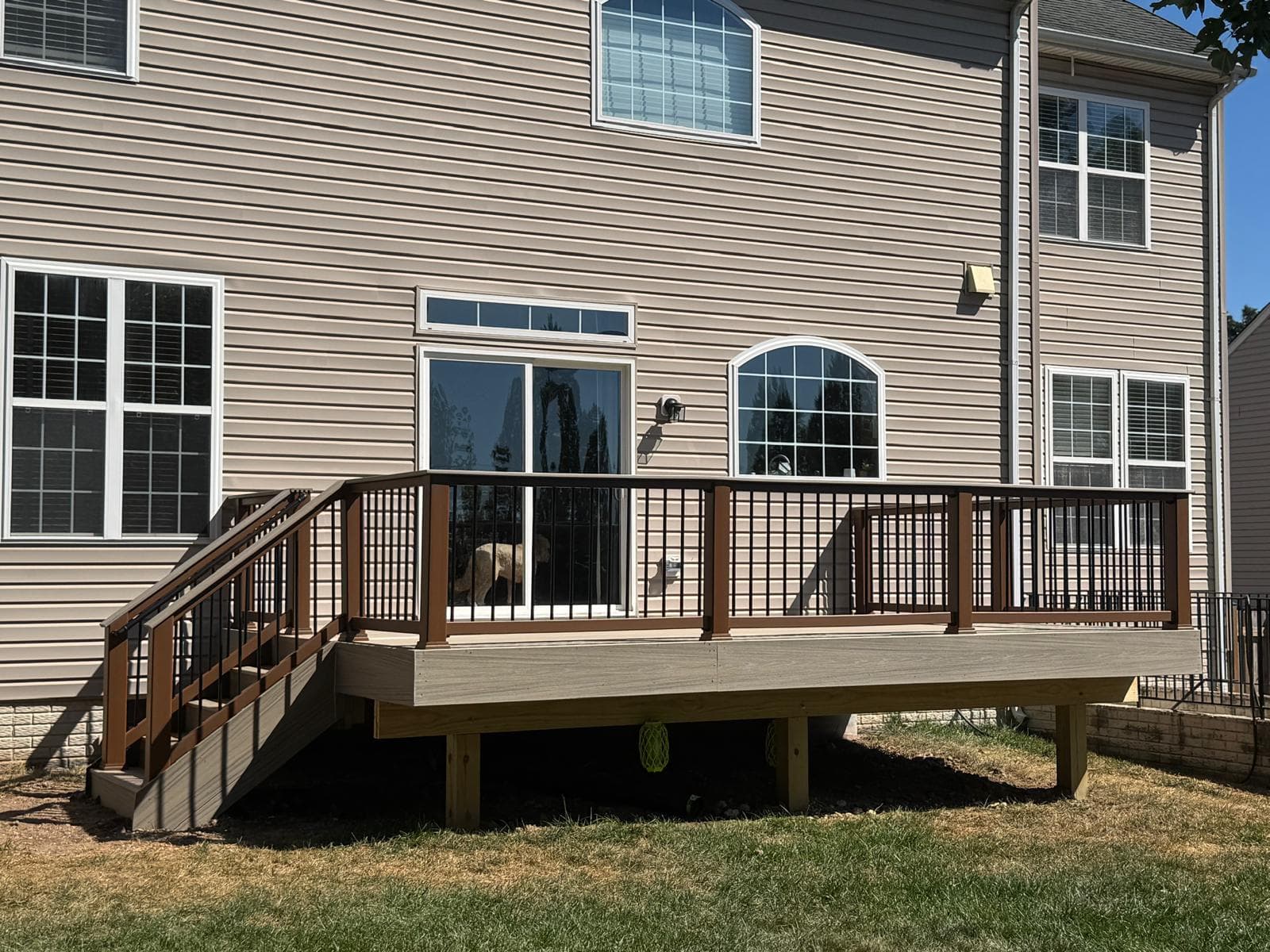
Custom Deck Builder
Transform your backyard with a custom-designed deck using Trex, TimberTech, wood, or PVC materials matched to your budget, HOA rules, and maintenance goals.
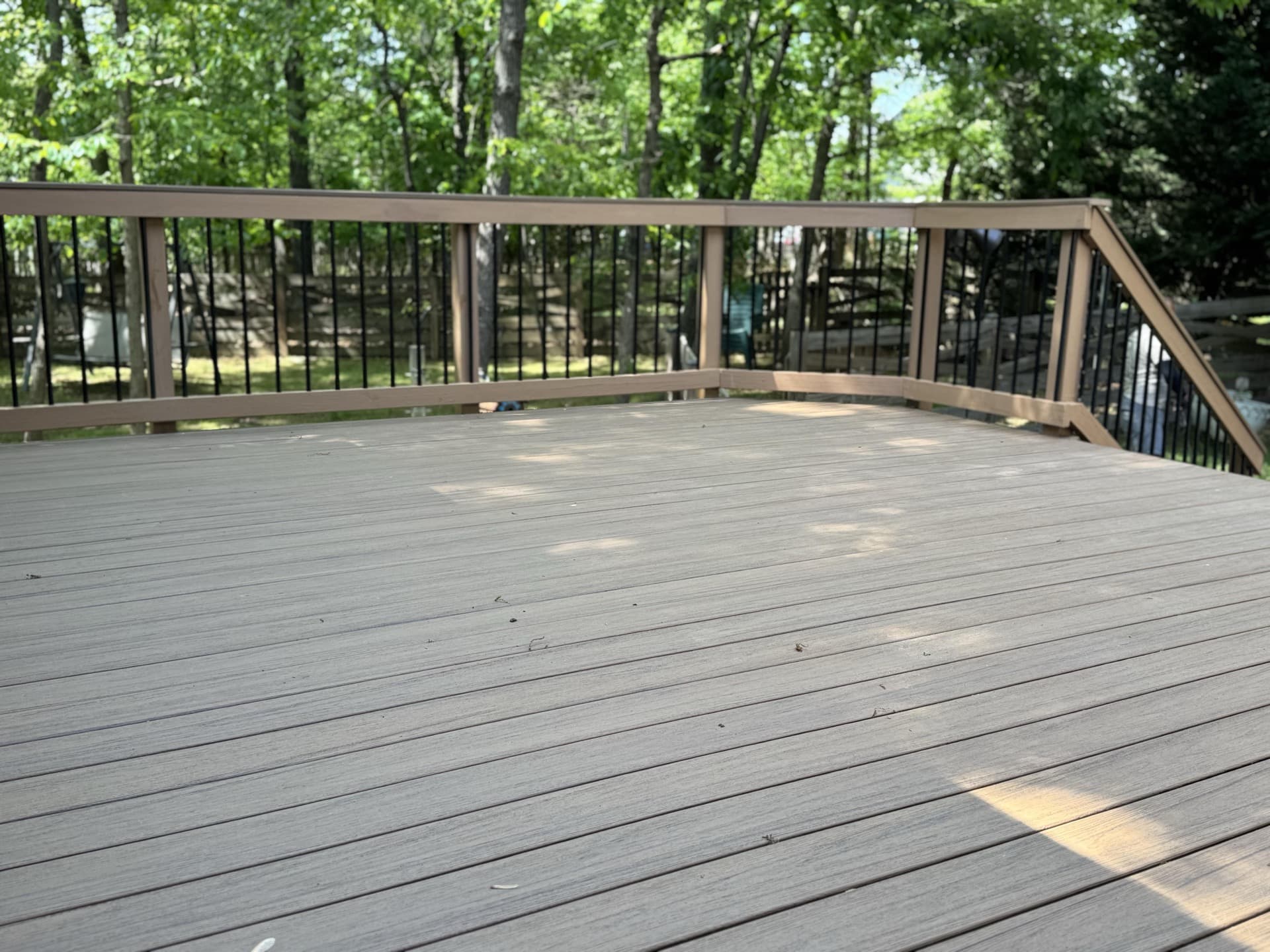
Deck Resurfacing
Wood-to-composite resurfacing for frames that pass inspection. The written estimate lists boards, railings, fascia, and what stays in the existing structure.
Patio Contractor Services
Professional bluestone and paver patio installation. We create durable, beautiful ground-level outdoor living spaces that last a lifetime.
Local Expertise Across Northern Virginia
Loudoun Decks serves homeowners in Loudoun County, Fairfax County, Prince William County, Arlington County, Alexandria, Falls Church, and Stafford County.
Loudoun County
- Ashburn, VA
- Leesburg, VA
- Sterling, VA
- Aldie, VA
- South Riding, VA
- Broadlands, VA
- Brambleton, VA
- Purcellville, VA
- Hamilton, VA
- Lovettsville, VA
- Round Hill, VA
- Middleburg, VA
- Dulles, VA
- Arcola, VA
- Belmont, VA
- Cascades, VA
- Countryside, VA
- Lowes Island, VA
- Potomac Falls, VA
- Lansdowne, VA
- One Loudoun, VA
- Stone Ridge, VA
Fairfax County
- Fairfax, VA
- Fairfax Station, VA
- Burke, VA
- Springfield, VA
- West Springfield, VA
- Annandale, VA
- Centreville, VA
- Chantilly, VA
- Clifton, VA
- Herndon, VA
- Reston, VA
- Great Falls, VA
- McLean, VA
- Vienna, VA
- Oakton, VA
- Falls Church, VA
- Tysons, VA
- Dunn Loring, VA
- Merrifield, VA
- Alexandria, VA
- Lorton, VA
- Mount Vernon, VA
Prince William County
- Gainesville, VA
- Haymarket, VA
- Bristow, VA
- Manassas, VA
- Manassas Park, VA
- Woodbridge, VA
- Lake Ridge, VA
- Dumfries, VA
- Occoquan, VA
- Nokesville, VA
- Independent Hill, VA
- Montclair, VA
- Dale City, VA
- Triangle, VA
Arlington County
- Arlington, VA
- Rosslyn, VA
- Ballston, VA
- Clarendon, VA
- Pentagon City, VA
- Crystal City, VA
- Shirlington, VA
Stafford County
- Stafford, VA
- Falmouth, VA
- Garrisonville, VA
- Aquia Harbour, VA
Guides Northern Virginia Homeowners Are Reading
Free Deck Cost Calculator
Get an instant estimate by material, size, and add-ons.
TimberTech & AZEK Decks
Premium PVC and composite deck options for Northern Virginia.
Deck Permits in Loudoun County
Permit requirements, review steps and inspection context for Loudoun homeowners.
Deck Permits in Fairfax County
Requirements, timeline, fees, and inspection process.
Deck Builder in Northern Virginia
Custom decks, permits, HOA support and local service areas.
Covered Deck Builder
Covered deck planning, outdoor living upgrades and shade structure decisions.