
Pergola on a Deck: What Northern Virginia Homeowners Need to Know
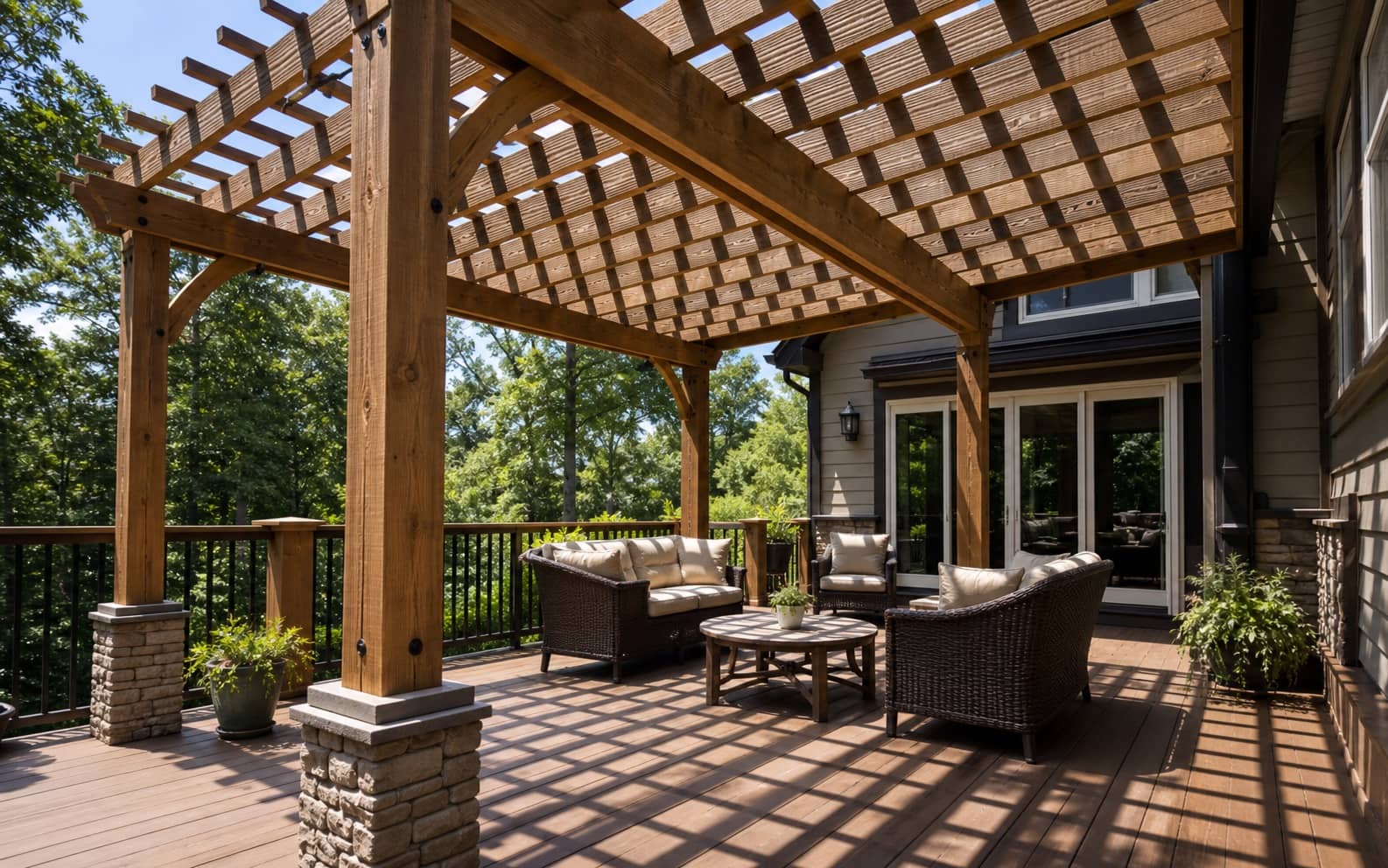
A pergola on a deck provides partial shade, a defined outdoor room feel, and a structure for lighting, fans, and climbing plants — while still feeling open to the sky. In Northern Virginia's hot summers, a pergola with fabric shade panels or a retractable canopy makes a significant difference in the usability of a deck during the July and August heat.
A pergola is a structure with open rafters over a defined area — providing partial shade and overhead definition without the full enclosure of a roof. Added to a deck in Northern Virginia, a pergola solves the most common summer usability complaint about open decks: afternoon sun exposure making the space too hot to use comfortably in July and August.
This guide covers what Northern Virginia homeowners need to know about adding a pergola to an existing or new deck: structural requirements, permit obligations, HOA considerations, shade options, and cost.
What a Pergola Is (and Is Not)
A pergola consists of vertical posts supporting horizontal beams and open rafters. The key characteristic is the open rafter structure — the pergola provides partial shade through the rafter spacing but is not a fully weatherproof roof. Rain falls through a traditional pergola; UV is partially blocked by the rafter pattern.
Variants that provide more shade and weather protection: - Louvered pergola: Motorized or manually adjustable louvers replace the open rafter gaps. Louvers can be opened for sun and air or closed for shade and rain protection. More expensive but significantly more functional. - Pergola with retractable canopy: A fabric shade system suspended between the rafters, manually or motorized. Provides full shade when extended; retracts to allow open sky. - Pergola with polycarbonate roofing: Translucent panels replace the open rafter gaps. Provides full rain protection and filtered UV — effectively a covered patio roof.
The variant matters for Northern Virginia's permit classification: an open-rafter traditional pergola may be classified differently than a fully covered pergola with polycarbonate panels, which may require the same permit path as a porch roof.
Structural Requirements for a Deck Pergola
A pergola on a deck transfers its load to the deck framing through the pergola posts. This creates concentrated loads at the post locations that the original deck framing may not have been designed to handle.
Post footing requirements: Pergola posts in Northern Virginia typically need to be anchored to dedicated footings, not just to the deck surface. Surface-mounted post bases on the deck boards transfer pergola loads into the decking, which is not designed for point loads from structure above. For most pergola installations on existing decks, the pergola posts are run through the deck surface to dedicated footings below — which requires core drilling through the decking and framing.
Alternatively, pergola posts can be mounted to the deck framing (not the decking boards) with structural post base hardware — but this requires verification that the joist and beam framing at the post locations can handle the additional vertical and lateral loads from the pergola.
Wind loading: Northern Virginia experiences sustained winds from nor'easters and summer thunderstorms. A pergola acts as a wind sail — the canopy or cover system, if closed during a wind event, significantly increases the lateral force on the pergola posts and their connections to the deck. Pergola designs in Northern Virginia should be engineered for wind loading, particularly for louvered or canopied variants.
When engineering is required: Fairfax County and Loudoun County building departments may require stamped structural drawings from a licensed PE for pergola additions above a certain size or with non-standard loading conditions. LDN Decks coordinates engineering review when required.
Permit Requirements for Deck Pergolas in Northern Virginia
A pergola attached to a house (attached pergola) requires a building permit in most Northern Virginia jurisdictions — it is a structural addition to the home. A freestanding pergola on a deck may or may not require a permit depending on size and jurisdiction.
General guidance: - Attached pergola (connected to the house structure): Permit required in Loudoun, Fairfax, and Prince William counties - Freestanding pergola on an existing deck, under 200 sq ft: Check with your specific county — some jurisdictions exempt small freestanding structures; others require permits for all overhead structures - Pergola with a solid roof (polycarbonate, metal, or roofing material): Almost universally requires a permit as it is classified as a roof addition
Always verify current permit requirements with your county building department before assuming a pergola is exempt.
HOA Approval for Pergolas
Pergolas in Northern Virginia HOA communities require ARC review. The primary HOA considerations:
Height: Pergola height above the deck surface is often the most scrutinized dimension. HOAs with height restrictions on structures in rear yards may limit pergola rafter height. Standard pergola rafter height is 8 to 10 feet above the deck surface; some HOAs restrict to 8 feet or require that the total structure height not exceed the roofline.
Material: HOAs typically require that pergola post and beam material match or complement the deck material — wood pergolas on composite decks are common (and often fine), but some HOAs specify that pergola color must match or complement the deck.
Fabric colors: If a retractable canopy or shade sail is included, some HOAs specify neutral fabric colors — white, tan, or gray — and prohibit brightly colored fabrics.
Shade Options for Northern Virginia Pergolas
Given Northern Virginia's afternoon sun intensity from June through September, the shade solution matters:
Traditional open rafter (no additional shade): Provides 30 to 50 percent shade depending on rafter spacing and sun angle. Not sufficient for full afternoon sun on west-facing decks in July.
Fabric shade sails or panels suspended between rafters: Provide 80 to 95 percent shade in the covered area. Installed seasonally (typically removed before winter). Cost: $500 to $2,500 depending on size and fabric quality.
Motorized retractable canopy: Provides 90 to 100 percent shade when extended. Can be integrated into the pergola frame with motorized operation from a wall switch or remote. Cost: $3,000 to $9,000 for the canopy system.
Motorized louvered pergola (e.g., Struxure, Gennius, Renson): Premium motorized louvers that open and close. Open louvers allow sun and ventilation; closed louvers provide shade and moderate rain protection. Cost: $15,000 to $40,000 for the full louvered system depending on size.
Cost of Pergolas on Northern Virginia Decks 2026
- Traditional wood or composite pergola (200-300 sq ft, no shade system): $12,000 to $22,000 installed - Pergola with retractable canopy: $18,000 to $35,000 - Louvered motorized pergola system (Struxure or equivalent): $35,000 to $75,000 - Pergola with polycarbonate roof (fully covered): $20,000 to $40,000
LDN Decks designs and builds pergola additions on decks across Northern Virginia — from traditional open-rafter structures to motorized louvered systems.
---
Related: Screened Porch vs Three-Season Room · Outdoor Kitchen on a Deck · Deck Lighting Ideas Northern Virginia · Under-Deck Drainage Systems · New Deck Services
Frequently Asked Questions
Does a pergola on a deck need a permit in Northern Virginia?
An attached pergola (connected to the house structure) requires a building permit in Loudoun, Fairfax, and Prince William counties. A freestanding pergola on an existing deck may or may not require a permit depending on size and jurisdiction — some counties exempt small freestanding structures. A pergola with a solid roof (polycarbonate, metal, or roofing material) almost always requires a permit as a roof addition. Always verify with your specific county building department before assuming a pergola is permit-exempt.
How much does a pergola cost in Northern Virginia?
A traditional wood or composite pergola (200-300 sq ft, no shade system) costs $12,000 to $22,000 installed. Adding a retractable canopy brings the total to $18,000 to $35,000. Motorized louvered pergola systems (Struxure, Gennius, Renson) run $35,000 to $75,000. Pergolas with polycarbonate roofs cost $20,000 to $40,000. These ranges reflect 2026 Northern Virginia market pricing including permits.
Do pergola posts need footings on an existing deck?
In most cases, yes. Surface-mounting pergola posts to the deck boards transfers structural loads through the decking, which is not designed for point loads from above-grade structures. Pergola posts typically need to be anchored to dedicated footings below the deck (run through the decking and framing) or mounted to the deck framing with structural hardware — not to the decking surface. This is a critical planning point for pergola additions to existing decks.
Does an HOA need to approve a pergola on a deck?
Yes, in Northern Virginia HOA communities. Pergolas are visible exterior structures subject to ARC review. Common HOA concerns include pergola height relative to the home and neighboring properties, post and beam material consistency with the deck and house, and fabric color for any canopy or shade system. Some HOAs restrict pergola height to 8 feet above deck surface or require that the total height not exceed the roofline. Submit a complete ARC application with dimensions and material specifications.
What is the best shade solution for a pergola in Northern Virginia summers?
For Northern Virginia's intense afternoon sun in July and August, a retractable canopy or motorized louvered system provides the most effective shade. A traditional open-rafter pergola provides only 30 to 50 percent shade — insufficient for a west-facing deck in full afternoon sun. A retractable canopy adds $5,000 to $13,000 to the pergola cost but makes the space genuinely usable on hot summer afternoons. A motorized louvered system is the premium solution at $35,000 to $75,000 all-in.
Cost ranges reflect Northern Virginia market conditions as of 2026. Permit requirements for pergolas vary by jurisdiction and structure type — always verify with your county building department. Structural requirements for pergola post anchoring depend on the existing deck framing condition and must be assessed by a licensed contractor.
Plan Your Northern Virginia Deck Project With Loudoun Decks
Get a free, no-pressure consultation from a licensed Northern Virginia deck builder. Call (571) 655-7207 or visit ldndecks.com/get-estimate.
Get a Free EstimateEverything Your Outdoor
Space Needs
From ground-up deck construction to full outdoor living spaces, every project is custom-designed for your home with permit planning, material guidance, and written workmanship terms.
Custom Deck Builder
Transform your backyard with a custom-designed deck using Trex, TimberTech, wood, or PVC materials matched to your budget, HOA rules, and maintenance goals.
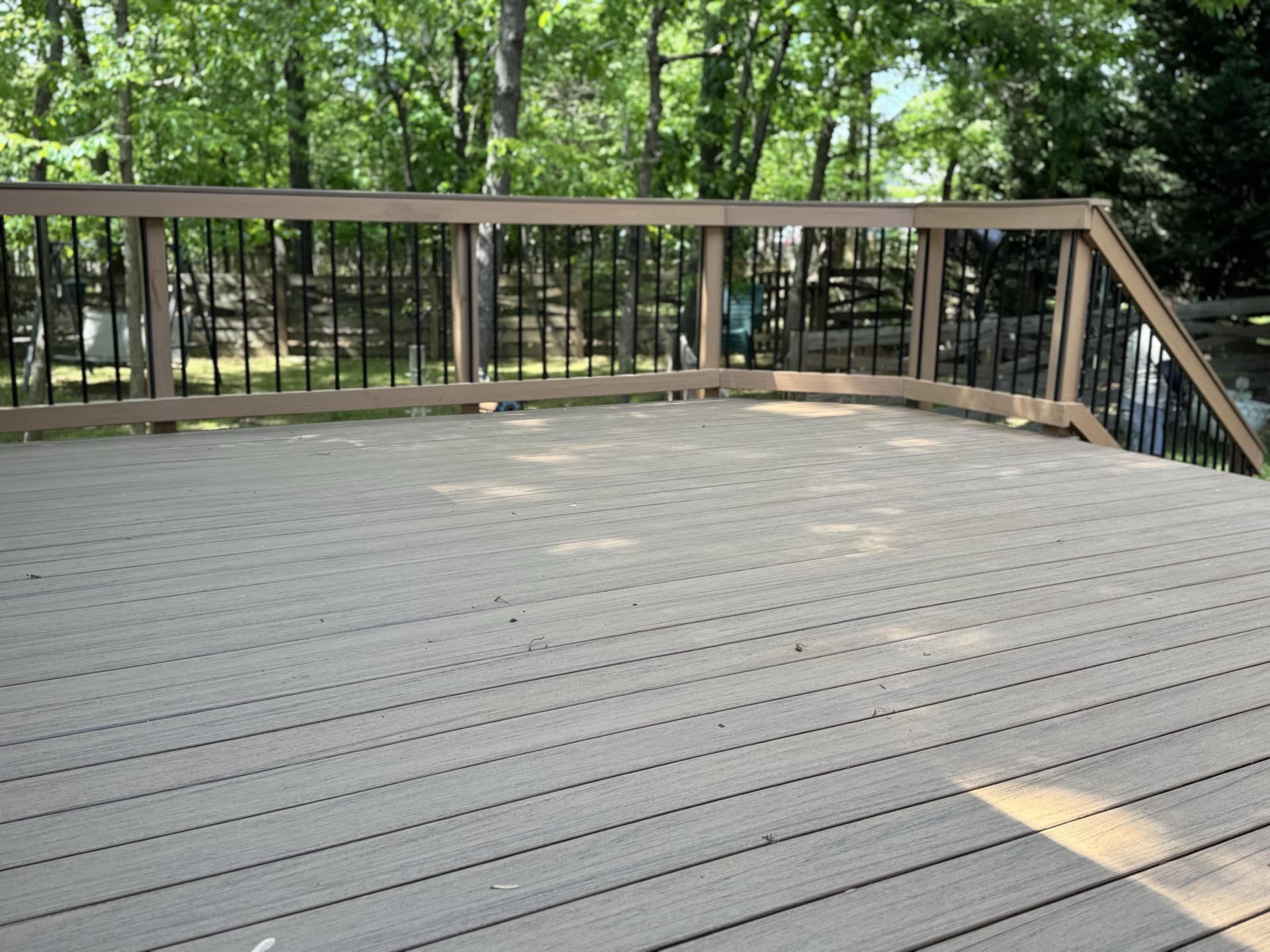
Deck Resurfacing
Premium wood-to-composite resurfacing for structurally sound frames. Full surface conversions start from $15k with boards, railings, fascia, and safety review.
Patio Contractor Services
Professional bluestone and paver patio installation. We create durable, beautiful ground-level outdoor living spaces that last a lifetime.
Local Expertise Across Northern Virginia
Loudoun Decks is a trusted deck builder serving Loudoun County, Fairfax County, Prince William County, Arlington, and Stafford.
Guides Northern Virginia Homeowners Are Reading
TimberTech & AZEK Decks
Premium PVC and composite deck options for Northern Virginia.
Deck Permits in Loudoun County
Permit requirements, review steps and inspection context for Loudoun homeowners.
Deck Permits in Fairfax County
Requirements, timeline, fees, and inspection process.
Deck Builder in Northern Virginia
Custom decks, permits, HOA support and local service areas.
Covered Deck Builder
Covered deck planning, outdoor living upgrades and shade structure decisions.
Trex vs TimberTech vs AZEK
Side-by-side brand comparison for Virginia climate.