


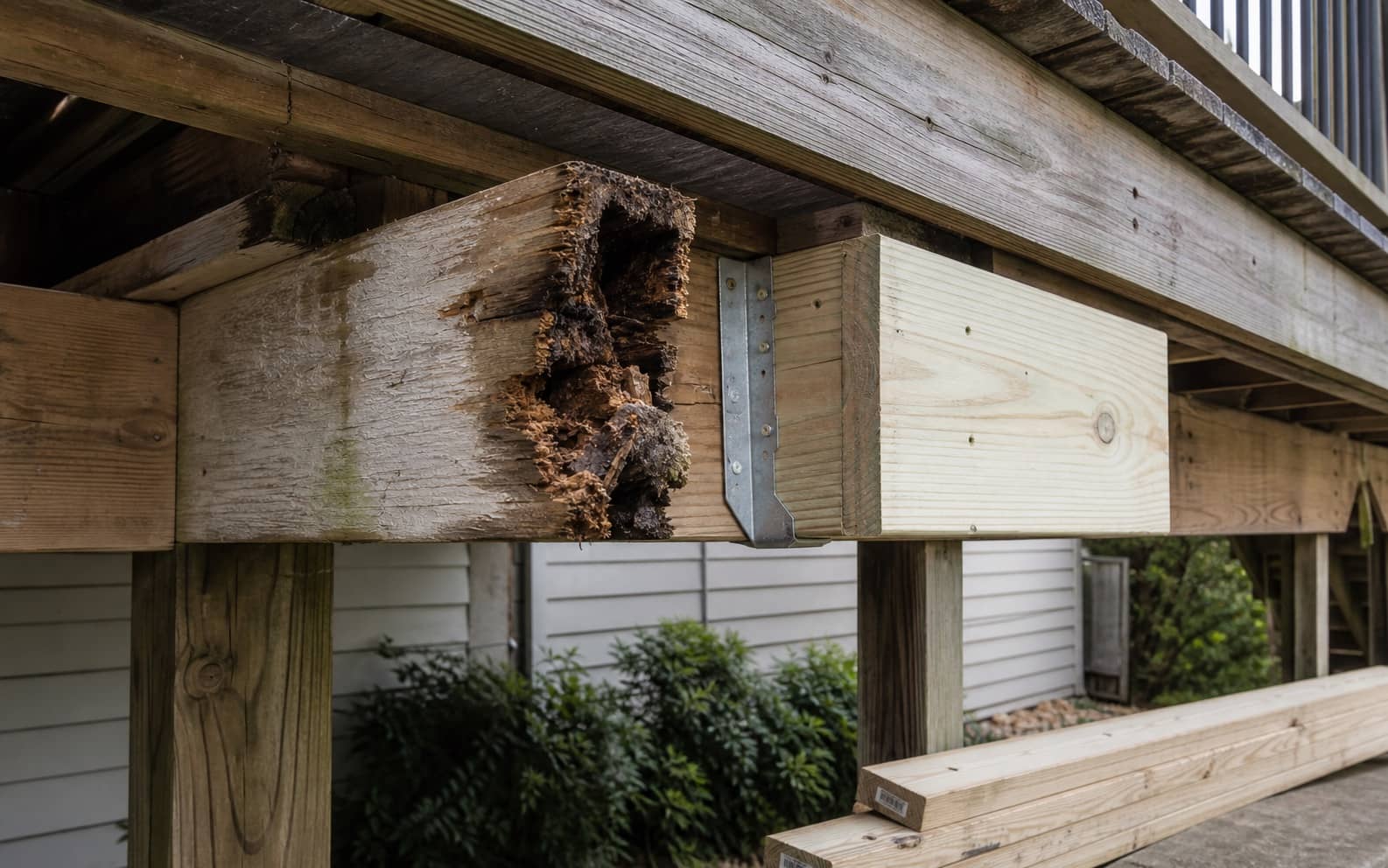
Deck Joist Rot: How to Identify, Repair, or Replace Rotted Joists
Deck joist rot is the most common structural defect found during professional deck inspections in Northern Virginia. It develops slowly and silently beneath the surface boards, often invisible until the structure is significantly compromised. This guide shows you how to find it, assess it, and fix it before it becomes a collapse risk.
Deck joist rot is the single most common structural defect found during professional deck inspections across Northern Virginia. It is caused by fungal decay — a biological process where moisture-feeding fungi colonize the wood fiber and consume it from the inside out. The process begins well before any visible sign appears on the surface, and by the time a homeowner notices soft boards or a sagging deck, the joist below may have lost fifty percent or more of its structural cross-section.
Understanding where rot develops, how to find it, how to assess its severity, and what the repair options are will help any Northern Virginia homeowner make a well-informed decision about their aging deck structure.
Where Deck Joist Rot Starts
Fungal decay requires four conditions: oxygen, warm temperatures, organic material (wood), and moisture above approximately 28 percent moisture content. You cannot eliminate oxygen or organic material, and Northern Virginia summers provide ample warmth. The controlling variable is moisture — and there are specific locations on every deck where moisture consistently concentrates above the threshold for decay.
Joist tops where deck boards sit. Water pools on the top edge of every joist every time it rains. Modern composite decking with hidden fasteners allows some airflow, but older decked-over joists where boards sit flat against the joist top can trap moisture for days after rain events.
End cuts of joists. When a joist is cut to length, the cut exposes end grain — the most absorbent cross-section of the wood. End grain absorbs moisture at a dramatically higher rate than face grain. Even pressure-treated lumber is most vulnerable at the cut ends because the preservative treatment does not fully penetrate into end grain.
Joist-to-hanger contacts. Joist hangers hold the joist ends and direct water into the metal pocket where the wood sits. If the hanger is not properly drained, the wood in this location stays moist longest after rain.
Ledger board contact points. The ledger is in direct, sustained contact with the house structure. Any failure of the ledger flashing allows water to infiltrate behind the ledger and into the top of the rim joist and the ends of the joists hanging from it.
How to Inspect Joists for Rot
Go under your deck with a flat-head screwdriver and a flashlight. Inspect every joist systematically, starting at the ledger end and working toward the beam.
Screwdriver test: Push the tip of the screwdriver firmly into the wood at three locations per joist — the top edge, the end near the ledger, and the end near the beam. Healthy pressure-treated lumber requires significant force to penetrate. If the screwdriver goes in easily with hand pressure, you have soft rot. If sections crumble away, you have advanced decay.
Visual check: Look for dark staining (brown, black, or gray discoloration that penetrates deeper than surface weathering), visible mushroom-like growth or white filament networks (active fungal growth), cracking along the grain that exposes interior wood, and any section where the wood looks lighter or drier than surrounding areas in an unusual pattern.
Bounce test: Walk across the deck surface while someone watches from below. A joist that deflects visibly under your foot weight — moving more than half an inch — has lost significant structural capacity.
Assessing Severity: Repair vs. Replace
Not all joist rot requires full replacement. The key question is how much structural cross-section has been lost.
Minor surface rot — where only the outer quarter-inch of the wood is soft but the interior remains firm — can sometimes be stabilized with wood hardener treatments and monitored. This is the exception, not the rule, and requires follow-up inspection within one season.
Moderate rot — where the top edge of the joist has lost one-quarter to one-third of its depth — typically warrants sistering: installing a new full-length joist directly beside the compromised one, fastened together, so the new joist carries the load while the old one remains in place.
Severe rot — where more than a third of the joist cross-section is compromised, or where the rot extends through the full width of the joist, or where the end of the joist has lost its connection to the hanger — requires full joist replacement. The compromised member must come out entirely.
Widespread rot affecting multiple joists — where more than three to four joists in a section are compromised — shifts the decision from targeted repair to deck resurfacing or deck replacement, depending on whether the beam and ledger are sound.
The Sistering Method: How It Works
Sistering is the most common joist repair technique. A new pressure-treated joist of identical dimensions is cut to match the length of the compromised joist and installed directly beside it. It is fastened to the existing joist with structural screws or through-bolts at regular intervals, transferred into the same joist hangers where possible, or supported on a new hanger.
Sistering is effective when: the rot is localized to one section of one or a few joists, the ledger and beam connections at both ends are still sound, and the rot has not progressed to the point where the original joist cannot be used as a guide for the new one.
Proper sistering for a deck in Northern Virginia requires a permit in most jurisdictions. The county inspector will verify that the new joist meets current span and lumber grade requirements and that the connection hardware is appropriately rated.
Preventing Future Joist Rot
The single most effective prevention measure is butyl joist tape applied to the top edge of every joist before the decking surface is installed. This self-adhesive membrane creates a waterproof barrier between the joist top and the deck board, eliminating the primary moisture concentration point.
All joist ends and cut surfaces should be treated with end-cut preservative at installation. Hardware must be hot-dipped galvanized or stainless, rated for contact with ACQ pressure-treated lumber.
When we perform a deck resurfacing project, applying butyl joist tape to every joist top is a standard part of our process — it is the single most important thing we do to extend the structural life of the existing frame for the next fifteen to twenty years.
Getting a Joist Inspection in Northern Virginia
If your deck is more than ten years old and has never had a structural inspection, the joists should be professionally evaluated. LDN Decks conducts full understructure assessments across Ashburn, Leesburg, Fairfax, Sterling, Herndon, Reston, Centreville, Chantilly, Great Falls, McLean, and surrounding communities in Loudoun and Fairfax counties.
Schedule a Deck Structural Inspection
---
Related: 7 Signs Your Deck Needs Immediate Repair · Ledger Board Problems · Deck Repair Services · Deck Resurfacing Services · Resurface vs Replace Guide
Frequently Asked Questions
How do I know if my deck joists are rotting?
Probe each joist with a flat-head screwdriver — healthy wood resists penetration while rotted wood compresses easily or crumbles. Also look for dark discoloration, visible fungal growth, and surface boards that feel soft or bounce unusually when walked on. End grain at joist cuts and joist tops are the most common locations for early rot.
Can rotted deck joists be repaired without replacing them?
Minor surface rot can sometimes be stabilized with wood hardener if less than a quarter-inch of depth is affected. Moderate rot typically requires sistering — installing a new joist beside the compromised one. Severe rot where more than a third of the cross-section is lost requires full joist replacement. A professional inspection determines which applies.
What is joist sistering for a deck?
Sistering means installing a new full-length joist directly beside a compromised one and fastening them together so the new joist carries the structural load. It is the most common repair for moderate joist rot when the ledger and beam ends are still sound. Sistering requires a permit in most Northern Virginia jurisdictions.
How long do deck joists last in Northern Virginia?
Modern pressure-treated lumber (post-2004 ACQ treatment) with proper hardware and joist tape should last 20 to 30 years. Older decks with inadequate hardware, no flashing, or no joist tape commonly show significant rot at 10 to 15 years. Climate, exposure, deck design, and maintenance all affect lifespan.
How much does it cost to replace deck joists in Northern Virginia?
Individual joist replacement ranges from $300 to $700 per joist depending on size, access, and hardware. Sistering a joist runs $200 to $450 per joist. When multiple joists need replacement, the cumulative cost often approaches resurfacing cost — at which point a full resurfacing with new surface boards and joist tape becomes the more cost-effective choice.
Plan Your Northern Virginia Deck Project With Loudoun Decks
Get a free, no-pressure consultation from a licensed Northern Virginia deck builder. Call (571) 655-7207 or visit ldndecks.com/get-estimate.
Get a Free EstimateEverything Your Outdoor
Space Needs
From ground-up deck construction to full outdoor living spaces, every project is custom-designed for your home with permit planning, material guidance, and written workmanship terms.
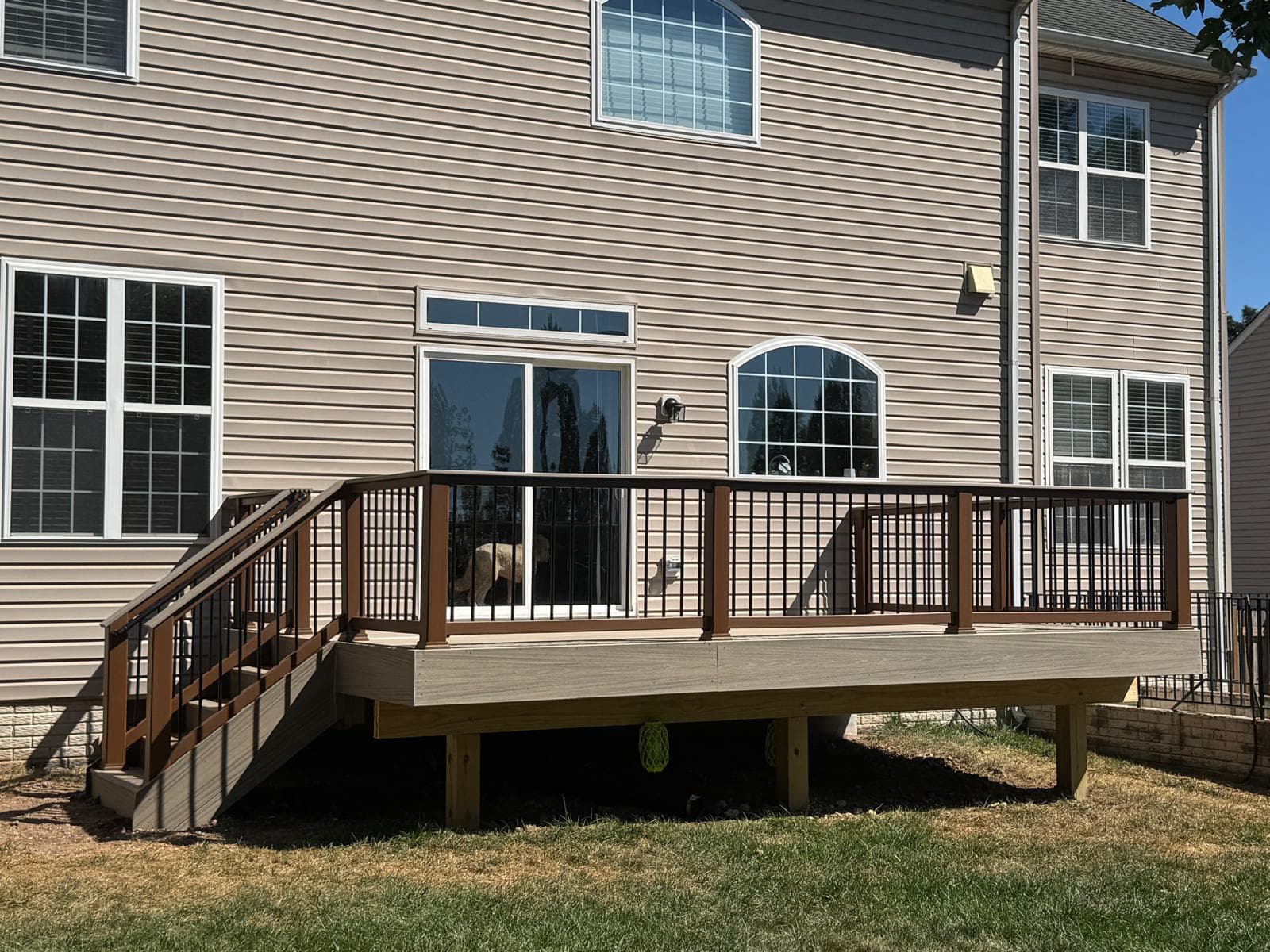
Custom Deck Builder
Transform your backyard with a custom-designed deck using Trex, TimberTech, wood, or PVC materials matched to your budget, HOA rules, and maintenance goals.
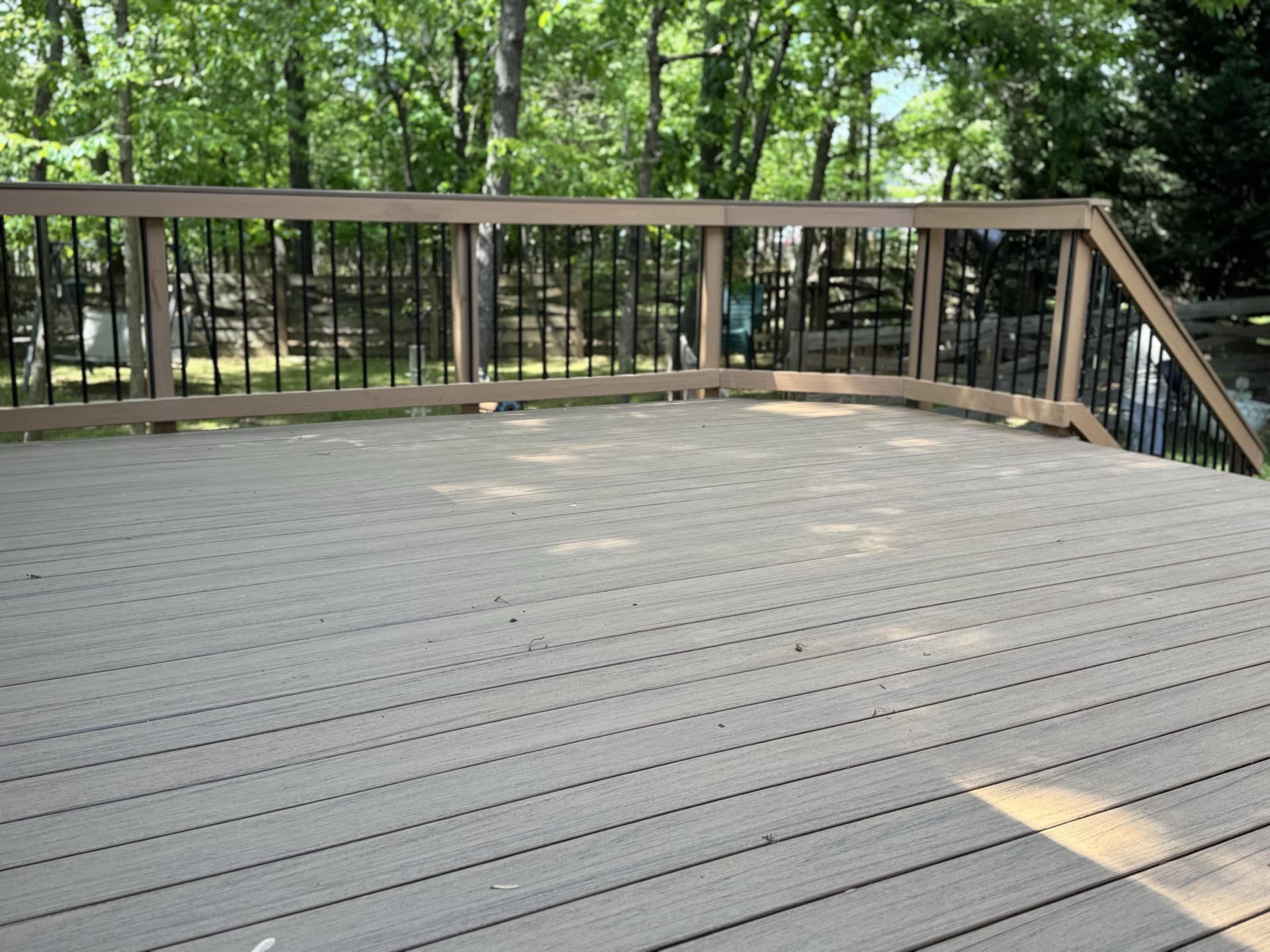
Deck Resurfacing
Premium wood-to-composite resurfacing for structurally sound frames. Full surface conversions start from $15k with boards, railings, fascia, and safety review.
Patio Contractor Services
Professional bluestone and paver patio installation. We create durable, beautiful ground-level outdoor living spaces that last a lifetime.
Local Expertise Across Northern Virginia
Loudoun Decks is a trusted deck builder serving Loudoun County, Fairfax County, Prince William County, Arlington, and Stafford.
Guides Northern Virginia Homeowners Are Reading
Free Deck Cost Calculator
Get an instant estimate by material, size, and add-ons.
TimberTech & AZEK Decks
Premium PVC and composite deck options for Northern Virginia.
Deck Permits in Loudoun County
Permit requirements, review steps and inspection context for Loudoun homeowners.
Deck Permits in Fairfax County
Requirements, timeline, fees, and inspection process.
Deck Builder in Northern Virginia
Custom decks, permits, HOA support and local service areas.
Covered Deck Builder
Covered deck planning, outdoor living upgrades and shade structure decisions.