

Do I Need a Building Permit for a Deck in Virginia?
If you are planning a deck anywhere in Northern Virginia, the honest answer is almost always yes — you need a building permit. Here is exactly when Virginia requires one, what the 16-inch and 256-square-foot rules mean, and how HOA review fits in.
Few questions stall a backyard project faster than permitting. Homeowners in Loudoun County, Fairfax County, and Prince William County all ask the same thing before they call us: do I actually need a building permit for a deck in Virginia? In the vast majority of cases, the answer is yes. Virginia regulates deck construction under a single statewide code, and most functional decks cross at least one threshold that triggers a permit.
This guide breaks down the exact rules, the difference between an attached and a detached deck, how HOA review works alongside the county, and the real risks of skipping the process.
The Short Answer: Yes, Almost Always
Deck construction in Virginia is governed by the Virginia Uniform Statewide Building Code, which adopts the Virginia Residential Code. The code sets clear triggers, and a typical backyard deck — attached to the house, a step or two off the ground, large enough to hold furniture — will hit one of them. A permit is the county’s way of confirming your footings, framing, and railings are built to a standard that will not fail.
When Does Virginia Require a Deck Permit?
Under the statewide code, a building permit is required when a deck meets any one of these conditions.
The 256-Square-Foot Rule
A freestanding deck larger than 256 square feet requires a permit. A 16x16 deck sits right at that line, so anything roomier than a modest platform will need approval. Smaller detached platforms can sometimes be exempt — but only if they also clear every other trigger below.
The 16-Inch Rule
If the walking surface of the deck sits more than 16 inches above grade at any point, a permit is required regardless of square footage. On Northern Virginia’s rolling lots, even a deck that looks low at the house often rises well past 16 inches at the far corner. This single rule pulls most decks into the permit process on its own.
Attached vs. Detached Decks
Any deck attached to the house — meaning it is fastened to the home with a ledger board — requires a permit, full stop. The ledger connection is the single most safety-critical joint on a deck, and improperly attached ledgers are a leading cause of deck collapses. Counties will not let that connection go uninspected.
A fully detached, freestanding deck has slightly more latitude, but it still has to clear the 256-square-foot and 16-inch thresholds to qualify for any exemption. In practice, very few usable decks are both small enough and low enough to skip a permit.
Heavy Loads Like Hot Tubs
Adding a hot tub, an outdoor kitchen, or any concentrated heavy load always requires a permit and engineered framing, even on a deck that would otherwise be exempt.
The 30-Inch Railing Threshold
Separate from whether you need a permit, the code requires a guardrail on any deck surface more than 30 inches above grade. Guards must be 36 inches tall and built so a 4-inch sphere cannot pass through the balusters. Inspectors check this on every permitted deck, and it is one of the most common reasons a DIY or budget build fails its final inspection.
HOA Review Is a Separate Approval
A county building permit and HOA architectural approval are two different things, and you generally need both. Many Northern Virginia communities — Brambleton, South Riding, Broadlands, Ashburn Village, and dozens of others — run an Architectural Review Committee that controls deck color, material, railing style, and sometimes footprint.
The HOA does not care about structural code; the county does not care about your board color. You have to satisfy both, and the HOA review often takes longer than the county’s. Starting that approval early is the single best thing you can do to keep a project on schedule. For the county-specific process, see our detailed guides for Loudoun County deck permits and Fairfax County deck permits.
The Inspection Sequence
Once a permit is issued, a permitted deck in Virginia is typically inspected in three stages. First, the footing inspection — the county verifies hole depth and diameter before any concrete is poured. Virginia’s frost line means footings generally must reach 24 to 30 inches deep, which we cover in our guide on how deep deck footings need to be in Virginia. Second, the framing inspection — the inspector checks the ledger attachment, joist size and spacing, beam connections, and hardware before the decking boards go down. If you are unsure whether your plan calls for 2x8 or 2x10 joists, that decision is verified here. Third, the final inspection — railings, stairs, handrails, and lighting are checked once the deck is complete.
Miss a stage — for example, pour footings before the first inspection — and the county can require you to dig them back up to prove they are compliant.
The Risks of an Unpermitted Deck
Skipping the permit does not save money; it defers a much larger bill. An unpermitted deck can trigger a stop-work order, daily fines, and a forced tear-down. It complicates every future home sale, because Virginia sellers must disclose known unpermitted work, and it can void the liability portion of your homeowners insurance if someone is hurt. We break down each of these consequences in what happens if you build a deck without a permit.
How Loudoun Decks Handles Permitting End to End
The good news: you do not have to navigate any of this yourself. As a licensed Northern Virginia deck builder, Loudoun Decks supports the permit and HOA documentation process. We produce the engineered drawings, submit to Loudoun, Fairfax, or Prince William County, prepare and submit your HOA architectural package, and schedule every inspection. You approve the design; we help organize the paperwork.
If you are planning a deck in Northern Virginia and want a builder who treats permitting as part of the job — not an afterthought — call us at 571-655-7207 or reach out through ldndecks.com/get-estimate.
Frequently Asked Questions
Do I need a permit for a small deck in Virginia?
Possibly not. A fully detached deck that is 256 square feet or smaller and sits no more than 16 inches above grade can be exempt. But if it is attached to the house, larger, or higher, a permit is required — and most usable decks cross at least one of those lines.
Does an attached deck always need a permit in Virginia?
Yes. Any deck fastened to the house with a ledger board requires a building permit regardless of size or height, because the ledger connection is the most safety-critical joint on the structure.
What is the 16-inch rule for decks in Virginia?
If any part of the deck’s walking surface is more than 16 inches above the ground, a building permit is required even if the deck is small. On sloped Northern Virginia lots, most decks exceed this at some point.
Do I need HOA approval as well as a county permit?
Usually yes. HOA architectural review and the county building permit are separate approvals. The HOA controls appearance — color, material, railing style — while the county enforces structural code. You typically need both before construction begins.
How long does deck permitting take in Northern Virginia?
County plan review generally runs 2 to 6 weeks depending on the jurisdiction and season, and HOA review can add another 2 to 4 weeks. Submitting both early is the best way to avoid delays.
Can Loudoun Decks handle the permit for me?
Yes. We manage the full process — engineered drawings, county submission for Loudoun, Fairfax, and Prince William, HOA architectural packages, and all inspections. Call 571-655-7207 to get started.
This article is general guidance, not legal or code advice. Exact permit thresholds, fees, and review timelines vary by county and by HOA. Always confirm current requirements with your local building department and homeowners association before starting work.
Plan Your Northern Virginia Deck Project With Loudoun Decks
Get a free, no-pressure consultation from a licensed Northern Virginia deck builder. Call (571) 655-7207 or visit ldndecks.com/get-estimate.
Get a Free EstimateEverything Your Outdoor
Space Needs
From ground-up deck construction to full outdoor living spaces, every project is custom-designed for your home with permit planning, material guidance, and written workmanship terms.
Custom Deck Builder
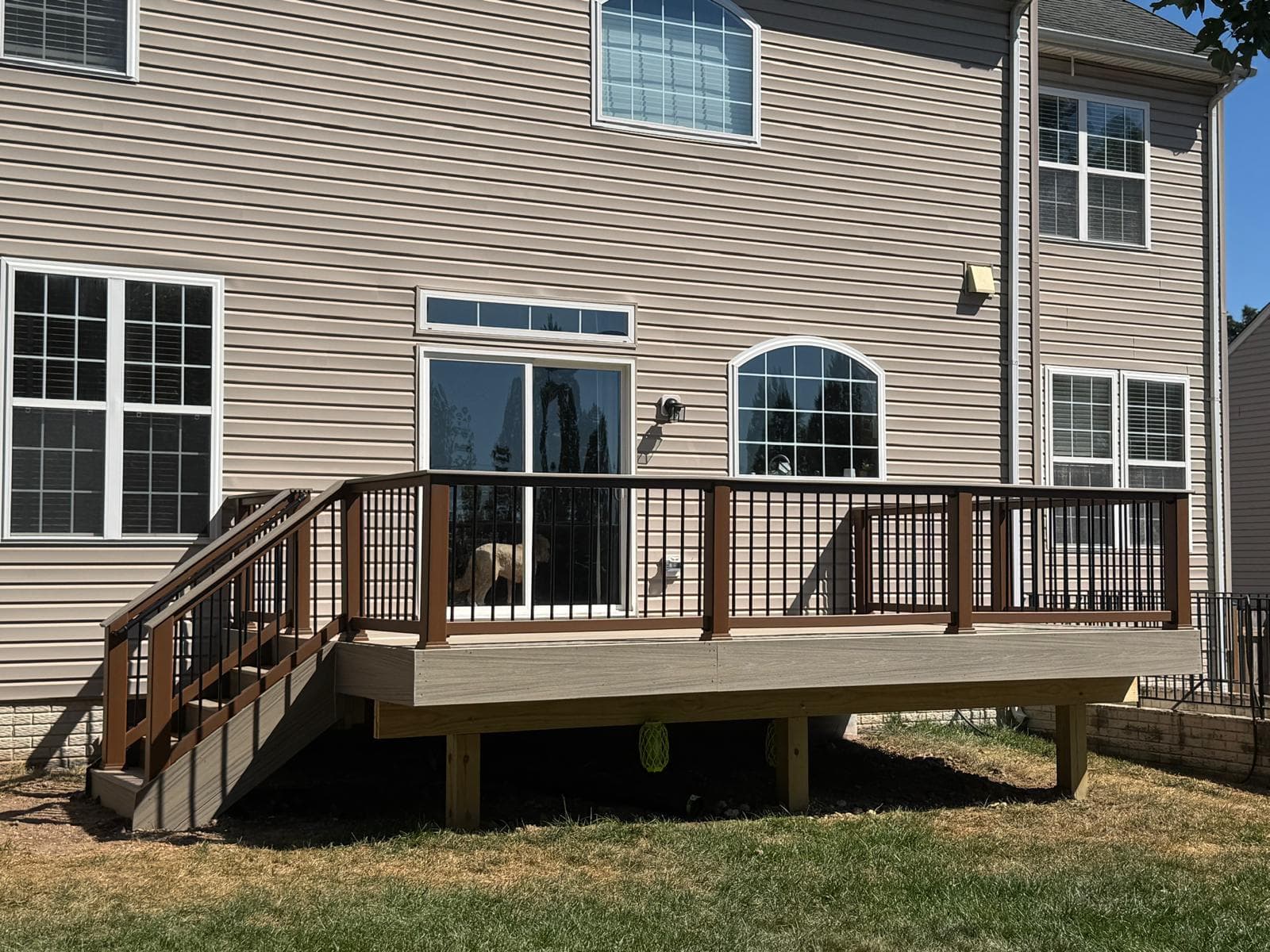
Transform your backyard with a custom-designed deck using Trex, TimberTech, wood, or PVC materials matched to your budget, HOA rules, and maintenance goals.
Deck Resurfacing
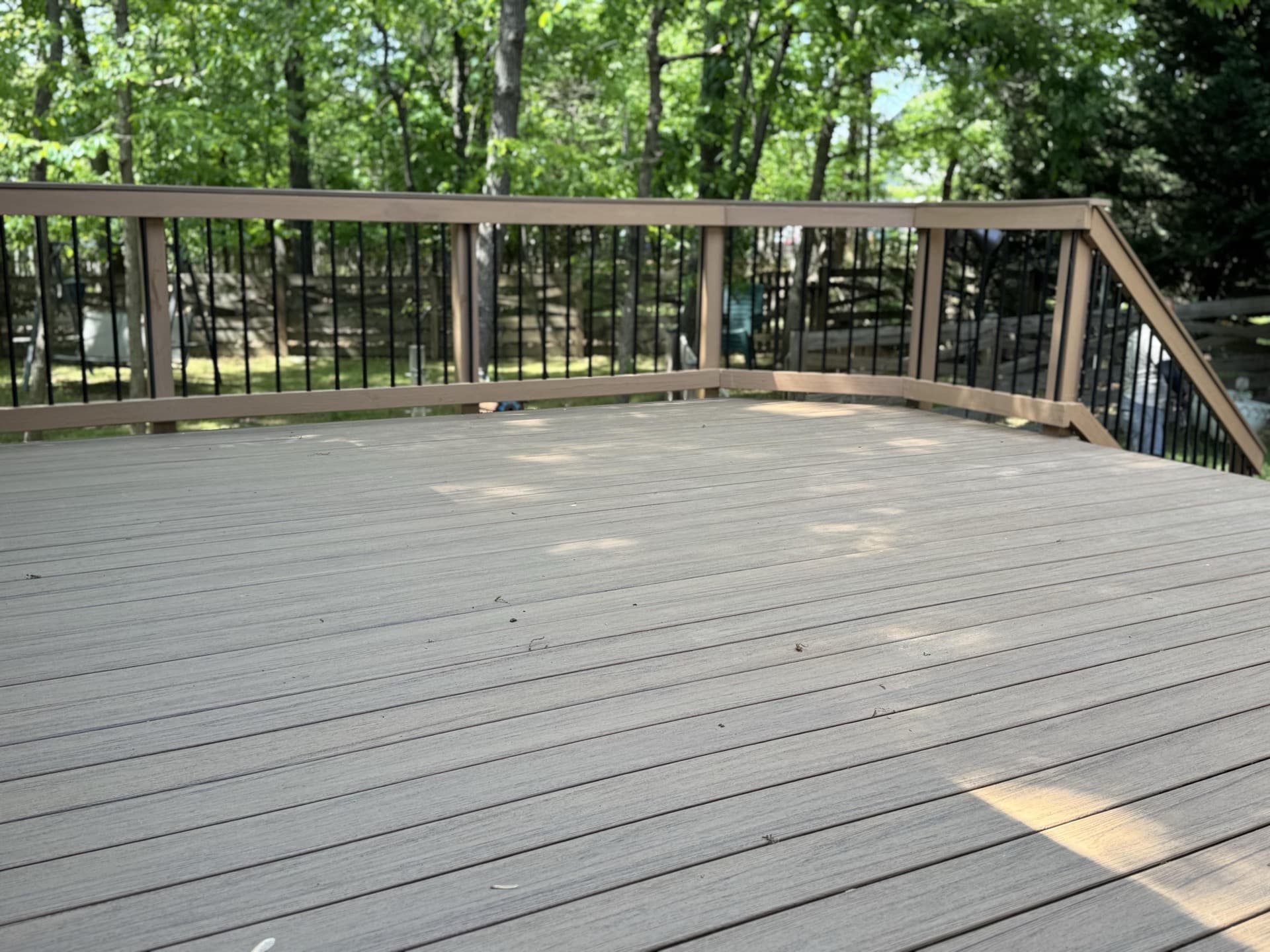
Premium wood-to-composite resurfacing for structurally sound frames. Full surface conversions start from $15k with boards, railings, fascia, and safety review.

Patio Contractor Services
Professional bluestone and paver patio installation. We create durable, beautiful ground-level outdoor living spaces that last a lifetime.
Local Expertise Across Northern Virginia
Loudoun Decks is a trusted deck builder serving Loudoun County, Fairfax County, Prince William County, Arlington, and Stafford.
Loudoun County
- Ashburn, VA
- Leesburg, VA
- Sterling, VA
- Aldie, VA
- South Riding, VA
- Broadlands, VA
- Brambleton, VA
- Purcellville, VA
- Hamilton, VA
- Lovettsville, VA
- Round Hill, VA
- Middleburg, VA
- Dulles, VA
- Arcola, VA
- Belmont, VA
- Cascades, VA
- Countryside, VA
- Lowes Island, VA
- Potomac Falls, VA
- Lansdowne, VA
- One Loudoun, VA
- Stone Ridge, VA
Fairfax County
- Fairfax, VA
- Fairfax Station, VA
- Burke, VA
- Springfield, VA
- West Springfield, VA
- Annandale, VA
- Centreville, VA
- Chantilly, VA
- Clifton, VA
- Herndon, VA
- Reston, VA
- Great Falls, VA
- McLean, VA
- Vienna, VA
- Oakton, VA
- Falls Church, VA
- Tysons, VA
- Dunn Loring, VA
- Merrifield, VA
- Alexandria, VA
- Lorton, VA
- Mount Vernon, VA
Prince William County
- Gainesville, VA
- Haymarket, VA
- Bristow, VA
- Manassas, VA
- Manassas Park, VA
- Woodbridge, VA
- Lake Ridge, VA
- Dumfries, VA
- Occoquan, VA
- Nokesville, VA
- Independent Hill, VA
- Montclair, VA
- Dale City, VA
- Triangle, VA
Arlington County
- Arlington, VA
- Rosslyn, VA
- Ballston, VA
- Clarendon, VA
- Pentagon City, VA
- Crystal City, VA
- Shirlington, VA
Stafford County
- Stafford, VA
- Falmouth, VA
- Garrisonville, VA
- Aquia Harbour, VA
Guides Northern Virginia Homeowners Are Reading
Covered Deck Builder
Covered deck planning, outdoor living upgrades and shade structure decisions.
Trex vs TimberTech vs AZEK
Side-by-side brand comparison for Virginia climate.
Composite Deck Cost in Northern Virginia
Material pricing, verified source references, planning examples and what drives the price.
Free Deck Cost Calculator
Get an instant estimate by material, size, and add-ons.
TimberTech & AZEK Decks
Premium PVC and composite deck options for Northern Virginia.
Deck Permits in Loudoun County
Permit requirements, review steps and inspection context for Loudoun homeowners.