
Composite Railing vs. Aluminum Railing: Which Is Better for Your Deck?
Composite and aluminum railing are the two most common baluster-style railing systems on Northern Virginia decks. Both are code-compliant, low-maintenance, and HOA-friendly. The right choice depends on aesthetic goal, budget, and whether the railing is on a composite deck, a porch, or a structure where one material performs noticeably better than the other.
When Northern Virginia homeowners specify a new deck with traditional baluster-style railing, the choice usually comes down to two options: composite railing (from brands like Trex, TimberTech, or AZEK) or aluminum railing (from brands like Westbury, Fortress Al13, or Trex Signature). Both are code-compliant, both are low-maintenance, and both are generally accepted by Northern Virginia HOAs.
The right choice depends on the specific project — aesthetic goal, deck material, application (outdoor deck vs. porch vs. elevated structure), and budget. This guide compares the two directly on the dimensions that matter.
Visual Appearance
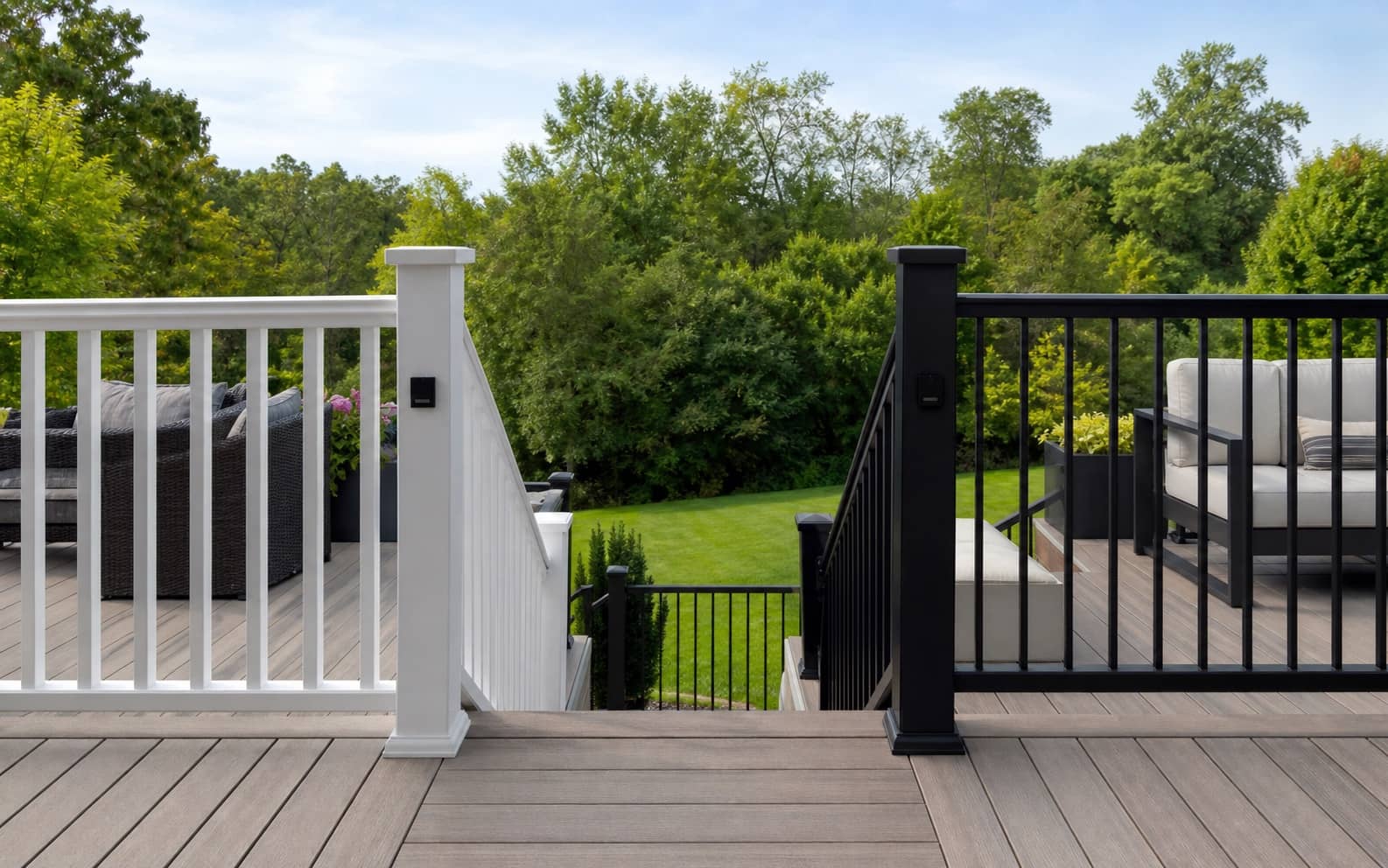
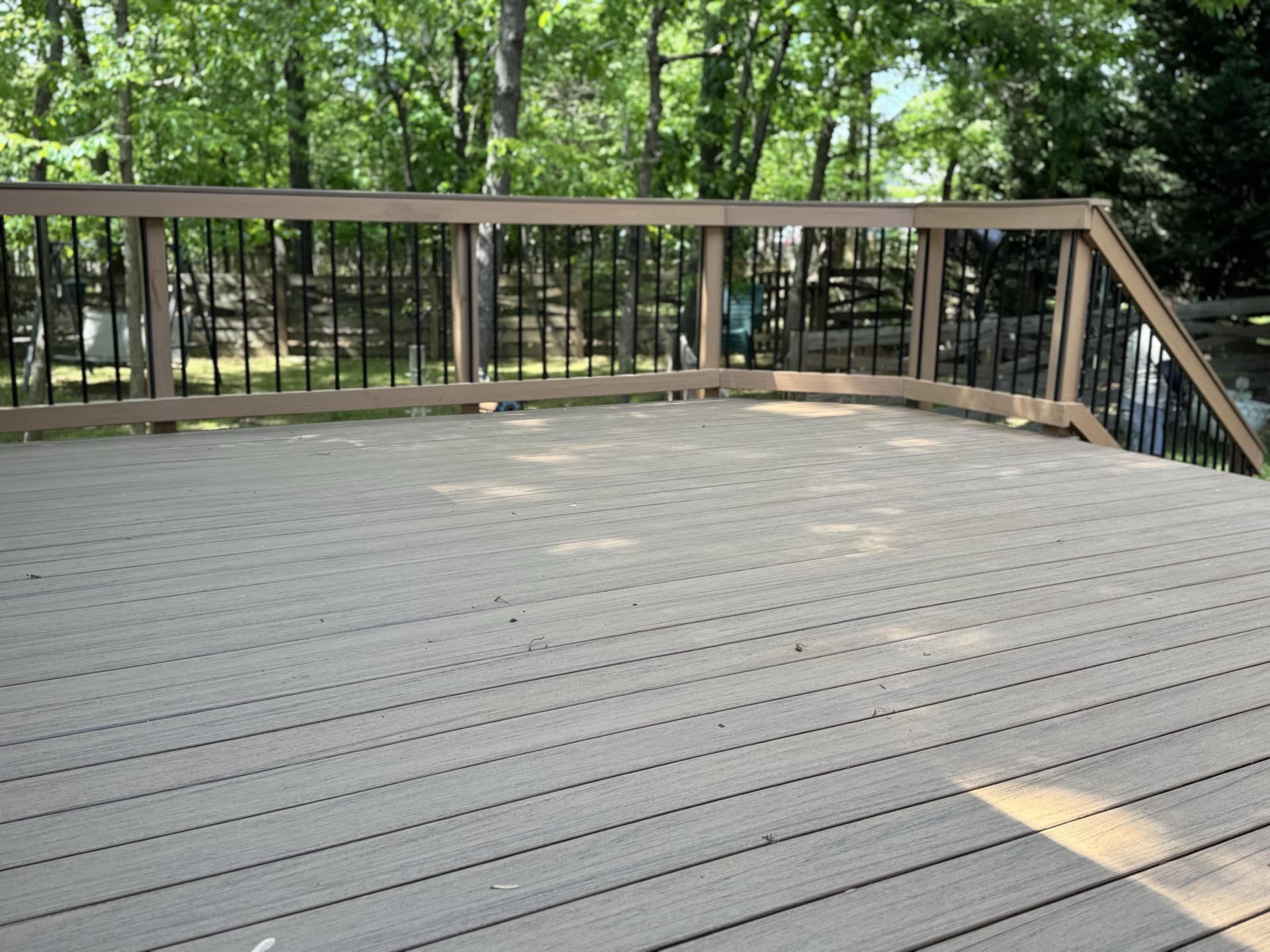
Composite railing has a warm, organic appearance — the posts, rails, and balusters have the look and feel of painted or stained wood, but without the maintenance. The profiles are typically heavier and more traditional-looking than aluminum. Composite railing from the same brand as the decking (Trex with Trex, TimberTech with TimberTech) creates a cohesive, coordinated look.
Aluminum railing has a more refined, thinner-profile appearance. Extruded aluminum can be formed into more precise shapes with tighter tolerances than composite, resulting in balusters and rail profiles that look more similar to traditional wrought iron or powder-coated steel. Available in a wide range of powder-coat colors including matte black, bronze, and custom colors. Systems like Westbury and Fortress Al13 have an architectural quality that reads as premium.
Verdict: If you want a warm, wood-like appearance coordinated with composite decking, composite railing wins. If you prefer a refined, metal aesthetic with slim profiles, aluminum wins.
Durability and Longevity
Composite railing is engineered for exterior exposure and carries 25-year warranties on most premium lines. The composite material does not rust, rot, or splinter. Cap rails and balusters are typically hollow or solid composite profiles that resist moisture. End grain exposure (cut ends) should be sealed at installation.
Aluminum railing is inherently rust-proof — it oxidizes to form a protective aluminum oxide layer rather than rust. The structural durability of aluminum is excellent. The failure mode, if any, is powder coat degradation over time (15 to 25 years) — the structural integrity remains while the finish may fade or chip in high-UV or high-abrasion conditions. Powder coat can be touched up or repainted.
Verdict: Both are highly durable. Aluminum has a slight edge in extreme environments; composite has a slight edge in lower-UV/lower-abrasion settings where the finish is better protected.
Cost
Composite railing: $75 to $120 per linear foot installed, depending on product tier and baluster style.
Aluminum railing: $85 to $150 per linear foot installed, depending on the system and infill style (picket vs. flat bar vs. decorative).
The cost difference between mid-range composite and mid-range aluminum is modest — $10 to $30 per linear foot. On a 60-linear-foot railing perimeter, the difference is $600 to $1,800. This is not a dominant factor in most decisions — the aesthetic and application should drive the choice more than the cost difference.
Weight and Installation
Composite railing is heavier than aluminum. Composite posts and rails require more handling effort during installation. On elevated decks where installers are working at height with long rail sections, composite weight can slow installation.
Aluminum railing is significantly lighter — roughly 65 to 70 percent less weight than comparable composite profiles. This makes installation faster and easier, particularly on elevated structures. Aluminum rail sections can often be pre-assembled on the ground and lifted into position as units.
Verdict: Aluminum installs faster, which can reduce labor cost on large or complex railing projects.
Application Fit
Composite railing pairs most naturally with composite deck surfaces. The coordinated material family (Trex deck + Trex railing, TimberTech deck + TimberTech railing) is the most cohesive design approach and is what most Northern Virginia deck builders default to on standard composite deck projects.
Aluminum railing performs particularly well in two applications: front porch railings (where thin profiles are aesthetically preferred over heavier composite profiles) and elevated or second-story decks (where lighter weight simplifies installation). Aluminum is also appropriate on pressure-treated wood decks where composite railing would look mismatched.
Aluminum is the railing of choice for most screened porch and three-season room projects in Northern Virginia because it integrates cleanly with screen and glass wall systems.
HOA Acceptance
Both composite and aluminum railing in standard colors are accepted by the vast majority of Northern Virginia HOAs without difficulty. The key variables are color (both must be in a color consistent with the home and community standards) and post cap style (some HOAs specify post cap profiles).
Aluminum railing in black or dark bronze is increasingly popular and is generally accepted by HOAs that allow dark exterior accents. Some HOAs with traditional covenants prefer the warmer appearance of composite railing — verify with your specific community.
The Recommendation
For a standard composite deck build in Northern Virginia: composite railing coordinated with the decking brand is the default correct choice. The cohesive appearance, matching warranty profile, and straightforward HOA approval make it the lowest-friction option.
For a porch, elevated structure, or project where the refined aluminum profile is specifically preferred: aluminum railing is the better choice, and the modestly higher cost is justified by the aesthetic and installation benefits.
For any project where the goal is maximum view transparency: neither composite nor aluminum baluster railing is the right answer — that is where cable railing or glass panel railing should be considered.
LDN Decks installs both composite and aluminum railing systems across Northern Virginia and can provide samples and examples of both on comparable projects.
Get a Railing Comparison Estimate
---
Related: Deck Railing Options Northern Virginia · Cable Railing for Decks · Deck Railing Code Requirements · Deck Cost 2026 · New Deck Services
Frequently Asked Questions
Is composite or aluminum railing better for a deck?
For a composite deck, composite railing coordinated with the same brand (Trex, TimberTech, AZEK) is usually the best choice — the materials match, warranties align, and HOA approval is straightforward. Aluminum railing is better suited to porches, elevated structures where light weight matters, and projects where a refined metal profile is specifically preferred over the warmer composite look.
How much does composite railing cost vs aluminum railing?
Composite railing costs $75 to $120 per linear foot installed in Northern Virginia. Aluminum railing costs $85 to $150 per linear foot installed. The cost difference is modest — $10 to $30 per linear foot — so the decision should be driven by aesthetic preference and application fit rather than cost alone.
Does aluminum railing rust?
Aluminum does not rust. It oxidizes to form a protective aluminum oxide layer that prevents further corrosion — the structural integrity is maintained. The powder coat finish can degrade over 15 to 25 years with UV and abrasion exposure, but the aluminum itself remains structurally sound. Touch-up or refinishing of powder coat is possible if needed.
Which railing lasts longer — composite or aluminum?
Both carry 25-year or longer warranties and are designed to outlast most homeowners' ownership horizon. Aluminum has a slight durability advantage in extreme exposure conditions (salt air, extreme temperature swings). Composite is slightly better in moderate environments where UV exposure and temperature cycling are within normal ranges. In practical terms, either material will outlast most deck structures by a wide margin.
Can I mix composite and aluminum railing on the same deck?
Mixing materials is technically possible but rarely advisable from a design standpoint. The different profiles, textures, and appearances of composite and aluminum railing on the same structure typically look inconsistent. If you want to use aluminum for a specific section (such as stairs with aluminum treads), specify it consistently throughout that section and keep composite elsewhere only if the sections are clearly separated by a design element.
Product specifications, costs, and availability are subject to change. HOA acceptance of specific railing materials and colors varies by community. Always verify HOA requirements and obtain current contractor pricing before making railing decisions.
Plan Your Northern Virginia Deck Project With Loudoun Decks
Get a free, no-pressure consultation from a licensed Northern Virginia deck builder. Call (571) 655-7207 or visit ldndecks.com/get-estimate.
Get a Free EstimateEverything Your Outdoor
Space Needs
From ground-up deck construction to full outdoor living spaces, every project is custom-designed for your home with permit planning, material guidance, and written workmanship terms.
Custom Deck Builder
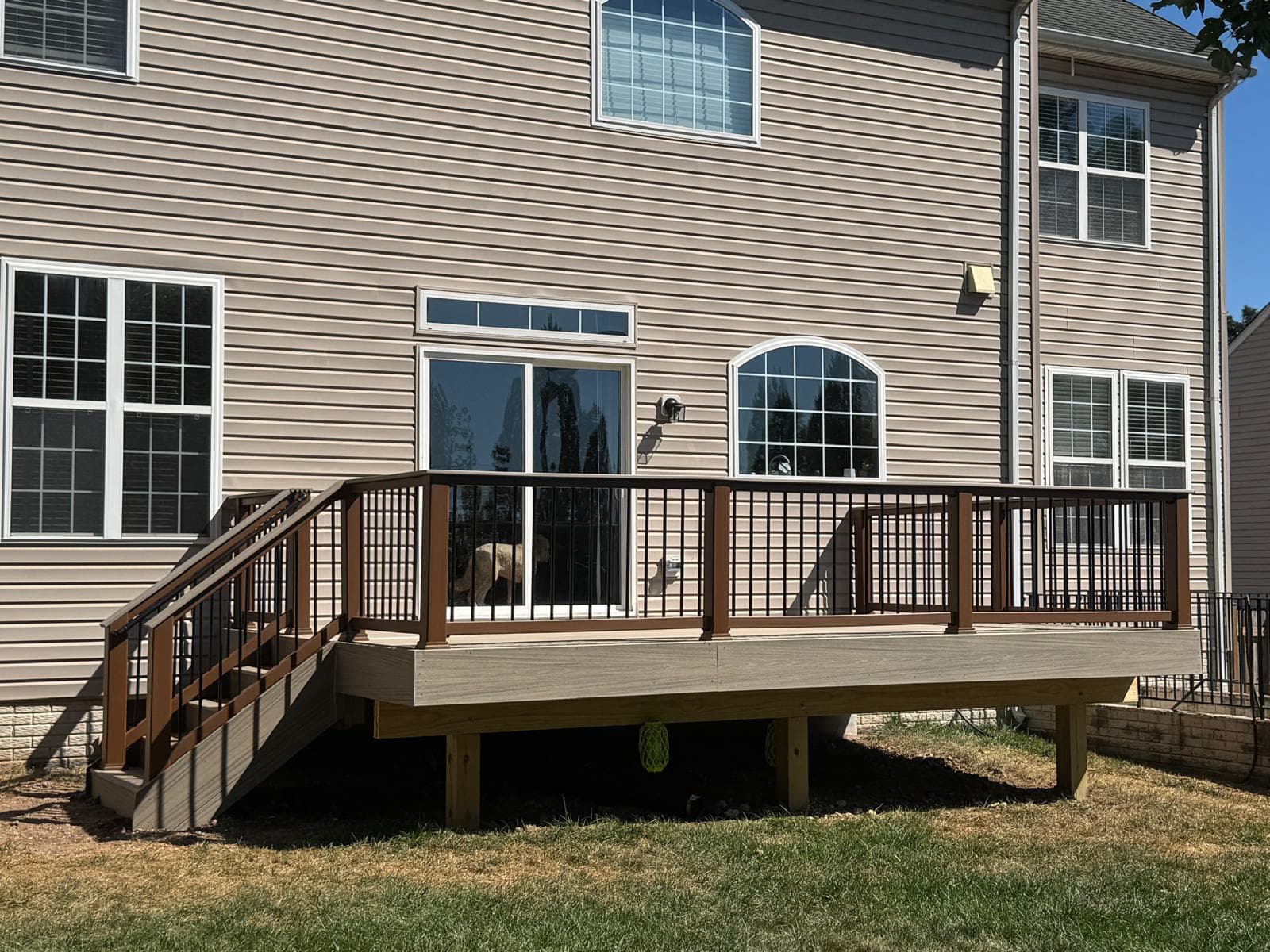
Transform your backyard with a custom-designed deck using Trex, TimberTech, wood, or PVC materials matched to your budget, HOA rules, and maintenance goals.
Deck Resurfacing
Premium wood-to-composite resurfacing for structurally sound frames. Full surface conversions start from $15k with boards, railings, fascia, and safety review.
Patio Contractor Services
Professional bluestone and paver patio installation. We create durable, beautiful ground-level outdoor living spaces that last a lifetime.
Local Expertise Across Northern Virginia
Loudoun Decks is a trusted deck builder serving Loudoun County, Fairfax County, Prince William County, Arlington, and Stafford.
Guides Northern Virginia Homeowners Are Reading
Deck Permits in Loudoun County
Permit requirements, review steps and inspection context for Loudoun homeowners.
Deck Permits in Fairfax County
Requirements, timeline, fees, and inspection process.
Deck Builder in Northern Virginia
Custom decks, permits, HOA support and local service areas.
Covered Deck Builder
Covered deck planning, outdoor living upgrades and shade structure decisions.
Trex vs TimberTech vs AZEK
Side-by-side brand comparison for Virginia climate.
Composite Deck Cost in Northern Virginia
Material pricing, verified source references, planning examples and what drives the price.