


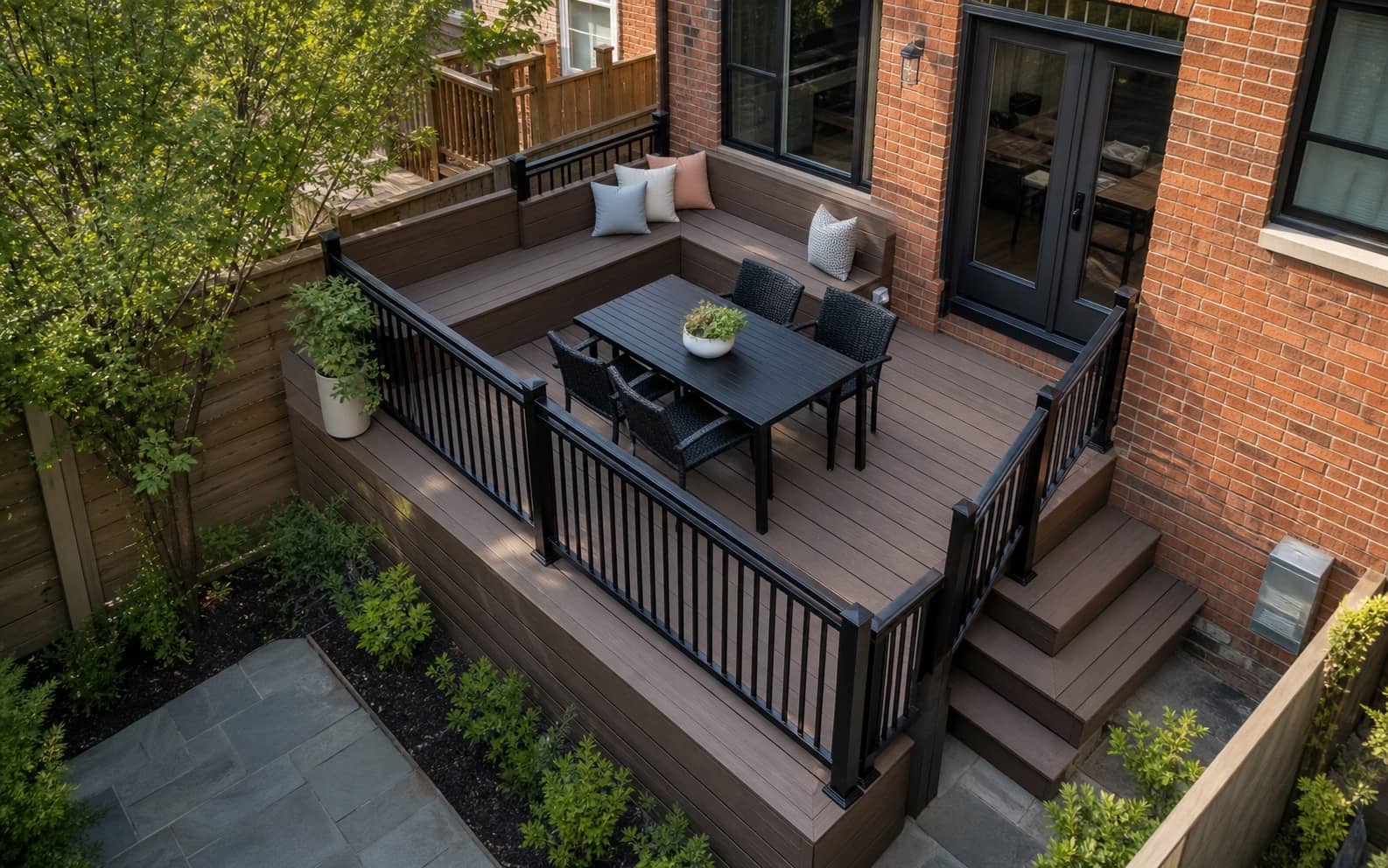
Deck Design Ideas for Small Backyards in Northern Virginia
Many Northern Virginia homes — particularly townhomes, end-units, and newer subdivisions in Ashburn, Brambleton, and South Riding — have compact backyards that feel limiting when it comes to outdoor living. The right deck design turns that constraint into an asset. Here are the approaches that work best on small lots.
A small backyard does not mean a small outdoor living space — it means a design challenge that, when solved well, produces an outdoor room that feels purposeful and complete. Northern Virginia has no shortage of compact lots: townhome communities in Ashburn, Brambleton, South Riding, and Herndon regularly feature 20 by 30-foot backyards or smaller. The homeowners who get the most from these spaces are the ones who plan their deck as a room, not just a platform.
Here are the design strategies that work best for small Northern Virginia backyards in 2026.
Strategy 1: Go Vertical With Railing and Screening
On a small deck, the railing line defines the edge of your outdoor room. Cable railing — horizontal stainless steel cables in place of balusters — preserves sightlines and makes a small deck feel larger and more connected to the yard beyond. Standard composite balusters can make a small deck feel enclosed and boxy; cable or glass railing opens it up.
If privacy is a priority (common on townhome lots where neighboring decks are close), vertical privacy screens built into the railing posts or as freestanding panels create separation without requiring a full fence. Cedar slat screens, composite louver panels, or metal mesh inserts are all options that add character while providing functional screening.
Strategy 2: Maximize Usable Square Footage With Smart Shape
On a small lot, a deck that extends the full width of the house is almost always more useful than one that occupies only part of the rear face. A 12 by 20-foot deck (240 square feet) that spans the full back of a townhome gives you space for a dining set and a sitting area. A 16 by 14-foot deck of similar square footage placed asymmetrically can feel cramped and leave awkward unused corners in the yard.
L-shaped decks are effective on corner lots or homes where the rear door and a side yard access point are both natural gathering areas. The L configuration adds linear footage without requiring a large overall footprint.
Strategy 3: Use Built-In Seating to Eliminate Furniture Footprint
Freestanding furniture on a small deck takes up more room than the seat area alone — chairs pulled out, table legs extending, traffic paths constrained. Built-in bench seating along the railing perimeter — particularly at the far end of the deck — keeps the center of the deck open for dining or movement.
A built-in bench at the rear rail, combined with a corner storage box below, eliminates the need for chairs at that edge and adds concealed storage for cushions, tools, or toys. This is one of the highest-value additions on a small deck and costs significantly less than freestanding furniture of equivalent durability.
Strategy 4: Incorporate Multi-Level Design on Sloped Lots
Many Northern Virginia backyards are not flat — lots in Loudoun County and Fairfax County commonly slope 3 to 8 feet across a 30-foot backyard depth. On a sloped lot, a single-level deck either floats high above grade at one end or cuts into the slope at the other. A two-level deck that follows the grade — main level at door height, lower landing closer to grade — solves this gracefully and adds usable space.
A lower landing that connects to the yard via a short stair run creates a natural transition between deck and lawn. It also defines distinct zones — a dining or cooking area at the upper level, a lounge or firepit zone at the lower level — even on a modest total footprint.
Strategy 5: Choose Lighter Composite Colors
Dark composite boards absorb more heat and make a small outdoor space feel heavier. In full-sun Northern Virginia backyards, lighter composite colors — grays, light taupes, blondes — are cooler underfoot and visually expand the space. This is particularly relevant on south and west-facing decks, which receive the most direct afternoon sun in summer.
Light-colored composite with a dark railing cap rail creates contrast that adds visual definition without making the deck feel smaller.
Strategy 6: Add a Pergola Overhead Instead of Spreading Sideways
When a small backyard cannot accommodate a larger deck footprint, adding vertical interest overhead with a pergola transforms the feel of the space without expanding the deck area. A pergola structure over even a 200 to 250-square-foot deck creates an outdoor room that feels intentionally designed rather than incidentally placed.
For Northern Virginia's summer sun exposure, a pergola with adjustable louvers provides functional shade control — open for light and airflow in spring and fall, closed for shade during peak summer afternoon heat.
Real Northern Virginia Scenarios
Ashburn townhome, 18 by 24-foot rear yard: A full-width 18 by 10-foot composite deck with cable railing, built-in bench on two sides, and a small pergola overhead creates a complete outdoor room on a lot where furniture would otherwise eat all the usable space.
Brambleton end-unit, sloped lot: A two-level composite deck — 14 by 12 upper level at door height, 14 by 8 lower landing stepping down to yard level — separates dining and lounge functions while managing the grade naturally.
South Riding single-family, 25 by 35-foot rear yard: A rectangular 16 by 20-foot composite deck with horizontal privacy screens on the shared property line side gives this homeowner a complete private outdoor living space without encroaching on the remaining yard.
LDN Decks designs and builds decks across Loudoun and Fairfax counties. We do on-site design consultations — bring your lot survey and your wish list and we will propose a layout that makes the most of what you have.
Get a Free Design Consultation
---
Related: Multi-Level Deck Design Guide · Covered Deck vs Open Deck · New Deck Services · Deck Cost 2026 · Deck Permit Loudoun County
Frequently Asked Questions
What is the best deck size for a small backyard?
For most Northern Virginia townhomes and compact single-family lots, a deck that spans the full width of the rear of the house — typically 14 to 20 feet wide — and extends 10 to 14 feet out from the house provides enough space for dining and seating without overwhelming the yard. Focus on width over depth for the most usable layout.
How can I make a small deck feel bigger?
Cable or glass railing instead of solid balusters preserves sightlines and makes a small deck feel more open. Lighter composite board colors expand the visual space. Built-in seating eliminates furniture footprint. Keeping the center of the deck clear of obstacles and using the railing perimeter for seating and storage makes the usable area feel larger.
What deck design works best for a sloped Northern Virginia backyard?
On a sloped lot, a two-level deck that follows the grade is usually the best solution — a main level at door height and a lower landing closer to grade. This avoids a tall single-level deck that would require extensive framing and instead creates a natural grade transition with two distinct functional zones.
Do I need a permit for a small deck in Northern Virginia?
Yes for most decks. Any deck attached to the house requires a permit in Loudoun and Fairfax counties regardless of size. Freestanding decks under 200 square feet and under 30 inches above grade may be exempt, but HOA rules still apply. Contact your county Department of Building and Development to confirm requirements for your specific project.
Can I add a pergola to a small deck?
Yes — a pergola is one of the best additions for a small deck because it adds overhead interest and shade without expanding the ground footprint. A pergola over a 200 to 250-square-foot deck transforms the feel of the space. Note that pergola additions require a permit in Northern Virginia and must be included in the HOA ARC application where applicable.
Deck design suggestions in this guide are general recommendations based on common Northern Virginia lot configurations. Actual design feasibility depends on site-specific conditions, HOA requirements, zoning setbacks, and structural considerations. Always obtain a professional on-site assessment before finalizing any deck design.
Plan Your Northern Virginia Deck Project With Loudoun Decks
Get a free, no-pressure consultation from a licensed Northern Virginia deck builder. Call (571) 655-7207 or visit ldndecks.com/get-estimate.
Get a Free EstimateEverything Your Outdoor
Space Needs
From ground-up deck construction to full outdoor living spaces, every project is custom-designed for your home with permit planning, material guidance, and written workmanship terms.
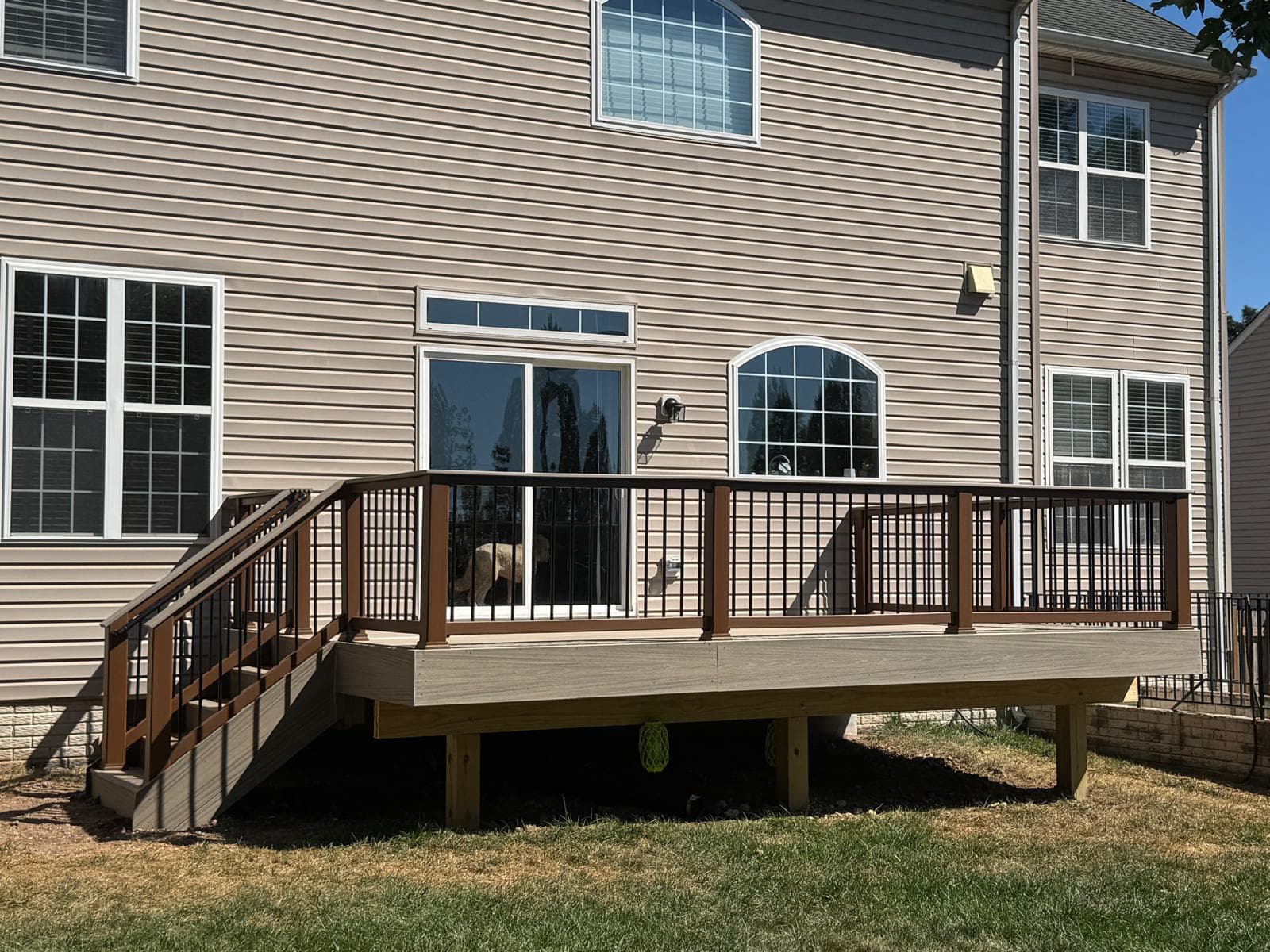
Custom Deck Builder
Transform your backyard with a custom-designed deck using Trex, TimberTech, wood, or PVC materials matched to your budget, HOA rules, and maintenance goals.
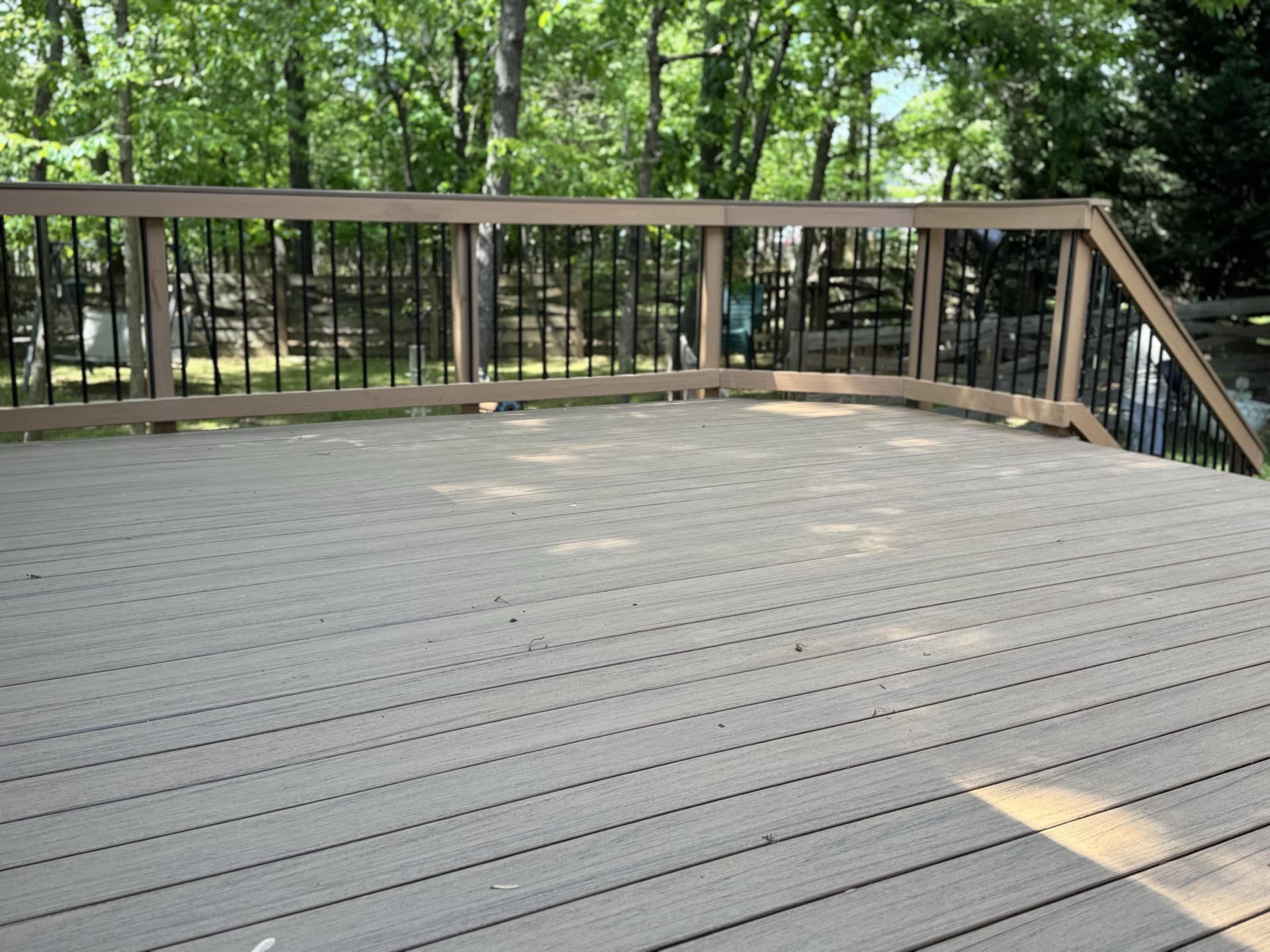
Deck Resurfacing
Premium wood-to-composite resurfacing for structurally sound frames. Full surface conversions start from $15k with boards, railings, fascia, and safety review.
Patio Contractor Services
Professional bluestone and paver patio installation. We create durable, beautiful ground-level outdoor living spaces that last a lifetime.
Local Expertise Across Northern Virginia
Loudoun Decks is a trusted deck builder serving Loudoun County, Fairfax County, Prince William County, Arlington, and Stafford.
Guides Northern Virginia Homeowners Are Reading
TimberTech & AZEK Decks
Premium PVC and composite deck options for Northern Virginia.
Deck Permits in Loudoun County
Permit requirements, review steps and inspection context for Loudoun homeowners.
Deck Permits in Fairfax County
Requirements, timeline, fees, and inspection process.
Deck Builder in Northern Virginia
Custom decks, permits, HOA support and local service areas.
Covered Deck Builder
Covered deck planning, outdoor living upgrades and shade structure decisions.
Trex vs TimberTech vs AZEK
Side-by-side brand comparison for Virginia climate.