


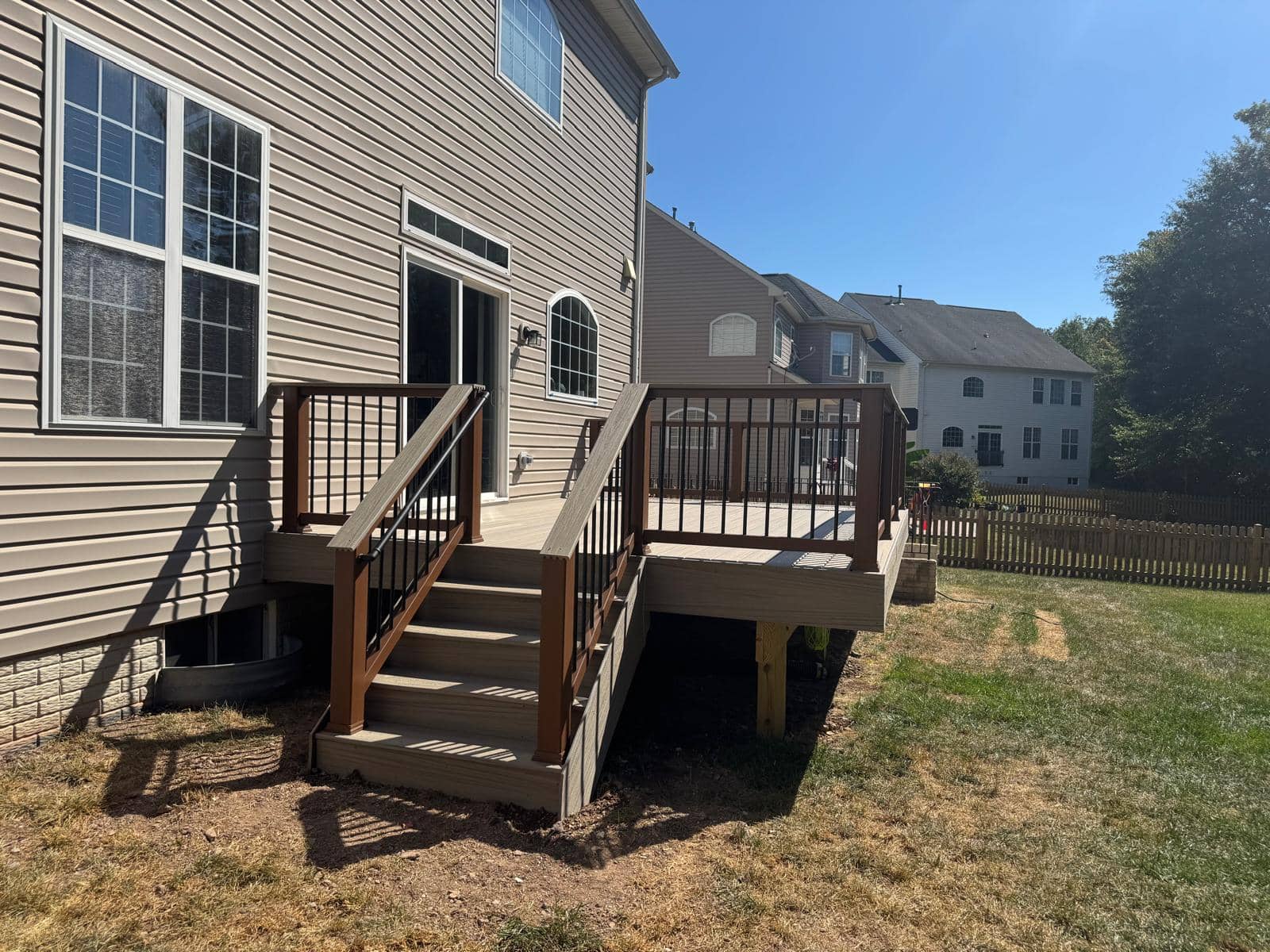
Do I Need 2x8 or 2x10 Joists for My Deck?
2x8 or 2x10 joists? The answer comes down to how far the joists span, how far apart they sit, and what the deck has to carry. Here is how span, spacing, and load drive the decision on a Northern Virginia deck.
It is one of the first real structural decisions on a deck build, and it changes the price, the feel underfoot, and whether the deck passes inspection: do you frame with 2x8 or 2x10 joists? The honest answer is that it depends — but it depends on a small number of factors you can actually reason through. Here is how a builder decides.
Joist Sizing in Plain English
Joists are the horizontal boards that run from the ledger to the beam and carry the deck boards — and everything on them. A joist’s job is to span a distance without sagging or bouncing. The deeper the joist, the farther it can span. A 2x10 is about two inches deeper than a 2x8, and that extra depth translates into significantly more span and stiffness.
So the question of 2x8 or 2x10 is really three questions: how far do the joists have to span, how far apart are they spaced, and how much load do they carry?
The IRC Span Tables: The Code Foundation
Deck framing in Virginia is governed by the Virginia Residential Code, which is based on the International Residential Code (IRC). The IRC publishes joist span tables — the official maximum distances a joist of a given size, species, and spacing is allowed to span. Inspectors check framing against these tables, so they are the starting point for every decision.
The tables vary by wood species. Most pressure-treated deck lumber in Northern Virginia is Southern Pine or Spruce-Pine-Fir, and Southern Pine is generally allowed to span farther for the same size board. The tables also assume the standard residential deck load: 40 pounds per square foot of live load plus 10 pounds per square foot of dead load.
Approximate 2x8 vs 2x10 Spans
Exact numbers come from the current code tables, but the general relationship is consistent. For pressure-treated Southern Pine at the most common 16-inch on-center spacing, a 2x8 joist spans noticeably less than a 2x10 — the 2x10 typically buys you several extra feet of clear span. Tighten the spacing to 12 inches on-center and both sizes can span a bit farther; open it to 24 inches on-center and both spans shrink.
The practical takeaway: on a shallow deck — joists spanning around 10 feet or less — a 2x8 at 16 inches on-center is often code-compliant. As the span grows past that, a 2x10, or tighter spacing, or both, becomes necessary. Always confirm the specific span against the current code table for your lumber species before framing.
Composite Decking Changes the Math
Here is what catches a lot of DIY builders: composite decking is heavier and less rigid than wood, and most composite manufacturers require joist spacing no wider than 16 inches on-center for perpendicular installation, and 12 inches on-center for a diagonal pattern. Some products are stricter.
That manufacturer requirement can override what the code span table alone would allow. Even when a 2x8 at 16 inches on-center technically meets the IRC, we frequently default to 2x10 joists at 12 inches on-center under composite — Trex, TimberTech, and similar products. The denser, deeper framing eliminates the slight bounce that telegraphs through composite boards and gives the finished deck the solid, premium feel homeowners expect. If you are weighing decking materials, see our guide to composite deck cost in Northern Virginia.
Hot Tubs and Other Heavy Loads
The standard 40 PSF live load assumption does not apply under a hot tub, an outdoor kitchen, or a heavy stone feature. A filled hot tub with occupants can concentrate thousands of pounds onto a small footprint — far beyond what standard joists are designed for.
Under that kind of load, joist sizing is not a 2x8-or-2x10 question; the area is specifically engineered. That usually means 2x10 or 2x12 joists, doubled up, at 12 inches on-center or tighter, sitting on upsized beams and oversized footings. If a hot tub is anywhere in your plans, it has to be designed into the framing from the start — see our guide on how deep deck footings need to be in Virginia for the foundation side of that equation.
Joist Spacing: 12, 16, or 24 Inches On-Center
Spacing and joist size work together. 24 inches on-center is the widest the code generally allows for wood decking; it uses the least lumber but produces the most flexible deck and is too wide for most composite. 16 inches on-center is the standard for the vast majority of decks, and the minimum most composite manufacturers accept for perpendicular boards. 12 inches on-center is the premium spec; it is required for diagonal composite patterns and used under heavy loads, giving the stiffest deck for the most lumber. Moving from 24 to 16 to 12 inches on-center also lets a given joist size span farther — so spacing is a lever you can pull instead of, or alongside, going up a joist size.
Cantilevers and Overhangs
The code also limits how far a joist can cantilever — extend past the beam — usually to a fraction of its back span. A 2x10 can cantilever farther than a 2x8. If your design has the deck oversailing the beam for a clean look, the cantilever limit can drive you to the larger joist on its own.
Why We Default to 2x10 in Northern Virginia
On most of the decks we build across Loudoun, Fairfax, and Prince William County, we default to 2x10 joists. The reasons: the spans on a typical backyard deck usually exceed comfortable 2x8 territory, most of our clients choose composite decking that rewards stiffer framing, the upgrade cost from 2x8 to 2x10 is modest relative to the whole project, and a stiffer frame simply lasts and feels better. A 2x8 frame is not wrong when the span and load allow it — but 2x10 leaves more margin, and margin is what you want in a structure your family stands on.
The framing decision is verified at the county framing inspection — the second of the three inspections on a permitted deck. For how that fits into the bigger picture, see our guide to deck permits in Virginia.
Get the Framing Spec Right
Joist size, spacing, species, span, cantilever, decking material, and special loads all interact — and the right answer is the combination that satisfies the code table, the decking manufacturer, and the way you actually want the deck to feel. As a licensed Northern Virginia deck builder, Loudoun Decks engineers every frame to the project, builds new decks to a 12-inch composite-ready standard, and gets it confirmed at inspection.
Planning a deck and want the structure done right? Call Loudoun Decks at 571-655-7207 or visit ldndecks.com/get-estimate.
Frequently Asked Questions
Should I use 2x8 or 2x10 deck joists?
It depends on span, spacing, and load. For short spans of roughly 10 feet or less at 16 inches on-center, a 2x8 is often code-compliant. Longer spans, composite decking, or heavy loads generally call for 2x10.
How far can a 2x10 deck joist span?
It depends on wood species and spacing, and you should confirm against the current IRC span table. As a rule, a 2x10 spans several feet farther than a 2x8 of the same species at the same spacing.
Do composite decks need closer joist spacing?
Yes. Most composite manufacturers require 16 inches on-center for perpendicular boards and 12 inches on-center for diagonal patterns. That requirement can override what the code span table alone would allow.
What joist size do I need for a hot tub on a deck?
A hot tub area is specifically engineered, not sized from a standard table. It typically requires 2x10 or 2x12 joists, doubled and spaced 12 inches on-center or tighter, on upsized beams and oversized footings — designed in from the start.
What is the standard deck joist spacing?
16 inches on-center is standard for most decks and is the minimum most composite products accept. 24 inches on-center is the widest code generally allows for wood decking; 12 inches on-center is the premium, heavy-load, and diagonal-composite spec.
Why do builders often default to 2x10 joists?
Typical backyard deck spans exceed comfortable 2x8 range, composite decking rewards stiffer framing, the cost upgrade is modest, and the extra depth leaves more structural margin. A 2x8 is fine where span and load allow it.
This article is general construction guidance, not a substitute for the current code span tables or an engineered design. Joist requirements depend on wood species, span, spacing, load, and decking material, and standards vary by county and HOA. Always confirm with your local building department before framing.
Plan Your Northern Virginia Deck Project With Loudoun Decks
Get a free, no-pressure consultation from a licensed Northern Virginia deck builder. Call (571) 655-7207 or visit ldndecks.com/get-estimate.
Get a Free EstimateEverything Your Outdoor
Space Needs
From ground-up deck construction to full outdoor living spaces, every project is custom-designed for your home with permit planning, material guidance, and written workmanship terms.
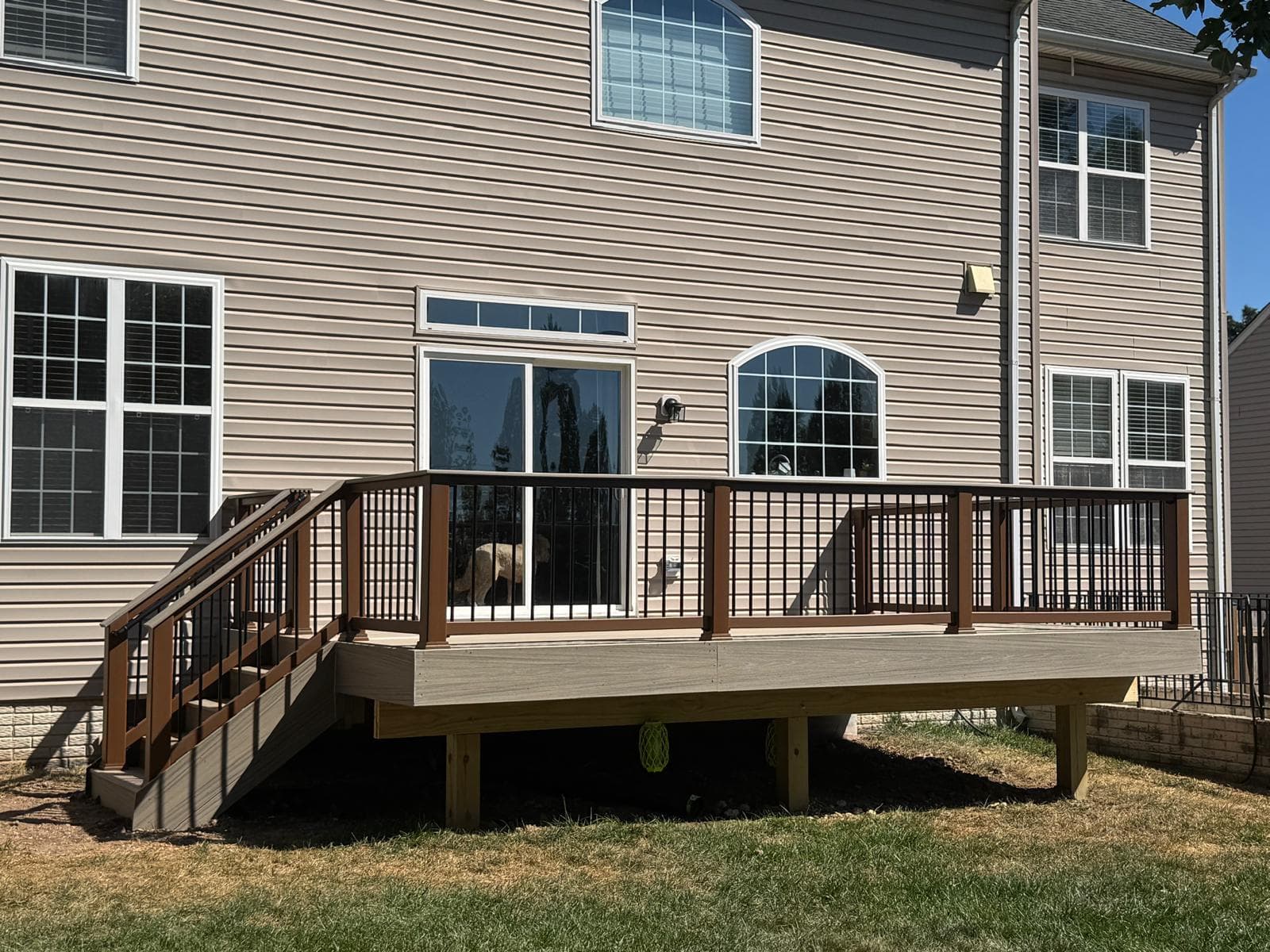
Custom Deck Builder
Transform your backyard with a custom-designed deck using Trex, TimberTech, wood, or PVC materials matched to your budget, HOA rules, and maintenance goals.
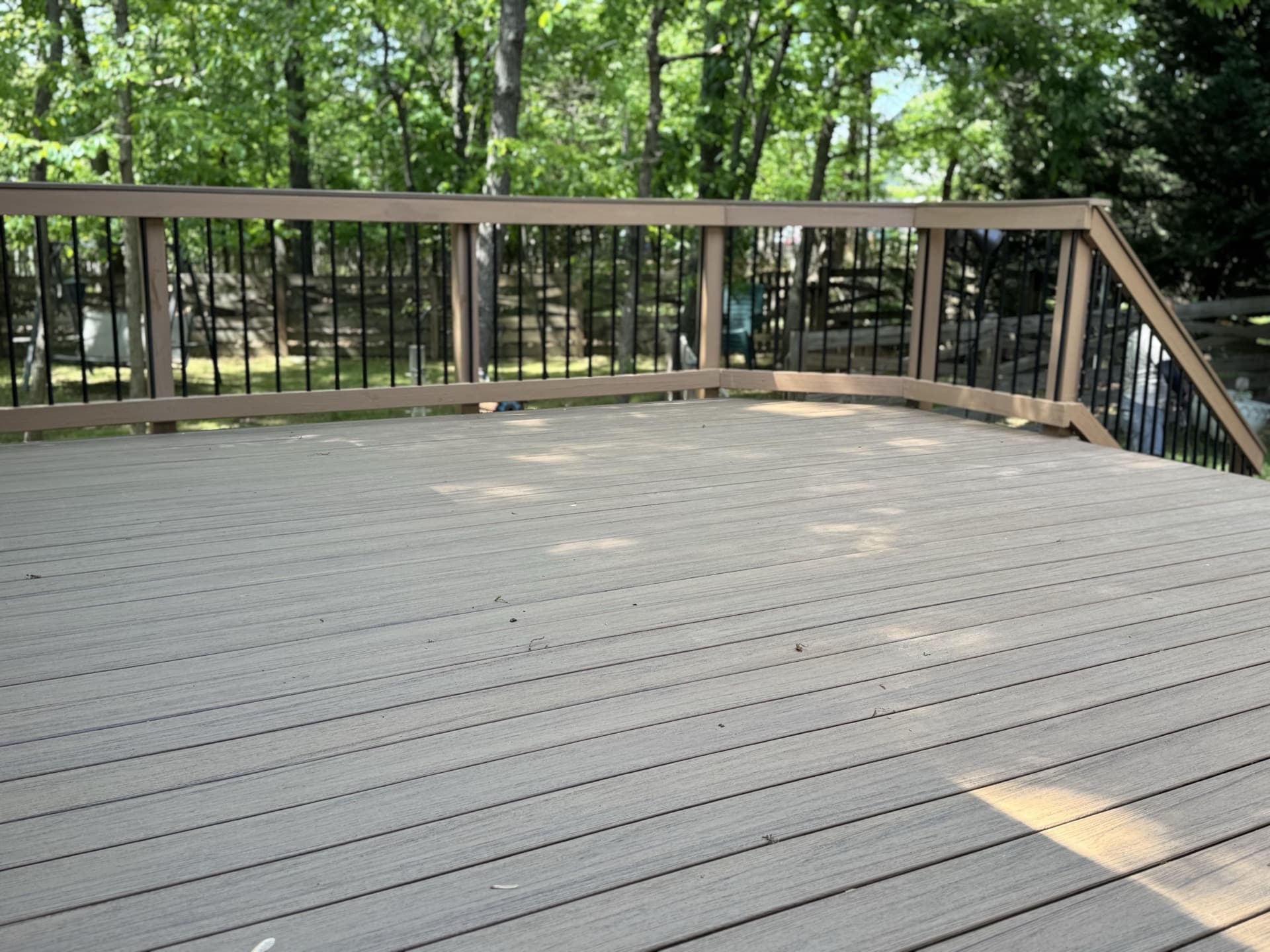
Deck Resurfacing
Premium wood-to-composite resurfacing for structurally sound frames. Full surface conversions start from $15k with boards, railings, fascia, and safety review.
Patio Contractor Services
Professional bluestone and paver patio installation. We create durable, beautiful ground-level outdoor living spaces that last a lifetime.
Local Expertise Across Northern Virginia
Loudoun Decks is a trusted deck builder serving Loudoun County, Fairfax County, Prince William County, Arlington, and Stafford.
Guides Northern Virginia Homeowners Are Reading
Deck Permits in Fairfax County
Requirements, timeline, fees, and inspection process.
Deck Builder in Northern Virginia
Custom decks, permits, HOA support and local service areas.
Covered Deck Builder
Covered deck planning, outdoor living upgrades and shade structure decisions.
Trex vs TimberTech vs AZEK
Side-by-side brand comparison for Virginia climate.
Composite Deck Cost in Northern Virginia
Material pricing, verified source references, planning examples and what drives the price.
Free Deck Cost Calculator
Get an instant estimate by material, size, and add-ons.