
Deck Railing Options in Northern Virginia: Types, Cost & Comparison
Railing is the most visible design element on most decks — it defines the perimeter, sets the style tone, and accounts for 20 to 35 percent of total project cost on a typical deck. Understanding the four primary railing categories available in Northern Virginia in 2026, what each costs, and what the code and HOA requirements are will help you choose the right system for your project.
Deck railing is more than a safety requirement — it is the design element that most defines how a deck looks from the yard, from inside the house, and from the street. On a 300-square-foot deck with 60 linear feet of railing perimeter, the railing system can cost $5,000 to $18,000 depending on the material and configuration chosen. Getting it right the first time matters.
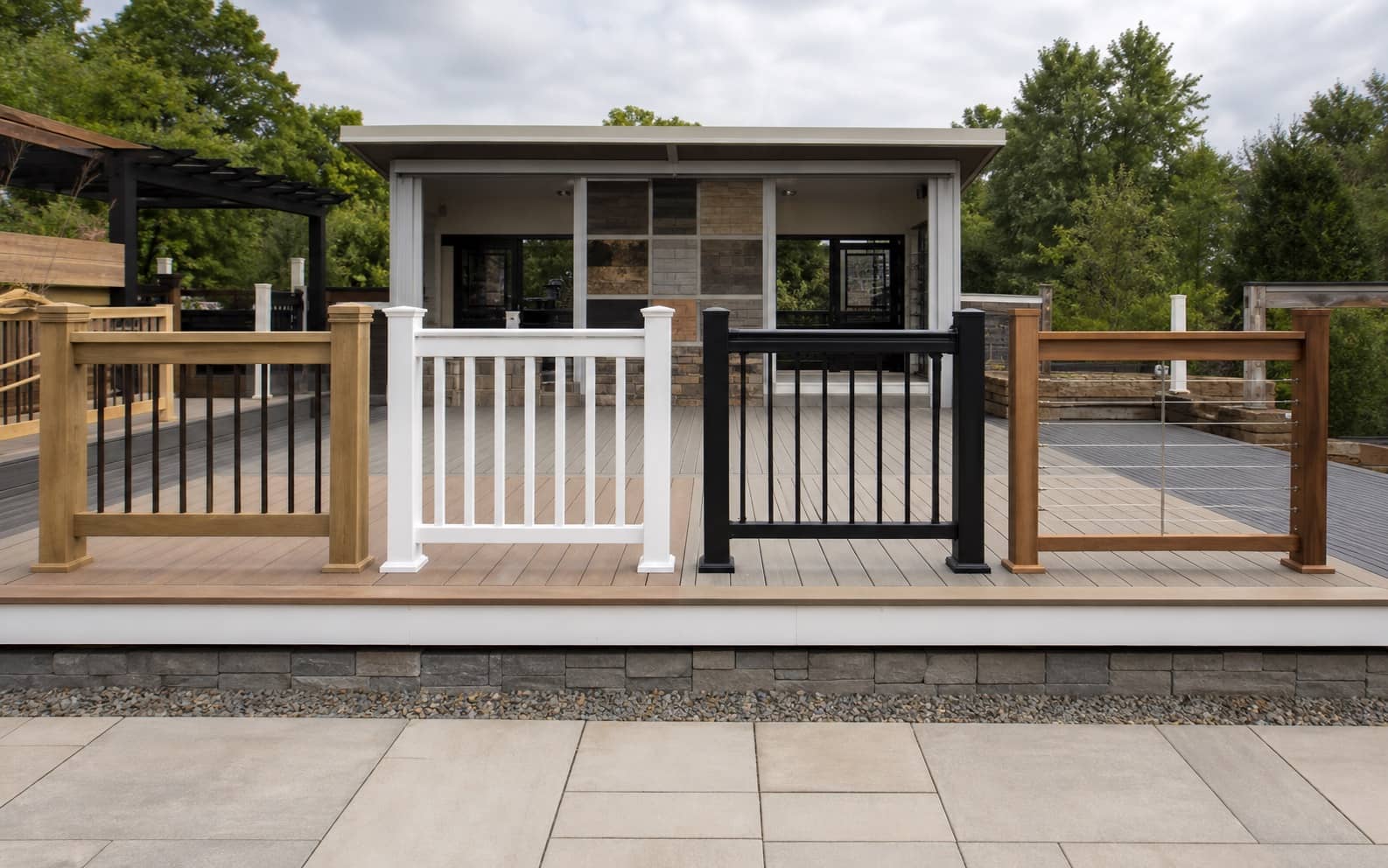
This guide covers the four primary railing categories used on Northern Virginia decks in 2026: composite railing, cable railing, aluminum railing, and glass panel railing. Each has distinct aesthetic characteristics, structural requirements, cost ranges, and maintenance profiles.
Virginia Deck Railing Code Requirements
Before comparing options, the baseline: Virginia residential code (adopted from the IRC) requires railing on any deck surface more than 30 inches above grade. Railing height must be at least 36 inches for decks under 30 inches high, and 42 inches for decks 30 inches or more above grade. Baluster spacing must not allow a 4-inch sphere to pass through. The top rail must be capable of withstanding 200 pounds of lateral force applied at any point.
All railing systems must meet these requirements regardless of material. Products from established manufacturers (Trex, TimberTech, AZEK, Fortress, DecksDirect) are designed and tested to meet IRC requirements — this is confirmed in their installation documentation, which inspectors may request during final inspection.
Option 1: Composite Railing
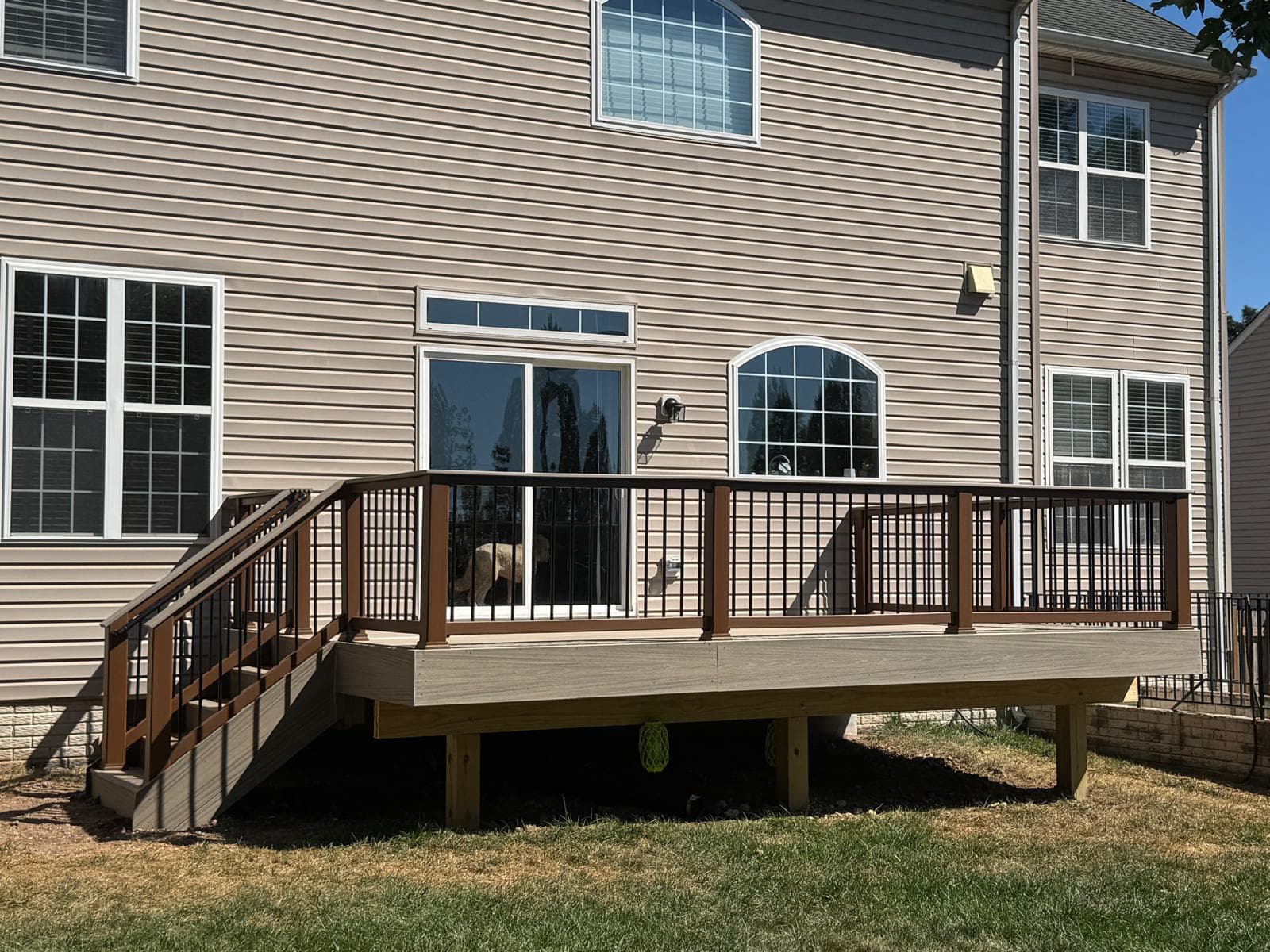
Composite railing is the most common choice on new composite deck builds in Northern Virginia. It matches the composite decking surface material from the same manufacturer, provides a cohesive look, and requires no painting or staining.
Products: Trex Transcend, Trex Select, TimberTech RadianceRail, AZEK Premier Rail, and others. Each major composite decking brand offers a coordinating railing line.
Aesthetic: Traditional to transitional. Available in multiple colors and baluster styles (square, round, decorative). Creates a classic deck perimeter. Doesn't provide open views — the balusters are visible.
Structural: Posts are typically aluminum-core or steel-reinforced for strength. Top and bottom rails are composite-wrapped aluminum or solid composite. Systems are tested and code-listed.
Cost (installed): $75 to $120 per linear foot, depending on product tier, baluster style, and post spacing.
HOA compatibility: High. Composite railing in approved colors is the default accepted option in virtually all Northern Virginia HOA communities.
Maintenance: Essentially zero. Occasional soap-and-water cleaning. No painting, staining, or structural maintenance required for the warranty period (25+ years on most premium lines).
Best for: Homeowners who want a clean, cohesive look that coordinates with composite decking, minimal maintenance, and straightforward HOA approval.
Option 2: Cable Railing
Cable railing uses horizontal stainless steel cables in place of vertical balusters. The cables are tensioned between posts and provide a minimalist, contemporary aesthetic with maximum sightline preservation.
Products: Fortress Building Products, Feeney CableRail, Stainless Cable & Railing, and others. Posts are typically powder-coated aluminum or stainless steel; top rails are composite, aluminum, or wood.
Aesthetic: Modern and minimalist. The horizontal cable lines are nearly invisible from a distance. Maximizes the view from the deck and makes small decks feel more open. Popular on decks overlooking wooded lots, water features, or backyard landscapes.
Structural: Cable tensioning hardware requires posts to be significantly stronger than in standard railing — end posts at the top and bottom of each cable run experience the full tension load and must be anchored with larger footings or blocking. This structural requirement is frequently underestimated in DIY cable railing projects.
Cost (installed): $130 to $220 per linear foot, reflecting the higher material cost of stainless cable and hardware and the additional structural requirements at post locations.
HOA compatibility: Variable. Many Northern Virginia HOAs accept cable railing in principle, but some specify that horizontal cable must be tensioned to prevent climbing (which is a code requirement anyway) and some restrict the post color or cap rail material. Verify with your specific HOA before specifying cable.
Maintenance: Low. Stainless steel cables require occasional wiping with a stainless cleaner to remove oxidation. Cable tension should be checked annually — cables can stretch slightly over time and may need re-tensioning within the first year.
Best for: Contemporary home styles, wooded or view-oriented lots, homeowners who prioritize sightline preservation and a modern aesthetic, and projects where the budget supports the cost premium.
Option 3: Aluminum Railing
Aluminum railing uses extruded aluminum posts, rails, and either aluminum balusters or infill panels. It is available in a wide range of powder-coat colors and styles, including systems that closely mimic the appearance of wrought iron.
Products: Westbury Aluminum Railing, Trex Signature (aluminum), Fortress Al13, and others.
Aesthetic: Ranges from traditional (picket-style with decorative balusters) to contemporary (flat bar or square tube infill). Aluminum's strength allows thinner profiles than composite, which some homeowners find more elegant.
Structural: Extruded aluminum is lightweight but structurally strong. Systems are engineered and code-listed. Faster to install than composite in many cases due to lighter weight.
Cost (installed): $85 to $150 per linear foot, depending on system and infill style.
HOA compatibility: Generally good. Aluminum railing in black or bronze powder coat is accepted in most HOA communities. Some HOAs specify that railing must match siding or trim colors — verify before ordering.
Maintenance: Very low. Powder coat is durable and UV-stable. No rust. Occasional cleaning.
Best for: Homeowners who want the look of wrought iron with zero rust and minimal weight. Effective on elevated decks and second-story applications. Also well-suited to front porch railings where thin profiles are aesthetically preferred.
Option 4: Glass Panel Railing
Glass panel railing uses tempered or laminated safety glass panels in place of balusters, framed by metal posts. It provides completely unobstructed views — the railing perimeter is nearly invisible.
Products: Frameless glass systems (no rail between panels) and framed glass panel systems. Posts are typically brushed aluminum or stainless.
Aesthetic: Ultra-minimalist. The glass panels disappear visually, making the deck perimeter nearly invisible. Most dramatic sightline preservation of any railing type. High-end contemporary look.
Structural: Glass panels require careful engineering — post spacing, glass thickness, and panel attachment method must be specified to meet load requirements. Not all frameless systems are code-compliant in Virginia without engineering documentation.
Cost (installed): $250 to $400+ per linear foot. Glass panel railing is the premium category and reflects material, engineering, and installation complexity.
HOA compatibility: Varies significantly. Many HOAs do not specifically address glass panel railing in their guidelines — which may mean it falls under general discretionary review. Some HOA ARCs are unfamiliar with glass railing and may be cautious. Submit detailed drawings and manufacturer data sheets.
Maintenance: Glass requires cleaning — fingerprints and water spots are more visible than on other railing materials. In Northern Virginia's pollen season, glass panels need regular wiping from March through May to maintain clarity.
Best for: Premium homes and luxury deck projects where the view and aesthetic are the priority and cost is secondary. Particularly effective on elevated decks overlooking a significant view.
Quick Comparison Table
| Railing Type | Cost/LF | View | Maintenance | HOA Ease |
|---|---|---|---|---|
| Composite | $75–$120 | Blocked | None | Easy |
| Cable | $130–$220 | Open | Low | Variable |
| Aluminum | $85–$150 | Blocked | None | Easy |
| Glass | $250–$400+ | Open | Medium | Variable |
LDN Decks installs all four railing categories across Northern Virginia. We review HOA requirements before finalizing any railing specification and provide accurate installation documentation for permit and HOA submissions.
Get a Free Estimate Including Railing Comparison
---
Related: Cable Railing for Decks Northern Virginia · Composite vs Aluminum Railing · Deck Railing Code Northern Virginia · Deck Cost 2026 · New Deck Services
Frequently Asked Questions
What is the most popular deck railing in Northern Virginia?
Composite railing — coordinating with composite decking from the same brand (Trex, TimberTech, AZEK) — is the most common choice on new deck builds in Northern Virginia. It provides a cohesive look, zero maintenance, HOA acceptance, and 25-year warranties. Cable railing is the fastest-growing alternative, popular on contemporary homes and view-oriented lots.
How much does deck railing cost in Northern Virginia?
Installed deck railing costs in Northern Virginia range from $75 to $120 per linear foot for composite, $130 to $220 per linear foot for cable railing, $85 to $150 per linear foot for aluminum, and $250 to $400+ per linear foot for glass panel railing. On a typical deck with 60 linear feet of railing, expect $4,500 to $7,200 for composite and $7,800 to $13,200 for cable railing.
What height does deck railing need to be in Virginia?
Virginia residential code requires deck railing to be at least 36 inches high for deck surfaces less than 30 inches above grade, and at least 42 inches high for deck surfaces 30 inches or more above grade. Baluster spacing must not allow a 4-inch sphere to pass through. These requirements apply to all railing materials and styles.
Will my HOA approve cable railing on my deck?
Many Northern Virginia HOAs accept cable railing, but it is not universally approved. Some HOAs specify that horizontal cables must be tensioned to prevent climbing (which code already requires) and some restrict post color or cap rail material. Others are silent on cable railing, making it a discretionary ARC decision. Always verify with your specific HOA before specifying cable railing on a design.
Can I install deck railing myself in Northern Virginia?
The structural installation of deck railing — particularly post anchoring and cable tensioning — is part of the permitted deck construction and must be completed per the approved drawings. DIY railing installation on a permitted deck may require inspection and must meet the same code requirements as contractor-installed railing. Post anchoring for cable railing is particularly critical and is commonly underestimated in DIY projects.
Cost ranges reflect Northern Virginia market conditions as of 2026. HOA acceptance of railing types varies by community and is subject to individual ARC review. Always verify current HOA guidelines and obtain permits before installing or replacing deck railing.
Plan Your Northern Virginia Deck Project With Loudoun Decks
Get a free, no-pressure consultation from a licensed Northern Virginia deck builder. Call (571) 655-7207 or visit ldndecks.com/get-estimate.
Get a Free EstimateEverything Your Outdoor
Space Needs
From ground-up deck construction to full outdoor living spaces, every project is custom-designed for your home with permit planning, material guidance, and written workmanship terms.
Custom Deck Builder
Transform your backyard with a custom-designed deck using Trex, TimberTech, wood, or PVC materials matched to your budget, HOA rules, and maintenance goals.
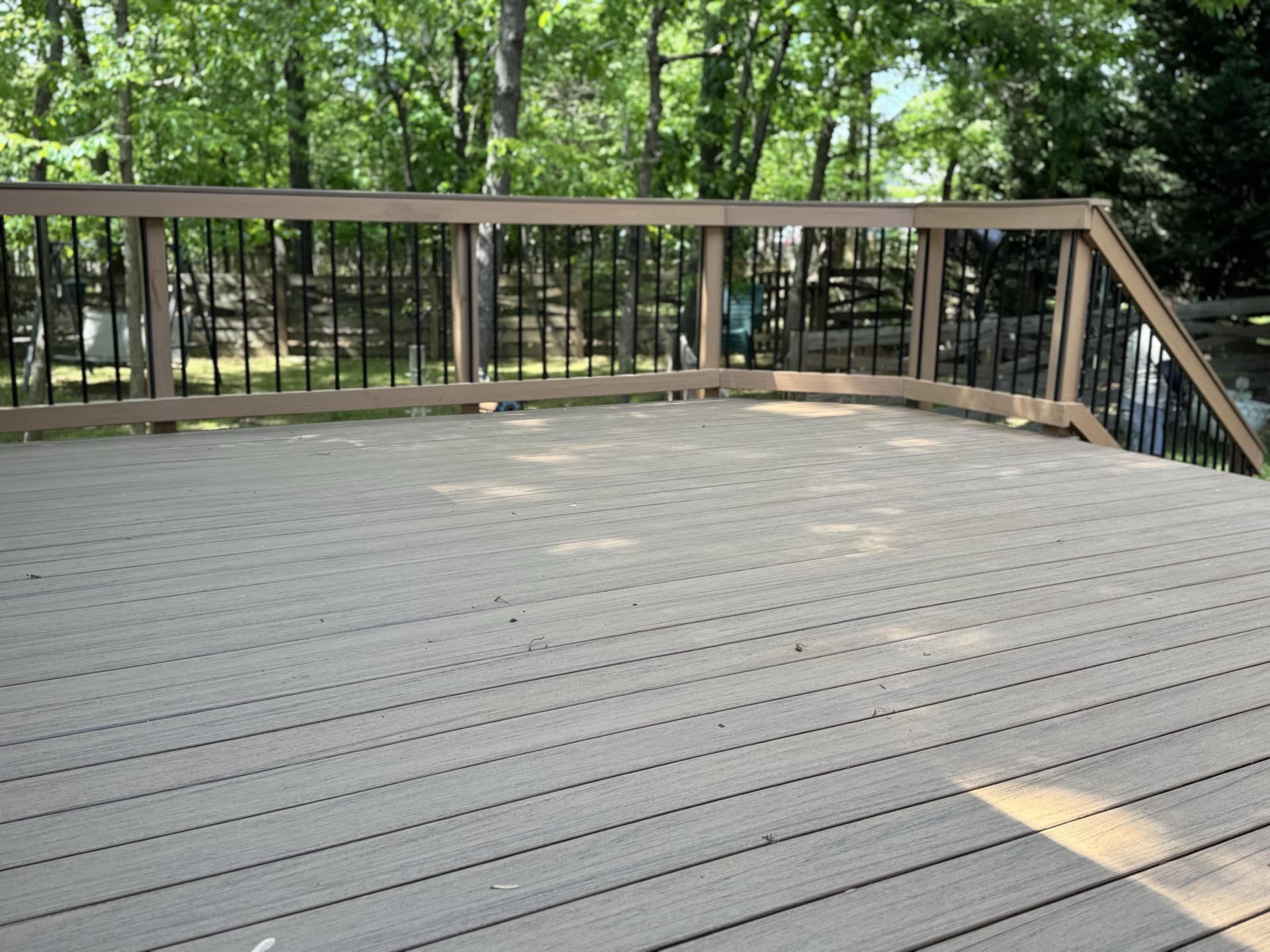
Deck Resurfacing
Premium wood-to-composite resurfacing for structurally sound frames. Full surface conversions start from $15k with boards, railings, fascia, and safety review.
Patio Contractor Services
Professional bluestone and paver patio installation. We create durable, beautiful ground-level outdoor living spaces that last a lifetime.
Local Expertise Across Northern Virginia
Loudoun Decks is a trusted deck builder serving Loudoun County, Fairfax County, Prince William County, Arlington, and Stafford.
Guides Northern Virginia Homeowners Are Reading
Deck Builder in Northern Virginia
Custom decks, permits, HOA support and local service areas.
Covered Deck Builder
Covered deck planning, outdoor living upgrades and shade structure decisions.
Trex vs TimberTech vs AZEK
Side-by-side brand comparison for Virginia climate.
Composite Deck Cost in Northern Virginia
Material pricing, verified source references, planning examples and what drives the price.
Free Deck Cost Calculator
Get an instant estimate by material, size, and add-ons.
TimberTech & AZEK Decks
Premium PVC and composite deck options for Northern Virginia.