


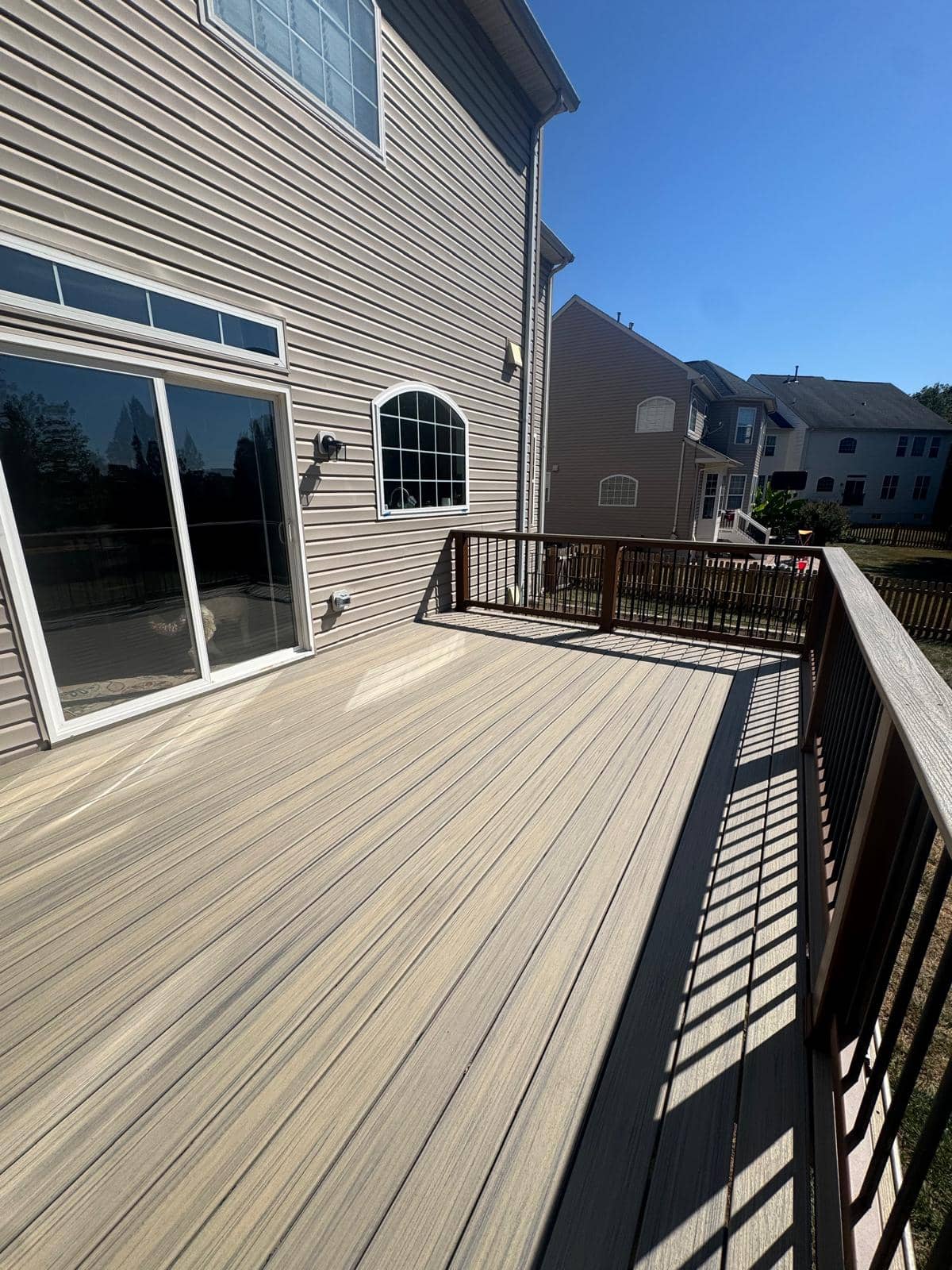
How Deep Do Deck Footings Need to Be in Virginia?
In Virginia, deck footings have to reach below the frost line — generally 24 to 30 inches deep — or freezing ground will lift and crack your deck. Here is how depth, diameter, and soil bearing actually work.
Footings are the part of your deck no one sees and everyone forgets — until the deck starts to tilt, the ledger pulls away from the house, or a county inspector red-tags the project. In Northern Virginia, the single most important number in deck footing construction is depth. Get it wrong and the freeze-thaw cycle will slowly tear the structure apart.
Here is what the code requires, what we actually build to, and why footing depth is non-negotiable in Loudoun, Fairfax, and Prince William County.
Virginia’s Frost Line and Why It Matters
When the ground freezes, the moisture in the soil expands. If the bottom of your footing sits above that frozen zone, the expanding soil pushes it upward — a process called frost heave. When the ground thaws, the footing does not always settle back evenly. Over a few seasons, that cycle racks the frame, opens gaps at the ledger board, and throws the whole deck out of level.
The fix is simple in concept: the bottom of every footing must sit below the frost line, in soil that never freezes. In Northern Virginia, the established frost depth used for residential construction is roughly 18 inches, but the building code and local building departments require deck footings to extend deeper for a margin of safety.
The Minimum Depth: 24 to 30 Inches
In practice, deck footings in Virginia are dug to a minimum of 24 inches deep, and many builders — including Loudoun Decks — go to 30 inches on standard projects. The deeper footing costs very little more in concrete and labor, but it buys a large safety margin against an unusually cold winter or a footing dug slightly shallow.
For decks carrying concentrated loads — a hot tub, a stone outdoor kitchen, a roof structure — footings often go deeper still and are poured as oversized caissons. The county footing inspection happens before any concrete is poured, specifically so the inspector can confirm the hole reached the required depth.
Footing Diameter and Soil Bearing
Depth keeps the footing below the frost line. Diameter is what keeps the deck from sinking. Every footing has to spread the load of the post above it across enough soil that the ground can carry it.
The required diameter depends on two things: how much load that post carries — its tributary area — and the bearing capacity of your soil. A typical residential deck footing in Northern Virginia runs 16 to 24 inches in diameter. A corner post carrying a small tributary area might need only a modest footing; an interior post under a large span — or under a hot tub — needs a much wider one.
Virginia’s residential code assumes a default soil bearing value unless a soil test proves otherwise. If your lot has soft, high-clay, or recently filled soil, the assumed value may not hold, and footings have to be widened or deepened to compensate.
Soil Conditions Across Northern Virginia
Northern Virginia soil is not uniform. Much of Loudoun and Prince William County sits on dense clay that holds water and swells when wet. Newer subdivisions are frequently built on engineered fill, which can be inconsistent from one corner of a yard to the next. Western Loudoun has rockier, shallower soil over bedrock.
Each of these conditions changes how a footing has to be built. Clay that stays saturated transmits more frost pressure against the sides of a footing. Loose fill offers less bearing and may require a wider base. A good builder reads the soil at the time of digging and adjusts — a footing plan drawn at a desk is only a starting point.
Common Footing Inspection Failures
The footing inspection is one of the easiest to fail and one of the most expensive to fix, because the remedy is literally digging back up work you have already done. The failures we see most often are holes dug too shallow — usually from hitting hard clay or rock and stopping early — concrete poured before the inspection so the inspector cannot see the hole, footing diameter too small for the load the post carries, loose spoil left in the bottom of the hole so the footing is not actually bearing on solid ground, and footings not aligned under the beam or post. If you have inherited a deck and are unsure whether its footings are sound, a professional deck inspection can confirm it before a small problem becomes a structural one.
Frost Heave: The Slow-Motion Failure
Frost heave rarely fails a deck overnight. It shows up as a deck that was perfectly level when built and is visibly out of level two or three winters later. You will see it as a sloping deck surface, doors and gates that no longer latch, gaps opening between deck boards and the ledger, and cracked footings. By the time it is obvious, the only real fix is to re-support or replace the affected footings — a job our deck repair team in Loudoun County handles regularly, and far more expensive than digging deep in the first place.
Hot Tubs and Heavy-Load Footings
A filled hot tub with people in it can concentrate several thousand pounds onto a small area of the deck. Footings under that load are not standard footings — they are oversized, often 24 to 30 inches in diameter, dug deep, and paired with tighter joist spacing and heavier beams above. (For the framing side of that equation, see our guide on 2x8 vs 2x10 deck joists.) If a hot tub is anywhere in your future plans, the footings have to be designed for it from day one. Retrofitting footings under a finished deck is one of the hardest jobs in the trade.
Build It Right the First Time
Footing depth is invisible the day the deck is finished and decisive ten years later. Footings are also checked at the first of three county inspections on a permitted deck — see our full guide to deck permits in Virginia for how that process works. As a licensed Northern Virginia deck builder, Loudoun Decks digs every footing below the frost line, sizes the diameter to the actual soil and load, and schedules the county footing inspection before a single bag of concrete is opened.
Planning a deck — or worried an existing one is heaving? Call Loudoun Decks at 571-655-7207 or visit ldndecks.com/get-estimate for a free assessment.
Frequently Asked Questions
How deep do deck footings need to be in Virginia?
At least 24 inches, and many builders go to 30 inches. The bottom of every footing must sit below the frost line so freezing soil cannot lift it.
What is the frost line depth in Northern Virginia?
The residential frost depth used in Northern Virginia is roughly 18 inches, but deck footings are dug well past it — 24 to 30 inches — for a safety margin.
How wide should a deck footing be?
Typically 16 to 24 inches in diameter, depending on how much load the post carries and the bearing capacity of the soil. Heavier loads and softer soil require wider footings.
What happens if deck footings are too shallow?
Shallow footings are subject to frost heave: freezing soil lifts them and they do not settle evenly. Over a few winters the deck goes out of level, gaps open at the ledger, and footings can crack.
Do hot tub decks need deeper footings?
Yes. A filled hot tub concentrates thousands of pounds onto a small area, so footings are oversized — often 24 to 30 inches in diameter and dug deep — and must be designed before the deck is built.
Why does the county inspect footings before concrete is poured?
So the inspector can confirm the hole reached the required depth and diameter. If concrete is poured first, the county may require you to expose or replace the footing.
This article is general construction guidance, not an engineered design. Exact footing depth, diameter, and soil requirements vary by county, by soil conditions, and by load. Always confirm current requirements with your local building department before starting work.
Plan Your Northern Virginia Deck Project With Loudoun Decks
Get a free, no-pressure consultation from a licensed Northern Virginia deck builder. Call (571) 655-7207 or visit ldndecks.com/get-estimate.
Get a Free EstimateEverything Your Outdoor
Space Needs
From ground-up deck construction to full outdoor living spaces, every project is custom-designed for your home with permit planning, material guidance, and written workmanship terms.
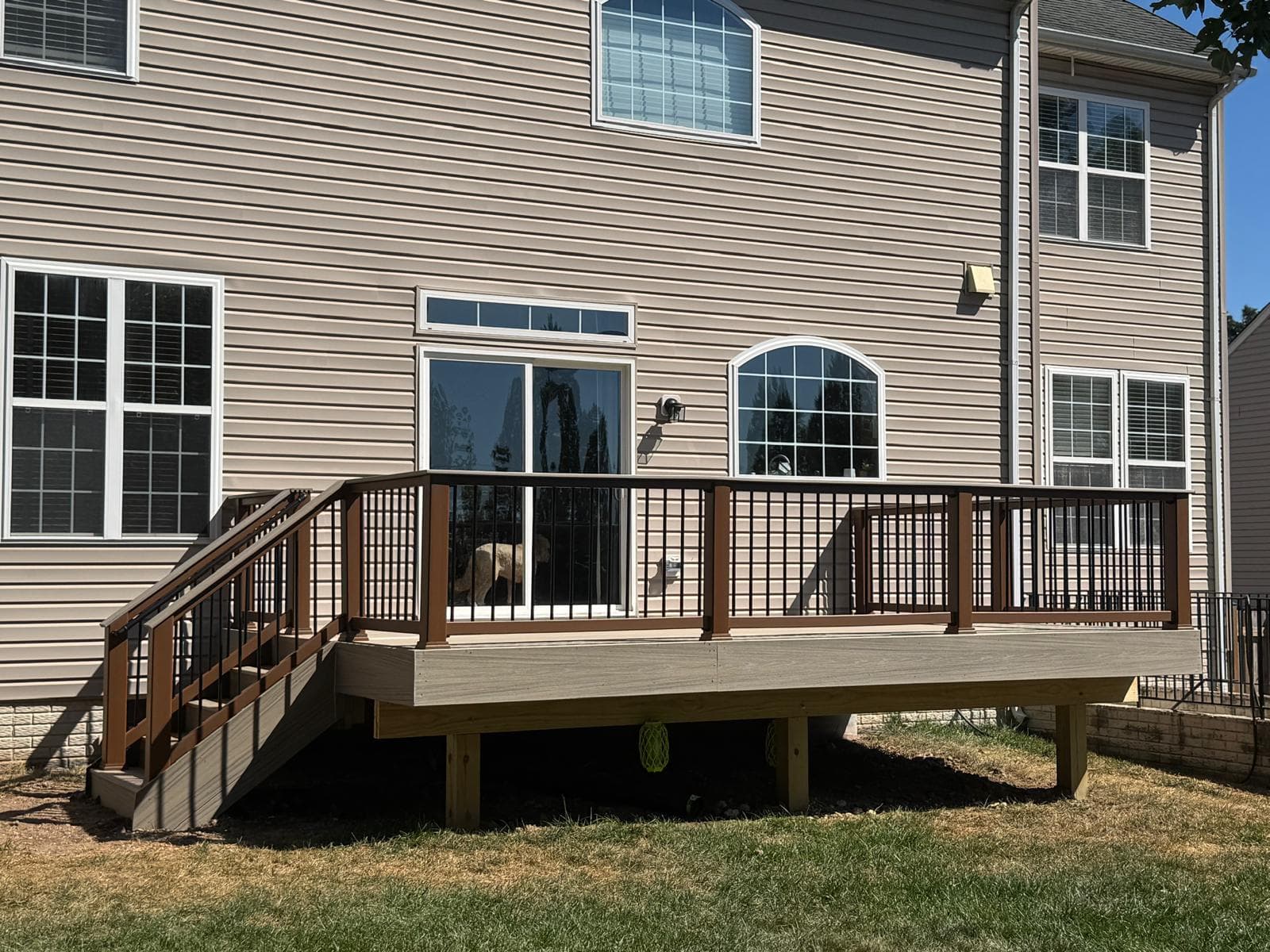
Custom Deck Builder
Transform your backyard with a custom-designed deck using Trex, TimberTech, wood, or PVC materials matched to your budget, HOA rules, and maintenance goals.
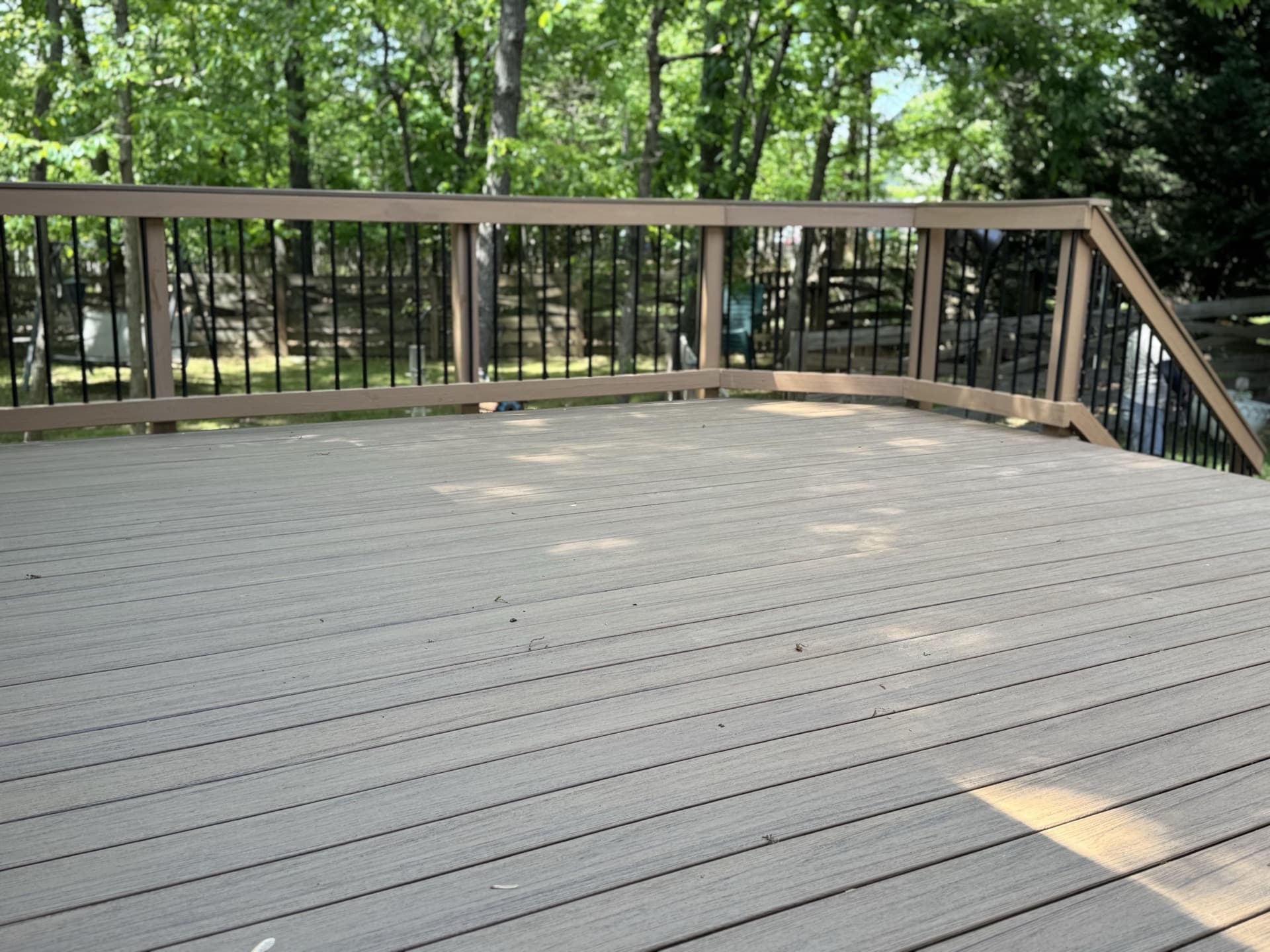
Deck Resurfacing
Premium wood-to-composite resurfacing for structurally sound frames. Full surface conversions start from $15k with boards, railings, fascia, and safety review.
Patio Contractor Services
Professional bluestone and paver patio installation. We create durable, beautiful ground-level outdoor living spaces that last a lifetime.
Local Expertise Across Northern Virginia
Loudoun Decks is a trusted deck builder serving Loudoun County, Fairfax County, Prince William County, Arlington, and Stafford.
Guides Northern Virginia Homeowners Are Reading
Free Deck Cost Calculator
Get an instant estimate by material, size, and add-ons.
TimberTech & AZEK Decks
Premium PVC and composite deck options for Northern Virginia.
Deck Permits in Loudoun County
Permit requirements, review steps and inspection context for Loudoun homeowners.
Deck Permits in Fairfax County
Requirements, timeline, fees, and inspection process.
Deck Builder in Northern Virginia
Custom decks, permits, HOA support and local service areas.
Covered Deck Builder
Covered deck planning, outdoor living upgrades and shade structure decisions.