
Best Composite Deck Colors for Full Sun in Northern Virginia
Choosing the right composite decking color for a full-sun Northern Virginia deck is not just an aesthetic decision — it directly affects surface temperature, UV fading, and long-term appearance. This guide covers the science of color and heat, specific product picks, and Northern Virginia backyard-oriented recommendations.
Choosing the right composite decking color is one of the most important decisions you will make for your Northern Virginia deck — not just for aesthetics, but for how the deck performs in the sun over time. Many homeowners pick a color based solely on what looks best in the showroom, then discover two summers later that their dark espresso deck is uncomfortably hot in July, or that the rich chocolate brown they loved at installation has visibly weathered in the most exposed areas.
This guide covers the science of how color affects deck temperature and UV fading, the specific product lines that perform best in full-sun Northern Virginia settings, and how to make a color decision that holds up beautifully for years.
How Color Affects Deck Temperature and Fading
The color you choose for your composite decking has a direct, measurable effect on two things: surface temperature and rate of visible UV weathering.
Surface temperature: Darker colors absorb more solar radiation and convert it to heat. A dark espresso or charcoal composite board in full Northern Virginia summer sun can reach surface temperatures of 150F or higher — hot enough to be uncomfortable on bare feet and hot enough to accelerate weathering of the polymer cap over time. Lighter colors reflect significantly more solar radiation, keeping surface temperatures 20 to 40 degrees lower under identical conditions.
Rate of UV fading: Because darker boards absorb more heat and UV energy, they show the visible effects of weathering — a slight lightening toward a dustier, less saturated version — more obviously than lighter boards. Lighter boards fade too, but the change is far less visually dramatic because the starting color is already in the range the board weathers toward.
This does not mean dark colors are wrong for composite decking. It means they require more deliberate decision-making about placement, product tier selection, and maintenance expectations.
Light Colors: The Best Choice for Full Sun
For south-facing or west-facing decks that receive four or more hours of direct midday sun in Ashburn, Centreville, Sterling, Herndon, and similar open suburban communities, lighter composite tones are the most practical and long-term durable choice.
Trex Toasted Sand (Transcend line) is one of the most consistently recommended full-sun colors in Northern Virginia. The warm, sand-beige tone reflects well, stays cooler underfoot, and ages gracefully — the natural weathering of a light warm tone is far less noticeable over time than a medium brown undergoing the same UV process.
Trex Gravel Path (Transcend line) is a warm gray with subtle wood grain that works beautifully in both traditional and contemporary backyard settings. Light gray tones are extremely popular in HOA communities like Brambleton and One Loudoun because they pair well with most exterior color palettes.
TimberTech Coastline and TimberTech Antique Leather (PRO Terrain Collection) are warm sandy tones that reflect solar radiation effectively and age with minimal visible color shift.
TimberTech AZEK Whitmore and Harvest tones in the AZEK Vintage Collection are among the lightest-colored, highest-performance full-sun boards available. Because AZEK is cellular PVC with no wood fiber, heat cycling affects them less dramatically than any composite board in any color.
Mid-Tone Colors That Balance Aesthetics and Performance
Not every homeowner wants a light-toned deck. Medium brown or warm gray tones work well in Northern Virginia — especially in partially shaded backyards or east-facing decks that receive morning sun but not the intense late-afternoon heat.
Trex Transcend Havana Gold and Spiced Rum are warm medium browns that offer a rich hardwood appearance without the aggressive heat absorption of very dark colors. These tones age well in moderate sun conditions and are popular in western Loudoun County and the more naturally shaded communities of Great Falls and McLean.
TimberTech PRO Rustic Elm and Weathered Teak offer realistic tropical hardwood grain texture at a mid-tone warmth level and perform exceptionally well in partially shaded backyards where visual richness is the priority.
Dark Colors and Full Sun: What to Expect
Dark composite colors — espresso, charcoal, dark walnut, lava rock — are visually dramatic and create a striking contemporary aesthetic. They work well in covered deck settings, under pergolas, in north-facing installations, or in heavily wooded backyard settings where direct sun exposure is limited.
In full-sun south-facing or west-facing applications in open suburban Northern Virginia, dark composite boards should be chosen with clear expectations:
- Surface temperatures will be significantly higher, making the deck uncomfortable on hot summer afternoons without shoes. - Visible UV weathering contrast will be more apparent over five to ten years — the board will lighten toward a muted version of its original color in the most exposed areas. - Annual cleaning is essential to maintain appearance, as pollen and tannin staining shows more visibly on dark boards. - Choosing a premium tier product — Trex Transcend Lineage or TimberTech AZEK — significantly improves performance for dark colors in demanding sun conditions.
The Two-Tone Picture Frame Border Strategy
One of the most effective design strategies for full-sun decks is the two-tone picture frame border. Instead of running the entire deck in a single dark color, use a lighter field board for the main deck surface and a contrasting darker tone for the perimeter border and stair treads only.
This gives you the visual definition and richness of a dark color at the architectural edges — where it creates a beautiful border — while keeping the main field surface cooler, lighter, and more forgiving over time. For example: a Trex Gravel Path or Toasted Sand field with a Trex Lava Rock or Winchester Grey border. Or a TimberTech Coastline field with a Rustic Elm perimeter.
The picture frame border also marks stair transitions clearly for safety, and creates a design that looks custom and intentional rather than a single monochromatic slab.
Northern Virginia-Specific Color Recommendations
Based on inspecting and installing composite decks across Loudoun, Fairfax, and Prince William counties, here is how we approach color selection by site condition.
Open south or west-facing backyards (common in Ashburn, Centreville, Sterling, Manassas): Prioritize light to mid-tone colors. Trex Toasted Sand, TimberTech Antique Leather, or AZEK Whitmore. Avoid dark boards unless covered by a pergola or roof.
Wooded north or east-facing backyards (common in Great Falls, McLean, Aldie, western Loudoun): More flexibility. Mid-tone and dark colors perform well with limited sun exposure. TimberTech Rustic Elm, Trex Spiced Rum, or AZEK Mahogany perform beautifully.
HOA-governed communities (Brambleton, One Loudoun, Broadlands, Stone Ridge): Many HOAs specify approved color palettes through the Architectural Review Committee. Light to mid-range earth tones and warm grays are typically within approved palettes. Always verify HOA-approved colors before selecting boards.
Pool deck applications: Choose lighter colors or AZEK PVC for pool surrounds. Surface temperature is critical where barefoot traffic is constant around water.
Ready to choose the right color for your Northern Virginia composite deck? Contact LDN Decks and we can review your backyard orientation, HOA requirements, and design goals to recommend the ideal color and product line.
---
Related: Composite Decking Services · Trex vs TimberTech vs AZEK Guide · Why Composite Decks Fade in the Sun · Deck Design Ideas Northern Virginia 2026 · Composite Deck Cost Guide
Frequently Asked Questions
What color composite decking is best for full sun?
Lighter tones — sandy beige, warm gray, and light tan — are the most practical choice for full-sun south-facing or west-facing decks in Northern Virginia. They reflect more solar radiation, stay significantly cooler underfoot, and age with less visible color shift than dark composite colors.
Do dark composite deck colors fade faster?
Yes, dark composite colors show visible UV weathering — a lightening toward a dustier version of the original tone — more obviously than light colors over five to ten years. The degree of visible change depends on sun exposure, product tier, and maintenance. Premium capped composites and AZEK PVC minimize fading across all colors.
How hot do dark composite deck boards get in the sun?
Dark composite boards in direct midday sun in Northern Virginia can reach surface temperatures of 140 to 160 degrees Fahrenheit. Light-colored boards run 20 to 40 degrees cooler under identical conditions. AZEK cellular PVC boards run cooler than composite boards of the same color due to their zero-wood-fiber composition.
What is a picture frame border on a composite deck?
A picture frame border uses a contrasting color for the perimeter boards and stair treads around a lighter-colored main deck field. It creates a visually defined, custom architectural edge while keeping the high-traffic central surface lighter and cooler. It is one of the most popular deck design trends in Northern Virginia for 2026.
Does my HOA allow all composite deck colors?
Many Northern Virginia HOAs specify approved deck color palettes through their Architectural Review Committee. Most accept earth tones, warm grays, and light naturals. Brighter or unconventional colors are often restricted. Always verify approved colors with your HOA before purchasing boards.
Plan Your Northern Virginia Deck Project With Loudoun Decks
Get a free, no-pressure consultation from a licensed Northern Virginia deck builder. Call (571) 655-7207 or visit ldndecks.com/get-estimate.
Get a Free EstimateEverything Your Outdoor
Space Needs
From ground-up deck construction to full outdoor living spaces, every project is custom-designed for your home with permit planning, material guidance, and written workmanship terms.
Custom Deck Builder
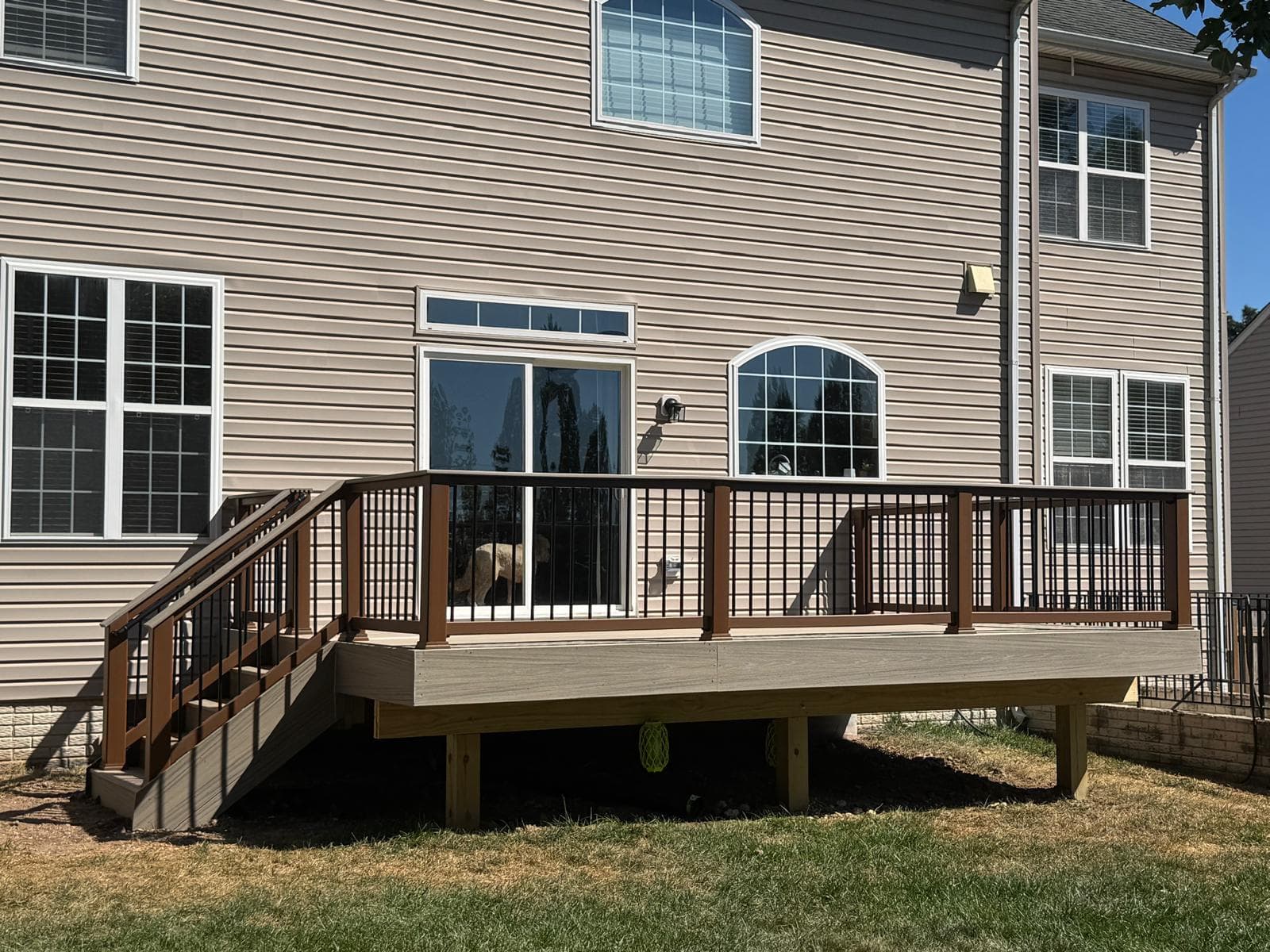
Transform your backyard with a custom-designed deck using Trex, TimberTech, wood, or PVC materials matched to your budget, HOA rules, and maintenance goals.
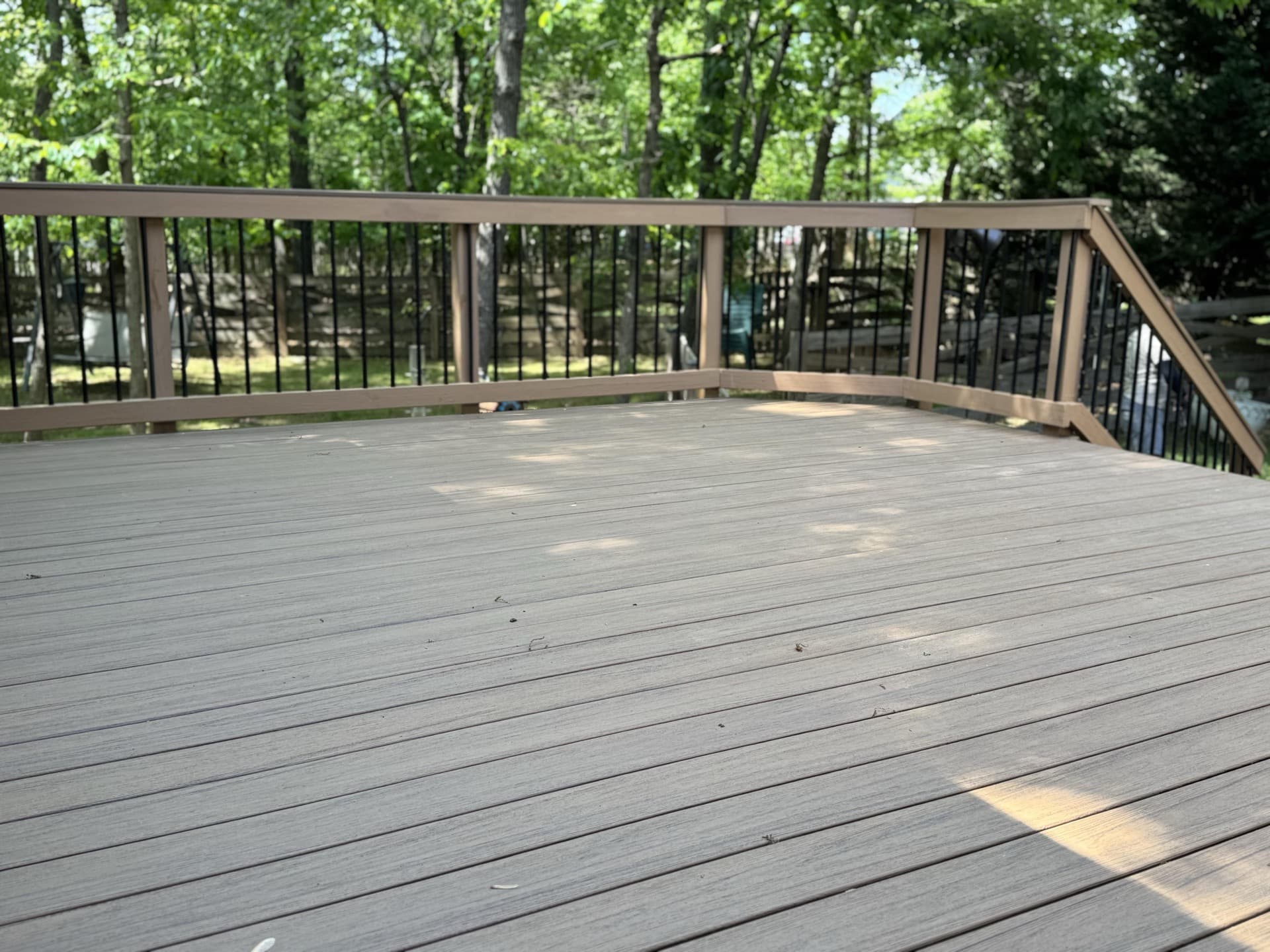
Deck Resurfacing
Wood-to-composite resurfacing for frames that pass inspection. The written estimate lists boards, railings, fascia, and what stays in the existing structure.
Patio Contractor Services
Professional bluestone and paver patio installation. We create durable, beautiful ground-level outdoor living spaces that last a lifetime.
Local Expertise Across Northern Virginia
Loudoun Decks serves homeowners in Loudoun County, Fairfax County, Prince William County, Arlington County, Alexandria, Falls Church, and Stafford County.
Loudoun County
- Ashburn, VA
- Leesburg, VA
- Sterling, VA
- Aldie, VA
- South Riding, VA
- Broadlands, VA
- Brambleton, VA
- Purcellville, VA
- Hamilton, VA
- Lovettsville, VA
- Round Hill, VA
- Middleburg, VA
- Dulles, VA
- Arcola, VA
- Belmont, VA
- Cascades, VA
- Countryside, VA
- Lowes Island, VA
- Potomac Falls, VA
- Lansdowne, VA
- One Loudoun, VA
- Stone Ridge, VA
Fairfax County
- Fairfax, VA
- Fairfax Station, VA
- Burke, VA
- Springfield, VA
- West Springfield, VA
- Annandale, VA
- Centreville, VA
- Chantilly, VA
- Clifton, VA
- Herndon, VA
- Reston, VA
- Great Falls, VA
- McLean, VA
- Vienna, VA
- Oakton, VA
- Falls Church, VA
- Tysons, VA
- Dunn Loring, VA
- Merrifield, VA
- Alexandria, VA
- Lorton, VA
- Mount Vernon, VA
Prince William County
- Gainesville, VA
- Haymarket, VA
- Bristow, VA
- Manassas, VA
- Manassas Park, VA
- Woodbridge, VA
- Lake Ridge, VA
- Dumfries, VA
- Occoquan, VA
- Nokesville, VA
- Independent Hill, VA
- Montclair, VA
- Dale City, VA
- Triangle, VA
Arlington County
- Arlington, VA
- Rosslyn, VA
- Ballston, VA
- Clarendon, VA
- Pentagon City, VA
- Crystal City, VA
- Shirlington, VA
Stafford County
- Stafford, VA
- Falmouth, VA
- Garrisonville, VA
- Aquia Harbour, VA
Guides Northern Virginia Homeowners Are Reading
Covered Deck Builder
Covered deck planning, outdoor living upgrades and shade structure decisions.
Trex vs TimberTech vs AZEK
Side-by-side brand comparison for Virginia climate.
Composite Deck Cost in Northern Virginia
Material pricing, verified source references, planning examples and what drives the price.
Free Deck Cost Calculator
Get an instant estimate by material, size, and add-ons.
TimberTech & AZEK Decks
Premium PVC and composite deck options for Northern Virginia.
Deck Permits in Loudoun County
Permit requirements, review steps and inspection context for Loudoun homeowners.