

How to Choose a Deck Contractor in Northern Virginia: 10 Questions to Ask
Choosing the wrong deck contractor in Northern Virginia is one of the most expensive mistakes a homeowner can make — a poorly built deck that fails inspection, requires structural repair, or collapses under load is not just expensive to fix, it is dangerous. These 10 questions separate qualified, licensed, insured deck contractors from the rest.
Northern Virginia's deck market includes hundreds of contractors ranging from large established companies to individual operators who appeared after a home show. The price spread for the same project scope can be $15,000 to $25,000 between the highest and lowest bids. Understanding why that spread exists — and what it means for quality, safety, and long-term outcome — is the most important thing a homeowner can do before signing a contract.
These 10 questions are not formalities. Each one probes a specific quality or compliance dimension that separates competent, properly licensed deck contractors from operators who cut corners on licensing, insurance, or code compliance.
Question 1: Are You Licensed as a Class A or Class B Contractor in Virginia?
Virginia requires residential contractors who perform work above a certain value to hold a Class A or Class B Contractor's License from the Virginia Department of Professional and Occupational Regulation (DPOR). A Class A license is required for projects over $120,000 annually; a Class B license for projects over $10,000 annually.
For a deck project costing $30,000 to $50,000, the contractor must hold at minimum a Class B license. Verify the license number on the DPOR website before signing. Unlicensed contractors performing work above these thresholds are operating illegally in Virginia — and homeowners who hire unlicensed contractors may have limited legal recourse for defective work.
Ask for: The contractor's DPOR license number and the license holder's name. Verify on dpor.virginia.gov.
Question 2: What Insurance Do You Carry?
A legitimate deck contractor carries two types of insurance:
General liability insurance: Covers damage to your property caused by the contractor's work (e.g., a crew member breaks a window, or a piece of framing falls and damages the house siding). Minimum recommended coverage: $1,000,000 per occurrence.
Workers' compensation insurance: Covers injuries to the contractor's employees while working on your property. Without workers' comp, you as the homeowner may be liable for a worker's medical costs if they are injured on your property. In Virginia, contractors with employees are required to carry workers' comp.
Ask for: A certificate of insurance (COI) naming you as an additional insured on the GL policy, and proof of workers' comp coverage. Legitimate contractors can produce these within 24 hours of being asked.
Question 3: Will You Pull the Permit?
The deck permit must be pulled in the name of the contractor performing the work — not the homeowner. If a contractor asks you to pull the permit yourself, or tells you the project does not need a permit (when it clearly does), these are serious red flags.
Why it matters: When a contractor pulls the permit, they take legal responsibility for the work meeting code. When the homeowner pulls the permit as an owner-builder, the homeowner takes that responsibility — but the contractor is the one building it. If the work fails inspection or causes problems, the homeowner has significantly less recourse against an unlicensed or uninsured contractor when they pulled the permit themselves.
Ask for: The contractor's plan to pull the permit before construction begins and their process for scheduling inspections.
Question 4: Who Does the Work — Your Crew or Subcontractors?
Understanding whether the contractor uses their own employees or subcontractors affects quality control, insurance coverage, and accountability. Neither approach is automatically superior — large deck companies use both models effectively — but you should understand which applies.
If the contractor uses subcontractors, ask whether those subcontractors are licensed and insured, and whether the prime contractor's insurance covers subcontractor work. Some contractors use unlicensed day labor as subcontractors, then front the project with their own license. This creates problems if work fails.
Ask: Who specifically will perform the framing work, and who will perform any specialty work (electrical, gas)?
Question 5: Can I See Your Lien Waiver Process?
In Virginia, subcontractors and material suppliers can file a mechanic's lien on your property if the prime contractor does not pay them — even if you paid the contractor in full. A legitimate contractor either works without subcontractors (eliminating the risk) or uses a lien waiver process to protect homeowners.
A lien waiver is a document signed by a subcontractor or supplier confirming they have been paid and waiving their lien rights on your property. Legitimate contractors who use subs provide lien waivers from their subs as a matter of course.
Ask: Do you use subcontractors, and if so, will you provide lien waivers as payment milestones are completed?
Question 6: What Is Your Payment Schedule?
Legitimate deck contractors use milestone-based payment schedules tied to project phases: deposit at signing, payment at framing completion, payment at decking completion, and final payment at final inspection. The deposit should not exceed 30 to 40 percent for standard projects.
Red flags: - Demanding 50% or more upfront before any work begins - Requesting full payment before final inspection - Requesting payment in cash with no written receipt - No written contract — verbal-only agreements
Ask for: A written contract specifying payment milestones tied to project phases and inspection completion.
Question 7: What Does Your Warranty Cover?
A contractor's workmanship warranty is separate from the material manufacturer's warranty. For a deck project, you should receive:
Workmanship warranty: The contractor's guarantee of their installation quality. Typical for Northern Virginia: 1 to 5 years on workmanship. This covers improper installation that causes failures — ledger movement, joist hanger issues, loose railing connections. A one-year workmanship warranty is the minimum acceptable; two to five years is better.
Material warranty: The manufacturer's warranty on the composite decking, railing, and hardware. This is separate from the contractor's workmanship warranty — the manufacturer covers material defects; the contractor covers installation defects.
Understand which entity you call for which type of failure, and what the contractor's process is for handling warranty claims.
Question 8: Can You Provide References for Projects Completed in the Past Two Years?
Every contractor can provide a reference from a satisfied client — the question is whether those references are recent and verifiable. Ask specifically for references from projects completed in the past two years, and contact at least two of them.
Ask the references: - Was the project completed on the timeline quoted? - Were there surprises in the final price versus the initial quote? - How did the contractor handle problems that arose during construction? - Would you hire them again?
Ask for: Two to three references from projects completed in the past 24 months, with contact information.
Question 9: How Do You Handle Changes During Construction?
Discoveries during construction — rotted ledger, compromised framing that was not visible during estimate, soil conditions requiring larger footings — are a normal part of deck work, particularly on replacement projects. How a contractor handles these discoveries is a significant quality indicator.
Legitimate contractors document change orders in writing before performing additional work, with a written description of the change and the cost impact. A contractor who presents a large unexpected bill at the end of the project for undiscussed changes is a problem — even if the additional work was genuinely necessary.
Ask: What is your process for change orders discovered during construction? Will I receive a written change order before any additional work proceeds?
Question 10: What Is Your Process for Final Inspection?
A permitted deck must pass final inspection by the county building inspector before it is legally complete. The contractor should be responsible for scheduling and attending the final inspection, addressing any corrections required by the inspector before final payment, and providing you with the final inspection card or digital confirmation.
A contractor who discourages you from pursuing the final inspection, tells you inspections are not necessary, or disappears after construction without completing the inspection process is a major red flag.
Ask: What is your process for scheduling and passing the county final inspection?
Why LDN Decks Passes All 10
LDN Decks is a Class A licensed Virginia contractor. We carry $2M general liability and workers' compensation coverage. We pull all permits, maintain licensed trade contractors for gas and electrical work, use lien waiver processes on all sub-traded work, offer milestone payment schedules, and provide written workmanship warranties. References available for every recent project.
Contact LDN Decks for a Free Estimate
---
Related: Deck Cost Northern Virginia 2026 · Deck Permit Process Loudoun County · Deck Collapse Warning Signs · Repair vs Replace a Deck · New Deck Services
Frequently Asked Questions
What license does a deck contractor need in Virginia?
Virginia requires contractors performing work above $10,000 annually to hold a Class B Contractor's License from the Virginia Department of Professional and Occupational Regulation (DPOR). For projects over $120,000 annually, a Class A license is required. Verify any contractor's license on dpor.virginia.gov before signing a contract. Working with an unlicensed contractor reduces your legal recourse for defective work and may create problems with permit applications.
Should a deck contractor pull the permit or should I?
The deck permit should be pulled by the contractor in their name, not by the homeowner. When a contractor pulls the permit, they take legal responsibility for code-compliant construction. If a contractor asks you to pull the permit, or says the project does not need a permit, these are significant red flags — the first shifts responsibility to you, and the second suggests the contractor plans to skip required inspections.
What insurance should a deck contractor carry?
A legitimate deck contractor carries general liability insurance ($1,000,000 per occurrence minimum) covering damage to your property, and workers' compensation insurance covering injuries to their employees. Request a certificate of insurance naming you as additional insured before work begins. Without workers' comp, you as the homeowner may be liable for medical costs if a worker is injured on your property — a significant legal exposure.
What is a normal payment schedule for a deck project in Northern Virginia?
Legitimate deck contractors use milestone-based payment schedules: 30 to 40 percent deposit at contract signing, a payment at framing completion, a payment at decking completion, and final payment upon passing final inspection. Red flags include: demands for 50% or more upfront before work begins, requests for full payment before final inspection, cash-only with no written receipt, or no written contract at all.
What warranty should a deck contractor provide in Northern Virginia?
Expect a workmanship warranty of 1 to 5 years from the contractor covering installation defects — improper ledger connection, loose railing posts, failed hardware connections. This is separate from the material manufacturer's warranty (25 to 30 years on composite decking products), which covers material defects. Understand which entity covers which type of failure before signing. Two to five-year workmanship warranties are standard among quality Northern Virginia deck contractors.
Licensing requirements and contractor regulations are subject to change. Always verify current Virginia contractor licensing requirements with the Virginia Department of Professional and Occupational Regulation (DPOR) at dpor.virginia.gov. This guide is for informational purposes and does not constitute legal advice.
Plan Your Northern Virginia Deck Project With Loudoun Decks
Get a free, no-pressure consultation from a licensed Northern Virginia deck builder. Call (571) 655-7207 or visit ldndecks.com/get-estimate.
Get a Free EstimateEverything Your Outdoor
Space Needs
From ground-up deck construction to full outdoor living spaces, every project is custom-designed for your home with permit planning, material guidance, and written workmanship terms.
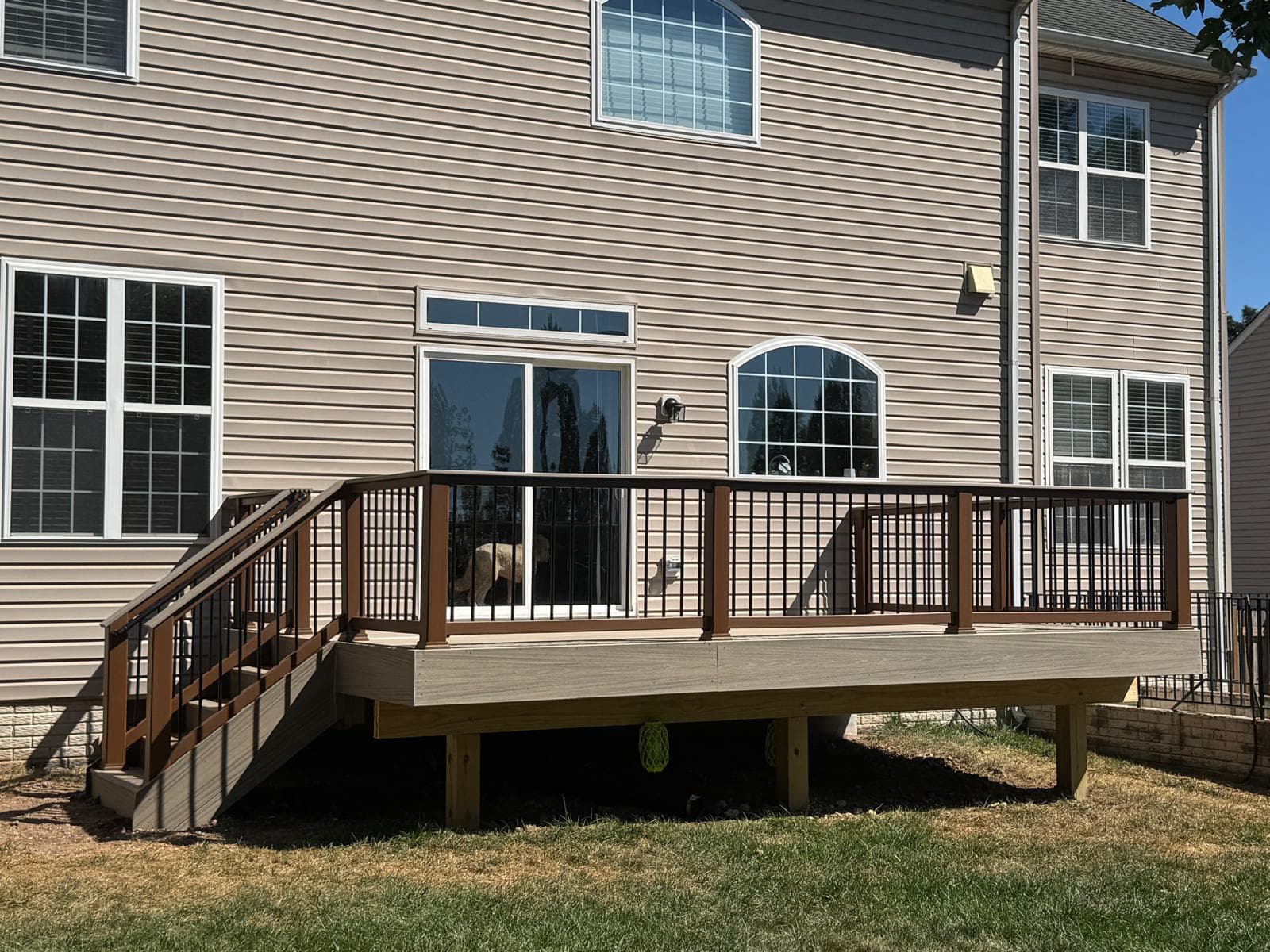
Custom Deck Builder
Transform your backyard with a custom-designed deck using Trex, TimberTech, wood, or PVC materials matched to your budget, HOA rules, and maintenance goals.
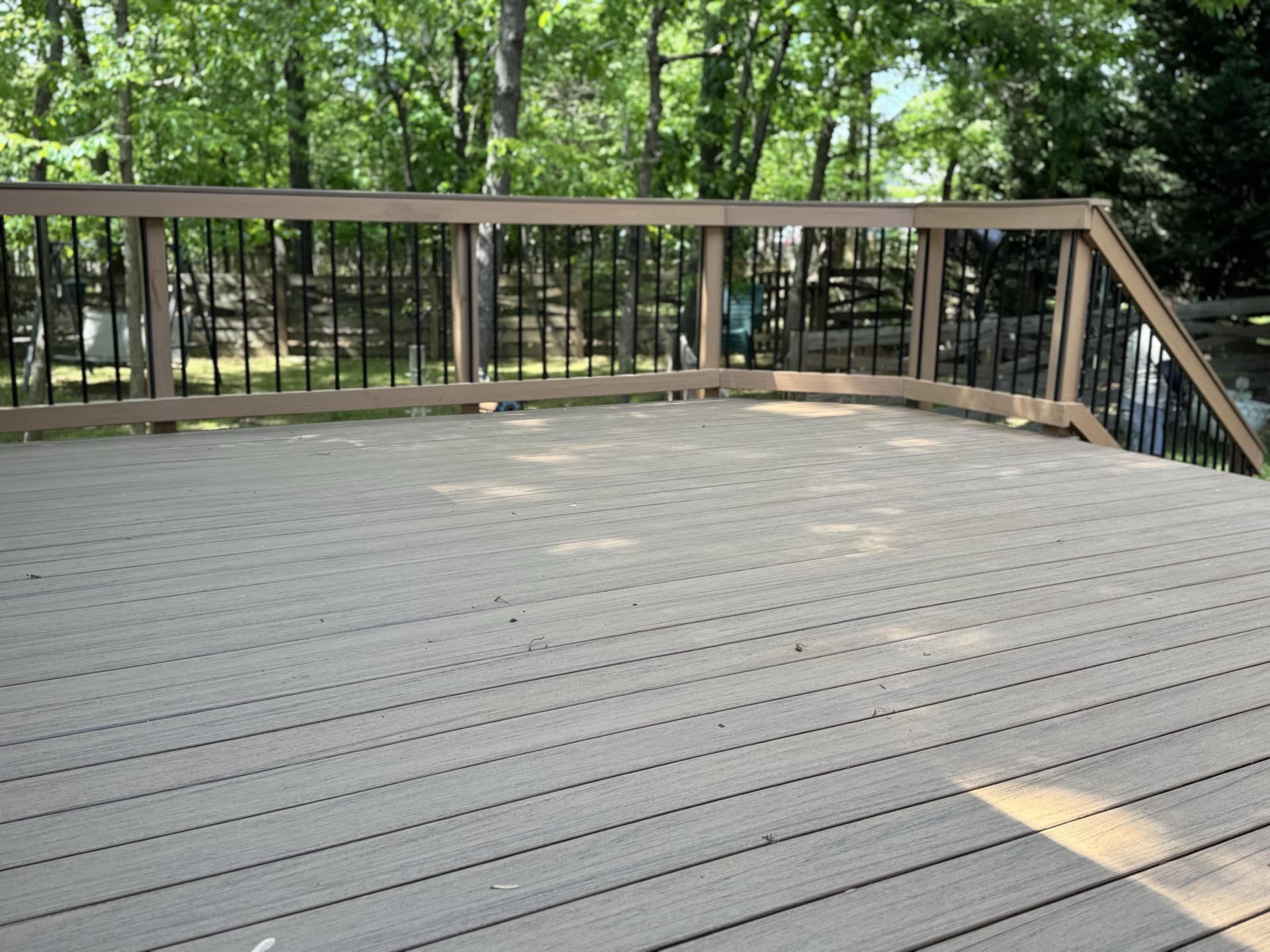
Deck Resurfacing
Premium wood-to-composite resurfacing for structurally sound frames. Full surface conversions start from $15k with boards, railings, fascia, and safety review.

Patio Contractor Services
Professional bluestone and paver patio installation. We create durable, beautiful ground-level outdoor living spaces that last a lifetime.
Local Expertise Across Northern Virginia
Loudoun Decks is a trusted deck builder serving Loudoun County, Fairfax County, Prince William County, Arlington, and Stafford.
Guides Northern Virginia Homeowners Are Reading
Covered Deck Builder
Covered deck planning, outdoor living upgrades and shade structure decisions.
Trex vs TimberTech vs AZEK
Side-by-side brand comparison for Virginia climate.
Composite Deck Cost in Northern Virginia
Material pricing, verified source references, planning examples and what drives the price.
Free Deck Cost Calculator
Get an instant estimate by material, size, and add-ons.
TimberTech & AZEK Decks
Premium PVC and composite deck options for Northern Virginia.
Deck Permits in Loudoun County
Permit requirements, review steps and inspection context for Loudoun homeowners.