
Pressure-Treated Deck Boards: What Northern Virginia Homeowners Need to Know
Pressure-treated decking has been the standard material for residential deck surfaces for decades, and it remains a viable option in 2026 for Northern Virginia homeowners who understand what they are choosing. This guide covers what modern pressure-treated lumber actually is, how it performs in Northern Virginia's climate, and what maintenance commitment it requires.
Pressure-treated (PT) decking is often discussed in comparison to composite as if it is the inferior option. In some dimensions, it is — composite requires less maintenance and has a longer effective lifespan before significant investment is needed. But pressure-treated decking remains a legitimate choice for specific situations, and understanding when it is and is not the right material helps Northern Virginia homeowners make informed decisions.
What Modern Pressure-Treated Lumber Is
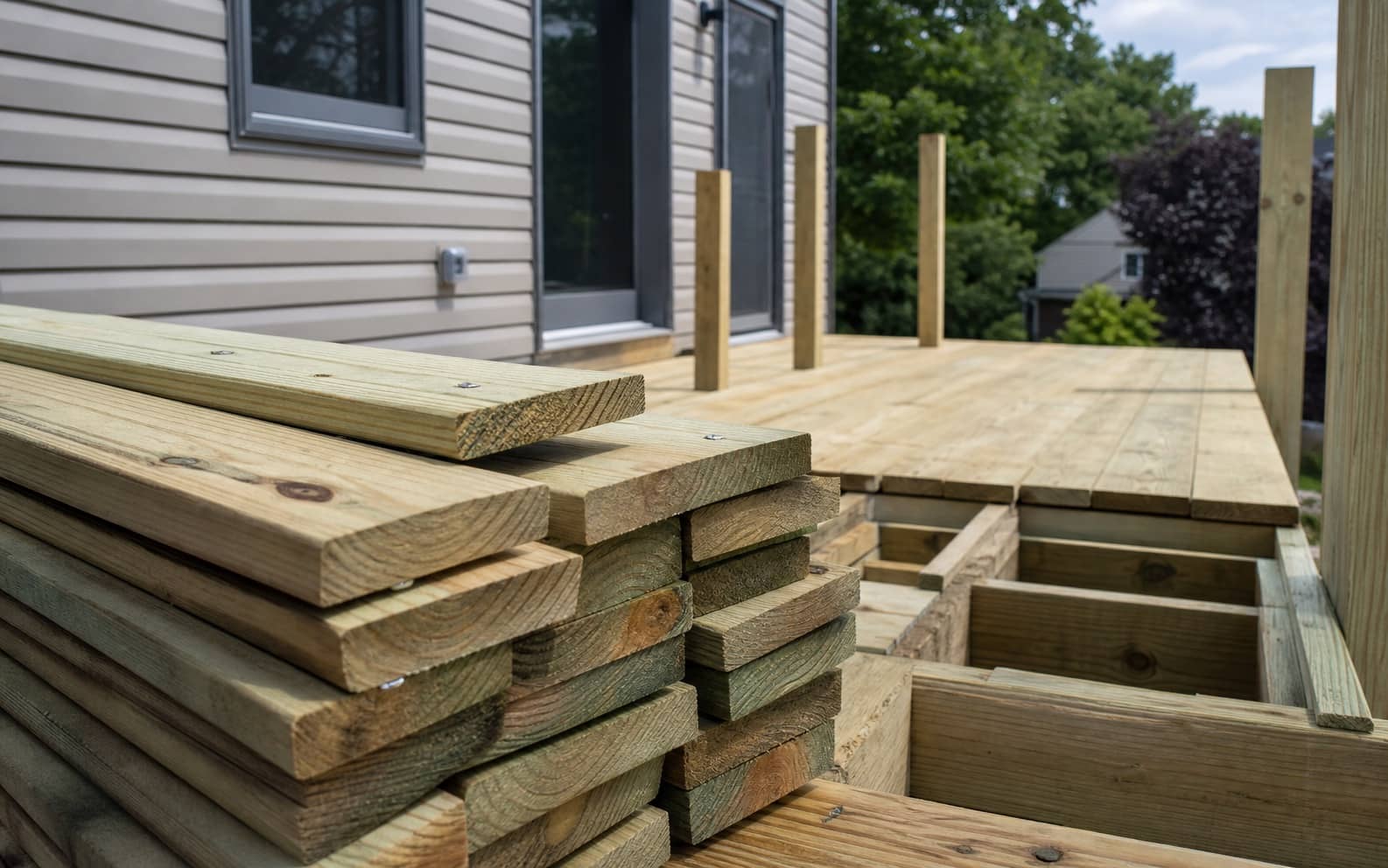
Pressure-treated lumber is wood — typically Southern Yellow Pine in the Eastern US market — that has been infused with preservative chemicals under pressure. The preservative penetrates the wood fiber and protects against fungal decay and insect damage (termites, carpenter ants).
The chemistry has changed. Prior to 2004, most residential pressure-treated lumber used CCA (chromated copper arsenate) — an arsenic-containing compound that was effective but raised health and environmental concerns. CCA was phased out of residential use. Modern PT lumber uses copper-based preservatives: ACQ (alkaline copper quaternary), CA (copper azole), or MCQ (micronized copper quaternary).
Important consequence of the chemistry change: Modern copper-based preservatives are more corrosive to standard steel hardware than CCA was. Decks built with post-2004 PT lumber must use hot-dipped galvanized or stainless steel hardware — joist hangers, screws, bolts, post bases. Standard zinc-plated hardware corrodes rapidly in contact with ACQ-treated lumber. This is a code requirement and a real-world durability requirement — it is also one of the most common mistakes on improperly built or owner-built PT decks in Northern Virginia.
Treatment Retention Levels
PT lumber is graded by the amount of preservative retained in the wood, expressed in pounds per cubic foot. For deck applications:
0.15 pcf (Above Ground, AG): Interior structural use or above-grade applications with good drainage and drying. Not appropriate for ground contact or submerged applications.
0.25 pcf (Ground Contact, GC): Required for deck joists, beams, posts, and structural framing members in contact with or near the ground. This is the minimum specification for structural framing in all Northern Virginia deck permits.
0.40 pcf (Heavy Duty Ground Contact): For posts set directly in soil, foundation applications, and critical structural members. Recommended for post bases in Northern Virginia's high-moisture soil conditions.
For deck surface boards (the boards you walk on), AG-rated PT (0.15 pcf) is typically specified — the boards are above grade and receive good air circulation. The framing must be GC or higher.
How PT Decking Performs in Northern Virginia
Year 1 to 3: Fresh PT lumber contains significant retained moisture from the treatment process. The boards may arrive at the job site with surface wetness and will check (develop small surface cracks along the grain) as they dry. This is normal and not a defect. Staining or sealing is not effective on freshly treated, still-drying lumber — most stain manufacturers recommend waiting 6 to 12 months before applying a finish to new PT lumber. During the first season, the deck surface will look rough and uneven as the boards dry.
Year 3 to 7: With consistent staining and sealing every 2 to 3 years, PT decking in this age range looks good and performs reliably. Color is maintained, surface splintering is limited, and the boards hold their structure. This is the best performance window for a well-maintained PT deck.
Year 8 to 15: The cumulative effect of UV exposure, Northern Virginia's humidity, and seasonal moisture cycling begins to show. Even well-maintained PT boards develop surface checking and weathering. Color becomes harder to maintain consistently. Individual boards may develop significant warping or splitting, requiring selective replacement. This is the maintenance-intensive period.
Year 15 to 25+: Without consistent maintenance, many PT decks in Northern Virginia are in decline by this age. With exceptional maintenance, boards can remain structurally sound longer — but the cumulative labor investment has typically exceeded the initial cost savings compared to composite.
Maintenance Requirements in Northern Virginia
Pressure-treated decking requires active maintenance to perform at its potential:
Staining/sealing every 2 to 3 years: A penetrating oil-based stain or semi-transparent water-based stain protects the wood surface from UV and moisture. The cost for professional staining of a 300-square-foot deck (power wash, prep, apply) runs $800 to $1,500 per treatment cycle in Northern Virginia. Over 20 years, 7 to 9 treatment cycles total $5,600 to $13,500.
Annual inspection: Check for loose fasteners, raised screw heads, splitting boards, and any soft spots indicating early rot. Address issues promptly — deferred maintenance accelerates degradation.
Spring cleaning: Northern Virginia's pollen season coats PT surfaces in fine yellow/green pollen that can stain if left on wet wood. Annual spring power washing is recommended.
Partial board replacement: Plan for selective board replacement at year 10 to 15, addressing the boards with the most significant weathering or splitting.
When Pressure-Treated Is the Right Choice
Budget constraints: PT decking costs 30 to 50 percent less than composite surface material. For homeowners with a firm budget ceiling that composite cannot meet, a well-built PT deck is better than no deck.
Short ownership horizon: If you plan to sell within 5 to 7 years, a well-maintained PT deck that presents cleanly at listing time may not need the composite premium to serve its purpose.
Structural framing (always): Regardless of surface material, all deck framing — joists, beams, posts, ledger — is pressure-treated lumber. This is code-required and not optional. Composite decking sits on PT framing; the choice of surface material does not affect the structural framing specification.
Utility applications: Low-visibility utility decks — equipment platforms, storage areas, secondary access decks — are appropriate candidates for PT where aesthetics are not the priority.
PT Decking Is Not Maintenance-Free
The most important thing for Northern Virginia homeowners to understand about pressure-treated decking is that the cost savings relative to composite are front-loaded, and the maintenance costs are back-loaded. The 30 to 50 percent lower upfront material cost is real — but the 20-year total cost including maintenance and partial replacement converges with composite in most scenarios. See the full 20-year cost comparison for a detailed analysis.
LDN Decks builds both pressure-treated and composite decks across Northern Virginia. We provide honest cost comparisons for both options so our clients choose the material that fits their situation — not just the one that's easiest to sell.
Get a Free Estimate — PT and Composite Options Compared
---
Related: Composite vs Pressure-Treated: 20-Year Cost · Trex Decking Review · TimberTech vs Trex · Deck Cost 2026 · Deck Repair Services
Frequently Asked Questions
Is pressure-treated decking safe in 2026?
Yes. Modern pressure-treated lumber uses copper-based preservatives (ACQ, CA, MCQ) that replaced the arsenic-containing CCA formulation phased out in 2004. Current PT lumber is safe for residential deck use. Standard handling precautions (wash hands after handling, avoid sanding or burning) are recommended, as with any construction material. Finished, installed PT decking poses no health risk for normal outdoor use.
How long does pressure-treated decking last in Northern Virginia?
With consistent maintenance (staining and sealing every 2 to 3 years), a pressure-treated deck surface can last 15 to 25 years in Northern Virginia. Without regular maintenance, significant weathering, splitting, and surface degradation typically develops at 8 to 12 years. Northern Virginia's humid summers and freeze-thaw winters accelerate weathering compared to drier climates.
How often does pressure-treated decking need to be stained?
Every 2 to 3 years in Northern Virginia. The humid climate and significant UV exposure accelerate the degradation of surface finish. The water-beading test is the practical guide: pour water on the deck surface. If it beads, the finish is still protecting the wood. If it absorbs immediately, the deck needs restaining. Professional staining of a 300-square-foot deck costs $800 to $1,500 in the Northern Virginia market.
What hardware is required for pressure-treated decking?
Modern pressure-treated lumber uses copper-based preservatives (ACQ, CA, MCQ) that are highly corrosive to standard steel hardware. Code and manufacturer requirements specify hot-dipped galvanized or stainless steel hardware — joist hangers, screws, bolts, and post bases. Standard zinc-plated hardware corrodes rapidly in contact with modern PT lumber. This is one of the most common quality failures on improperly built wood decks in Northern Virginia.
Can I stain pressure-treated decking right away?
No. Freshly treated PT lumber retains significant moisture from the treatment process and should dry for 6 to 12 months before staining. Stain applied to wet or still-drying PT lumber will not penetrate properly and will peel or flake prematurely. The practical test is to sprinkle water on the board — if it beads, the wood is still too wet to stain effectively; if it absorbs, the wood is ready.
This guide reflects general performance characteristics of pressure-treated lumber as of 2026. Specific product retention levels, maintenance requirements, and performance outcomes vary by product, installation, site conditions, and maintenance practices. Always follow manufacturer installation and maintenance guidelines and use code-required hardware with modern PT lumber.
Plan Your Northern Virginia Deck Project With Loudoun Decks
Get a free, no-pressure consultation from a licensed Northern Virginia deck builder. Call (571) 655-7207 or visit ldndecks.com/get-estimate.
Get a Free EstimateEverything Your Outdoor
Space Needs
From ground-up deck construction to full outdoor living spaces, every project is custom-designed for your home with permit planning, material guidance, and written workmanship terms.
Custom Deck Builder
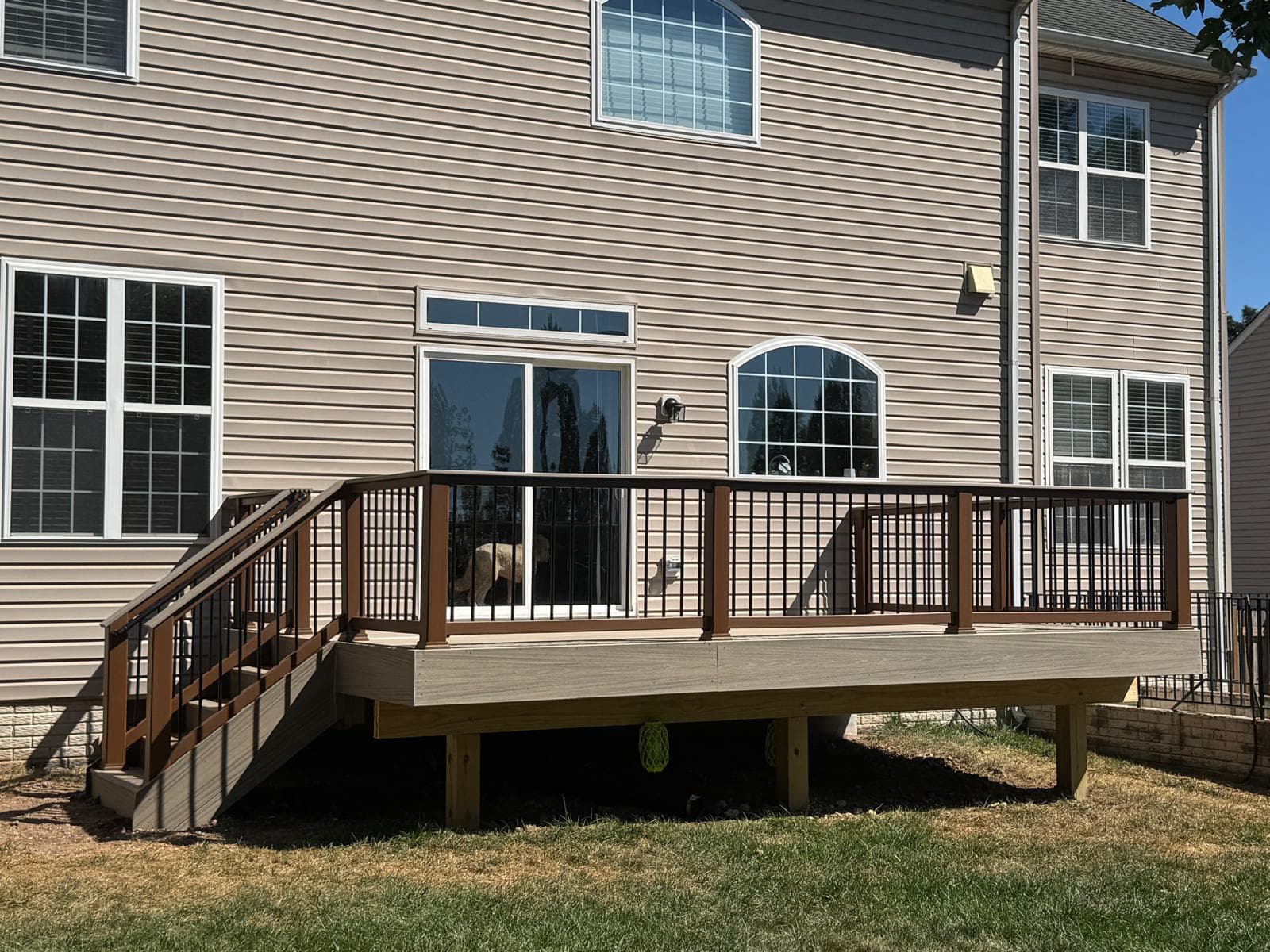
Transform your backyard with a custom-designed deck using Trex, TimberTech, wood, or PVC materials matched to your budget, HOA rules, and maintenance goals.
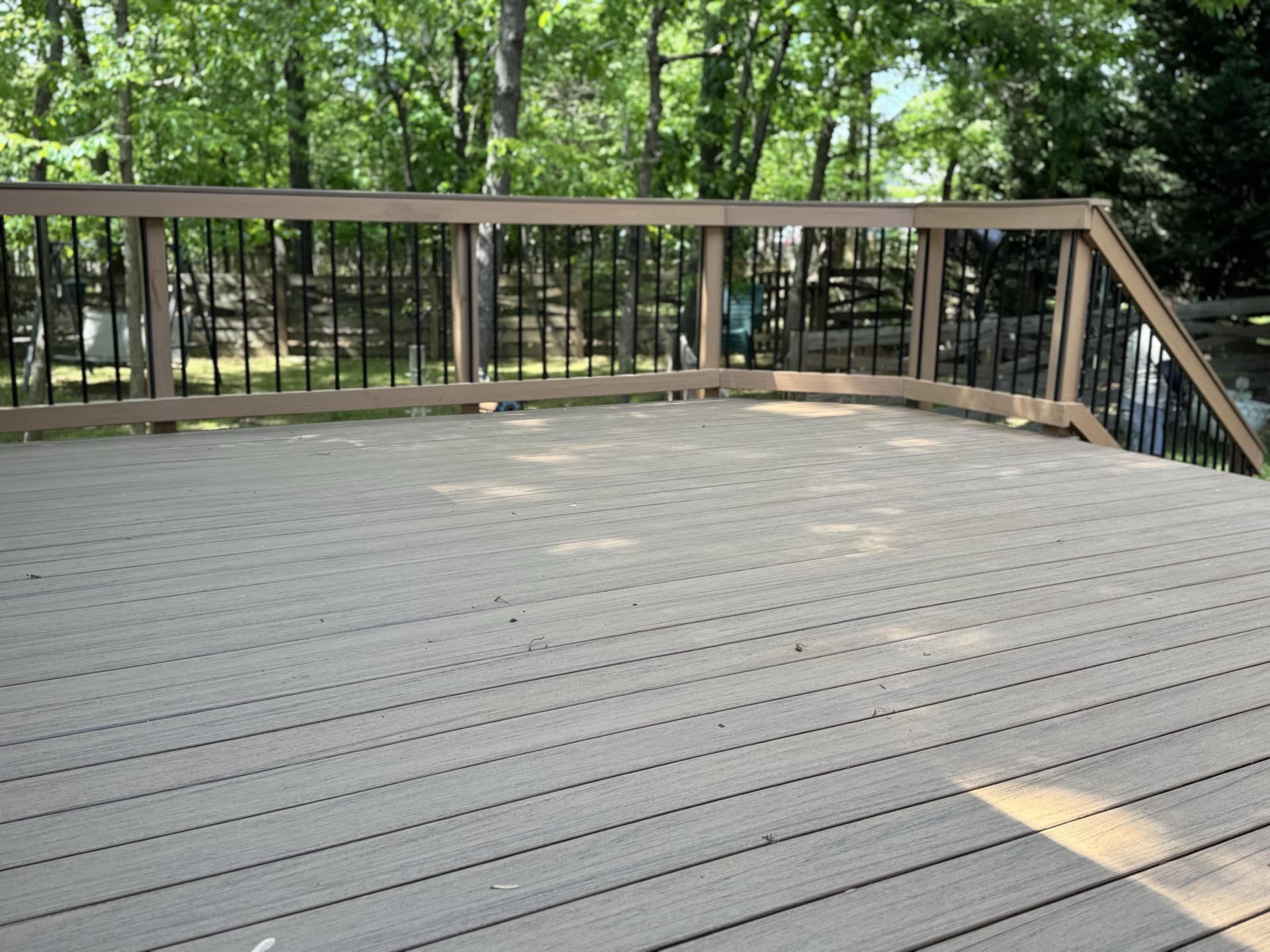
Deck Resurfacing
Premium wood-to-composite resurfacing for structurally sound frames. Full surface conversions start from $15k with boards, railings, fascia, and safety review.
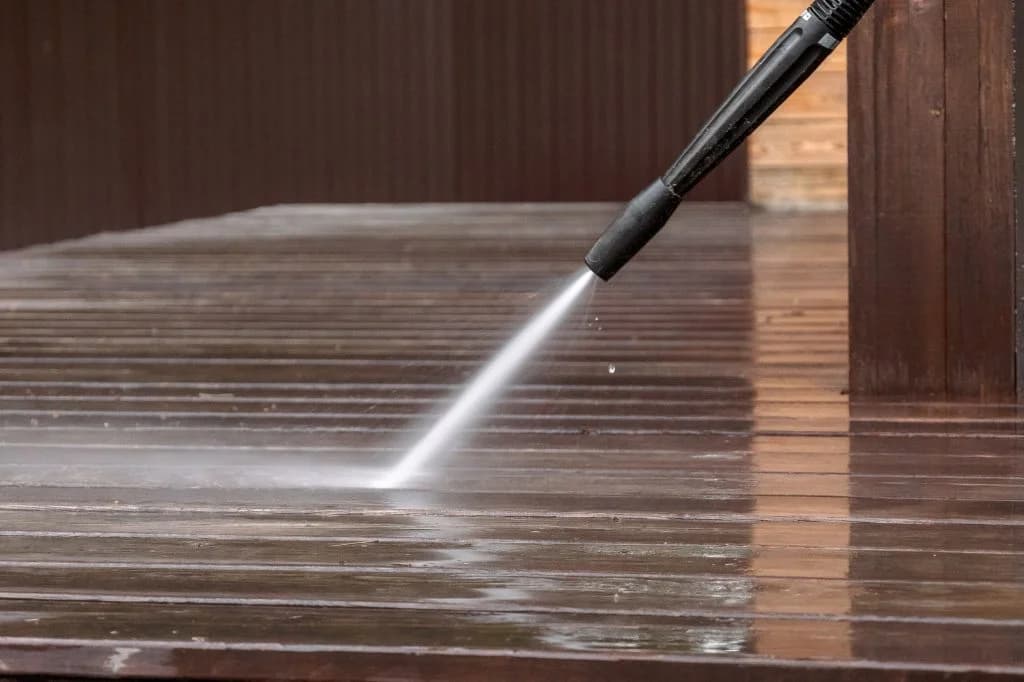
Patio Contractor Services
Professional bluestone and paver patio installation. We create durable, beautiful ground-level outdoor living spaces that last a lifetime.
Local Expertise Across Northern Virginia
Loudoun Decks is a trusted deck builder serving Loudoun County, Fairfax County, Prince William County, Arlington, and Stafford.
Guides Northern Virginia Homeowners Are Reading
Composite Deck Cost in Northern Virginia
Material pricing, verified source references, planning examples and what drives the price.
Free Deck Cost Calculator
Get an instant estimate by material, size, and add-ons.
TimberTech & AZEK Decks
Premium PVC and composite deck options for Northern Virginia.
Deck Permits in Loudoun County
Permit requirements, review steps and inspection context for Loudoun homeowners.
Deck Permits in Fairfax County
Requirements, timeline, fees, and inspection process.
Deck Builder in Northern Virginia
Custom decks, permits, HOA support and local service areas.