


Deck Post and Footing Problems: When to Replace and What It Costs
Deck posts carry every pound of load from the deck surface to the ground. When a post rots or a footing heaves, the entire structural system above it is at risk. This guide covers how to identify post and footing failure on Northern Virginia decks and what replacement actually involves.
Deck posts and concrete footings are the foundation of your deck — literally. Every load on the deck surface flows downward through the joists, into the beams, into the posts, through the post bases, and finally into the concrete footings that anchor everything to the earth. When any element in this vertical load path is compromised, the deck above it becomes unsafe.
Post and footing problems are common on older Northern Virginia decks, and they are frequently hidden from view until the problem is significant. This guide covers what causes post rot and footing failure, how to identify both conditions, and what homeowners in Loudoun and Fairfax counties should expect from a professional repair.
What Causes Deck Post Rot
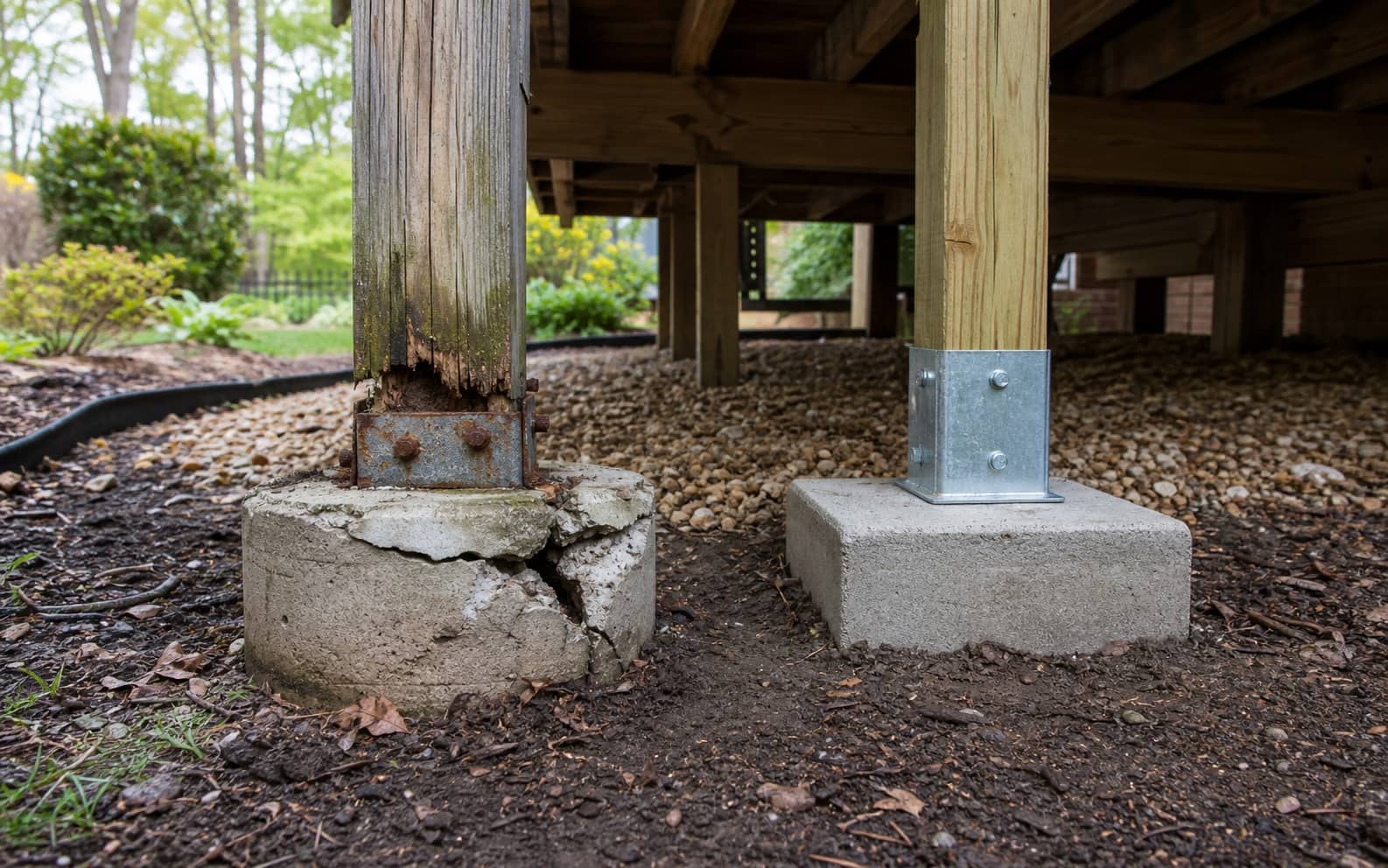
Deck posts rot for one primary reason: sustained moisture at the base of the post. The specific location where rot begins is almost always at or just above the post base — the transition zone where the post moves from open air to the concrete footing surface.
Older post installation methods made this problem nearly universal. Posts set directly into concrete (embedded-in-concrete method) sit in a pocket that collects and holds water. The post base stays wet after rain, snow melt, or irrigation spray, and the sustained moisture enables fungal decay to establish in the most structurally critical location — the point where the post must transfer maximum compression load.
Even above-grade post installation can trap moisture if the post base hardware lacks adequate drainage ports, if the concrete footing surface has cracked and cups water, or if grade (soil level) around the footing has risen to cover the post base over time.
Pressure-treated lumber is resistant to fungal decay when treated correctly, but that resistance is not permanent and is not uniform throughout the board. The treatment penetrates deeply in end grain but less deeply in face grain. If the post is cut to length at the job site, the cut end — which sits on or near the footing — may have inadequate preservative penetration.
What Causes Footing Failure in Northern Virginia
Virginia's frost line in Loudoun and Fairfax counties ranges from 24 to 30 inches below grade. Concrete footings must extend below the frost line — if they do not, the soil beneath the footing freezes and expands in winter, pushing the footing and everything above it upward.
Heave is the most common footing failure mode in Northern Virginia. A footing that heaves in winter may partially return to its original position in spring, but with each cycle, it tends to drift higher and further out of alignment. Over five to ten years, multiple heave cycles can raise a footing by several inches, visibly tilting the post above it and stressing every connection in the structural system.
Footings can also crack if they were poured with insufficient concrete or rebar, if the concrete mix was too wet when poured, or if the footing diameter was inadequate for the load it carries. A cracked footing that allows water infiltration can degrade significantly over many freeze-thaw cycles.
How to Identify Post Problems
Visual inspection at grade: Look at the base of each post at the point where it transitions to the concrete. Signs of compromise include: dark brown or black discoloration in the wood fiber (deeper than surface weathering), visible checking or cracking that exposes interior wood, wood that has shrunk away from the post base hardware, and any section that appears visually different from the solid wood above.
Screwdriver probe: Push a flat-head screwdriver firmly into the post at ground level. Healthy pressure-treated lumber requires significant force. Rotted wood compresses with light hand pressure.
Post plumb check: Use a level or sight line from a distance. A post that is visibly out of plumb — leaning — suggests the footing below has shifted.
Lateral movement test: Apply lateral pressure to the post by hand. A sound post should feel rigid. A post with significant base rot may flex slightly, or you may feel movement at the post-to-beam connection above.
How to Identify Footing Problems
Visible heave: The top surface of the footing has risen above original grade or above the surrounding footing caps in a way that suggests the footing has moved upward.
Visible cracks: Surface cracks across the footing face, particularly if they penetrate depth or show staining from internal moisture.
Misaligned post base hardware: Post bases should sit flat and level on the footing surface. If the hardware has tilted or partially separated from the concrete, the footing has moved.
Deck-level unevenness: Check the deck surface from one end. Sections of deck that have developed a noticeable slope near one post location are often caused by an underlying footing issue.
Post and Footing Replacement: What It Involves
Replacing a deck post and footing is more involved than it appears from the surface. The process includes: temporarily shoring the beam above the compromised post so the deck frame is supported during the repair, removing the damaged post and post base hardware, breaking out the existing footing if replacement is required, drilling or digging a new footing hole to the correct depth, pouring a new footing with appropriate diameter and reinforcement, allowing adequate cure time before loading, and installing a new post with correct-rated post base hardware.
This is a permitted repair. The county inspector verifies footing depth and diameter before the concrete is poured, and the completed repair must pass structural inspection before the shoring can be removed.
2026 Cost Ranges in Northern Virginia
Post replacement only (footing is sound): $600 to $1,400 per post, depending on post height, beam removal complexity, and hardware.
Post plus footing replacement: $900 to $2,200 per post location, reflecting the additional cost of breaking out the existing footing, drilling to correct depth, forming and pouring new concrete, and allowing cure time before loading.
Multiple post locations: Projects with three or more post replacements often benefit from efficiency on mobilization and permit costs. A full post-and-footing replacement at four corners of an aging deck can range from $3,500 to $7,000 depending on deck height and site access.
When multiple structural deficiencies exist simultaneously — rotted joists, a compromised ledger, and failed post locations — the cumulative repair cost often approaches or exceeds the cost of a full deck replacement. A professional assessment gives a clear picture of total repair scope before any decision is made.
Getting a Post and Footing Assessment in Northern Virginia
LDN Decks evaluates post and footing condition as part of every structural deck inspection across Loudoun, Fairfax, and Prince William counties. We probe posts, check footing condition where accessible, assess plumb and lateral stability, and document every finding in a written report with repair cost and scope.
Schedule a Free Structural Assessment
---
Related: 7 Signs Your Deck Needs Immediate Repair · Deck Joist Rot Guide · Ledger Board Problems · Deck Replacement Services · Deck Repair Services · Deck Footing Code Northern Virginia
Frequently Asked Questions
How do I know if my deck posts are rotting?
Probe the base of each post with a flat-head screwdriver at ground level — healthy pressure-treated lumber resists penetration while rotted wood compresses with light pressure. Also look for dark discoloration, visible cracking that exposes interior wood, and any post that is visibly out of plumb or moves laterally when pushed.
What is deck footing heaving?
Footing heaving occurs when a concrete footing was set shallower than the frost line — 24 to 30 inches in Loudoun and Fairfax counties — causing the soil beneath to freeze and expand in winter, pushing the footing upward. Over multiple freeze-thaw cycles, heave can raise a footing by several inches, tilting the post above it and stressing every structural connection.
How much does it cost to replace deck posts in Northern Virginia?
Post replacement only (when the footing is sound) typically ranges from $600 to $1,400 per post. When the footing must also be replaced, the cost per location rises to $900 to $2,200 depending on post height, footing depth, and site access. Projects with three or more posts often see lower per-post costs due to mobilization efficiency.
Do I need a permit to replace deck posts?
Yes. Post and footing replacement is a structural repair that requires a building permit in Loudoun, Fairfax, and Prince William counties. The permit requires a county inspection to verify footing depth before concrete is poured. Completing structural repairs without a permit creates a disclosed defect that must be reported in a real estate transaction.
Can I replace one deck post at a time?
Yes, if the repair is properly sequenced. The beam above the compromised post must be temporarily shored before the post is removed. A competent contractor handles one post location at a time, with the existing structure supported throughout. If multiple post locations are compromised, it is often more efficient to address all of them in a single mobilization.
This article provides general homeowner guidance on deck post and footing problems and is not a substitute for a professional in-person structural inspection. Repair costs, code requirements, and permit obligations vary by county and project complexity. Always obtain a written estimate from a licensed contractor before undertaking structural repairs.
Plan Your Northern Virginia Deck Project With Loudoun Decks
Get a free, no-pressure consultation from a licensed Northern Virginia deck builder. Call (571) 655-7207 or visit ldndecks.com/get-estimate.
Get a Free EstimateEverything Your Outdoor
Space Needs
From ground-up deck construction to full outdoor living spaces, every project is custom-designed for your home with permit planning, material guidance, and written workmanship terms.
Custom Deck Builder
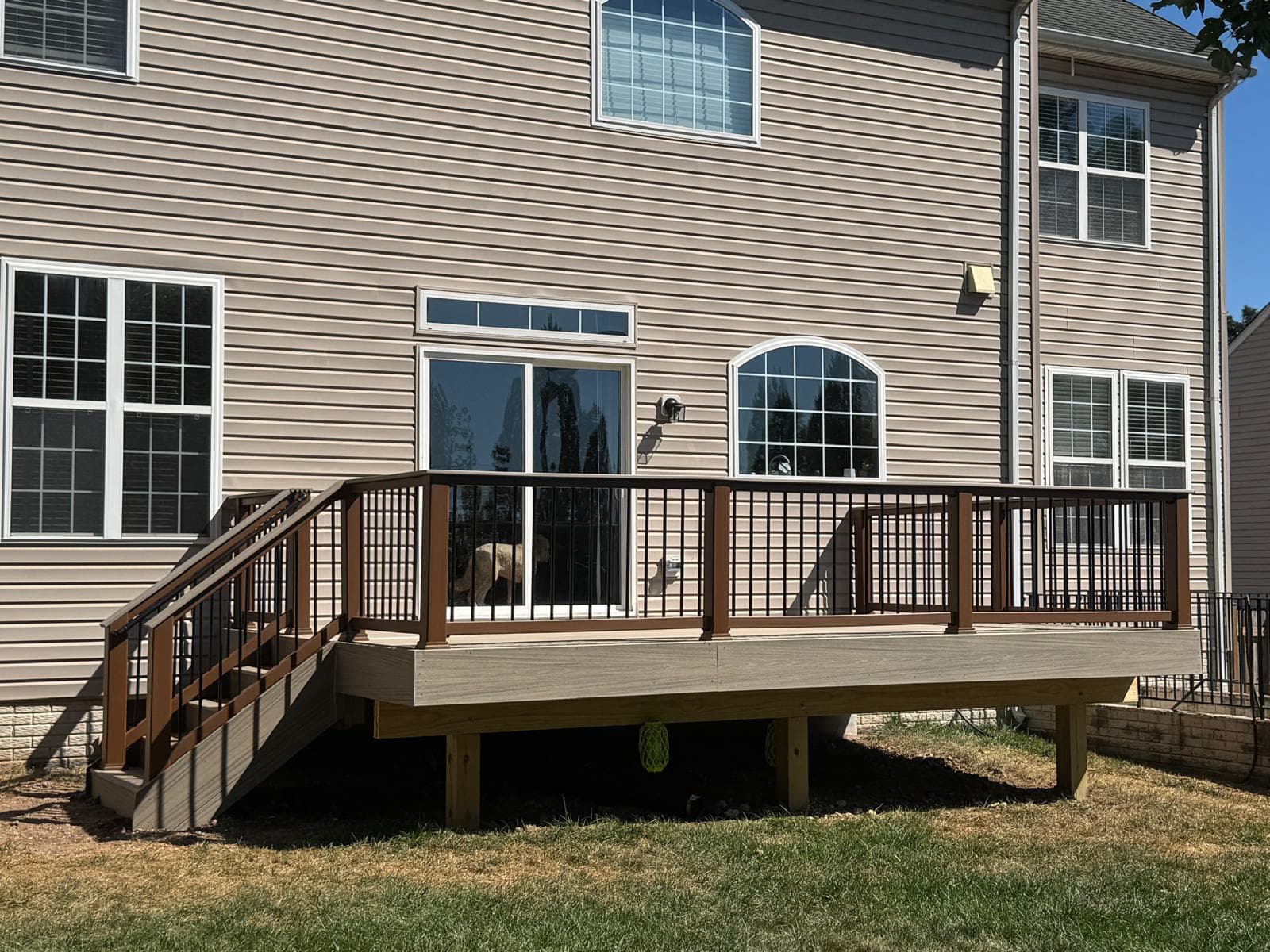
Transform your backyard with a custom-designed deck using Trex, TimberTech, wood, or PVC materials matched to your budget, HOA rules, and maintenance goals.
Deck Resurfacing
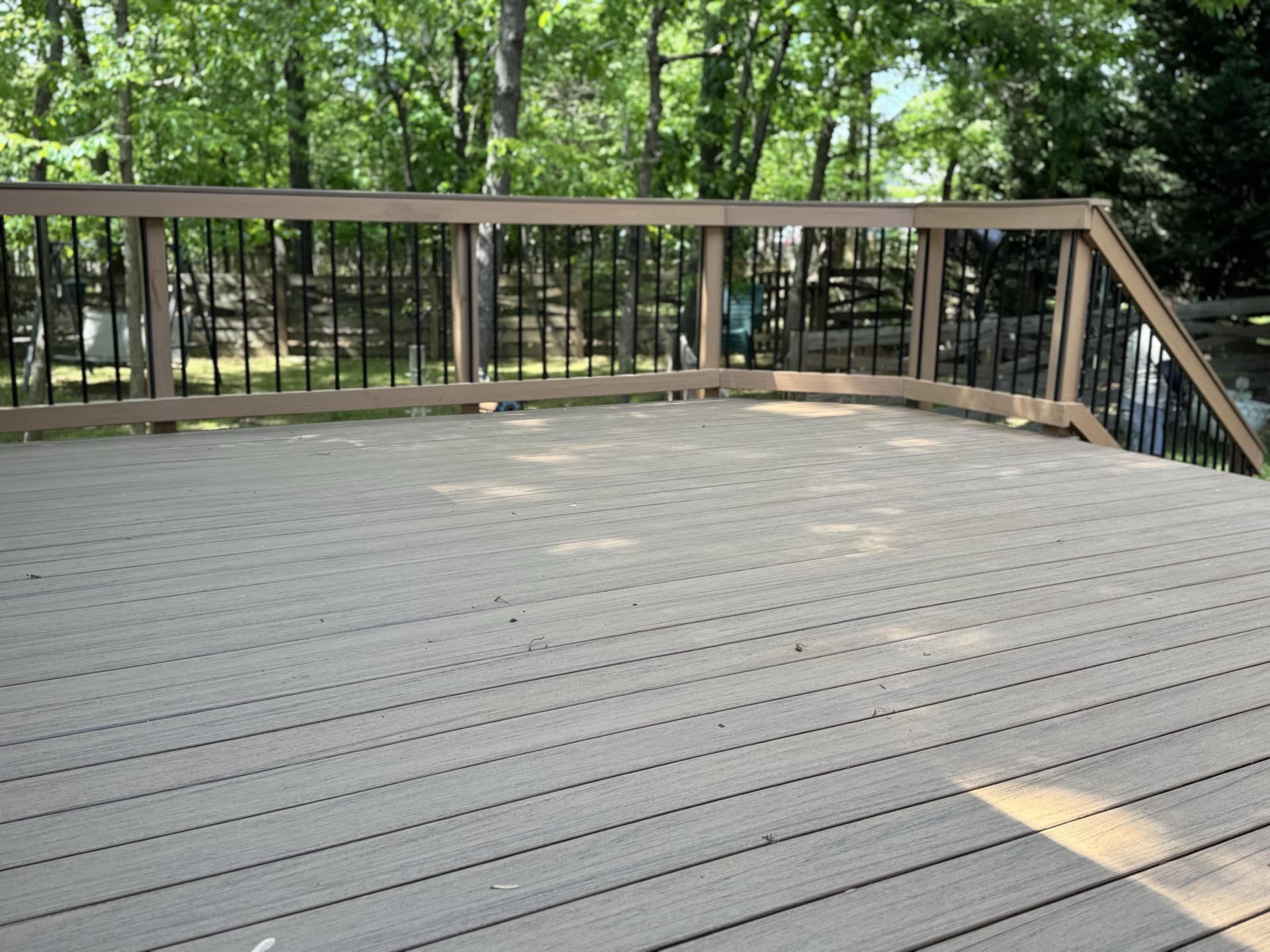
Premium wood-to-composite resurfacing for structurally sound frames. Full surface conversions start from $15k with boards, railings, fascia, and safety review.
Patio Contractor Services
Professional bluestone and paver patio installation. We create durable, beautiful ground-level outdoor living spaces that last a lifetime.
Local Expertise Across Northern Virginia
Loudoun Decks is a trusted deck builder serving Loudoun County, Fairfax County, Prince William County, Arlington, and Stafford.
Guides Northern Virginia Homeowners Are Reading
TimberTech & AZEK Decks
Premium PVC and composite deck options for Northern Virginia.
Deck Permits in Loudoun County
Permit requirements, review steps and inspection context for Loudoun homeowners.
Deck Permits in Fairfax County
Requirements, timeline, fees, and inspection process.
Deck Builder in Northern Virginia
Custom decks, permits, HOA support and local service areas.
Covered Deck Builder
Covered deck planning, outdoor living upgrades and shade structure decisions.
Trex vs TimberTech vs AZEK
Side-by-side brand comparison for Virginia climate.