


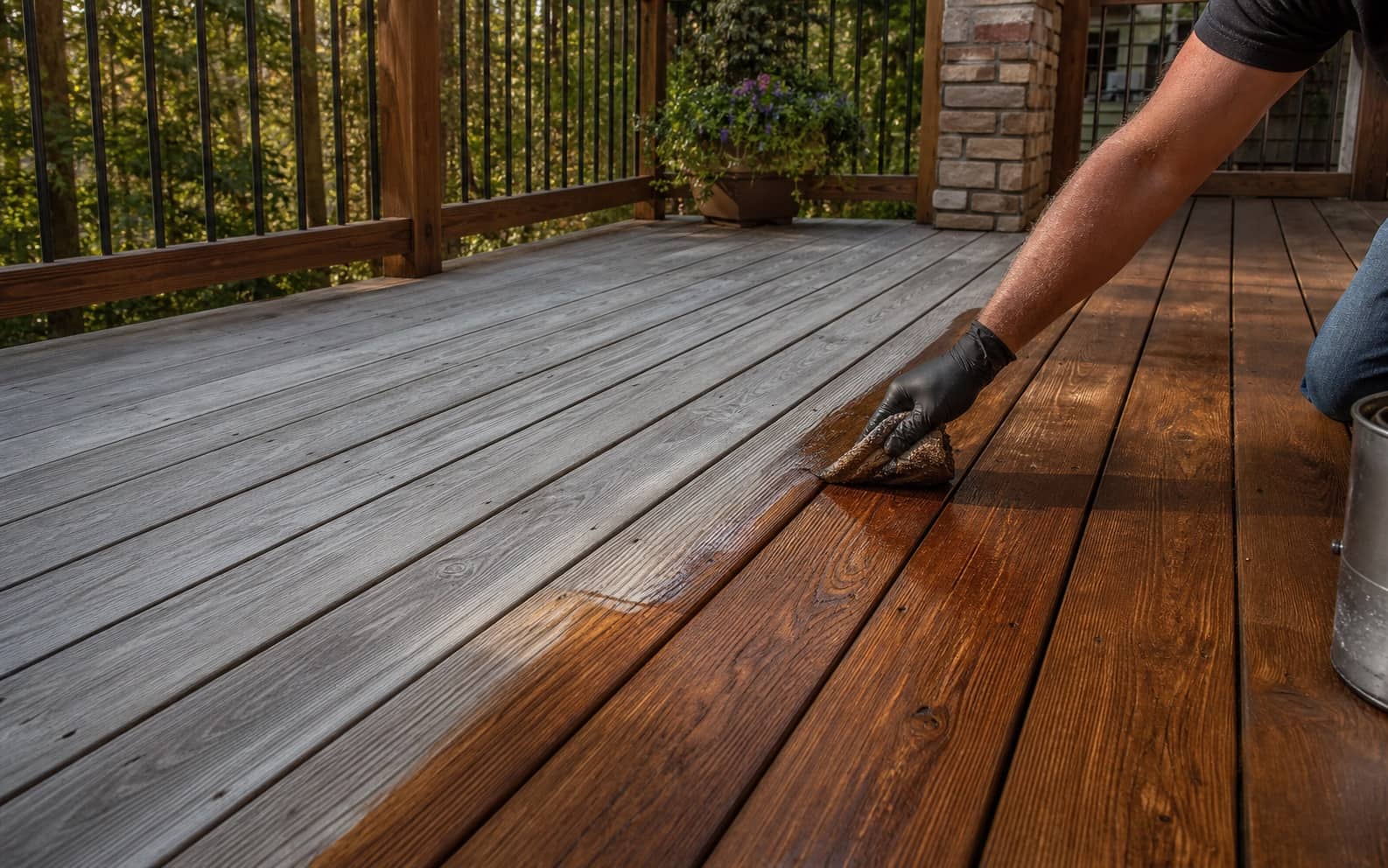
Deck Staining in Northern Virginia: When to Stain, How to Do It & What It Costs
Deck staining is the single most impactful maintenance action for pressure-treated and hardwood deck surfaces. Done on the right schedule with the right product and proper preparation, staining extends deck life by 5 to 10 years and is the primary reason some wood decks in Northern Virginia last 25 years while others look worn out at 8.
Deck staining is not a cosmetic upgrade — it is a structural maintenance task. The stain or sealer penetrating the wood surface is the primary barrier between the wood fiber and Northern Virginia's humidity, UV radiation, and freeze-thaw cycling. When that barrier degrades and is not renewed, moisture enters the wood, mold grows in the fiber, and the boards begin their irreversible deterioration cycle.
This guide covers everything a Northern Virginia homeowner needs to know about deck staining: when to stain, how to choose the right product, preparation requirements, application, and cost.
Who Needs This Guide
This guide applies to pressure-treated wood and hardwood deck surfaces — ipe, cumaru, cedar, and similar species. Composite decking (Trex, TimberTech, AZEK) does not need staining — the polymer cap layer provides surface protection that painting or staining would impair, not help. If you have composite decking, see the composite deck cleaning guide instead.
When to Stain: The Northern Virginia Timing Window
The single most common staining mistake in Northern Virginia is poor timing. Stain applied at the wrong time either fails to penetrate, peels prematurely, or traps moisture in the wood.
For new pressure-treated lumber: Wait 6 to 12 months before first staining. New PT lumber is still drying out from the treatment process. The water-bead test determines readiness: sprinkle water on the deck surface. If it beads, the wood is still too wet. If it absorbs within 30 seconds, the wood is ready for staining.
For existing decks: Stain every 2 to 3 years, or when the water-bead test shows absorption (water soaks in immediately without beading). Annual inspection tells you whether the cycle is 2 or 3 years — some Northern Virginia exposures in full south-facing sun need 2-year cycles; shaded decks may reach 3+ years.
Best time of year in Northern Virginia: Late April through early June, or September through October. Ideal conditions: air temperature 50°F to 90°F, no rain in the 24-hour forecast, low humidity. Avoid staining in direct afternoon sun on south or west-facing surfaces — the stain dries too fast and does not penetrate properly. Avoid staining within 48 hours of rain.
Northern Virginia pollen conflict: April and May bring heavy tree pollen. Staining during peak pollen means pollen lands on wet stain and embeds in the surface finish. Best practice: stain after pollen season ends (mid-to-late May) or before it starts (late March if conditions are right).
Choosing the Right Deck Stain
The deck stain market has two primary categories:
Oil-based penetrating stains: Penetrate into the wood fiber rather than forming a surface film. Provide excellent protection for rough-sawn or textured pressure-treated surfaces. Tend to last slightly longer (2 to 3 years in Northern Virginia conditions) than water-based alternatives. Slower drying (8 to 24 hours). Strong odor during application. Cleanup requires mineral spirits. Products: Defy Extreme, Armstrong Clark, TWP (Total Wood Preservative), Cabot Australian Timber Oil.
Water-based penetrating stains: Easier application, faster drying (2 to 4 hours), low odor. Have improved dramatically in the past decade — modern water-based stains approach oil-based performance. Slightly easier to re-coat because they do not require stripping before reapplication. Products: Defy Water-Based, Ready Seal (water-based), Cabot Australian Timber Oil Water-Based.
Film-forming stains and solid stains: Create a surface film rather than penetrating. Longer initial protection but once they start to fail, they peel — and peeling requires stripping before recoating. Not generally recommended for horizontal deck surfaces in Northern Virginia where water sits on the surface and drives film failure from beneath.
For Northern Virginia: The Defy Extreme line and Armstrong Clark are the products most frequently recommended by deck maintenance professionals in the Loudoun and Fairfax County market. Both penetrate well, hold color reasonably in Virginia's UV environment, and re-coat cleanly at the 2 to 3-year cycle.
Preparation: The Most Important Step
Stain application without proper preparation produces results that look good for one season and then fail prematurely. Preparation is 70 percent of the work and 100 percent of what determines how long the stain lasts.
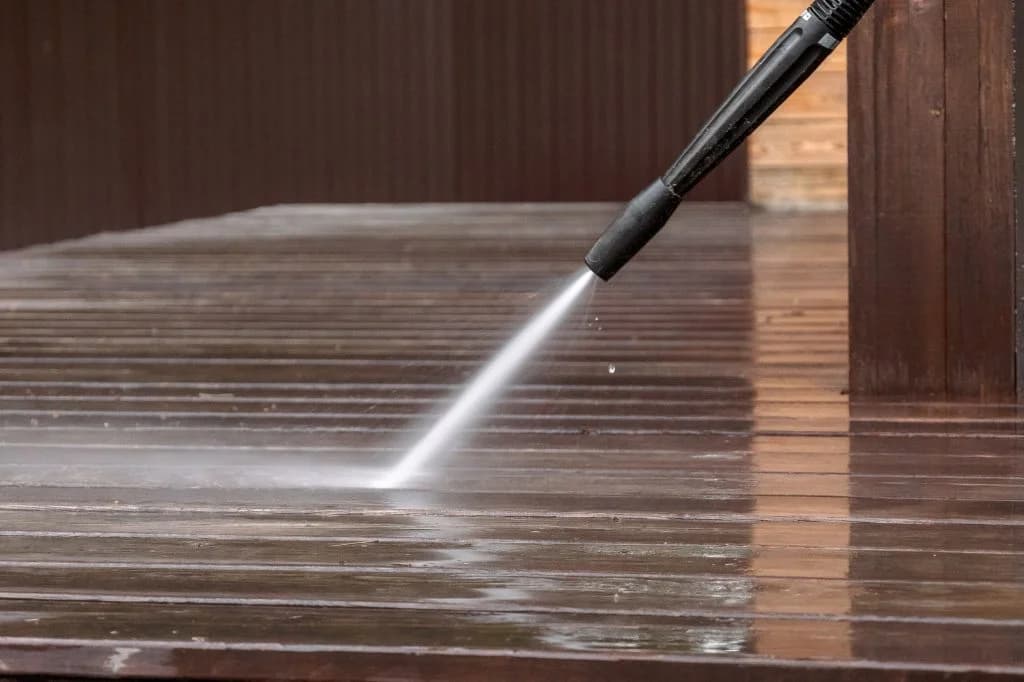
Step 1 — Clean the deck: Power wash at 1,500 to 2,000 PSI with a fan tip. Remove all dirt, mildew, and old surface oxidation. For decks with significant mildew, use a deck cleaner with mildewcide (Defy Wood Cleaner, Armstrong Clark Cleaner) before power washing. Allow 48 to 72 hours to dry completely after washing.
Step 2 — Brighten the wood (optional but recommended): A wood brightener (oxalic acid solution) opens the wood grain and restores the natural pH of cleaned wood, improving stain penetration. Apply after cleaning, allow to dwell per product instructions, rinse, and allow to dry. Decks that have been cleaned and brightened accept stain noticeably more evenly than decks that were only washed.
Step 3 — Sand rough spots: Hand-sand any boards with raised grain, splinters, or rough spots raised by power washing. A 60 to 80-grit sanding block addresses specific boards without sanding the entire surface.
Step 4 — Protect adjacent surfaces: Tape or cover the house siding, landscaping, and concrete adjacent to the deck. Many penetrating stains stain concrete permanently.
Step 5 — Make repairs before staining: Replace any boards with rot, significant cracking, or structural failure before applying stain. Staining over a compromised board does not rehabilitate it — it conceals damage that will progress.
Application
Method: Penetrating stains can be applied by brush, roller, or pump sprayer. The most effective method for rough-sawn PT lumber is a natural-bristle brush or pad applicator — it forces the stain into the grain rather than leaving it on the surface. Rollers work for smooth surfaces. Sprayers are fast but require back-brushing to work the stain into the grain.
Coverage: Most penetrating stains cover 150 to 200 square feet per gallon on rough-sawn PT lumber. Over-application is one of the most common mistakes — penetrating stains can only absorb as much product as the wood can accept. Excess stain that remains on the surface dries as a sticky, uneven film. Apply thin coats; add a second coat while the first is still wet (within the wet-edge window specified by the product).
Curing time: Allow 24 to 48 hours before replacing furniture. Most penetrating stains are fully cured at 72 hours. Avoid rain during the curing window.
Cost of Professional Deck Staining in Northern Virginia
Professional deck staining (power wash, prep, one coat stain) for a 300-square-foot deck in Northern Virginia costs $800 to $1,500 depending on deck condition, access, and stain product selected. Heavily weathered decks requiring additional prep (sanding, multiple wash passes, wood brightener) add $200 to $500 to the base cost.
On a 2 to 3-year cycle over 20 years, professional staining totals $5,600 to $13,500 in maintenance cost — a significant factor in the composite vs. PT total cost comparison.
LDN Decks provides deck staining services across Loudoun and Fairfax counties. We power wash, prep, and apply penetrating oil-based stain on the correct timing cycle for the Northern Virginia climate.
---
Related: How to Clean a Composite Deck · How to Power Wash a Deck · Deck Winterization Checklist · Pressure-Treated Deck Boards Guide · Deck Repair Services
Frequently Asked Questions
How often should you stain a deck in Northern Virginia?
Every 2 to 3 years for most Northern Virginia wood deck surfaces. Full south-facing or west-facing decks in direct sun may need 2-year cycles due to higher UV exposure. Shaded decks in good condition may reach 3 years. The water-bead test is the practical guide: when water absorbs immediately instead of beading, it is time to stain regardless of the elapsed calendar time.
What is the best time to stain a deck in Northern Virginia?
Late May through early June, or September through October. These windows avoid peak pollen season, provide moderate temperatures (50°F to 90°F), and have lower humidity than July and August. Avoid staining in direct afternoon sun, within 48 hours of rain, or when temperature is below 50°F. Do not stain new pressure-treated lumber until it has dried for 6 to 12 months.
What is the best deck stain for Northern Virginia?
Penetrating oil-based stains perform best in Northern Virginia's UV-intense summers and humid climate. Defy Extreme, Armstrong Clark, and TWP (Total Wood Preservative) are frequently recommended by deck maintenance professionals in the Loudoun and Fairfax County market. Water-based alternatives (Defy Water-Based, Ready Seal) have improved significantly and work well for homeowners who prefer low-odor products.
How much does deck staining cost in Northern Virginia?
Professional deck staining (power wash, prep, one coat penetrating stain) costs $800 to $1,500 for a 300-square-foot deck in Northern Virginia. Heavily weathered decks requiring additional prep add $200 to $500. Materials for DIY staining run $80 to $150 per gallon for premium penetrating stains, with a 300-square-foot deck typically requiring 1.5 to 2 gallons.
Do I need to clean the deck before staining?
Yes — preparation is the most important factor in how long deck stain lasts. The minimum required prep is a thorough power wash (1,500 to 2,000 PSI fan tip) with a deck cleaner, followed by 48 to 72 hours of drying. Adding a wood brightener (oxalic acid solution) after washing improves stain penetration. Stain applied to a dirty or wet surface fails prematurely regardless of product quality.
Stain product recommendations reflect professional practice in the Northern Virginia market as of 2026. Product formulations change; always read current product labels, safety data sheets, and application instructions before use. Cost estimates reflect typical Northern Virginia market conditions and vary by project scope and contractor.
Plan Your Northern Virginia Deck Project With Loudoun Decks
Get a free, no-pressure consultation from a licensed Northern Virginia deck builder. Call (571) 655-7207 or visit ldndecks.com/get-estimate.
Get a Free EstimateEverything Your Outdoor
Space Needs
From ground-up deck construction to full outdoor living spaces, every project is custom-designed for your home with permit planning, material guidance, and written workmanship terms.
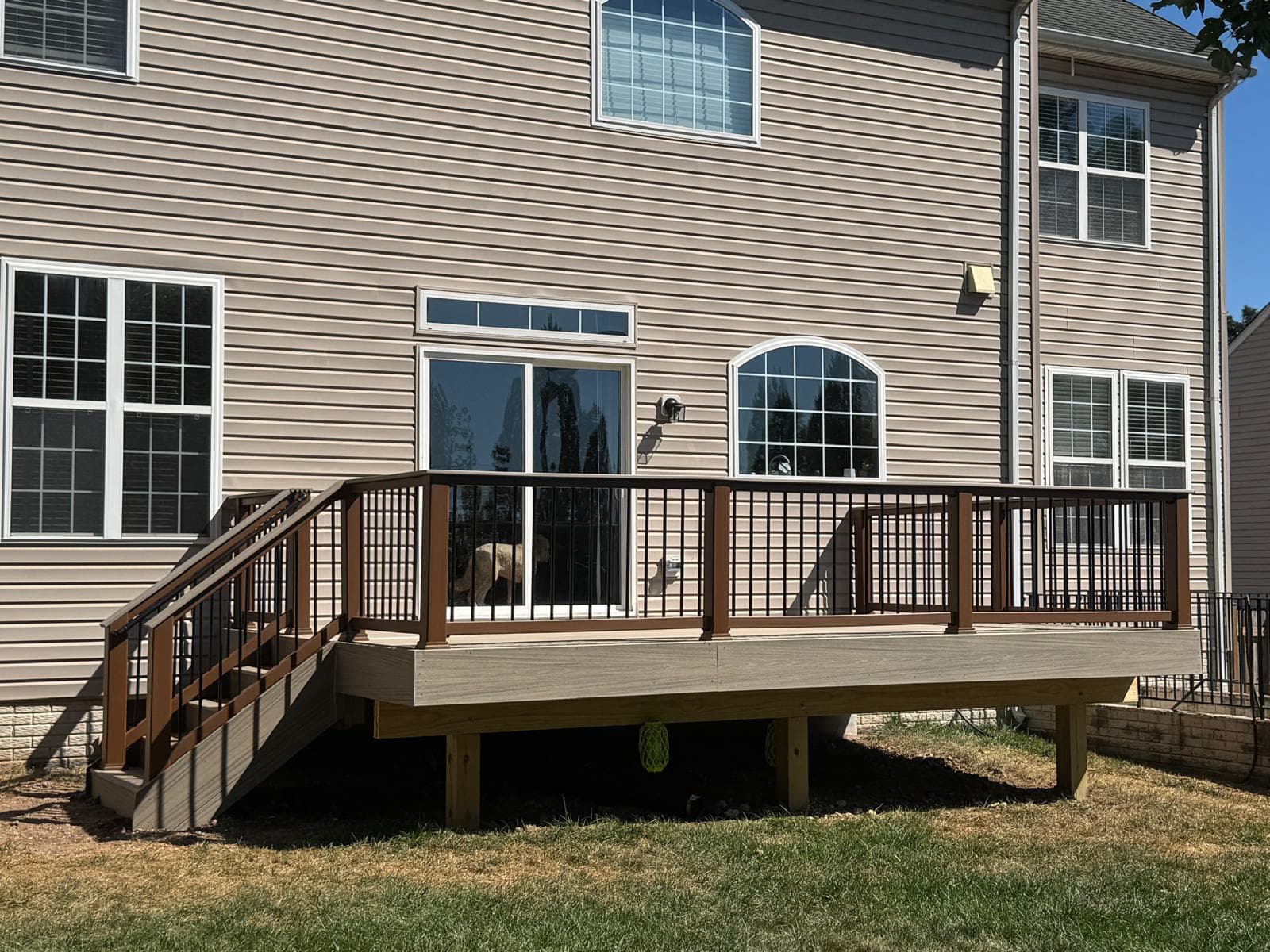
Custom Deck Builder
Transform your backyard with a custom-designed deck using Trex, TimberTech, wood, or PVC materials matched to your budget, HOA rules, and maintenance goals.
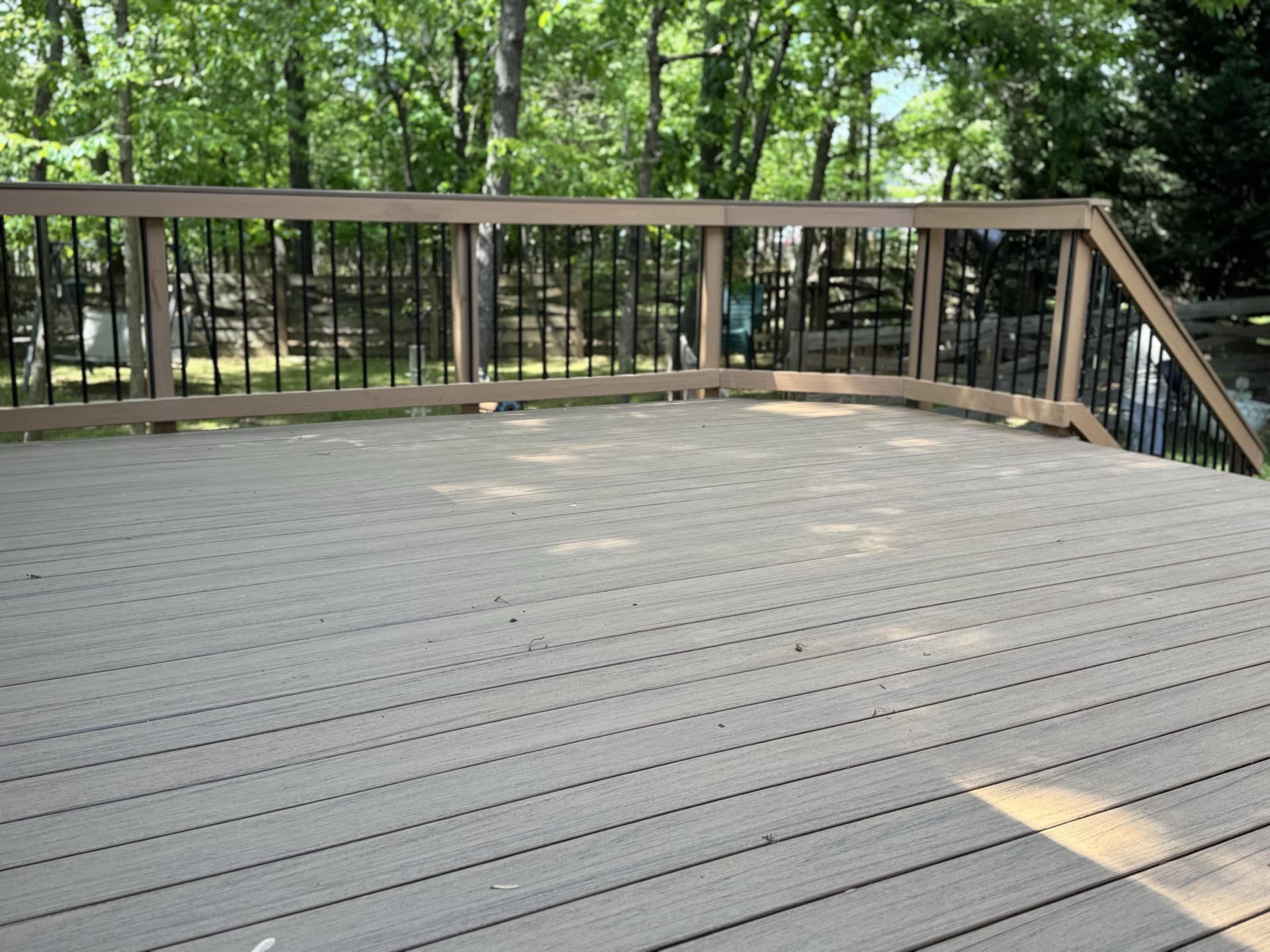
Deck Resurfacing
Premium wood-to-composite resurfacing for structurally sound frames. Full surface conversions start from $15k with boards, railings, fascia, and safety review.
Patio Contractor Services
Professional bluestone and paver patio installation. We create durable, beautiful ground-level outdoor living spaces that last a lifetime.
Local Expertise Across Northern Virginia
Loudoun Decks is a trusted deck builder serving Loudoun County, Fairfax County, Prince William County, Arlington, and Stafford.
Guides Northern Virginia Homeowners Are Reading
Covered Deck Builder
Covered deck planning, outdoor living upgrades and shade structure decisions.
Trex vs TimberTech vs AZEK
Side-by-side brand comparison for Virginia climate.
Composite Deck Cost in Northern Virginia
Material pricing, verified source references, planning examples and what drives the price.
Free Deck Cost Calculator
Get an instant estimate by material, size, and add-ons.
TimberTech & AZEK Decks
Premium PVC and composite deck options for Northern Virginia.
Deck Permits in Loudoun County
Permit requirements, review steps and inspection context for Loudoun homeowners.