
7 Signs Your Deck Needs Immediate Structural Repair
Deck failures in the United States injure thousands of homeowners every year, and Northern Virginia decks face a particularly demanding environment of humid summers, heavy freeze-thaw cycling, and aggressive seasonal pollen. Most failures are preventable — if you know what to look for before the problem becomes a collapse.
Deck failures in the United States injure thousands of homeowners every year, and the majority of those failures are not random events — they are the predictable result of warning signs that were visible weeks, months, or even years before the collapse. Northern Virginia decks face a demanding environment: humid summers, heavy freeze-thaw cycling in Loudoun and Fairfax counties, and significant seasonal moisture fluctuation. Wood rots, metal hardware corrodes, and footings heave under these conditions over time.
This guide covers the seven structural warning signs that mean your deck needs professional attention immediately — not at the end of the season, not next spring. If you observe more than one of these on your deck, do not use the deck for gatherings or events until a licensed deck builder has completed an inspection.
Sign 1: Soft, Spongy, or Crumbling Wood on Joists or Beams
The most reliable way to check your deck's structural health is to go underneath it and probe the joists, beams, and ledger board with a flat-head screwdriver. Push the tip firmly into the wood — not just the surface, but into the end grain and at any point where wood contacts metal hardware.
Healthy pressure-treated lumber resists the screwdriver and requires significant force to penetrate. Compromised lumber goes soft immediately. If your screwdriver penetrates more than a quarter inch with light pressure, the wood fiber has been destroyed by rot. If entire sections crumble or fall away at contact, you are looking at advanced fungal decay.
The critical locations to probe are the top of every joist (where water pools after rain), the ledger board where it contacts the house, the ends of beams where they sit on post caps, and any area where a metal hanger or bracket holds wood in sustained contact with water.
Sign 2: Visible Separation at the Ledger Board
The ledger board is the horizontal member bolted directly to your house's rim joist or band joist. It is the single most load-bearing connection on the entire deck — when people gather on a deck, the ledger carries the majority of that dynamic load.
Ledger failures cause the most catastrophic deck collapses because the entire structure separates from the house in one sudden event. Warning signs include: visible gaps between the ledger and the house wall, water staining or dark wood discoloration along the ledger-to-house joint, rust streaking from the lag bolts, visible rot at the house sheathing adjacent to the ledger, or any lateral movement in the deck when you push it away from the house.
If your ledger was installed without proper flashing — a thin metal or waterproof membrane that directs water away from the connection — it has been collecting water against the house for the life of the deck. This is one of the most common code violations on older Northern Virginia decks built before 2003.
Sign 3: Lateral Movement or Wobble in the Deck Frame
Stand at the far corner of your deck and push the railing sideways — parallel to the house — with firm, steady pressure. A structurally sound deck should feel completely rigid. It should not rack, sway, or absorb your push and return.
Lateral instability is caused by missing or failed diagonal bracing, post-to-beam connections that have loosened or rotted, or footings that have shifted and no longer provide a firm base. In older decks, the original ledger-to-joist hardware may have been insufficient to begin with.
A wobbling deck is especially dangerous in a dynamic gathering scenario where dozens of people shift weight simultaneously. The lateral force that breaks a deck apart is often magnified by simultaneous movement, not sustained static load.
Sign 4: Post Rot at Grade or Ground Contact
Deck posts are the vertical columns that carry the deck's weight to the footings. The most vulnerable location on any post is where it transitions from air to concrete — the base of the post, at or just above the footing surface.
At ground level, posts experience sustained moisture from soil contact, splash-back from rain, snow piling, and condensation. Older decks often have posts set directly into concrete or into the ground — a practice that accelerates rot at the point of maximum structural stress. Modern decks use post base hardware that elevates the post off the concrete surface and allows drainage, but older hardware traps moisture at exactly the wrong location.
Check each post at its base. Look for: dark staining or discoloration in the bottom six inches, visible cracking along the grain that exposes the interior, wood that compresses easily when pushed, and any lean or tilt in the post that suggests the footing has shifted.
Sign 5: Rust-Stained, Missing, or Corroded Hardware
Deck hardware — joist hangers, post caps, hurricane ties, lag bolts, and structural screws — is rated for a specific service life based on the chemistry of the treated lumber it contacts. Modern pressure-treated lumber uses copper-based preservatives that accelerate corrosion of standard steel hardware. Decks built after 2004 are required to use hot-dipped galvanized or stainless hardware, but many older decks used standard zinc-plated hardware that was not rated for ACQ-treated lumber.
Signs of hardware failure include visible orange or red rust streaking from hanger positions, bolt heads that show heavy surface corrosion, joist hangers where the metal tabs have separated from the wood, and missing fasteners where the hardware has simply rusted through.
Hardware failure is particularly dangerous because it often occurs before the wood itself shows visible damage — the connection between two pieces of sound lumber can fail completely when the metal holding them together dissolves.
Sign 6: Cracked, Heaved, or Exposed Footings
Concrete deck footings must extend below the frost line — in Northern Virginia, that is 24 to 30 inches below grade in Loudoun and Fairfax counties. Footings set shallower than the local frost depth will heave upward during freeze-thaw cycles, pushing posts out of alignment and stressing every connection above them.
Signs of footing problems include: visible cracking across the top of the concrete pad, posts that are visibly out of plumb (leaning), deck sections that appear uneven or have developed a slope that was not present when the deck was new, and concrete that is exposed above grade in a way that suggests the footing has moved upward.
Heaved footings require full post-and-footing replacement. The damage to the concrete cannot be repaired by surface patching — the footing must be removed and reset at the correct depth.
Sign 7: Sagging or Uneven Deck Surface
Sight down the length of your deck from one end. The surface should be level or pitched very slightly away from the house for drainage — approximately one-quarter inch per foot. If you can see a dip, sag, or wave in the deck boards, it means the framing below has moved, deflected, or partially failed.
A sagging deck surface is most often caused by overloaded or undersized joists, widespread joist rot causing section loss, or a beam that has developed a significant check crack or split. It can also be caused by a footing that has settled unevenly under the main beam.
Never dismiss a sagging deck surface as a cosmetic issue. The boards are following the framing — and the framing is telling you something has changed in the structural system.
What to Do If You See These Signs
If your Northern Virginia deck shows one or more of these warning signs, the appropriate response is not to schedule a repair for next season. It is to restrict use of the deck immediately for large gatherings, contact a licensed deck builder for a structural inspection, and get a written assessment of which components need repair or replacement.
At LDN Decks, we conduct full structural evaluations across Loudoun, Fairfax, and Prince William counties — probing joists, inspecting ledger connections, checking hardware, and assessing footing condition. Our inspection reports identify exactly which components are compromised, what the repair scope is, and what the cost will be before any work begins.
Schedule a Free Deck Inspection
---
Related: Deck Repair Services · Deck Replacement Services · Resurface vs Replace Guide · Deck Joist Rot: Signs and Repair · Deck Ledger Board Problems
Frequently Asked Questions
How do I know if my deck is structurally safe?
The most reliable check is to probe the joists and ledger board with a flat-head screwdriver — healthy wood resists penetration, rotted wood compresses or crumbles. Also push the deck laterally to test for wobble, check posts at the base for dark staining and soft wood, and look for rust streaking from hardware. A professional structural inspection gives you a definitive answer.
What causes deck collapses?
Most deck collapses are caused by ledger board failure — where the deck separates from the house — or by widespread joist and post rot that has gone undetected. Corroded or inappropriate hardware is also a common cause, especially on decks built before 2004 that used standard steel hardware on ACQ-treated lumber.
How often should a deck be structurally inspected?
A professional structural inspection every three to five years is a reasonable baseline for decks over ten years old. Decks approaching fifteen or more years should be inspected annually. Any deck that has experienced a major weather event, significant water infiltration, or visible damage should be inspected before the next use.
Can I repair structural deck damage myself?
Minor tasks like replacing individual deck boards are within DIY range. Structural repairs — replacing joists, repairing ledger connections, replacing posts or footings — require a permit in Loudoun, Fairfax, and Prince William counties and must be inspected by the county before the repair is closed in. Improper structural repairs are a safety liability.
How much does a structural deck repair cost in Northern Virginia?
Targeted structural repairs vary significantly by scope. Replacing a few rotted joists can cost $800 to $2,500. Ledger board replacement with proper flashing ranges from $1,500 to $4,000 depending on access and deck complexity. Full post and footing replacement runs $500 to $1,200 per post location. A complete structural assessment identifies exact scope before any cost is confirmed.
This article provides general homeowner guidance on deck structural warning signs and is not a substitute for a professional in-person structural inspection. Structural safety depends on many factors not visible to the untrained eye. Always obtain a licensed professional inspection before determining whether a deck is safe for use.
Plan Your Northern Virginia Deck Project With Loudoun Decks
Get a free, no-pressure consultation from a licensed Northern Virginia deck builder. Call (571) 655-7207 or visit ldndecks.com/get-estimate.
Get a Free EstimateEverything Your Outdoor
Space Needs
From ground-up deck construction to full outdoor living spaces, every project is custom-designed for your home with permit planning, material guidance, and written workmanship terms.
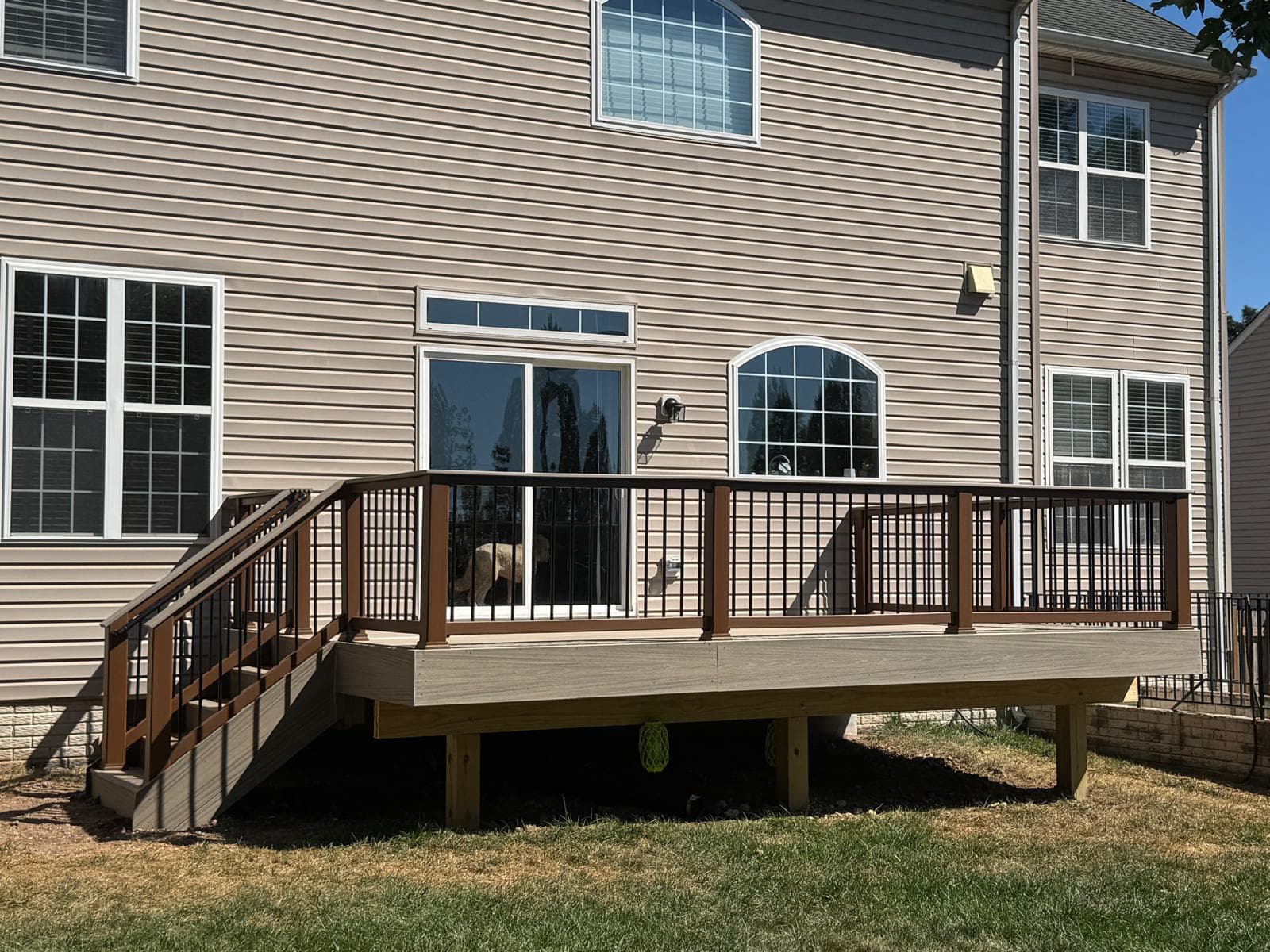
Custom Deck Builder
Transform your backyard with a custom-designed deck using Trex, TimberTech, wood, or PVC materials matched to your budget, HOA rules, and maintenance goals.
Deck Resurfacing
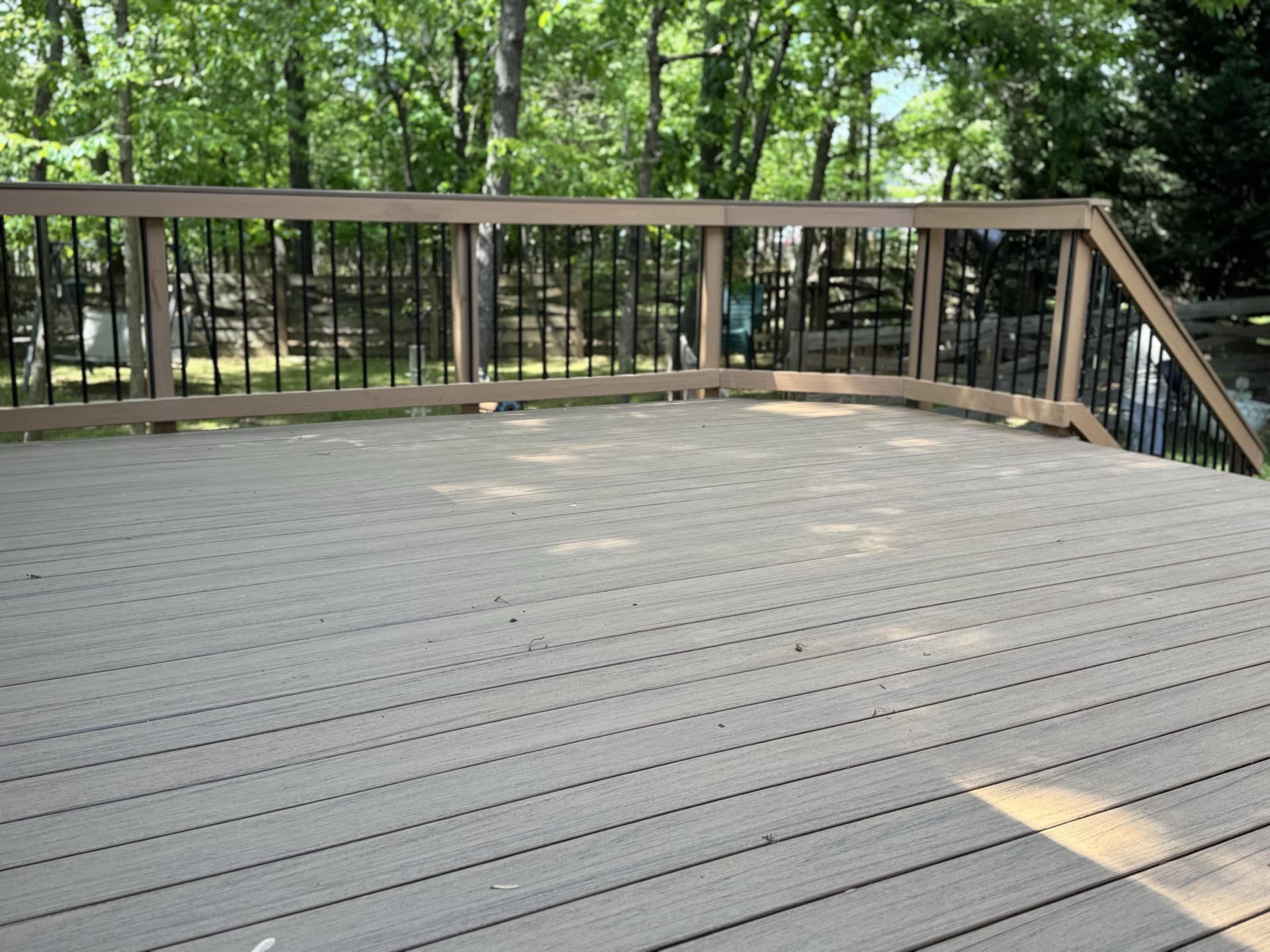
Premium wood-to-composite resurfacing for structurally sound frames. Full surface conversions start from $15k with boards, railings, fascia, and safety review.
Patio Contractor Services
Professional bluestone and paver patio installation. We create durable, beautiful ground-level outdoor living spaces that last a lifetime.
Local Expertise Across Northern Virginia
Loudoun Decks is a trusted deck builder serving Loudoun County, Fairfax County, Prince William County, Arlington, and Stafford.
Guides Northern Virginia Homeowners Are Reading
Free Deck Cost Calculator
Get an instant estimate by material, size, and add-ons.
TimberTech & AZEK Decks
Premium PVC and composite deck options for Northern Virginia.
Deck Permits in Loudoun County
Permit requirements, review steps and inspection context for Loudoun homeowners.
Deck Permits in Fairfax County
Requirements, timeline, fees, and inspection process.
Deck Builder in Northern Virginia
Custom decks, permits, HOA support and local service areas.
Covered Deck Builder
Covered deck planning, outdoor living upgrades and shade structure decisions.