


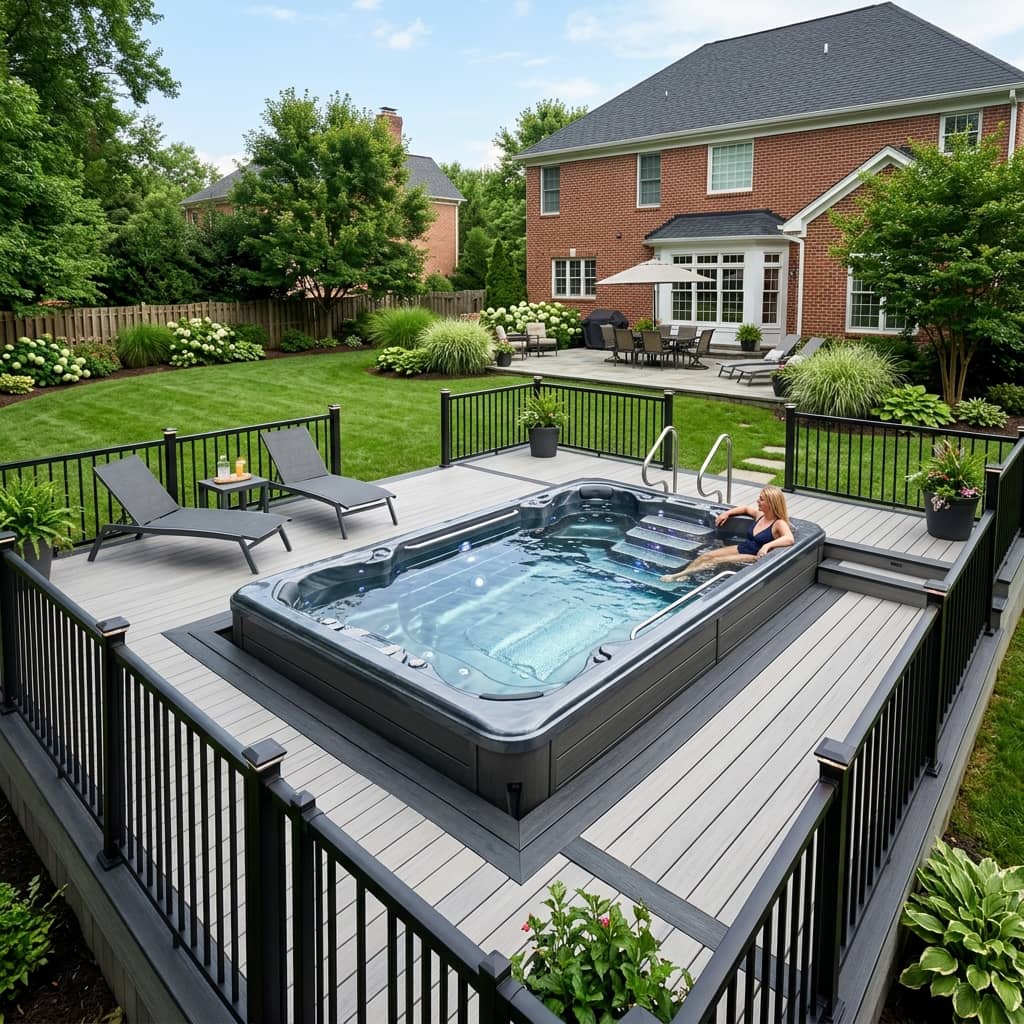
Designing a Deck for a Swim Spa: Structural Loads, Sinking Layouts, and Material Selection
Swim spas are one of the hottest outdoor living upgrades in 2026. Discover the structural calculations, access clearances, and design strategies needed to seamlessly integrate a heavy swim spa into your custom composite deck.
Swim spas are one of the fastest-growing outdoor living trends in Northern Virginia for 2026. Combining the fitness benefits of a swimming pool with the hydrotherapy and compact footprint of a hot tub, a swim spa is an incredible year-round asset for backyards in Loudoun and Fairfax counties.
Content details:
Integrating a 15-foot to 20-foot swim spa into a custom composite deck requires a massive level of structural engineering and architectural planning. A typical swim spa filled with water and occupants can weigh anywhere from 15,000 to over 22,000 pounds. Restability is critical: placing that much weight on or adjacent to a deck framing system requires precise load-path planning, specialized foundations, and service clearances. This guide outlines the essential steps for designing and engineering a deck built around a premium swim spa.
1. Sinking vs. Above-Ground: Choosing the Layout
How your swim spa sits relative to your deck surface dictates the look, accessibility, and construction complexity of the project:
- Fully Sunken (Flush): The swim spa is recessed completely so the top rim sits flush with the decking boards. This offers a highly modern, streamlined look and preserves unobstructed views of the backyard. However, it requires a deep excavation, concrete retaining walls to hold back the soil, and a drainage system to prevent water pooling in the pit. - Semi-Sunken (18-Inch Reveal): The sweet spot for accessibility and design. Sinking the spa so that 18 inches of the cabinet extends above the deck provides a perfect, natural seating ledge all the way around the perimeter. It makes climbing in and out easy without needing steps, and reduces excavation depth. - Above-Ground with Wrap-Around Decking: The spa sits on a concrete pad at grade level, and the deck is elevated to meet the top rim on one, two, or three sides. This is often the most cost-effective method because it eliminates excavation while still giving the feel of a built-in pool.
2. Sizing Structural Footings and Supporting the Load
No residential deck structure is strong enough to support a filled swim spa on its own. Standard decks are engineered for a live load of 40 pounds per square foot (psf), whereas a swim spa can impose a concentrated load exceeding 200 to 300 psf.
- The Concrete Vault or Pad: The swim spa must sit on a level, reinforced concrete slab, typically 6 inches thick, poured independently of the deck foundation. The slab must be reinforced with grade 60 rebar and cast on a well-compacted gravel base to prevent settling or cracking under the massive weight. - Independent Deck Framing: The deck framing surrounds the spa but does not carry its weight. The joists surrounding the spa opening are framed as independent structures, using doubled or tripled header beams supported by dedicated post and footing systems. This ensures that any minor movement in the spa does not transfer stress to the main deck or the house ledger.
3. Maintenance Access and Service Clearances
One of the most common mistakes in swim spa deck design is blocking access to the spa's mechanical cabinet. Swim spas house heaters, pumps, control boards, and plumbing manifolds inside their perimeter cabinets. If a pump seals leak or an electrical board needs replacement, a technician must be able to access the service panels.
- The 3-Foot Clearance Rule: Manufacturers typically require at least 3 feet of clear workspace in front of the access panels (usually located on the front and sides of the spa). - Removable Deck Hatches: If the deck wraps tightly around the spa, we design custom, structural hatch panels built into the deck surface. Using hidden steel brackets, these panels can be easily unscrewed and lifted out to expose the spa cabinet when service is needed, maintaining a seamless look during daily use. - Ventilation: Sunken spa vaults must have adequate ventilation to prevent humidity buildup from corroding electrical components. Running PVC ventilation pipes or installing grilles in the deck fascia is highly recommended.
4. Selecting the Right Decking Materials
Because swim spas generate a high-moisture environment, choosing the right decking material is essential for longevity and safety:
- Cellular PVC (TimberTech AZEK Vintage): The gold standard for spa surrounds. PVC contains no wood fibers, meaning it is 100% waterproof, highly resistant to mold, and does not absorb heat, keeping it comfortable for bare feet on hot summer afternoons. - High-Performance Capped Composite (Trex Transcend Lineage): Excellent choice. Features solar-reflective technology to reduce surface temperatures and a hard outer shell that resists scratching from spa steps or dragged covers. - Slip Resistance: Ensure the chosen board profile features a deep wood-grain texture to provide maximum traction when wet, minimizing slip hazards for swimmers stepping out of the spa.
Plan Your Custom Swim Spa Sanctuary
Integrating a swim spa into your deck design is a major home improvement project that requires professional, licensed design and structural engineering. When designed correctly, it creates a breathtaking, resort-like backyard retreat that delivers decades of health, fitness, and relaxation.
Ready to map out a custom 3D rendering for your swim spa deck in Northern Virginia? Contact the Loudoun Decks team today to schedule your free engineering consultation.
Frequently Asked Questions
Can a swim spa sit directly on a composite deck?
No, a filled swim spa is too heavy for standard deck framing. It must sit on a dedicated, level concrete pad (typically 6 inches thick with rebar reinforcement) poured directly on compacted soil, with the deck built independently around the spa's perimeter.
How much service clearance is required around a swim spa?
Most manufacturers require a minimum of 3 feet of clear access in front of the spa's mechanical and plumbing panels. We design removable structural deck panels to ensure technicians can easily access the panels without dismantling the deck.
How do you handle water drainage for a sunken swim spa?
A sunken spa vault must be designed with a gravity drain or a heavy-duty sump pump system to prevent rainwater or splash-out from flooding the pit and damaging the electrical control boards.
Plan Your Northern Virginia Deck Project With Loudoun Decks
Get a free, no-pressure consultation from a licensed Northern Virginia deck builder. Call (571) 655-7207 or visit ldndecks.com/get-estimate.
Get a Free EstimateEverything Your Outdoor
Space Needs
From ground-up deck construction to full outdoor living spaces, every project is custom-designed for your home with permit planning, material guidance, and written workmanship terms.
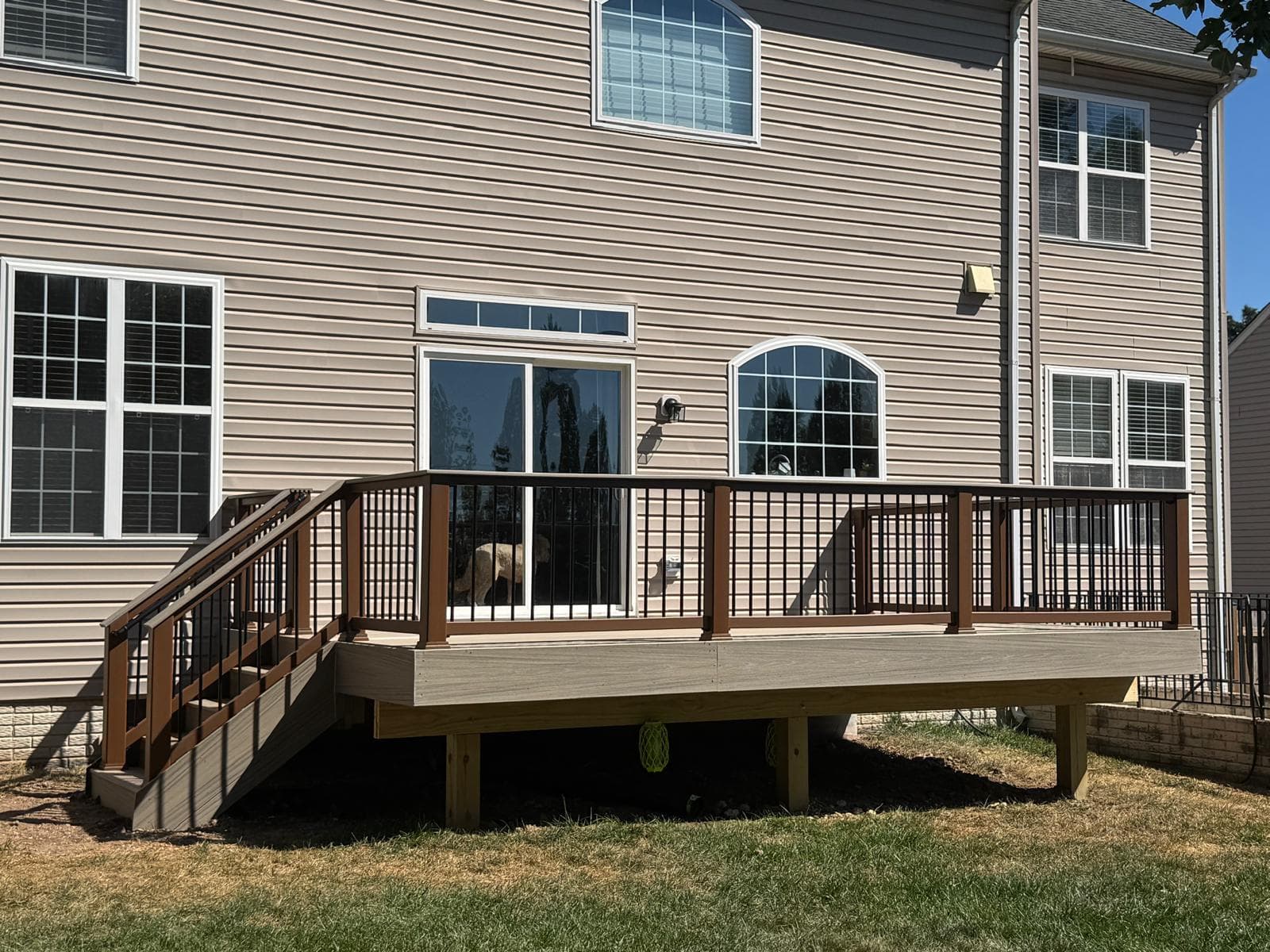
Custom Deck Builder
Transform your backyard with a custom-designed deck using Trex, TimberTech, wood, or PVC materials matched to your budget, HOA rules, and maintenance goals.
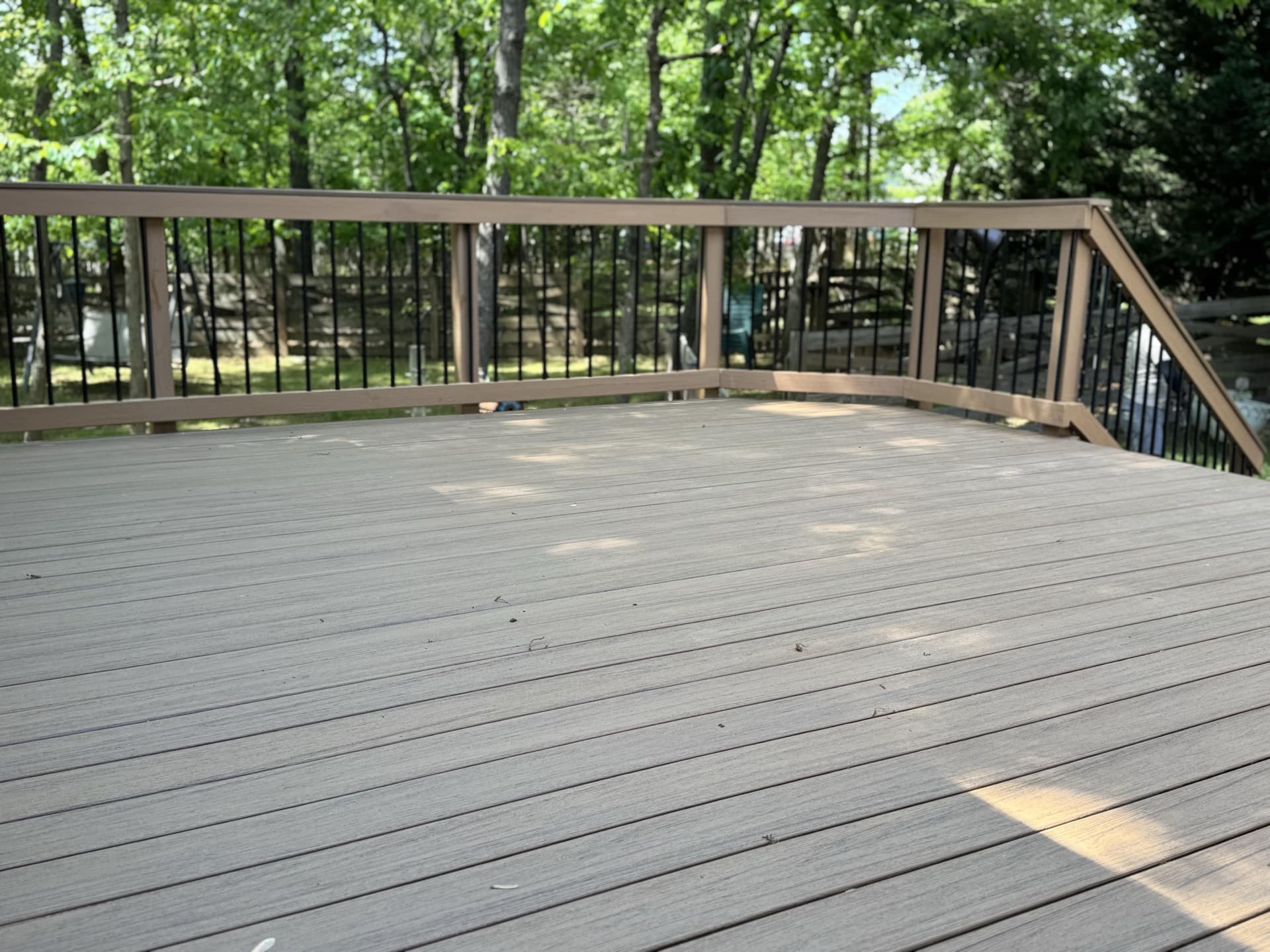
Deck Resurfacing
Premium wood-to-composite resurfacing for structurally sound frames. Full surface conversions start from $15k with boards, railings, fascia, and safety review.

Patio Contractor Services
Professional bluestone and paver patio installation. We create durable, beautiful ground-level outdoor living spaces that last a lifetime.
Local Expertise Across Northern Virginia
Loudoun Decks is a trusted deck builder serving Loudoun County, Fairfax County, Prince William County, Arlington, and Stafford.
Loudoun County
- Ashburn, VA
- Leesburg, VA
- Sterling, VA
- Aldie, VA
- South Riding, VA
- Broadlands, VA
- Brambleton, VA
- Purcellville, VA
- Hamilton, VA
- Lovettsville, VA
- Round Hill, VA
- Middleburg, VA
- Dulles, VA
- Arcola, VA
- Belmont, VA
- Cascades, VA
- Countryside, VA
- Lowes Island, VA
- Potomac Falls, VA
- Lansdowne, VA
- One Loudoun, VA
- Stone Ridge, VA
Fairfax County
- Fairfax, VA
- Fairfax Station, VA
- Burke, VA
- Springfield, VA
- West Springfield, VA
- Annandale, VA
- Centreville, VA
- Chantilly, VA
- Clifton, VA
- Herndon, VA
- Reston, VA
- Great Falls, VA
- McLean, VA
- Vienna, VA
- Oakton, VA
- Falls Church, VA
- Tysons, VA
- Dunn Loring, VA
- Merrifield, VA
- Alexandria, VA
- Lorton, VA
- Mount Vernon, VA
Prince William County
- Gainesville, VA
- Haymarket, VA
- Bristow, VA
- Manassas, VA
- Manassas Park, VA
- Woodbridge, VA
- Lake Ridge, VA
- Dumfries, VA
- Occoquan, VA
- Nokesville, VA
- Independent Hill, VA
- Montclair, VA
- Dale City, VA
- Triangle, VA
Arlington County
- Arlington, VA
- Rosslyn, VA
- Ballston, VA
- Clarendon, VA
- Pentagon City, VA
- Crystal City, VA
- Shirlington, VA
Stafford County
- Stafford, VA
- Falmouth, VA
- Garrisonville, VA
- Aquia Harbour, VA
Guides Northern Virginia Homeowners Are Reading
Free Deck Cost Calculator
Get an instant estimate by material, size, and add-ons.
TimberTech & AZEK Decks
Premium PVC and composite deck options for Northern Virginia.
Deck Permits in Loudoun County
Permit requirements, review steps and inspection context for Loudoun homeowners.
Deck Permits in Fairfax County
Requirements, timeline, fees, and inspection process.
Deck Builder in Northern Virginia
Custom decks, permits, HOA support and local service areas.
Covered Deck Builder
Covered deck planning, outdoor living upgrades and shade structure decisions.