
Cable Railing for Decks in Northern Virginia: Pros, Cons & Cost
Cable railing has gone from a niche premium option to one of the most requested railing systems in Northern Virginia in the past five years. The appeal is obvious — the horizontal cables are nearly invisible, views are preserved, and the aesthetic is clean and contemporary. But cable railing also has real trade-offs that homeowners frequently discover after the project is complete.
Cable railing is now one of the most requested deck railing systems in Northern Virginia, and for the right project it is genuinely the best choice. The horizontal stainless steel cables preserve views, the minimal aesthetic works with contemporary and transitional home styles, and the system is durable and low-maintenance.
But cable railing is also the most misunderstood railing category. The structural requirements are more demanding than most homeowners realize. The cost is higher than most online estimates suggest once correct installation is included. And the HOA approval process is less predictable than it is for composite railing.
This guide covers what you actually need to know before specifying cable railing for a Northern Virginia deck.
What Cable Railing Is — and Is Not
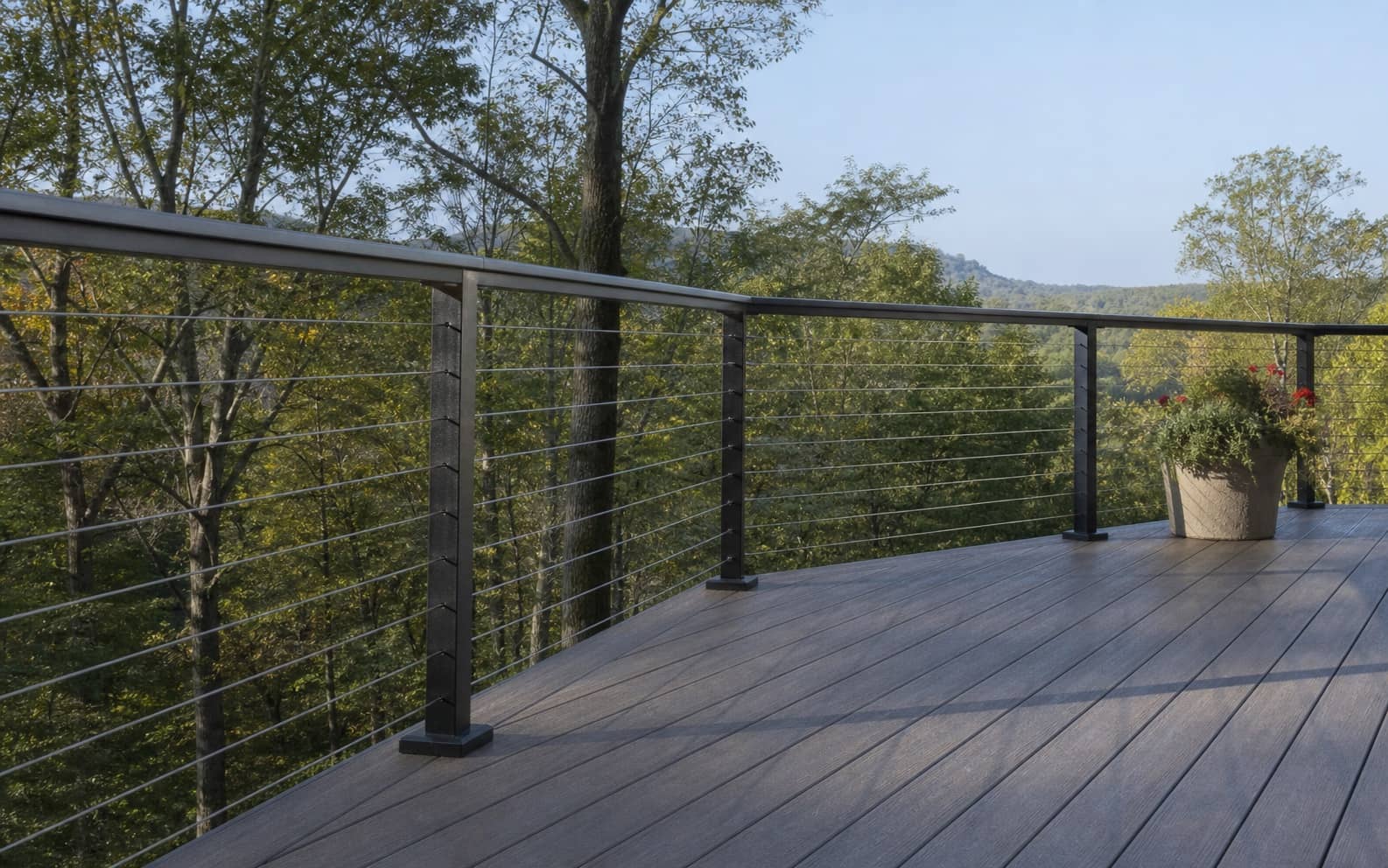
Cable railing uses horizontal 1x19 stainless steel cables — typically 3/16 inch diameter — tensioned between structural posts. The cables run horizontally through the posts, with tensioning hardware at one or both ends of each cable run. The system meets code by spacing cables no more than 3 to 4 inches apart (so the 4-inch sphere rule is satisfied) and tensioning them to resist lateral force (so they cannot be used as a climbing ladder by children).
The cap rail — the horizontal top rail you grip — is separate from the cables. It can be composite, aluminum, stainless, or wood. The cap rail sits on the posts and is what most people hold when using the railing.
Cable railing is not frameless glass. It is not invisible — the cables are visible at close range. At distance, especially against a green background, they largely disappear. From inside the house looking out through a sliding glass door, cable railing is significantly more transparent than composite baluster railing.
The Structural Reality of Cable Railing Posts
The single most important thing to understand about cable railing is the load on end posts. When cables are tensioned — which is required for code compliance and structural integrity — each cable exerts a lateral pull of 50 to 100 pounds at each end post. A typical cable run has 10 to 12 cables. This means end posts experience 500 to 1,200 pounds of cumulative lateral force from cable tension alone, before any occupant loading is applied.
This is why cable railing posts must be significantly stronger than standard composite or aluminum railing posts. Code-compliant cable railing requires:
- End posts (at corners or at the terminal end of each cable run) must be anchored with blocking into the deck framing, not just surface-mounted - End posts are often set with external blocking on two faces to distribute the tension load across multiple framing members - Post spacing on cable railing runs is typically 3 to 5 feet, versus up to 8 feet for some composite railing systems - The deck framing at post locations must be designed to accept the concentrated loads
This is why cable railing should be specified at the design stage of a new deck — retrofitting cable railing onto an existing deck often requires structural modifications to the framing. It is not a drop-in replacement for composite baluster railing.
Cost of Cable Railing in Northern Virginia
Cable railing consistently costs more than homeowners expect based on online research. The disconnect is that most online cost guides reflect the material cost of the cable and hardware, not the installed cost with code-compliant posts and blocking.
Material cost: Stainless 1x19 cable, tensioning hardware (Swageless or swage fittings), and post hardware run $25 to $45 per linear foot in materials alone, depending on the fitting system.
Posts: Code-compliant cable railing posts — aluminum core or steel in appropriate sizes with the correct attachment hardware — run $150 to $350 each. A 60-linear-foot railing perimeter with posts every 4 feet requires 15 to 18 posts.
Cap rail: Composite cap rail is $8 to $15 per linear foot. Stainless or aluminum top rail is $20 to $40 per linear foot.
Labor: Cable tensioning and post blocking is more labor-intensive per linear foot than composite railing installation.
Total installed cost in Northern Virginia: $130 to $220 per linear foot, all-in, for a properly installed code-compliant cable railing system with composite cap rail. On a 60-linear-foot perimeter, that is $7,800 to $13,200.
Quotes significantly below this range warrant scrutiny — the most common cost-reduction shortcut is undersized or improperly blocked posts, which creates a compliance and safety issue.
HOA Considerations
Cable railing's HOA approval path is less predictable than composite railing's. The outcomes in Northern Virginia communities generally fall into three categories:
Explicitly permitted: Some HOAs (particularly newer ones in communities established since 2010) have updated their ARC guidelines to include cable railing as an approved option. If your HOA has an updated design standards document that specifically addresses cable railing, approval is generally straightforward.
Discretionary: Many HOAs are silent on cable railing — their guidelines were written before cable railing was common. In this case, the ARC has discretion to approve or deny. Submitting a detailed application with manufacturer documentation, photos of comparable installations, and elevation drawings typically produces favorable outcomes.
Restricted: A minority of Northern Virginia HOAs — particularly those with traditional aesthetic covenants (older communities in Reston, some older Fairfax County communities) — explicitly prefer or require traditional baluster railing and may reject cable railing on aesthetic grounds.
Always check your HOA's current ARC guidelines before specifying cable railing on your design.
Maintenance Reality
Stainless steel cable in a Northern Virginia environment is genuinely low-maintenance — but not zero-maintenance.
Cable tension: Cables stretch slightly under sustained load, particularly in the first year. Cable tension should be checked 12 months after installation and re-tensioned as needed. This is typically a straightforward adjustment with the original tensioning tool.
Surface oxidation: 316 marine-grade stainless steel is the correct specification for exterior cable — 304 grade is susceptible to surface rust staining in humid environments. If your cable shows reddish staining, it may be 304-grade cable in a humid installation. Cleaning with a stainless steel cleaner removes surface oxidation.
Post hardware: The tensioning fittings should be inspected annually for corrosion at the fitting-to-cable junction. Surface cleaning and occasional application of a corrosion inhibitor extends fitting life.
Is Cable Railing Right for Your Project?
Cable railing is the right choice when: the aesthetic goal is contemporary or minimalist, the view from the deck is a significant asset that should be preserved, the project budget accommodates the cost premium, and HOA approval is either confirmed or likely. It is the wrong choice when: the HOA has traditional aesthetic covenants, the deck framing was not designed for cable loads (and structural modification is not feasible), or the budget does not support the full installed cost of a code-compliant system.
LDN Decks installs cable railing systems across Northern Virginia — Ashburn, Leesburg, Fairfax, Reston, McLean, and surrounding communities. We specify 316-grade stainless cable, code-compliant post blocking, and provide full HOA submission documentation.
---
Related: Deck Railing Options Northern Virginia · Composite vs Aluminum Railing · Deck Railing Code Requirements · HOA Deck Approval Process · New Deck Services
Frequently Asked Questions
How much does cable railing cost in Northern Virginia?
A properly installed cable railing system in Northern Virginia costs $130 to $220 per linear foot all-in, including stainless cable, code-compliant posts with correct blocking, cap rail, and tensioning hardware. On a 60-linear-foot deck perimeter, expect $7,800 to $13,200. Quotes significantly below this range often reflect undersized posts or insufficient blocking — a safety and compliance risk.
Is cable railing safe for children?
Code-compliant cable railing is designed to be safe for children. Virginia code requires cable spacing of less than 4 inches (so a 4-inch sphere cannot pass through) and sufficient cable tension that cables cannot be used as climbing rungs. All cable railing systems installed by licensed contractors to IRC requirements meet these child safety provisions.
Can cable railing be added to an existing deck?
Cable railing can be retrofitted onto an existing deck, but it often requires structural modification of the framing at post locations. End posts for cable railing must be anchored with blocking into the deck framing — a requirement that may not be met by the original framing if it was designed for standard railing. A structural assessment is required before specifying cable railing on an existing deck.
What is the difference between 304 and 316 stainless steel cable?
316-grade stainless steel has higher molybdenum content that significantly improves corrosion resistance in humid and salt-air environments. 304-grade stainless is more susceptible to surface oxidation (rust staining) in Northern Virginia's humid climate. For exterior deck cable railing, 316-grade is the correct specification. Always confirm the grade of cable with your contractor before installation.
Does cable railing require more maintenance than composite railing?
Cable railing requires slightly more maintenance than composite railing. Cable tension should be checked and adjusted at 12 months after installation and periodically thereafter. 316 stainless cable benefits from occasional cleaning with a stainless steel cleaner to remove surface oxidation, particularly in Northern Virginia's humid summers. Overall maintenance is still low — far less than wood railing or painted metal.
Cable railing structural requirements, code compliance specifications, and HOA approval outcomes vary by project and community. Always obtain a professional structural assessment before retrofitting cable railing onto an existing deck, and verify HOA guidelines before finalizing any railing specification.
Plan Your Northern Virginia Deck Project With Loudoun Decks
Get a free, no-pressure consultation from a licensed Northern Virginia deck builder. Call (571) 655-7207 or visit ldndecks.com/get-estimate.
Get a Free EstimateEverything Your Outdoor
Space Needs
From ground-up deck construction to full outdoor living spaces, every project is custom-designed for your home with permit planning, material guidance, and written workmanship terms.
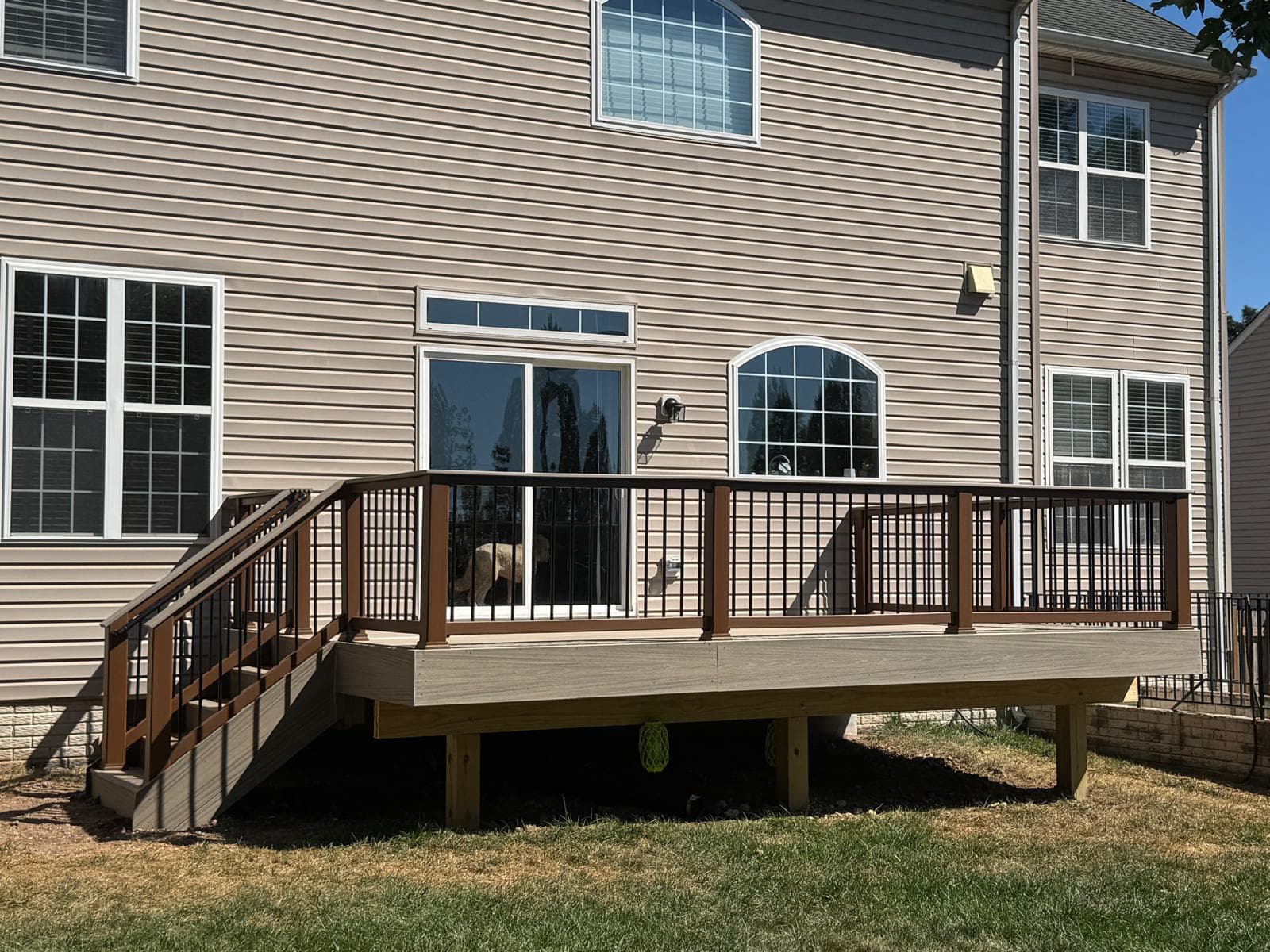
Custom Deck Builder
Transform your backyard with a custom-designed deck using Trex, TimberTech, wood, or PVC materials matched to your budget, HOA rules, and maintenance goals.
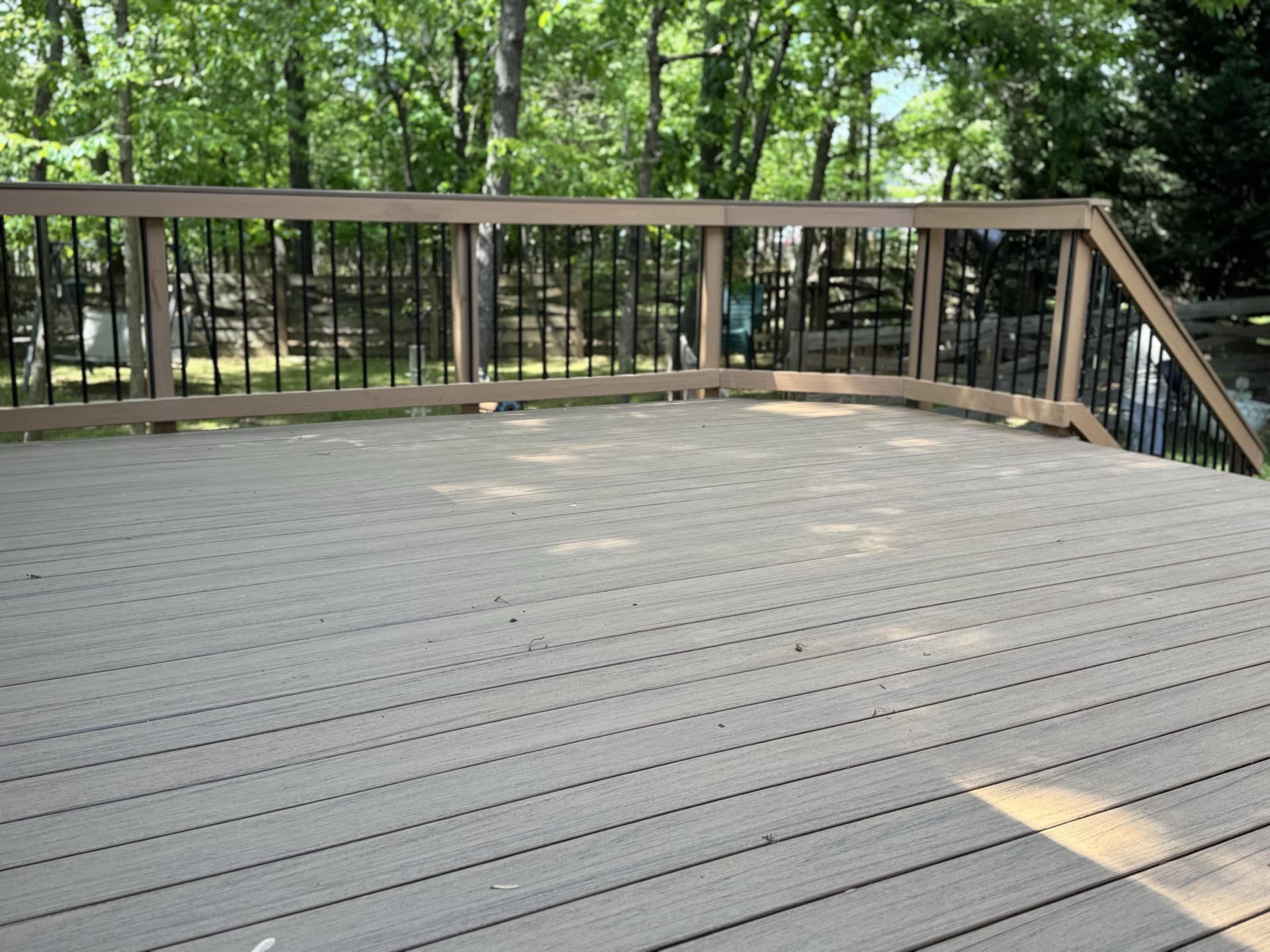
Deck Resurfacing
Premium wood-to-composite resurfacing for structurally sound frames. Full surface conversions start from $15k with boards, railings, fascia, and safety review.
Patio Contractor Services
Professional bluestone and paver patio installation. We create durable, beautiful ground-level outdoor living spaces that last a lifetime.
Local Expertise Across Northern Virginia
Loudoun Decks is a trusted deck builder serving Loudoun County, Fairfax County, Prince William County, Arlington, and Stafford.
Guides Northern Virginia Homeowners Are Reading
Composite Deck Cost in Northern Virginia
Material pricing, verified source references, planning examples and what drives the price.
Free Deck Cost Calculator
Get an instant estimate by material, size, and add-ons.
TimberTech & AZEK Decks
Premium PVC and composite deck options for Northern Virginia.
Deck Permits in Loudoun County
Permit requirements, review steps and inspection context for Loudoun homeowners.
Deck Permits in Fairfax County
Requirements, timeline, fees, and inspection process.
Deck Builder in Northern Virginia
Custom decks, permits, HOA support and local service areas.