

Deck Ledger Board Problems: Signs of Failure and What to Do
The ledger board is the single most critical structural connection on your deck — and the most common cause of catastrophic deck collapses in the United States. Without proper installation and maintenance, it silently deteriorates behind the deck surface until the structure separates from the house without warning.
The ledger board is the horizontal structural member that anchors your deck directly to your home's framing. Every load on the deck — the weight of the boards, furniture, people, and snow — transfers through the joists into the ledger and from the ledger into the house. The ledger is not one connection point. It is dozens of fastener connections distributed along its entire length, and every one of them must remain sound for the ledger to function safely.
Ledger failure is the primary cause of catastrophic deck collapses. When a ledger fails, the deck does not creak or sag gradually — it separates from the house suddenly and completely, dropping everyone standing on it. Understanding what causes ledger failure, how to identify early warning signs, and what repair looks like are critical pieces of knowledge for any Northern Virginia homeowner with an attached deck.
What Causes Ledger Board Failure?
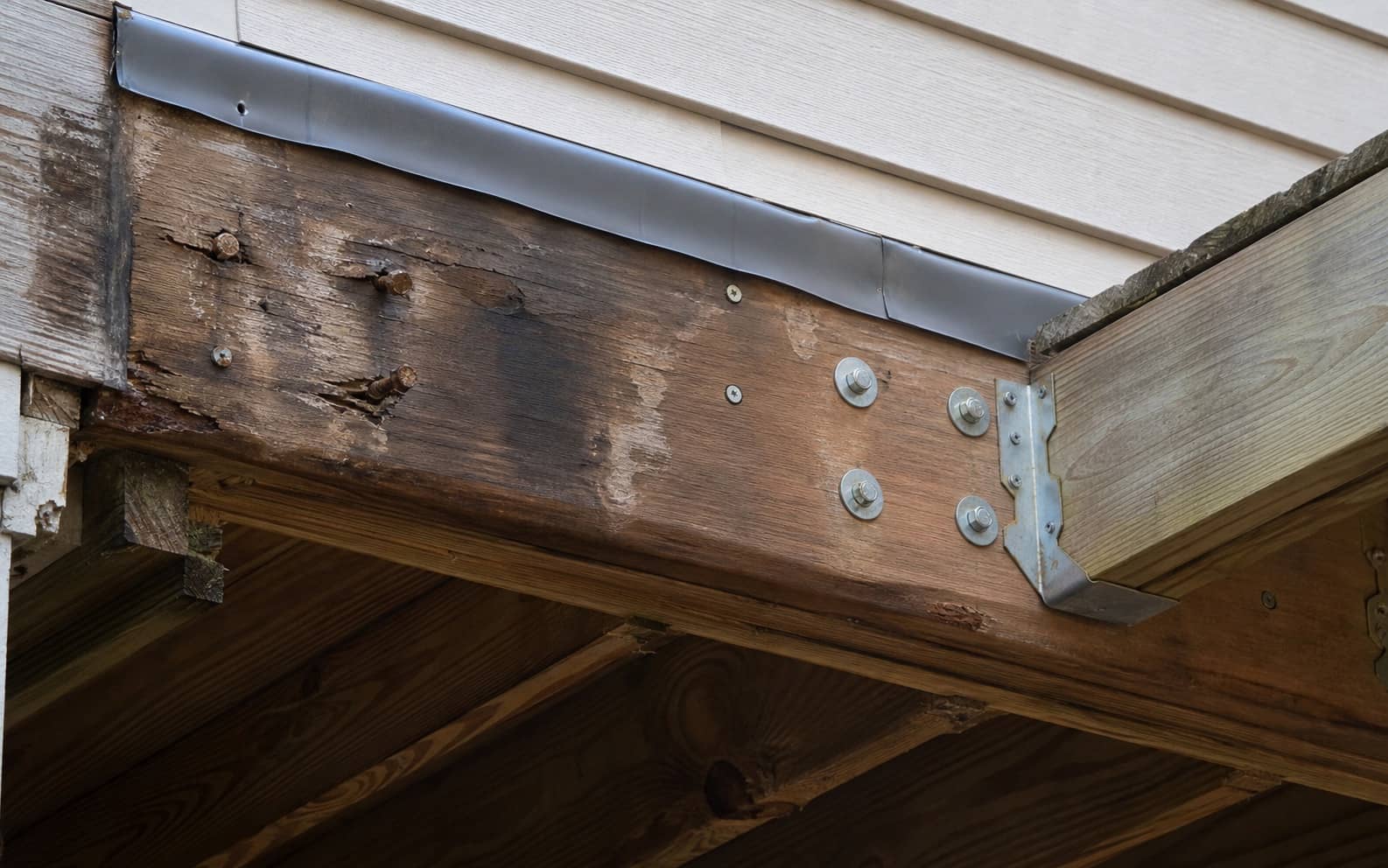
Absent or failed flashing. The ledger board sits against the house sheathing and siding. Without a properly installed flashing system — a thin waterproof membrane or metal flashing that directs water away from the connection — every rain event drives water between the ledger and the house wall. This water has nowhere to go. It pools behind the ledger, keeps the wood chronically wet, and produces the ideal conditions for fungal decay in both the ledger and the house's rim joist.
Flashing was not required by Virginia building code on most decks built before approximately 2000 to 2004. A substantial portion of older Northern Virginia decks have no flashing at all, or flashing that was improperly installed and no longer channels water away effectively.
Improper fasteners. The ledger must be attached with specific structural fasteners — lag screws or through-bolts of a defined diameter, pattern, and penetration depth — calculated to carry the deck's design loads. Decks built with nails, standard screws, or lag screws that are too small or too widely spaced are structurally undersized at the most critical connection point.
Improper ledger-to-joist connections. The joists that hang from the ledger must be connected with code-compliant joist hangers, not simply toe-nailed into the ledger face. Toe-nailed connections fail under the lateral forces that a deck experiences.
Ledger attached to inadequate backing. The ledger must attach to the house's structural rim joist or band joist — not to sheathing, siding, or decorative trim. Decks attached to vinyl siding or manufactured stone without a direct structural connection to the rim joist are not properly anchored.
Warning Signs of Ledger Failure
Visible gap between the ledger and house wall. Any separation at the connection point is a serious warning. A gap means the ledger has either shifted outward, the house framing it is attached to has compressed or failed, or the fasteners have corroded through.
Water staining along the top of the ledger or at the house wall. Dark staining at the ledger-to-house joint indicates chronic water infiltration. The staining on the exterior represents a fraction of the moisture that has accumulated behind the ledger.
Rust streaks from lag bolt locations. Rust streaking from the fastener positions indicates the fasteners are corroding. If the exterior of the bolt shows heavy oxidation, the section buried inside the house framing may be significantly worse.
Soft wood in the ledger when probed. Push a flat-head screwdriver into the face and top of the ledger at multiple points. Healthy lumber resists penetration. Rot-compromised lumber compresses under light hand pressure.
Soft or discolored house sheathing adjacent to the ledger. Reach under the ledger where it meets the house and probe the sheathing. If the house sheathing is soft, the moisture has migrated from the deck connection into the house structure — a more serious repair scope that involves the building envelope.
Deck that moves laterally when pushed toward or away from the house. The ledger should provide a rigid anchor. Any movement perpendicular to the house suggests the fastener pattern has lost its holding capacity.
What a Proper Ledger Repair Involves
Ledger repair is not a surface fix. Correcting a compromised ledger connection involves removing the deck surface boards and fascia in the area of the ledger, fully exposing the ledger and the house wall behind it, removing the ledger entirely if rot is present, assessing the condition of the house rim joist (and repairing it if compromised), installing new properly-rated flashing, installing a new ledger of correct dimensions attached with code-compliant fasteners in the correct pattern, and installing new joist hangers before restoring the deck surface.
This is a permitted repair in every Northern Virginia jurisdiction. The permit allows the county inspector to verify the new ledger connection before the deck surface is replaced — exactly the inspection that should have happened when the deck was originally built.
Ledger Code Requirements in Northern Virginia
Virginia residential code, adopted from the IRC, specifies ledger fastener type, diameter, spacing, and penetration based on deck joist span and tributary load. It also requires ledger flashing that extends behind the house siding and over the top of the ledger, and specifies that the ledger must attach to the structural rim joist of the house — not to sheathing or non-structural elements.
For homeowners in Loudoun County, Fairfax County, and Prince William County, ledger repair requires a building permit and county structural inspection. Completing a ledger repair without a permit creates a liability that surfaces during a home sale inspection — unpermitted structural work is a disclosed defect that can delay or kill a real estate transaction in Northern Virginia's active market.
Getting a Ledger Inspection
LDN Decks inspects ledger connections on every structural assessment we conduct across Northern Virginia — Ashburn, Leesburg, Sterling, Fairfax, Centreville, Herndon, and surrounding communities. If your deck is more than 10 years old, particularly if it was built before 2005, the ledger connection should be professionally evaluated.
---
Related: 7 Signs Your Deck Needs Immediate Repair · Deck Joist Rot Guide · Deck Repair Services · Deck Replacement Services · Deck Permit Guide Loudoun County
Frequently Asked Questions
What is a deck ledger board?
The ledger board is the horizontal structural member that anchors the deck directly to your home's framing — typically the rim joist or band joist. Every joist in the deck hangs from or connects to the ledger, making it the most critical load-transfer point in the entire deck structure.
How do I know if my deck ledger board is failing?
Key warning signs include: visible gaps between the ledger and the house wall, water staining or rust streaks at the ledger-to-house joint, soft wood when probed with a screwdriver, and lateral movement in the deck when pushed away from the house. Any of these signs warrants immediate professional inspection.
What is deck ledger flashing and why does it matter?
Ledger flashing is a waterproof membrane or metal flashing installed behind the siding and over the top of the ledger board to direct water away from the ledger-to-house connection. Without proper flashing, rain water infiltrates behind the ledger and produces chronic moisture levels that cause decay in both the ledger and the house's rim joist. Many older Northern Virginia decks were built without code-compliant flashing.
Can a failing deck ledger be repaired?
Yes, but it is a significant repair — not a patch. Proper ledger repair involves removing the deck surface at the ledger, removing the compromised ledger, repairing any house framing damage, installing proper flashing, and installing a new ledger with code-compliant fasteners. It requires a building permit and county inspection in Loudoun, Fairfax, and Prince William counties.
How much does deck ledger repair cost in Northern Virginia?
Ledger board replacement with proper flashing and fasteners typically ranges from $1,500 to $4,500, depending on deck size, access complexity, and whether the house rim joist also needs repair. When the house structure behind the ledger has been damaged by moisture infiltration, the repair scope expands and costs increase accordingly.
This article provides general homeowner guidance on deck ledger board failure and is not a substitute for a professional in-person structural inspection. Structural repair requirements, permit obligations, and code specifications vary by county and deck configuration. Always consult a licensed contractor before undertaking structural deck repairs.
Plan Your Northern Virginia Deck Project With Loudoun Decks
Get a free, no-pressure consultation from a licensed Northern Virginia deck builder. Call (571) 655-7207 or visit ldndecks.com/get-estimate.
Get a Free EstimateEverything Your Outdoor
Space Needs
From ground-up deck construction to full outdoor living spaces, every project is custom-designed for your home with permit planning, material guidance, and written workmanship terms.
Custom Deck Builder
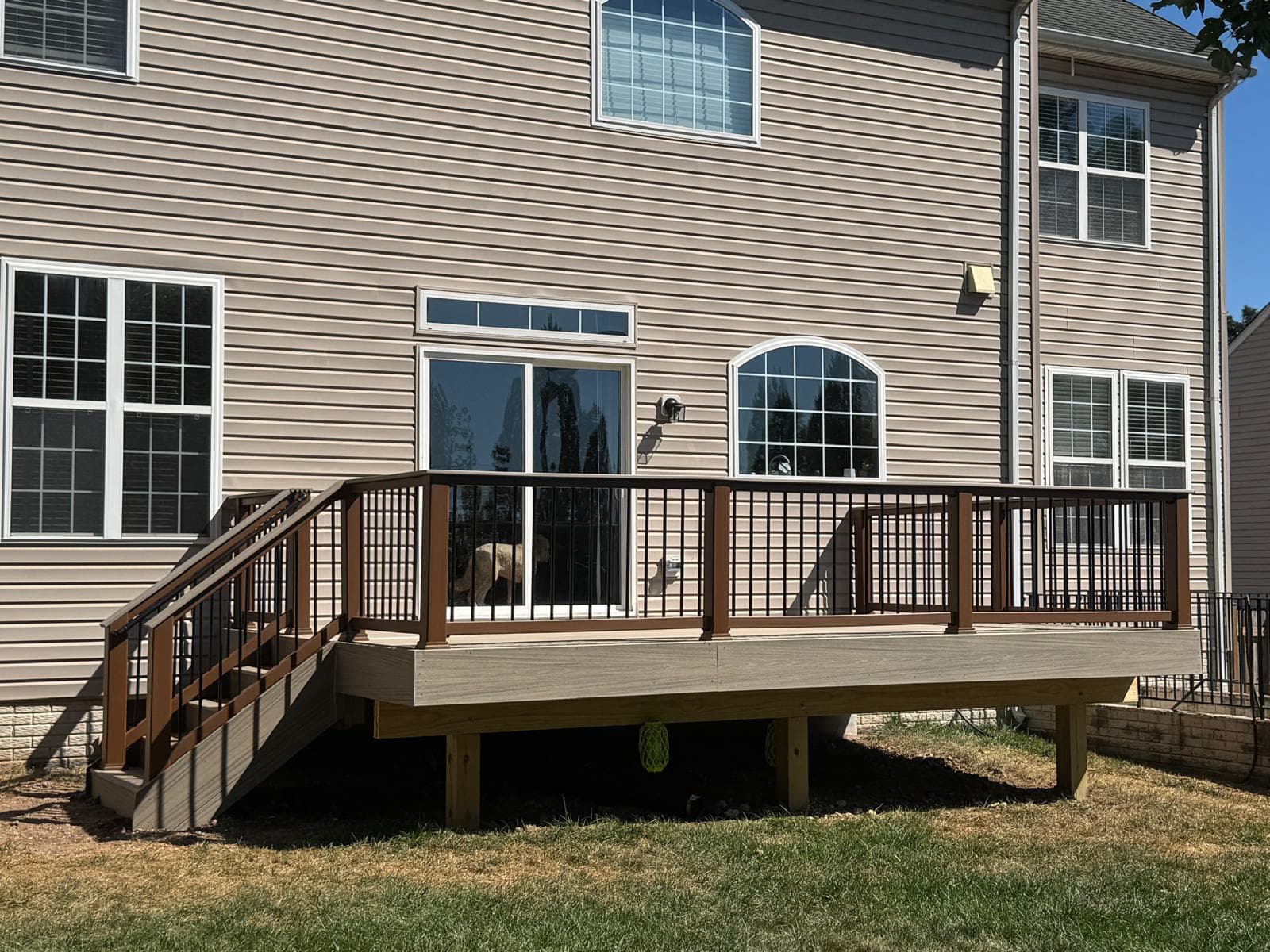
Transform your backyard with a custom-designed deck using Trex, TimberTech, wood, or PVC materials matched to your budget, HOA rules, and maintenance goals.
Deck Resurfacing
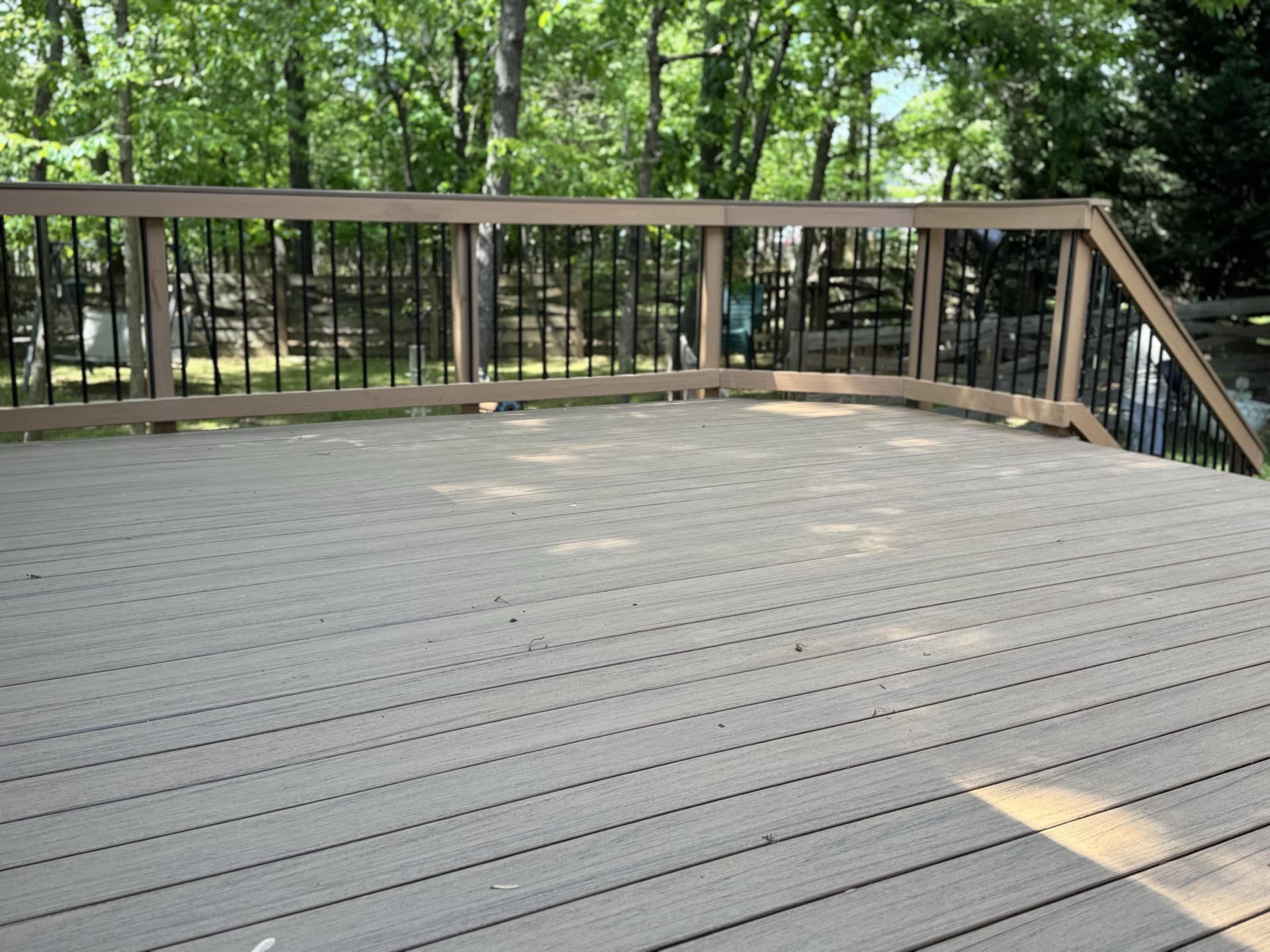
Premium wood-to-composite resurfacing for structurally sound frames. Full surface conversions start from $15k with boards, railings, fascia, and safety review.

Patio Contractor Services
Professional bluestone and paver patio installation. We create durable, beautiful ground-level outdoor living spaces that last a lifetime.
Local Expertise Across Northern Virginia
Loudoun Decks is a trusted deck builder serving Loudoun County, Fairfax County, Prince William County, Arlington, and Stafford.
Guides Northern Virginia Homeowners Are Reading
Deck Builder in Northern Virginia
Custom decks, permits, HOA support and local service areas.
Covered Deck Builder
Covered deck planning, outdoor living upgrades and shade structure decisions.
Trex vs TimberTech vs AZEK
Side-by-side brand comparison for Virginia climate.
Composite Deck Cost in Northern Virginia
Material pricing, verified source references, planning examples and what drives the price.
Free Deck Cost Calculator
Get an instant estimate by material, size, and add-ons.
TimberTech & AZEK Decks
Premium PVC and composite deck options for Northern Virginia.