


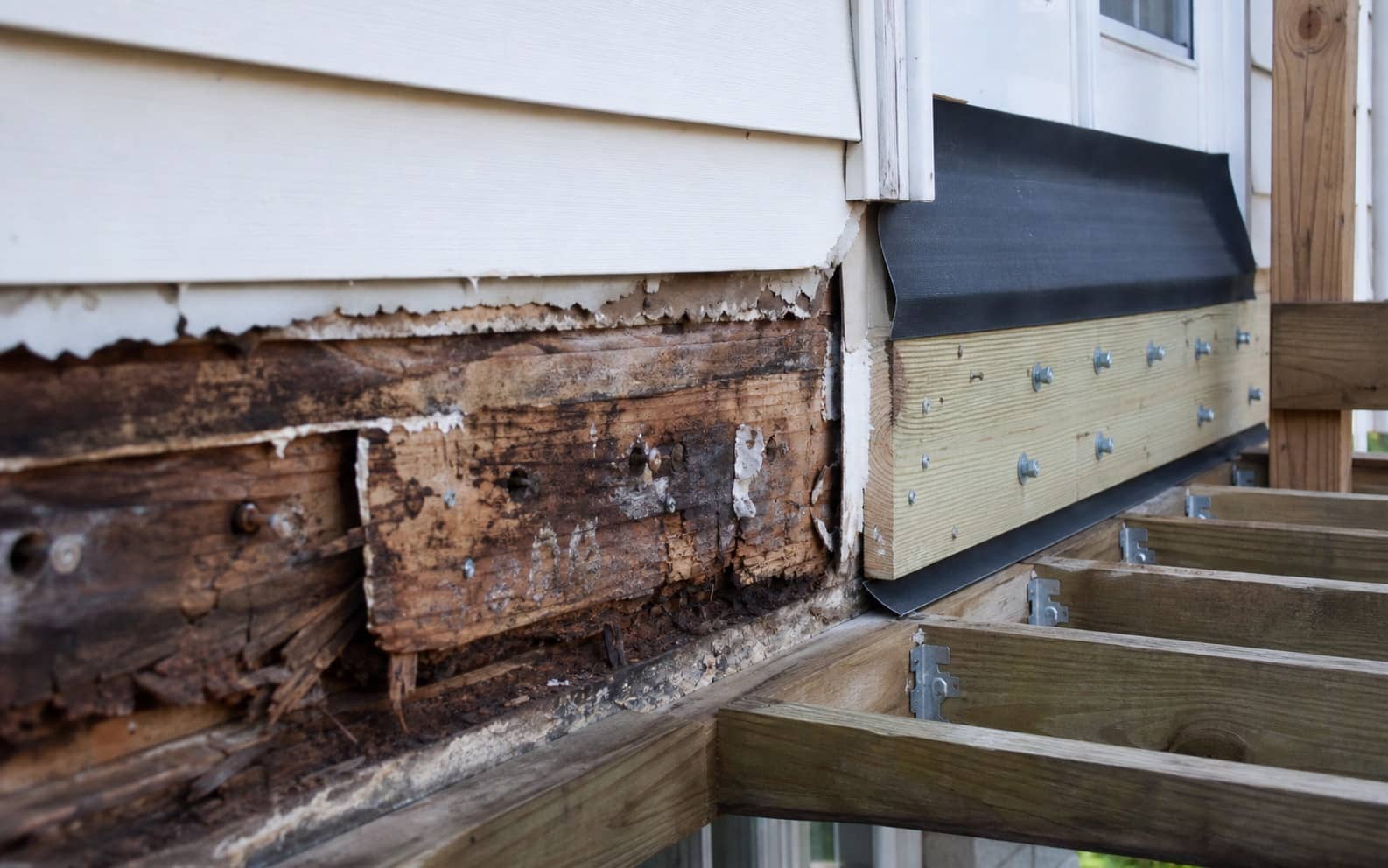
Ledger Board Failure: The #1 Cause of Deck Collapses in Northern Virginia
The ledger board — the framing member connecting the deck to the house — is involved in the majority of catastrophic deck collapses in the United States. Understanding what the ledger is, why it fails, how to inspect it, and what current code requires helps Northern Virginia homeowners assess the single greatest structural risk factor in their deck.
If there is one thing every Northern Virginia homeowner with an attached deck should understand about structural safety, it is the ledger board. The ledger is the single most failure-prone element in a residential deck structure, and ledger failure — when it occurs — is typically catastrophic rather than gradual. Decks that fail at the ledger do not sag slowly over time; they separate from the house suddenly, often under occupant load.
This guide covers everything a Northern Virginia homeowner needs to know about the ledger: what it is, why it fails, how to inspect it, and what current code requires.
What the Ledger Board Is
The ledger board is the pressure-treated lumber member that is attached directly to the house's structural framing — specifically to the rim joist (also called the band joist) of the house floor system. The ledger runs along the length of the house at the deck edge and serves as the primary connection point between the deck and the house.
On a typical attached deck, the ledger carries approximately half the total deck load. The other half is carried by the beam and posts at the outer deck perimeter. When a ledger fails, the deck is no longer supported at the house end — the entire structure rotates away from the house and collapses outward.
Why Ledger Boards Fail
Ledger failure has two primary mechanisms:
1. Water infiltration and rot in the house rim joist:
The ledger is installed against the house's exterior. At this junction, water from rain and snow can infiltrate behind the ledger and into the space between the ledger and the house rim joist. In Northern Virginia's climate — with significant seasonal rainfall, freeze-thaw cycling, and humid summers — this water infiltration is persistent.
The house rim joist behind the ledger is typically not visible or accessible for inspection. As it rots, the ledger fasteners are being driven into progressively weaker wood. The connection looks intact from the outside while the substrate it's attached to is failing. By the time visual signs appear — water staining on the house siding, soft ledger wood, or a visible gap — the rim joist may be 80 percent compromised.
2. Inadequate initial fastening:
Before the 2009 IRC strengthened deck ledger attachment requirements, many decks were built with nails, insufficient lag screws, or incorrect fastener spacing. Research by the American Forest & Paper Association found that ledger connections on decks built before 2000 frequently did not meet even the pre-2009 code requirements — let alone current code. Decks built in Northern Virginia in the 1990s are disproportionately represented in the population of structures with inadequate ledger connections.
Current Code Requirements for Ledger Attachment in Northern Virginia
The Virginia Uniform Statewide Building Code (adopting the 2021 IRC) requires:
Flashing: A continuous metal or flexible flashing must be installed above the ledger before the ledger is attached, extending up behind the house siding and over the top of the ledger face. Flashing redirects water away from the ledger-to-house junction. Improper or missing flashing is the most common construction deficiency found in older decks.
Fastener type: 1/2-inch through-bolts or 1/2-inch lag screws with minimum penetration into the house rim joist or header, installed in a pattern specified in IRC Table R507.9.1.3(1). The table specifies fastener size, spacing, and quantity based on joist span and deck width. Nails are not permitted for ledger attachment under current code.
Fastener spacing: IRC Table R507.9.1.3(1) provides a matrix of required fastener quantities based on ledger depth, joist span, and deck tributary width. For a typical Northern Virginia deck with 12-foot joists, two rows of 1/2-inch through-bolts at 16 to 24-inch spacing may be required.
House framing condition: The house rim joist must be verified to be sound before ledger installation. Attaching to a compromised rim joist does not produce a code-compliant connection regardless of fastener quality.
How to Inspect Your Ledger
The following inspection can be performed by a homeowner but has limits — the house rim joist behind the ledger is not accessible without removing the ledger, and its condition can only be fully assessed by a professional.
From the deck surface level (outside): - Look for any gap between the ledger and the house — even 1/16 inch of visible gap indicates movement - Look for the flashing: there should be metal or membrane flashing visible above the ledger, tucked behind the house siding - Look at the house siding above the ledger: any dark staining, paint failure, or visible rot in the siding above the ledger indicates water infiltration behind the flashing - Inspect visible fastener heads: corroded fasteners or fasteners that have pulled proud (moved outward) from the ledger face indicate connection failure
From below the deck (if accessible): - Probe the ledger with a screwdriver: press firmly into the ledger face and end grain. Sound wood resists; rotted wood accepts penetration - Inspect joist hanger connections at the ledger: all nail/screw holes should be filled; hangers should be flush to the ledger - Look at the house rim joist alongside the ledger if it is visible: probe for soft wood
Red flags that require professional inspection: - Any visible gap between the ledger and the house - Missing or improperly installed flashing (no metal visible above the ledger) - Soft wood in the ledger on probing - Water staining on the house siding above the ledger - Fasteners that have moved outward from the ledger face - A deck built before 2000 that has not been professionally inspected
What Professional Ledger Inspection Involves
A professional contractor inspecting a ledger uses: - A moisture meter to measure wood moisture content in the ledger and — if partially accessible — the rim joist. Elevated moisture content indicates active water infiltration before visible rot develops - A structural probe (a pointed tool with more force than a screwdriver) to test wood density at multiple points - Visual inspection of the flashing system with a mirror and light if needed - In some cases, removal of a small section of siding above the ledger to inspect the flashing installation and rim joist condition directly
Ledger Repair and Replacement
When a ledger is found to be deficient — whether through rot, inadequate fastening, or missing flashing — the repair approach depends on the severity:
Flashing only: If the ledger is sound but flashing is missing or improperly installed, a contractor can install correct flashing without replacing the ledger or rebuilding the connection.
Fastener upgrade: If the ledger is sound but fastened with insufficient or non-code hardware, through-bolts can be added in the correct pattern without ledger replacement.
Ledger replacement: If the ledger itself is rotted, it must be replaced. This typically requires temporarily supporting the deck joists while the old ledger is removed, the house rim joist is assessed and repaired if needed, new flashing is installed, and a new ledger is attached with code-compliant fasteners.
House rim joist repair: If the house rim joist has been compromised by water and rot, this requires structural repair by a contractor — potentially including sistering new rim joist members alongside the damaged ones before a new ledger can be attached.
All ledger repair and replacement work requires a building permit in Northern Virginia jurisdictions and triggers inspection.
LDN Decks performs ledger inspections, repair, and replacement across Loudoun, Fairfax, and Prince William counties. We provide written inspection reports with photographic documentation and code citations for any deficiency found.
---
Related: Deck Collapse Warning Signs · DIY Deck Safety Checklist · Repair vs. Replace a Deck · Deck Permit Process Northern Virginia · Deck Repair Services
Frequently Asked Questions
What is a deck ledger board?
The ledger board is the pressure-treated lumber member attached directly to the house that connects the deck to the structure. It is bolted to the house's rim joist (the perimeter framing of the floor system) and carries approximately half the total deck load. The ledger runs along the house edge of the deck and is the most structurally critical connection in an attached deck.
Why is the ledger board the most dangerous part of a deck?
Ledger failure is the most common cause of catastrophic deck collapse because the failure mechanism is largely invisible. Water infiltrating behind the ledger rots the house rim joist the ledger is attached to. The connection looks intact from outside while the wood substrate is failing. By the time visual signs appear, the rim joist may be substantially compromised. When it fails, decks separate from the house suddenly — often under full occupant load.
How do I know if my deck ledger has proper flashing?
Look at the junction between the ledger and the house siding, at the top of the ledger. There should be visible metal or membrane flashing extending from behind the siding downward over the ledger face. If you see the ledger butting directly against house siding with no visible flashing or a caulk bead only, the ledger likely lacks proper flashing. Caulk-only flashing is not a code-compliant method and eventually fails, allowing water infiltration.
Can nails be used to attach a deck ledger in Virginia?
No. Virginia residential code (adopting the IRC) requires 1/2-inch through-bolts or 1/2-inch lag screws in a specified pattern for ledger attachment — nails are not permitted. Decks built before the strengthened ledger attachment requirements in the 2009 IRC may have been built with nails or undersized fasteners. These connections do not meet current code and represent a safety risk that should be evaluated and upgraded.
How much does ledger repair or replacement cost in Northern Virginia?
Ledger flashing repair or upgrade (ledger board sound) runs $400 to $1,200 depending on ledger length and access. Full ledger replacement with new flashing and code-compliant fasteners runs $1,500 to $4,000 for a typical residential deck. If the house rim joist must also be repaired, add $500 to $2,000 depending on extent. A permit is required for all ledger repair and replacement work in Northern Virginia jurisdictions.
This guide describes ledger board failure mechanisms and inspection guidance for informational purposes. Ledger condition assessment and repair must be performed by a licensed contractor. Ledger repair or replacement requires a building permit in Northern Virginia jurisdictions. Do not occupy a deck with suspected ledger failure until a professional assessment is completed.
Plan Your Northern Virginia Deck Project With Loudoun Decks
Get a free, no-pressure consultation from a licensed Northern Virginia deck builder. Call (571) 655-7207 or visit ldndecks.com/get-estimate.
Get a Free EstimateEverything Your Outdoor
Space Needs
From ground-up deck construction to full outdoor living spaces, every project is custom-designed for your home with permit planning, material guidance, and written workmanship terms.
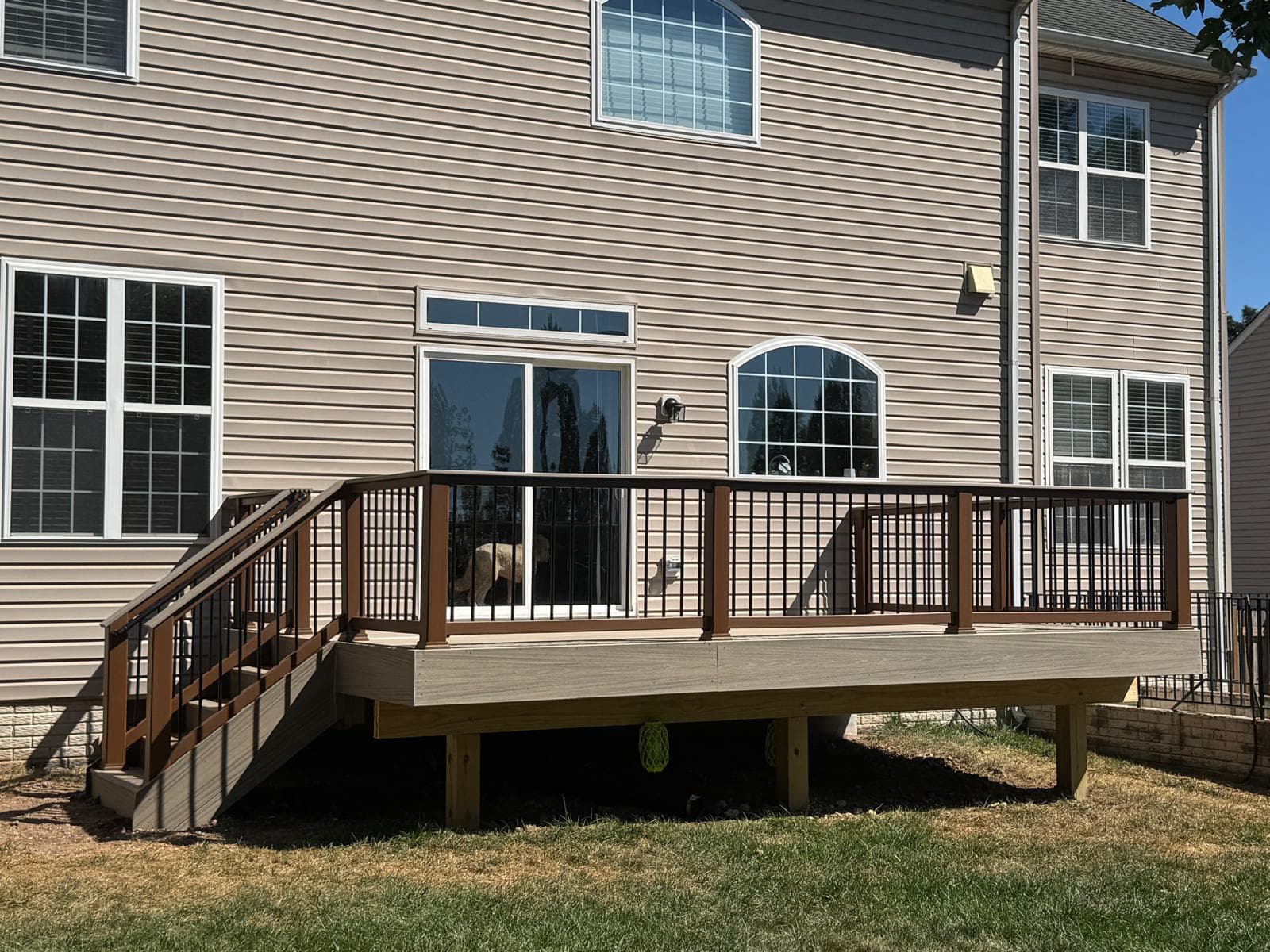
Custom Deck Builder
Transform your backyard with a custom-designed deck using Trex, TimberTech, wood, or PVC materials matched to your budget, HOA rules, and maintenance goals.
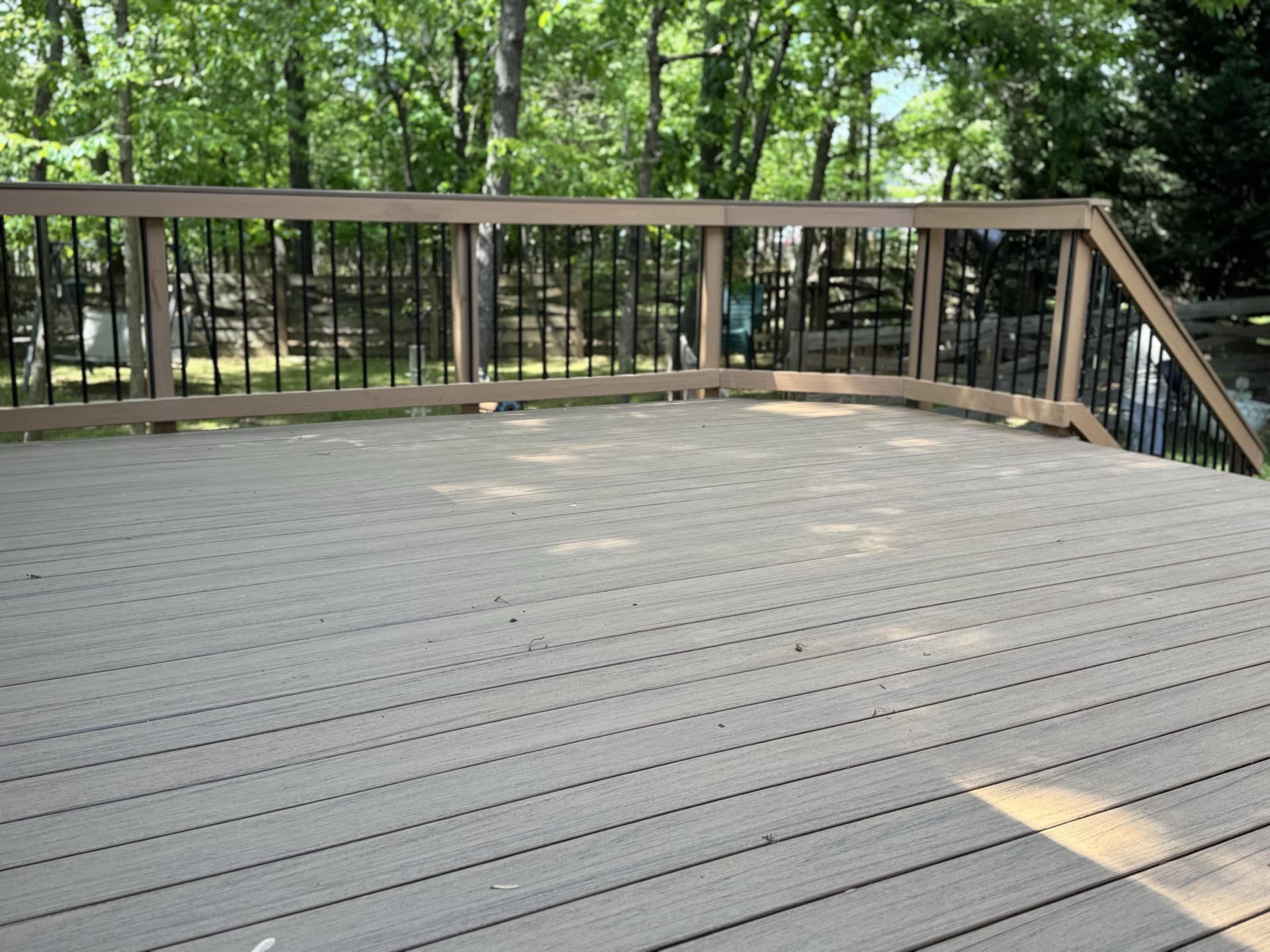
Deck Resurfacing
Premium wood-to-composite resurfacing for structurally sound frames. Full surface conversions start from $15k with boards, railings, fascia, and safety review.

Patio Contractor Services
Professional bluestone and paver patio installation. We create durable, beautiful ground-level outdoor living spaces that last a lifetime.
Local Expertise Across Northern Virginia
Loudoun Decks is a trusted deck builder serving Loudoun County, Fairfax County, Prince William County, Arlington, and Stafford.
Guides Northern Virginia Homeowners Are Reading
Covered Deck Builder
Covered deck planning, outdoor living upgrades and shade structure decisions.
Trex vs TimberTech vs AZEK
Side-by-side brand comparison for Virginia climate.
Composite Deck Cost in Northern Virginia
Material pricing, verified source references, planning examples and what drives the price.
Free Deck Cost Calculator
Get an instant estimate by material, size, and add-ons.
TimberTech & AZEK Decks
Premium PVC and composite deck options for Northern Virginia.
Deck Permits in Loudoun County
Permit requirements, review steps and inspection context for Loudoun homeowners.