


How to Clean a Composite Deck in Northern Virginia: Spring & Fall Guide
Composite decking requires minimal maintenance — but minimal is not zero. In Northern Virginia, two cleaning cycles per year address the specific challenges of the local climate: spring pollen accumulation and summer mildew, and fall leaf tannin staining. Cleaning composite correctly takes less than two hours and keeps the deck looking like new for the full warranty period.
Composite decking from Trex, TimberTech, and AZEK is designed to resist the stains, moisture, and UV exposure that degrade wood decks. But the Northern Virginia climate creates specific cleaning challenges that accumulate seasonally: heavy spring pollen, summer humidity-driven mildew, and fall leaf tannin staining. Addressed properly each season, these issues clean up easily. Left too long, some — particularly tannin staining from wet leaves — can become permanent or require professional intervention.
This guide covers what to use, what to avoid, and exactly how to clean a composite deck in Northern Virginia across both seasonal cycles.
What Can and Cannot Be Used on Composite Decking
Before any specific cleaning step, the most important rules:
Safe to use: Mild dish soap (Dawn or equivalent) with warm water and a soft-bristle brush. Composite deck cleaners from the same manufacturer (Trex Deck Wash, TimberTech Deck Cleaner). Oxygen bleach (sodium percarbonate) in the dilutions specified by the manufacturer. Garden hose or low-pressure power washer (1,500 PSI maximum, fan tip at least 12 inches from the surface).
Never use: Chlorine bleach (sodium hypochlorite) — it strips the pigment from composite cap layers and can void the warranty. Acetone, mineral spirits, or petroleum solvents. Wire brushes or stiff metal scrubbers — they scratch the cap surface and create pathways for staining. Pressure washers above 1,500 PSI or with a zero-degree tip — the concentrated stream damages the cap.
Check your warranty: Trex, TimberTech, and AZEK all specify approved cleaning methods in their warranty documents. Using non-approved cleaners — particularly chlorine bleach — can void the stain warranty. When in doubt, the safest default is manufacturer-approved cleaner or plain dish soap.
Spring Cleaning: Pollen, Mildew, and General Grime
Northern Virginia's pollen season runs from mid-March through late May. Tree pollen — predominantly oak and pine — coats all outdoor surfaces. On composite decking, pollen accumulates in the texture channels of wood-grain composite surfaces. Combined with spring rain and humidity, pollen creates a grimy residue that can develop into a substrate for mildew if not addressed.
Timing: Clean as soon as pollen season ends — typically late May to early June. Cleaning during peak pollen will require a second cleaning pass.
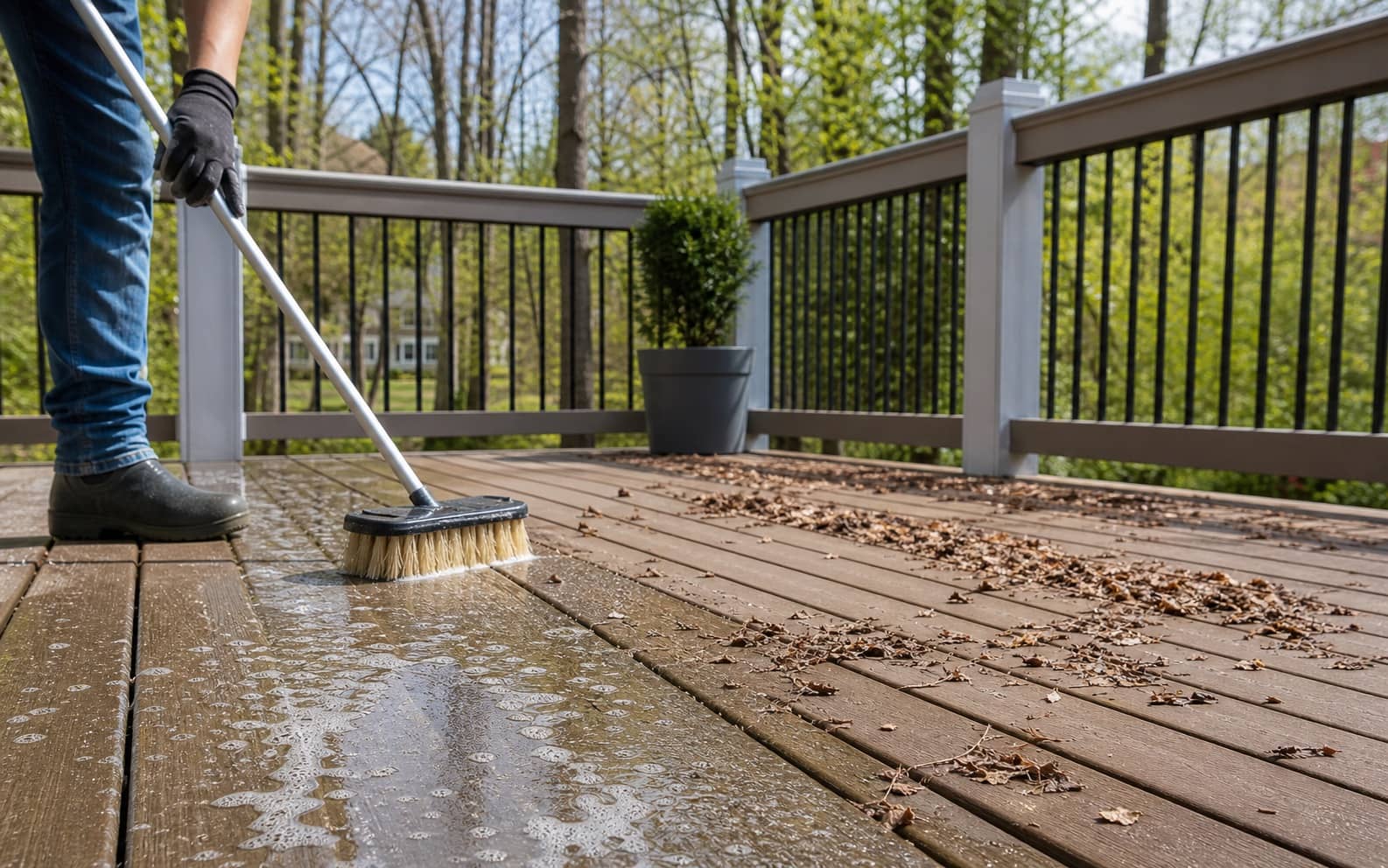
Step 1: Sweep or blow all loose debris, leaves, and pollen from the deck surface and from between deck boards. Accumulated debris in board gaps traps moisture and is the primary source of mildew under the deck surface.
Step 2: Wet the deck surface with a garden hose.
Step 3: Apply composite deck cleaner or a bucket solution of warm water and two tablespoons of dish soap per gallon. Work in sections of 8 to 10 square feet.
Step 4: Scrub with a soft-bristle deck brush, working with the grain direction of the board texture. Do not scrub across the grain — cross-grain scrubbing lifts and abrades the texture channels.
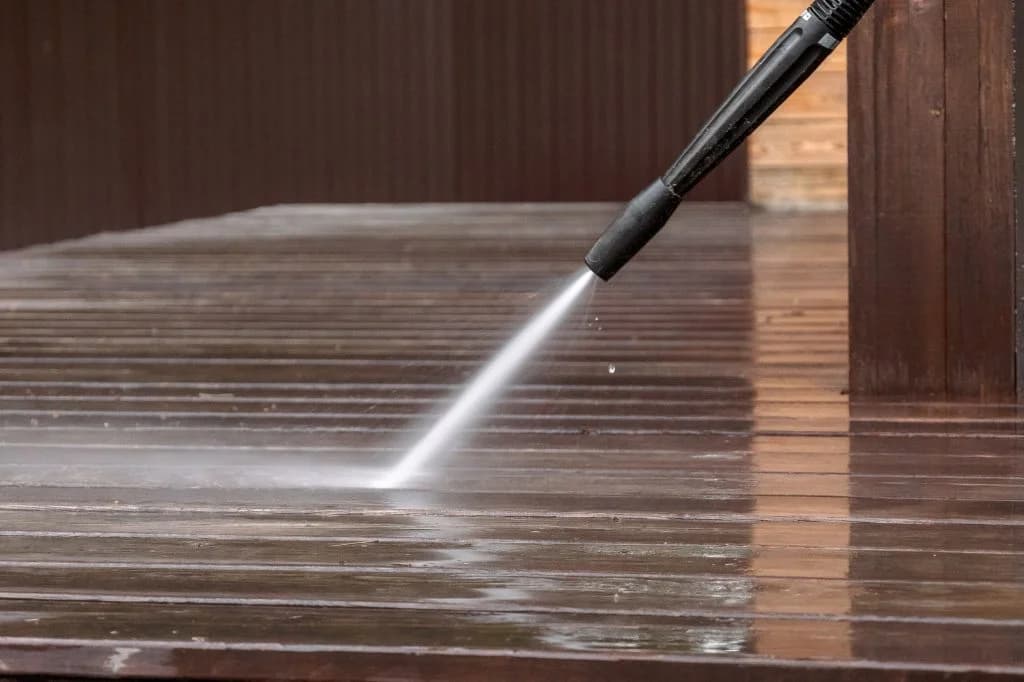
Step 5: Rinse thoroughly with the garden hose or a low-pressure power washer (1,500 PSI max, fan tip, 12+ inches from the surface). Rinse from the house outward so dirty water does not flow back across cleaned sections.
Step 6: Allow to dry fully — 24 to 48 hours — before placing furniture back on the surface.
For mildew spots: Mildew on composite appears as gray-black blotching, typically in shaded areas or near furniture legs. Mix a solution of oxygen bleach (Stain Solver or similar sodium percarbonate product) in the concentration specified on the package, apply to the mildew area, allow to dwell 10 to 15 minutes, scrub with a soft brush, and rinse thoroughly. Oxygen bleach is safe for composite; chlorine bleach is not.
Fall Cleaning: Leaf Tannin Staining
Northern Virginia's heavy tree canopy — particularly the oak-dominated landscapes of Loudoun, Fairfax, and Prince William counties — drops a substantial volume of leaves from October through December. Wet leaves sitting on composite decking leach tannins (natural tree acids) into the board surface. Tannin staining appears as dark brown or orange-brown discoloration in the pattern of the leaf outline.
Prevention is far easier than remediation. The best approach is to remove leaves before they have a chance to sit wet on the deck surface. After any significant leaf fall event, sweep or blow the deck. A weekly sweep during peak leaf drop in October and November prevents most tannin staining.
For existing tannin stains:
Fresh tannin stains (less than one week old): Apply composite deck cleaner or dish soap solution, scrub with a soft brush in the grain direction, rinse. Fresh stains typically remove with normal cleaning.
Set tannin stains (more than two weeks wet contact): Apply an oxygen bleach solution at the package-specified concentration. Allow to dwell 20 to 30 minutes, keep the area moist by re-wetting if it starts to dry. Scrub with a soft brush and rinse. Multiple applications may be needed for set stains.
Old tannin stains (stained through a winter): These may be permanent on some composite products. Some composite manufacturers offer stain treatment guidance for severe cases — contact the manufacturer's warranty support line with photos before attempting aggressive cleaning.
Timing: A fall cleaning pass after leaves are done dropping in early December prepares the deck for winter without active maintenance requirements through the cold months.
What to Do About Composite Deck Fading
If a composite deck looks faded or dull after cleaning, the most common cause is a thin layer of chalky oxidation on the cap surface. This is normal weathering within the composite cap layer and is typically cosmetic, not a warranty defect.
For oxidation haze, a composite deck restorer product (Corte-Clean and similar) can restore the color depth of the surface cap without repainting. Follow the product instructions carefully.
If the fading is significant color change — boards are visibly lighter than they were at installation — document it with photos against the original board color (often visible under furniture or in a protected area) and contact the manufacturer's warranty support. Significant fade within the warranty period is a potential warranty claim.
LDN Decks offers professional deck cleaning services across Northern Virginia as a standalone service or as part of annual deck maintenance programs.
Get a Deck Cleaning or Maintenance Estimate
---
Related: Deck Staining Guide Northern Virginia · How to Power Wash a Deck · Deck Winterization Checklist · Why Composite Decking Fades · Deck Repair Services
Frequently Asked Questions
Can I use a pressure washer on a composite deck?
Yes, with restrictions. Use a maximum of 1,500 PSI with a fan-tip nozzle (never a zero-degree tip) held at least 12 inches from the deck surface. Work with the board grain direction, not across it. Higher pressure or a focused tip can damage the composite cap surface, create surface abrasion, and void the warranty on some products.
Can I use bleach to clean a composite deck?
Chlorine bleach (sodium hypochlorite) is not safe for composite decking — it strips pigment from the cap layer and can void the stain warranty on Trex, TimberTech, and AZEK products. Oxygen bleach (sodium percarbonate, sold as Stain Solver and similar products) is safe for composite decking and effective for mildew removal at manufacturer-specified dilutions.
How do I remove mildew from composite decking?
Mix an oxygen bleach solution (sodium percarbonate) at the package-specified concentration. Apply to the mildew area, allow to dwell 10 to 15 minutes, scrub with a soft-bristle brush in the grain direction, and rinse thoroughly with water. Repeat if needed. Never use chlorine bleach — it damages the composite cap and voids the warranty.
How do I remove leaf stains from a composite deck?
Fresh leaf tannin stains (less than one week) typically clean with dish soap solution and a soft brush. Set stains (more than two weeks) require oxygen bleach at package-specified concentration, with a 20 to 30-minute dwell time before scrubbing and rinsing. Prevention is far easier — sweep leaves after every significant fall event to prevent tannin contact with the board surface.
How often should I clean my composite deck in Northern Virginia?
Two cleaning passes per year are standard for Northern Virginia's climate: once in late May or early June after pollen season ends, and once in early December after leaves are done dropping. Additional spot cleaning after summer cookouts or other staining events is recommended — composite is much easier to clean when stains are fresh than after they set.
Always follow the manufacturer's approved cleaning instructions for your specific composite decking product. Using non-approved cleaners may void warranty coverage. Product-specific cleaning guidance is available from Trex, TimberTech, and AZEK customer support.
Plan Your Northern Virginia Deck Project With Loudoun Decks
Get a free, no-pressure consultation from a licensed Northern Virginia deck builder. Call (571) 655-7207 or visit ldndecks.com/get-estimate.
Get a Free EstimateEverything Your Outdoor
Space Needs
From ground-up deck construction to full outdoor living spaces, every project is custom-designed for your home with permit planning, material guidance, and written workmanship terms.
Custom Deck Builder
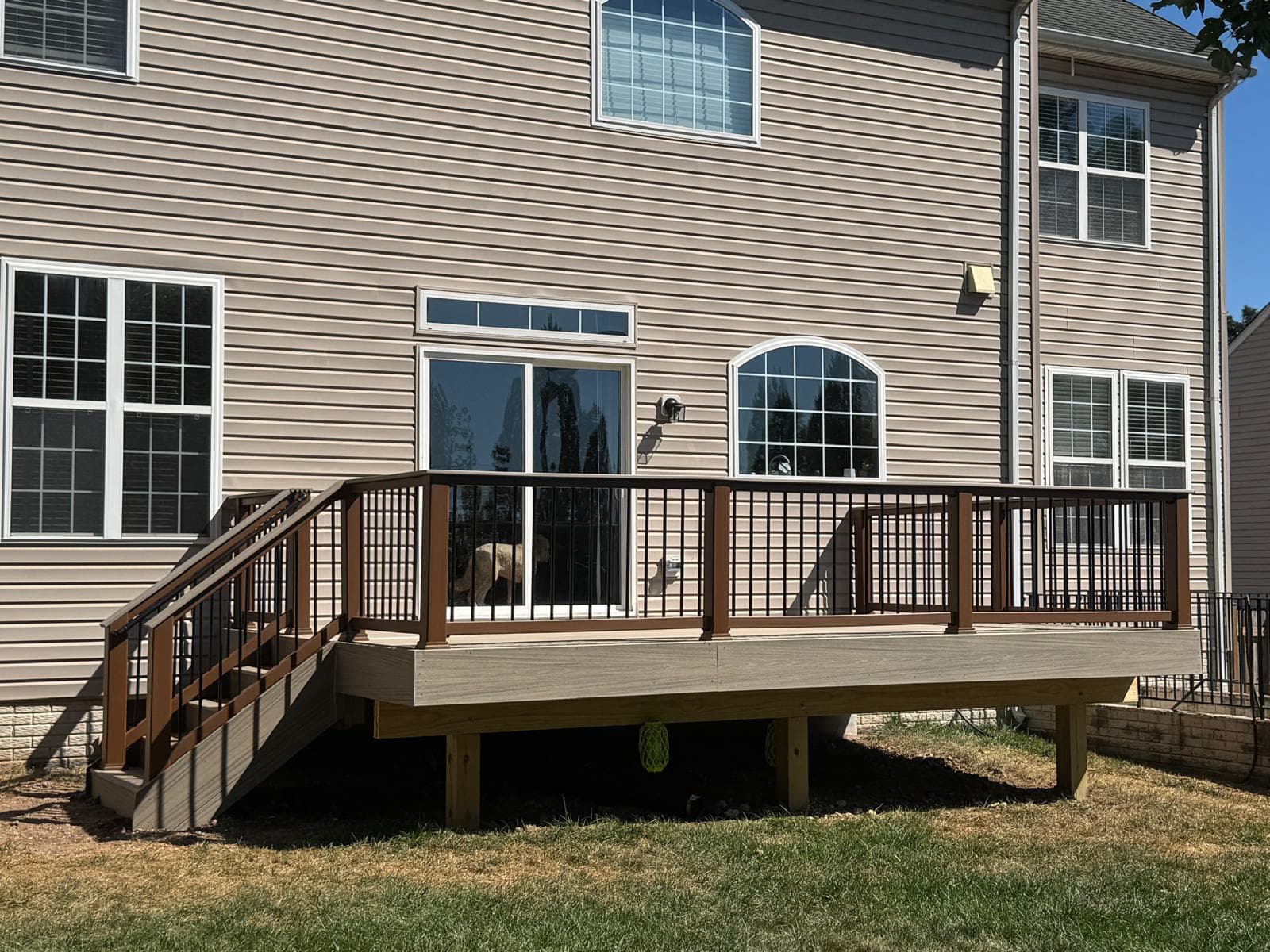
Transform your backyard with a custom-designed deck using Trex, TimberTech, wood, or PVC materials matched to your budget, HOA rules, and maintenance goals.
Deck Resurfacing
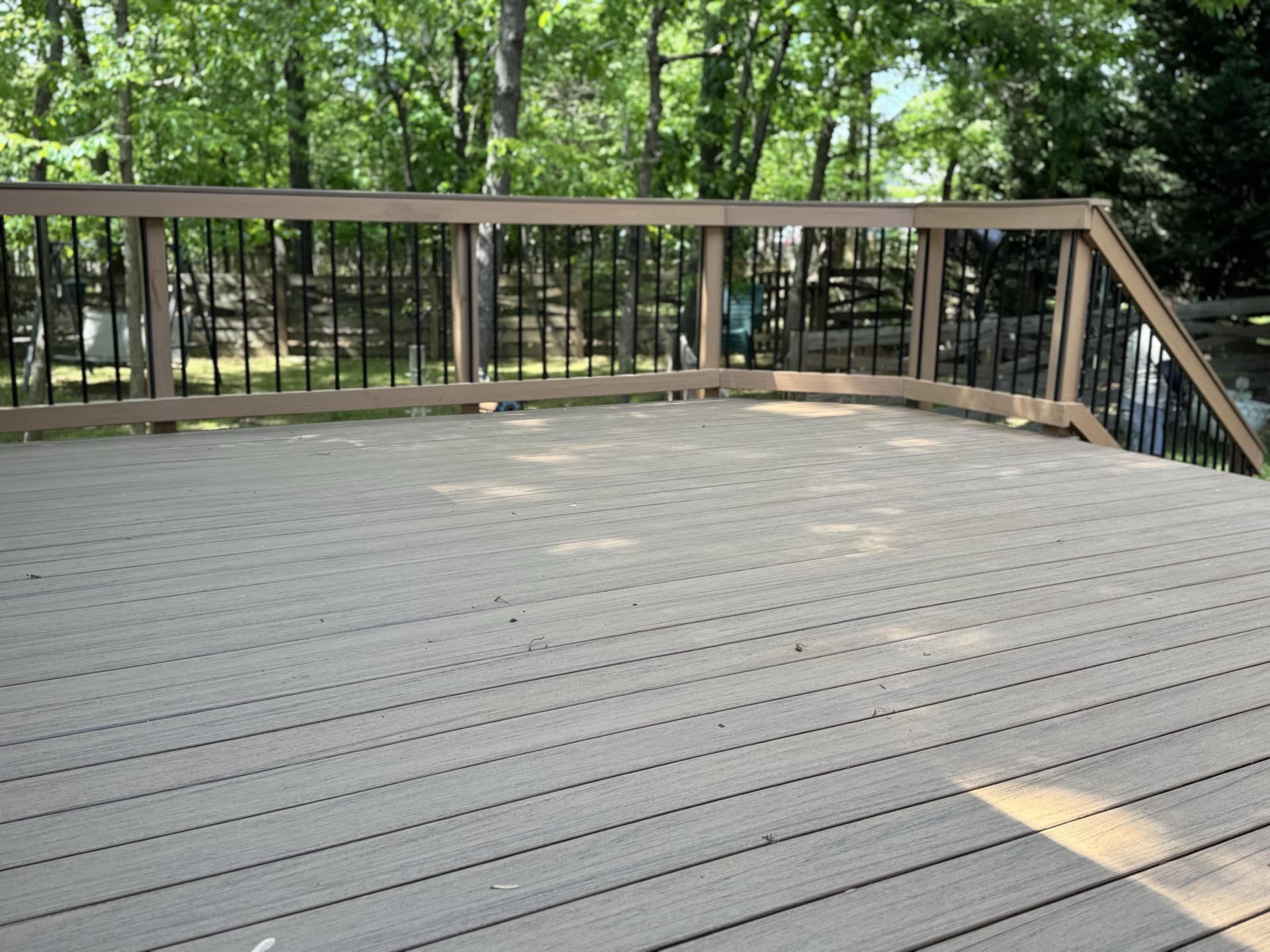
Premium wood-to-composite resurfacing for structurally sound frames. Full surface conversions start from $15k with boards, railings, fascia, and safety review.
Patio Contractor Services
Professional bluestone and paver patio installation. We create durable, beautiful ground-level outdoor living spaces that last a lifetime.
Local Expertise Across Northern Virginia
Loudoun Decks is a trusted deck builder serving Loudoun County, Fairfax County, Prince William County, Arlington, and Stafford.
Guides Northern Virginia Homeowners Are Reading
Deck Permits in Fairfax County
Requirements, timeline, fees, and inspection process.
Deck Builder in Northern Virginia
Custom decks, permits, HOA support and local service areas.
Covered Deck Builder
Covered deck planning, outdoor living upgrades and shade structure decisions.
Trex vs TimberTech vs AZEK
Side-by-side brand comparison for Virginia climate.
Composite Deck Cost in Northern Virginia
Material pricing, verified source references, planning examples and what drives the price.
Free Deck Cost Calculator
Get an instant estimate by material, size, and add-ons.