
Common Deck Stair Inspection Failures in Virginia
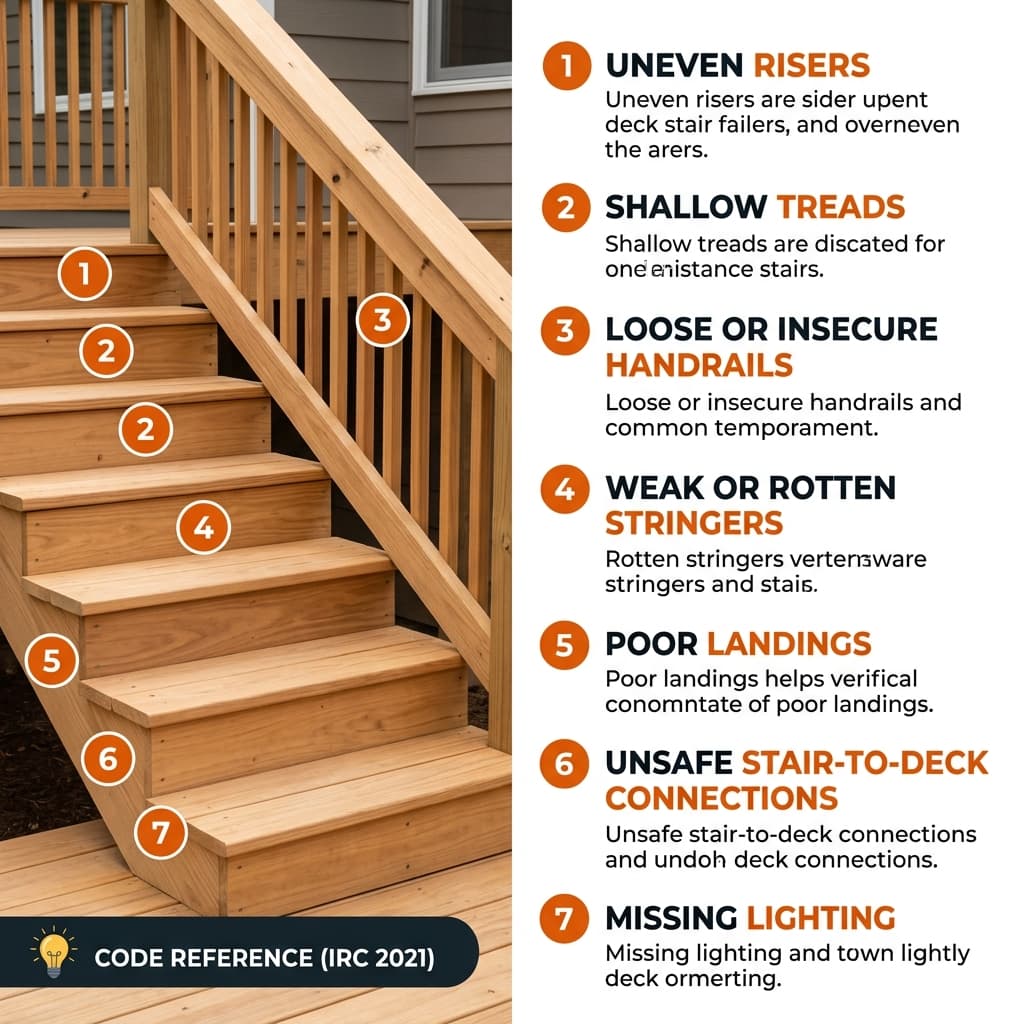
Deck stairs fail inspections for predictable reasons: uneven risers, shallow treads, loose handrails, weak guards, rotten stringers, poor landings, missing lighting and unsafe stair-to-deck connections.
Quick Answer
The most common deck stair inspection failures in Virginia are uneven riser heights, improper tread depth, loose or non-graspable handrails, weak guards, rotten stringers, poor landings, missing lighting, corroded hardware, and stairs pulling away from the deck frame.
These issues matter because stair failures are often connected to wider structural problems, especially on attached decks with ledger, flashing, framing, or permit-history concerns.
Source Context
Deck stairs often fail inspection because small measurement and connection problems create real safety risk. A deck surface may look fine, but the stairs concentrate movement, moisture, foot traffic, handrail loads and landing settlement into one compact system.
In Virginia and Northern Virginia, inspectors commonly look at stair geometry, handrails, guards, stringer support, bottom landings, lighting and how securely the stair connects back to the deck framing. The exact interpretation can vary by jurisdiction, but the failure patterns are remarkably consistent.
This guide explains the most common deck stair inspection failures we see around Loudoun County, Fairfax County, Prince William County, Arlington, Alexandria, Falls Church, Leesburg, Ashburn, Sterling, Herndon, Reston and McLean. For homeowner self-checking, download the deck stair safety inspection checklist.
1. Uneven Riser Heights
Uneven risers are one of the most common stair inspection failures. The riser is the vertical height from one tread to the next. If one step is noticeably taller or shorter than the others, people lose the rhythm of the staircase and trip.
This often happens when the bottom landing settles, a stair was laid out before the finished landing height was known, or a builder tried to make the math work by hiding the difference in the first or last step. Our deck stair code guide explains the rise/run principles in more detail.
2. Improper Tread Depth
The tread is the horizontal surface your foot lands on. Treads that are too shallow make stairs feel steep and insecure. Tread issues also happen when boards cup, split, loosen, or are installed without enough support underneath.
Composite stair treads deserve special attention because they may require tighter stringer spacing than wood. If the tread flexes underfoot, the issue may be support spacing, fasteners, board condition or all three.
3. Loose or Non-Graspable Handrails
A handrail has to do more than look finished. It needs to be continuous, secure and graspable. A wide flat cap board may look like a rail, but it usually does not function like a handrail during a fall.
Loose handrails fail because they cannot reliably stop someone who slips. Non-graspable rails fail because a hand cannot wrap around them. Older deck stairs often have this problem after years of patch repairs.
4. Weak Guardrails and Poor Post Attachment
Guards protect open sides of stairs and elevated deck areas. A guard that moves when pushed is a serious warning sign. The problem may be weak post attachment, rotted framing, poor blocking, missing structural hardware or fasteners that have corroded over time.
Posts attached only through surface decking are especially concerning. Stair guards and deck guards need real structural resistance, not just trim-level attachment.
5. Rotten or Cracked Stair Stringers
Stringers carry the treads and transfer stair loads to the deck framing and landing. They are often close to the ground, exposed to splashback, and vulnerable at the bottom where water sits.
Rotten stringers can be hidden from above. Look from the side and underneath. If a screwdriver sinks easily into the wood, if the stringer is split near the notches, or if the bottom end is soft, the stair may need more than surface repair. The parts are explained in our deck stair construction diagram.
6. Improper Stringer Spacing
Stringers spaced too far apart can make stair treads flex. This is common when older wood stair framing is reused under new composite boards without checking the manufacturer installation requirements.
If the stair feels bouncy but the treads are not visibly broken, stringer spacing may be the cause. A resurfacing project should always evaluate stairs before new boards are installed.
7. Missing or Inadequate Landings
The bottom of the stairs needs a firm, stable, level landing. A stair set sitting on bare soil, pavers that have settled, or a cracked concrete pad can shift the entire stair geometry.
When the landing sinks, the bottom riser becomes taller than the others. That creates a trip hazard and can twist the stringers. Northern Virginia clay soil and freeze-thaw cycles make landing stability especially important.
8. Unsafe Open Risers
Open risers can be acceptable in many deck stair designs, but openings still need to feel safe and meet applicable rules. Large gaps can be a concern for small children, pets and final inspection.
Open riser issues are often paired with inconsistent stair geometry, missing blocking or older rail/guard layouts that no longer match modern expectations.
9. Poor Stair Lighting
Stairs that disappear after dark are a safety problem. Lighting may be required or expected depending on the project and inspection context, and it is always smart for homeowner safety.
Low-voltage riser lights, post lights and carefully placed deck lighting reduce fall risk after sunset. Our deck stair lighting service explains how lighting can be planned with stair framing instead of added later as an afterthought.
10. Slippery Treads
Algae, mildew, worn wood grain, pollen film, poor drainage and shaded locations can all make stair treads slick. Slippery stairs may not be a framing failure, but they can still create real injury risk.
This is more common on older wood decks, shaded backyard stairs and stairs near landscaping that traps moisture. Maintenance helps, but severely worn or damaged treads may need replacement.
11. Corroded Fasteners and Hardware
Exterior stair hardware lives in a harsh environment. Rain, humidity, pressure-treated lumber chemicals and winter conditions can corrode weak fasteners.
Interior screws, drywall screws, light-duty brackets and mismatched connectors do not belong in structural stair assemblies. Corroded hardware is especially concerning at stringer hangers, guard posts, handrail supports and the stair-to-deck connection.
12. Stairs Pulling Away From the Deck Framing
The top stair connection is one of the most important parts of the system. If the stairs are pulling away, dropping, opening a gap, or moving separately from the deck, stop using them until they are inspected.
This can indicate failed blocking, poor connectors, rotten framing, weak fasteners or broader movement in the deck structure.
13. Poor Footing Support
Stairs need a reliable load path to the ground. A stair landing that sits on unstable soil, undersized support or a moving slab can undermine the entire run.
The same structural logic that applies to the main deck applies to the stairs. Our guide to deck load paths explains how weight should travel through the structure.
14. Ledger or Stair Connection Issues
On attached decks, stair safety can be affected by the deck-to-house connection. If the ledger is moving, rotted, unflashed or poorly attached, the stair system may only be one symptom of a larger structural problem.
Review our ledger board flashing guide if you see water stains, missing metal flashing, soft wood at the house connection or movement where the deck meets the home.
15. Unpermitted or Older Stair Modifications
Deck stairs are often modified after the original build: a landing gets moved, a stair run is shortened, a patio is added, or railings are replaced. If those changes were not permitted or inspected, the stair may not match the original approved structure.
This can create problems during county inspection, real estate transactions, insurance questions and buyer home inspections. For permit context, see our Loudoun County deck permit guide and Fairfax County deck permit guide.
Why These Issues Matter
Deck stair failures matter because they increase fall risk, can fail county or home inspections, can make repairs more expensive when ignored, and can create permit, resale and liability concerns.
A loose handrail today may become a failed guard post later. A small landing settlement today may create a major riser inconsistency next season. A rotten stringer end may be the visible sign of wider moisture damage.
Repair vs Rebuild
Some stair problems are repairable. A single loose tread, a missing light, or a small handrail hardware issue may be corrected without rebuilding the entire stair run.
Rebuild becomes more likely when the stringers are cracked or rotted, multiple risers are inconsistent, the landing has moved, the stairs are pulling away from the deck, guard posts are structurally weak, or several issues appear together. Stairs are not the place to hide structural problems under new boards.
If the deck is already being evaluated for repair, resurfacing or replacement, include the stairs in that decision. Our deck resurfacing vs replacement guide explains how to decide when the underlying frame is still worth saving.
Homeowner Checklist Summary
Before using older deck stairs heavily, check these items:
- Do the stairs move, bounce, twist or pull away?
- Are all treads secure and slip-resistant?
- Do all risers feel consistent?
- Is the handrail graspable, continuous and firm?
- Do guards and posts resist movement?
- Are stringers free from rot, splitting and soil contact?
- Is the bottom landing stable, level and properly supported?
- Are fasteners and connectors exterior-rated and not badly rusted?
- Are the stairs visible at night?
Download the full printable Deck Stair Safety Inspection Checklist PDF for a pass/fail version you can use at home. If you need to model the layout itself, use the Virginia deck stair calculator to estimate step count, exact riser height, total run and stair angle.
When to Request a Professional Evaluation
If your deck stairs feel unsafe, failed inspection, are pulling away, have visible rot, have major riser inconsistency, or need repair/rebuild in Northern Virginia, request a professional evaluation from Loudoun Decks.
We inspect, repair and rebuild deck stairs with safety, permitting and long-term durability in mind. Call 571-655-7207 or request help through LDN Decks.
Related Resources
Frequently Asked Questions
Why do deck stairs fail inspection?
Deck stairs usually fail inspection because of uneven riser heights, improper tread depth, loose or non-graspable handrails, weak guards, poor stringer support, missing landings, missing lighting, corrosion or unsafe stair-to-deck connections.
Can deck stairs be repaired instead of rebuilt?
Sometimes. A loose tread, missing light or minor handrail hardware issue may be repairable. Rebuild is more likely when stringers are rotten, risers are inconsistent, the landing has moved, or the stairs are pulling away from the deck.
Are uneven stair risers dangerous?
Yes. Your body expects each step in a stair flight to repeat the same rhythm. A riser that is noticeably taller or shorter than the others creates a trip hazard and is a common inspection issue.
Do deck stairs need a handrail in Virginia?
Many deck stair flights require a graspable handrail, especially when there are four or more risers. Requirements can vary by exact stair layout and jurisdiction, so confirm with the local code authority or a qualified deck professional.
What are signs my deck stairs are unsafe?
Warning signs include movement, bounce, loose treads, uneven risers, a handrail that moves, weak guards, rot around stringers, cracked or sunken landings, corroded hardware, missing lighting and stairs pulling away from deck framing.
Should I repair or replace old deck stairs?
Repair may be enough for isolated, non-structural issues. Replacement is safer when the stringers, landing, top connection, guards or multiple stair dimensions are compromised.
Can Loudoun Decks help with failed deck stair inspections?
Yes. Loudoun Decks can evaluate failed stair inspection issues, document the likely cause, and recommend repair or rebuild options for Northern Virginia homeowners.
This article is for general homeowner education only and is not a substitute for a professional inspection, engineering review, or local code authority decision. Requirements may vary by jurisdiction.
Plan Your Northern Virginia Deck Project With Loudoun Decks
Get a free, no-pressure consultation from a licensed Northern Virginia deck builder. Call (571) 655-7207 or visit ldndecks.com/get-estimate.
Get a Free EstimateEverything Your Outdoor
Space Needs
From ground-up deck construction to full outdoor living spaces, every project is custom-designed for your home with permit planning, material guidance, and written workmanship terms.
Custom Deck Builder
Transform your backyard with a custom-designed deck using Trex, TimberTech, wood, or PVC materials matched to your budget, HOA rules, and maintenance goals.
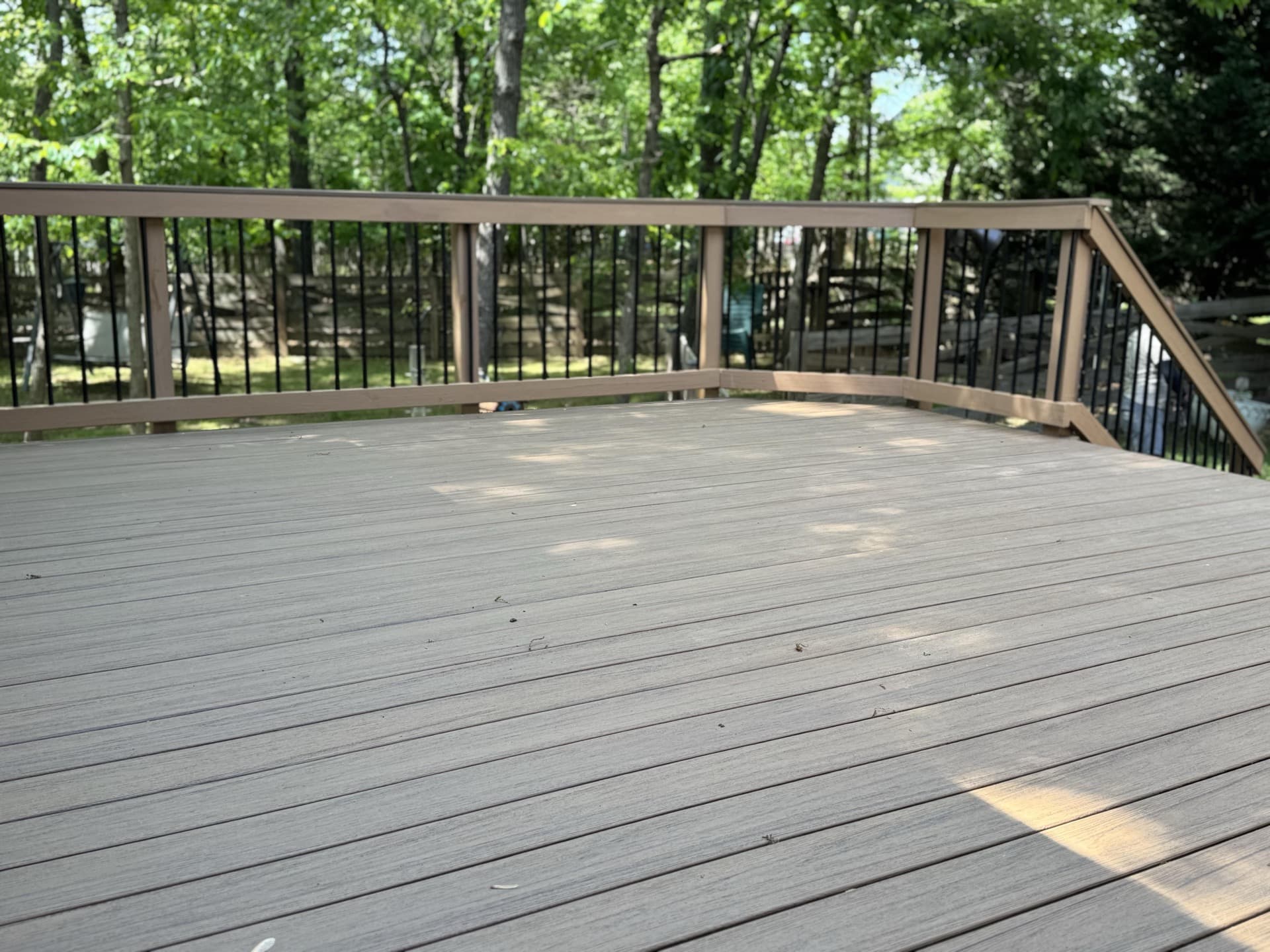
Deck Resurfacing
Premium wood-to-composite resurfacing for structurally sound frames. Full surface conversions start from $15k with boards, railings, fascia, and safety review.
Patio Contractor Services
Professional bluestone and paver patio installation. We create durable, beautiful ground-level outdoor living spaces that last a lifetime.
Local Expertise Across Northern Virginia
Loudoun Decks is a trusted deck builder serving Loudoun County, Fairfax County, Prince William County, Arlington, and Stafford.
Guides Northern Virginia Homeowners Are Reading
Deck Builder in Northern Virginia
Custom decks, permits, HOA support and local service areas.
Deck Permits in Loudoun County
Permit requirements, review steps and inspection context for Loudoun homeowners.
Deck Permits in Fairfax County
Requirements, timeline, fees, and inspection process.
Deck Permits in Arlington County
Permit, setback, inspection and urban-lot planning context for Arlington decks.
HOA Deck Rules in NoVA
Approval process, common restrictions, and tips.
Loudoun County Deck Builder Hub
Service-area guide for Ashburn, Leesburg, Sterling and western Loudoun projects.