


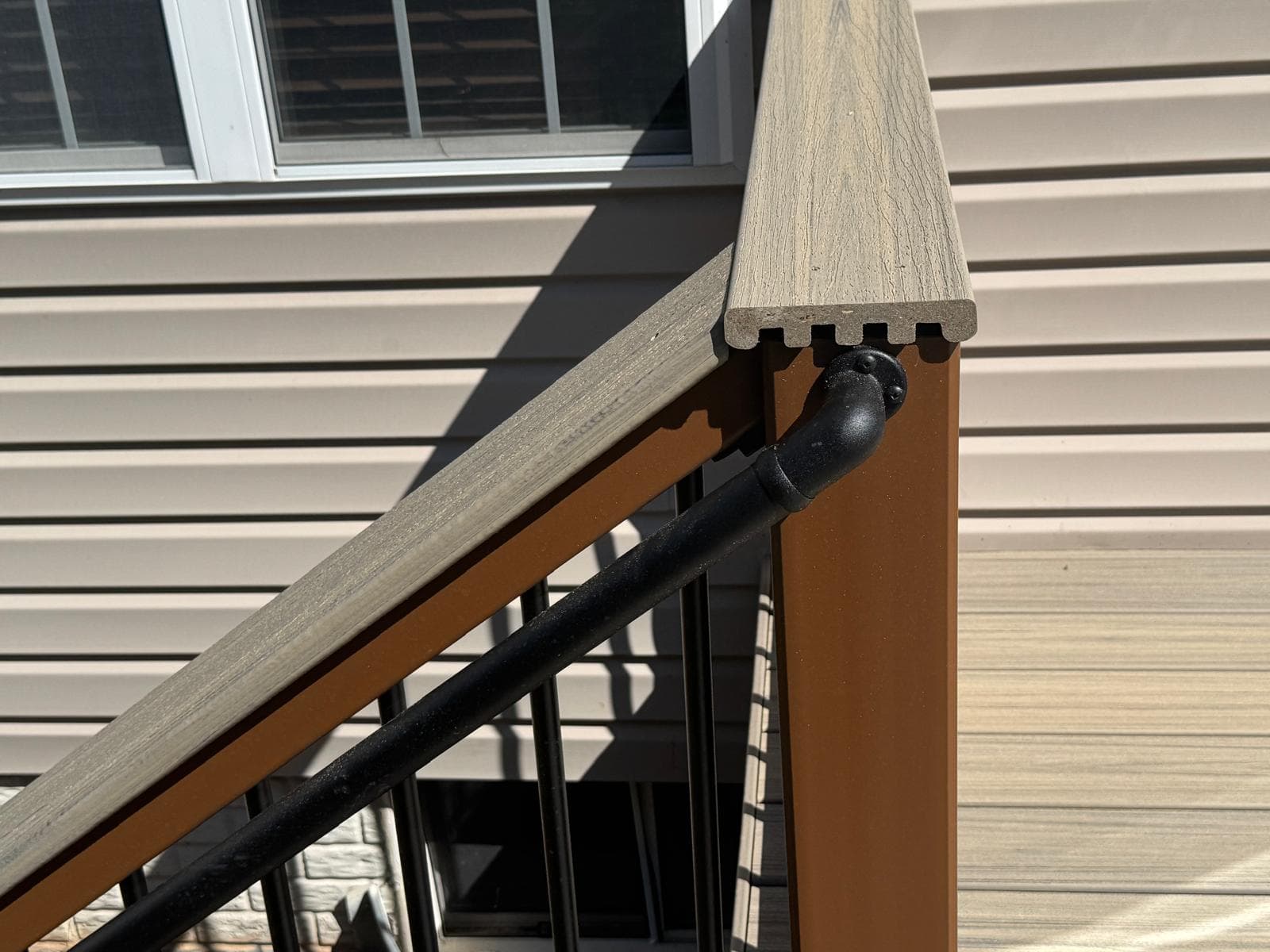
Understanding Deck Load Paths: How Your Deck Stays Up
An in-depth explanation of how a deck safely transfers the weight of furniture, people, and snow directly into the earth without collapsing.
Quick Answer
A deck load path is the continuous structural route that carries people, furniture, snow, and deck weight from surface boards into joists, beams or ledgers, posts, concrete footings, and finally stable soil.
The highest-risk breaks in that path are rotten or poorly fastened ledgers, undersized beams, weak post-to-beam connections, shallow footings, and soil settlement after clay-soil moisture or freeze-thaw movement.
Source Context
When designing a new outdoor living space, it’s easy to focus solely on the aesthetics—the color of the composite boards, the layout of the seating, or the style of the railing. However, the most critical aspect of any elevated structure is invisible to the naked eye: the Load Path.
Understanding the concept of load paths is the difference between a deck that lasts for 50 years and one that is a catastrophic collapse waiting to happen. In this educational deep-dive, we explore exactly how your deck manages extreme weight and safely transfers it to the ground.
What is a Load Path?
In structural engineering, a load path is the continuous route that gravity and external forces take as they travel through the structure’s components and eventually disperse into the earth. If there is a single break or weak point in this path, the structure fails.
When 20 people are standing on your deck during a summer party, their combined weight pushes down. Gravity demands that this force be transferred downwards. The deck’s job is to channel that force efficiently.
The Journey of the Load
Let’s trace the journey of a 200-pound person standing in the middle of a deck.
Step 1: The Decking Boards The journey begins right under their feet. The composite or wood decking boards take the immediate, localized pressure. The boards must be thick enough and stiff enough to carry this weight without snapping. They immediately transfer the load horizontally to the nearest joists.
Step 2: The Joists The joists are the repeated structural floorboards running perpendicular to the decking. When the decking board transfers the weight down, the joists act as tiny bridges. They carry the force along their length, dividing the weight and sending it to the two primary support structures: the ledger board and the beam.
Step 3A: The Ledger Board (Attached to House) If the deck is attached to your home, the joists carry half the load toward the house and transfer it into the **Ledger Board**. The ledger board is bolted tightly to the house’s internal rim joist.
*Critical Failure Point:* If the ledger board is not properly bolted, or if water has caused the house’s rim joist to rot, the load path breaks here. The ledger pulls away, and the deck collapses against the house.
Step 3B: The Beam (Away from House) The other half of the load travels down the joists away from the house and rests upon the **Beam**. The beam acts as a massive horizontal spine. It collects the weight from dozens of joists and consolidates it, shifting the force laterally toward the vertical support columns.
Step 4: The 6x6 Posts Once the beam has consolidated the weight, it drives the load straight down into the **Posts**. Modern building codes require thick 6x6 pressure-treated posts for this exact reason; they must handle immense downward crushing force (compression) without bowing or snapping.
Step 5: The Concrete Footings and the Earth The final step in the load path. The posts transfer thousands of pounds of force into the **Concrete Footings**. The footings—flared at the bottom like a bell—take the concentrated force from the 6x6 post and spread it out over a wide surface area of soil. Because the footings are dug deep past the frost line, the earth safely absorbs the weight, and the load path is complete.
Why "Over-Engineering" Matters
At Loudoun Decks, we frequently over-engineer our load paths. By using 12-inch joist spacing instead of 16-inch, oversized beams, and deeper concrete footings, we create a load path with immense redundancy. If one element is subjected to an extreme, unexpected force (like a massive winter blizzard dumping three feet of wet snow), the rest of the structure effortlessly absorbs the excess load.
Related Resources
Frequently Asked Questions
What happens if a deck load path is broken?
If a load path is broken—for example, due to a rotting post or an improperly attached ledger board—the deck can catastrophically collapse because the weight has nowhere safe to travel.
How do joists contribute to the load path?
Joists act as horizontal bridges that collect the weight from the deck boards and carry it outwards, transferring it safely to the beams and the ledger board.
Why are deck footings so important?
Footings are the final destination of the load path. They spread the immense concentrated weight of the deck over a large area of solid earth, preventing the structure from sinking.
Plan Your Northern Virginia Deck Project With Loudoun Decks
Get a free, no-pressure consultation from a licensed Northern Virginia deck builder. Call (571) 655-7207 or visit ldndecks.com/get-estimate.
Get a Free EstimateEverything Your Outdoor
Space Needs
From ground-up deck construction to full outdoor living spaces, every project is custom-designed for your home with permit planning, material guidance, and written workmanship terms.
Custom Deck Builder
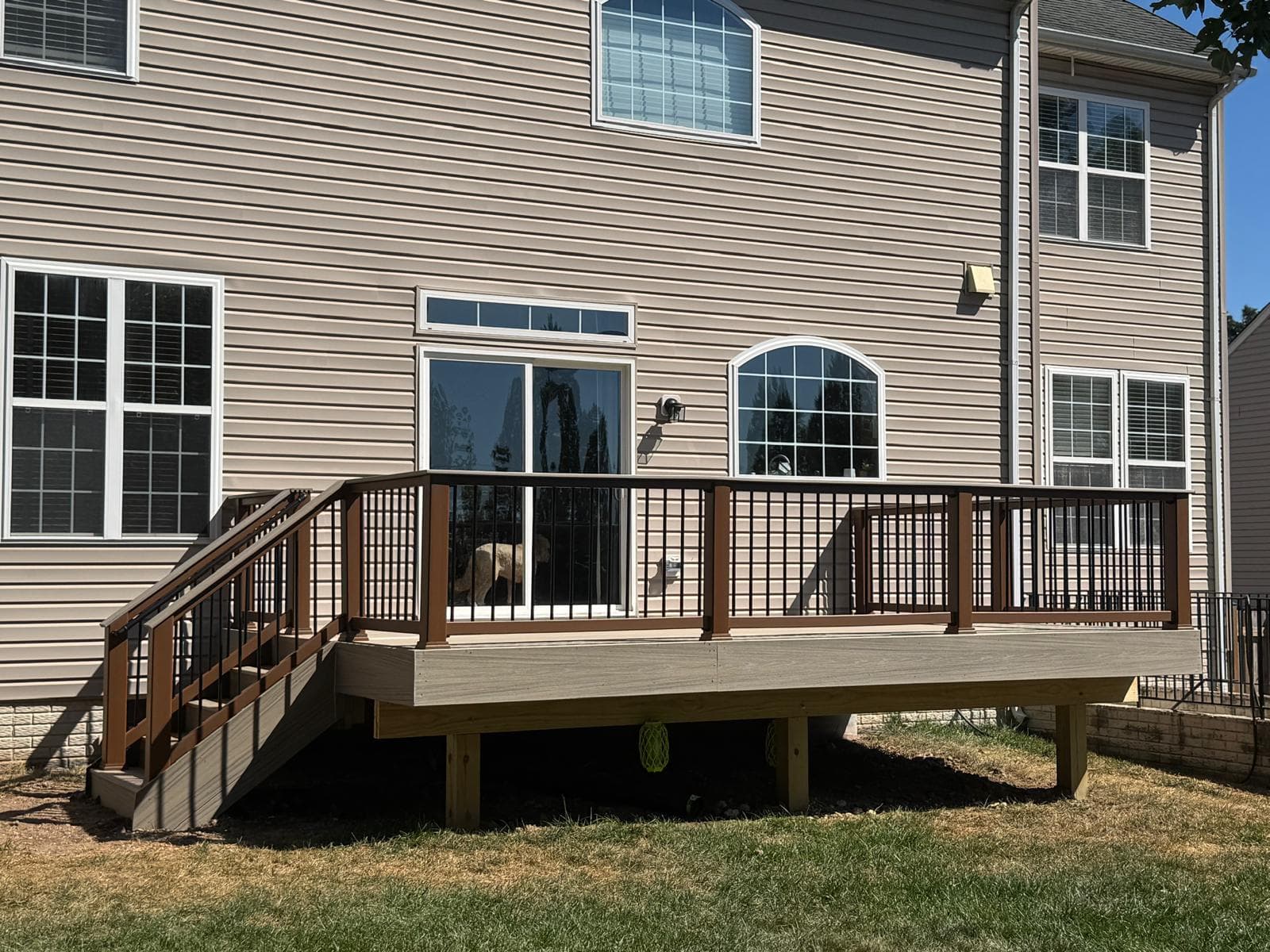
Transform your backyard with a custom-designed deck using Trex, TimberTech, wood, or PVC materials matched to your budget, HOA rules, and maintenance goals.
Deck Resurfacing
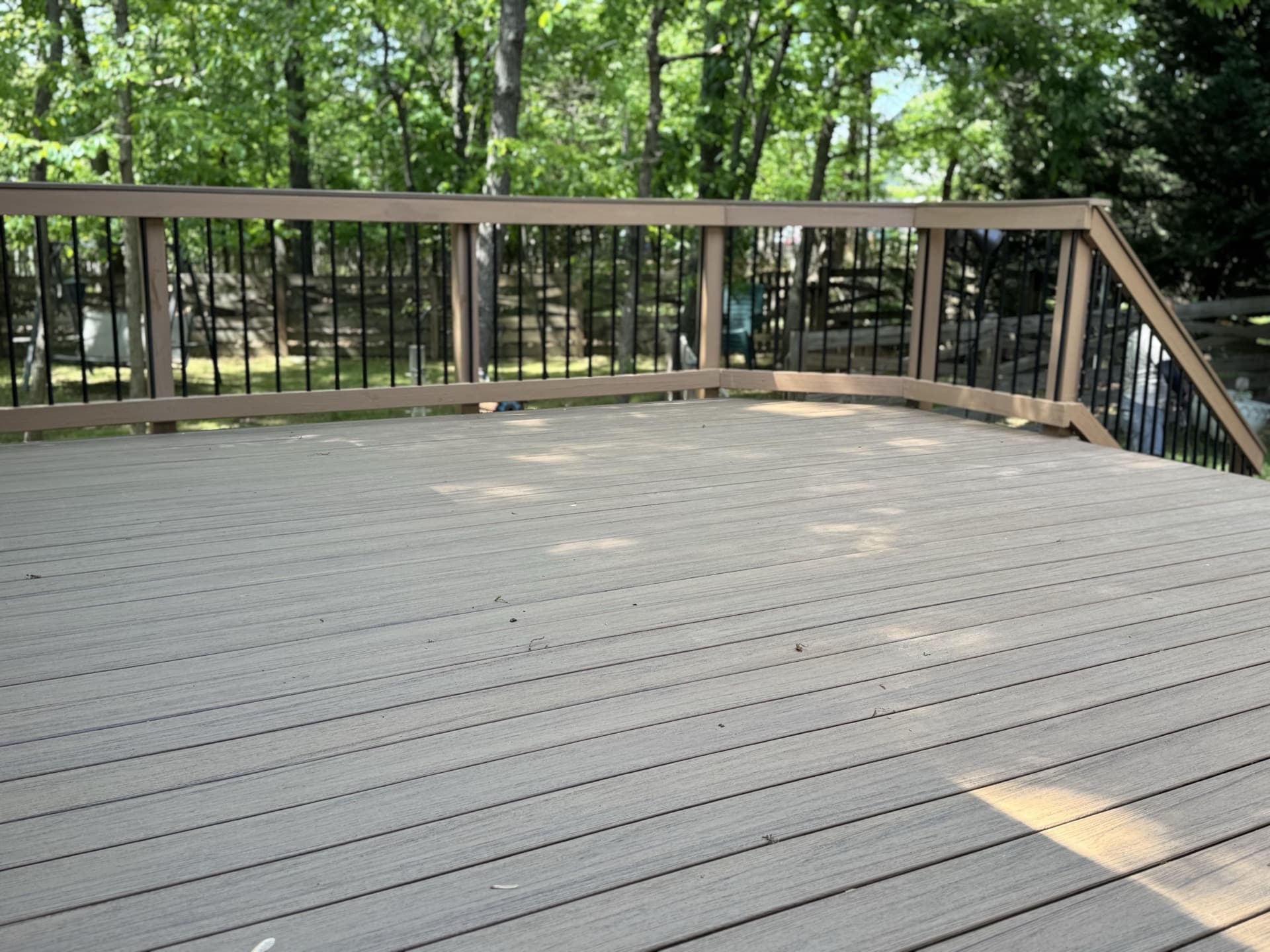
Premium wood-to-composite resurfacing for structurally sound frames. Full surface conversions start from $15k with boards, railings, fascia, and safety review.

Patio Contractor Services
Professional bluestone and paver patio installation. We create durable, beautiful ground-level outdoor living spaces that last a lifetime.
Local Expertise Across Northern Virginia
Loudoun Decks is a trusted deck builder serving Loudoun County, Fairfax County, Prince William County, Arlington, and Stafford.
Guides Northern Virginia Homeowners Are Reading
Deck Resurfacing vs Replacement
How to decide between resurfacing, structural repair and full replacement.
Premium Composite Replacement
High-value composite replacement planning for Arlington, Alexandria and McLean homeowners.
Deck Footing Depth Calculator
Estimate footing depth, diameter, frost-depth guidance and inspection notes.
Deck Beam Span Calculator
Estimate beam span, post spacing, tributary width and framing warnings.
Deck Joist Span Calculator
Estimate joist span, spacing, cantilever and composite decking support warnings.
Deck Load Calculator
Estimate distributed deck load, beam line load, post load and heavy-upgrade warnings.