


Ledger Board Flashing: The Single Most Critical Deck Connection
The ledger board is the joint where most deck failures begin. Learn why flashing the ledger correctly with metal Z-flashing and a self-adhered membrane is the single most important detail in a safe attached deck — and the mistakes that cause deck collapses years later.
Quick Answer
Ledger board flashing is the layered water-control detail that keeps an attached deck from rotting the house rim joist behind the ledger. A safe attached deck typically needs self-adhered membrane behind the ledger, structural fasteners into the house framing, and metal flashing over the top edge to direct water away.
If an existing deck shows missing flashing, caulk-only flashing, staining below the ledger, soft rim-joist wood, movement at the house connection, or failed fasteners, treat it as a structural inspection issue before using, resurfacing, or selling the deck.
Source Context
Of every joint on a deck, one carries more risk than all the others combined: the ledger board. The ledger is the long piece of lumber that bolts a deck directly to the house, and it holds up roughly half the weight of everything on the deck — the boards, the railings, the furniture, the people. When a deck collapses in the United States, the ledger connection is the failure point in the vast majority of cases.
The bolts that fasten the ledger to the house do most of the work, but the detail that decides whether the ledger lasts thirty years or rots out in seven is the flashing. Flashing is the layered moisture barrier that keeps rainwater from getting in behind the ledger and sitting against the house framing. Done right, the ledger and the house stay dry forever. Done wrong — or skipped entirely, which still happens — water seeps in, the rim joist of the house rots, the bolts lose their grip, and one day under a full load the deck tears away.
This guide explains why the ledger is the highest-stakes joint on a deck, exactly how a properly flashed ledger is layered, the two materials that do the work, and the installation mistakes that cause the failures we see most often.
Why the Ledger Is the Highest-Stakes Joint
A freestanding deck distributes its load through posts and beams down to concrete footings — a clean, gravity-driven path described in detail in our guide to deck load paths. The footings spread that load over enough soil area to stay stable for decades.
An attached deck splits its load differently. About half the weight still travels through the outer beam and into the footings; the other half travels back toward the house and rests on the ledger. The ledger then transfers that load into the rim joist of the house — the structural band that wraps the floor framing — through a row of large lag screws or through-bolts.
That connection point is exposed to weather. Rain runs down the siding and lands on the top edge of the ledger; melting snow and ice work their way in from above; humidity gets trapped between the ledger and the house. If water can sit against either the ledger or the rim joist behind it, wood rot is inevitable. And rotted wood does not hold fasteners. The bolts loosen, the ledger pulls away from the house, and the deck collapses — often years after the build, often during a party when the load is highest.
This is why every reputable Northern Virginia deck builder treats the ledger flashing detail as non-negotiable. It is the single highest-leverage detail in the entire build.
The Three Layers of a Properly Flashed Ledger
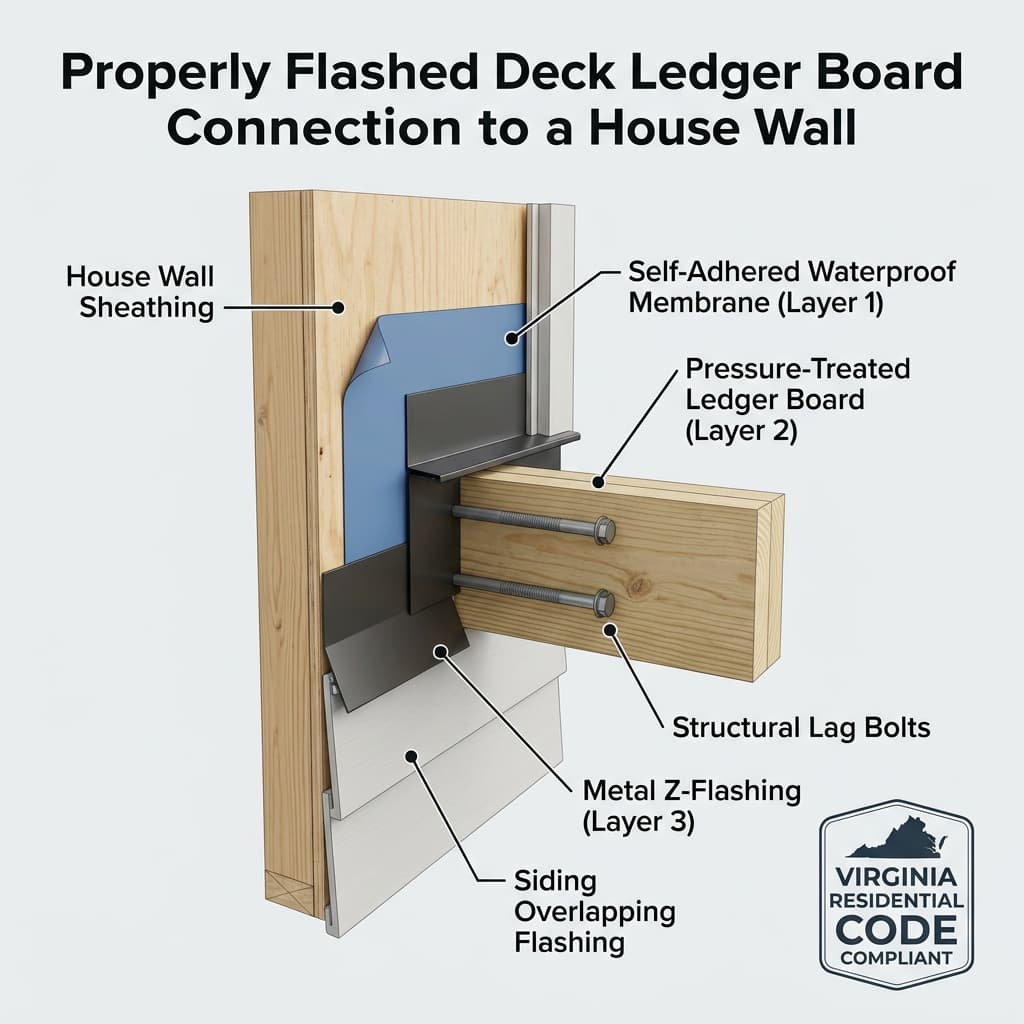
A correctly flashed ledger is not one product; it is a system of three layers, installed in the right order, that together send water away from the house.
Layer 1: Self-Adhered Membrane Behind the Ledger
Before the ledger goes up, the wall sheathing where it will sit is covered with a self-adhered, peel-and-stick waterproof membrane. The membrane wraps over the top edge of the sheathing and extends several inches above and below where the ledger will land. This is the layer that stops water from reaching the house framing if anything sneaks past the metal flashing above.
Layer 2: The Ledger Itself
The pressure-treated ledger is then bolted directly through the membrane and into the rim joist of the house with structural lag screws or through-bolts — never nails. Code specifies the size, spacing, and pattern of the fasteners based on the deck load. The fasteners punch through the membrane, but because the membrane is self-sealing, it tightens around each fastener and keeps the penetration watertight.
Layer 3: Z-Flashing Over the Top
Finally, a piece of metal Z-flashing — a long, narrow strip bent into a Z shape — is installed over the top edge of the ledger. The bottom leg of the Z drapes over the front of the ledger, the middle of the Z sits flat on top of the ledger, and the top leg of the Z tucks up behind the house siding above the ledger. The siding is then re-installed over that top leg.
The Z shape is doing real work. Any water running down the siding above the deck hits the top leg of the Z, runs out across the middle, and drips off the bottom leg in front of the ledger — never reaching the joint between the ledger and the house.
Metal Z-Flashing vs. Self-Adhered Tape
The two materials in the system serve different roles, and both belong in a code-compliant ledger detail.
Metal Z-flashing is typically galvanized steel, aluminum, or copper. It is rigid, holds its shape under siding pressure, and physically diverts water away from the joint. Aluminum is the most common choice in Northern Virginia because it is corrosion-resistant and inexpensive. Copper is the premium option — it lasts essentially forever and develops a green patina that some homeowners prefer aesthetically — but it costs significantly more.
Self-adhered membrane (sometimes called butyl flashing tape, butyl joist tape used in this context, or peel-and-stick) is a thick, asphalt or butyl-based adhesive backed with a tough release liner. Modern brands like Trex Protect, Vycor, and Grace Ice & Water Shield self-seal around fasteners and bond aggressively to clean sheathing. The membrane is what keeps the joint behind the ledger dry; the metal flashing is what keeps water from getting to the joint in the first place.
Neither one is a substitute for the other. A ledger with only metal Z-flashing and no membrane behind it will eventually leak at the fasteners. A ledger with only membrane and no metal Z above it will eventually leak at the top edge once the membrane ages. The two materials together create a redundant system where each layer fails safely into the next.
The Mistakes That Cause Ledger Failure
A handful of installation shortcuts account for almost every ledger failure we see during deck inspections.
Caulk-Only Flashing
The single most common shortcut is skipping the metal flashing and the membrane entirely, and running a bead of caulk along the top edge of the ledger instead. Caulk is not flashing. It is designed as a finish detail to seal small gaps, and it dries out and cracks within three to five years in Virginia’s freeze-thaw cycle. As soon as it cracks, water pours in. A deck flashed only with caulk is on a clock.
Reverse-Lapped Flashing
Flashing only works if each upper layer overlaps the layer below — the same way roof shingles work. If a builder slips the top leg of the Z-flashing under the siding correctly but then drops the membrane over the front of the ledger instead of under it, water runs straight behind the ledger. We have inspected decks where the right materials were on site but they were installed in the wrong order; the result is the same as no flashing at all.
Missing Kickout at the End of the Ledger
Where a deck meets a roof — for example, where the deck attaches alongside a porch or a lower roof — the flashing needs a kickout, a small metal piece that diverts water out and away from the end of the ledger and onto the roof surface. Without a kickout, water runs straight down the wall behind the ledger and rots the corner of the house. This is one of the most frequent causes of hidden interior water damage in two-story Northern Virginia homes.
Nailing Instead of Bolting
Nailing a ledger to the house — using framing nails instead of structural lag screws or through-bolts — is illegal under current Virginia code, but we still find it on older decks. Nails have almost no withdrawal strength against the downward pull of the deck. A nail-attached ledger is not a question of if it will fail, only when.
Direct Contact With Vinyl or Stucco
The ledger should bear on the rim joist, not on a cladding material. Vinyl siding, stucco, and EIFS finishes cannot carry a structural load, and pressing a ledger directly against them traps moisture against the cladding. Proper detail removes the cladding behind the ledger so that the ledger lands on the structural sheathing and rim joist, with the flashing system reinstated above and below.
How to Inspect a Ledger on an Existing Deck
If you own an attached deck and want to know whether the ledger was flashed correctly, a few visual checks reveal a lot.
Stand on the deck and look at the top edge of the ledger where it meets the siding. A correctly flashed ledger shows a thin metal lip — the bottom leg of the Z-flashing — running the full length of the joint, just behind the front of the ledger. If you see only a bead of caulk, no metal at all, or paint covering everything, the flashing is either missing or has been finished over.
From underneath, look at the rim joist of the house behind the ledger. Probe the wood gently with a screwdriver where it is accessible. Soft, punky wood that gives under light pressure means rot has already started. Stains running down the siding below the ledger — dark vertical streaks, especially after rain — indicate water has been escaping at the joint, which usually means it has been entering at the joint as well.
A deck that is more than fifteen years old, especially one not built by a licensed contractor, is worth a professional deck safety inspection. The cost is a fraction of any repair, and ledger problems caught early can often be retrofitted before the framing is compromised.
When the Ledger Has Already Failed
If the rim joist behind the ledger is rotted, the deck is no longer safely attached to the house — full stop. The fix is not patching. The deck has to be temporarily supported with shoring posts, the ledger removed, the damaged rim joist cut out and replaced, the new framing wrapped with self-adhered membrane, and a new ledger reinstalled with proper Z-flashing above. In severe cases, a section of the house’s floor framing may need to be sistered to restore the load path.
This is not DIY work. It requires permits, structural engineering, and a builder comfortable performing surgery on the side of a finished house. We cover the broader decision in deck repair versus replacement, but for a failed ledger specifically, the right call is almost always to involve a licensed contractor immediately and not to use the deck in the meantime.
What Virginia Code Requires
The Virginia Residential Code, adopted statewide, governs deck ledger attachment under its prescriptive deck provisions. The code addresses three things directly:
1. The fasteners. Ledgers must be attached with structural lag screws or through-bolts in a specified size and pattern based on deck span and load. Nails are not permitted. 2. The flashing. Ledgers must be flashed to prevent water from entering the wall cavity. The code does not specify a single product, but it requires a continuous waterproof barrier that diverts water away from the connection. 3. The inspection. Permitted decks are inspected at the framing stage, and the inspector checks the ledger attachment and flashing before the decking boards are installed. A deck that hides a defective ledger fails its framing inspection.
For the broader permit process and how counties handle these inspections, see our Loudoun County deck permit guide and Fairfax County deck permit guide.
Built to Stay Attached
A deck is only as safe as the joint that holds it to the house. At Loudoun Decks, every attached deck we build starts with a properly engineered ledger detail: the wall opened to bare sheathing where needed, a continuous self-adhered membrane behind the ledger, structural lag screws or through-bolts in the correct pattern, metal Z-flashing over the top tucked up behind the siding, and a kickout at every roof junction. The detail takes an extra few hours during the build and ensures the deck stays attached to the house for the life of the structure.
If you want a Northern Virginia deck builder who treats the ledger flashing detail as the single most important step in the build, call 571-655-7207 or visit ldndecks.com/get-estimate for a free design consultation.
Related Resources
Frequently Asked Questions
What is ledger board flashing?
Ledger board flashing is the layered moisture barrier that keeps rainwater from getting in behind the deck ledger and rotting the house framing. A properly flashed ledger uses a self-adhered membrane against the sheathing, the ledger bolted through the membrane, and metal Z-flashing over the top tucked up behind the siding above.
Why do unflashed ledgers fail?
Without flashing, water runs down the siding and into the joint between the ledger and the house. The rim joist of the house — where the ledger bolts attach — rots over time, the fasteners lose their grip on rotten wood, and the deck eventually pulls away from the house under load. This is the most common cause of deck collapse.
Can flashing be added to an existing deck?
Retrofitting a ledger flashing system on a finished deck is possible but invasive. The decking boards immediately next to the house usually have to be removed, the existing ledger condition inspected for hidden rot, and the flashing layered in carefully. If the rim joist behind the ledger has already rotted, full ledger replacement is required.
What is the difference between metal Z-flashing and self-adhered membrane?
Metal Z-flashing is a rigid strip that physically diverts water away from the top of the ledger and is installed over the top edge tucked behind the siding. Self-adhered membrane is a peel-and-stick waterproof barrier installed behind the ledger that self-seals around the fasteners. Both are required — neither one substitutes for the other.
Does Virginia code require ledger flashing?
Yes. The Virginia Residential Code requires that deck ledgers be flashed to prevent water from entering the wall cavity. Inspectors check the ledger attachment and flashing at the framing stage of a permitted deck before any decking boards can be installed.
Is caulk acceptable as ledger flashing?
No. A bead of caulk along the top edge of the ledger is not flashing. Caulk dries out and cracks within a few years in Virginia’s freeze-thaw climate, and as soon as it cracks, water enters the joint. A ledger flashed only with caulk is the most common pattern of failure we see during deck inspections.
Plan Your Northern Virginia Deck Project With Loudoun Decks
Get a free, no-pressure consultation from a licensed Northern Virginia deck builder. Call (571) 655-7207 or visit ldndecks.com/get-estimate.
Get a Free EstimateEverything Your Outdoor
Space Needs
From ground-up deck construction to full outdoor living spaces, every project is custom-designed for your home with permit planning, material guidance, and written workmanship terms.
Custom Deck Builder
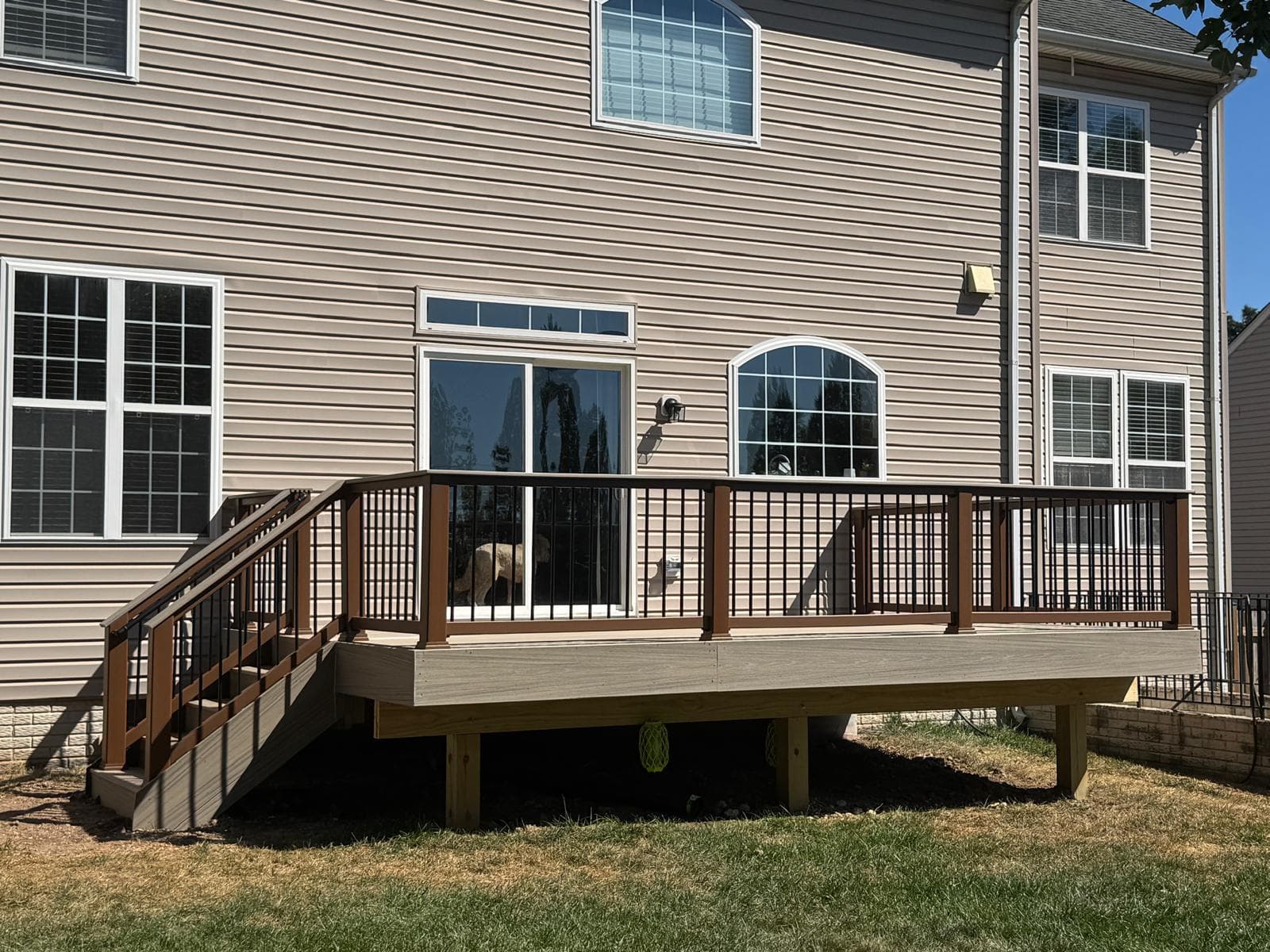
Transform your backyard with a custom-designed deck using Trex, TimberTech, wood, or PVC materials matched to your budget, HOA rules, and maintenance goals.
Deck Resurfacing
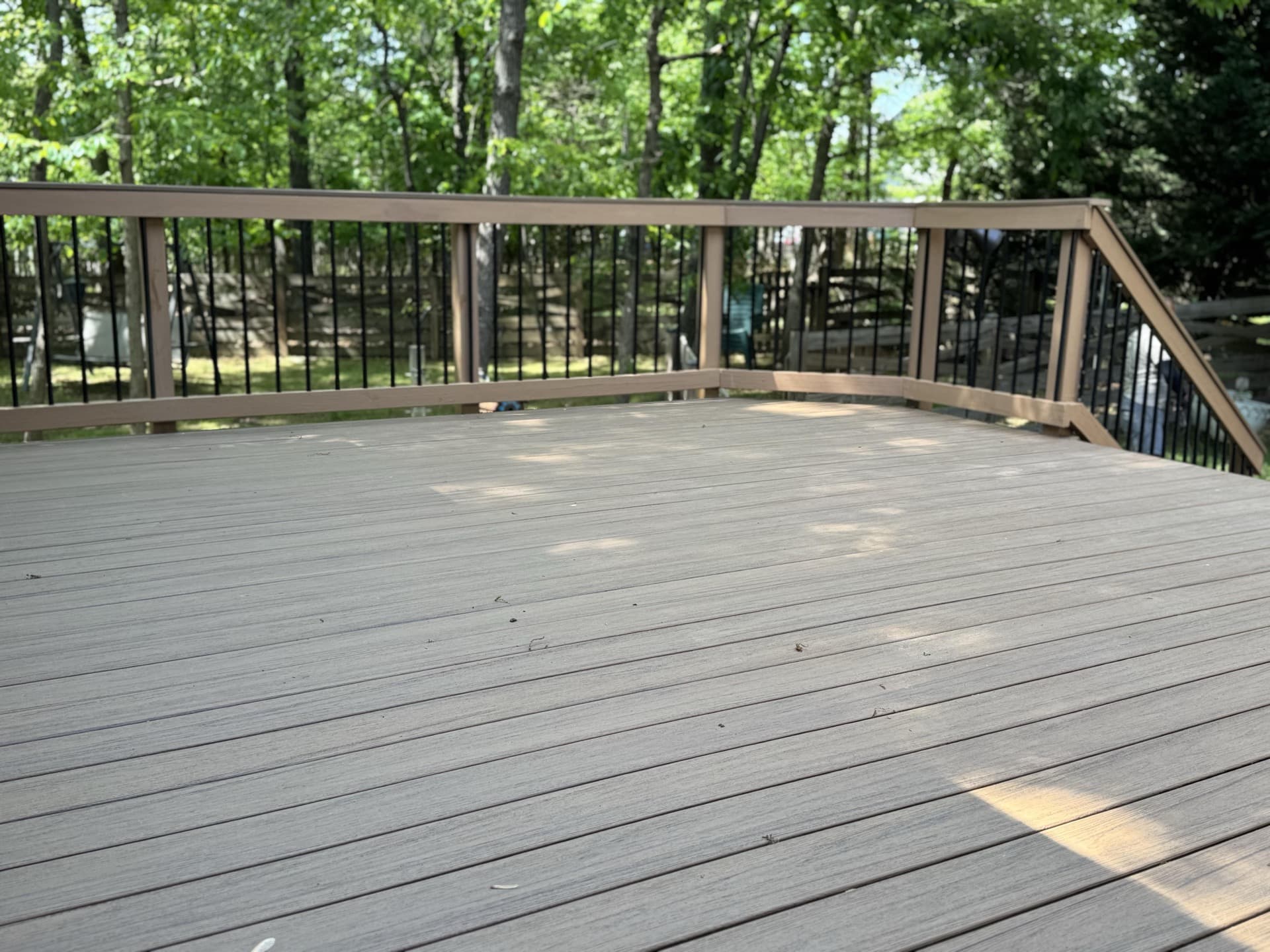
Premium wood-to-composite resurfacing for structurally sound frames. Full surface conversions start from $15k with boards, railings, fascia, and safety review.

Patio Contractor Services
Professional bluestone and paver patio installation. We create durable, beautiful ground-level outdoor living spaces that last a lifetime.
Local Expertise Across Northern Virginia
Loudoun Decks is a trusted deck builder serving Loudoun County, Fairfax County, Prince William County, Arlington, and Stafford.
Guides Northern Virginia Homeowners Are Reading
Premium Composite Replacement
High-value composite replacement planning for Arlington, Alexandria and McLean homeowners.
Deck Footing Depth Calculator
Estimate footing depth, diameter, frost-depth guidance and inspection notes.
Deck Beam Span Calculator
Estimate beam span, post spacing, tributary width and framing warnings.
Deck Joist Span Calculator
Estimate joist span, spacing, cantilever and composite decking support warnings.
Deck Load Calculator
Estimate distributed deck load, beam line load, post load and heavy-upgrade warnings.
Virginia Deck Stair Calculator
Estimate deck stair rise, run, number of steps, tread depth and stair angle.