Learn when should decks be replaced, which structural signs require evaluation, and how Northern Virginia homeowners can plan a lasting deck project well.
A deck can look tired long before it becomes unsafe, and it can also look acceptable while problems develop beneath the surface. That is why the question of when should decks be replaced is less about one loose board and more about the condition of the framing, connections, layout, and materials as a whole. For Northern Virginia homeowners planning a meaningful outdoor upgrade, a professional evaluation can clarify whether repair, resurfacing, or full replacement is the responsible next step.
When Should Decks Be Replaced Rather Than Repaired?
Replacement becomes the stronger option when defects affect the deck's structural system, not just its walking surface. A few damaged boards, worn rail components, or aging fasteners may be repairable in some situations. But widespread deterioration in joists, beams, posts, stairs, ledgers, or footings changes the conversation. Those components support the deck and cannot be treated as cosmetic details.
The age of a deck matters, but it is not a deadline by itself. Wood decks age differently depending on original construction, drainage, sun exposure, maintenance history, and whether water has been allowed to collect where framing meets the house or railing posts. A newer deck with poor water management may need substantial work, while an older deck with sound framing may be a candidate for a more limited scope.
The practical question is whether targeted repairs would leave you with a dependable structure and a layout that still serves your household. If repair addresses only the visible issue while the underlying system remains questionable, replacement may provide a clearer, more durable path.
Signs That Call for a Structural Deck Evaluation
A deck does not need to collapse or feel dramatically unstable before it deserves attention. Homeowners often notice small changes first: movement underfoot, railing looseness, stair problems, or areas that stay damp after rain. These signs do not automatically mean the entire deck must be replaced, but they justify a closer look by a qualified deck professional.
Soft, cracked, or deteriorating wood
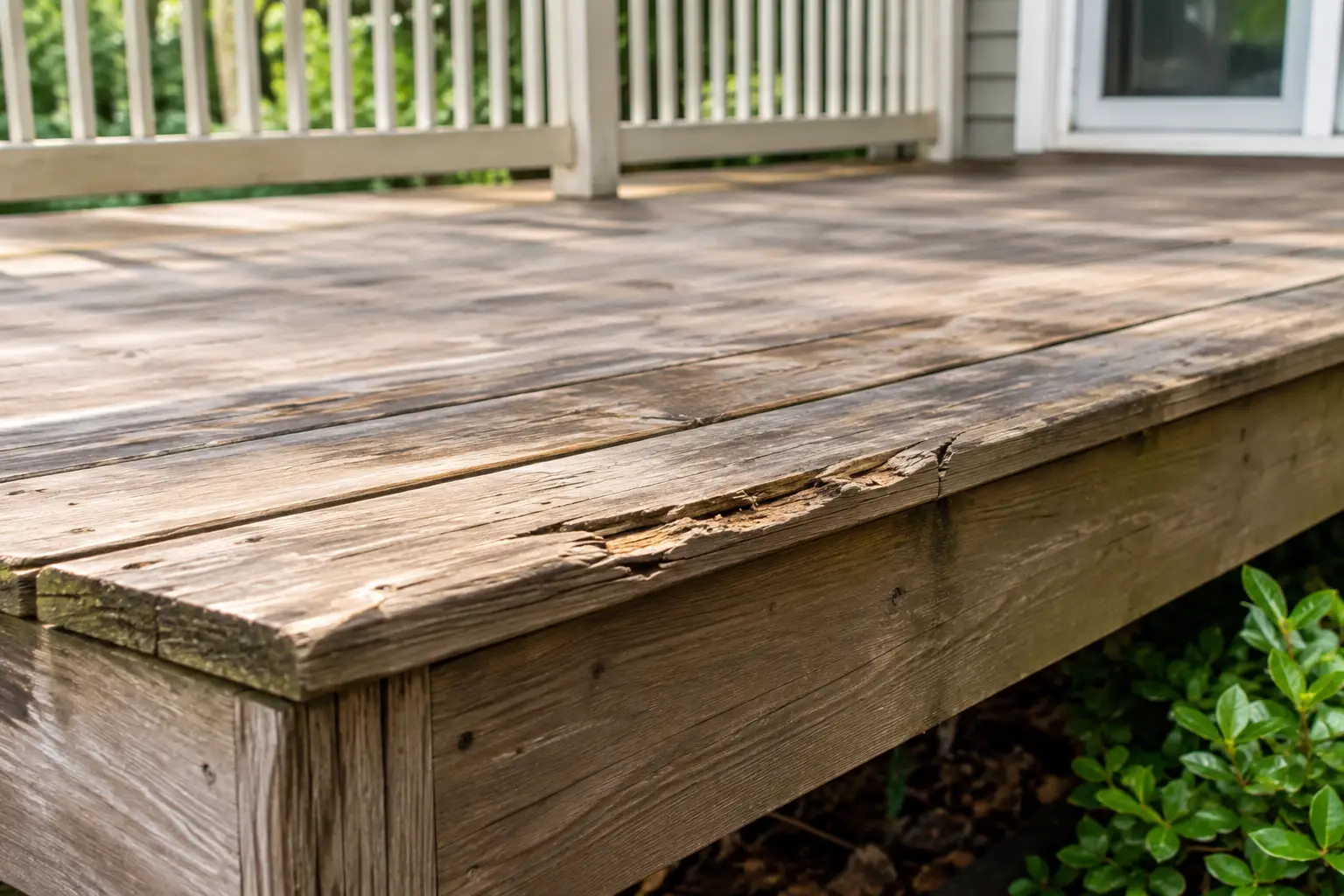
Surface checking and weathering are common on exposed wood. More concerning conditions include soft areas, deep splits around fasteners, rotted board ends, and deterioration where posts or framing members meet the ground or trap moisture. Decay near connections can be especially significant because those areas carry loads and are difficult to judge from the deck surface alone.
Movement in railings, stairs, or the deck frame
Railings should feel secure. Wobbling sections, loose posts, shifting stairs, or noticeable bounce in the deck can point to failed connections, weakened framing, or inadequate support. These conditions should not be dismissed as normal aging, particularly on elevated decks where the deck structure and guard system work together to protect the people using it.
Fastener corrosion and connection concerns
Rusting hardware, missing fasteners, pulled-through screws, or visible corrosion around metal connectors can indicate that parts of the deck are no longer performing as intended. Hardware compatibility also matters when choosing new decking, railing, and flashing details. A replacement project allows the complete assembly to be evaluated rather than treating each visible issue separately.
Water damage at the house connection
The area where a deck attaches to the home deserves careful attention. Water intrusion, staining, failed flashing, or visible deterioration near this connection can affect both the deck and the home. Because the details are concealed or difficult to inspect from above, this is not an area for assumptions. A professional assessment should determine the appropriate scope of work.
Resurfacing vs. Full Deck Replacement
Resurfacing can be appealing when homeowners want a fresh appearance without changing everything below the boards. It may be appropriate only when the existing frame is in sound condition, properly configured for the new decking product, and capable of supporting the planned railing, stairs, and accessories. The framing must be evaluated before a new composite or PVC surface is selected.
This distinction matters because composite and PVC decking are premium finish materials, not a cure for structural problems. Covering compromised framing can delay necessary work while making future corrections more complicated. Product installation requirements also vary, including joist spacing, fastening methods, ventilation, and support details. Current manufacturer instructions should guide the design and installation.
Full replacement creates more opportunity to correct limitations that may have been accepted when the original deck was built. Homeowners can reconsider traffic flow, stair placement, usable dining space, railing style, privacy, lighting, and whether a covered deck or outdoor kitchen belongs in the long-term plan. It can also be the right time to coordinate HOA review and local permitting requirements rather than attempting to fit major changes into an aging structure.
There is a trade-off. A complete replacement generally involves a broader scope, more decisions, and more site coordination than a surface-only update. It may also require attention to access, demolition, inspections, drainage, and the relationship between the deck and the home. The benefit is a project designed as one system instead of a new surface attached to an uncertain base.
Why Material Choice Matters During Replacement
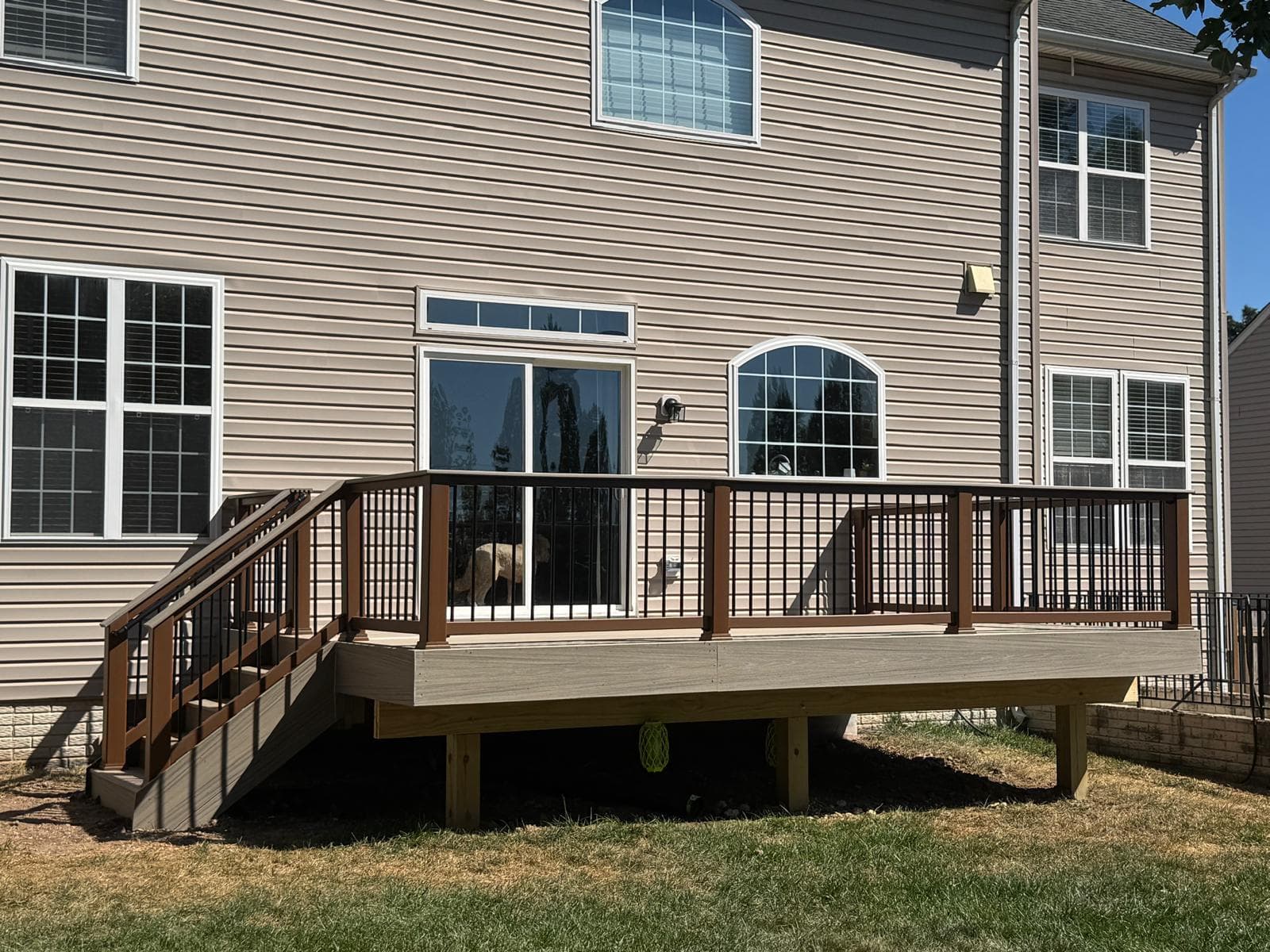
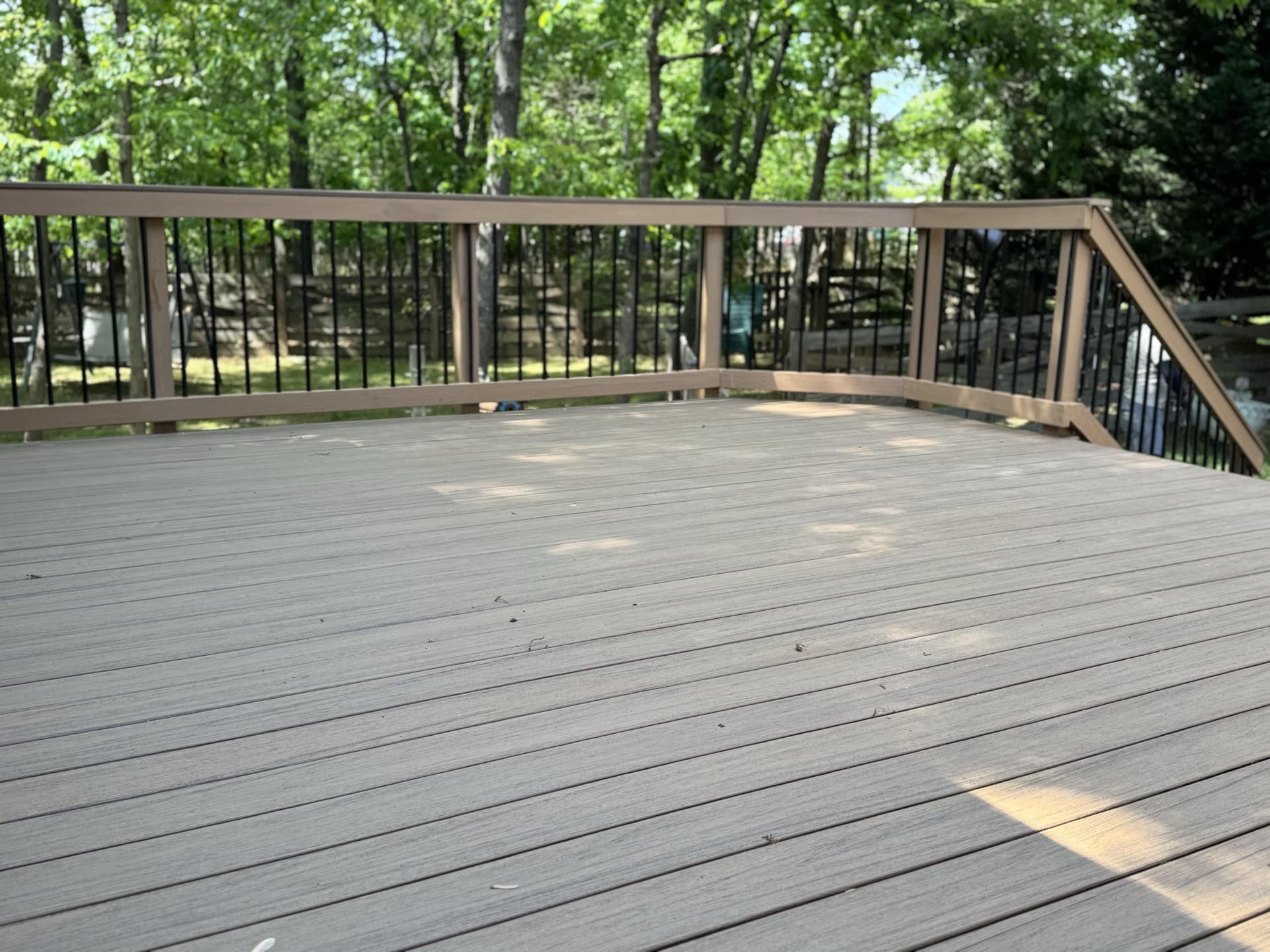
Many replacement projects move from aging wood to composite or PVC decking because homeowners want a finished outdoor space that is designed for long-term exposure and everyday use. Trex, TimberTech, and AZEK/PVC options offer different product lines, colors, textures, board profiles, and performance characteristics. The best selection depends on the project design, desired appearance, sun exposure, budget priorities, and manufacturer requirements.
Material selection should not begin and end with the deck boards. Railings, fascia, stairs, skirting, lighting, and picture-frame details affect the finished appearance and project scope. Cable railing, for example, may suit an open view, but it also requires a design that addresses tensioning and structural support. Low-voltage deck lighting can improve evening use and stair visibility, but wiring should be planned before finishes are installed.
A covered deck introduces another layer of coordination. Roof loads, attachment details, drainage, ceiling finishes, lighting, and the transition to the existing home should be considered together. When homeowners know a covered area is likely in the future, discussing it before replacing the deck can help avoid a design that limits later options.
Planning a Replacement Project in Northern Virginia
A productive consultation starts with the deck's current condition and the way your household wants to use the space. Consider whether the present footprint is too small, whether the stairs land in the right place, and whether seating, grilling, dining, or entertaining creates congestion. These decisions influence the structure, materials, railings, and access plan.
It is also useful to gather any HOA guidelines, property survey information, and prior permit documents you have available. Requirements vary by jurisdiction and community, and a builder should verify the applicable process for the specific property. No contractor can responsibly promise approval before the governing authority or HOA completes its review.
A written estimate should clearly identify what is being removed, what structural work is included, the proposed material system, railing and stair scope, permitting responsibilities, and allowances or exclusions that affect the project. This is particularly valuable when comparing proposals. Two estimates can appear similar at first glance while covering very different structural details, finish levels, or responsibilities.
Cost is shaped by more than deck size. Existing-condition surprises, elevation, access, demolition, framing complexity, stairs, railings, lighting, covered structures, material selections, and approval requirements can all affect the scope. A site-specific written estimate is more useful than a generic price comparison because it connects the investment to the actual work required.
Make the Decision Before Small Problems Grow
If your deck has visible deterioration, movement, repeated repair needs, or a layout that no longer fits how you live, waiting for a more obvious failure is rarely the best planning strategy. A professional assessment can separate surface wear from structural concerns and show whether resurfacing remains realistic.
For homeowners considering a substantial composite or PVC deck replacement, Loudoun Decks can review the existing structure, discuss material and design options, and prepare a written estimate for the appropriate scope. Financing options can be discussed during the estimate. The goal is not simply to replace boards, but to make a well-informed decision about the outdoor space your home needs next.