Compare Trex vs TimberTech decking for a Northern Virginia deck replacement, including material lines, heat, design, railings, and project planning early.
Trex vs TimberTech decking is rarely a simple brand decision. For a Northern Virginia homeowner replacing an aging wood deck or planning a larger outdoor-living project, the better choice depends on the product line, the deck’s sun exposure, the desired look, the railing plan, and the condition of the structure underneath. Both manufacturers offer premium composite options, but their boards are not identical - and neither is every project.
A productive comparison starts with the deck you are trying to build, not with a color sample alone. A low platform deck beside a patio has different priorities than an elevated deck with stairs, a covered section, lighting, and a long view from the house. The material should support the scope, not dictate it.
Trex vs TimberTech decking: the practical differences
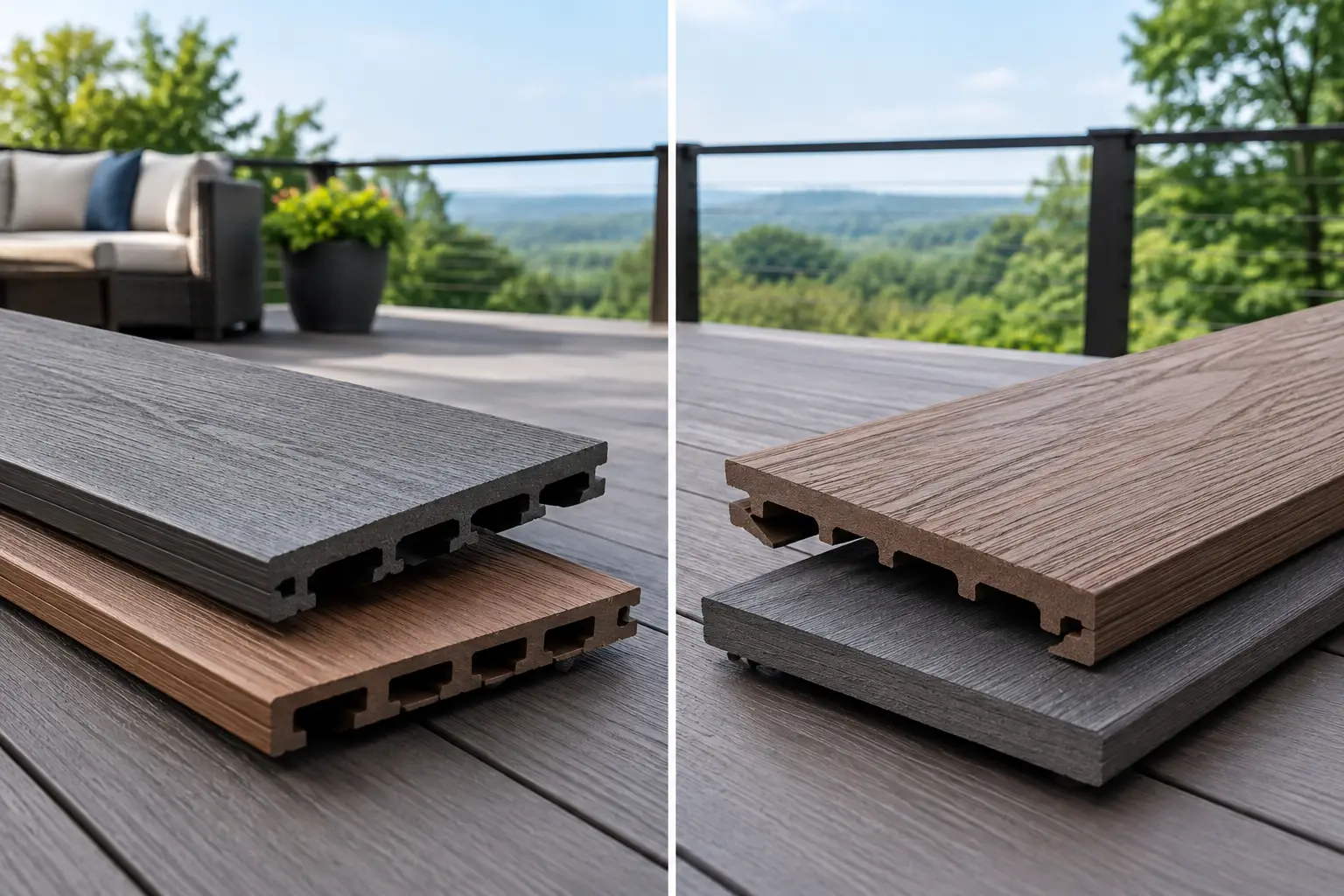
Trex and TimberTech both make capped composite decking designed to reduce the recurring upkeep associated with traditional wood. Their product collections vary by profile, color range, board construction, price tier, available accessories, and published installation requirements. TimberTech also has PVC decking within its broader offering, while Trex is widely known for composite decking.
That distinction matters. Composite boards generally combine recycled wood fibers and plastic, then use a protective cap on the board surface. PVC boards use a different construction and may be considered when weight, moisture exposure, color options, or heat behavior are central concerns. A homeowner comparing brands should first confirm whether the comparison is composite to composite or composite to PVC. Those are different material conversations.
Neither brand is universally better. A specific Trex collection may be the right fit for one deck, while a TimberTech composite or PVC option may better suit another. The strongest decision comes from comparing the exact collections under consideration rather than treating each manufacturer as one product.
Start with exposure, layout, and how the deck will be used
Direct afternoon sun can shape the entire material decision. Darker boards often absorb more heat than lighter ones, regardless of manufacturer. Board texture, color variation, airflow below the deck, surrounding masonry, and the direction of the deck can all affect how the surface feels on a hot day.
For a deck that receives intense sun, ask to see full-size samples outside at the time of day you expect to use the space. Small indoor samples cannot accurately show how a color will read against your home or how it may feel underfoot. If the deck is intended for barefoot use near a pool, patio door, or outdoor kitchen, this conversation belongs early in design planning.
Covered areas create a different set of priorities. The visual transition between a covered porch and an open deck may matter more than heat alone. Homeowners may also want to coordinate decking with ceiling finishes, railing colors, deck lighting, and the home’s exterior trim. A board that looks right in isolation can feel too cool, too busy, or too uniform once it covers a large area.
Appearance is more than a color name
Trex and TimberTech each offer colors intended to resemble wood tones, from lighter natural shades to deeper browns and grays. The visual difference often comes down to variegation, grain pattern, board width, edge profile, and how the selected color works with the house.
Some homeowners prefer a calm, consistent surface. Others want stronger tonal movement that reads more like natural hardwood. Neither approach is wrong, but pronounced variation deserves a full-board review. Ask to see multiple boards from the same collection, because the pattern is designed to vary from board to board.
Also consider scale. A color that is appealing on a sample may appear substantially darker across a large elevated deck. On a shaded lot, a very dark deck may visually recede; on a bright rear elevation, it may create a sharp contrast. Railing infill, picture-frame borders, fascia, stair treads, and skirting can amplify that effect.
Board profile and installation details affect the finished deck
A composite deck is a system, not just a field of boards. The selected product influences fastener compatibility, expansion and contraction allowances, fascia installation, stair detailing, and manufacturer-required joist spacing. These details should be planned before materials are ordered.
Many projects use grooved boards and concealed fasteners for a cleaner surface. Square-edge boards may still be used at picture frames, perimeter boards, or other locations depending on the layout. The pattern of the deck boards - straight, diagonal, bordered, or mixed-width - can affect material use, framing requirements, and labor scope.
TimberTech PVC options may have installation considerations that differ from composite products. Likewise, individual Trex and TimberTech collections can have different requirements. A qualified builder should verify the current technical documentation for the chosen boards and design the framing accordingly. This is especially relevant for stairs, curved layouts, long runs, and decks with complex transitions.
Do not choose a board before evaluating the existing structure
For a deck replacement, homeowners sometimes focus on resurfacing: removing old deck boards and installing composite on the existing frame. That can be appropriate in limited circumstances, but it should follow a careful structural evaluation. Composite and PVC boards do not fix deteriorated framing, inadequate connections, undersized components, or stair issues.
An older deck may also need updates to meet current project requirements for railings, guards, stairs, footing conditions, or attachment methods. The scope can change further when the homeowner wants to enlarge the deck, add a roof structure, change stair locations, or install heavier features such as a built-in kitchen. Those decisions should be addressed before a material selection creates false expectations about the project.
In Loudoun and Fairfax counties, and nearby communities, permitting and HOA review can affect timing, drawings, material colors, railing choices, and project sequence. Requirements vary by property and jurisdiction. A well-defined written scope gives the homeowner a clearer path for planning than a material-only quote.
Railings and lighting can change the right choice
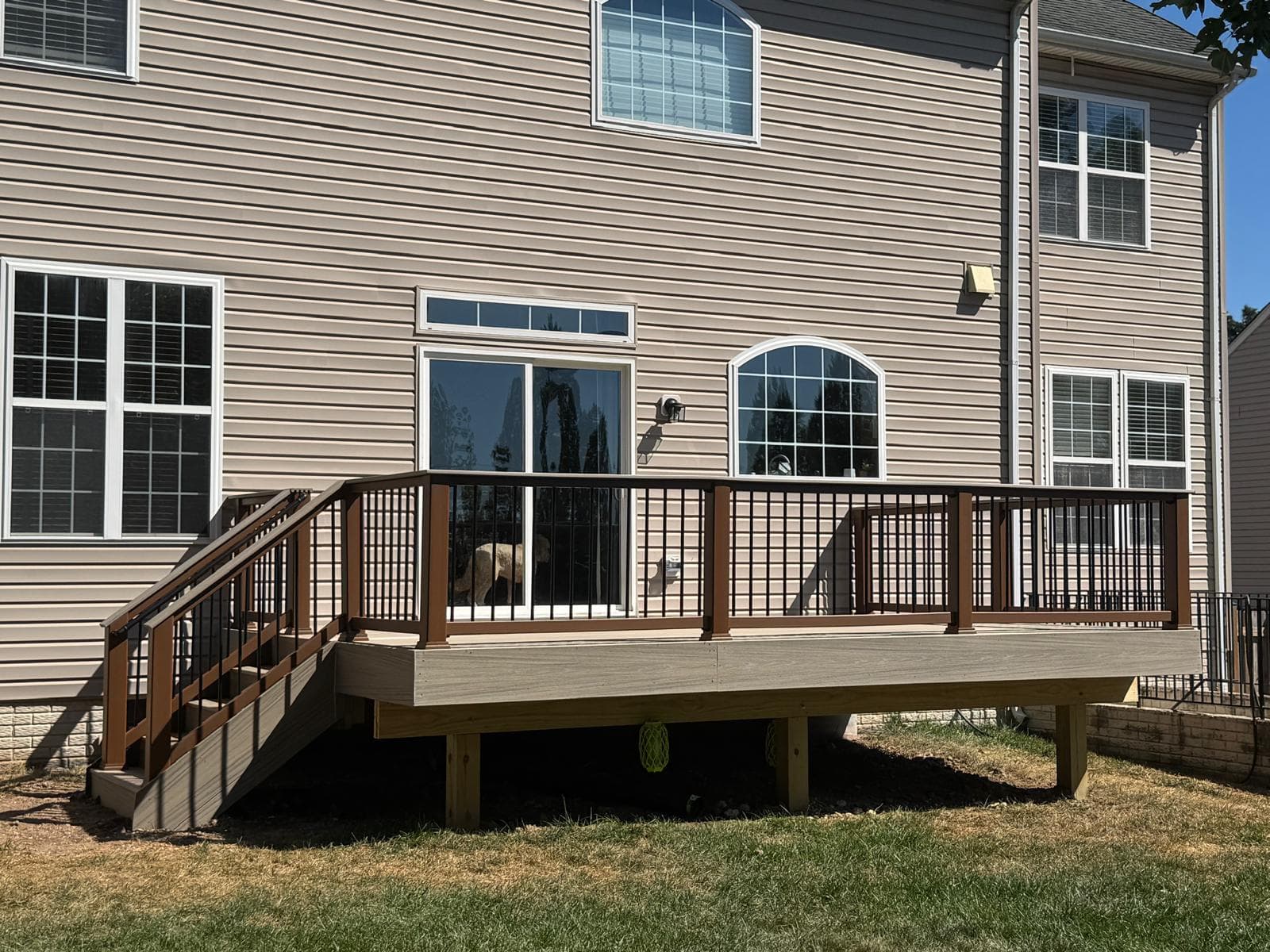
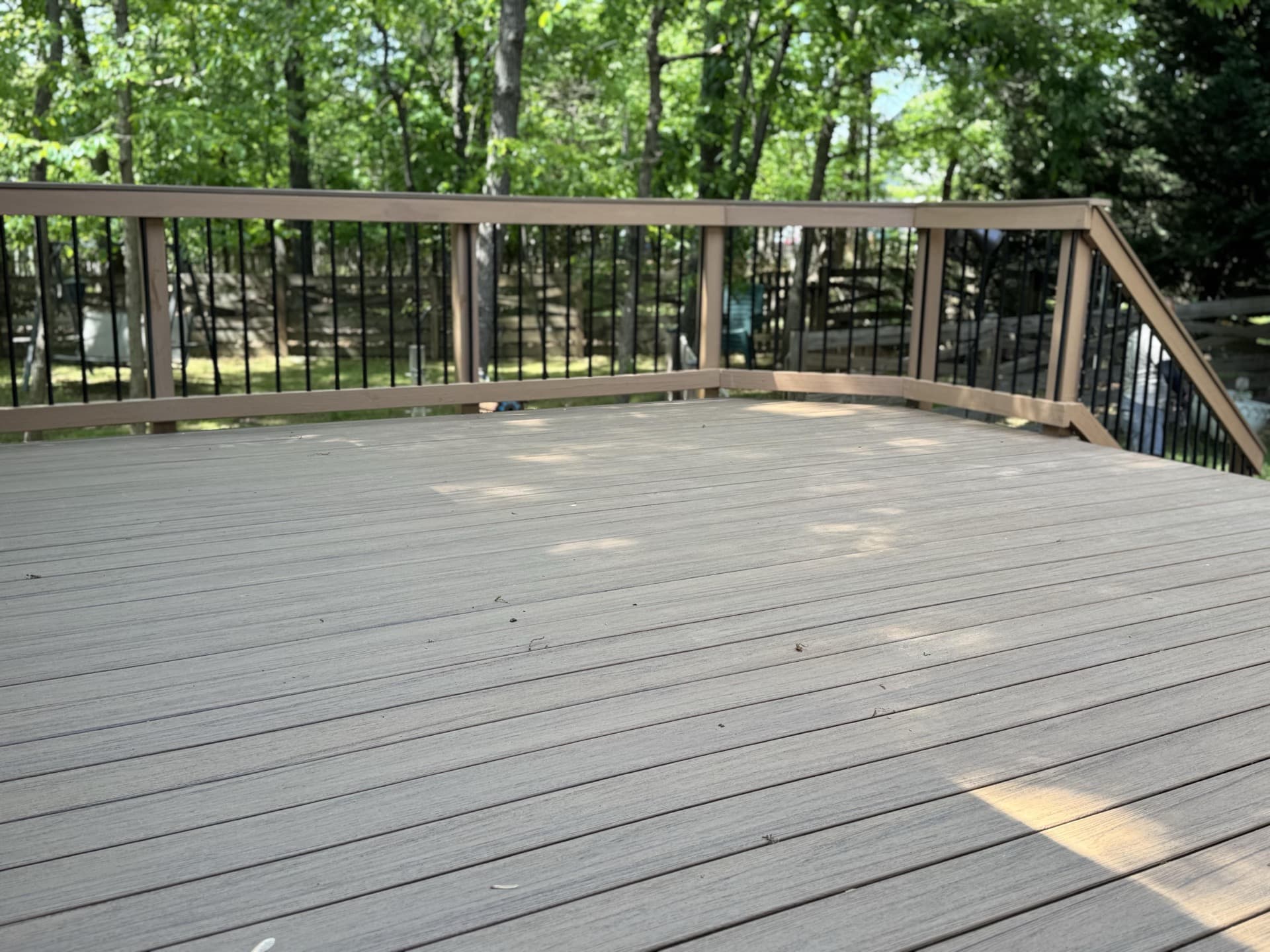
Decking and railings should be selected together. A warm brown board can look very different beside black aluminum railing, cable railing, white rail components, or a mixed-material design. If preserving a view is a priority, the railing system may become one of the biggest visual decisions on the deck.
Lighting should be planned before construction as well. Step lights, post-cap lights, low-voltage deck lighting, and under-deck lighting each require coordination with the framing and electrical plan. The goal is not to add every available feature. It is to place lighting where it supports safe movement, useful entertaining space, and the way the deck will be used after dark.
A larger project may also involve a covered deck, privacy screen, integrated seating, or an outdoor kitchen area. These features affect traffic flow and framing long before they affect the final photograph. Material selection works best when it follows the overall layout.
How to compare Trex and TimberTech with confidence
Bring a short list of priorities to your consultation: preferred color family, sun exposure, expected use, railing style, whether the deck is elevated, and whether you want to retain or alter the current footprint. Then compare the exact Trex and TimberTech collections that fit those priorities.
Ask for the current manufacturer information for the selected boards, including care guidance, installation requirements, color availability, and applicable warranty documents. Manufacturer offerings can change, so do not rely on an old sample board or a neighbor’s deck as a final specification. It is also reasonable to ask how the decking choice affects stair details, fascia, framing, and the transition at doors or existing patios.
The lowest material tier is not always the most economical project decision, and the highest tier is not automatically the best fit. A well-planned deck balances appearance, long-term expectations, structural scope, and the details that will be difficult to change later.
If you are weighing Trex against TimberTech for a replacement or new composite deck, Loudoun Decks can discuss the material options in the context of your property and prepare a written estimate. Bring your priorities and questions to the first conversation; the right deck starts with a scope that makes sense before the first board is selected.