Compare deck resurfacing vs replacement with a clear look at framing, design limits, permits, materials, and planning for Northern Virginia homes today.
A deck can look tired long before it is structurally finished. That is why deck resurfacing vs replacement is not simply a materials decision. For Northern Virginia homeowners considering composite or PVC decking, the real question is whether the existing frame can responsibly support a new surface and the outdoor-living plan you want next.
Resurfacing may preserve a usable structure and shorten the scope. Full replacement creates a clean starting point for correcting structural concerns, changing the layout, adding a covered area, or upgrading railings and lighting. The right path begins with an on-site evaluation, not an assumption based on how the deck boards look from above.
What Deck Resurfacing Actually Includes
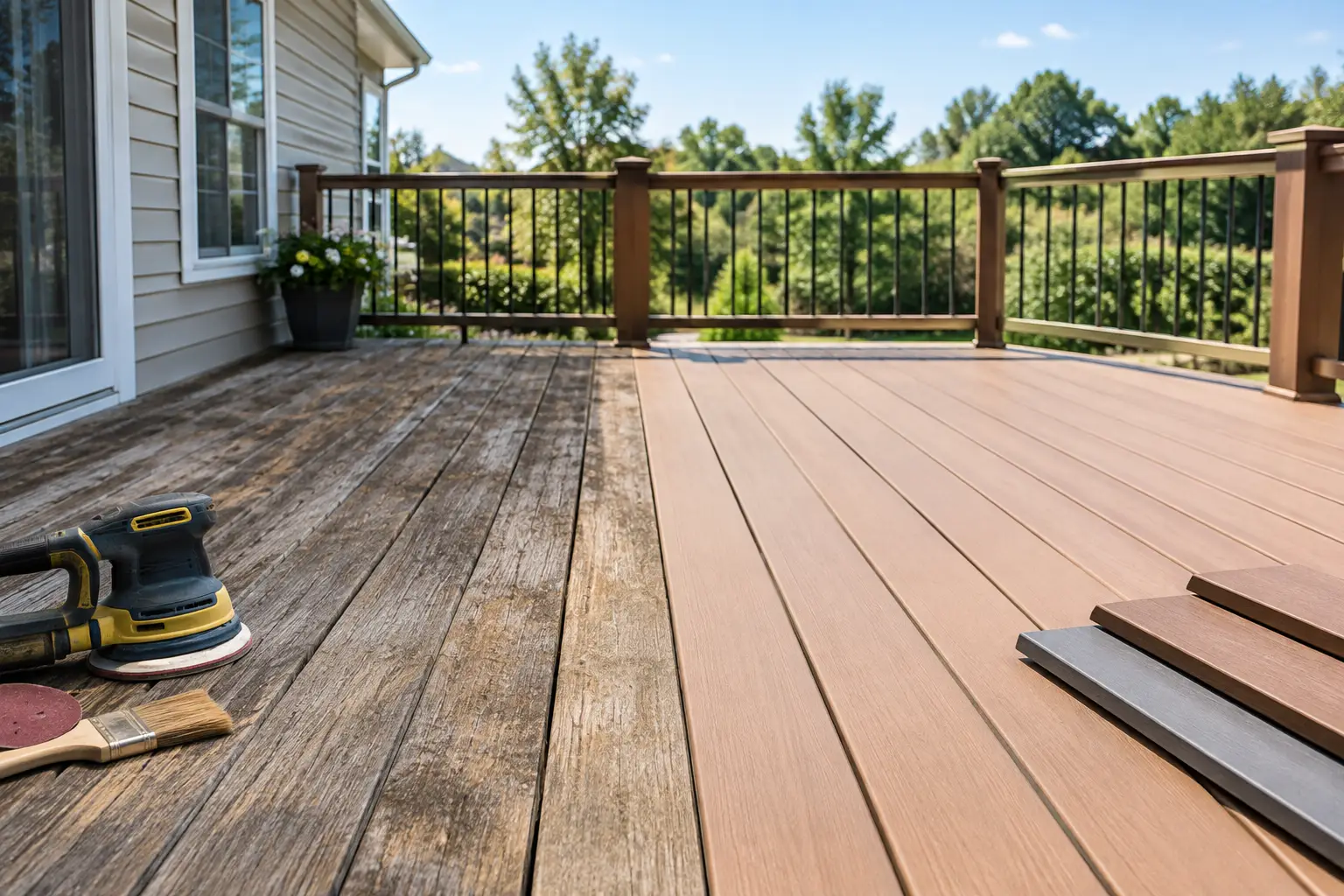
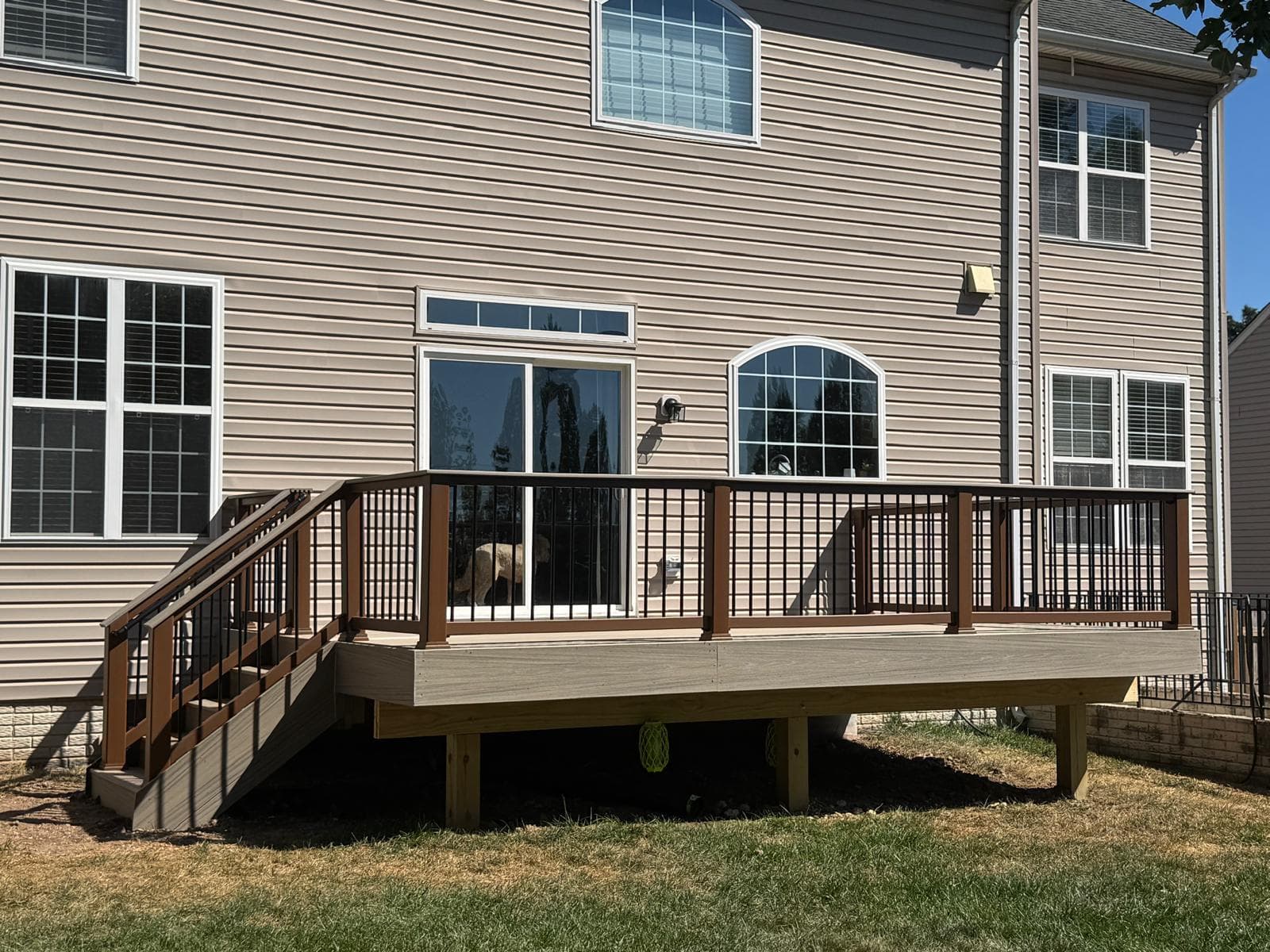
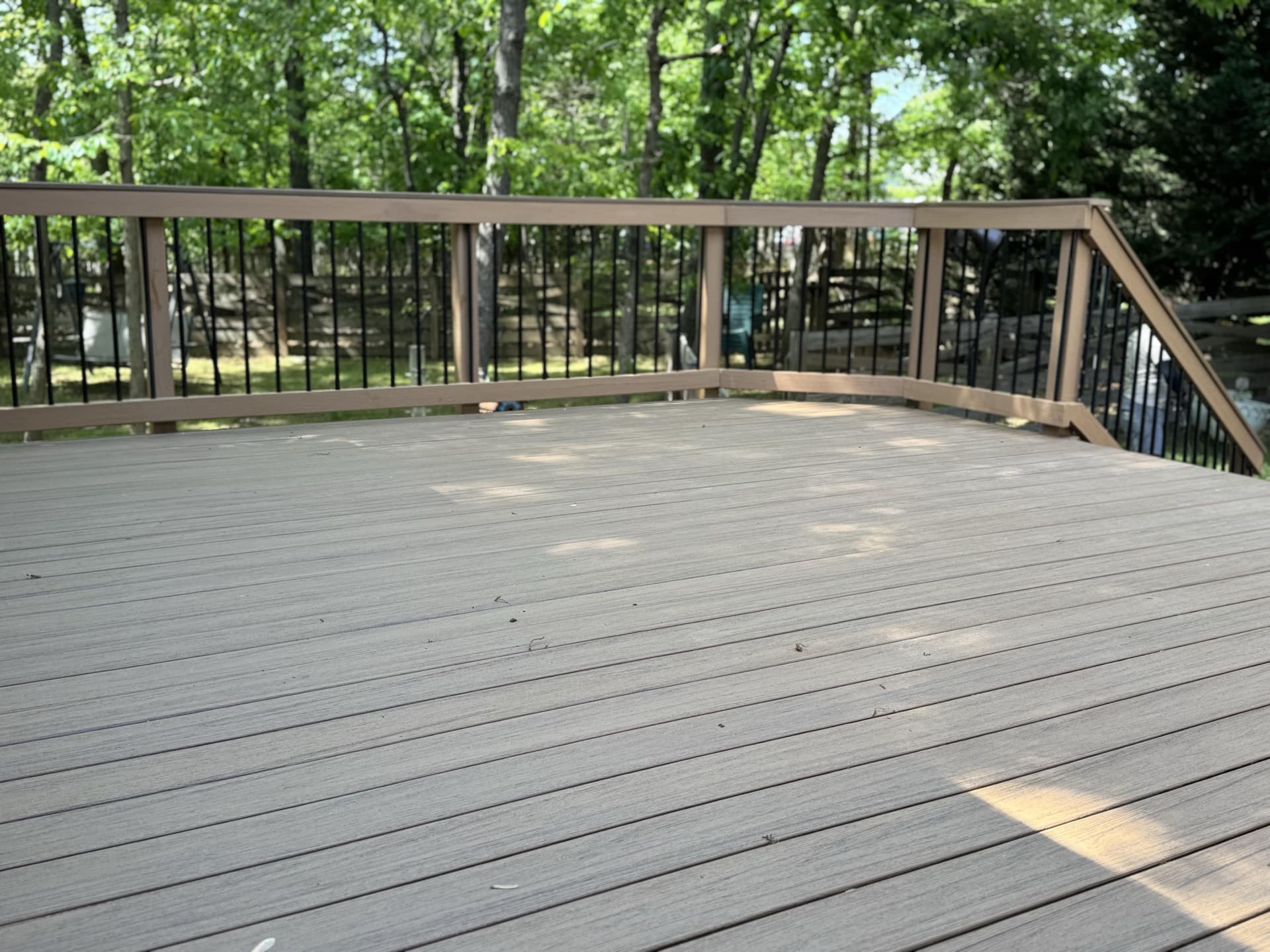
Deck resurfacing generally means removing the existing walking surface and installing new decking over the current framing. Depending on the project, it may also include new railings, stairs, trim, and fascia. It is often considered when homeowners want the low-maintenance appearance of composite or PVC decking without changing the deck's footprint.
That description sounds straightforward, but resurfacing is only appropriate when the underlying structure is in suitable condition for the planned finish materials. A professional evaluation should look beyond visible deck boards to the joists, beams, posts, connections, ledger area, footings, stair framing, and the way the deck attaches to the home.
Composite and PVC boards can have different installation requirements than older wood decking. Joist spacing, blocking, fastener systems, drainage details, and ventilation all matter. The existing frame must be evaluated against the selected product's current manufacturer requirements, rather than treated as automatically compatible because it held up the previous surface.
When Resurfacing Can Make Sense
Resurfacing can be a sensible option when the deck frame is sound, the layout still works for the household, and the project does not require major structural changes. A homeowner may be happy with the deck's size and stairs but ready to move away from aging wood boards and dated railing.
It can also fit a project where the goal is a focused finish upgrade rather than a broader redesign. For example, replacing the surface and railings may improve appearance, comfort, and day-to-day use while preserving a footprint that already fits the yard and HOA-approved plan.
Even then, the scope should be specific. A written estimate should identify what will be removed, what framing will be reviewed or repaired if needed, which decking and railing products are proposed, and how transitions, stairs, and trim will be handled.
When Deck Replacement Is the Better Investment
Full replacement means removing the existing deck structure and building a new one. It is often the more responsible direction when structural components are compromised, when the original design no longer meets the home's needs, or when a substantial upgrade would otherwise be constrained by the old frame.
The strongest reason to replace is not that a deck looks old. It is that the condition or configuration of the structure does not support the next phase of ownership with confidence. Surface-level improvements cannot correct a frame with significant deterioration, questionable connections, inadequate support, or a layout that limits safe, practical use.
Replacement also gives homeowners more freedom to rethink the deck as part of the property. That may mean adjusting the size, changing stair placement, improving circulation from the house to the yard, choosing a railing style that better preserves a view, or planning for integrated lighting. If a covered deck or a larger outdoor-living project is under consideration, replacement often provides the clearer foundation for coordinated planning.
Four Signs Replacement Should Be Part of the Conversation
A visible inspection cannot establish every structural condition, but these situations warrant a serious replacement discussion:
- The frame shows deterioration, movement, or concerns at critical connections.
- The deck layout is too small, awkward, or poorly positioned for how the family uses the space.
- New railings, stairs, or upgraded decking would require substantial changes to the existing framing.
- The project involves a major addition, such as a covered structure or a redesigned outdoor-living area.
These are not automatic verdicts. They are reasons to evaluate the whole system before committing to a finish upgrade that may have limited long-term value.
Resurfacing vs Replacement: The Decision Factors That Matter
The visible deck boards are only one part of the decision. A useful comparison weighs structure, design goals, approvals, materials, and future plans together.
Structural condition
This is the first filter. If the framing is suitable, resurfacing may remain on the table. If the evaluation identifies issues that cannot be addressed reasonably within a resurfacing scope, replacement can offer a more accountable solution. Homeowners should be cautious of any proposal that treats framing review as an afterthought.
Layout and use
Consider how the deck functions during an ordinary week, not just when it is freshly cleaned for guests. Is there enough room for dining and seating? Do the stairs land where you need them? Is the route from the kitchen convenient? Does the railing interrupt a view or make the space feel enclosed?
If the answer is no, resurfacing may leave you with a better-looking version of the same limitations. Replacement creates an opportunity to solve them before new materials are installed.
Material selection
Trex, TimberTech, and AZEK/PVC options offer different looks, product lines, and planning considerations. The best material is not simply the one with the boldest color sample. It should fit the architecture of the home, expected exposure, preferred texture, railing choice, and maintenance expectations.
A professional proposal should identify the actual materials being considered and confirm that the supporting structure and installation approach align with current manufacturer specifications. Product documentation and warranty terms can change, so they should be reviewed for the selected system rather than generalized from memory.
Permits and HOA review
In Loudoun and Fairfax counties and nearby communities, deck work may involve permit requirements, inspections, or HOA architectural review, depending on the scope and location. A replacement project, dimensional change, or covered structure can require more coordination than a limited resurfacing scope.
No builder should promise approval before the applicable review process is complete. What homeowners can do is begin early: gather any community guidelines, understand property constraints, and allow enough time for decisions that affect plans, materials, and schedule.
Access and site conditions
Deck projects are built at the home, and site logistics matter. Access to the yard, elevation changes, landscaping, utility considerations, and the path for material delivery can affect how the project is planned. These details do not always determine whether resurfacing or replacement is right, but they should be part of an accurate written scope.
Avoid the False Savings Question
Homeowners sometimes frame the choice as a simple effort to spend less now. That approach can miss the more useful question: which scope addresses the home's actual condition and supports the way you want to use the property?
Resurfacing can be efficient when it preserves a structure that is genuinely worth preserving. Replacement can be the better value when it prevents a new surface from being installed over a frame that is near the end of its useful life or incompatible with the desired design. Neither option is automatically better. The stronger choice is the one supported by the structure, the plan, and a clearly defined scope.
This is also why broad online pricing is a poor substitute for a project review. Deck size is only one variable. Elevation, access, demolition, framing requirements, stair complexity, railing selection, lighting, permits, HOA requirements, and the chosen material system all influence the work involved. Financing options can be discussed during the estimate if that is part of your planning.
What to Ask Before You Choose
A productive consultation should leave you with more than a recommendation. Ask whether the existing framing is suitable for the proposed decking system, what structural items are included in the evaluation, and whether your preferred railing or stair design changes the scope. If you are considering future features, ask whether it makes sense to plan for them now rather than reopen finished work later.
Also ask for clarity around permits, inspections, HOA documentation, material selections, and exclusions. A detailed written estimate helps compare proposals on scope rather than on a headline number alone. It also gives you a better basis for deciding whether a resurfacing plan is appropriately limited or whether replacement is the more durable path.
For homeowners planning a substantial composite or PVC deck project, Loudoun Decks can review the existing structure, discuss design options, and prepare a written estimate. Bring photos of your current deck, any HOA guidelines, and a short list of how you would like the space to work differently. The most useful deck decision is the one made before new boards cover the questions underneath.