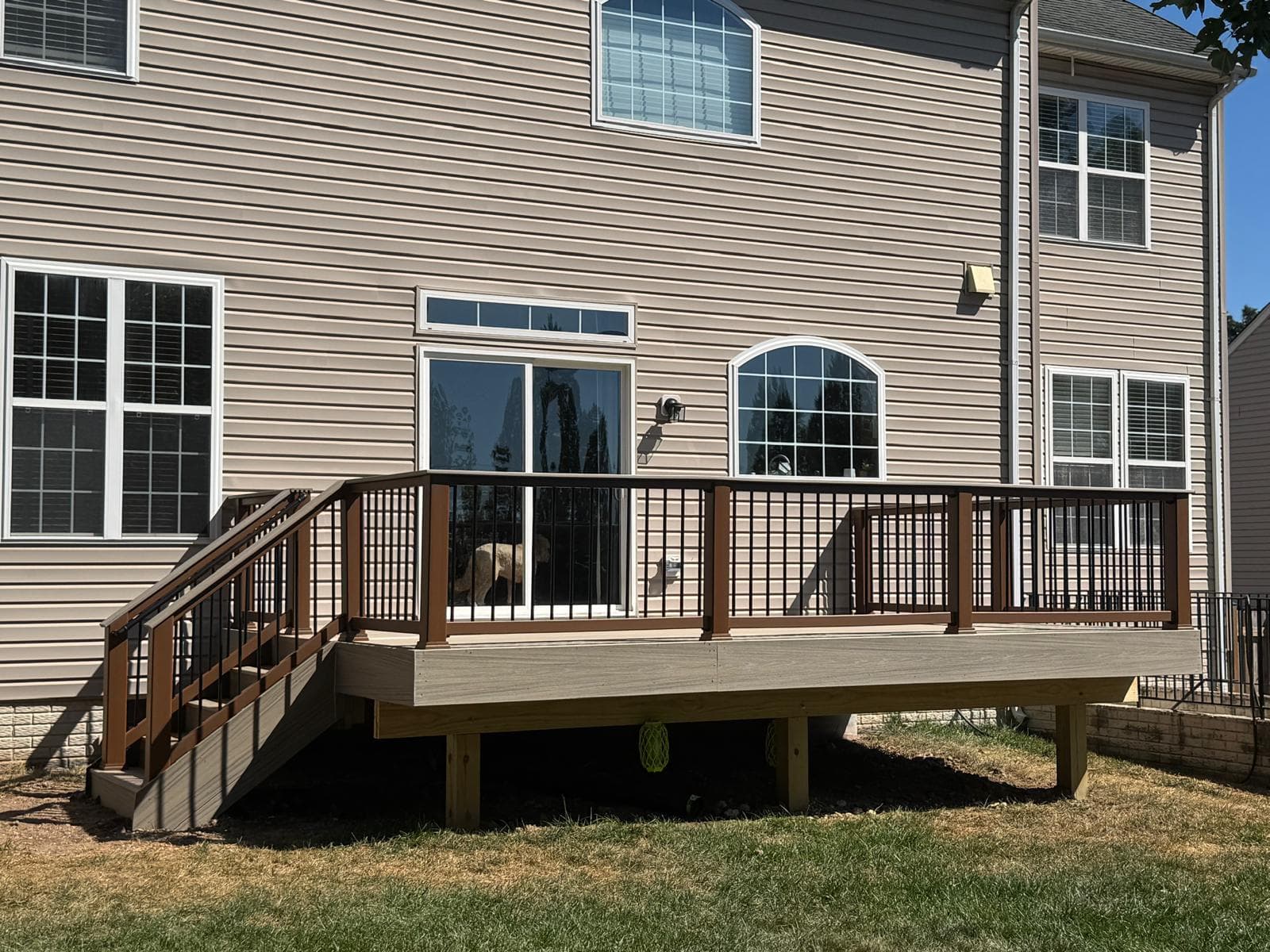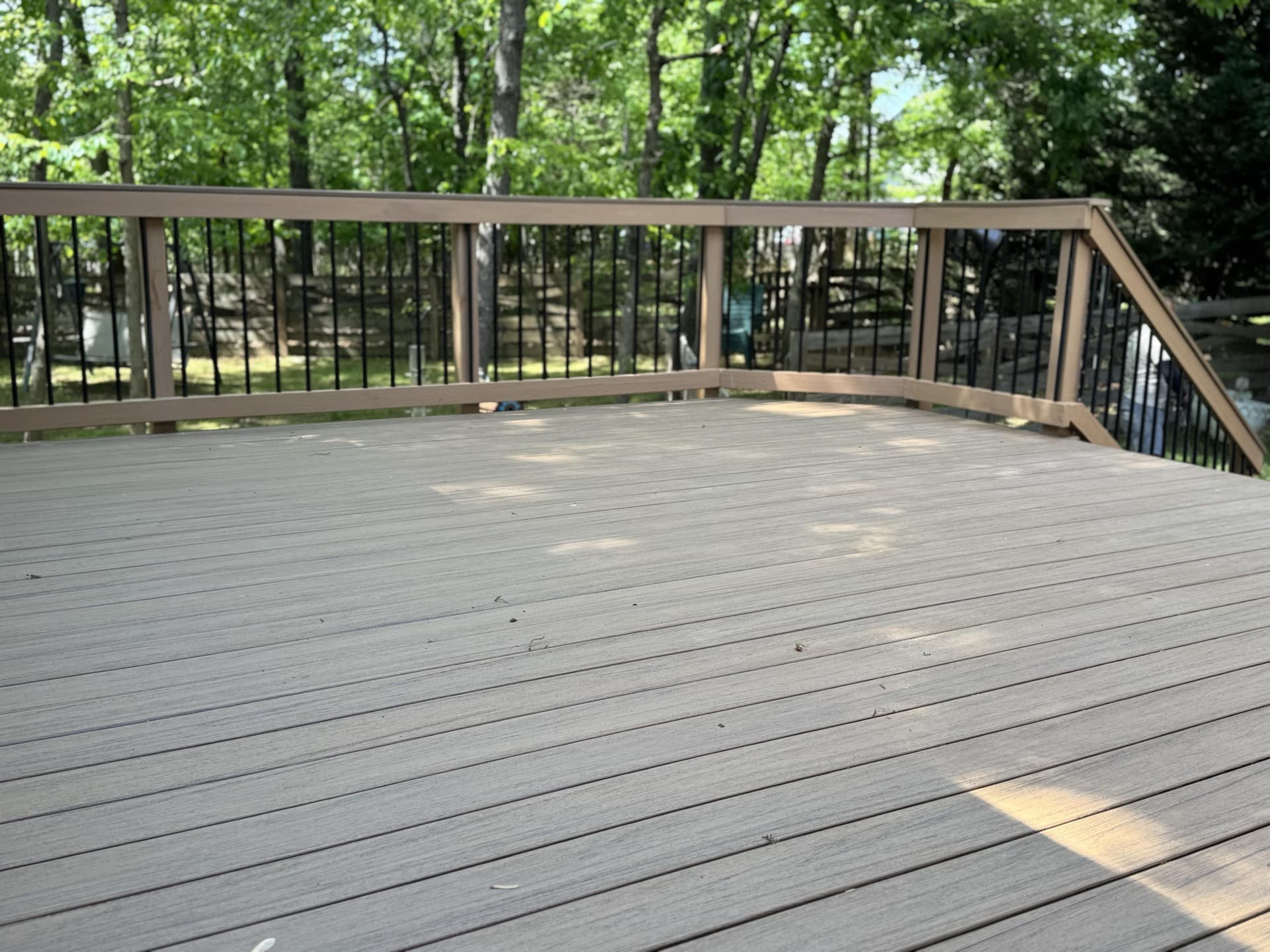


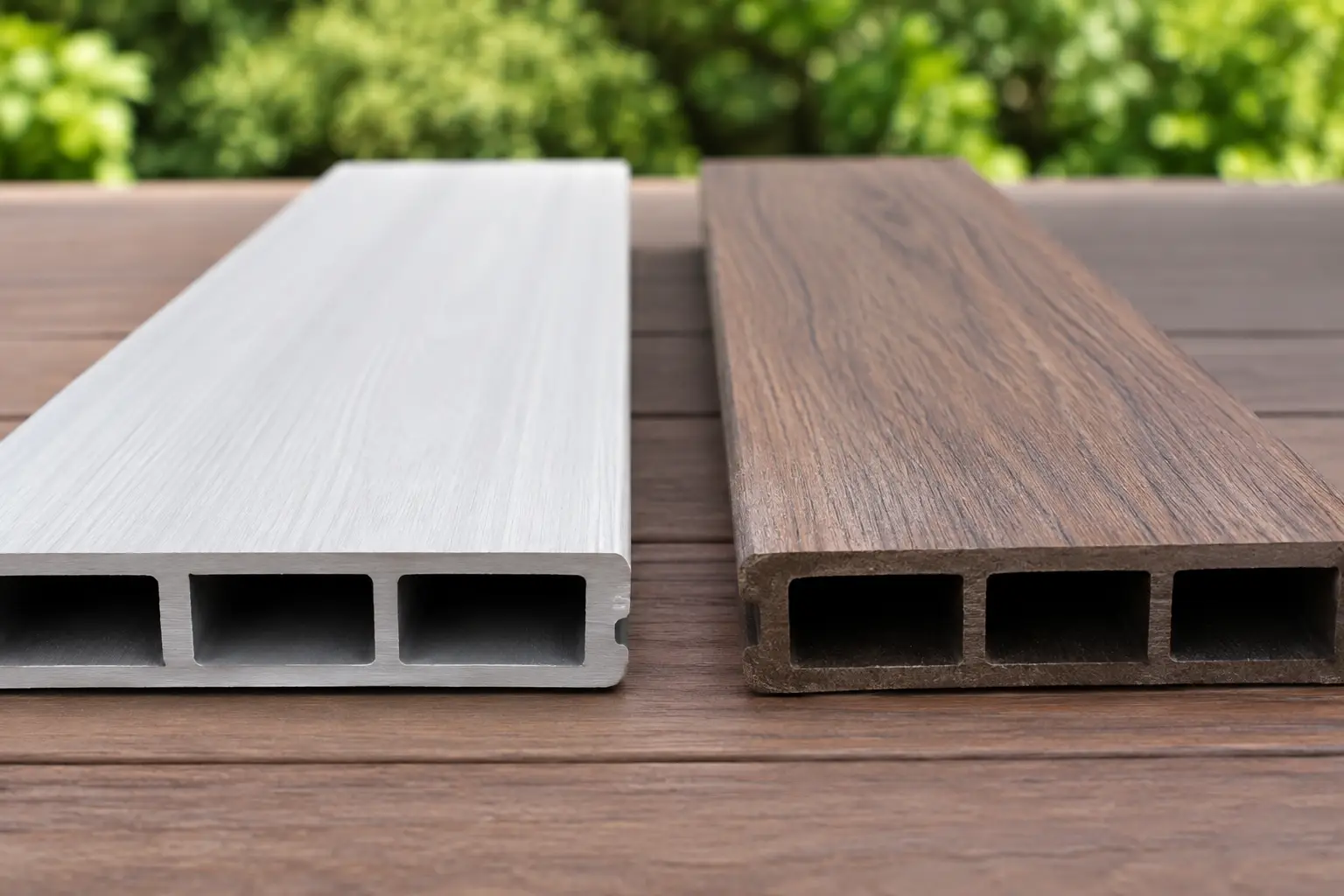
A deck can look nearly identical on installation day whether it is built with PVC or composite boards. The more useful question is how it will perform after years of Northern Virginia humidity, summer sun, wet leaves, snow, foot traffic, and furniture movement. When comparing pvc vs composite decking durability, homeowners should look beyond the board surface and consider the entire deck system: framing, drainage, fastening, railings, and the conditions around the home.
Both materials are designed to reduce the upkeep associated with traditional wood decking. Neither is automatically the right choice for every project. PVC can be an especially strong option where moisture exposure is a major concern, while high-quality capped composite often provides a substantial, stable-looking deck surface with a broad range of colors and textures. The best decision depends on your site, design priorities, and the condition of the supporting structure.
PVC vs Composite Decking Durability at a Glance
PVC decking is made primarily from polyvinyl chloride rather than a blend of wood fibers and plastic. Composite decking generally combines plastic with wood-based fibers and includes a protective cap on its walking surface and sides, depending on the product line. That difference affects how each material responds to moisture, heat, weight, and daily use.
PVC boards have no wood content, so they are a sensible material to discuss for decks with persistent moisture exposure. This can matter around shaded areas, properties with limited airflow, covered deck sections, and locations where leaves or debris tend to stay wet. Composite boards are also made for outdoor use and are far more moisture-resistant than unprotected wood, but product construction varies. A builder should confirm the specific board profile, cap coverage, approved fastening method, and installation requirements before finalizing the material.
Surface durability is not only about whether a board will rot. It also includes resistance to scratches, scuffs, stains, fading, and visible wear. Both PVC and composite boards can be damaged by dragged furniture, sharp metal feet, grill grease, dropped tools, or abrasive debris. A practical choice is one whose color, texture, and finish fit how your household actually uses the deck.
Moisture, Mold, and Seasonal Exposure
Northern Virginia decks experience repeated wet-dry cycles. Spring pollen, summer storms, fallen leaves, and winter moisture can collect in the gaps between boards or beneath low-clearance decks. Proper drainage and ventilation matter regardless of the decking selected.
PVC's lack of wood fibers gives it an advantage in environments where standing moisture is difficult to avoid. The board itself is not susceptible to wood rot. That does not eliminate the need for thoughtful deck design, however. Water can still affect framing, fasteners, connections, and the soil or hardscape below the deck. A premium deck surface installed over aging or poorly draining structural components does not solve those underlying problems.
Capped composite can perform very well in wet conditions when it is correctly installed and maintained according to the manufacturer’s current guidance. The protective cap is a key part of that performance. Homeowners comparing products should ask whether the cap wraps the board fully or only covers certain faces, especially when reviewing grooved versus square-edge boards and cut ends.
Mold and mildew are also often misunderstood. They may grow on airborne debris and organic residue sitting on any exterior surface, including PVC and composite. Material selection helps, but open board spacing, drainage, sunlight, and routine removal of leaf buildup have a meaningful effect on the deck's appearance over time.
Heat, Sun, and Everyday Comfort
Durability also includes whether a deck remains comfortable and visually consistent through long sun exposure. Darker decking colors generally become hotter in direct sunlight, regardless of whether the board is PVC or composite. Board texture, color selection, deck orientation, shade structures, and nearby reflective surfaces all influence the experience underfoot.
PVC decking can have greater thermal movement than composite, which makes correct installation especially important. Board expansion and contraction are not a homeowner maintenance issue to solve later. They are planning and workmanship issues that should be addressed during construction through the manufacturer's specified spacing, fastening, and detailing requirements.
Composite boards also expand and contract, though the degree varies by product. Their mix of materials can give them a more wood-like density and feel underfoot, which some homeowners prefer. The right answer is not simply which board moves less. It is whether the selected material is installed by a builder who understands its current specifications and accounts for the deck's exposure.