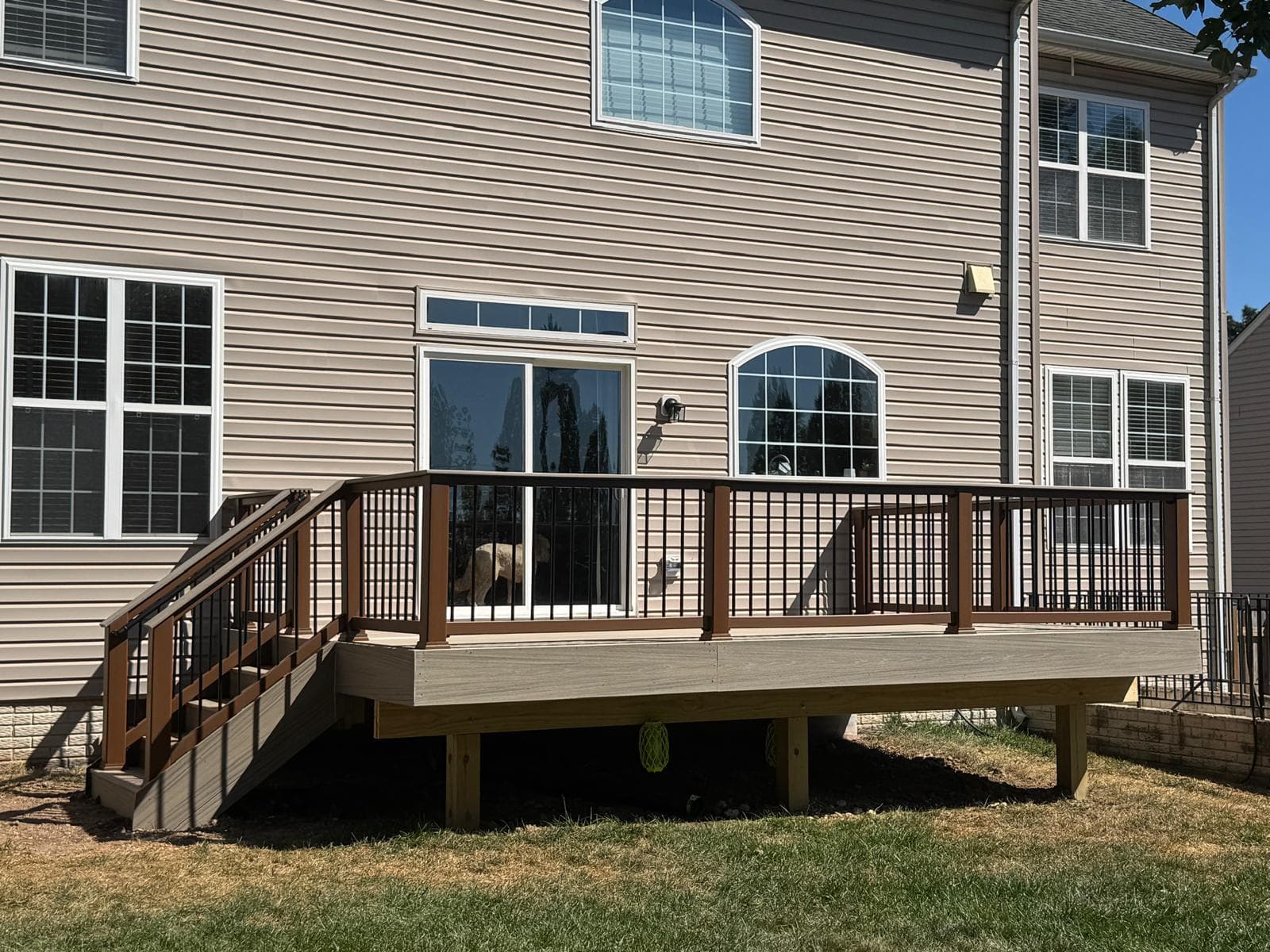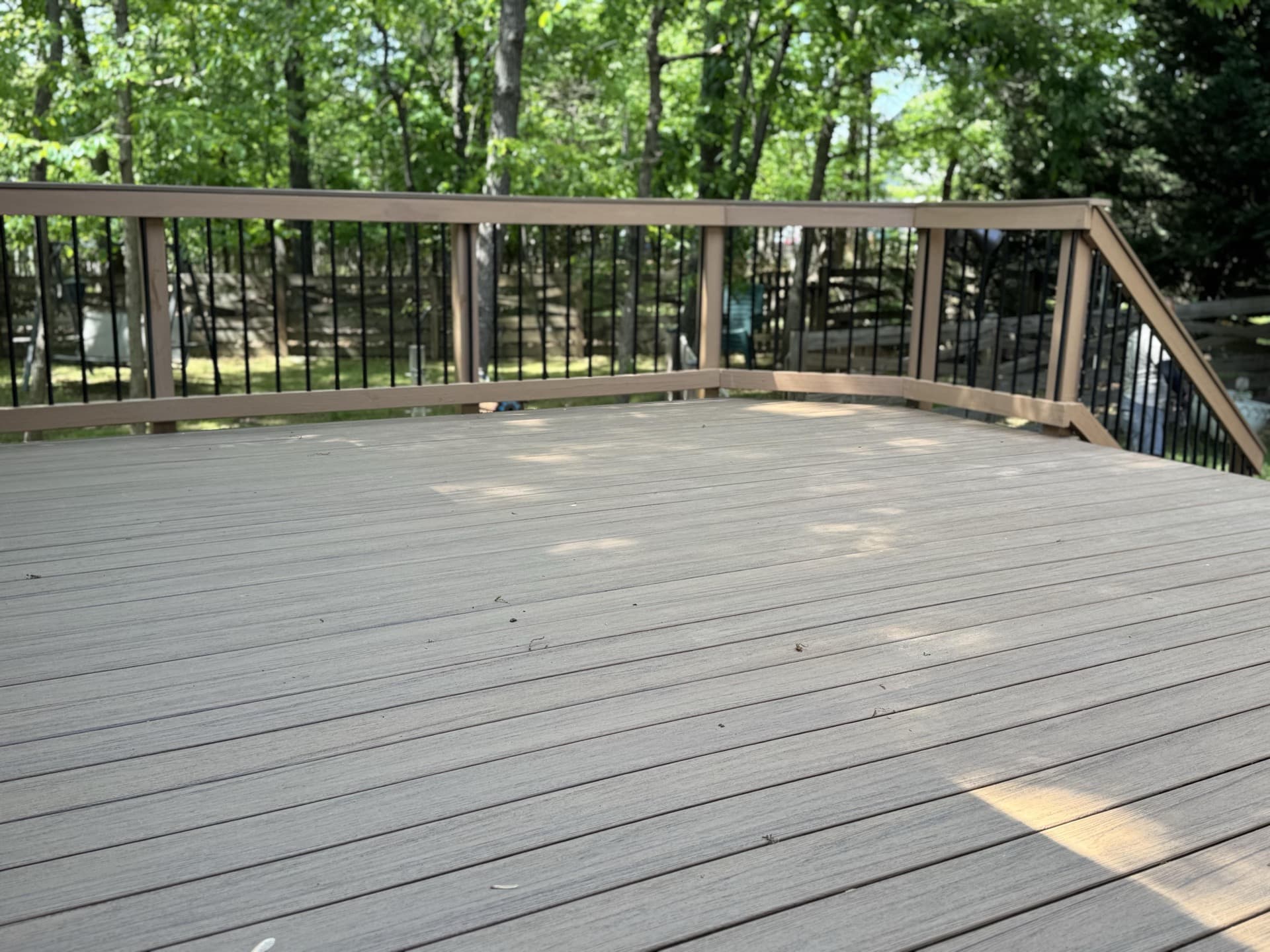



A new deck can look like a straightforward exterior upgrade until the planning begins. An aging frame, a changed door height, sloped ground, railing choices, HOA review, and permit requirements can all affect what needs to happen before new decking is installed. The best deck contractors help homeowners see that full scope early, so the project is planned around the home rather than around a simplified material list.
For Northern Virginia homeowners considering a composite or PVC deck, the goal is not simply to find someone who can install boards. It is to choose a builder who can evaluate the existing conditions, explain meaningful options, provide a written scope, and coordinate the work required for a finished outdoor space that fits the property.
What Qualified Deck Contractors Should Evaluate First
A productive contractor conversation starts with the deck itself, not a generic square-foot number. The builder should understand whether the project is a replacement of an existing deck, a new structure, an expansion, or part of a larger outdoor-living plan. Those are different projects, even when they result in decks of similar size.
For an existing deck, the key question is whether the supporting structure is suitable for the proposed finish materials and the homeowner's plans. Composite and PVC decking, new railings, stairs, lighting, and a covered section can change the requirements placed on the structure. If the existing frame has reached the end of its useful life, or if the layout no longer works, replacing only the surface may not be the right long-term decision.
A careful evaluation also considers access, grade changes, door locations, stair placement, posts, footings, and how the deck connects to the house. These details influence the construction approach and should be addressed before a proposal is finalized. A contractor who asks specific questions is not making the process harder. They are identifying decisions that can prevent confusion once construction is underway.
Compare the Written Scope, Not Just the Materials
Two estimates can both mention composite decking and still describe very different projects. One may account for a complete structural replacement, while another assumes existing framing will remain. One may include stairs, railing, permit coordination, and demolition. Another may treat those items differently or leave them for later discussion.
When comparing deck contractors, ask each company to clarify what is included in its written estimate. The document should make it easier to understand the proposed layout, decking material, railing system, stair work, structural scope, and any selected features such as lighting or a covered deck area. It should also identify assumptions that need confirmation before work begins.
This is where apparent savings can become difficult to evaluate. A lower initial figure is not useful if the scope is incomplete or if major decisions have not been addressed. Homeowners do not need construction expertise to compare proposals effectively. They need a clear description of what each contractor intends to build and which conditions could affect the final plan.
Ask How Existing Conditions Will Be Handled
Resurfacing can be appropriate when an existing frame is in sound condition and the design goals are modest. It can also be the wrong choice when the structure needs correction, when the deck layout needs to change, or when the planned railing and stair system call for more extensive work.
A professional contractor should explain the distinction without forcing a one-size-fits-all answer. Ask what will be evaluated on the existing deck, what would lead to a recommendation for replacement rather than resurfacing, and how any unexpected conditions would be communicated. The answer should be specific to the property, not based solely on the age of the deck or the appearance of its surface boards.
Material Advice Should Match the Way You Use the Deck
Trex, TimberTech, and AZEK/PVC products each offer options for homeowners seeking a lower-maintenance alternative to traditional wood. The right selection depends on more than color. Board profile, finish, heat considerations, edge treatment, railing compatibility, warranty documentation, and the desired overall look can all matter.
A useful contractor conversation connects those choices to everyday use. A deck that receives strong afternoon sun may prompt different questions than one shaded by mature trees. A family that regularly hosts larger gatherings may prioritize circulation, stair width, or a defined cooking area. A homeowner focused on a clean contemporary look may want to consider cable railing, but should also discuss its fit with the deck design, local requirements, and maintenance expectations.
Material samples are valuable because color shifts in different light. View options outside when possible, alongside siding, brick, stone, or existing trim. Do not choose based only on a small image or an indoor sample. The builder should be able to explain the selected system as a complete assembly, including fascia, railings, fasteners, and transitions, rather than treating deck boards as an isolated purchase.