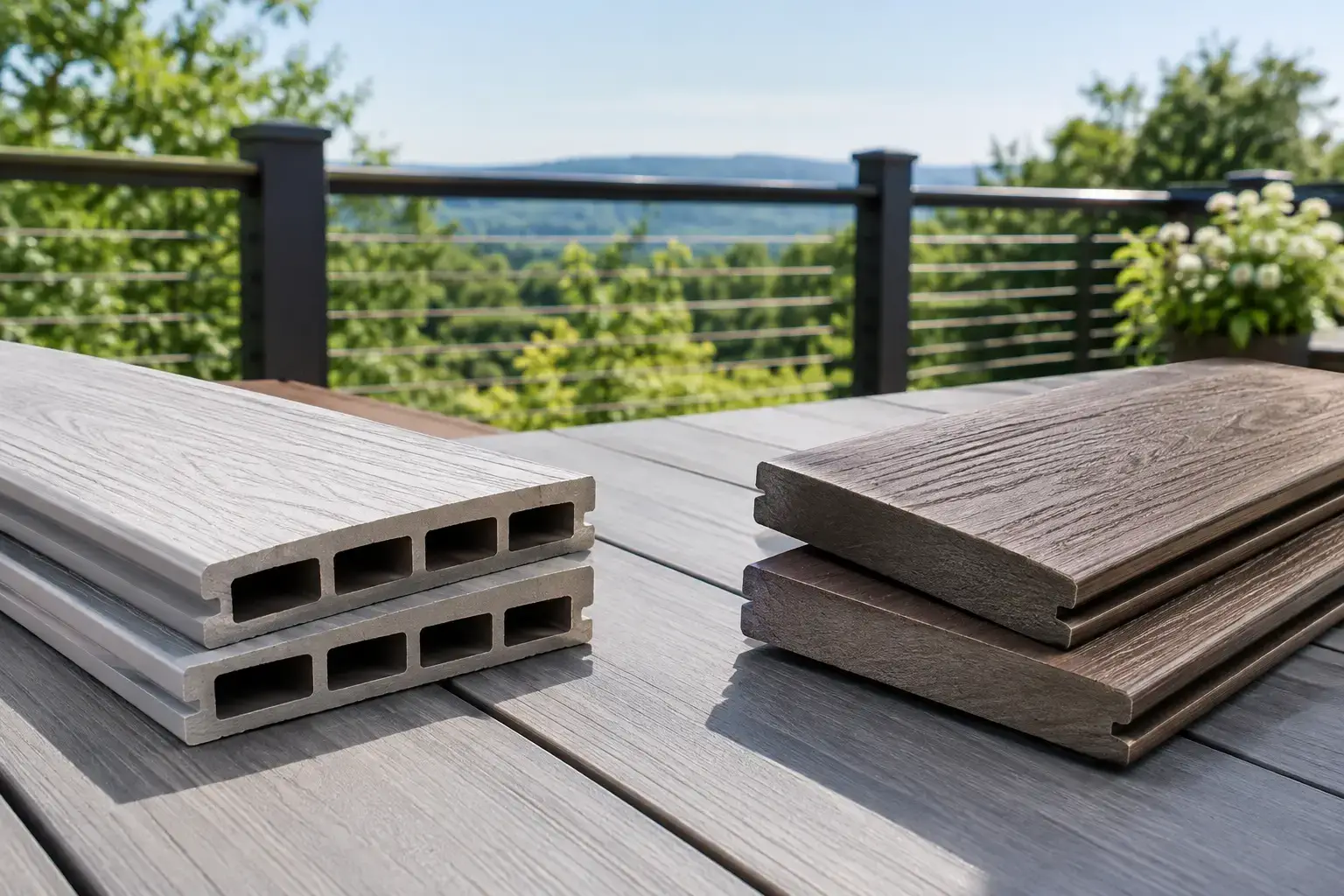
Compare AZEK vs composite decking for a Northern Virginia deck replacement. See how material, heat, design, framing, and scope affect the right choice.
A deck board can look similar in a showroom and behave very differently once it is installed across a sunny backyard, around a pool, or beneath a covered roof. For homeowners comparing AZEK vs composite decking, the better choice is rarely about picking the material with the boldest marketing claim. It is about matching the board, color, layout, framing condition, and expected use of the deck to the project in front of you.
AZEK and composite decking are both premium, low-maintenance alternatives to traditional wood. They are not interchangeable, however. The differences can affect appearance, surface temperature, movement, installation details, and the overall scope of a replacement or new deck.
AZEK vs Composite Decking: The Basic Difference
AZEK decking generally refers to PVC decking, commonly associated with the TimberTech AZEK product line. PVC boards are made without wood fibers. Composite decking, by comparison, typically combines recycled plastic with wood fibers and is protected by a durable outer cap.
That core construction affects how the materials respond to moisture, heat, and daily use. It also affects the product lines, colors, board profiles, and installation requirements available for a particular project.
Neither material eliminates the need for thoughtful design and professional construction. A premium deck surface installed over aging framing, inadequate footings, or an awkward layout will not solve the larger problem. For replacement projects especially, the deck structure should be evaluated before selecting a finish material.
When AZEK PVC Decking May Be the Better Fit
PVC decking is often a strong option for homeowners who want a highly finished deck surface and place a high value on moisture resistance. Because it contains no wood fibers, it is a logical material to discuss for decks exposed to persistent moisture, heavy shade, nearby water, or frequent wet use.
It can also appeal to homeowners looking for a particular visual style. Depending on the current collection, PVC decking may offer options with more pronounced color variation, different board widths, or a refined wood-look finish. The right choice comes down to the specific collection rather than the word “PVC” alone. Samples should be viewed outdoors, not just under interior lighting.
The trade-off is that PVC decking requires close attention to manufacturer installation instructions. Like other exterior materials, it expands and contracts with temperature changes. Board spacing, fastening methods, picture-frame details, stair construction, and end treatment need to be planned for the selected product. These are not cosmetic afterthoughts. They influence how clean the finished deck looks over time.
PVC can also be a sensible conversation for projects where the deck is a central architectural feature of the home, such as a large elevated deck, a covered deck with open perimeter sections, or a design with wide stairs and detailed railing transitions. In those cases, the material choice should support the entire design rather than stand apart from it.
When Capped Composite Decking May Be the Better Fit
Capped composite decking remains a popular choice for substantial residential deck projects because it offers a broad range of colors, textures, and product tiers. It can work well for homeowners who want the look of a traditional deck surface without the recurring staining and painting associated with wood.
Composite is often a practical fit when a homeowner is balancing appearance, long-term maintenance expectations, and the broader scope of a deck replacement. That scope may include new railings, stairs, lighting, skirting, a covered area, or adjustments to improve how the deck connects to the yard.
It is also important to recognize that “composite” is a category, not one uniform product. Different collections can vary in cap technology, texture, profile, color variation, and approved installation details. A board from one line should not be judged solely by a sample from another.
For many Northern Virginia homeowners, the decision comes down to the selected color and collection after the project layout has been established. A well-chosen capped composite board can deliver the appearance and performance a project needs while leaving room in the overall plan for structural work, railings, lighting, or other features that improve how the space is used.
Heat, Sun Exposure, and Color Matter More Than Many People Expect
No decking material stays cool in direct summer sun. Darker colors commonly absorb more heat, and a deck that faces intense afternoon sun will feel different from one shaded by mature trees or a roof structure. This is true whether you choose PVC or composite.
Material selection can influence the experience, but it should not be treated as a promise that the deck surface will remain comfortable barefoot on the hottest days. The more useful discussion is about exposure: Which areas receive full sun? Will the deck be covered? Is there a pool, outdoor kitchen, or frequently used stair landing? Will children or pets use the surface often?
A sample placed in the actual deck location can help homeowners evaluate color in real conditions. It also reveals how undertones relate to the home’s siding, brick, stone, trim, and railing. A color that looks neutral indoors may appear much warmer or cooler outside.
The Material Is Only One Part of a Deck Replacement
Homeowners sometimes approach a project as a simple surface swap: remove the old boards and install new composite or PVC decking. That approach may be appropriate in limited situations, but it is not automatically the right answer.
Before resurfacing, a builder should assess the existing frame, connections, footings, stairs, and overall layout. Older decks may have framing that does not suit the chosen decking product or current project needs. A new board pattern, picture-frame border, diagonal field boards, or upgraded rail system can change the framing requirements. So can a plan to add lighting, a covered section, or a larger stair configuration.
A structural evaluation also helps avoid a mismatch between a premium surface and a worn-out foundation beneath it. If the existing deck has reached the end of its useful life, a full replacement may provide a clearer path to a coordinated design, proper approvals, and a better long-term result.
Compare the Full Scope, Not Just the Boards
When evaluating AZEK PVC and composite decking, ask for a written scope that identifies the selected product line, color, board layout, railing approach, stair design, and any framing work involved. This gives you a more meaningful comparison than a material name alone.
The final project scope can be affected by deck size and elevation, site access, demolition needs, structural conditions, railing choices, lighting, permit requirements, and HOA review. A covered deck or outdoor-living upgrade may involve additional coordination that should be considered early, not added after material decisions are already made.
Manufacturer specifications should also be reviewed for the exact product under consideration. Product details can change, and performance claims, approved uses, fastening requirements, and warranty coverage depend on the specific collection and installation.
How to Make the Right Choice for Your Home
Start with how you want to use the deck. A quiet rear platform used mainly for grilling has different priorities than a large gathering space with multiple access points, railings, lighting, and a covered area. Then consider sun exposure, desired color, maintenance expectations, and whether the existing structure supports a resurfacing plan.
From there, compare actual samples alongside the project drawings or proposed layout. Look at the samples in morning and afternoon light. Discuss board direction, borders, fascia, stair treads, railings, and transitions to the home. These details determine whether the finished deck feels intentional.
For a substantial new deck or replacement, Loudoun Decks can help homeowners evaluate the material options within a complete written project scope. Financing options can also be discussed during the estimate process.
The best deck surface is the one that fits the structure, the setting, and the way your household will use the space for years to come. Request a professional estimate when you are ready to compare AZEK PVC and composite decking as part of a complete deck plan.
Plan Your Northern Virginia Deck Project With Loudoun Decks
From ground-up deck construction to full outdoor living spaces, every project is custom-designed for your home with permit planning, material guidance, and written workmanship terms.
Loudoun Decks serves homeowners in Loudoun County, Fairfax County, Prince William County, Arlington County, Alexandria, Falls Church, and Stafford County.