


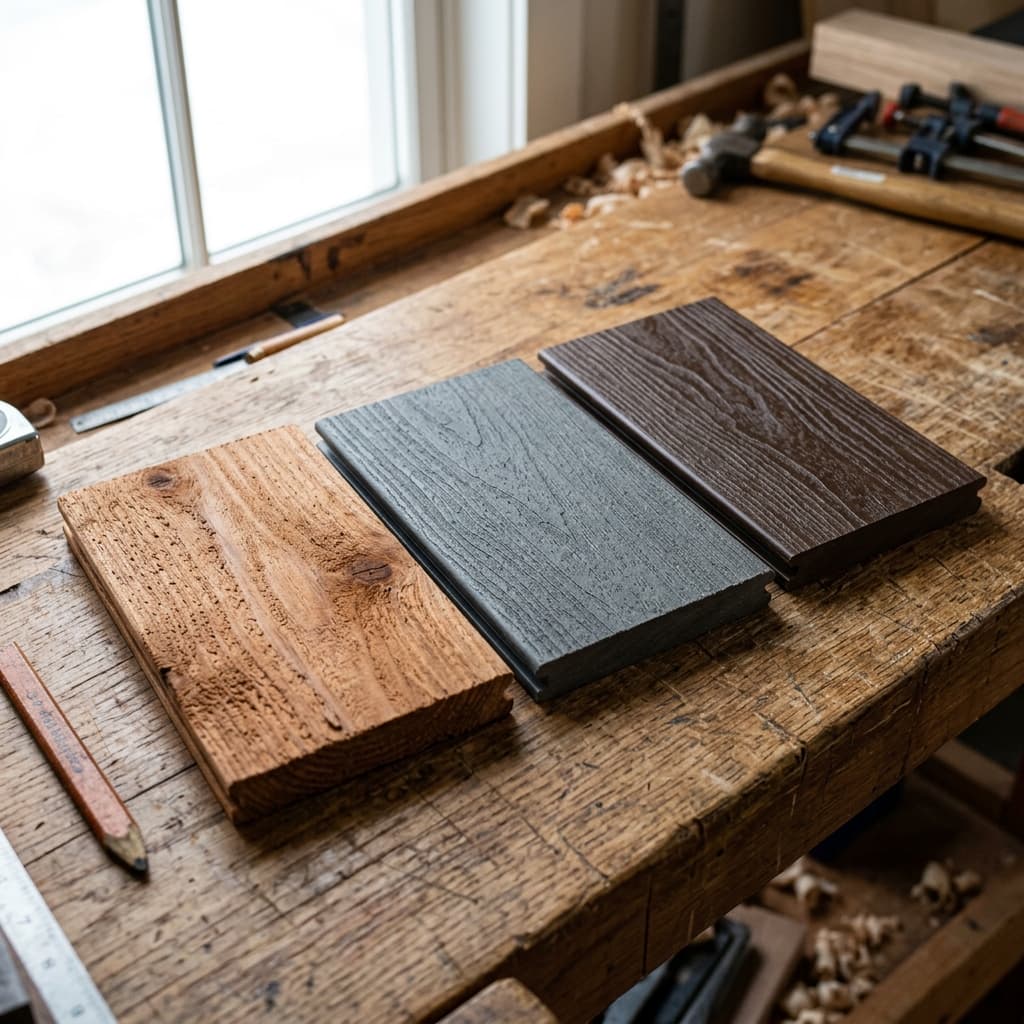
Wood vs. Composite vs. PVC: The 2026 Material Showdown for Virginia Homes
Overwhelmed by decking choices? We break down the exact pros, cons, and costs of pressure-treated wood, composite decking, and premium PVC materials.
Quick Answer
For most Northern Virginia homeowners, composite decking is the practical middle ground: lower maintenance than wood, lower cost than premium PVC, and strong long-term durability for Trex and TimberTech-style projects.
Wood can still fit tight budgets, while cellular PVC or AZEK-style boards make sense for premium, moisture-heavy, poolside, shaded, or luxury outdoor-living builds where upfront cost is less important than performance.
Selecting the right material for your new deck is the most significant decision you will make. It dictates the upfront cost, the long-term maintenance requirements, and the overall aesthetic of your backyard. In 2026, the market in Northern Virginia is dominated by three distinct categories: Natural Wood, Composite, and PVC.
Here is a comprehensive educational breakdown of each material to help you choose the right fit for your lifestyle and budget.
1. Pressure-Treated Wood: The Traditional Standard
Pressure-treated (PT) pine is the most common and historically traditional deck material. The wood is infused with chemical preservatives to resist rot and insect damage.
The Pros: - Cost-Effective: PT wood is the most affordable decking material upfront. If you have a strict budget, wood allows you to build a larger deck for less money. - Natural Aesthetic: Many homeowners love the genuine, rustic look and feel of real wood that simply cannot be perfectly replicated by synthetics.
The Cons: - High Maintenance: This is the critical tradeoff. To prevent splintering, warping, and fading, a wood deck in Virginia must be rigorously power-washed, sanded, and re-stained every 1 to 2 years. - Shorter Lifespan: Even with perfect maintenance, the surface boards of a wood deck typically need replacing after 10 to 15 years due to the harsh UV rays and humidity in our region.
2. Composite Decking (Trex & TimberTech): The Sweet Spot
Composite decking is manufactured by blending recycled plastic film (like grocery bags) with reclaimed wood fibers (sawdust). The boards are then "capped" with a hard, protective polymer shell.
The Pros: - Ultra-Low Maintenance: Composite never needs sanding, staining, or sealing. A simple wash with soap and water twice a year is all that is required. - Durability and Warranty: Premium composite lines come with 25 to 50-year fade and stain warranties. They are highly resistant to scratching and mold. - Eco-Friendly: Brands like Trex are made from 95% recycled materials, keeping thousands of pounds of plastic out of landfills.
The Cons: - Higher Initial Cost: Composite decking is significantly more expensive than wood upfront (often 40% to 60% more for the surface materials). - Heat Retention: Darker colored composite boards can become quite hot on bare feet during peak summer afternoons in direct sunlight.
3. Cellular PVC (AZEK): The Luxury Tier
PVC decking is fundamentally different from composite because it contains absolutely zero organic wood fibers; it is 100% synthetic polymer.
The Pros: - Total Moisture Immunity: Because there is no wood dust inside the board, PVC is completely impervious to water. It cannot rot, swell, or harbor mold. It is the perfect material for pool decks or extremely damp, shaded yards. - Cooler Touch: PVC dissipates heat much faster than dense composite, making it noticeably cooler on bare feet in the summer sun. - Premium Aesthetics: Advanced manufacturing allows PVC boards (like TimberTech Advanced PVC) to feature incredibly hyper-realistic, wire-brushed wood grain textures.
The Cons: - The Price Tag: PVC is the most expensive decking material on the market, representing the absolute peak of luxury outdoor living. - Expansion: Synthetic boards expand and contract more with temperature changes than natural wood, requiring highly precise installation techniques by specialized contractors.
Making the Decision
If your primary goal is maximizing square footage on a tight budget and you don't mind spending a few weekends a year on maintenance, Pressure-Treated Wood is a solid choice.
If you want the best balance of value, zero maintenance, and long-term durability, Composite Decking is the overwhelming favorite for Northern Virginia homeowners.
If you have a higher budget and demand the absolute best in moisture resistance, heat dissipation, and luxury aesthetics, Cellular PVC is unmatched.
Related Resources
Frequently Asked Questions
Is composite decking better than wood?
Composite decking requires significantly less maintenance and lasts much longer than wood, making it a better long-term investment despite the higher initial cost.
What is the difference between composite and PVC decking?
Composite decking is made from a blend of plastic and wood fibers, while PVC is 100% synthetic plastic with no organic material, offering ultimate moisture resistance.
How long does a wood deck last in Virginia?
With rigorous annual maintenance, the surface boards of a pressure-treated wood deck typically last 10 to 15 years before needing replacement.
Plan Your Northern Virginia Deck Project With Loudoun Decks
Get a free, no-pressure consultation from a licensed Northern Virginia deck builder. Call (571) 655-7207 or visit ldndecks.com/get-estimate.
Get a Free EstimateEverything Your Outdoor
Space Needs
From ground-up deck construction to full outdoor living spaces, every project is custom-designed for your home with permit planning, material guidance, and written workmanship terms.
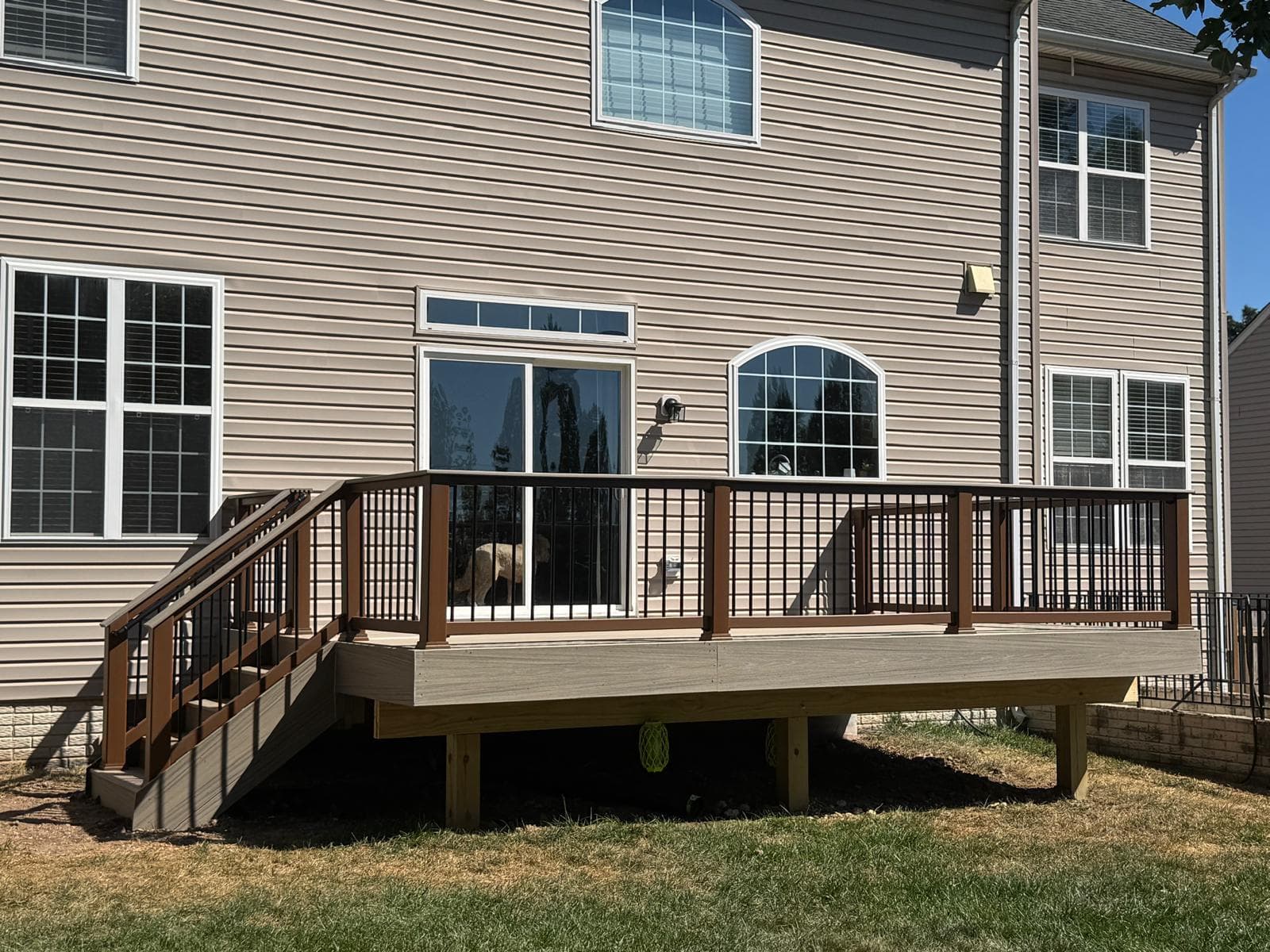
Custom Deck Builder
Transform your backyard with a custom-designed deck using Trex, TimberTech, wood, or PVC materials matched to your budget, HOA rules, and maintenance goals.
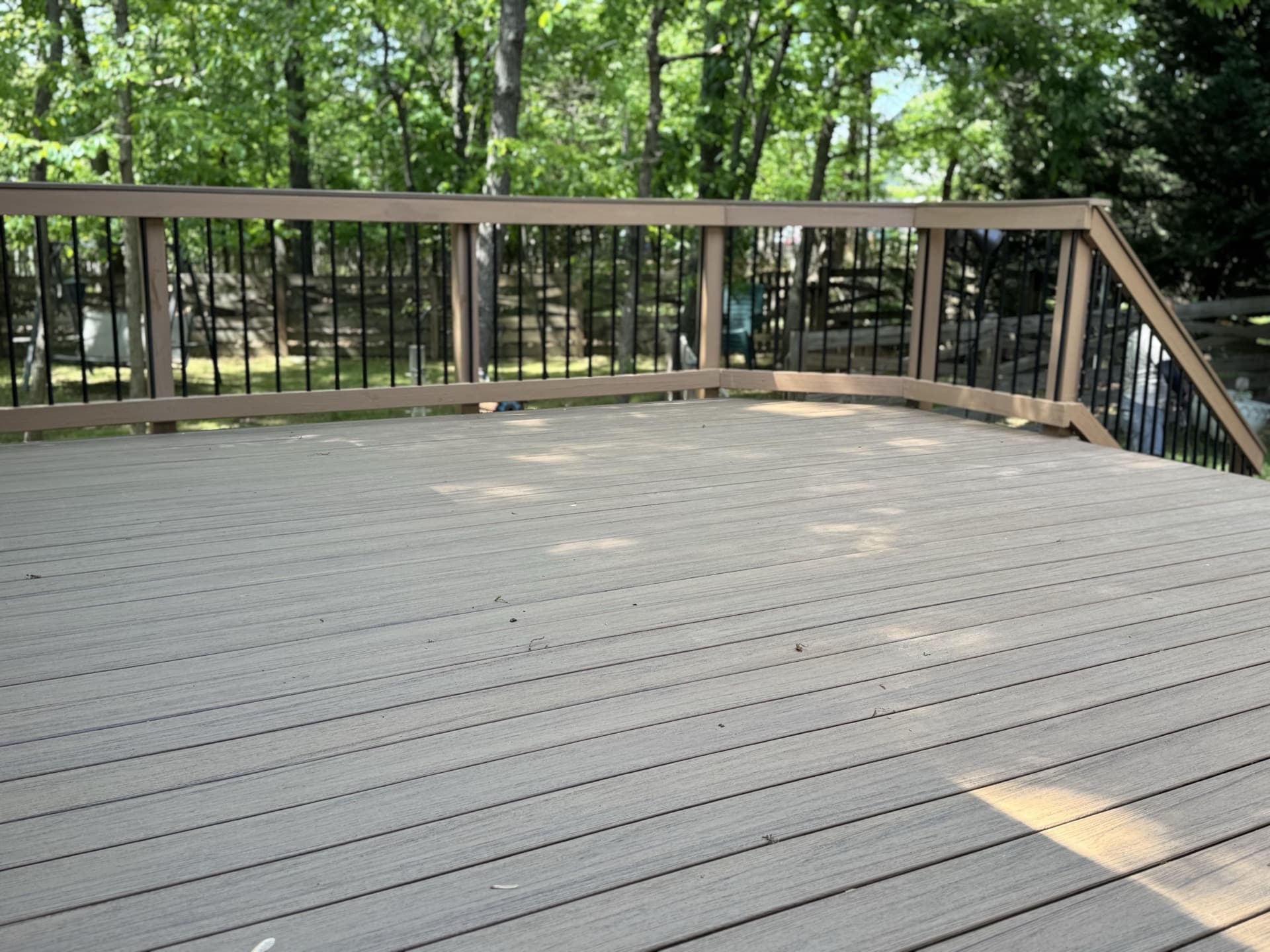
Deck Resurfacing
Premium wood-to-composite resurfacing for structurally sound frames. Full surface conversions start from $15k with boards, railings, fascia, and safety review.
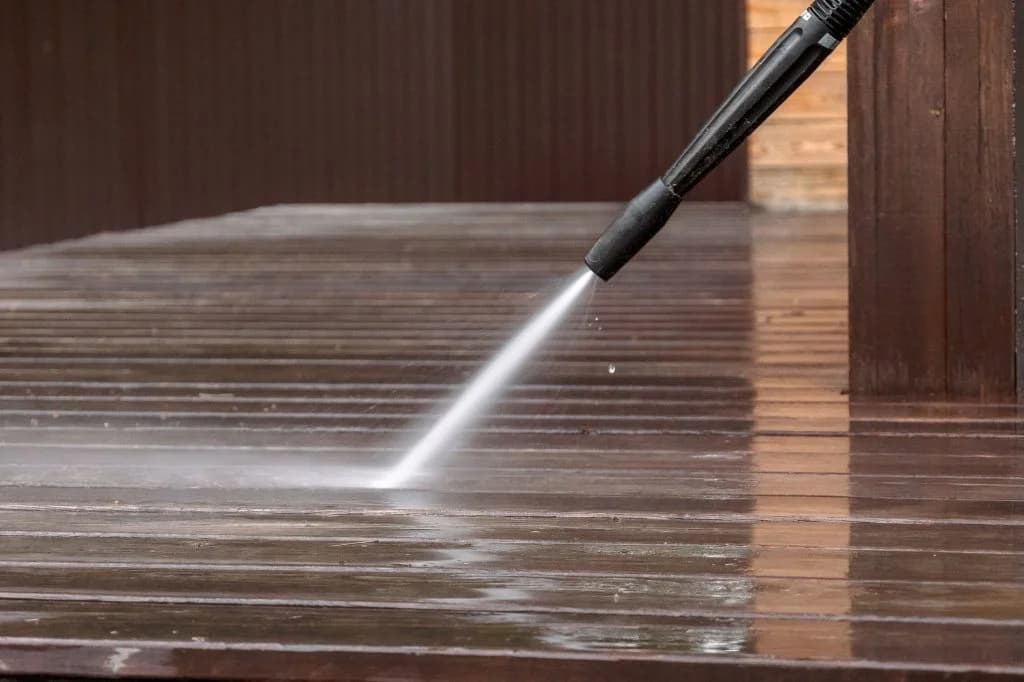
Patio Contractor Services
Professional bluestone and paver patio installation. We create durable, beautiful ground-level outdoor living spaces that last a lifetime.
Local Expertise Across Northern Virginia
Loudoun Decks is a trusted deck builder serving Loudoun County, Fairfax County, Prince William County, Arlington, and Stafford.
Guides Northern Virginia Homeowners Are Reading
Trex vs TimberTech vs AZEK
Side-by-side brand comparison for Virginia climate.
Covered Deck Builder
Covered deck planning, outdoor living upgrades and shade structure decisions.
Deck Resurfacing vs Replacement
How to decide between resurfacing, structural repair and full replacement.
Premium Composite Replacement
High-value composite replacement planning for Arlington, Alexandria and McLean homeowners.
Deck Footing Depth Calculator
Estimate footing depth, diameter, frost-depth guidance and inspection notes.
Deck Beam Span Calculator
Estimate beam span, post spacing, tributary width and framing warnings.