


Before You Repair Your Deck, Look Beneath the Surface
A planned deck repair in Fairfax Station became an ongoing full rebuild after our team found extensive deterioration. Here is what homeowners can ask before choosing a scope.
We planned to repair this Fairfax Station deck. We’re now rebuilding it.
The original scope for this Fairfax County project was a deck repair. Loudoun Decks is now rebuilding the entire deck. The project is still in progress. That change is the starting point for this project story: before committing to a repair, understand what can remain and compare the complete options.
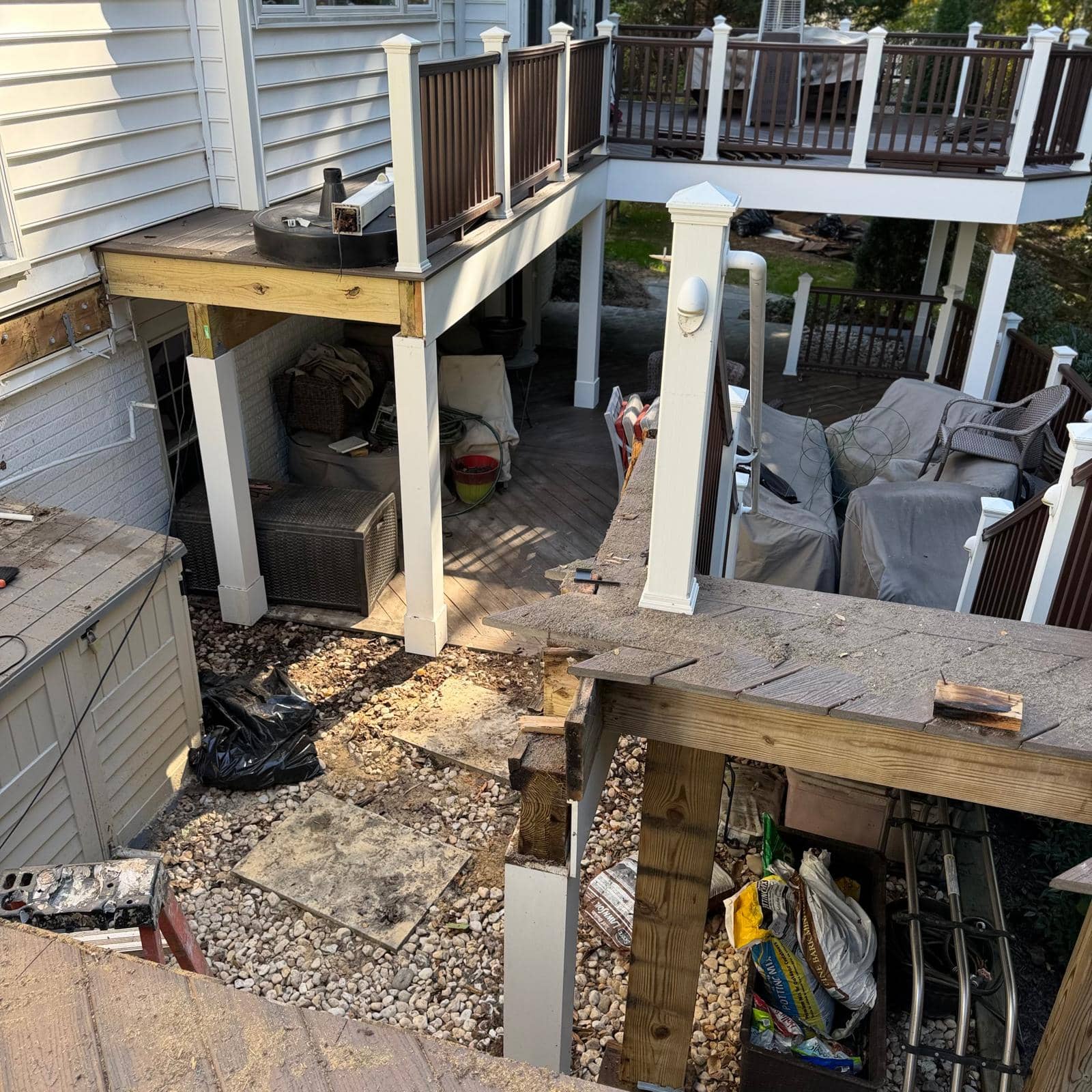
The photographs below show a partially dismantled deck in Fairfax Station, Virginia, with areas of darkened, fragmented wood and visible material loss exposed beneath the walking surface. They offer a useful starting point for a homeowner conversation: what should be evaluated before deciding between repair and rebuilding?
These images document visible conditions during work. They do not establish the cause of the deterioration, the condition of every component, or the deck’s remaining service life. According to our project team, once the team began the repair, they found deterioration and rot extensive enough that, in their judgment, continuing with repairs no longer made sense. The team changed the scope to a full rebuild, which is currently underway. This describes the team’s assessment; it is not a formal structural safety determination or a claim that rebuilding cost less.
What can the surface leave out?
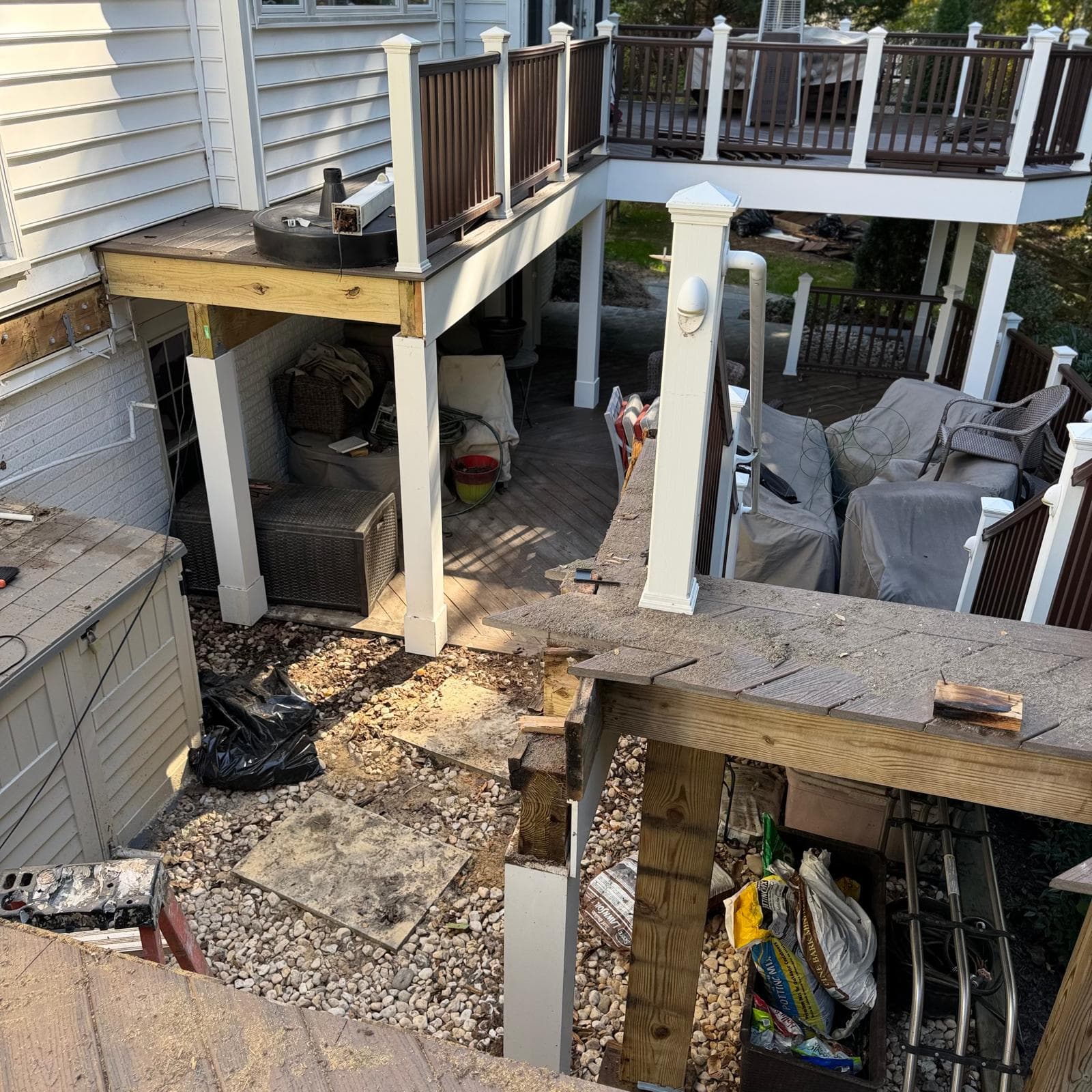
Deck boards and railings are only part of the picture. The supporting wood and connections deserve attention too. NADRA’s Check Your Deck consumer checklist directs attention to multiple areas, including the house connection, posts, joists, boards, railings, and stairs.
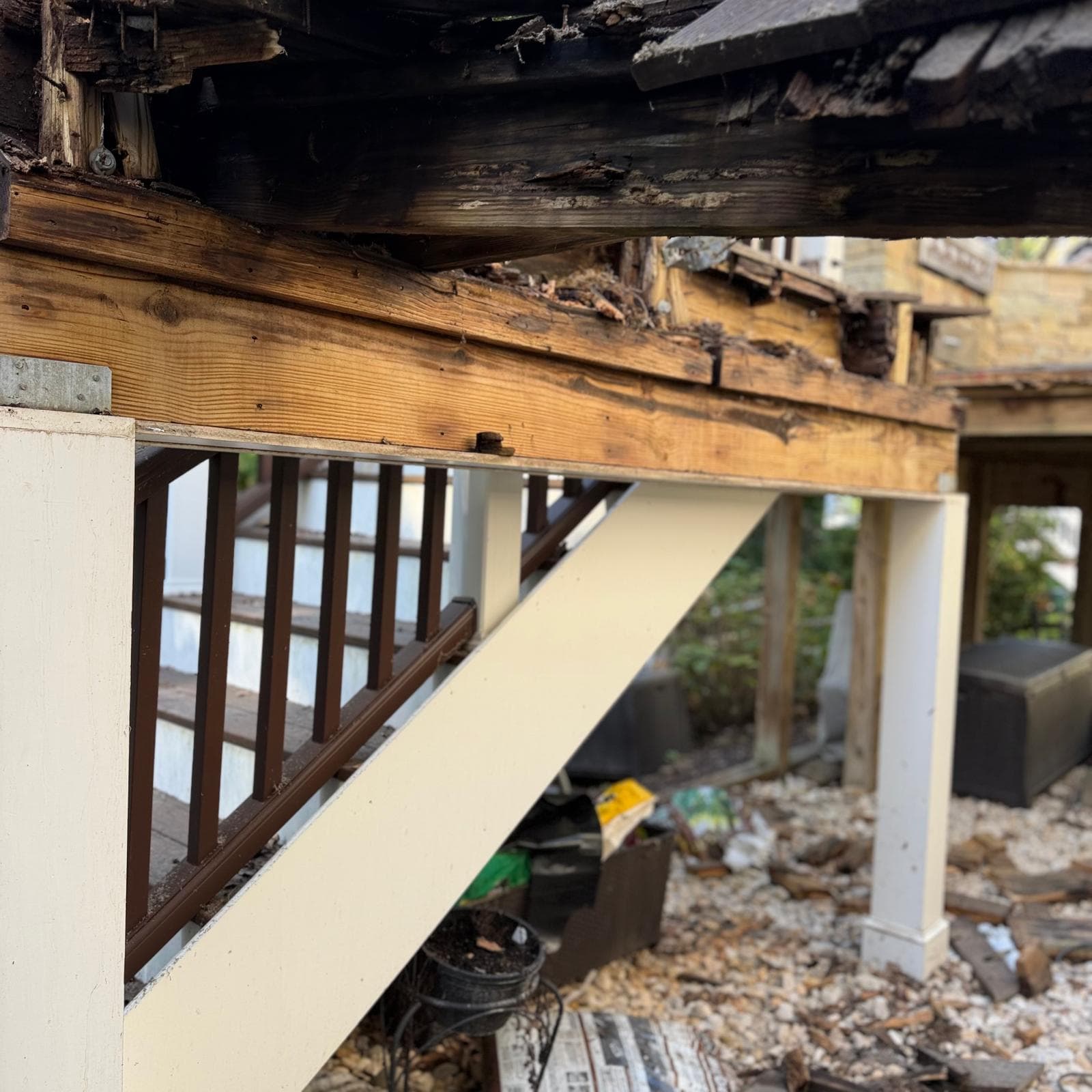
In this photo set, removed coverings and components leave portions of the wood exposed. The close-up shows irregular edges, darkened wood, and areas where material is visibly missing. Those are observations from the photographs—not a determination of how the damage started.
An on-site deck evaluation should establish what is affected, what can remain, and what needs further investigation. A photograph cannot answer all three questions.
Rebuilding is now underway
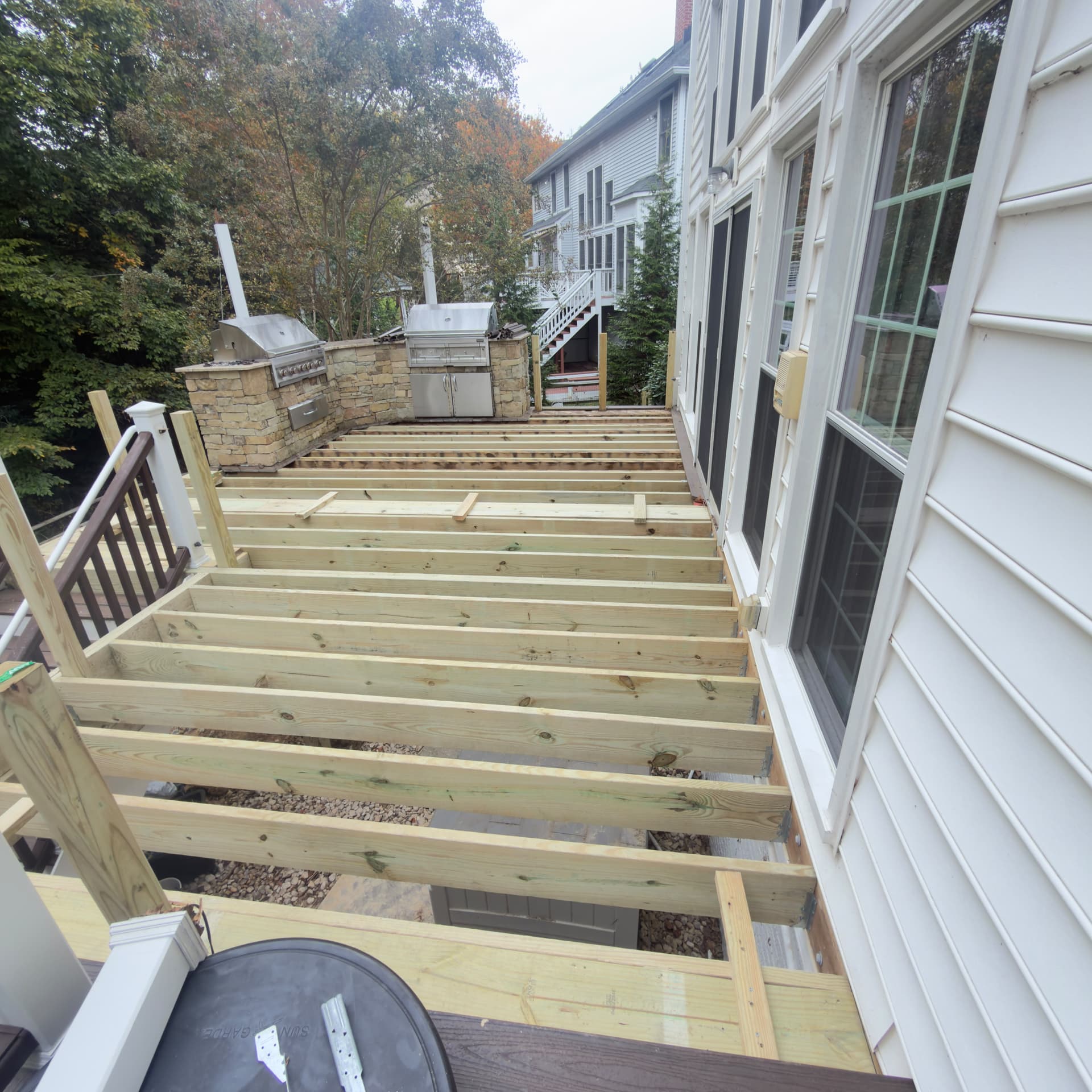
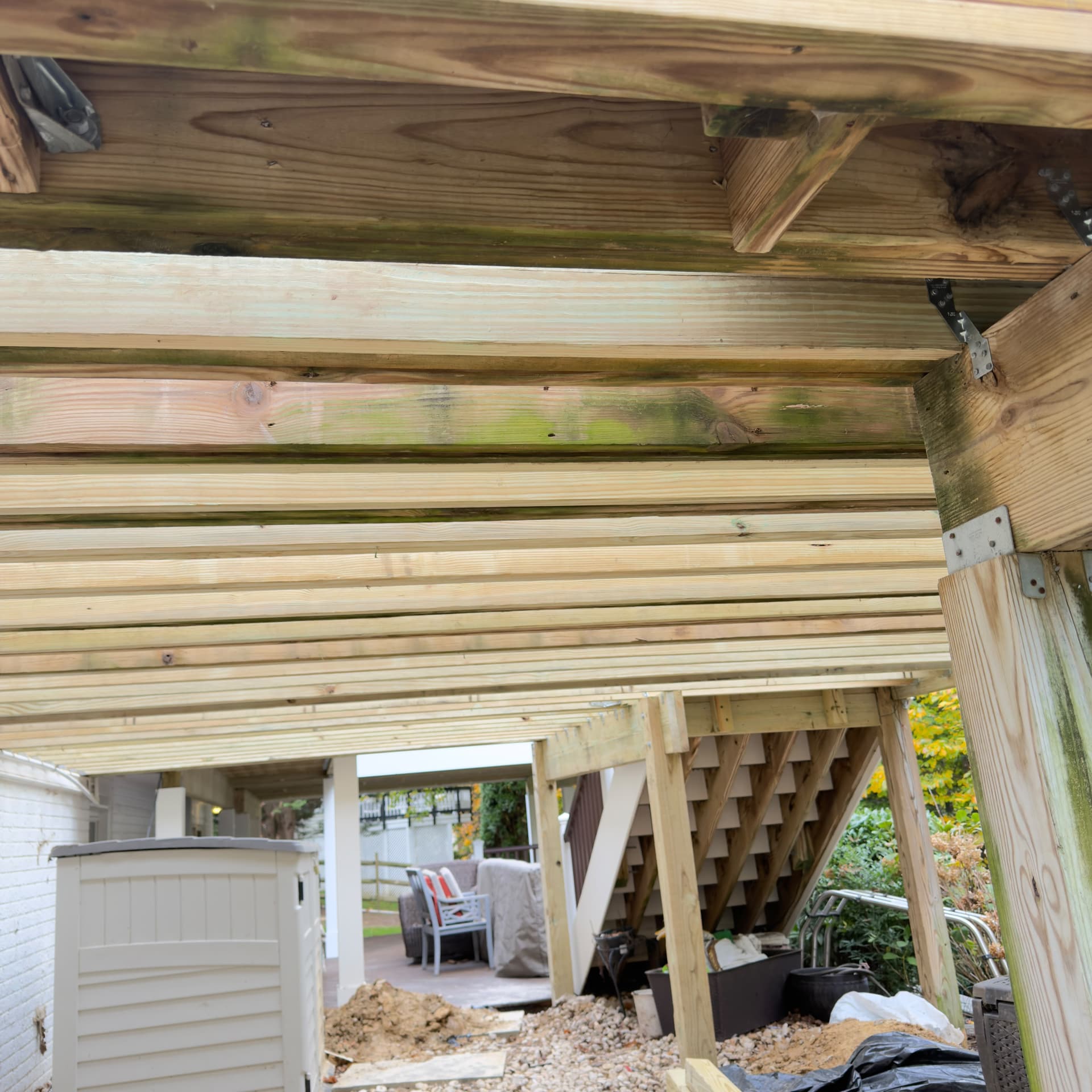
The latest progress photographs show exposed wood framing from above and below, with the walking surface not yet installed across the photographed area. The project is still underway. These views document a stage of the rebuild, not a finished deck or an inspection sign-off.
Which signs deserve closer attention?
NADRA identifies split or decaying wood as an item to check and highlights areas that remain damp or are near fasteners. Its checklist is a useful conversation guide when arranging an evaluation; it is not a condition report for your particular deck. NADRA also provides a deck evaluation guide. Fairfax County offers local deck safety information; neither resource diagnoses the photographed project.
If you notice damaged wood, changing conditions, or something you cannot explain, document the location and ask a qualified professional to evaluate it. Share any previous repairs, available plans, maintenance history, and known changes to the deck.
You do not need to remove boards or enter a damaged area to document a concern. Share photographs taken from an accessible location with the professional evaluating your deck.
Deck repair or rebuilding: compare the full scope
The first repair price is only one part of the decision. Ask for a comparison that explains the work, the assumptions, and the condition of what will remain.
| Question | Repair proposal | Rebuild proposal |
|---|---|---|
| What is included? | Identify the components being repaired or replaced. | Identify the demolition and new construction scope. |
| What remains? | Document retained components and their evaluated condition. | Specify any existing components proposed for reuse. |
| What is uncertain? | Explain concealed conditions and how additional work will be priced. | Explain site, design, and other unresolved scope items. |
| What is the full cost? | Include access, removal, disposal, framing, decking, guards, stairs, restoration, and design or permits where applicable. | Include the same applicable categories so the comparison is meaningful; these are comparison items, not a verified component list for this case. |
| What are the longer-term expectations? | Explain the basis and limits of any remaining-service-life assessment. | Explain the proposed materials, maintenance, and documented warranty terms. |
For a broader comparison beyond this case, see our guide to deck resurfacing versus replacement.
A repair may be the right choice when the evaluated condition and defined scope support it. Rebuilding the deck may offer better overall value when a proposed repair leaves substantial unresolved work or does not meet the homeowner’s goals.
Better value does not necessarily mean a lower initial price. It means weighing the complete investment against the expected use, maintenance, remaining components, and desired result. Neither option should be selected solely because it sounds less expensive in a headline.
Repairs can also carry warranties. Compare the actual written terms for each proposal, including coverage, exclusions, duration, and who provides it.
Does a 10- or 12-year-old deck automatically need replacement?
Age is background information, not an expiration date. A deck described as approximately 10–12 years old still needs a condition-based evaluation before anyone recommends a scope of work.
If the installation date is uncertain, say so. Old photographs, invoices, permits, and repair records can help establish the history. They should accompany the evaluation rather than substitute for it.
The installation date of this deck has not been established for this article. No remaining service life is claimed from these images.
Ask for an explanation before choosing a scope
A useful proposal should help you understand the decision. What was observed? Which components were evaluated? What remains unknown? Why does the recommended scope address those findings?
If both repair and rebuilding are viable, ask to see the tradeoffs in writing. Include your own priorities: how you use the space, whether the layout works, your budget, and your plans for the home.
Concerned about your deck or planning repairs? [Request a written estimate](/get-estimate) from Loudoun Decks to discuss the next steps. For a repair inquiry, select “Other” on the form, describe the affected components, and mention any photographs you have available.
Plan Your Northern Virginia Deck Project With Loudoun Decks
Get a free, no-pressure consultation from a licensed Northern Virginia deck builder. Call (571) 655-7207 or visit ldndecks.com/get-estimate.
Get a Free EstimateEverything Your Outdoor
Space Needs
From ground-up deck construction to full outdoor living spaces, every project is custom-designed for your home with permit planning, material guidance, and written workmanship terms.
Custom Deck Builder
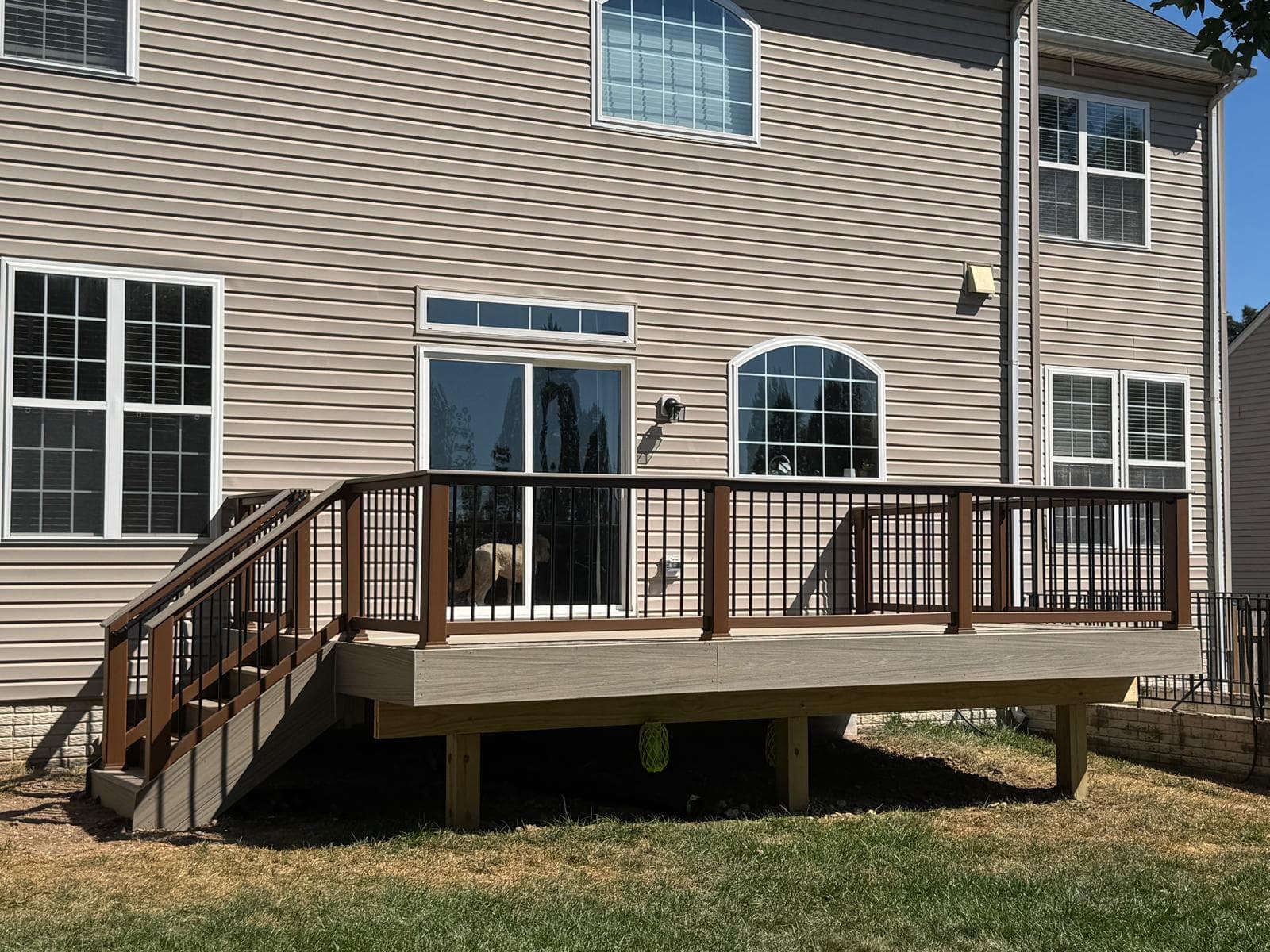
Transform your backyard with a custom-designed deck using Trex, TimberTech, wood, or PVC materials matched to your budget, HOA rules, and maintenance goals.
Deck Resurfacing
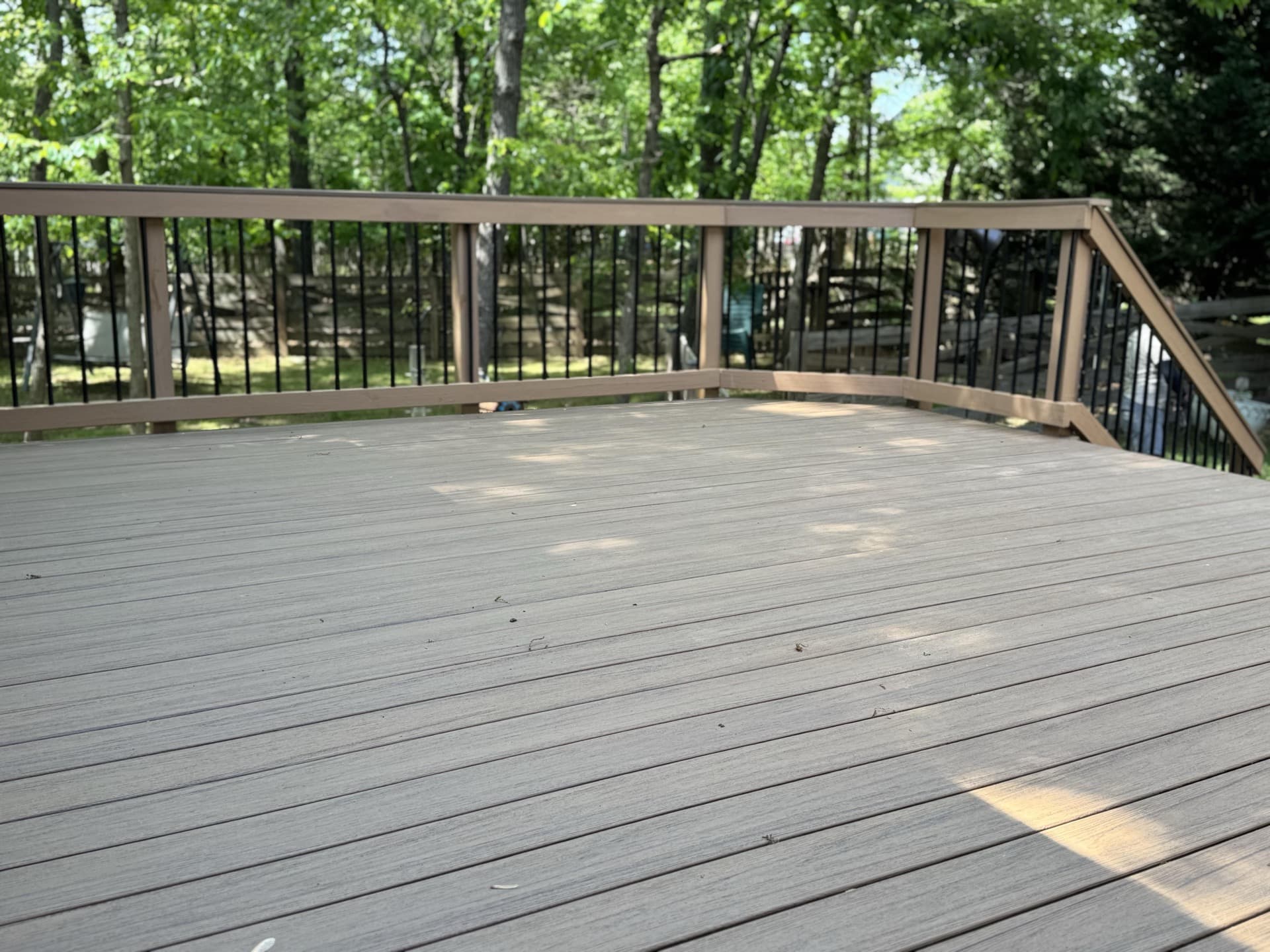
Wood-to-composite resurfacing for frames that pass inspection. The written estimate lists boards, railings, fascia, and what stays in the existing structure.
Patio Contractor Services
Professional bluestone and paver patio installation. We create durable, beautiful ground-level outdoor living spaces that last a lifetime.
Local Expertise Across Northern Virginia
Loudoun Decks serves homeowners in Loudoun County, Fairfax County, Prince William County, Arlington County, Alexandria, Falls Church, and Stafford County.
Loudoun County
- Ashburn, VA
- Leesburg, VA
- Sterling, VA
- Aldie, VA
- South Riding, VA
- Broadlands, VA
- Brambleton, VA
- Purcellville, VA
- Hamilton, VA
- Lovettsville, VA
- Round Hill, VA
- Middleburg, VA
- Dulles, VA
- Arcola, VA
- Belmont, VA
- Cascades, VA
- Countryside, VA
- Lowes Island, VA
- Potomac Falls, VA
- Lansdowne, VA
- One Loudoun, VA
- Stone Ridge, VA
Fairfax County
- Fairfax, VA
- Fairfax Station, VA
- Burke, VA
- Springfield, VA
- West Springfield, VA
- Annandale, VA
- Centreville, VA
- Chantilly, VA
- Clifton, VA
- Herndon, VA
- Reston, VA
- Great Falls, VA
- McLean, VA
- Vienna, VA
- Oakton, VA
- Falls Church, VA
- Tysons, VA
- Dunn Loring, VA
- Merrifield, VA
- Alexandria, VA
- Lorton, VA
- Mount Vernon, VA
Prince William County
- Gainesville, VA
- Haymarket, VA
- Bristow, VA
- Manassas, VA
- Manassas Park, VA
- Woodbridge, VA
- Lake Ridge, VA
- Dumfries, VA
- Occoquan, VA
- Nokesville, VA
- Independent Hill, VA
- Montclair, VA
- Dale City, VA
- Triangle, VA
Arlington County
- Arlington, VA
- Rosslyn, VA
- Ballston, VA
- Clarendon, VA
- Pentagon City, VA
- Crystal City, VA
- Shirlington, VA
Stafford County
- Stafford, VA
- Falmouth, VA
- Garrisonville, VA
- Aquia Harbour, VA
Guides Northern Virginia Homeowners Are Reading
Deck Builder in Northern Virginia
Custom decks, permits, HOA support and local service areas.
Covered Deck Builder
Covered deck planning, outdoor living upgrades and shade structure decisions.
Trex vs TimberTech vs AZEK
Side-by-side brand comparison for Virginia climate.
Composite Deck Cost in Northern Virginia
Material pricing, verified source references, planning examples and what drives the price.
Free Deck Cost Calculator
Get an instant estimate by material, size, and add-ons.
TimberTech & AZEK Decks
Premium PVC and composite deck options for Northern Virginia.