


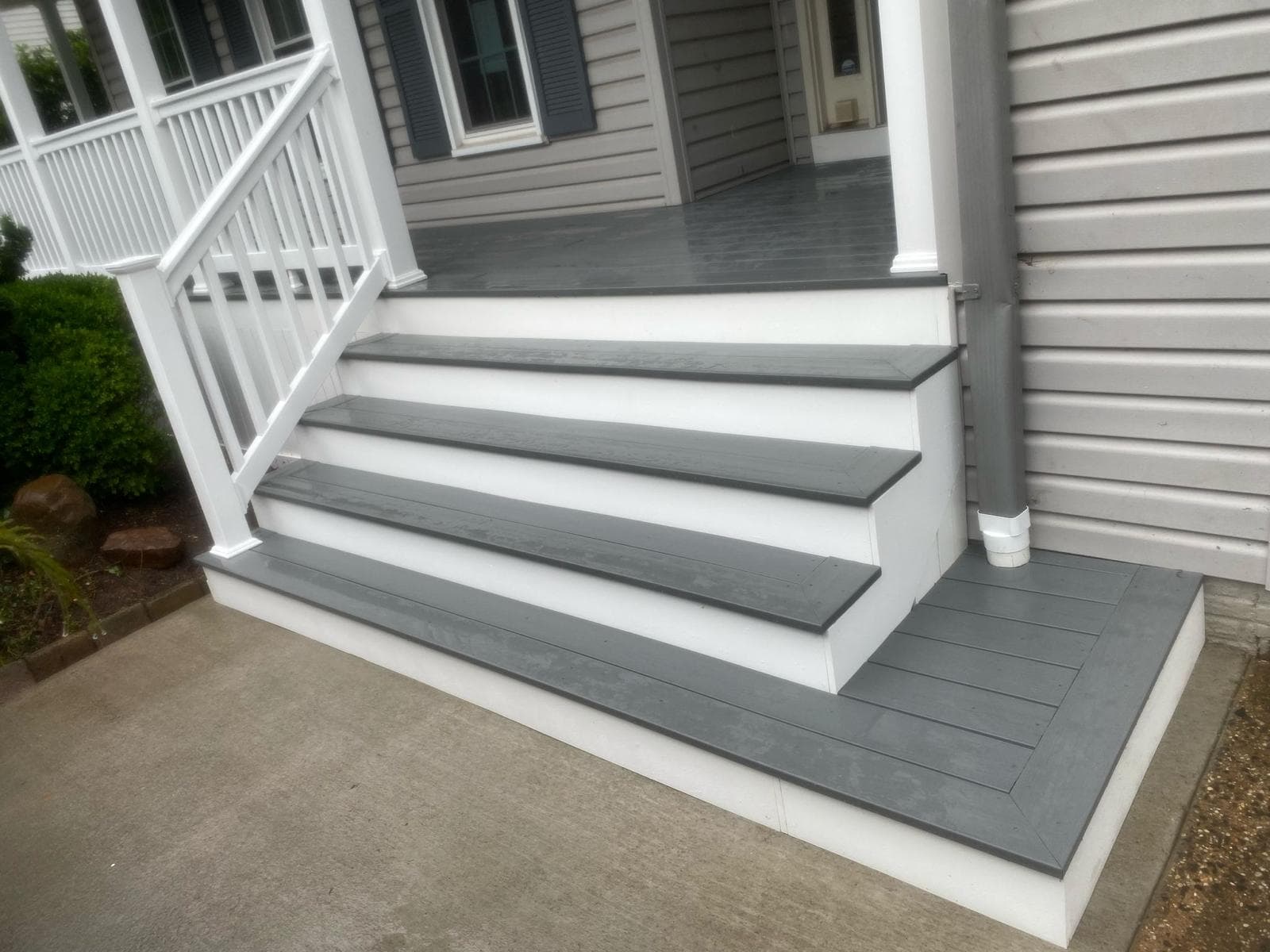
The Science of Soil Bearing Capacity and How It Affects Your Deck Footings
Ever wonder why deck concrete footings have to be so large? Understand the science of soil bearing capacity and why clay soil in Northern Virginia requires engineered designs.
Quick Answer
Soil bearing capacity is the amount of deck load the soil can safely support without settlement or shear failure. In Northern Virginia clay, conservative footing sizing matters because wet clay expands, weakens, and shifts through freeze-thaw cycles.
For homeowners, the practical implication is simple: footing depth and diameter are not cosmetic choices. They are what let posts transfer deck loads into stable soil without sinking, tilting, or pulling the deck out of level.
Source Context
When we think about deck safety, we often focus on the ledger board attachment, the railing strength, or the thick structural beams. But there is an even more fundamental factor that supports the entire deck: the soil beneath it.
Every pound of weight on your deck—from the composite boards, heavy wooden beams, and grill, to the family and guests enjoying the space—is ultimately pushed directly into the dirt. To prevent the deck from sinking, settling, or tilting over time, the concrete footings must be engineered specifically for the Soil Bearing Capacity of your property.
In this architectural and engineering guide, we will explore the science of soil mechanics and how it dictates the design of safe deck foundations in Northern Virginia.
1. What is Soil Bearing Capacity?
Soil bearing capacity is the maximum load-bearing pressure that a specific type of soil can safely support without experiencing excessive settlement or shear failure. It is measured in pounds per square foot (PSF).
If the pressure exerted by the deck's concrete footings exceeds the soil's bearing capacity, the soil particles slide past each other, the footing sinks, and the deck structure undergoes structural failure. Different soils have dramatically different bearing capacities: - Bedrock / Solid Rock: 4,000+ PSF (Extremely stable) - Sand and Gravel: 2,000 to 3,000 PSF (Good drainage and support) - Silt and Clay (Dense): 1,500 PSF (Fair support, prone to shifting) - Soft Clay / Organic Topsoil: Under 1,000 PSF (Weakest, highly unstable)
2. The Challenge of Northern Virginia Clay Soil
Most homeowners in Fairfax, Loudoun, and Prince William County are familiar with the dense, red clay soil of our region. While dry clay can feel rock-hard, clay has unique properties that pose challenges for deck builders: - Moisture Sensitivity: Clay acts like a sponge. When it is wet, it expands and its bearing capacity drops dramatically. When it dries during summer droughts, it shrinks. This cycle puts constant pressure on foundations. - Low Default Bearing Capacity: Unless a professional soil test proves otherwise, building departments in Northern Virginia assume a default soil bearing capacity of 1,500 PSF for clay soils. This relatively low rating means footings must be designed larger to distribute weight safely.
3. The Math: Footing Diameter vs. Load Distribution
To prevent a footing from sinking, the downward force (load) must be distributed over a large enough surface area to stay below the soil's 1,500 PSF limit.
Here is a simple example of the engineering math: - Suppose a single corner post of an elevated deck carries a total load of 3,000 pounds (combining the deck's weight and potential snow/live load). - If we use a small, 12-inch diameter circular concrete footing, the surface area in contact with the soil is about 0.78 square feet. - The pressure exerted on the soil would be 3,000 lbs / 0.78 sq ft = 3,846 PSF. - This pressure is more than double the soil's 1,500 PSF capacity! This deck would sink. - To solve this, we must increase the footing diameter. A 20-inch diameter footing provides 2.18 square feet of surface area. - The pressure drops to 3,000 lbs / 2.18 sq ft = 1,376 PSF, which is safely under the limit. This deck remains perfectly stable.
4. Frost Depth and Footing Design in Virginia
It is not enough for a footing to be wide; it must also be deep. In Virginia, the ground freezes to a depth of about 20 to 24 inches during cold winters. As water in the soil freezes, it expands, creating an upward force called "frost heave" that can lift a deck post right out of the ground.
To prevent this, building codes require all deck footings in Northern Virginia to be dug to a minimum depth of 24 to 30 inches below the finished grade. This ensures the concrete base rests on warm, unfrozen soil that does not expand and contract. For early planning, use the Deck Footing Depth Calculator Virginia to model depth, diameter, soil and load conditions before permit review.
Engineered for a Lifetime
At Loudoun Decks, we believe in over-engineering from the ground up. In our local clay soil, we refuse to cut corners on foundation footings. We utilize specialized footing design calculators to precisely size every pier, dig well below the frost line, and flare the footing bottoms to ensure your deck is anchored to the earth with complete safety and stability. After footing assumptions are clear, use the Deck Beam Span Calculator Virginia to understand how beam span and post spacing affect the structure above the concrete.
Related Resources
Frequently Asked Questions
What is the default soil bearing capacity in Northern Virginia?
By default, local building departments in Loudoun and Fairfax County assume a soil bearing capacity of 1,500 PSF due to the clay-rich nature of the region.
Why do wet clay soils cause deck settling?
Clay soils expand when wet and contract when dry. High moisture levels significantly weaken the load-carrying capacity of clay, which can lead to sinking if footings are undersized.
How deep must deck footings be dug in Virginia?
Footings must be dug below the local frost line, which means a minimum depth of 24 to 30 inches in Northern Virginia to prevent shifting from frost heave.
Plan Your Northern Virginia Deck Project With Loudoun Decks
Get a free, no-pressure consultation from a licensed Northern Virginia deck builder. Call (571) 655-7207 or visit ldndecks.com/get-estimate.
Get a Free EstimateEverything Your Outdoor
Space Needs
From ground-up deck construction to full outdoor living spaces, every project is custom-designed for your home with permit planning, material guidance, and written workmanship terms.
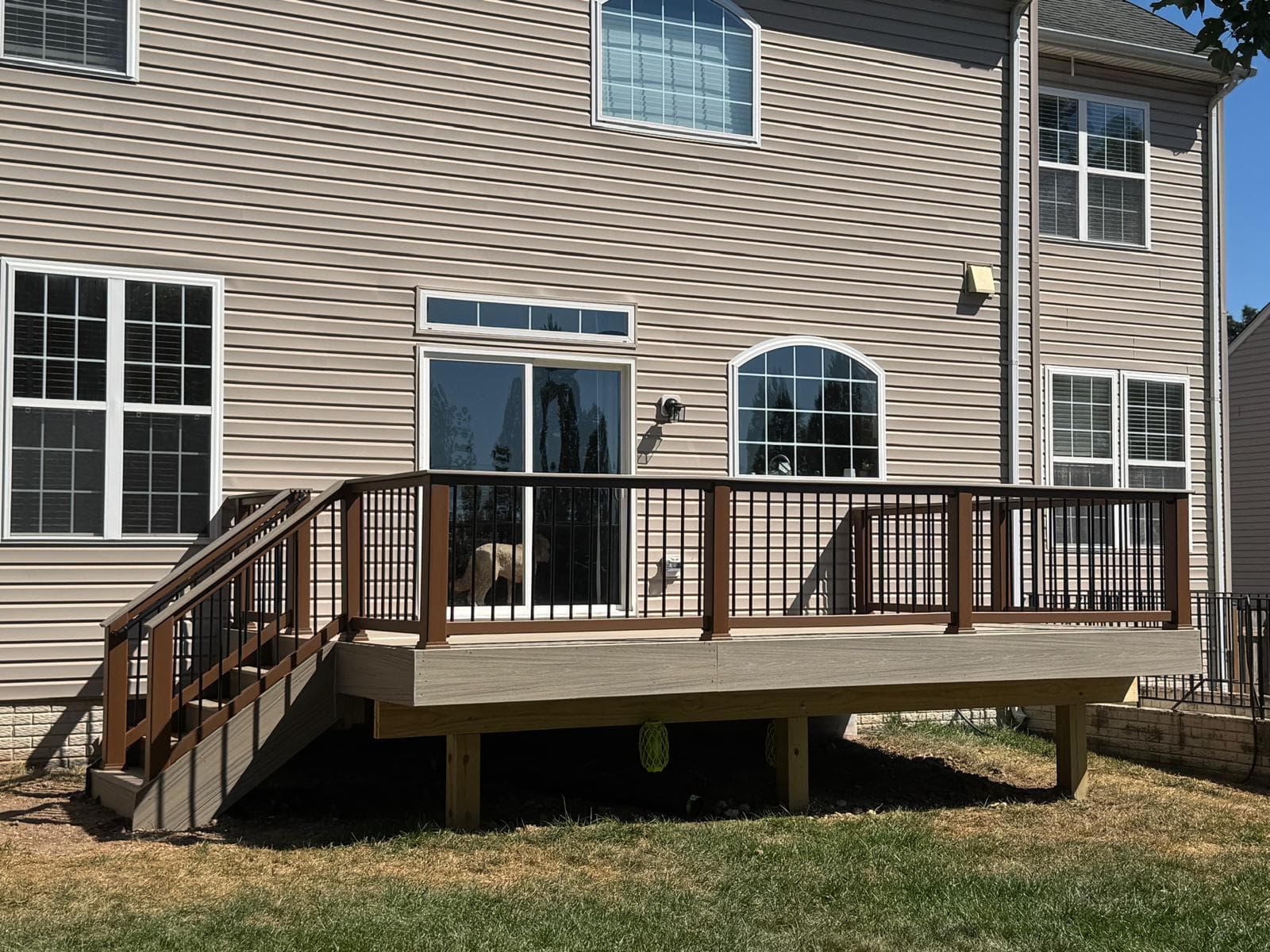
Custom Deck Builder
Transform your backyard with a custom-designed deck using Trex, TimberTech, wood, or PVC materials matched to your budget, HOA rules, and maintenance goals.
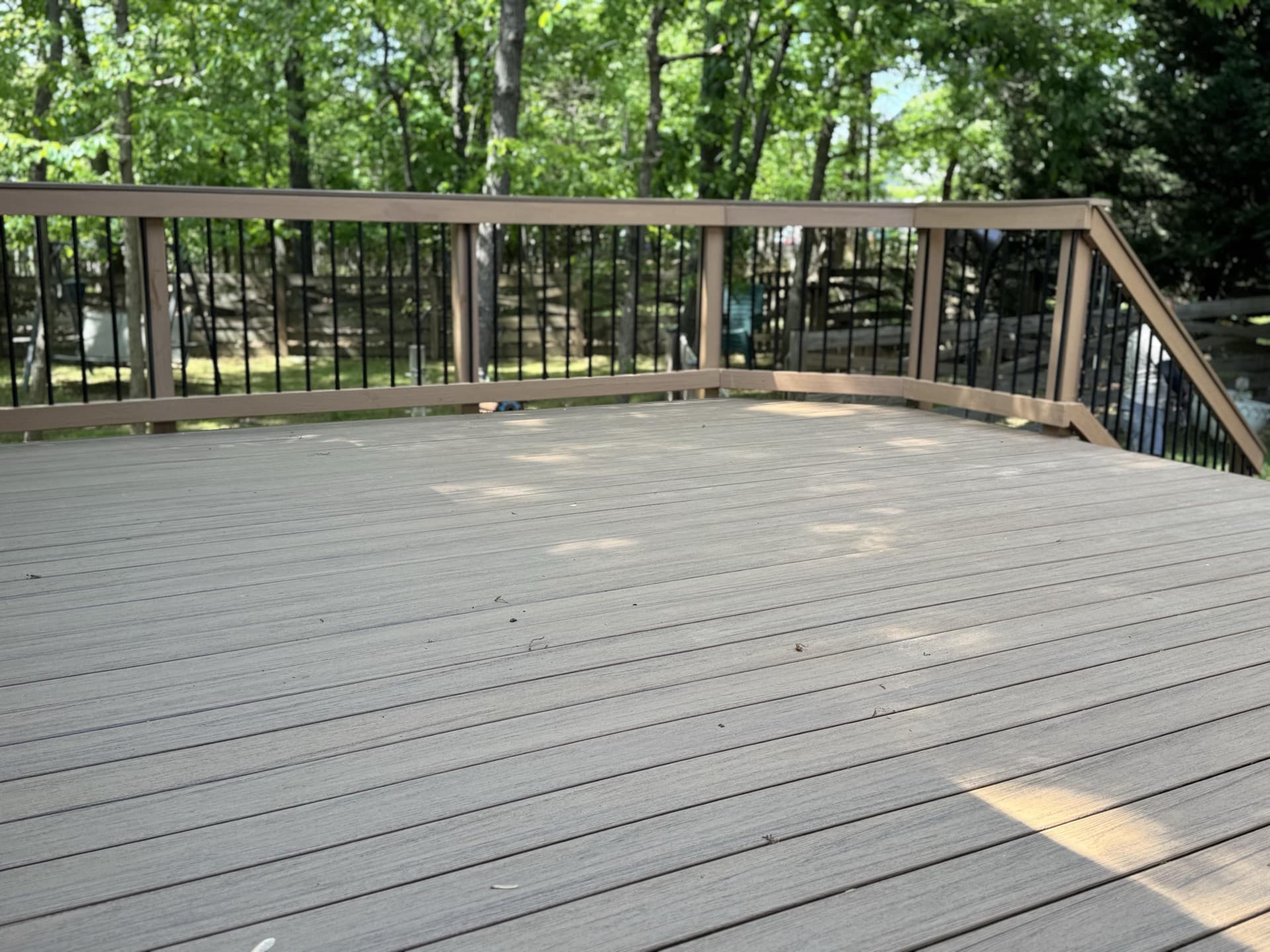
Deck Resurfacing
Premium wood-to-composite resurfacing for structurally sound frames. Full surface conversions start from $15k with boards, railings, fascia, and safety review.
Patio Contractor Services
Professional bluestone and paver patio installation. We create durable, beautiful ground-level outdoor living spaces that last a lifetime.
Local Expertise Across Northern Virginia
Loudoun Decks is a trusted deck builder serving Loudoun County, Fairfax County, Prince William County, Arlington, and Stafford.
Guides Northern Virginia Homeowners Are Reading
Premium Composite Replacement
High-value composite replacement planning for Arlington, Alexandria and McLean homeowners.
Deck Footing Depth Calculator
Estimate footing depth, diameter, frost-depth guidance and inspection notes.
Deck Beam Span Calculator
Estimate beam span, post spacing, tributary width and framing warnings.
Deck Joist Span Calculator
Estimate joist span, spacing, cantilever and composite decking support warnings.
Deck Load Calculator
Estimate distributed deck load, beam line load, post load and heavy-upgrade warnings.
Virginia Deck Stair Calculator
Estimate deck stair rise, run, number of steps, tread depth and stair angle.