


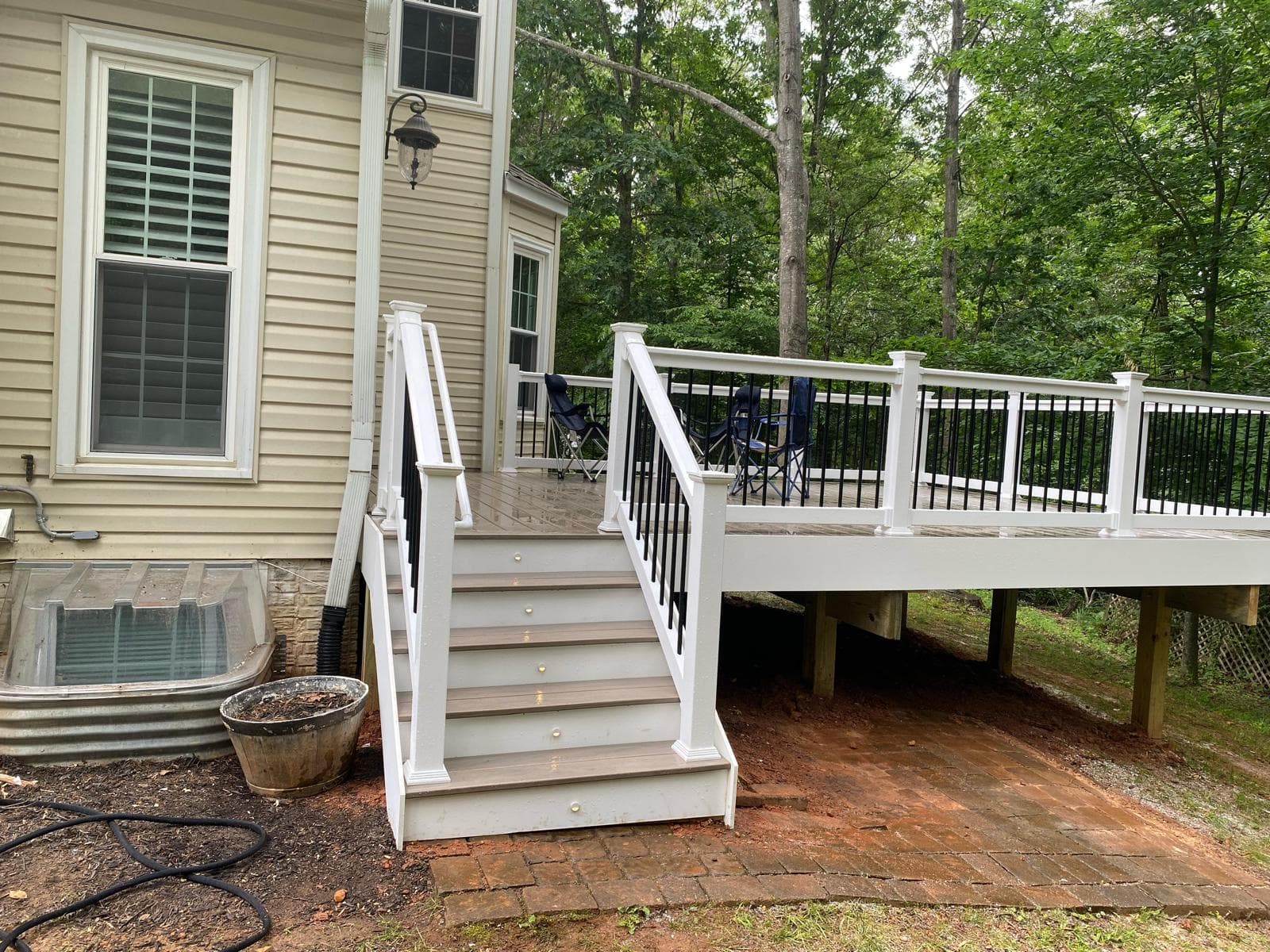
A Homeowner’s Guide to Deck Drainage Systems: Creating Dry Under-Deck Spaces
Learn how under-deck drainage systems capture and divert water, allowing you to transform the damp space under your elevated deck into a dry, premium outdoor living area.
Quick Answer
A deck drainage system captures water that passes through or around deck boards and routes it away from the house, framing, and lower patio so the space below an elevated deck can stay usable.
For new construction, above-joist systems protect framing best. For existing decks, under-joist ceiling systems can create a dry lower area, but ledger flashing, slope, ventilation, and access for maintenance still matter.
Source Context
Elevated decks are a staple of suburban Northern Virginia architecture, especially on properties with walkout basements in Loudoun, Fairfax, and Prince William County. However, the space beneath a second-story deck is often underutilized. Typically damp, dark, and subject to constant dripping rainwater, this area usually ends up as a muddy patch or an eyesore.
An under-deck drainage system completely changes this dynamic. By capturing rainwater as it drains through the deck boards and funneling it away, you can create a 100% dry, usable space underneath. Whether you want a clean storage area, a dry outdoor patio, or a fully finished outdoor ceiling with lighting and fans, a drainage system is the core foundation.
In this educational guide, we will look at how deck drainage systems work, the different types available, and key design considerations for your home.
How Deck Drainage Systems Work
A standard deck floor is not waterproof; water passes freely through the gaps between the decking boards. A deck drainage system is a series of gutters, troughs, or membranes installed below the decking that catches this water and routes it to a perimeter gutter, which then drains into a downspout or away from the house foundation.
By capturing the water before it falls to the ground below, the area underneath remains dry, even during torrential summer thunderstorms.
The Two Main Types of Deck Drainage Systems
There are two primary ways to engineer an under-deck drainage system, and the choice depends on whether you are building a new deck or retrofitting an existing one.
1. Above-the-Joist Systems (New Construction) An above-the-joist system is installed *during* the framing process, before the decking boards are screwed down.
These systems (such as Trex RainEscape) utilize flexible, waterproof membrane troughs that drape over the top of the joists, creating a U-shape between each joist bay. The troughs are pitched down toward a funnel at the outer rim joist, which empties into an exterior gutter.
The Pros: - Maximum Joist Protection: Because the waterproof membrane covers the tops of the joists, the joists themselves remain completely dry and shielded from moisture. This virtually eliminates joist rot and can double the lifespan of your deck's wooden skeleton. - Clean Interior Look: Since the system sits above the joists, the entire joist structure is exposed from below. This allows you to install a flat, seamless beadboard or tongue-and-groove ceiling directly to the bottom of the dry joists. - Electrical Safety: Running wires for recessed lights, ceiling fans, or outdoor speakers is much easier and safer because the joist cavity remains entirely dry.
The Cons: - Only for New Builds: This system cannot be easily retrofitted onto an existing deck because every single decking board would have to be removed to lay the membrane.
2. Under-the-Joist Systems (Retrofitting & Existing Decks) An under-the-joist system is installed to the underside of the deck joists.
These systems typically consist of interlocking vinyl or aluminum ceiling panels (such as Zip-Up Underdeck or Under Deck Oasis) that attach to a grid system fastened to the bottom of the joists. The panels are sloped slightly away from the house to guide water to an integrated gutter.
The Pros: - Perfect for Retrofits: This system is easily installed on existing elevated decks without removing a single top board. - Completed Ceiling in One Step: The panels themselves double as the finished ceiling, instantly clean-looking, paint-free, and available in multiple colors and wood-grain textures. - Easy Maintenance: Many vinyl and aluminum panels are removable, allowing you to easily inspect or clean out any debris that slips through the deck boards. - Electrical Safety: Running wires for recessed lights, ceiling fans, or outdoor speakers is much easier and safer because the joist cavity remains entirely dry.
The Cons: - Joists Remain Exposed to Moisture: Because the drainage happens below the joists, the wood framing is still subjected to water coming down from the deck boards. Proper joist flashing tape is critical to protect the joist tops from rot in this setup.
Key Design and Installation Considerations
If you are planning to install a deck drainage system on your Northern Virginia home, keep these crucial guidelines in mind:
Slope and Pitch Water must move. A deck drainage system must be installed with a minimum slope of 1/4 inch per foot toward the gutter. If the troughs or panels are completely flat, water will pool, leading to mold, mildew, and potential structural leaks.
Proper Ledger Flashing The ledger board—where the deck connects to your house—is the most sensitive area for water intrusion. The drainage system must be meticulously flashed and sealed to the house siding and ledger board to prevent water from running down the side of your home.
Debris Management While the system is designed to catch water, small pine needles, seeds, and oak tassels will inevitably fall through the decking gaps. Ensure your contractor uses a system with a gutter screen or leaf guard, and design the downspouts so they can be easily flushed out with a garden hose once a year.
Ventilation and Airflow Even with a dry space underneath, you must maintain proper airflow. A completely sealed ceiling under a low deck can trap ambient moisture from the soil, leading to mold on the joists. Ensuring a slight gap at the perimeter for ventilation is a best practice.
What Can You Do with a Dry Under-Deck Space?
Once you have a dry space under your deck, the possibilities for outdoor living are endless: - Outdoor Living Room: Add comfy sofas, a rug, a TV, and table lamps for a cozy, shade-covered retreat. - Dry Storage Area: Store lawnmowers, bicycles, pool toys, and patio furniture during the winter months without worrying about rain or snow. - Outdoor Dining & Bar: Build a bar height counter and dining table for shaded dining during hot summer days.
Build It Right
A deck drainage system is a premium upgrade that significantly increases both the comfort and the lifespan of your outdoor living structure. At Loudoun Decks, we specialize in implementing integrated drainage solutions during new deck construction to guarantee your understructure is protected and your lower patio is 100% dry.
Related Resources
Frequently Asked Questions
Can you install a deck drainage system on an existing deck?
Yes. While above-the-joist systems must be installed during new construction, under-the-joist panel systems are designed specifically for retrofitting existing elevated decks.
What is the best deck drainage system?
For new construction, above-the-joist systems like Trex RainEscape are best because they shield the structural joists from rot. For retrofitting, under-the-joist vinyl or aluminum systems are ideal.
How do you clean an under-deck drainage system?
Most systems are relatively self-cleaning as water flushes debris down the slope. However, they should be flushed with a garden hose once a year, and gutter guards should be checked for leaves.
Plan Your Northern Virginia Deck Project With Loudoun Decks
Get a free, no-pressure consultation from a licensed Northern Virginia deck builder. Call (571) 655-7207 or visit ldndecks.com/get-estimate.
Get a Free EstimateEverything Your Outdoor
Space Needs
From ground-up deck construction to full outdoor living spaces, every project is custom-designed for your home with permit planning, material guidance, and written workmanship terms.
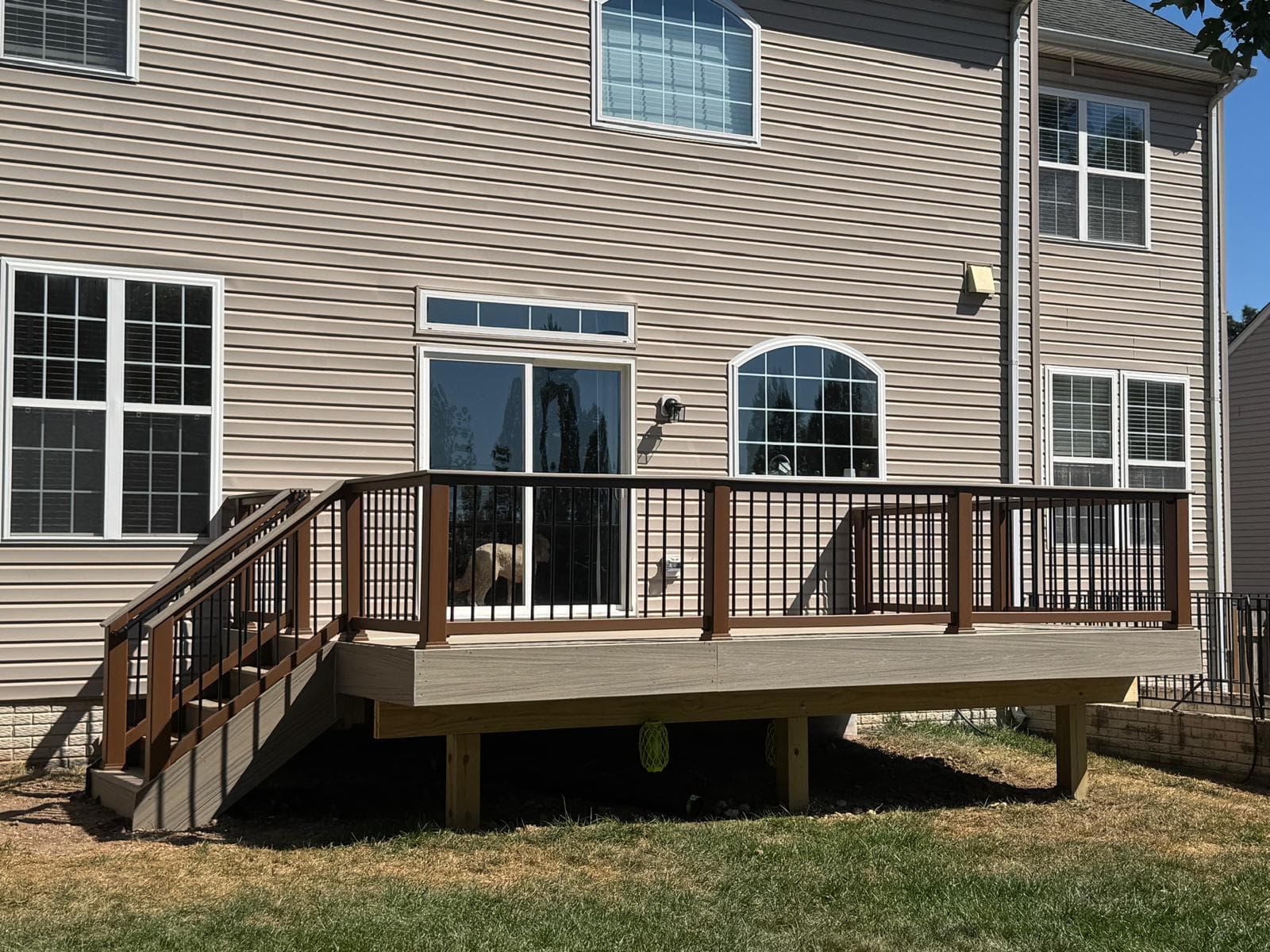
Custom Deck Builder
Transform your backyard with a custom-designed deck using Trex, TimberTech, wood, or PVC materials matched to your budget, HOA rules, and maintenance goals.
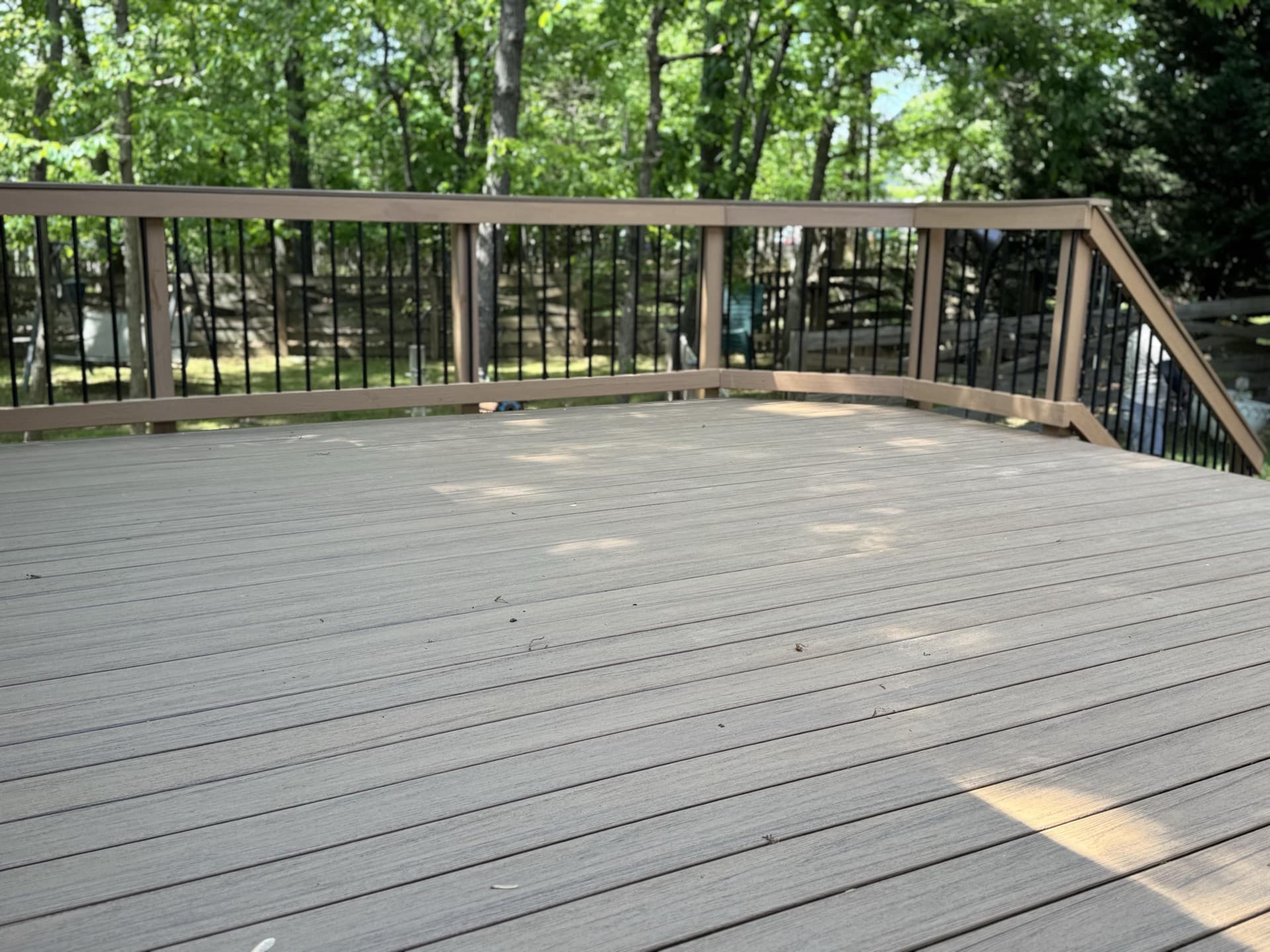
Deck Resurfacing
Premium wood-to-composite resurfacing for structurally sound frames. Full surface conversions start from $15k with boards, railings, fascia, and safety review.
Patio Contractor Services
Professional bluestone and paver patio installation. We create durable, beautiful ground-level outdoor living spaces that last a lifetime.
Local Expertise Across Northern Virginia
Loudoun Decks is a trusted deck builder serving Loudoun County, Fairfax County, Prince William County, Arlington, and Stafford.
Guides Northern Virginia Homeowners Are Reading
Ledger Board Flashing Guide
House-attachment flashing, fasteners, rot risk and collapse-prevention basics.
Deck Snow Load Requirements
Snow, drift, ledger and heavy-load guidance for Virginia deck structures.
Before & After Deck Projects
Photo gallery with verification notes for deck replacements, composite upgrades and outdoor living work.
LDN Decks Reviews
Homeowner feedback and trust signals for Northern Virginia deck projects.
BBB Accredited Deck Builder
BBB profile, status context and third-party trust signals.
LDN Decks Reviews on Yelp
Yelp review profile and public reputation signals for homeowners.