


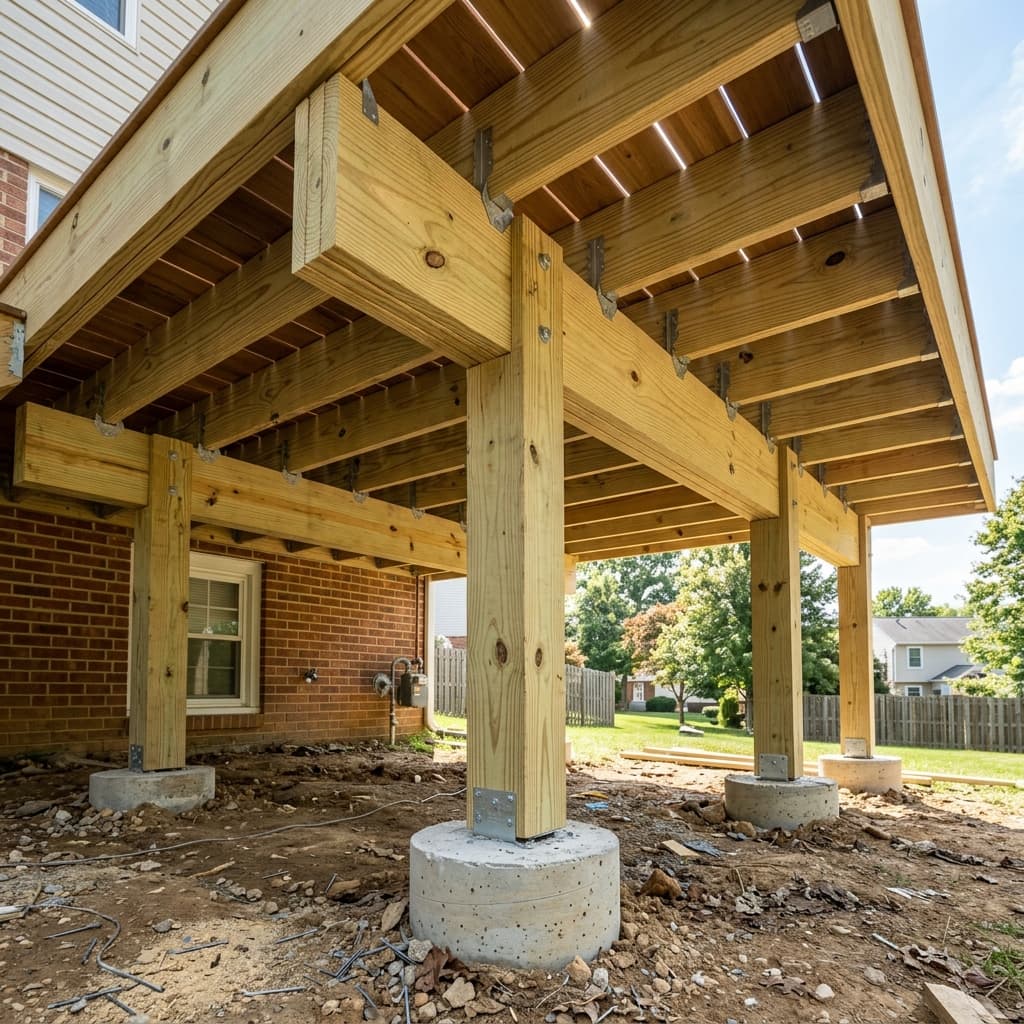
The Ultimate Guide to Deck Understructure: Beams, Joists, and Posts Explained
A beautiful deck is only as strong as its foundation. Learn the critical components of deck understructure, from concrete footings to load-bearing beams and joists.
When homeowners think about their dream deck, they usually envision the color of the composite decking, the style of the railing, and the placement of the outdoor furniture. However, the most critical part of any deck in Northern Virginia is the part you rarely see: the understructure.
The understructure is the structural skeleton that supports the entire weight of the deck, the people on it, and any heavy additions like a hot tub or outdoor kitchen. Understanding how beams, joists, and posts work together will help you make informed decisions when hiring a deck builder in Fairfax or Loudoun County.
1. Concrete Footings: The Foundation
Every strong deck starts below the ground. In Virginia, the freezing and thawing of the soil during winter can cause the ground to shift (a process called frost heave). To prevent your deck from moving, concrete footings must be dug below the frost line—typically 24 to 30 inches deep in our region.
These concrete caissons act as the anchor points for the entire structure. The diameter of the footing depends on the weight it needs to support. A standard deck might use 16-inch diameter footings, while a deck supporting a hot tub might require massive 24-inch or 30-inch footings.
2. The 6x6 Support Posts
Resting on top of the concrete footings are the vertical support posts. While some older or budget decks use 4x4 posts, modern building codes and professional deck builders (like Loudoun Decks) exclusively use thick 6x6 pressure-treated wooden posts.
These posts transfer the entire load of the deck down into the footings. They must be connected to the concrete using galvanized steel standoff bases, which keep the wood slightly elevated above the concrete to prevent moisture absorption and rot.
3. Load-Bearing Beams
Beams are the heavy horizontal lumber pieces that rest horizontally on top of the 6x6 posts. They act as the primary structural spine of the deck.
In standard residential construction, beams are typically created by "sistering" (bolting together) two or three pieces of 2x10 or 2x12 pressure-treated lumber. The beams must be appropriately sized based on the distance they span between posts and the overall weight of the deck. Proper beam sizing is crucial to prevent the deck from sagging in the middle over time.
4. Deck Joists: The Floor Frame
Joists are the repeated horizontal boards that sit on top of the beams (or hang from the ledger board attached to your house). These are the boards that the actual decking surface is screwed into.
The spacing between joists is incredibly important. Standard wood decks often have joists spaced 16 inches on-center. However, for composite decking like Trex or TimberTech, we frequently recommend 12-inch on-center spacing. Because composite is heavier and slightly more flexible than wood, tighter joist spacing prevents the floor from feeling "bouncy" when you walk on it.
5. The Ledger Board: The Critical Connection
If your deck is attached to your home, the ledger board is the single most important component. It is a long piece of lumber bolted directly to the structural rim joist of your house.
More deck failures are caused by improperly attached ledger boards than any other issue. The ledger must be secured with heavy-duty galvanized lag screws or structural bolts, and it must be meticulously flashed with metal or rubberized tape to prevent rainwater from getting trapped behind it and rotting the side of your home.
Built to Last
At Loudoun Decks, we believe that over-engineering the understructure is the only way to build. We use 6x6 posts, heavy-duty joist tape to prevent water damage, and premium galvanized hardware. When you understand the anatomy of a deck, you understand why a properly permitted and professionally built structure is an investment that will safely last for decades.
Frequently Asked Questions
What is the understructure of a deck?
The understructure is the framework that supports the deck, consisting of concrete footings, support posts, load-bearing beams, and joists.
Why are 6x6 posts better than 4x4 posts for decks?
6x6 posts provide significantly more load-bearing capacity and structural stability, reducing the risk of warping and ensuring the deck remains safe for decades.
What is the standard joist spacing for a composite deck?
While 16 inches on-center is common, professional builders often recommend 12-inch on-center spacing for composite decking to prevent any bouncy feel underfoot.
Plan Your Northern Virginia Deck Project With Loudoun Decks
Get a free, no-pressure consultation from a licensed Northern Virginia deck builder. Call (571) 655-7207 or visit ldndecks.com/contact.
Get a Free EstimateEverything Your Outdoor
Space Needs
From ground-up deck construction to full outdoor living spaces, every project is custom-designed for your home, fully permitted, and backed by our warranty.
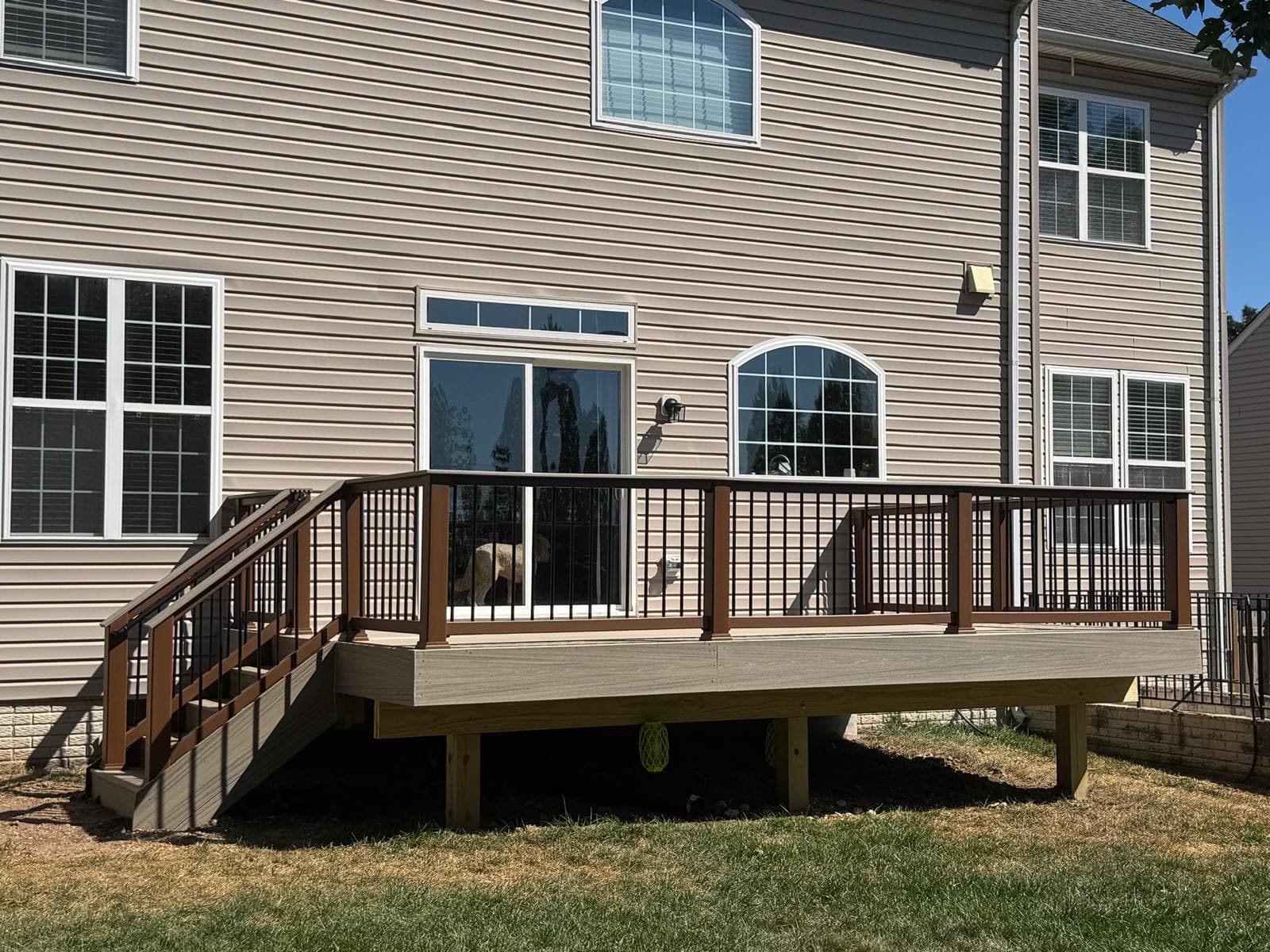
Custom Deck Builder
Transform your backyard with a custom-designed deck. As a Trex Platinum builder, we offer the best warranties and craftsmanship in Northern Virginia.
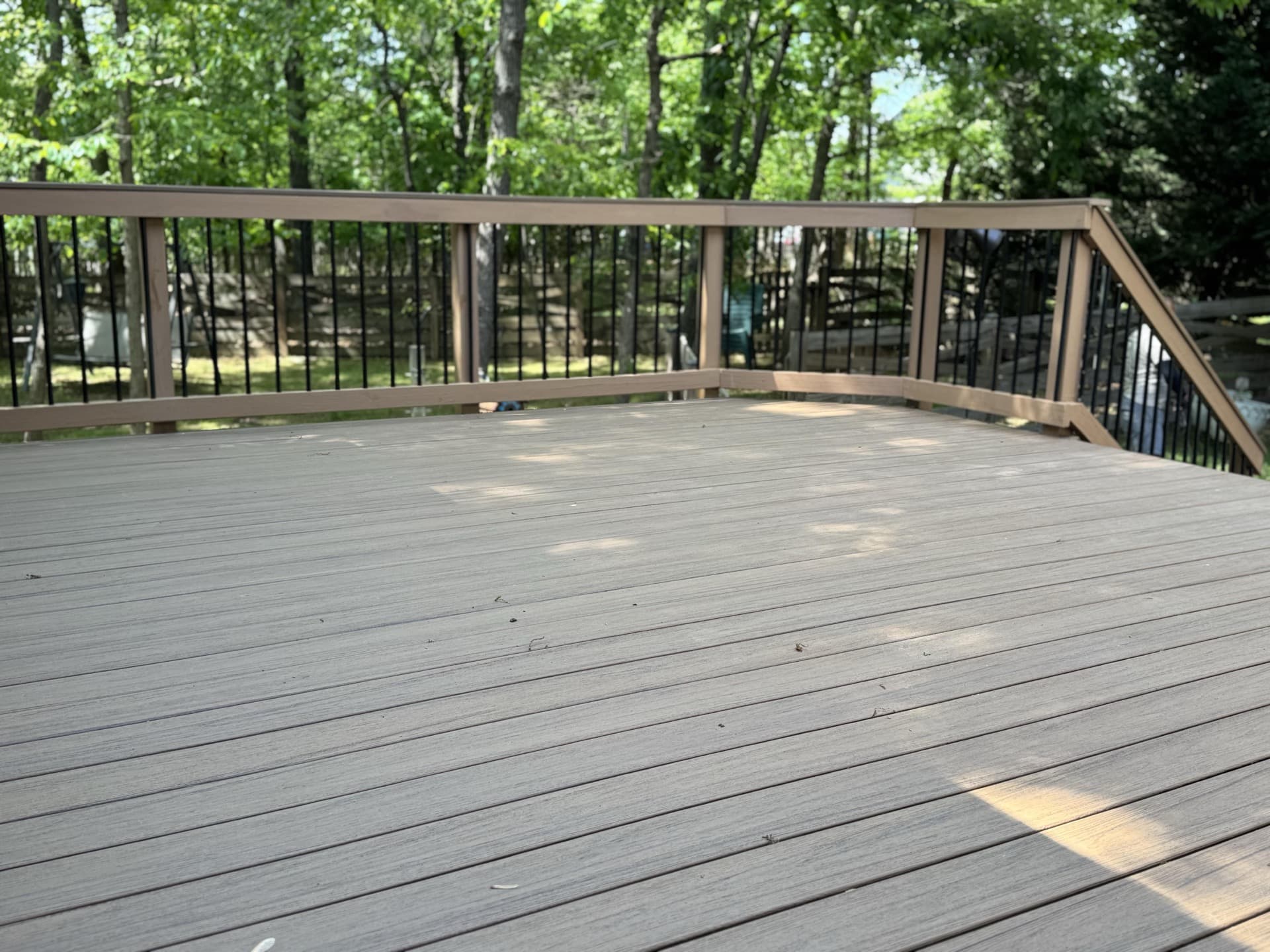
Deck Resurfacing & Repair
Save 40% on costs with our expert deck resurfacing and repair. We refresh your existing frame with modern composite boards and railings.
Patio Contractor Services
Professional bluestone and paver patio installation. We create durable, beautiful ground-level outdoor living spaces that last a lifetime.
Local Expertise Across Northern Virginia
Loudoun Decks is a trusted deck builder serving Loudoun County, Fairfax County, Prince William County, Arlington, and Stafford.
Guides Northern Virginia Homeowners Are Reading
Deck Railing Options & Costs
Composite, aluminum, cable, glass compared.
Fire Pit Design & Costs
Gas vs wood-burning integration tips.
Pergola & Shade Guide
Attached vs freestanding costs and permits.
Outdoor Living Contractor
Decks, patios, porches and backyard systems planned together.
Paver vs Flagstone
Cost and durability comparison for Virginia patios.